
Reviewed · TEMPLES & SHRINES
Mt. Fuji Heritage Tour: Traditional Villages, Lakes & Shrine
Mt. Fuji is the star here, but the best part is how many different faces of Japan you see in one day: a thatched-roof village, spring-fed ponds, a Shinto shrine, and the famous red pagoda view. For $50, this is an efficient way to reach places that are awkward to connect by public transport from Tokyo.
I like the mix of classic photo stops and quieter cultural places, especially Saiko Iyashi no Sato Nenba and Oshino Hakkai. I also like the practical guiding. Guides such as Sia, Kazi, Wanting, Rachel, and Alex have been praised for clear meeting instructions, good timekeeping, and help with families. The main drawback is the long bus day, and clouds may hide Fuji when you arrive.
Key points at a glance
- A full Fuji sampler: Visit five major sights around Lake Kawaguchi and the Fuji Five Lakes area in one 10-hour day.
- The thatched village is more than a photo stop: Saiko Iyashi no Sato Nenba offers traditional houses, snacks, crafts, and optional ninja costume rental.
- The pagoda requires stairs: Arakurayama Sengen Park rewards the climb with the famous Fuji and Chureito Pagoda view.
- Autumn changes the plan: From October 26 to November 20, the tour visits the Maple Corridor instead of Oishi Park.
- Lunch costs extra: Bring food, buy snacks at the stops, or use the restaurant suggested by the guide.
- Weather controls the headline view: You may see Fuji clearly, partially, or not at all.
Why this $50 Fuji day trip offers good value

At $50 per person, the tour covers the driver, guide, parking, pickup and drop-off at the designated meeting point, and admission to Saiko Iyashi no Sato Nenba. That is a strong price for a 10-hour outing, particularly if you want a planned route rather than working out several bus connections yourself.
The real value is time. Saiko, Lake Kawaguchi, Arakurayama, and Oshino Hakkai sit in different parts of the Fuji area. Public transport can get you there, but connecting all these stops in one day takes planning and leaves you exposed to missed buses. Here, you board once in Tokyo and let the driver handle the long stretches.
The tradeoff is that you spend about two and a half hours going out and another two and a half hours returning. Traffic can make the ride longer, especially on weekends and holidays. I would not book an evening activity that depends on a precise return time. The company may shorten, change, or cancel a stop if traffic or conditions require it.
This is a shared group tour, and the guide gives explanations in several languages. That makes it useful for mixed-language groups, though explanations may be shorter than on a private English-only tour. The strongest praise has gone to guides who keep everyone together, explain where to meet, and give clear return times. That practical help matters on a busy day with several stops.
More Temple & Shrine Tours in Mount Fuji:
- From Tokyo: Fuji Mountain Area – FujiQ – Lake Kawaguchiko – Chureito Pagoda
★ 4.8 · 32 reviews - Tokyo: Mt. Fuji, Owakudani, Hakone Shrine, & Open-Air Museum
★ 4.7 · 25 reviews - Kyoto: Fushimi Inari, Kinkakuji, Bamboo Grove 1 Day Bus Tour
★ 4.8 · 4,316 reviews
Saiko Iyashi no Sato Nenba and its thatched roofs
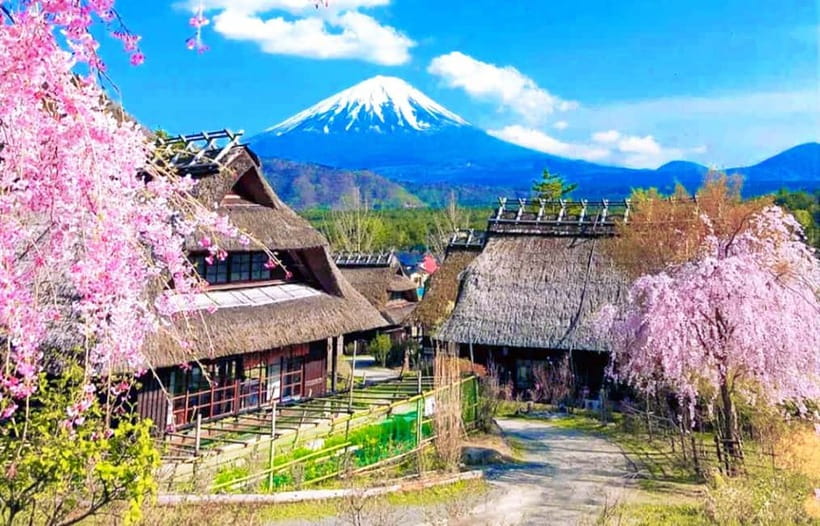
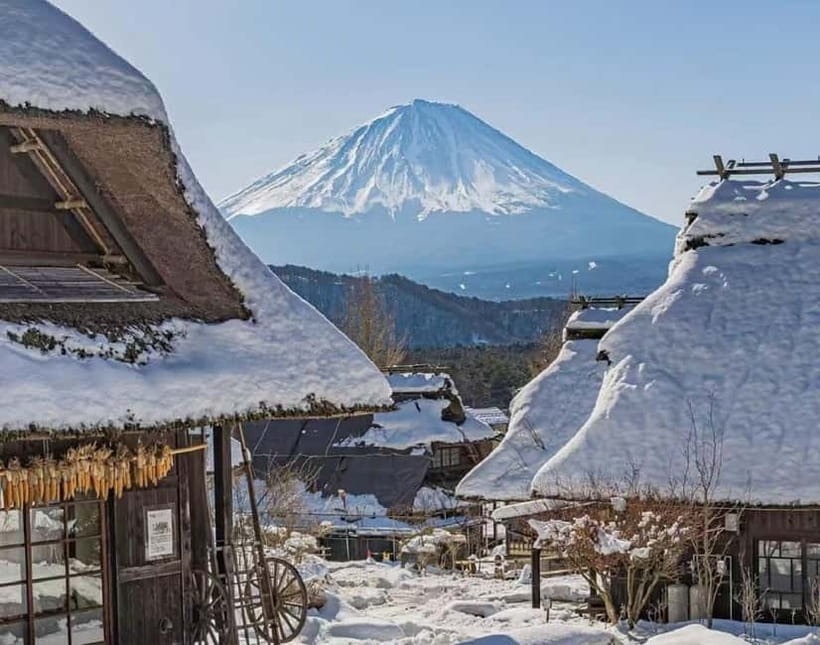
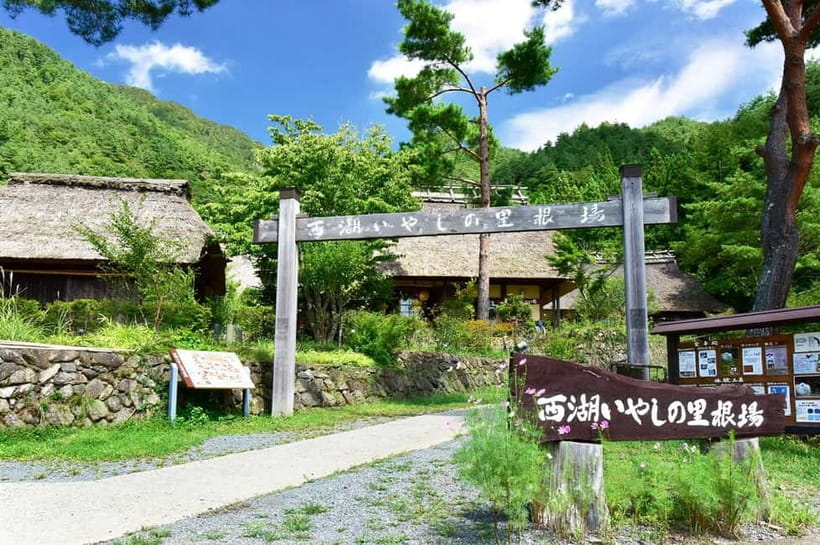
After the long drive from Tokyo, the first major stop is Saiko Iyashi no Sato Nenba, a recreated traditional village beside Lake Saiko. Its thatched-roof houses give you a very different view of the Fuji area from the polished pagoda photograph that comes later.
This is one of the most appealing stops for photos. Fuji can appear behind the low roofs, and the village setting gives your pictures a strong sense of place. The admission fee is included, so you can enter without an extra ticket.
You will have about an hour with a guided visit and time for photos. At the entrance, you can buy Japanese street snacks, which is useful since lunch is not included. You can also rent a ninja costume for an additional fee if you want playful pictures rather than formal travel portraits.
I would use this stop for more than a quick Fuji photograph. Look at the house shapes, walk between the buildings, and allow time for food or small purchases. Shops at the attractions operate independently, so bring cash. Credit cards may not work at every location.
Cloudy weather does not ruin this village stop. Fuji is a bonus here, while the roofs and rural setting remain worth seeing on their own. If you have children, the snack stalls and costume option may make this the most entertaining stop of the morning.
Lake Kawaguchi, Oishi Park, and the seasonal change
The route then moves toward Lake Kawaguchi, one of the most accessible and popular places to view Mt. Fuji. The lake itself is part of the sightseeing route, while Oishi Park provides the main photo stop.
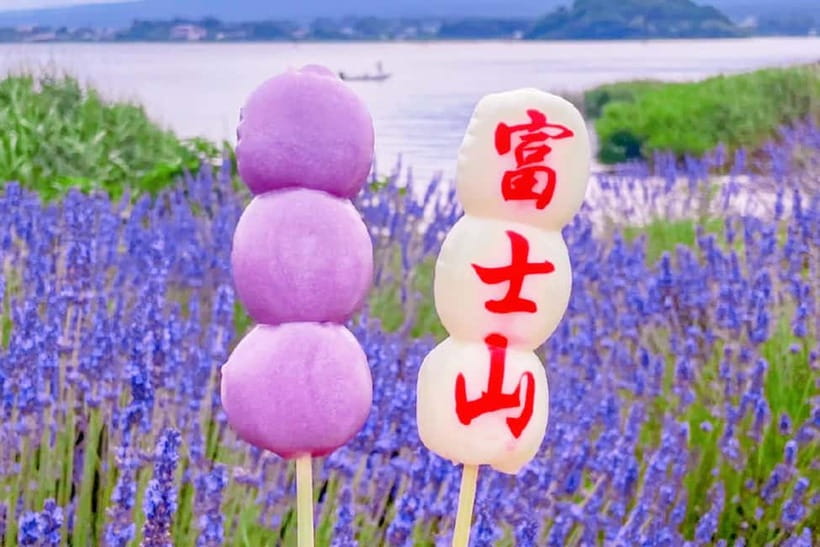
Oishi Park changes with the season. In summer, lavender adds color and scent to the fields. In autumn, red broom grass gives the area a warmer look. With the lake and Fuji nearby, this is an easy place to take broad, open photographs rather than the tighter shrine-and-pagoda composition later in the day.
The planned time at Oishi Park is about 40 minutes. That is enough for a walk, photographs, and a quick look at the seasonal planting, but not enough for a slow visit. Keep an eye on the meeting time. The bus cannot wait for a long stroll along the shore.
There is an important autumn exception. From October 26 through November 20, the tour goes to the Lake Kawaguchi Maple Corridor instead of Oishi Park. During peak fall color, the corridor becomes the better seasonal choice, with red leaves framing views toward the snow-capped mountain when the weather cooperates.
This change is worth noting when you book. If you specifically want lavender, choose a summer date. If fiery foliage is your priority, late October to late November is the more suitable window, but the exact appearance of the leaves depends on nature. You should also expect large crowds around peak autumn color.
Arakurayama Sengen Park and the Chureito Pagoda climb
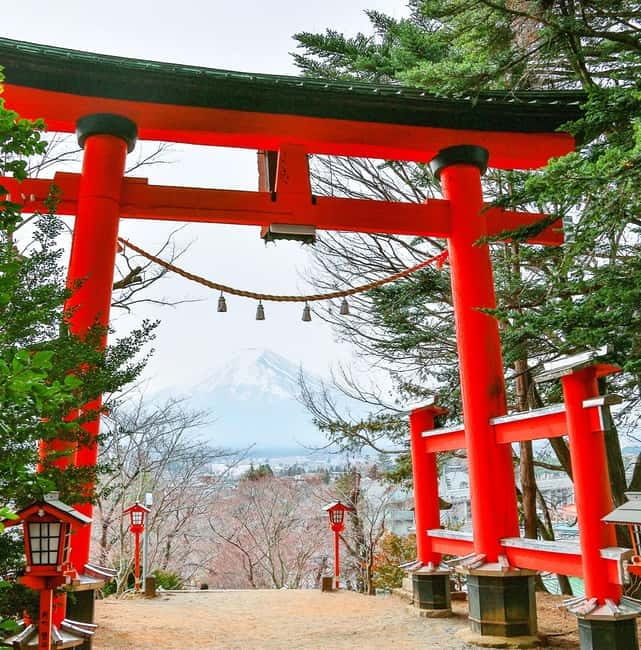
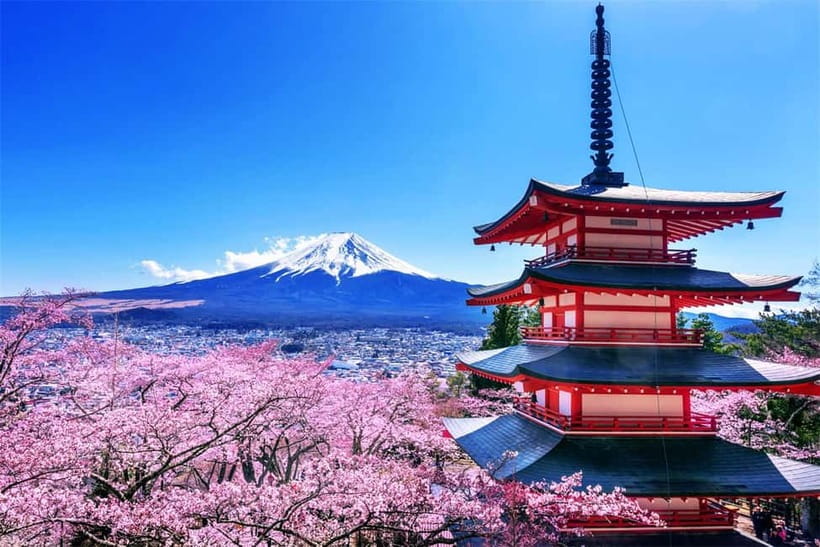
The most famous photograph on the tour comes at Arakurayama Sengen Park. From the hillside, Chureito Pagoda rises in front of Mt. Fuji, creating the image associated with many first visits to the region.
The photo stop lasts about 40 minutes at the park, followed by shorter visits to Arakura Fuji Sengen Shrine and Chureito Pagoda. The key point is simple: you must climb steps to reach the main viewpoint. Comfortable shoes are not optional advice here. Wear footwear you can manage on an uphill stairway and carry water.
The climb is part of the experience, not just an inconvenience. Arakura Fuji Sengen Shrine gives the route a spiritual setting before you reach the high viewpoint. At the top, the pagoda and Fuji line up in the classic composition, though the mountain may be covered by cloud.
You may want a goshuin, a calligraphic shrine stamp, at the pagoda. One useful timing tip is to hand over your goshuin book before climbing the stairs, since the wait can be around 20 minutes. If you leave it until after taking pictures, you may not have enough free time.
The schedule is tight here. You will get the famous view and a short shrine visit, but this is not a long temple or park walk. If climbing stairs is difficult, this tour may not suit you. The activity is not suitable for wheelchair users, and the operator does not present it as an accessible outing.
More Historical Tours in Mount Fuji:
- World Heritage Shirakawa-go and Experience Tours from Kanazawa
★ 5.0 · 4,049 reviews - Tokyo: Imperial Palace and Shogun Historical Walking Tour
★ 5.0 · 2,251 reviews - World Heritage Kyoto & Nara Uji Authentic Matcha Experience
★ 5.0 · 1,573 reviews - Kyoto Gion: 2-Hour Geisha Culture & History Walking Tour
★ 5.0 · 1,186 reviews
The lunch break: practical rather than included
A local restaurant break is scheduled for about 40 minutes, but lunch is not part of the $50 price. You can bring your own meal, buy food at one of the attractions, or follow the guide’s restaurant suggestion.
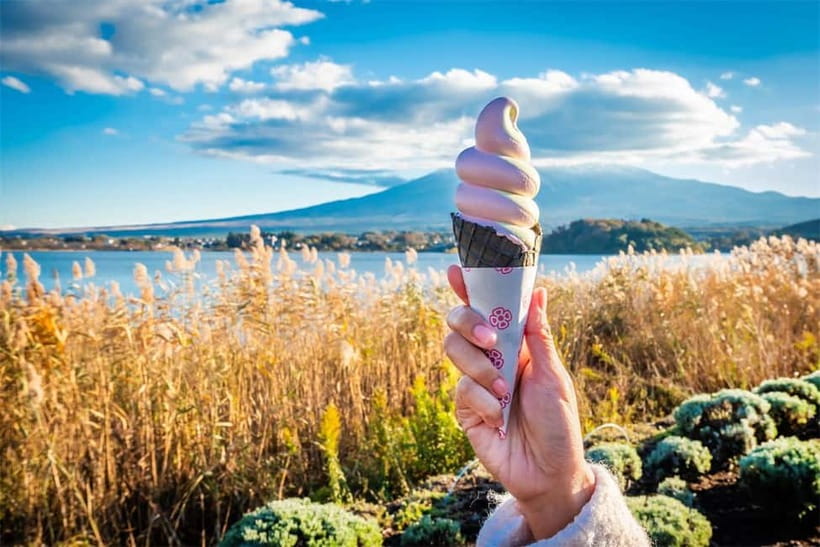
The restaurant choice may be convenient because it keeps the group on schedule, but it is not the only food option in the area. One practical approach is to buy snacks at Saiko Iyashi no Sato Nenba and add something during the day. If you prefer a full meal, ask the guide early about the available restaurant plan.
Guides have sometimes collected lunch orders in advance so food is ready when the group arrives. That can save time, but choices may be limited. Bring cash and do not assume every food stall or shop accepts cards.
Since the return to Tokyo is long, I would avoid treating lunch as your only meal. A bottle of water and a small snack are sensible additions, especially if you are traveling with children.
Oshino Hakkai and its clear spring ponds
The final attraction is Oshino Hakkai, a village area known for eight clear spring ponds fed by melted snow from Mt. Fuji. The water, reflections, and small-scale setting provide a calmer ending after the busier photo stops.
You get about 70 minutes here, the longest sightseeing period of the day. That gives you time to walk around, take pictures, browse the stalls, and sample local food. Freshly made rice crackers and wasabi ice cream are two unusual treats to look for nearby.
Oshino Hakkai works well even when Fuji is hidden. The ponds and village setting give you something to see beyond the mountain. If the sky clears, reflections and mountain views add another layer to the visit.
This stop is also a good place to use your cash. Souvenir shops and food sellers run independently from the tour, and some may not accept credit cards. Keep enough yen for snacks and small purchases rather than spending everything earlier in the day.
After Oshino Hakkai, you return to Tokyo by bus. The planned ride is about two and a half hours, but holiday traffic can extend it. Your guide will provide the vehicle license plate and contact number the night before, which helps if the pickup area is busy.
What the guides add to the day
The guide can make or break a route with this many stops. The most useful service is not a long lecture. It is telling you where to go, when to return, where the toilets are, and how to find the bus again.
Sia receives repeated praise for keeping groups organized, sharing information before each stop, teaching basic Japanese words, and helping people find good photo positions. Kazi is noted for friendly explanations, careful timing, and calm handling of a busy day. Wanting is praised for answering questions and helping even when passengers needed different onward arrangements. Rachel is described as professional with families and good at explaining Japanese customs.
Alex and other guides have also been praised for keeping the day moving. Some passengers would prefer more information about Mt. Fuji and the towns along the route, so you should set your expectations correctly. This is a sightseeing tour with multilingual commentary, not a specialist history seminar.
The service can still be very personal. Guides have helped with large suitcases, supported families with young children, and walked passengers to a bus station when they separated from the group. Those details matter when you are tired or unfamiliar with the area.
Weather, crowds, and the Fuji photo gamble
Every stop is designed around Mt. Fuji, but no tour can control the clouds. Clear views are more likely when conditions cooperate, yet even a well-planned day can turn gray. Several passengers have enjoyed the villages, shrines, and ponds despite missing a clear mountain view.
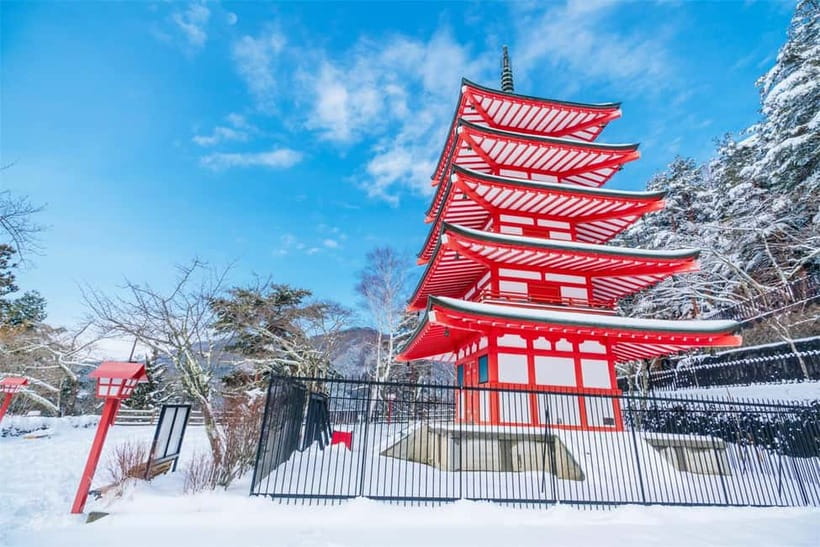
Check the forecast before you leave, but treat it as a guide rather than a promise. If the mountain is hidden, Saiko’s traditional houses, Arakura shrine, the pagoda, and Oshino Hakkai still give you a worthwhile day of Japanese scenery.
Timing also changes the feel of the experience. Autumn foliage brings some of the best color, but it also brings more people. Weekend and holiday traffic can slow the return and may shorten time at a stop. Arrive 15 minutes early at the meeting point, since late arrivals and no-shows are not refunded.
The exact meeting point depends on the option you book, with the Tokyo MODE Gakuen location at 1-chome-5-1 Marunouchi listed as a starting and ending point. Check the final message carefully. The night before, you should receive the guide’s phone number and vehicle license plate.
Who should book this Mt. Fuji tour?
I would choose this tour if you have one free day from Tokyo and want the main Fuji-area sights without renting a car or managing several local buses. It suits first-time visitors, families who value a fixed schedule, and photographers who want several established viewpoints in one outing.
It is also a good match for people who want variety. You get a rural village, lake scenery, seasonal plants, a shrine, a pagoda, spring ponds, snacks, and mountain photographs. Few stops receive enough time for a slow, private visit, but the route gives you a broad taste of the region.
I would think twice if you dislike long coach rides, need a flexible schedule, use a wheelchair, or want an in-depth cultural tour. I would also avoid booking it on a day when you have an important evening reservation in Tokyo.
Cancellation is free up to 24 hours before departure, and you can reserve now and pay later. That is useful when the forecast is uncertain, but it does not remove the basic weather risk.
Should you book it?
Book this tour if your priority is maximum Fuji-area coverage for a low price. The bus saves planning time, admission to the thatched village is included, and the guides are known for careful instructions and friendly support.
Choose another option if you want long walks, a private guide, guaranteed mountain views, or a relaxed lunch. For most first-time visitors with one day available, though, this is a sensible and well-priced introduction to the villages, lakes, shrines, and food around Mt. Fuji.
FAQ
How long does the Mt. Fuji Heritage Tour last?
The tour lasts 10 hours. The outbound and return bus journeys each take about two and a half hours, subject to traffic.
Where does the tour start and finish?
The listed Tokyo meeting and drop-off location is Tokyo MODE Gakuen, 1-chome-5-1 Marunouchi. The exact meeting point may vary according to the option booked.
Is lunch included?
No. You can bring food, buy lunch at the attractions, or eat at a restaurant suggested by the guide. A restaurant break of about 40 minutes is scheduled.
Which languages are available?
Live guiding is available in English, Japanese, and Traditional Chinese. This is a shared group tour, and explanations may be given in several languages.
Will I definitely see Mt. Fuji?
No. Weather may block the mountain, so clear Fuji views are not guaranteed. The tour still visits the traditional village, shrine, pagoda, lake area, and spring ponds.
Does the tour visit Oishi Park in autumn?
From October 26 through November 20, the tour visits the Lake Kawaguchi Maple Corridor instead of Oishi Park. Outside that period, the route includes Oishi Park.
Is the tour suitable for wheelchair users?
No. The activity is not suitable for wheelchair users, and the visit to Chureito Pagoda includes a climb up steps. Comfortable shoes are recommended.
Just added around Mount Fuji
- Ramen Cooking Class at Lake Kawaguchiko (Short Course)★ 5.0 · 42 reviews
- Private Fuji Full-day Car Tour with Hotel Pickup -Local Guide★ 5.0 · 12 reviews
- Sushi Cooking Class at Sushi Factory -KIWAMI- Mt.Fuji★ 5.0 · 23 reviews
- Private Local Hiking to enjoy the nature and culture of Mt.Fuji★ 5.0 · 22 reviews
- Cute & Fun E-Car tour following guide around Lake Kawaguchiko★ 5.0 · 54 reviews
- Ramen Cooking Class at Ramen Factory in Mt.Fuji★ 5.0 · 101 reviews
- Fujisan Sushi Making Lesson★ 5.0 · 16 reviews
- Early Morning Kayaking With Views of Mt Fuji at Lake Kawaguchiko★ 5.0 · 69 reviews
Temples & Shrines, compared.

Tea Ceremony in a Traditional Tea House in Kiyomizu
Our verdict →
Meiji Shrine, Asakusa, Skytree Bus Tour and Cruise
Our verdict →
Fushimi Inari Hidden Hiking Tour (Private Option Available)
Our verdict →
Osaka/Kyoto:Kinkakuji,Arashiyama,FushimiInariShrine,NaraPark
Our verdict →
Nikko: Kegon Falls, Lake Chuzenji & Toshogu Temple
Our verdict →
Kamakura & Enoshima Day Trip including Temple Tickets
Our verdict →Browse the lists this tour appears in