
Reviewed · MORNING
Nara Early Morning Tour (Kyoto or Osaka Departure Available)
Nara is at its most peaceful early in the day, when the forest paths are quiet, the shrine lanterns feel more atmospheric, and the deer have not yet been surrounded by crowds. This small-group morning walk takes you through four major sights in about four and a half hours, with an English-speaking guide to explain what you are seeing.
I especially like the maximum group size of 12, which gives guides such as Momoka, Nana, Haruka, and Futaba room to answer questions and adjust the pace. I also like the balance between temples, shrine grounds, woodland paths, and deer in Nara Park. The tradeoff is simple: expect around 10,000 steps, pay ¥800 extra to enter Todai-ji, and arrange your own ride back to Kyoto or Osaka.
Key points to know before booking
- Early start, lighter crowds: You reach Nara’s best-known sights before the busiest part of the day.
- Four major stops: The route includes Kofuku-ji Temple, Kasuga Grand Shrine, Nara Park, and Todai-ji Temple.
- Small groups: A maximum of 12 people keeps the walk more personal than a large coach outing.
- Strong guide element: Guides including Momoka, Nana, Haruka, Koh, Koichiro, and Futaba are praised for clear explanations, patience, and useful local advice.
- Plan for a long walk: The tour covers about 10,000 steps and requires a moderate level of fitness.
- Know the extra costs: Transport from Kyoto or Osaka is included only with the selected option. Return transport, food, drinks, and the ¥800 Todai-ji entrance fee are not included.
Why an early Nara visit makes sense
Nara is easy to underestimate. On a map, the main sights seem close together. On foot, with temple grounds, shrine approaches, woodland paths, and deer-filled parkland between them, the morning becomes a substantial outing.
The early timing is the main reason to choose this tour instead of visiting later on your own. Nara Park can become crowded, especially around the deer and the approaches to Todai-ji. Starting early gives you a quieter look at the site and makes it easier to hear your guide without competing with a large crowd.
You are not simply moving from one photo stop to another. The route shows how Nara connects imperial power, Buddhism, Shinto practice, nature, and local custom. A good guide can explain why the deer are treated with respect, how the old capital developed, and what to look for in the buildings and religious spaces.
The small group is another real advantage. Guides such as Nana and Haruka are praised for keeping the pace comfortable and leaving time for questions and photos. Momoka is repeatedly described as attentive and good at drawing people into the conversation, while Futaba has been praised for staying in contact around the meeting point and using quizzes to make Japanese culture easier to understand.
The tour begins and ends in Nara Park. If you choose the Kyoto or Osaka departure option, the transport fee to Nara is included. Read that detail carefully when booking, since the basic meeting point is still listed as Nara Park, and your journey home is not covered.
More Morning Tours in Nara:
- From Kyoto: Nara Guided Morning Tour
★ 4.6 · 335 reviews - Kyoto Early Morning Tour with English-Speaking Guide
★ 5.0 · 1,427 reviews - Kyoto: Early Morning Tour with English-Speaking Guide
★ 4.9 · 1,128 reviews
Kofuku-ji Temple and Nara’s first glimpse of the past
The first stop is Kofuku-ji Temple, with about 30 minutes allocated for the visit. The temple was established in 710, the same year Nara became Japan’s capital, so it gives your guide an immediate way to place the city in its national setting.
Kofuku-ji is best known for its five-storied pagoda. It is the second-tallest wooden pagoda in Japan, only seven meters shorter than the tallest. Even if you are not deeply interested in Buddhist architecture, the pagoda makes a strong first impression and gives you a clear sense of the scale and craftsmanship found throughout Nara.
The short stop is useful because it sets the tone without trying to cover every building in detail. Your guide can point out the main features, explain the temple’s role, and help you understand why Nara became such an important religious center.
Thirty minutes is enough for an introduction, but not for a slow, independent exploration of the full temple complex. If Kofuku-ji is a personal priority, you may want to return after the tour. For most people, though, the brief visit works well as the opening chapter of a longer morning.
Kasuga Grand Shrine and its lantern-lined forest
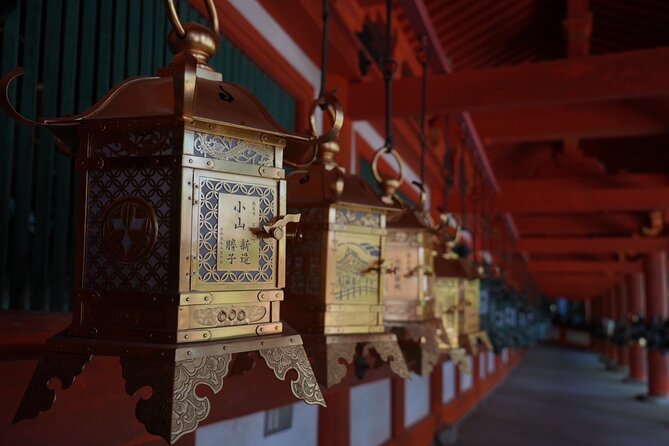
The tour allows about an hour at Kasuga Grand Shrine, one of Nara’s most atmospheric stops. The shrine is famous for its lanterns, with approximately 3,000 stone and bronze examples donated by worshippers.
This is where the early hour pays off most clearly. The approach through the trees feels calm, and the lanterns create a visual link between the natural setting and the sacred buildings. You get a different mood here from the open spaces around Kofuku-ji and the huge interior of Todai-ji.
Kasuga Grand Shrine is a Shinto site, so your guide can help explain customs and symbols that are easy to miss if you walk through alone. The guides are especially useful here because the appeal is not limited to one famous structure. The forest path, lanterns, worship practices, and surrounding stories all form part of the visit.
The hour is generous enough for photographs and questions, though the walk itself contributes to the total step count. Wear shoes that you can comfortably use for several hours and expect uneven or extended walking rather than a quick transfer between monuments.
Nara Park and the deer encounter
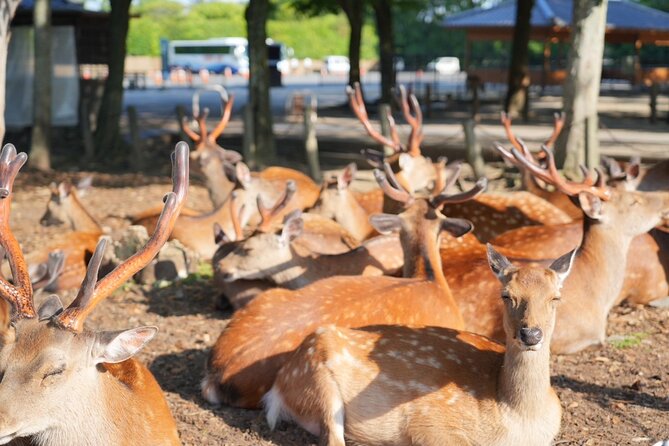
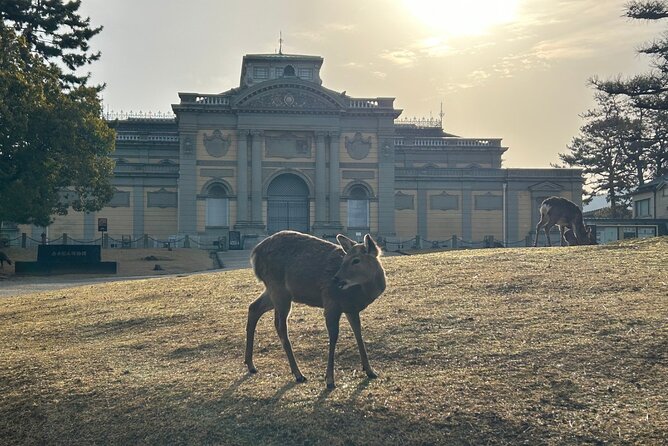
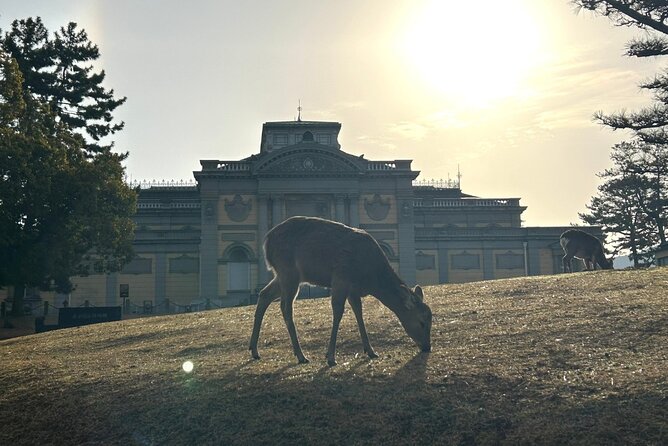
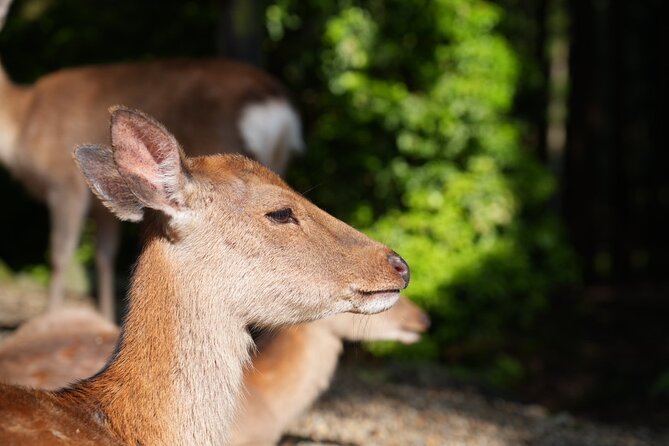
Nara Park is the most playful part of the morning, but it is also the place where a little common sense helps. The park is home to thousands of wild deer, regarded as sacred because one of the four gods associated with Kasuga Shrine is said to have ridden a deer to Nara.
You may have the chance to feed the deer with special biscuits. The deer often bow in response to food, which is charming, but they are still large, lively animals. One review jokingly described an experienced guide as a deer handler, and the point is practical: your guide can help you understand how to approach them and when to stop feeding.
The park stop is listed at about 30 minutes, but the deer experience also connects the shrine and temple portions of the route. You are walking through a place where religion, local tradition, and daily tourism meet. That mixture is one reason Nara feels different from a standard temple visit.
Keep food and ordinary snacks away from the deer, and follow your guide’s instructions. The tour information confirms that the deer are wild, so this is not a controlled animal encounter. Families often enjoy this section most, and children can take part, but children under six cannot join the tour itself.
A few more Nara half-days worth comparing
- World Heritage Kyoto & Nara Uji Authentic Matcha Experience
★ 5.0 · 1,573 reviews - Kyoto/Osaka: Nara, Fushimi Inari Taisha, Arashiyama Bus Tour
★ 4.7 · 1,275 reviews - Nara Half Day Trip Walking Tour (Private Option Available)
★ 5.0 · 937 reviews - Osaka/Kyoto: Arashiyama, Nara & Fushimi Inari Shrine w/Lunch
★ 4.4 · 754 reviews
Todai-ji and the Great Buddha
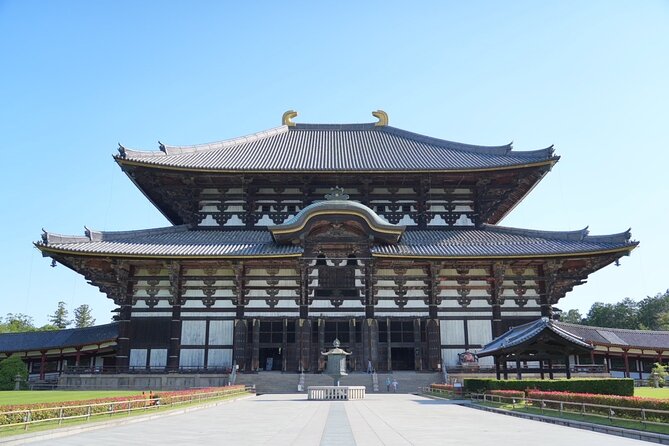
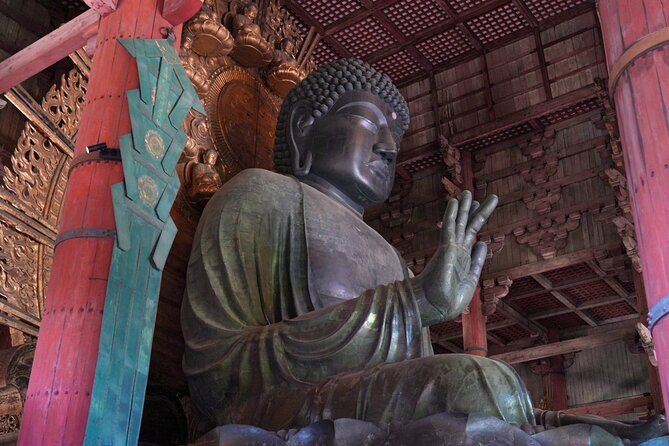
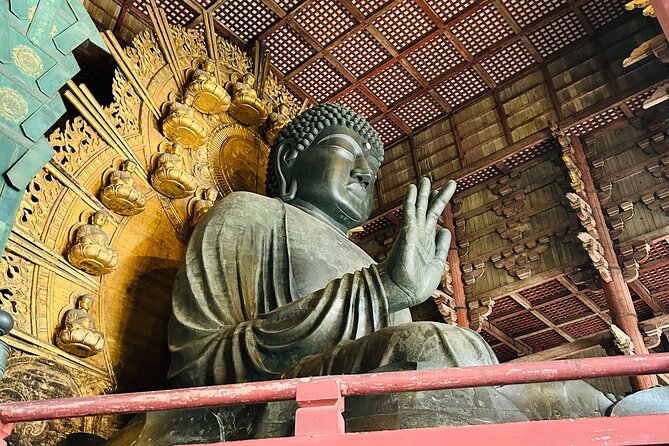
Todai-ji receives about an hour, making it the most substantial temple visit of the morning. The temple is famous for its Great Buddha, described as the biggest Buddha statue in Japan. Its main hall was also, until recently, the world’s largest wooden building.
The scale is the point. After the more intimate lanterns and forest paths at Kasuga, Todai-ji gives you a dramatic change of size. The hall is enormous, and the Great Buddha provides a powerful finale to the religious and architectural story that began at Kofuku-ji.
Your guide can explain the building’s importance, Buddhist ideas connected with the statue, and the long development of Nara as a sacred city. Guides such as Koichiro have been praised for explaining Japanese history, religion, culture, and local folklore in a way that answers questions without wandering too far off topic.
Todai-ji admission is not included. The listed fee is ¥800 per person, so add that to the tour price. This is worth knowing before you set out, since the temple is one of the main reasons to book the experience. You should also leave enough time after the tour if you want to explore the grounds more slowly.
What the guide adds to the morning
You can visit Nara’s main sights without a guide. The value of this experience comes from the connections made between them.
A guide can tell you why Kofuku-ji is tied to the founding of the capital, what the lanterns at Kasuga Grand Shrine represent, why the deer are considered sacred, and how Todai-ji fits into Nara’s Buddhist story. That context turns four attractive stops into one coherent visit.
The guide style seems to vary by person, but the strongest pattern is clear. Momoka is praised for her friendly manner, clear explanations, local tips, and ability to involve the whole group. Nana is noted for explaining key historical events. Haruka is valued for her relaxed pacing and help with returning to Kyoto and finding restaurants.
Koh has been praised for making train travel and meeting arrangements easy, while Futaba is described as warm, approachable, and good at using quizzes. Koichiro is singled out for his command of history, religion, culture, and local folklore. Other guides named by participants include Natsuho, Shin, Ayame, Toshiki, Ginko, Kevin, Itsuku, and Soichiro Toide.
You cannot normally select a particular guide, so treat those names as examples of the guiding style rather than a promise. What you can expect is an English-speaking guide in a group capped at 12, with time for questions and some practical suggestions beyond the formal route.
Walking, transport, and the real cost
The listed price is $61.02 per person. For a four-and-a-half-hour guided visit covering four major Nara sights, that is a reasonable price if you value explanation and convenience more than exploring alone.
The value is stronger when you use the Kyoto or Osaka departure option and want help getting to Nara. The included transport fee applies only if you choose that option. Your return transport is not included, so budget for the train or other ride back to Kyoto or Osaka.
You will also pay for Todai-ji separately at ¥800 per person. Food and drinks are not included, so bring money or refreshments for after the tour. The exact meal plan is not part of the experience, and the schedule is built around sightseeing rather than a food stop.
The walk is listed at about 10,000 steps. That makes the tour a poor match for anyone seeking a short, low-effort visit, even though the pace is often described as relaxed and well managed. Comfortable walking shoes are more important here than stylish footwear.
The tour requires a moderate level of physical fitness and is not recommended for people over 75. It is also unavailable to children under six. Those limits are worth taking seriously because the route combines distance, standing, temple grounds, and outdoor paths.
Who will get the most from this tour
I would choose this tour if you have only one morning for Nara and want to see the essential sights with a clear historical thread. It suits first-time visitors, families with children aged six or older, and anyone who prefers asking questions rather than reading signs on their own.
It also works well during a busy travel period. The early start helps you avoid the worst crowds, and the small group makes the walking portions easier to manage. If you like photography, the quiet morning light and less crowded shrine and park areas are useful advantages.
You may prefer an independent visit if you want to set your own pace, spend half a day inside Todai-ji, or linger at one temple. The fixed route and four-and-a-half-hour schedule leave less room for long personal detours.
You should also think carefully about the return journey. Since the tour ends in Nara Park and does not include transport back to Kyoto or Osaka, you need to be comfortable arranging that part yourself. Guides may offer practical advice, but the cost and planning remain yours.
Should you book the Nara Early Morning Tour?
Book it if you want a well-paced introduction to Nara before the crowds arrive, especially if you value an English-speaking guide and do not want to work out the cultural context on your own. The combination of Kofuku-ji, Kasuga Grand Shrine, Nara Park, and Todai-ji gives you a strong half-day overview.
The biggest reasons to go are the early timing, small group, and guides who make room for questions and practical advice. The biggest cautions are the 10,000-step walk, the extra ¥800 temple fee, and the fact that you must arrange your own return transport.
For most first visits, I think the tour offers good value at $61.02, provided you are ready for a proper walking morning. If you want quiet paths, sacred sites, deer, and the Great Buddha in one compact outing, this is a sensible way to see Nara.
FAQ
How long does the Nara Early Morning Tour last?
The tour lasts approximately 4 hours and 30 minutes.
Where does the tour start and end?
The listed start and end point is Nara Park in Nara, Japan.
Can I join from Kyoto or Osaka?
Yes. An option is available that includes the transportation fee from Kyoto or Osaka to Nara. You must select that option when booking.
Is transportation back to Kyoto or Osaka included?
No. The return transportation fee is not included, so you must arrange and pay for your return journey from Nara.
Is Todai-ji admission included?
No. Entrance to Todai-ji costs ¥800 per person and is paid separately.
How large is the group?
The tour has a maximum of 12 participants.
How much walking is involved?
You will walk about 10,000 steps and should have a moderate level of physical fitness.
Can young children or older adults join?
Children under six cannot join. The tour is not recommended for people over 75.
Just added around Nara
- Private Kyoto Tour by Car with Optional Nara or Osaka Add-Ons★ 5.0 · 36 reviews
- Kyoto, Osaka, Nara Private Tour by Car English Driver Guide★ 4.0 · 63 reviews
- Nara Todaiji Kasuga Taisha Private Full Day Tour From Kyoto★ 5.0 · 13 reviews
- From Kyoto: Nara History Guided Half Day Bus Tour with lunch★ 5.0 · 23 reviews
- Nara 8hr Private Tour – Kyoto DEP. with Licensed Guide★ 5.0 · 115 reviews
- Arashiyama & Nara Highlights: One-Day Private Tour Adventure★ 5.0 · 16 reviews
- Kyoto Private Car Tour – Full Day with Local Guide & Nara Option★ 5.0 · 169 reviews
- Kyoto & Nara Private Tour from Osaka Kyoto Hotel Pick-up★ 4.5 · 32 reviews
Morning, compared.
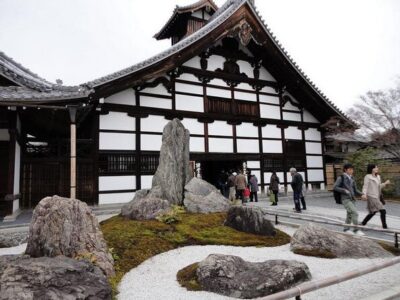
Kyoto Early Morning Tour with English-Speaking Guide
Our verdict →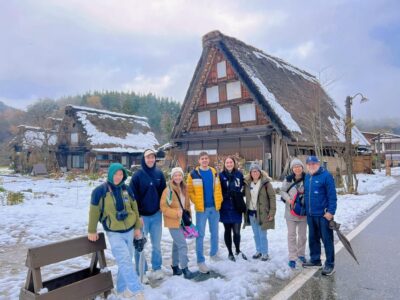

Private-group Morning Cycling Tour in Hida-Furukawa
Our verdict →
Explore Hidden Alleyway with a Local Expert (Morning tour)
Our verdict →Browse the lists this tour appears in