
Reviewed · TEA CEREMONY EXPERIENCES
Kyoto: Nara & Traditional Matcha Experience Bus Tour
Nara’s deer are the headline, but the best part of this day is the mix: Todaiji’s enormous Great Buddha, lantern-lined Kasuga Taisha, and a hands-on matcha session in Uji. Guides such as Nanami, Mai, At-Chan, and Tsubasa add useful history, simple Japanese phrases, and practical help throughout the day.
I like the comfortable coach and the way the tour links three major heritage sites without making you change trains. I also like the balance of guided visits and free time for photos, snacks, and tea shopping. The catch is pace: you cover a lot in 510 minutes, and the temples involve stairs, hills, and plenty of walking.
Key points to know before booking
- Three major heritage stops: Visit Todaiji, Kasuga Taisha, and Byodoin Temple in one organized day.
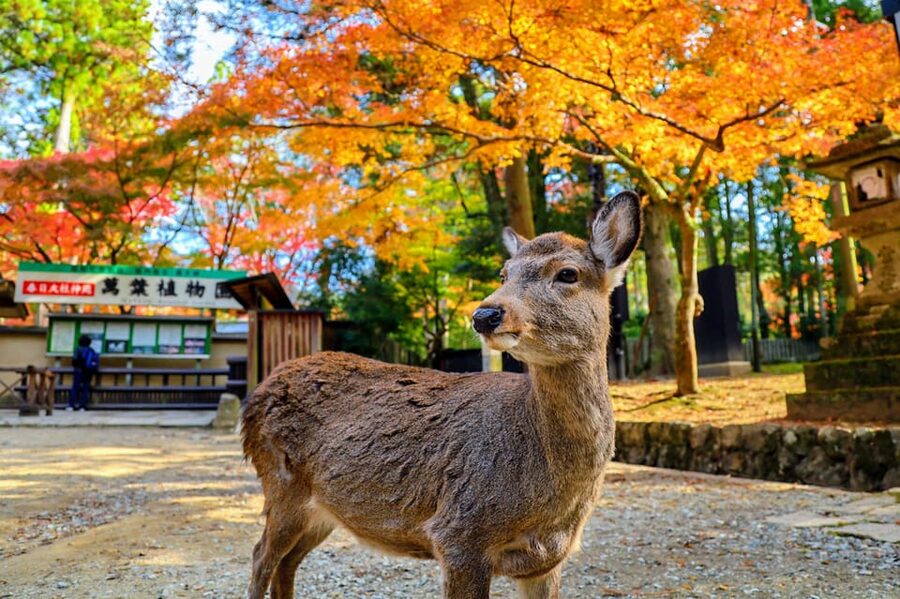
- Deer in Nara Park: Buy rice crackers locally and feed the wild deer, which may bow before asking for more.
- Matcha made by hand: Learn how Uji green tea becomes fine powder, then prepare it yourself.
- Strong guide support: Guides including Nanami, Mai, At-Chan, Yuta, Rina, and Tsubasa are praised for clear explanations and personal care.
- Long but efficient day: The 8:00 AM departure and 5:30 PM return give you a broad taste of Nara and Uji.
- Optional Japanese lunch: Add the meal when booking, or arrange your own food during the lunch break.
Why this Nara and Uji day works
At $122 per person, this is not the cheapest way to reach Nara. You could take trains and visit some sites independently for less. But the price includes a full-day air-conditioned coach, English guidance, admission to Todaiji and Byodoin, the matcha session, and the chance to see several major sights without piecing together a complicated route.
I see the value in the connections. Nara and Uji are both easy day trips from Kyoto, but fitting them together by public transport takes planning, transfers, and careful attention to closing times. Here, you board once near Kyoto Station and let the guide manage the day.
The schedule is full, not frantic. You get a short visit at Kasuga Taisha and Nara Park, more time at Todaiji, a lunch break, then a longer stop at Byodoin and Uji. Traffic, weather, and operational needs can change the order, so you should treat the timetable as a working plan rather than a promise.
The bus has air conditioning, free Wi-Fi, regular ventilation, and an antibacterial coating. That matters after a morning of walking, especially in warm weather. The coach also gives you a place to rest between stops instead of spending those same hours navigating stations.
More Bus Tours in Nara
- Kyoto/Osaka: Nara, Fushimi Inari Taisha, Arashiyama Bus Tour
★ 4.7 · 1,275 reviews - From Osaka or Kyoto: Kyoto and Nara 1-Day Bus Tour
★ 3.5 · 141 reviews - From Kyoto: Nara History Guided Half Day Bus Tour with Lunch
★ 4.8 · 114 reviews
Meeting the group near Kyoto Station
The meeting point is in front of Tully’s Coffee at the Kyoto Avanti Store, at 31 Higashikujo Nishisannocho. Check-in is at 7:50 AM, with departure at 8:00 AM. Look for the green and white Japan Panoramic Tours flag.
Allow extra time to find the spot. Kyoto Station is large, and one traveler found the meeting area difficult to reach while crossing the station. The company helped in that case, but you should not count on a late departure. Latecomers and no-shows are not eligible for refunds or changes.
The early start is useful. It gives you a better chance of reaching Nara before the day becomes crowded, and it leaves enough time for Uji later. You will want breakfast before boarding or something easy to carry, since the first scheduled meal break comes after the morning sightseeing.
Kasuga Taisha and Nara’s lanterns
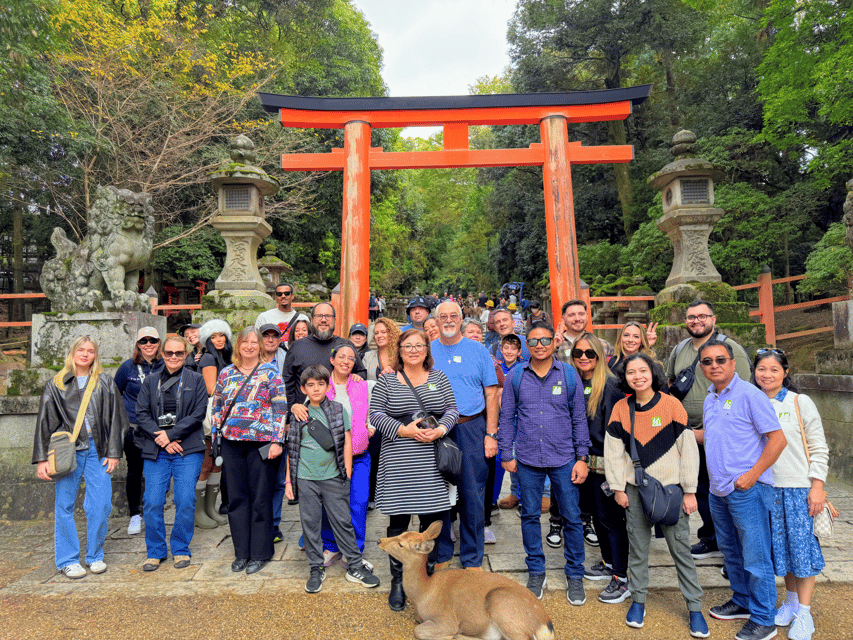
The first formal stop is Kasuga Taisha, one of Nara’s most atmospheric shrines. The visit lasts about 30 minutes, enough to see the shrine approach and its famous stone lanterns without spending the entire morning here.
The shrine is known for roughly 3,000 stone lanterns, which create a memorable path through the wooded grounds. Your guide can explain the role of the shrine and the customs involved in visiting, while you focus on the details that are easy to miss when exploring alone.
Thirty minutes is short. You will not have time to inspect every corner or wander far from the meeting point. Stay aware of the group and listen carefully for instructions. This is a preview rather than a full Kasuga Taisha visit, but it gives you one of Nara’s defining sights early in the day.
Feeding the deer in Nara Park
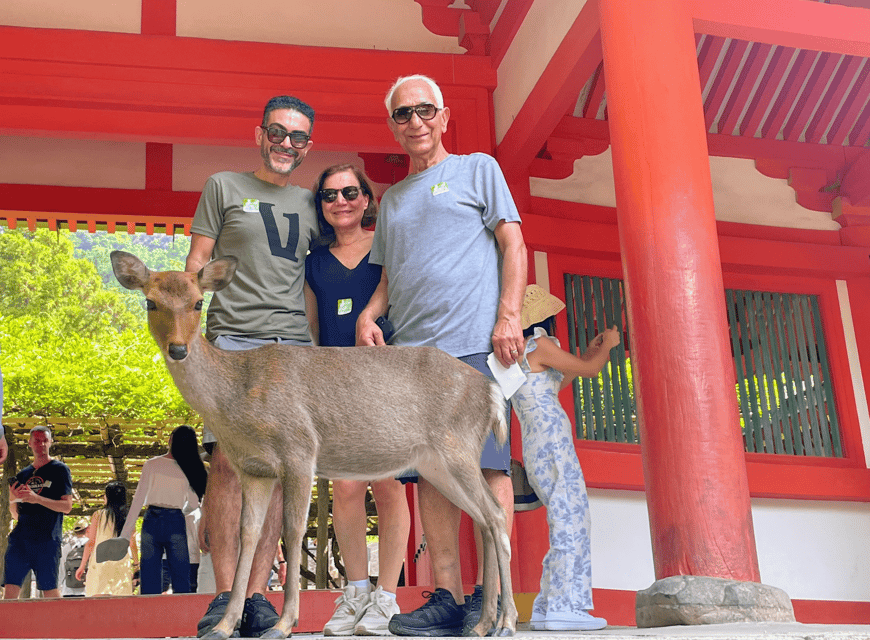
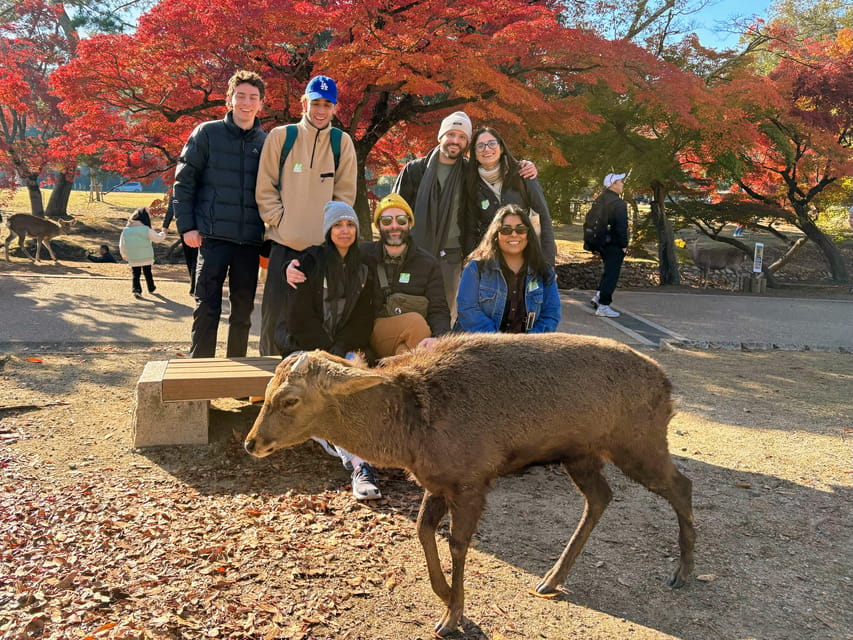
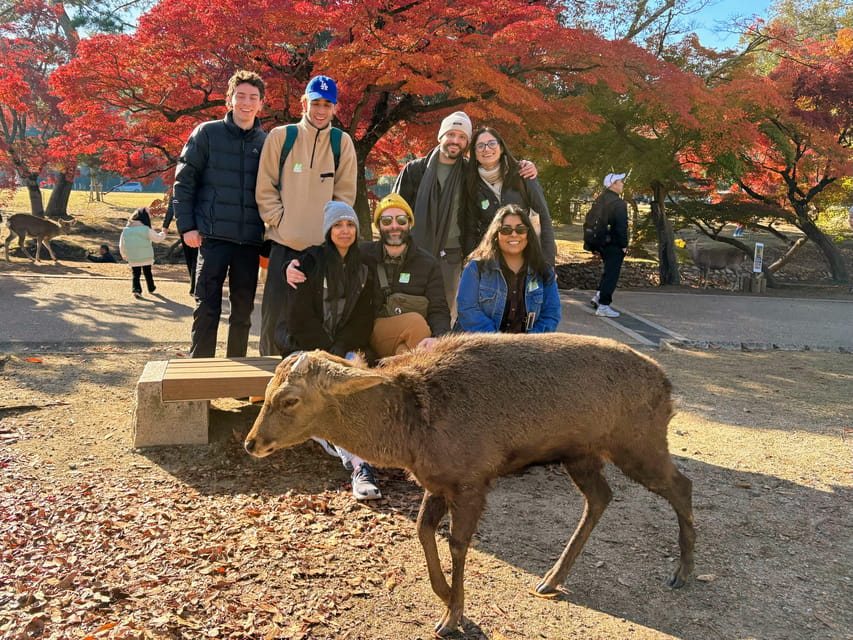
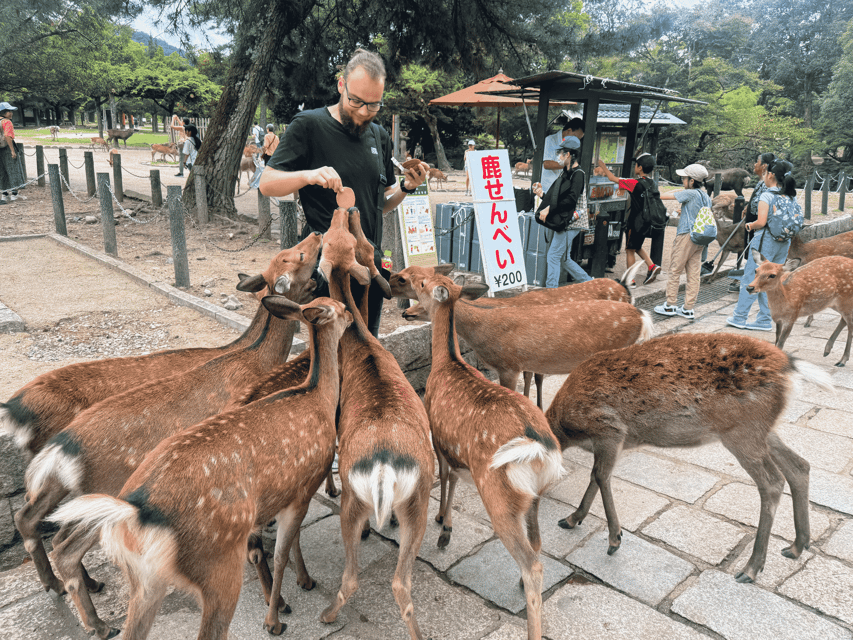
Nara Park is next, with around 30 minutes set aside for a close look at the famous wild deer. This is one of the most memorable parts of the day because the animals are not behind fences. They wander through the park and approach people who hold out rice crackers.
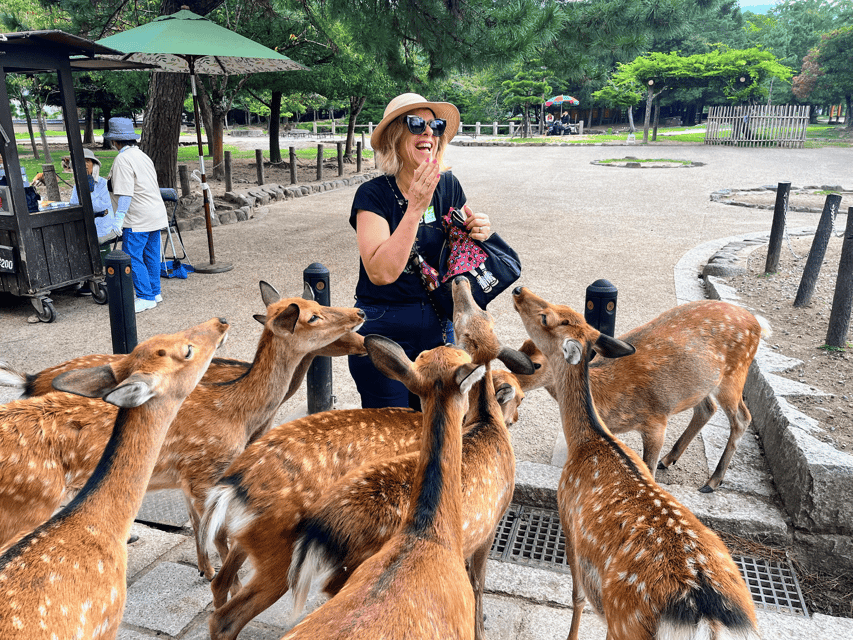
Buy the deer crackers from a roadside stall, not ordinary food from your bag. Hold out one cracker at a time, and once you run out, show the deer your empty hands. Some may bow, but do not expect every animal to perform on cue.
The deer are cute, but they are still animals. One visitor warned that they can bite, and that is useful advice. Keep paper, maps, and food away from curious mouths, and do not tease an animal by holding a cracker out of reach.
Thirty minutes can pass quickly, especially if you stop for photos. The guide helps you understand where to meet the deer and how to feed them safely. Guides such as Nanami and At-Chan have been especially praised for keeping groups together while making the park easy to enjoy.
More Tea Ceremony Experiences in Nara:
- World Heritage Kyoto & Nara Uji Authentic Matcha Experience
★ 5.0 · 1,573 reviews - Nara:Authentic Tea Ceremony(Max 5 ppl) -Master Matcha Making
★ 5.0 · 119 reviews - Nara:5 Type of Tea Tasting & Mindful Tea Ceremony
★ 5.0 · 28 reviews - Kyoto: Tea Ceremony in a Traditional Tea House in Kiyomizu
★ 4.9 · 3,519 reviews
Todaiji and the Great Buddha
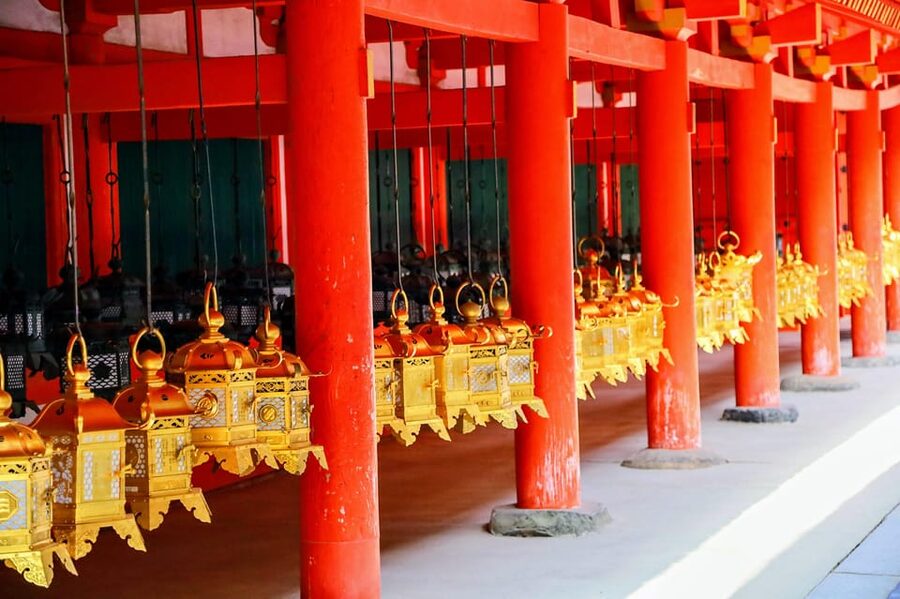
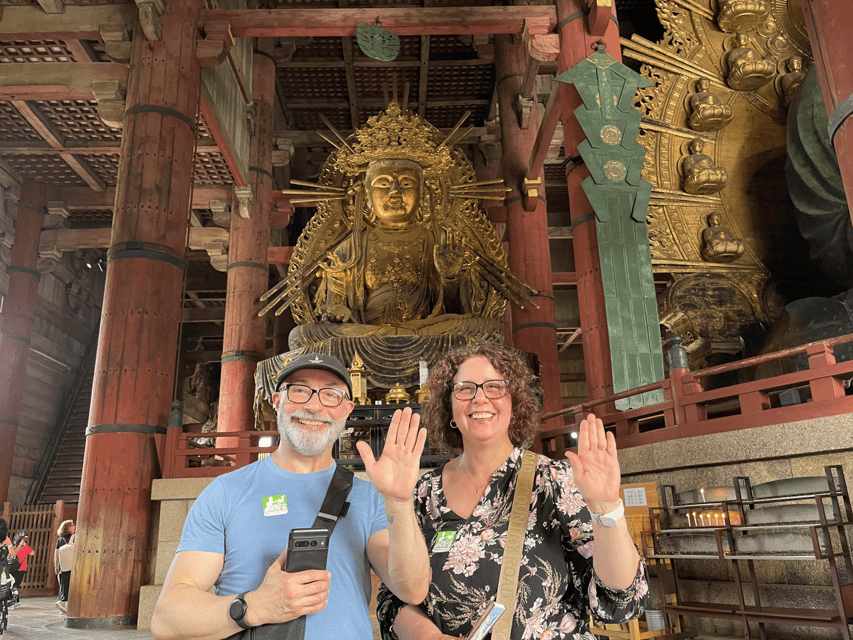
Todaiji receives the longest morning visit, about 50 minutes. This is the major architectural stop, and the central Daibutsuden Hall houses the Great Buddha of Nara, a huge bronze statue inside one of the world’s largest wooden buildings.
The scale is the point. You enter the hall and immediately get a sense of how much timber, labor, and religious purpose went into the structure. Your English-speaking guide provides the background, while the included admission saves you from handling another ticket during a tight schedule.
Todaiji and Nara Park sit close together, so the morning has a sensible rhythm. You see the deer, walk toward the temple, and then spend time inside the hall. Still, the route is not flat. Expect stairs, slopes, and a fair amount of standing and walking.
The English commentary is supported by audio headsets in French, German, Italian, Portuguese, Spanish, and Ukrainian. The live guide speaks English, so this tour is best suited to travelers who can follow spoken English. The audio system is helpful for those who prefer information in another listed language.
Lunch and the optional Japanese meal
After Nara, the coach heads toward Uji for about an hour. Lunch is scheduled at a local restaurant and lasts around 50 minutes. You can add a Japanese lunch when booking, or make your own arrangements during the break.
The supplied meal is described as a traditional Japanese lunch and is a practical choice if you want the day handled for you. It removes the need to search for food with a group schedule in mind. Vegetarian arrangements are possible if requested at least two days before the tour date.
If you book at the last minute, you should expect the regular meal rather than a special arrangement. Additional drinks and food are not included, so bring cash and water. Cash is also useful for deer crackers, small snacks, and purchases in Uji.
Byodoin Temple and the Phoenix Hall
Byodoin is the afternoon’s main temple stop, with about an hour to explore. Its Phoenix Hall appears on Japan’s 10 yen coin, so you may already recognize the building before you arrive. Seeing it in person gives that familiar coin image a real setting and a sense of proportion.
The temple is part of the Historic Monuments of Ancient Kyoto UNESCO World Heritage Site. The grounds offer a quieter change after Nara’s busy park and large Todaiji hall. You get time for photos and for a closer look at the temple setting before moving on.
An hour is a useful amount of time here. It is long enough to see the principal building and absorb the atmosphere, but not long enough for a slow, detailed study of every feature. If temple architecture is your main interest, you may wish for more time. For a first visit that also includes Nara, the stop is well judged.
Your guide can connect the building to Japanese Buddhist art and architecture, then direct you toward the next meeting point. Guides including Yuta, Harry, and Rina have been praised for explaining cultural details clearly and helping the group keep to schedule.
Making Uji matcha from scratch
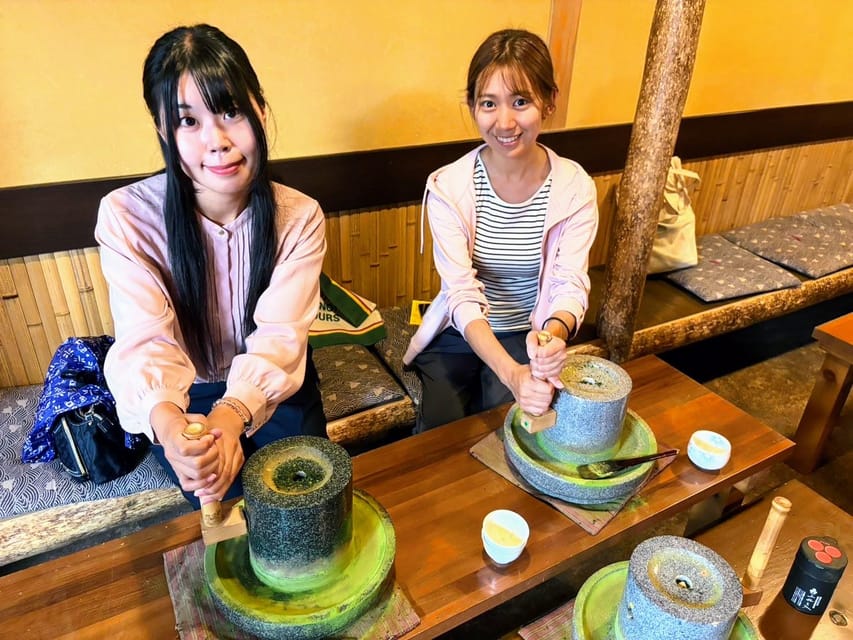
The final major activity takes place in Uji, the area most closely linked with matcha on this tour. You learn that matcha is finely ground green tea powder, then prepare it yourself during a session lasting about 70 minutes, combined with free time.
This hands-on part gives the day a different shape. At the temples, you look and listen. In Uji, you handle the tea and take part in the process. The cup you make may taste more meaningful because you have learned how it is produced and prepared.
The session is not only about tea ceremony manners. Matcha is also used in sweets and cooking, and Uji has plenty of small shops, restaurants, and tea sellers nearby. Use your free time for tea, snacks, and souvenirs, but remember that purchases are your own expense.
The matcha activity is one of the strongest reasons to choose this tour over a standard Nara day trip. It turns Uji from a quick photo stop into a place where you do something connected to the area’s food culture.
Guides who make the schedule easier
The guide can shape the day more than any individual landmark. The company uses different English-speaking guides, and names frequently associated with this tour include Nanami, Mai, At-Chan, Tsubasa, Yuta, Rina, Aoi, Den, and Harry.
Several guides add short Japanese lessons during the bus rides, including numbers and simple phrases. That is a smart use of travel time, especially if you are new to Japan. Some also use handmade visual aids to explain temples, customs, and the day’s route.
The practical help matters just as much. At-Chan helped one person locate the Tsuen tea shop during free time, while another guide helped a guest who had gone off track. A guide also lent a neck fan to someone struggling with the heat. Those details show the sort of personal attention you can reasonably hope for, though the exact guide varies by departure.
The coach driver matters too. The route includes busy roads between Kyoto, Nara, and Uji, and traffic can affect the schedule. The driver and bus are frequently praised for being clean, comfortable, and punctual, but you should still expect changes if roads or weather slow the group.
Walking, pace, and who should book
This is not a suitable choice for wheelchair users or people with major mobility impairments. The route includes stairs and hills, and you need to move between the coach, temples, shrines, park paths, and meeting points.
You should wear comfortable shoes and bring water. The day lasts 510 minutes, or eight and a half hours, so even short walks add up. Summer can feel hot, while busy periods can make the temple approaches slower.
I would recommend this tour to a first-time visitor who wants Nara and Uji in one day without handling transport. It also suits families and older couples who appreciate clear directions, although anyone with limited mobility should choose a different plan.
Independent explorers may find the schedule too fixed. You will not have unlimited time at Kasuga Taisha, Nara Park, or Byodoin, and the group must leave together. The trade-off is that you can see more places with less planning.
Cancellation and booking flexibility
You can cancel up to 24 hours before departure for a full refund, and the reserve-now, pay-later option keeps your plans flexible. That is useful when your Kyoto schedule depends on weather or changing train plans.
The tour may replace a stop if a site closes. The order can also change because of traffic, weather, or operational reasons. Keep this in mind if you are booking around a fixed dinner reservation after the return to Kyoto.
Should you book this Nara and Uji tour?
Book it if you want a broad, well-supported day with Nara’s deer and temples, Byodoin’s Phoenix Hall, and a real matcha activity in Uji. The strongest value comes from the combination of admissions, transport, guide support, and the chance to avoid planning two separate outings.
Skip it if you prefer slow temple visits, long meals, or complete control over your route. For most first-time visitors staying in Kyoto, though, this is a practical way to cover two rewarding day-trip areas in one outing. Arrive early, wear good shoes, bring cash, and save room in your bag for Uji tea.
FAQ
Where does the tour meet?
Meet in front of Tully’s Coffee at the Kyoto Avanti Store, 31 Higashikujo Nishisannocho, Minami Ward, Kyoto. Check-in is at 7:50 AM, and departure is at 8:00 AM. Look for the green and white Japan Panoramic Tours flag.
How long does the tour last?
The tour lasts 510 minutes, or eight and a half hours. It departs at 8:00 AM and returns to the same Kyoto meeting point after the Uji visit.
Is lunch included?
Lunch is included only if you select the lunch option. The meal is Japanese, and vegetarian arrangements can be made up to two days before the tour date. Last-minute bookings receive the regular meal arrangement.
Which languages are available?
The live tour guide speaks English. Audio headsets are available in French, German, Italian, Portuguese, Spanish, and Ukrainian.
Is the tour suitable for wheelchair users?
No. The tour is not suitable for wheelchair users or people with mobility impairments because the route includes stairs and hills.
What happens if I need to cancel?
You can cancel up to 24 hours before the tour for a full refund. Latecomers and no-shows do not receive refunds or changes.
Just added around Nara
- Private Kyoto Tour by Car with Optional Nara or Osaka Add-Ons★ 5.0 · 36 reviews
- Kyoto, Osaka, Nara Private Tour by Car English Driver Guide★ 4.0 · 63 reviews
- Nara Todaiji Kasuga Taisha Private Full Day Tour From Kyoto★ 5.0 · 13 reviews
- From Kyoto: Nara History Guided Half Day Bus Tour with lunch★ 5.0 · 23 reviews
- Nara 8hr Private Tour – Kyoto DEP. with Licensed Guide★ 5.0 · 115 reviews
- Arashiyama & Nara Highlights: One-Day Private Tour Adventure★ 5.0 · 16 reviews
- Kyoto Private Car Tour – Full Day with Local Guide & Nara Option★ 5.0 · 169 reviews
- Kyoto & Nara Private Tour from Osaka Kyoto Hotel Pick-up★ 4.5 · 32 reviews
Tea Ceremony Experiences, compared.

Tea Ceremony in a Traditional Tea House in Kiyomizu
Our verdict →


World Heritage Kyoto & Nara Uji Authentic Matcha Experience
Our verdict →
Arashiyama Bamboo Forest, Monkeys, Matcha & Temple Tour
Our verdict →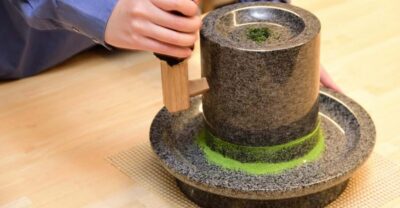
Browse the lists this tour appears in