
Reviewed · TEMPLES & SHRINES
Kyoto/Osaka: Nara, Fushimi Inari Taisha, Arashiyama Bus Tour
Nara’s free-roaming deer, Fushimi Inari’s endless orange gates, and Arashiyama’s bamboo paths make a strong trio of Japanese sights. This $52 day tour connects them by air-conditioned bus, saving you the trouble of working out several rail routes and local connections.
I like two things here: the route covers three very different places, and the guides keep the day moving with clear meeting times and practical instructions. Guides such as Amy, Willa, Fiona, and Christine have earned especially warm praise for their humor, organization, photos, and care with the group.
The trade-off is time. You get roughly an hour at Nara, 70 minutes at Fushimi Inari, and about two and a half hours around Arashiyama, but traffic can change the plan. This suits a first visit and a busy sightseeing day better than a slow, temple-by-temple exploration.
Key points to know before booking
- Three major sights in one day: Nara Park, Fushimi Inari Taisha, and Arashiyama.
- A useful Osaka connection: Depart from Osaka at 8:00 AM, then continue to Kyoto at 9:00 AM.
- Guided but not tightly escorted: Your guide gives background and directions, then you explore many stops on your own.
- Best Arashiyama freedom: You can choose bamboo, Tenryu-ji, food, the monkey park, Kimono Forest, or other local stops during free time.
- A long walking day: Comfortable shoes, water, weather protection, and comfortable clothes matter.
- Flexible return planning: Tell the operator if you want to finish in Osaka or Kyoto.
Three famous places without three separate transport puzzles
This tour is built for people who want to see a lot in one day without spending the morning studying Japanese train maps. Nara lies east of Osaka, Fushimi Inari is south of central Kyoto, and Arashiyama is on the city’s western side. Linking all three independently is possible, but it takes planning and leaves you responsible for every transfer.
The bus handles the long connections. You can start at Harimaya Nippombashi in Osaka or at Kyoto Station’s Hachijo Entrance Square Sunken Garden. The Osaka departure is scheduled for 8:00 AM, with a Kyoto departure at 9:00 AM. Arrive 10 to 15 minutes early because the bus leaves on time.
The transport includes an air-conditioned vehicle, parking, fuel, taxes, and handling charges. That matters in a full sightseeing day. You are paying for more than a seat: you are also buying a simpler route through three busy visitor areas.
The vehicle does not turn the day into a restful coach holiday. You will get off repeatedly, walk, climb shrine paths, and keep an eye on the clock. Traffic and weather can affect both the order and the return time, so do not schedule an important evening reservation too tightly.
More Bus Tours in Nara
- Kyoto: Nara & Traditional Matcha Experience Bus Tour
★ 4.9 · 185 reviews - From Osaka or Kyoto: Kyoto and Nara 1-Day Bus Tour
★ 3.5 · 141 reviews - From Kyoto: Nara History Guided Half Day Bus Tour with Lunch
★ 4.8 · 114 reviews
Nara Park and the deer crackers
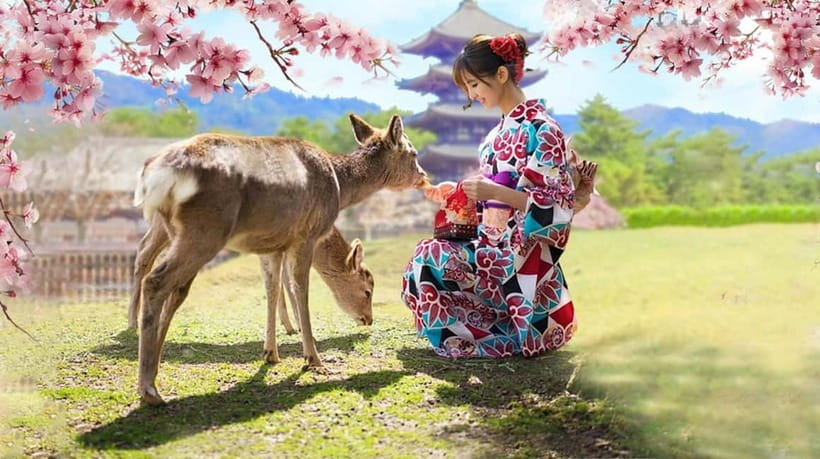
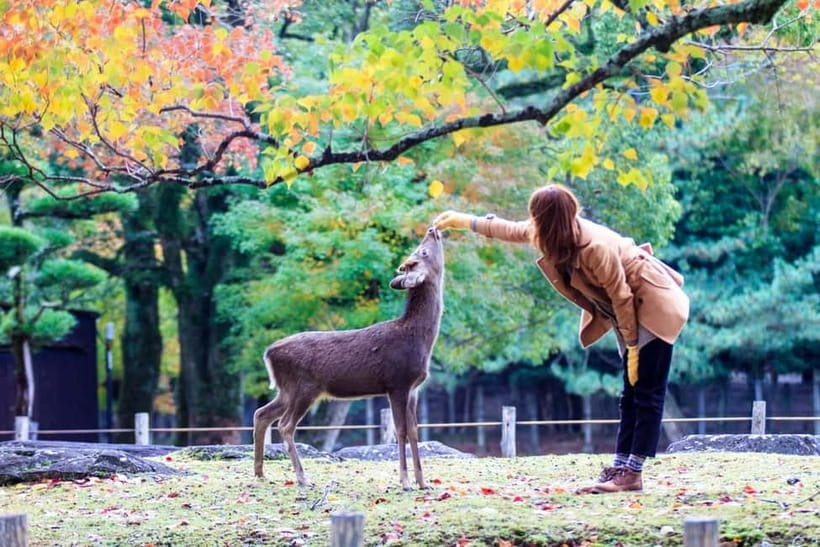
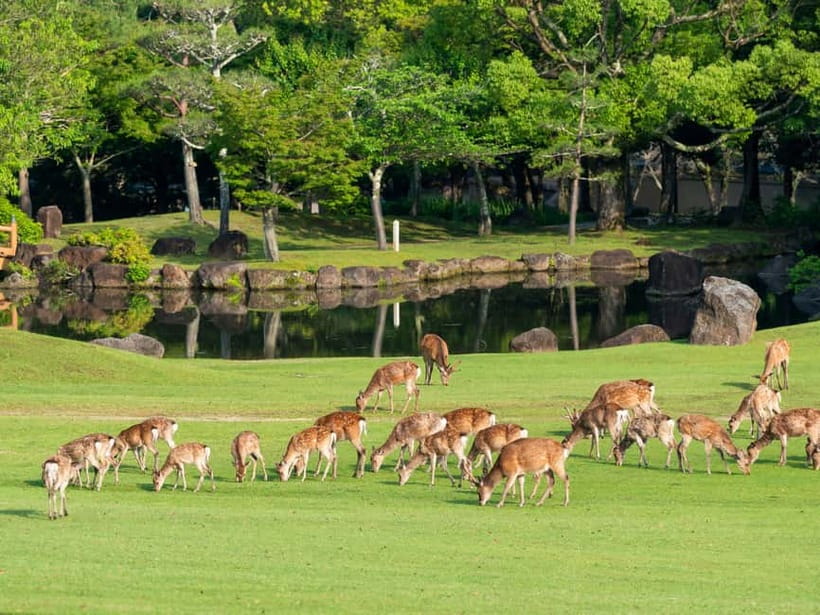
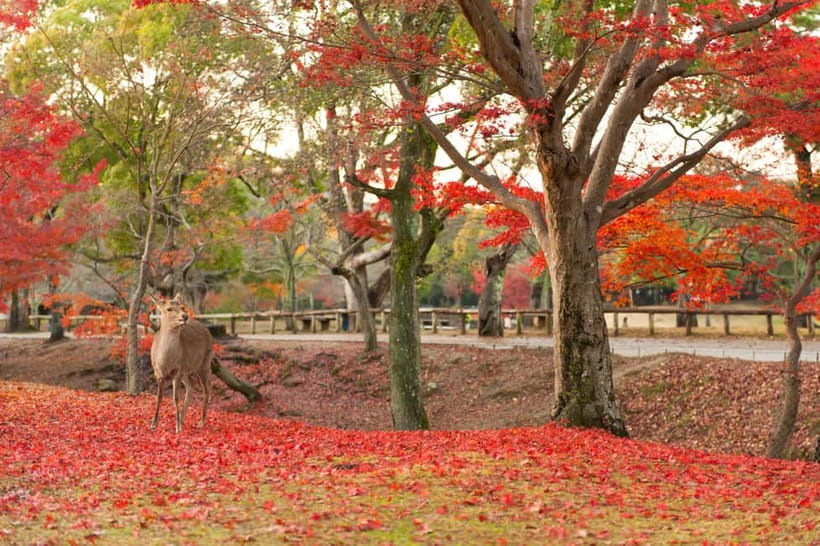
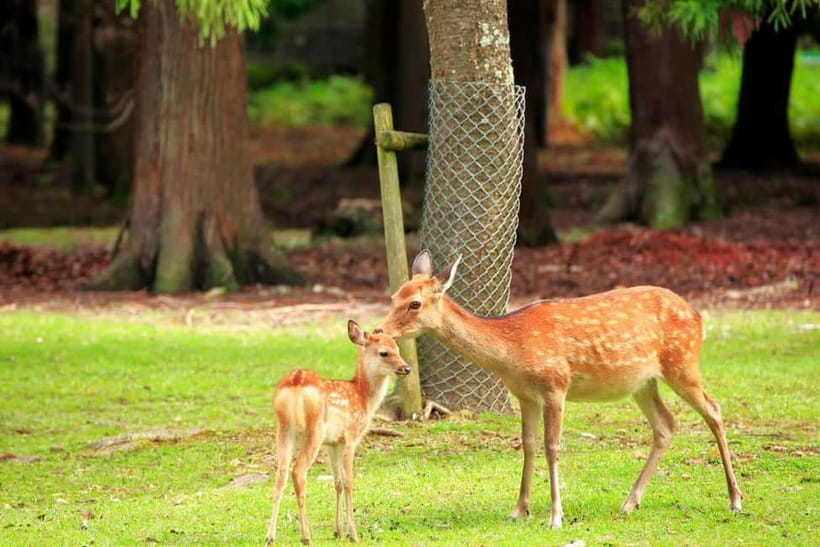
Nara Park gives you the most immediately playful stop of the day. More than 1,000 deer roam freely here, and they are treated as sacred messengers of the gods. You can buy special shika senbei, or deer crackers, and feed them under your guide’s instructions.
The deer are the headline, but the setting also introduces you to Nara’s old religious character. You can watch their polite bowing behavior, take photos, and walk through the park at an easy pace during the one-hour stop.
Keep your food and belongings organized. Once a deer sees crackers in your hand, it may follow with surprising determination. Feed in small amounts, finish the crackers, and avoid teasing an animal with an empty hand.
One hour is enough for the basic Nara experience, especially if feeding the deer is your main goal. It is not enough for a full visit to every major temple or museum in the area. If Nara is your top priority, an independent day with more time would suit you better.
Still, as the first stop, Nara works well. The deer offer an immediate connection with the place, and the open park gives you room to stretch after the morning departure.
Fushimi Inari Taisha and the red torii path
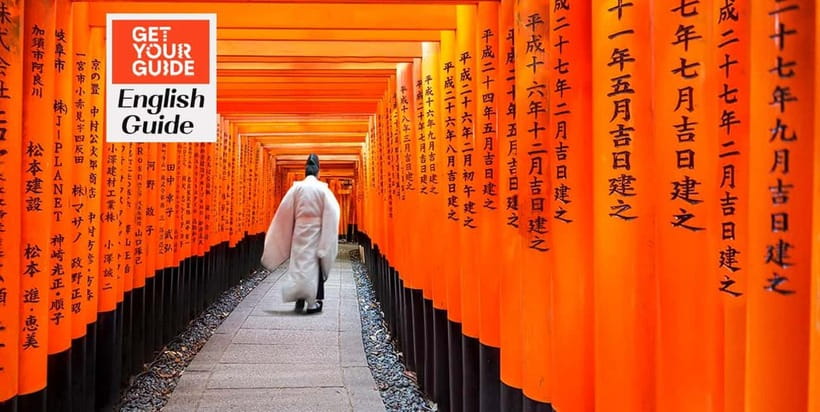
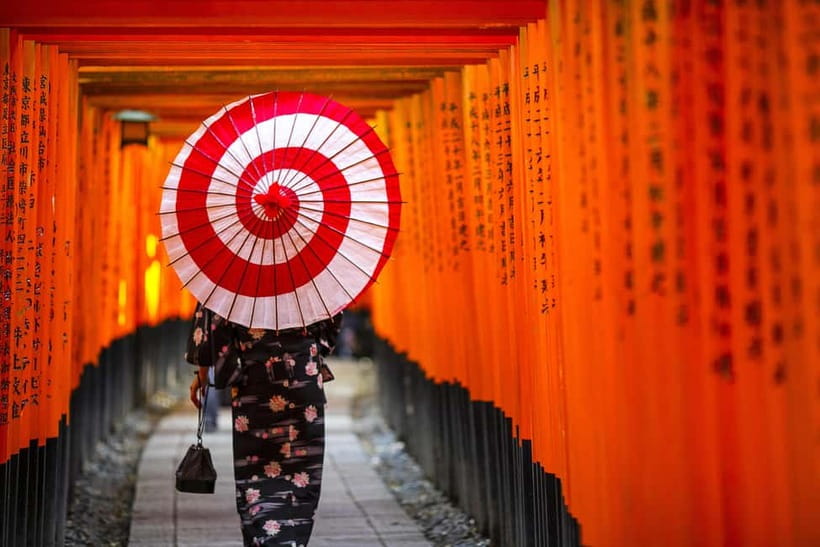
Fushimi Inari Taisha is the most visually dramatic stop. Its vermilion torii gates rise in long lines along the mountain, creating the famous tunnel effect seen in photographs and films, including Memoirs of a Geisha and Detective Conan.
The shrine honors Inari, associated with prosperity and business success. That gives this stop a different feel from Nara’s deer park. Here, the focus is ritual, symbols, wooden shrine buildings, fox figures, and the gradual climb beneath the gates.
You receive about 70 minutes. That is enough to walk through the lower gate sections, take photos, and get a sense of the route. It is not enough to hike the full mountain circuit at a leisurely speed. The farther you walk uphill, the quieter the path usually feels, but your return time remains fixed.
I recommend moving beyond the first photo crowd if your legs and schedule allow. The lower entrance is often the busiest part, while a short walk farther up gives you more of the repeating gate pattern. Wear shoes with a good grip, since the route includes steps and inclines.
Fushimi Inari is also a place where the guide’s timing help matters. A good guide, such as Amy, Christine, or Willa, can explain where to go, when to turn back, and how to meet the bus without guesswork. Several guides on this route are praised for using clear explanations, visual information, and reminders before each stop.
Arashiyama gives you the longest free-time block
Arashiyama receives the largest part of the day, around two and a half hours in the fuller schedule. That extra time lets you shape the visit around your interests instead of following one fixed walking route.
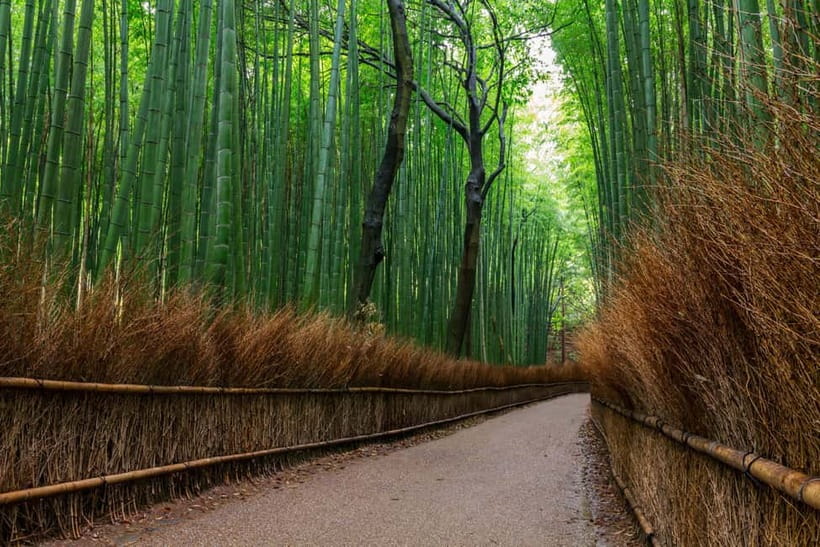
The bamboo forest is the essential stop. Tall green stalks line the path, and the filtered light creates a calm change of pace after the deer and shrine crowds. The dedicated bamboo visit is listed at about 15 minutes, but the wider Arashiyama period gives you time to continue walking and see nearby sights.
The forest is compact in the main visitor area, so do not expect hours of empty solitude. Go with modest expectations, take your photos, and then use the remaining time well. This is one place where an early arrival or a quieter side path can make a difference, but the tour cannot control how busy the area is.
Nonomiya Shrine sits within the bamboo area. It dates to the Heian Period, more than 1,000 years ago, and is associated with love and academic blessings. Its unpainted Kuroki Torii is unusual in Kyoto, where bright vermilion gates are more familiar. The stop is brief, around 15 minutes, but it fits naturally into a bamboo walk.
Tenryu-ji Temple is available for self-guided exploration at an extra fee. Its Sogenchi Garden is the main draw, with carefully arranged ponds, stones, plants, and borrowed views of the surrounding hills. If you enjoy Zen gardens, this is likely the best use of your paid entry.
The important question is how you want to spend your limited Arashiyama time. Tenryu-ji offers a deeper temple visit, while the bamboo forest and Togetsukyo Bridge are free. Families may prefer food and relaxed walking. Garden lovers should consider paying for Tenryu-ji. There is no single right choice.
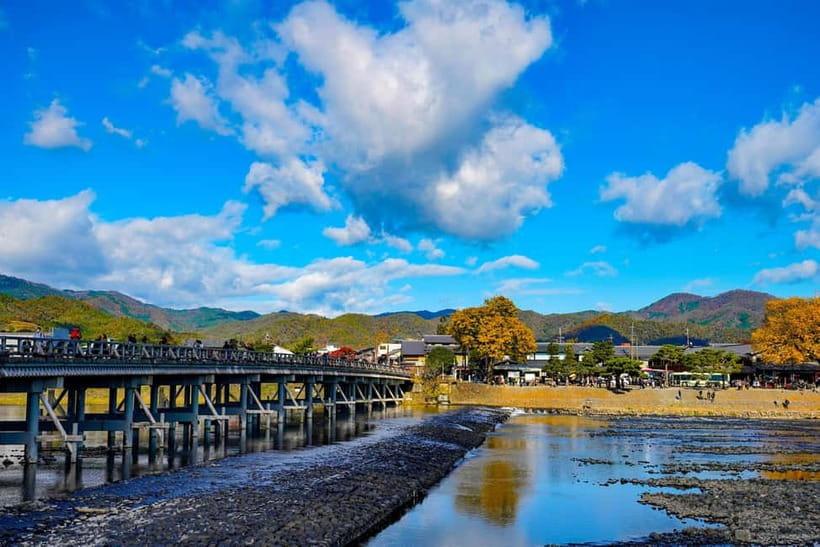
Togetsukyo Bridge provides one of the clearest views across the area. From the bridge, you can see the river and surrounding hills, while passing rickshaws add an old-fashioned touch. The listed bridge stop is about 15 minutes, but the wider free period may allow a longer look if you manage your route carefully.
Kimono Forest, near Arashiyama Station, offers a more modern photo stop. About 600 pillars display Kyoto Kyo-Yuzen textile patterns, turning a transport area into a colorful art installation. It is a quick visit, listed at about 15 minutes, and works well near the end of your Arashiyama time.
You may also find local street food, small restaurants, the Rilakkuma Tea House, and a footbath at Arashiyama Station. Food and drinks are not included, so budget separately. The footbath can be a pleasant way to ease tired legs, though your available time depends on the day’s traffic and group schedule.
More Temple & Shrine Tours in Nara
- Osaka/Kyoto: Arashiyama, Nara & Fushimi Inari Shrine w/Lunch
★ 4.4 · 754 reviews - Kyoto/Osaka: Kinkakuji, Bamboo Forest, and Nara Deer Park
★ 4.4 · 265 reviews - E-Bike Nara Highlights – Todaiji, Knives, Deer, Shrine
★ 4.8 · 186 reviews - Nara: Great Buddha, Kasuga Shrine & Deer Park Tour
★ 4.8 · 62 reviews
What the guide adds to a self-guided afternoon
This is not a private tour with one guide beside you at every shrine. Much of Arashiyama is self-guided, which gives you choice but also makes timekeeping your responsibility.
The guide’s most useful work happens between stops. You receive instructions about where to meet, how long you have, what to see, and how to get back to the vehicle. Guides including Amy, Willa, Fiona, Christine, Laura, Tracy, and Frederick have been singled out for warmth, organization, humor, and practical advice.
That range of guide names matters because the exact person on your departure can vary. You should expect an English-speaking guide, with Chinese also available, but you cannot choose a particular guide unless the operator confirms it.
The best guides on this route appear to balance information with movement. Amy is praised for keeping people organized while still being friendly and funny. Willa is noted for clear explanations and care with the group. Fiona is associated with high energy and practical help, while Christine is praised for recommendations and timely communication.
A well-run group tour depends on everyone returning on time. Read any pre-trip WhatsApp message carefully if you receive one, note the meeting place, and use the guide’s return instructions. This small effort prevents the common problem of enjoying a stop so much that you lose track of the bus.
Is $52 good value for this route?
At $52 per person, the price is reasonable if you value convenience. The bus, driver, guide, fuel, parking, taxes, and handling charges are included, while food, drinks, personal purchases, and Tenryu-ji admission are extra.
Independent transport costs vary by route and timing, but the real saving here is planning time. You do not need to coordinate the Osaka to Nara journey, the move to Fushimi Inari, the trip across Kyoto to Arashiyama, and the return. You also avoid the stress of finding the right platform after a long day.
The value is strongest for a first visit, a short stay, or anyone based in Osaka who wants to see Kyoto highlights in one sweep. It is also useful as a practical relocation day, since one booking can take you from Osaka toward Kyoto while including sightseeing along the way.
The value is weaker if you dislike fixed schedules. You may want more than 70 minutes at Fushimi Inari, more time at Nara’s temples, or a full afternoon in Arashiyama. In that case, public transport and separate visits give you more control, though with more planning.
Walking, weather, and family planning
Bring comfortable shoes. You will walk on park paths, shrine routes, bridge approaches, and urban streets, with some steps and inclines at Fushimi Inari. Water, an umbrella, and comfortable clothes are sensible because conditions can change during a long day.
Smoking is not allowed on the activity. Food and drinks are not included, so use Arashiyama’s restaurants and street food for a meal or snack, or plan your own supplies.
The tour is not suitable for wheelchair users or people with mobility impairments. If you are pregnant or aged 70 or above, you may be asked to sign a waiver on arrival.
Tell the operator in advance if you are bringing an infant, stroller, or large luggage. Japanese traffic rules count babies as passengers, so accurate passenger information is needed for the vehicle arrangement.
The return can be to Osaka or Kyoto, but you need to state your preferred drop-off when booking. Without that instruction, the default is the same point as pickup. Also allow flexibility at the end of the day, since traffic and weather can affect the arrival time.
Who should book this Kyoto and Nara day tour?
Book it if you want the main sights with minimal transport planning, especially on a first visit. You will see deer, shrine gates, bamboo, a Zen temple option, a historic bridge, and a modern textile installation in one long day.
It is also a good choice for solo visitors who like some company. The group format gives you a shared day, and solo participants may be seated with other solo members.
Skip it if you want to linger. An independent plan is better for photographers, temple enthusiasts, visitors with mobility concerns, and anyone who prefers a slow lunch or a long mountain walk.
For most people, the decision comes down to pace. If you can accept a busy schedule and keep your watch handy, $52 buys a practical introduction to Nara and Kyoto’s most recognizable sights. If you want depth at any one place, use this tour as a sampler, then return independently to your favorite stop.
FAQ
Where does the tour depart?
There are two starting location options: Harimaya Nippombashi 1-chome in Osaka and Kyoto Station Hachijo Entrance Square Sunken Garden. The meeting point depends on the option you book.
What time does the tour leave Osaka and Kyoto?
The scheduled Osaka departure is 8:00 AM, followed by a 9:00 AM departure from Kyoto. You should arrive at the meeting point 10 to 15 minutes early.
Can I finish the tour in Osaka or Kyoto?
Yes. You should tell the operator your preferred drop-off location when making the reservation. If you do not provide that information, the default is the same point as pickup.
Is Tenryu-ji Temple included in the price?
Tenryu-ji Temple entry is not included. The temple is available as a self-guided visit for an additional fee.
Are food and drinks included?
No. Food and beverages are not included, and personal expenses are also separate. Arashiyama has street food and restaurants where you can eat during free time.
Is the tour suitable for wheelchair users?
No. The activity is not suitable for wheelchair users or people with mobility impairments. Pregnant participants and people aged 70 or above may need to sign a waiver on arrival.
Just added around Nara
- Private Kyoto Tour by Car with Optional Nara or Osaka Add-Ons★ 5.0 · 36 reviews
- Kyoto, Osaka, Nara Private Tour by Car English Driver Guide★ 4.0 · 63 reviews
- Nara Todaiji Kasuga Taisha Private Full Day Tour From Kyoto★ 5.0 · 13 reviews
- From Kyoto: Nara History Guided Half Day Bus Tour with lunch★ 5.0 · 23 reviews
- Nara 8hr Private Tour – Kyoto DEP. with Licensed Guide★ 5.0 · 115 reviews
- Arashiyama & Nara Highlights: One-Day Private Tour Adventure★ 5.0 · 16 reviews
- Kyoto Private Car Tour – Full Day with Local Guide & Nara Option★ 5.0 · 169 reviews
- Kyoto & Nara Private Tour from Osaka Kyoto Hotel Pick-up★ 4.5 · 32 reviews
Temples & Shrines, compared.

Tea Ceremony in a Traditional Tea House in Kiyomizu
Our verdict →
Meiji Shrine, Asakusa, Skytree Bus Tour and Cruise
Our verdict →
Fushimi Inari Hidden Hiking Tour (Private Option Available)
Our verdict →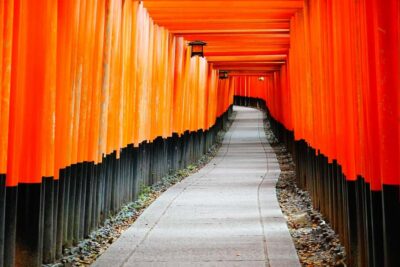
Osaka/Kyoto:Kinkakuji,Arashiyama,FushimiInariShrine,NaraPark
Our verdict →
Nikko: Kegon Falls, Lake Chuzenji & Toshogu Temple
Our verdict →
Kamakura & Enoshima Day Trip including Temple Tickets
Our verdict →Browse the lists this tour appears in