
Reviewed · WALKING TOURS
Nara Half Day Trip Walking Tour (Private Option Available)
Nara’s famous deer are only the beginning. This five-hour walk links the Great Buddha at Todaiji, lantern-filled Kasuga Taisha, an old merchant district, and a traditional Japanese lunch, giving you a much fuller picture of the city than a quick deer-feeding stop.
I especially like the small maximum group of eight, which gives guides room to answer questions and adjust the pace. I also like the useful mix of major sights and quieter corners, including Naramachi and its old merchant house. The main drawback is simple: five hours on foot can feel long in hot, humid weather or for anyone with limited stamina.
Key points
- See Nara’s essential sights in one well-planned walk, including Kofuku-ji, Todaiji, Kasuga Taisha, Nara Park, and Naramachi.
- Meet the deer with practical guidance, including how to feed them without letting them crowd you.
- Eat a traditional Japanese lunch, with dietary requests needing advance notice and no guarantee for gluten-free meals.
- Explore beyond the postcard stops, including an old merchant’s home and a less familiar Japanese townscape.
- Keep the group personal, with a maximum of eight people and the possibility of a private option.
- Allow five hours and prepare for the weather, especially summer heat, humidity, and strong winter cold.
Why this five-hour Nara walk works so well
Nara can look easy on a map. The temples sit near one another, the deer wander freely, and the main park paths are simple to follow. Yet the city’s religious customs, old neighborhoods, and forest setting make more sense when someone explains what you are seeing.
That is the real value here. You do not simply arrive at Todaiji, take a photograph of the Great Buddha, and move on. Your guide can explain how to behave at shrines, how to make a wish, why the lanterns matter, and how Nara developed as an important temple town.
The route also has a useful rhythm. You begin with major religious sites, pause for lunch, spend time among the deer, and finish in Naramachi, where the mood shifts from grand monuments to everyday historic buildings. It feels like a compact introduction rather than a single-theme excursion.
The group limit of eight matters. A guide can usually keep the pace flexible, help with photos, and answer questions without trying to manage a crowd. Guides who have led this experience include Shin, Yuki, Miyabi, Nao, Mari, Eri, Yusuke, Yuuki, Jimmy, and Hide. The exact guide depends on your date, but the strongest part of this tour is the personal local perspective.
More Day Trips in Nara
- Kyoto and Nara Day Trip from Kyoto
★ 4.5 · 445 reviews - Osaka: Nara and Uji Day Trip with Deer Park and Hot Spring
★ 4.4 · 302 reviews - From Kyoto / Osaka: Kyoto Must-see Spots & Nara Park One Day Tour
★ 5.0 · 169 reviews
Meeting at the Gyoki-bosatsu statue
The tour begins at the Statue of Gyoki-bosatsu at 27 Higashimuki Nakamachi. This is a practical meeting point near public transportation and close to Nara’s central shopping street.
You should arrive ready to walk. The activity ends back at the same meeting point, so you do not need to arrange a separate pickup or learn a new return route. Since the tour uses public areas and temple grounds, comfortable shoes are more useful than anything fancy.
The schedule is listed as approximately five hours. The stated stops add up to less than that, leaving time for walking between sites, explanations, photos, and small changes in pace. That is good news if you want context rather than a rushed checklist.
Kofuku-ji’s five-story pagoda
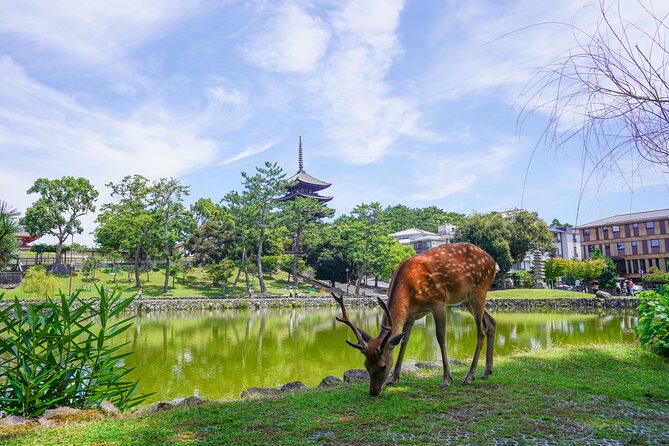
The first stop is Kofuku-ji Temple, where the five-story pagoda gives you an immediate sense of Nara’s visual style. Built by the Fujiwara clan in 730, the pagoda is one of the city’s best-known landmarks.
You have about 15 minutes here, and admission to this stop is free. This is more of an orientation visit than a long temple tour. The pagoda is ornate, historic, and easy to photograph, but you should not expect a lengthy interior visit based on the scheduled timing.
That short opening stop works well. It introduces Nara’s Buddhist architecture before you reach Todaiji, the largest and most dramatic temple on the route. Your guide can also help you notice details you might otherwise pass without a second thought.
Todaiji and the Great Buddha
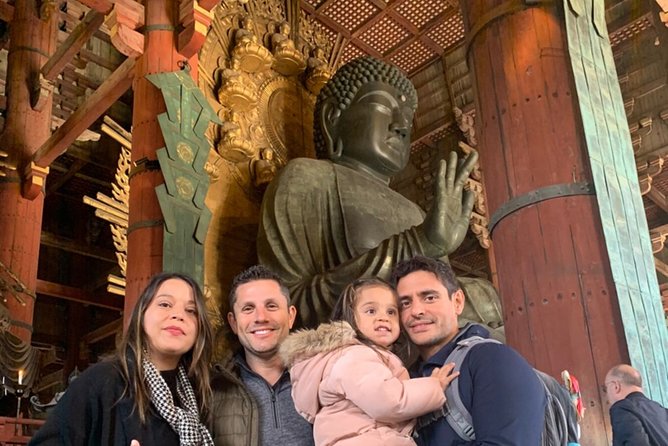
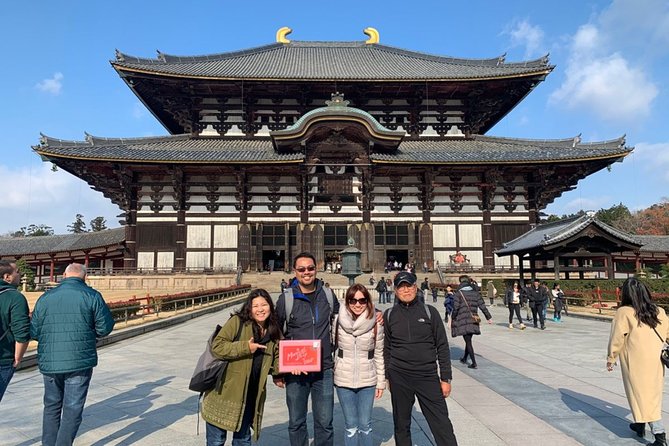
Todaiji is the visual centerpiece of the morning. The route includes the Main Hall and Nandaimon, the great gate watched over by two imposing Kongorikishi guardian statues.
Inside the Main Hall, you see Nara’s famous Great Buddha. The scale is hard to grasp from photographs, and the approach through the gate gives the visit a strong sense of arrival. Admission is included, so you do not need to handle a separate ticket during the tour.
The scheduled visit lasts about 30 minutes. That is enough for the main hall, the Buddha, the gate, and an explanation of the site, but it is not a slow, detailed study of every corner. If Todaiji is your main reason for visiting Nara, you may want extra independent time before or after the tour.
The guide’s explanation is important here. Religious buildings can blur together during a busy Japan itinerary. A good guide gives you a way to understand what makes Todaiji different, how to approach a Buddhist temple respectfully, and why the Great Buddha remains central to Nara’s identity.
Crowds can also affect this stop. One useful advantage of a small group is that your guide can explain where to stand, keep everyone together, and help the visit feel less confusing when the approach is busy.
More Walking Tours in Nara:
- Nara: Private Walking Tour with a Local
★ 4.3 · 36 reviews - Kobe: Private Walking Shore Excursion- Kyoto/Osaka/Nara/Kobe
★ 4.8 · 23 reviews - One-Day Walking Tour of Amazing 8th Century Capital Nara
★ 5.0 · 15 reviews - Kyoto Geisha Walking Tour: Gion District & Hidden Gems
★ 4.7 · 3,273 reviews
A traditional lunch in an old Japanese town
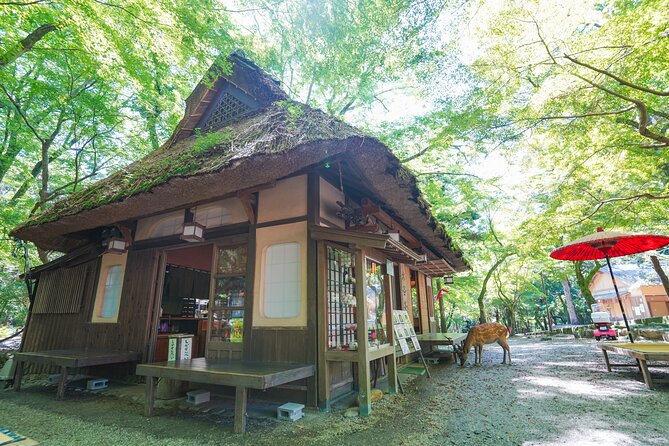
Lunch takes place at a traditional Japanese restaurant in the area around 107 Zoshicho. You have about 45 minutes, and the meal is included in the tour price.
This is more than a practical food break. The meal gives you a chance to sit down, try local Japanese dishes, and see how a well-established restaurant presents a set meal. Several guides have also used lunch to explain the food, which makes the experience more useful than simply stopping at the nearest place.
The exact menu can vary, so you should not book this expecting one fixed dish. The food has been described as filling and authentic, with some groups receiving teishoku-style meals. Vegetarian requests have been accommodated on some departures, and one group received a vegan meal, but you must ask by the day before. Gluten-free requests cannot be accommodated.
Allergy-free meals are not guaranteed. The food is prepared in kitchens outside the tour company, and substitutions may not always be possible. If you have a serious allergy or strict dietary rules, contact the operator before booking and bring extra cash for additional snacks or drinks. You do not need to pay for the guide’s meal.
Kasuga Taisha and the primeval forest
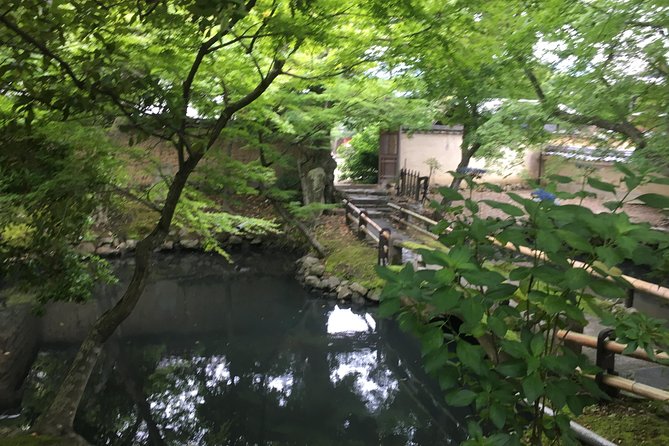
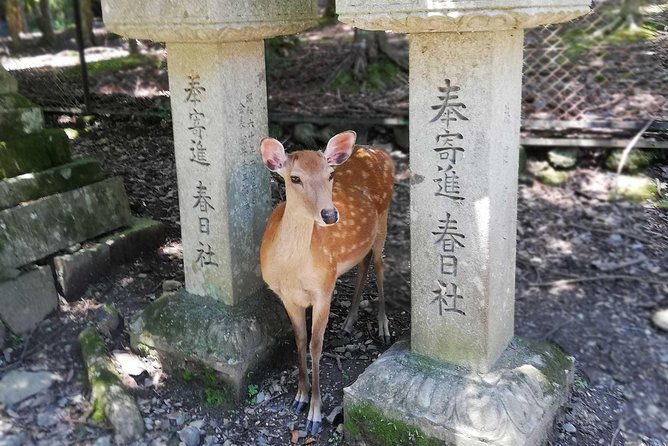
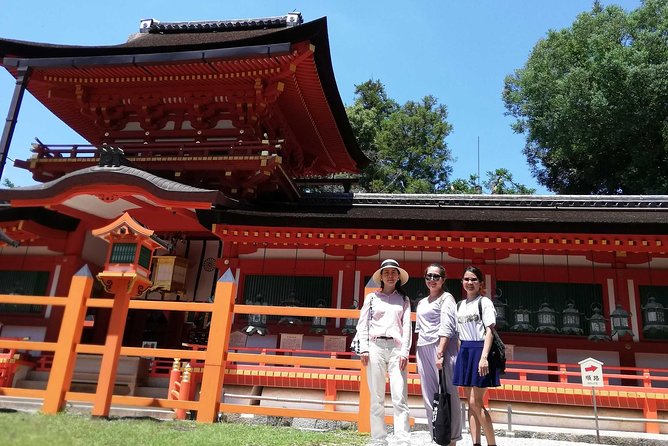
After lunch, the route continues to Kasuga Grand Shrine and the Kasugayama Primeval Forest area. The shrine is known for its many stone and bronze lanterns, which create a striking path through the wooded setting.
You have about 30 minutes here. That gives you time to walk through the shrine area, take photographs, and learn about Shinto customs. This is a good place to ask your guide how to bow, where to wash your hands, and how to make a respectful offering.
Kasuga Taisha feels different from Todaiji. Todaiji is vast and monumental, while Kasuga Taisha is more atmospheric, with red shrine buildings, lanterns, and trees. Seeing both in one day helps you understand that Nara is not simply a collection of Buddhist temples.
The forest paths and outdoor setting also make weather important. Summer can be extremely hot and humid, with temperatures sometimes reaching 40°C, or 110°F. Carry water, wear a hat, and use sunscreen. Winter can drop as low as -5°C, or 20°F, so warm layers matter. Rain may also change the comfort of the walking portions, and poor weather can lead to cancellation, a new date, or a full refund.
Nara Park and the polite, pushy deer
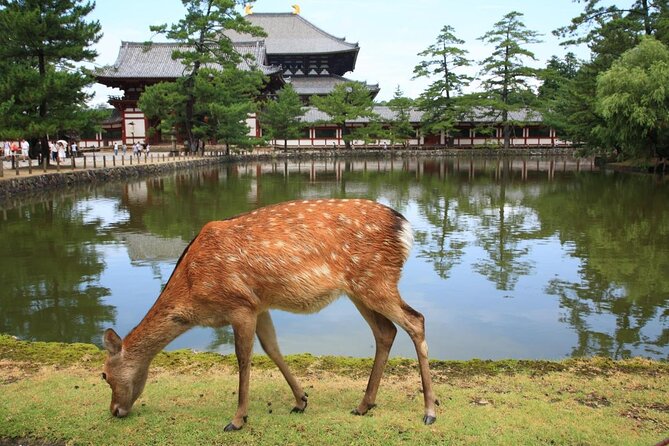
Nara Park is the most playful part of the day. Deer roam freely, and you have about 30 minutes to see them in their natural setting, feed them, and take photographs.
Bring patience. The deer may bow for food, but they can also be pushy, especially when they think you have crackers. Guides can show you how to offer the food respectfully, avoid letting a group surround you, and move on once the treats are gone.
The animal interaction works best when you follow the guide’s instructions. Keep your hands visible after the crackers run out, and do not tease the deer with food. Younger deer may be gentler near the forest, while other animals may be more eager and persistent.
Families often find this stop especially rewarding. Children get a memorable animal encounter, while adults can enjoy the setting and the chance to see the deer behaving as part of the park rather than as a staged attraction. Still, young children should stay close to an adult, since the deer are wild animals and can crowd people.
The 30-minute schedule is enough for a good introduction but may feel short if the deer are your main interest. The route includes several other major sights, so this is not a dedicated wildlife visit.
Naramachi and the old merchant’s house
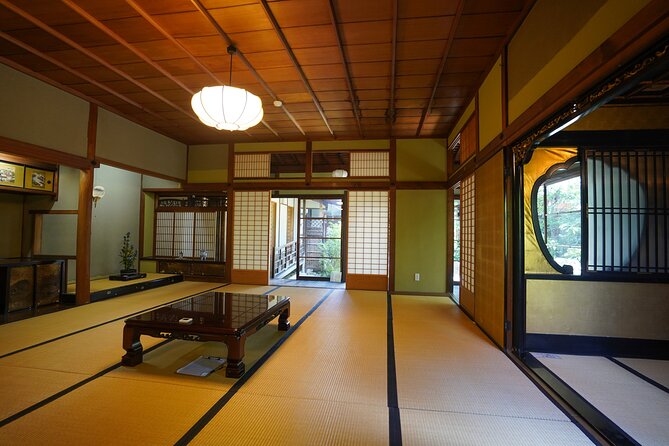
The final major stop is Naramachi, a former merchant district with a townscape very different from modern Tokyo. You walk among traditional buildings and enter Naramachi Nigiwai no Ie, an old merchant’s home.
This is one of the tour’s most useful additions. Many first-time visitors see the temples and park but miss the side of Nara where ordinary commerce and domestic life shaped the city. The narrow streets and preserved buildings give you a better sense of how people lived and worked.
The stop lasts about 35 minutes. You may see traditional architectural features and learn how merchant homes were arranged. It is not as immediately grand as Todaiji, but it gives the day a more human scale.
Guides have also pointed out local crafts, Nara sweets, mochi shops, knives, and other small food or shopping stops. Some have recommended places for kakigori or restaurants after the tour. These suggestions can be useful if you plan to stay in Nara for dinner or return later on your own.
The value of $105.45 per person
At $105.45 per person, this is not the cheapest way to walk around Nara. You could visit the public areas independently and pay temple admission as you go. The question is what the extra cost buys you.
Here, the price includes admission tickets to the paid shrines and temples, lunch, and a local guide for roughly five hours. You also get a planned route that links six different parts of Nara without needing to work out the order yourself.
I find the value strongest for first-time visitors who want historical and cultural context. It is also useful if you have only one day in Nara, or if you are coming from Osaka or Kyoto and want to use your time efficiently.
The value is less clear for repeat visitors who already know Todaiji and Kasuga Taisha, or for people who prefer a slow, self-directed day. You may also spend less independently if you are happy with a quick lunch and do not need a guide.
A private option is presented for this experience, but the supplied details do not give a separate private price or explain exactly how the route changes. Ask for those details before paying if privacy is important to you.
Who should book this Nara walking tour?
This tour suits first-time Nara visitors, families, and anyone who wants the main sights explained in plain language. It also works for people who enjoy food, local neighborhoods, and small cultural details as much as famous monuments.
The maximum of eight people keeps the group manageable. Past guides have adjusted the route for energy levels and mobility, and all ages are welcome. Still, you should expect a real walking day with short breaks, uneven outdoor conditions in some areas, and time spent standing at temples and shrines.
You should prepare carefully for the weather. Nara’s summers are hot and humid, and winters can be very cold. Comfortable shoes, water, a hat, and suitable layers will make a bigger difference than any extra sightseeing plan.
Book early if the small group matters to you. The activity has been booked multiple times recently, and the limited group size can make the experience feel much more personal than a large bus tour.
Should you book it?
Book this tour if you want Nara’s major sights, deer, lunch, and old neighborhoods tied together by a local guide. The strongest reasons are the small group, the included meal and admissions, and the useful balance between famous temples and less obvious places such as Naramachi.
Skip it if you want complete freedom, a very slow temple visit, or a dedicated deer experience. You should also think carefully about the five-hour walking time and the meal restrictions.
For most first visits, I consider this a sound introduction to Nara. It gives you the Great Buddha, lantern-lined Kasuga Taisha, a traditional lunch, friendly but forceful deer, and a look at old merchant life without making you plan every step yourself.
FAQ
How long does the Nara walking tour last?
The tour lasts approximately five hours, including the guided visits, lunch, walking between stops, and short breaks.
Where does the tour begin and end?
It begins at the Statue of Gyoki-bosatsu at 27 Higashimuki Nakamachi in Nara. The activity ends back at the same meeting point.
What sights are included?
The route includes Kofuku-ji Temple, Todaiji Temple, a traditional Japanese lunch, Kasuga Grand Shrine, Nara Park, and Naramachi.
Are entrance tickets included?
Admission tickets are included for the paid attractions listed on the route. Kofuku-ji and Nara Park are listed as free stops.
Is lunch included?
Yes. Lunch at a traditional Japanese restaurant is included. You do not need to pay for the guide’s food or drinks, but bring cash for your own extra snacks or drinks.
Can the tour accommodate dietary restrictions?
You must submit dietary requests by the day before the tour. Gluten-free requests cannot be accommodated, and allergy-free meals or substitutions are not guaranteed. Vegetarian and some vegan requests have been accommodated on certain departures.
What happens if the weather is poor?
The experience requires good weather. If it is canceled because of poor weather, you will be offered another date or a full refund. Free cancellation is available up to 24 hours before the start time.
Just added around Nara
- Private Kyoto Tour by Car with Optional Nara or Osaka Add-Ons★ 5.0 · 36 reviews
- Kyoto, Osaka, Nara Private Tour by Car English Driver Guide★ 4.0 · 63 reviews
- Nara Todaiji Kasuga Taisha Private Full Day Tour From Kyoto★ 5.0 · 13 reviews
- From Kyoto: Nara History Guided Half Day Bus Tour with lunch★ 5.0 · 23 reviews
- Nara 8hr Private Tour – Kyoto DEP. with Licensed Guide★ 5.0 · 115 reviews
- Arashiyama & Nara Highlights: One-Day Private Tour Adventure★ 5.0 · 16 reviews
- Kyoto Private Car Tour – Full Day with Local Guide & Nara Option★ 5.0 · 169 reviews
- Kyoto & Nara Private Tour from Osaka Kyoto Hotel Pick-up★ 4.5 · 32 reviews
Walking Tours, compared.
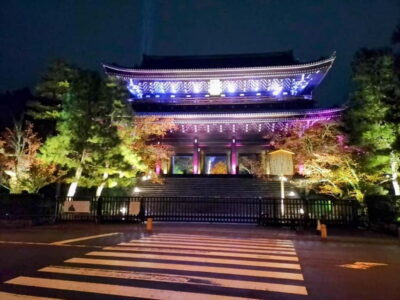
Kyoto Geisha Walking Tour: Gion District & Hidden Gems
Our verdict →
Imperial Palace and Shogun Historical Walking Tour
Our verdict →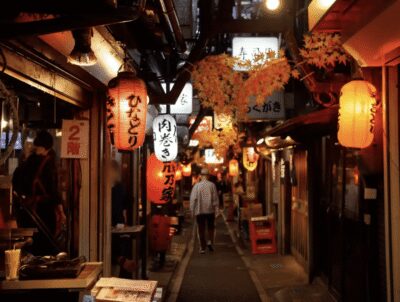
Shinjuku Local Bar and Izakaya Guided Walking Tour
Our verdict →


Nishiki Market Brunch Walking Tour (7 Tastings + Brunch)
Our verdict →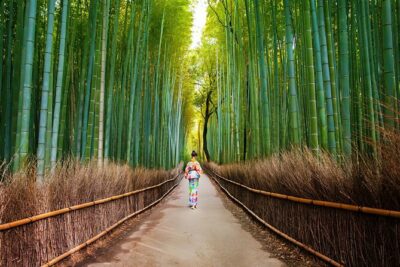
Kyoto Arashiyama Walking Tour: Bamboo, Monkeys, Gardens & Secrets
Our verdict →
Tokyo Castle & Imperial PalaceーShogun Walking Tour
Our verdict →Browse the lists this tour appears in