
Reviewed · HISTORICAL TOURS
Osaka: Kyoto & Nara & Uji Historical and Scenic One-Day Tour
Nara’s deer, Uji’s matcha lanes, and Fushimi Inari’s red torii gates make this a busy but memorable day out of Osaka. I like the door-to-door transport and the chance to combine several famous sights without working out Japan’s rail connections. I also like the guide support, especially the use of WhatsApp and the clear, good-humored explanations offered by guides such as Mia.
The catch is simple: you spend a lot of the day on the road, and the stops are tightly timed. Uji receives two hours, Nara Park 45 minutes, and Fushimi Inari about 70 minutes, so this is a sampler, not a slow cultural outing.
Key points at a glance
- Feed deer in Nara Park: You can buy snacks and approach Nara’s free-roaming deer, while remembering that they are wild animals.
- See Todaiji’s giant Buddha: The temple is a major Buddhist sight, but admission is not included and the temple visit is brief.
- Taste Uji’s matcha culture: You get time beside the Uji River, around Byodoin Temple, and along the matcha food streets.
- Walk beneath Fushimi Inari’s torii: The 70-minute stop allows photos and a short walk, but not a full climb through the mountain trails.
- Let someone else handle the driving: Round-trip transport, fuel, tolls, and parking are included in the $56 price.
- Plan for a full, active day: Expect 8 to 10 hours, moderate walking, and possible delays from traffic or weather.
What this Osaka day trip is really trying to do
This tour links four names that can blur together on a map: Osaka, Nara, Uji, and Kyoto. Osaka is the departure and return base. Nara supplies the deer and Todaiji Temple. Uji brings the tea culture and Byodoin Temple. Kyoto’s Fushimi Inari Taisha provides the famous tunnel of red gates.
That is a lot for one day. The appeal is variety. In the morning, you can be standing beside deer in an open park. A few hours later, you are looking at a Buddhist temple, browsing matcha sweets, and walking through a Shinto shrine. You get a broad taste of the Kansai region rather than one destination in depth.
I would think of this as a practical introduction for a first visit. You are not buying quiet temple time or a detailed study of each site. You are paying to cover ground with a guide and vehicle, which can be useful if train changes, station navigation, and parking sound like work rather than part of the holiday.
More Historical Tours in Nara:
- World Heritage Kyoto & Nara Uji Authentic Matcha Experience
★ 5.0 · 1,573 reviews - From Kyoto: Nara History Guided Half Day Bus Tour with Lunch
★ 4.8 · 114 reviews - Nara: Bike Tour in Ancient Capital UNESCO World Heritage
★ 5.0 · 43 reviews
Nara Park and Todaiji: deer first, Buddha second
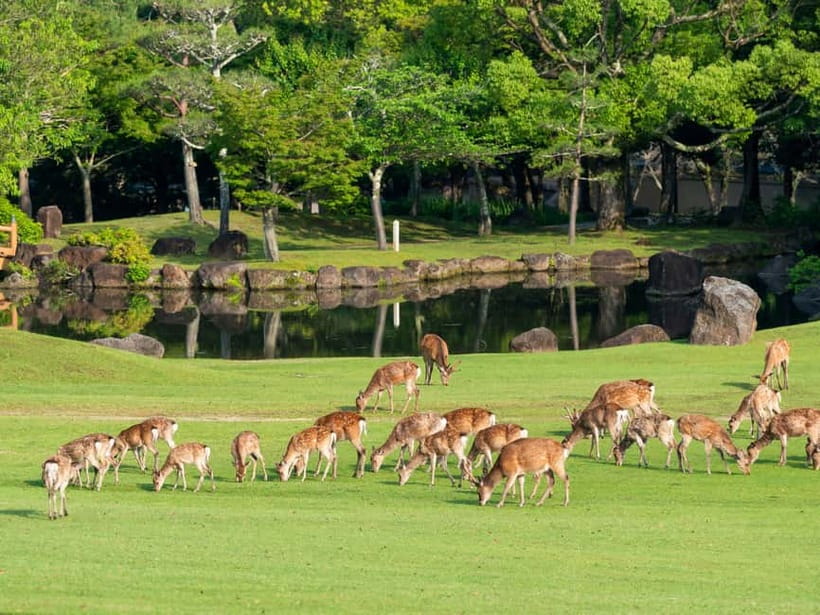
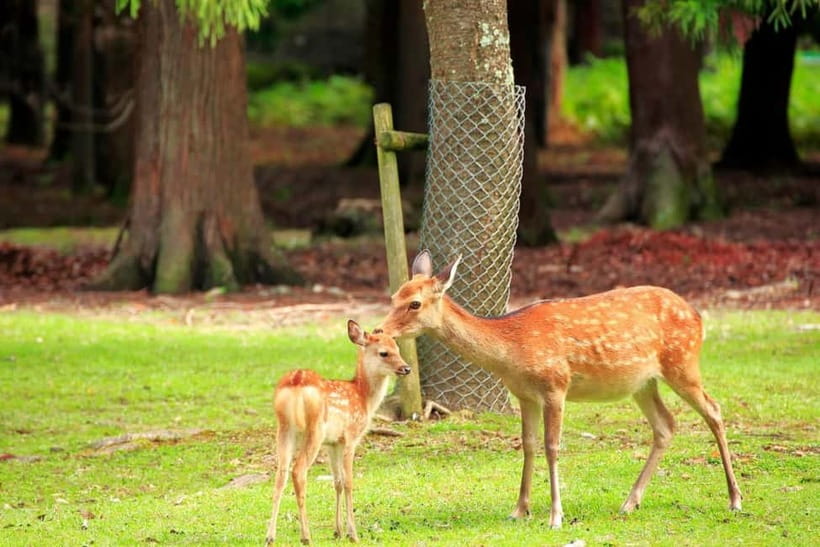
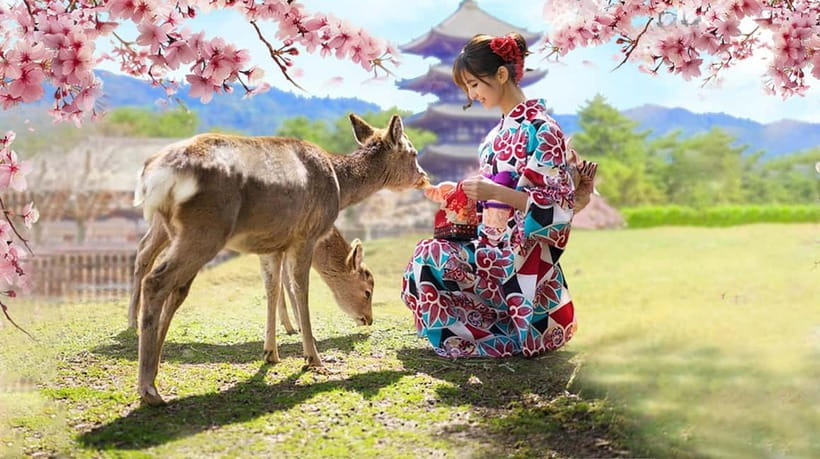
Nara Park is the most playful stop. You have about 45 minutes to walk around, see the deer, take pictures, and offer them food. Deer crackers are available locally, although food is not included in the tour price.
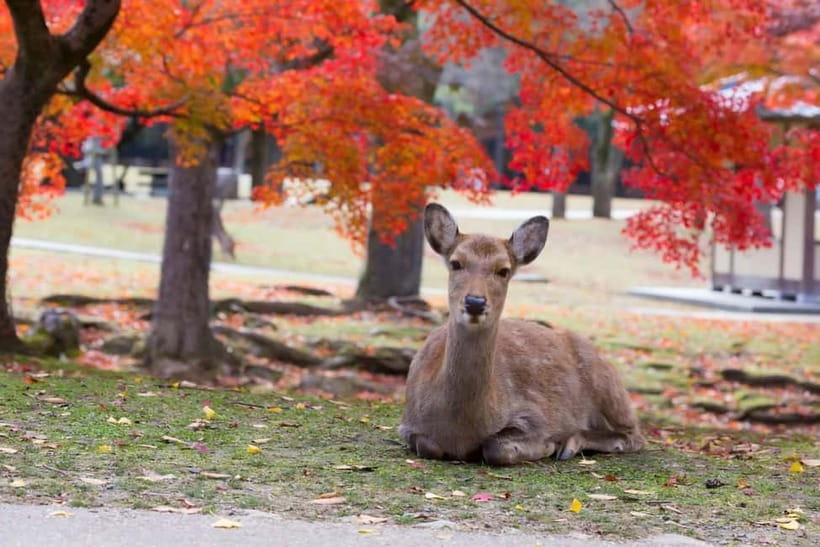
The deer are accustomed to people, but do not treat them like tame farm animals. Follow the guide’s instructions, keep your hands clear after the crackers are gone, and avoid teasing an animal with an empty hand. Their friendly behavior can turn pushy when food is involved. That small warning matters, especially for children and anyone uneasy around animals.
The park is also a good place to notice how Nara combines open public space with major religious sites. You are not simply visiting an animal attraction. The deer are part of the city’s identity, and the park leads you toward Todaiji, one of Japan’s best-known Buddhist temples.
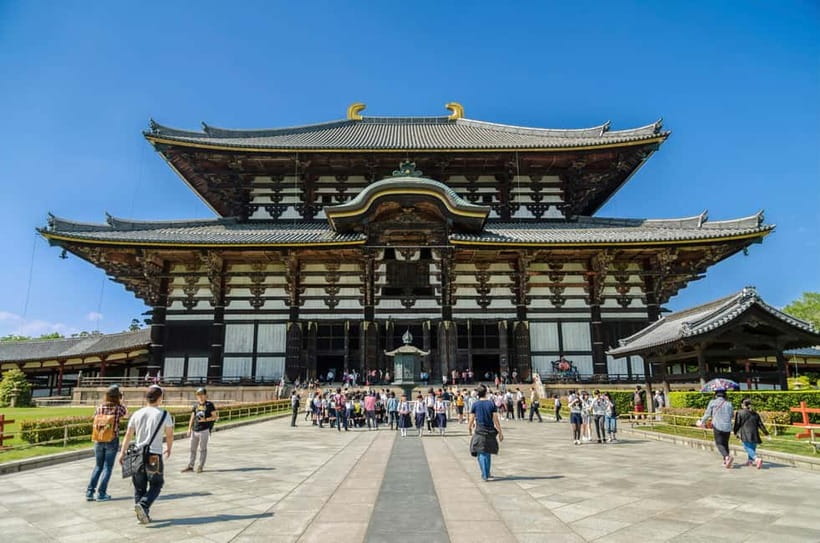
The Todaiji visit lasts about 30 minutes. The main draw is the enormous Vairocana Buddha inside the temple hall. The scale gives the stop its force, even if you are not deeply familiar with Buddhist art. The building and statue are meant to be experienced as a place of worship, not just photographed, so a little quiet attention pays off.
Admission to Todaiji is extra. Since the allotted time is short, I would not expect a full examination of the temple grounds. Still, this is one of the strongest stops on the route because it gives you a real sense of the size and solemn mood of Nara’s religious center.
The combination works well: Nara Park is informal and lively, while Todaiji is grand and serious. The transition happens quickly, which is typical of the whole day.
Uji River and Byodoin: the day’s gentlest stretch
Uji gets roughly two hours, making it the longest sightseeing stop. That time includes the Uji River, the statue of Murasaki Shikibu, Byodoin Temple, Kyoto Prefectural Uji Park, and the local food streets.
The river walk gives you a pause from the vehicle. Uji has a calmer feel than the major city sights, and the water and traditional streets provide a change of pace. The Murasaki Shikibu statue points to Uji’s connection with The Tale of Genji, one of Japan’s best-known classical works. You may not have time for a full literary exploration, but the statue adds some cultural context to the walk.
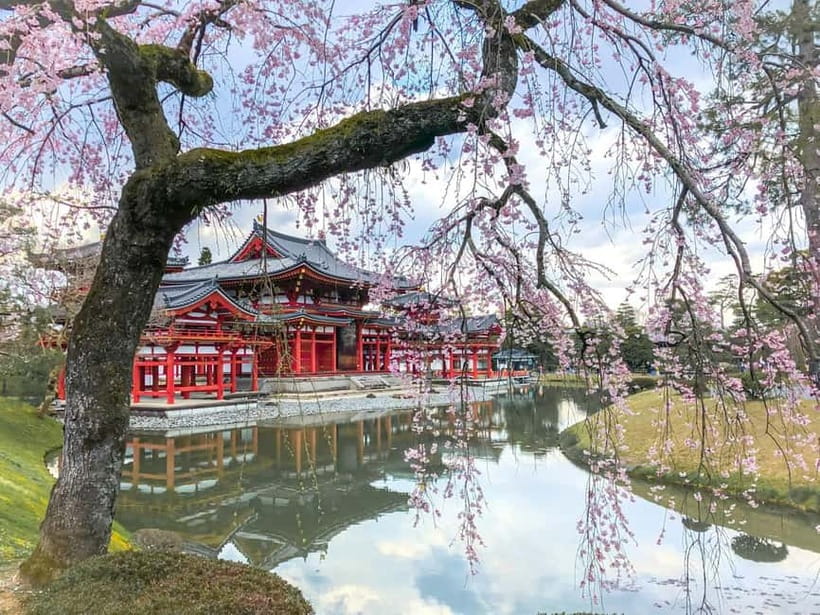
Byodoin Temple is the main reason to visit Uji. Its Phoenix Hall appears on the 10-yen coin, and the building sits beside a pond in a setting designed for reflection. The visit offers a different mood from Todaiji. Todaiji is huge and imposing. Byodoin is more balanced and refined, with its famous hall and water view creating a quieter experience.
Admission to Byodoin is not included. Keep that extra cost in mind when comparing the tour price with a self-planned day. The tour covers your transport, but temple entry and food come from your own budget.
Uji’s Omotesando and matcha food streets are useful for lunch or a sweet break. Uji is strongly associated with green tea, so this is the place to try matcha desserts and other tea-flavored snacks. The tour does not include meals or drinks, giving you freedom to choose what appeals to you, but the limited schedule means you should not linger too long over lunch.
I especially like Uji’s role in the route because it is not only a photo stop. It gives you a chance to taste something tied to the place. Matcha culture here is part of the town’s identity, not just a souvenir label.
The tradeoff is that two hours can disappear quickly. If you want Byodoin, the river, food, and shopping, you will need to keep an eye on the meeting time. One guide, Mia, was praised for giving useful local shopping tips, which can help you make better use of this short window.
Fushimi Inari: famous gates, limited time
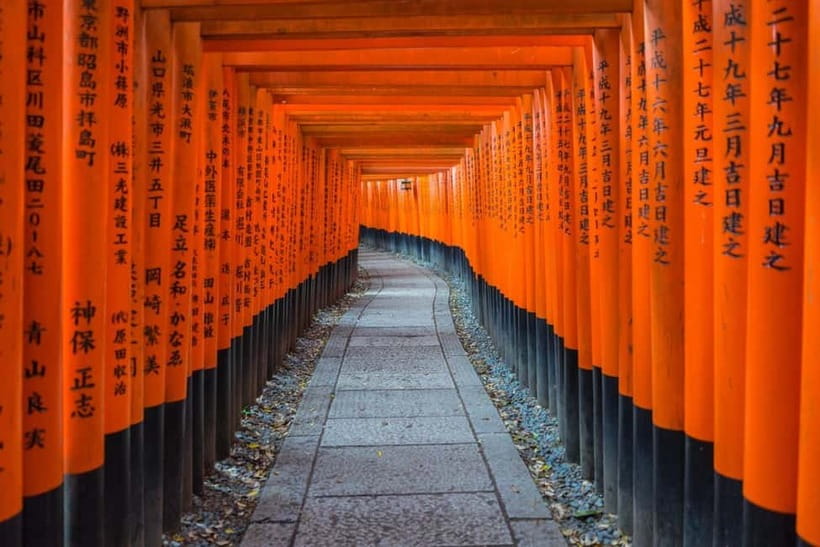
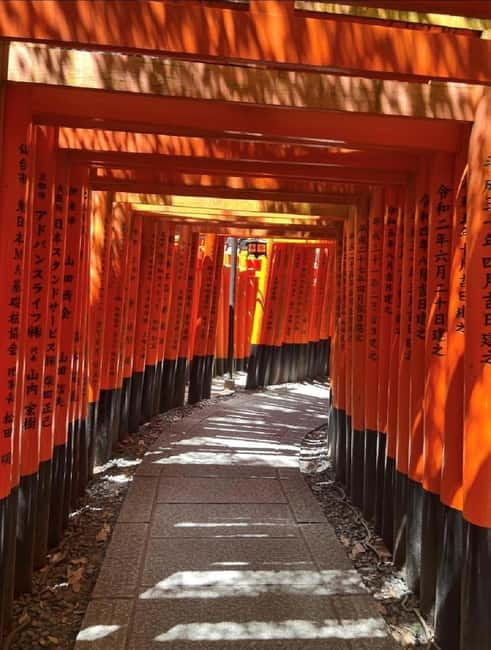
The final major stop is Fushimi Inari Taisha, where you get about 70 minutes for a break, photos, free time, and walking. The shrine is known for its rows of red torii gates climbing into the wooded hills behind the main grounds.
You can get a strong first impression in 70 minutes. The lower shrine area and early sections of the torii route are photogenic, and the repeating gates create the visual effect most people come to see. Light filtering through the gaps can give the path a hushed, almost theatrical mood.
You should not expect to complete the full mountain route. Fushimi Inari is much larger than the short stop suggests, and a serious hike would require more time. For this tour, treat the visit as an introduction and photo walk. If Fushimi Inari is your top priority, return independently on another day and allow much longer.
The shrine can also be crowded, particularly around the most accessible lower gates. Patience helps. Move to the side when taking pictures, listen for the guide’s instructions, and keep track of the group. The tight schedule means a late return here can affect everyone’s journey back to Osaka.
A few more Nara half-days worth comparing
- Kyoto/Osaka: Nara, Fushimi Inari Taisha, Arashiyama Bus Tour
★ 4.7 · 1,275 reviews - Nara Half Day Trip Walking Tour (Private Option Available)
★ 5.0 · 937 reviews - Osaka/Kyoto: Arashiyama, Nara & Fushimi Inari Shrine w/Lunch
★ 4.4 · 754 reviews - Nara Early Morning Tour (Kyoto or Osaka Departure Available)
★ 5.0 · 676 reviews
Why the transport matters at $56
At $56 per person, the price is attractive for a day that includes round-trip transport, an English or Chinese-speaking guide, fuel, tolls, and parking. Those costs add up when you try to cover Nara, Uji, and Kyoto in one day. The vehicle also removes the need to plan several rail journeys with a group.
The value depends on how you travel. If you are comfortable with Japanese trains and want plenty of time at each location, independent travel may give you more control. If you want to see several major places without managing every transfer, the organized vehicle earns its keep.
The price does not include admission to Todaiji or Byodoin, meals, drinks, or personal spending. Since the exact admission prices are not provided here, you should allow extra money for both temples and for lunch or matcha treats. The tour is inexpensive, but it is not an all-inclusive day.
There are also eight listed drop-off areas, including several Osaka wards, Kyoto Station Hachijo Entrance Square Sunken Garden, and neighborhoods such as Naniwa, Nishi, Fukushima, Kita, Chuo, Nishinari, and Harimaya Nippombashi 1-chome. Check your chosen option carefully because the pickup and return point can vary.
Guides, timing, and the road between stops
The guide can speak English or Chinese. Guide quality matters on a route like this because the schedule is tight and the cultural background is easy to miss. A good guide can turn a quick temple visit into something more meaningful, and can also keep everyone moving when traffic or crowds threaten the timetable.
The guide named Mia received special praise for useful local shopping advice and for keeping in touch through WhatsApp. Another guide was noted for humorous, vivid, and detailed explanations. That gives you a useful picture of the guiding style to hope for, though the specific guide depends on the date and language option.
Pickup details are sent by 8:00 pm the evening before. If you choose hotel pickup, wait in the lobby 10 minutes early. If you meet at a fixed point, arrive 15 minutes before departure. This is not the sort of tour where a late arrival is easy to absorb.
The full day lasts 8 to 10 hours. Traffic, weather, and other delays can change the order or return time. One clear limitation is the amount of time spent in the vehicle. You should accept that before booking. The route crosses several parts of the Kansai region, and the short visits are the price of seeing so much.
Walking, comfort, and who should skip it
Wear comfortable shoes and carry water. You will walk through park paths, temple grounds, streets, and shrine approaches, with a moderate amount of walking spread across the day. Fushimi Inari can include slopes and steps, even if you only cover the lower part.
The tour is not suitable for wheelchair users. It is also not suitable for people with animal allergies because Nara’s deer are a central part of the experience. Pregnant people and those aged 70 or above are asked to sign a travel waiver on arrival.
Tell the operator at booking if you bring an infant, stroller, or large luggage. Japanese traffic rules count babies as passengers, so accurate information affects the vehicle arrangement. Smoking is not allowed.
This tour suits first-time visitors, families with older children, and anyone who wants a broad Kansai overview from Osaka. It is less suitable for photographers, temple specialists, or anyone who prefers to spend half a day in one place. The route is active and efficient, not slow and spacious.
My take on the $56 experience
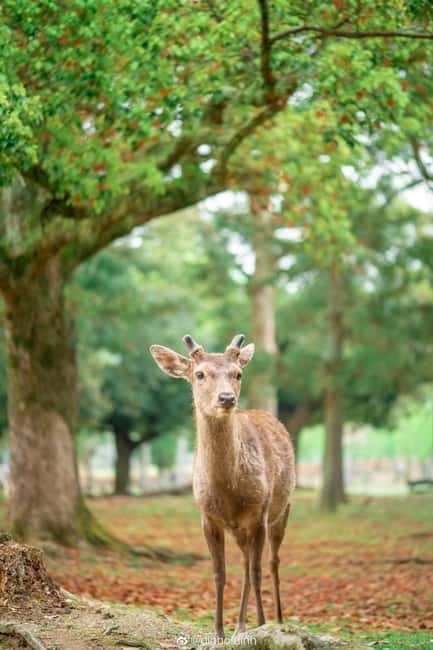
I like this tour for its range. You see animals, Buddhist architecture, a river town, tea culture, a famous shrine, and several different styles of Japanese sacred space in one day. The guide and vehicle also remove much of the planning burden.
I would book it if my Osaka stay were short and I wanted a first look at Nara, Uji, and Kyoto without arranging transport myself. I would not book it if I already knew these places well or wanted long, unhurried visits. The biggest question is not the price. It is your tolerance for road time and quick stops.
Book it for coverage, convenience, and a lively introduction. Skip it for depth. If you choose it, wear good shoes, bring water, budget separately for temple admissions and food, and treat every stop as a sample of a place you may want to revisit.
FAQ
How long does the Osaka, Kyoto, Nara, and Uji tour last?
The tour lasts between 8 and 10 hours. Starting times depend on the option selected, and the return time can change because of traffic, weather, or other unexpected conditions.
What places does the tour visit?
The route includes Nara Park, Todaiji Temple, Uji, the Uji River, the Murasaki Shikibu statue, Byodoin Temple, Kyoto Prefectural Uji Park, and Fushimi Inari Taisha.
Is transportation included?
Yes. Round-trip transportation by air-conditioned vehicle is included, along with fuel, tolls, and parking fees.
Are temple entrance fees included?
No. Admission to Todaiji Temple and Byodoin Temple is not included in the tour price.
Are meals and drinks included?
No. Meals, beverages, and other personal expenses are not included.
Can I feed the deer in Nara Park?
Yes. You can offer the deer a snack, but they are wild animals, so follow the guide’s instructions when feeding them.
What languages does the guide speak?
Guides are available in English and Chinese.
Where does pickup take place?
The meeting or pickup location depends on the option you book. Listed drop-off areas include several Osaka wards and Kyoto Station Hachijo Entrance Square Sunken Garden.
What should I bring?
Bring comfortable walking shoes and water. You should also arrive 15 minutes early at the meeting point, or wait in your hotel lobby 10 minutes early if hotel pickup applies.
Can wheelchair users join the tour?
No. The tour is not suitable for wheelchair users. It is also not suitable for people with animal allergies.
Just added around Nara
- Private Kyoto Tour by Car with Optional Nara or Osaka Add-Ons★ 5.0 · 36 reviews
- Kyoto, Osaka, Nara Private Tour by Car English Driver Guide★ 4.0 · 63 reviews
- Nara Todaiji Kasuga Taisha Private Full Day Tour From Kyoto★ 5.0 · 13 reviews
- From Kyoto: Nara History Guided Half Day Bus Tour with lunch★ 5.0 · 23 reviews
- Nara 8hr Private Tour – Kyoto DEP. with Licensed Guide★ 5.0 · 115 reviews
- Arashiyama & Nara Highlights: One-Day Private Tour Adventure★ 5.0 · 16 reviews
- Kyoto Private Car Tour – Full Day with Local Guide & Nara Option★ 5.0 · 169 reviews
- Kyoto & Nara Private Tour from Osaka Kyoto Hotel Pick-up★ 4.5 · 32 reviews
Historical Tours, compared.
Imperial Palace and Shogun Historical Walking Tour
Our verdict →
World Heritage Kyoto & Nara Uji Authentic Matcha Experience
Our verdict →
Kyoto Gion: 2-Hour Geisha Culture & History Walking Tour
Our verdict →
Hiroshima Historical Walking Tour – Why A-Bomb was Dropped
Our verdict →
Yanaka Walking Tour: Historic and Traditional District of Tokyo
Our verdict →
Shinjuku Historical Walking Tour & Secret Backstreets
Our verdict →
Mt. Fuji Heritage Tour: Traditional Villages, Lakes & Shrine
Our verdict →Browse the lists this tour appears in