
Reviewed · SUMO EXPERIENCES
Tokyo: Authentic Sumo Wrestling Experience with Lunch
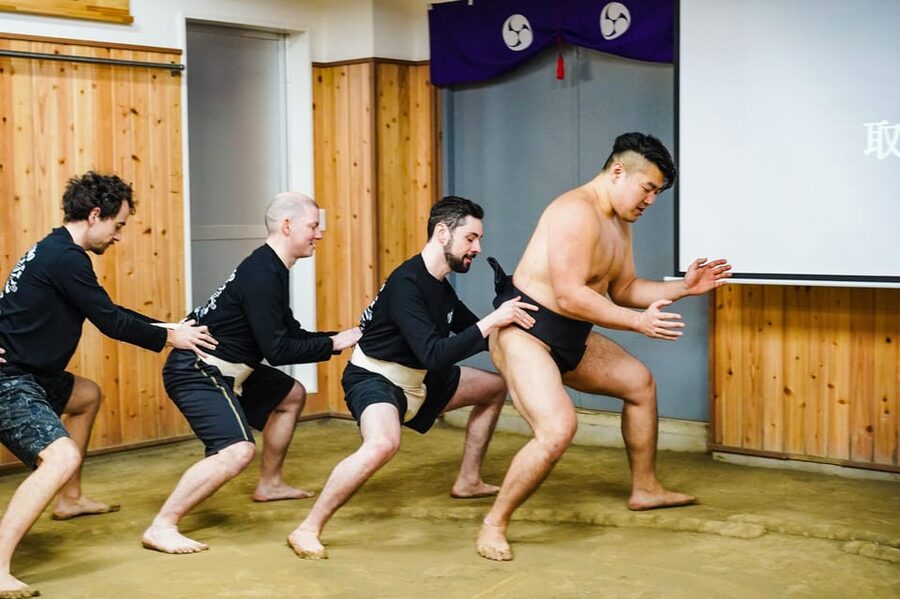
The remarkable part of this four-hour experience is that you watch real sumo practice from ringside, inside a stable officially used until 2022. This is not a staged tournament in a theater. You see the training space, dining room, bath, and the daily customs that shape a wrestler’s life.
I like two things in particular: you get a clear explanation of the rules before trying the moves, and lunch is shared at a table once used in the sumo room. The chance to challenge a rikishi is optional, but it gives the morning plenty of laughs. The main drawback is that the tour involves physical activity, tight timing, and places that are not suitable for wheelchairs or strollers.
Key points worth knowing
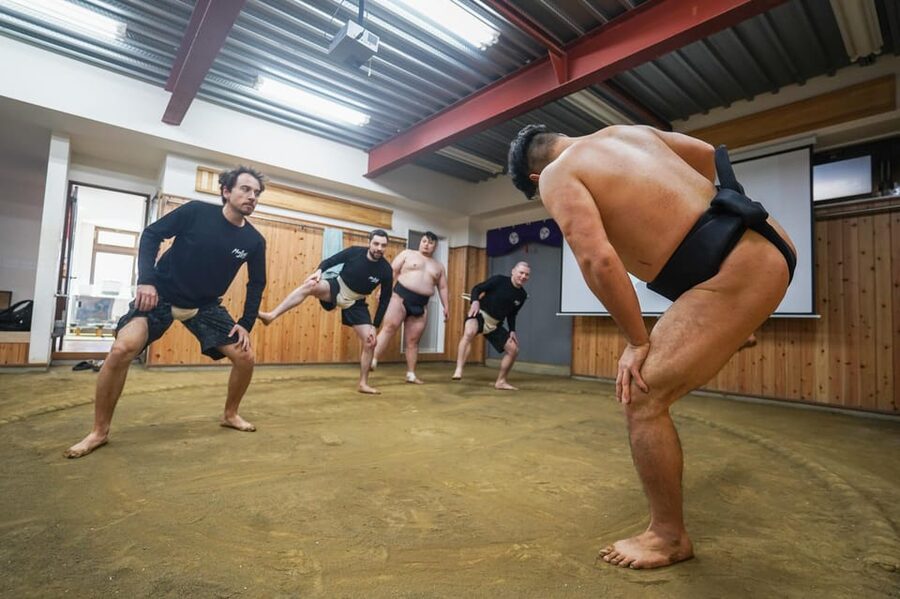
- Watch morning practice from close range: See how training begins, including the basic movements and exercises used by sumo wrestlers.
- Try the ring yourself: Practice sumo techniques, then enter a bout with a rikishi if you want to test your balance and nerve.
- Eat chanko-nabe with the wrestlers: Help make chicken dumplings for the hearty hot pot traditionally linked with a wrestler’s diet.
- Meet at Shin-Kawasaki Station: The meeting point is just outside the only ticket gate, in front of Kiyoken, about 20 minutes from Tokyo Station.
- Learn more than the rules: Guides explain sumo ranks, customs, training routines, and the sport’s place in Japanese culture.
- Plan for a firm schedule: If you arrive late and miss the group, you cannot join later, reschedule, or receive a refund.
Watching sumo practice inside a former stable
This experience begins outside Shin-Kawasaki Station, a useful location for anyone staying in Tokyo or Yokohama. It is about 10 minutes from Yokohama Station and roughly 20 minutes from Tokyo Station, though you should allow extra time to navigate the rail system and find the correct platform.
Meet just outside the ticket gate, in front of the Kiyoken shumai shop. Shin-Kawasaki has only one gate, which keeps the meeting point simple. Your guide will hold a red or orange sign marked Magical Trip. Do not wander off looking for a second entrance or a different Kiyoken branch.
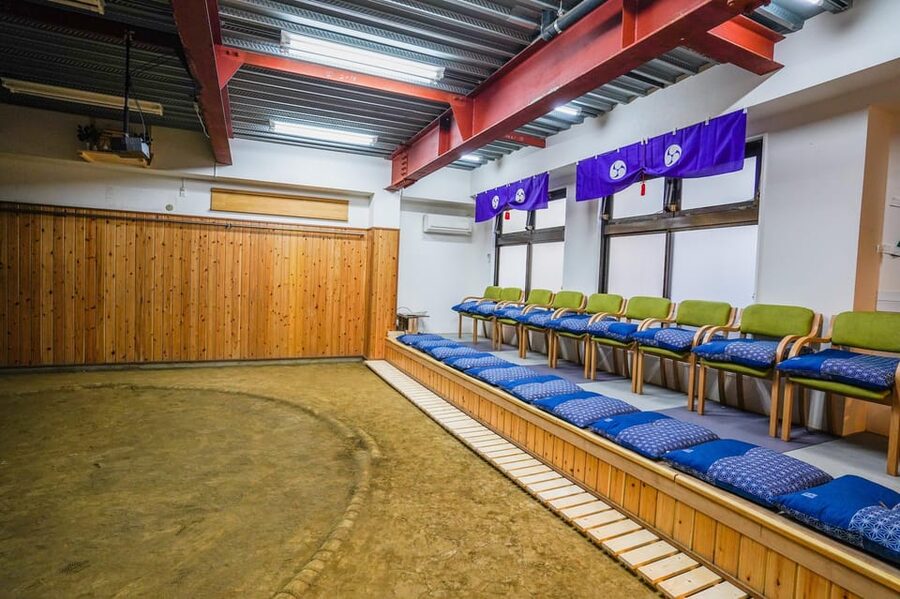
From the station, you head to a former sumo stable. The building was officially used until 2022, so you are seeing a genuine training setting rather than a purpose-built attraction. The visit includes a look at the dining room, bath, and practice area. These plain spaces help explain the daily life of sumo better than a quick match alone could.
Your guide provides the cultural context. Depending on the departure, guides have included Charlie, Mayu, Masao, Jim, and Fuji, but you should expect the guide to vary. The tour is conducted in English, and the explanations cover sumo history, ranks, customs, rules, and the basic rhythm of a wrestler’s training day.
The setting may feel modest. That is part of its value. Sumo is often seen only through grand tournaments, elaborate ceremonies, and large arenas. Here, you get a look at the working side of the sport, where repetition, discipline, and routine matter more than spectacle.
More Sumo Experiences in Tokyo:
- Tokyo: Sumo Show Experience with Chicken Hot Pot and a Photo
★ 4.8 · 6,678 reviews - Tokyo: Sumo Show and Dining Experience
★ 4.8 · 2,742 reviews - the SUMO show
★ 5.0 · 1,960 reviews
Seeing the morning routine from the front row
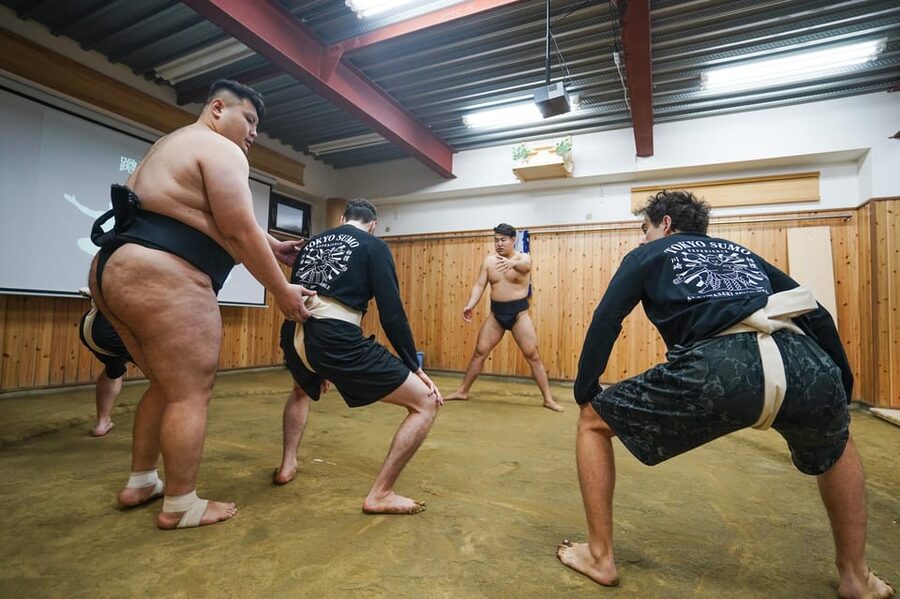
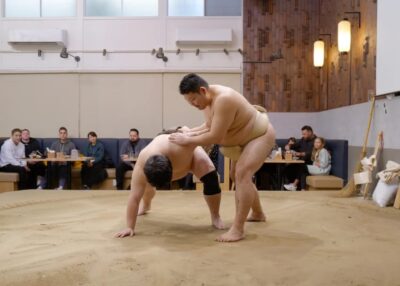
You take a seat directly in front of the ring for a morning practice session. The guide explains how the session begins, what the wrestlers are doing, and why each movement matters.
You may see exercises such as the wide-legged sumo squat, foot stamping, balance work, and other practice movements. The point is not simply to watch large athletes collide. Sumo training builds strength, balance, timing, flexibility, and the ability to control an opponent’s position.
This close view is one of the strongest parts of the morning. At a formal tournament, the crowd, distance, and ceremony can make it hard to understand the mechanics of the sport. Here, the guide can pause and explain the movements in plain English, then connect them to the match techniques you will see later.
The pace can feel slow at first. One person described the opening as a little gradual, but also found that the four hours passed quickly once the demonstrations and participation began. That is a fair expectation. This is not a nonstop action show. Sumo training involves repetition, waiting, and focus.
After watching, you have a chance to copy some of the exercises yourself. This is where the visit changes from a lesson into a shared activity. You do not need prior sumo knowledge, and the experience works well for people seeing the sport for the first time.
Learning the rules before entering the ring
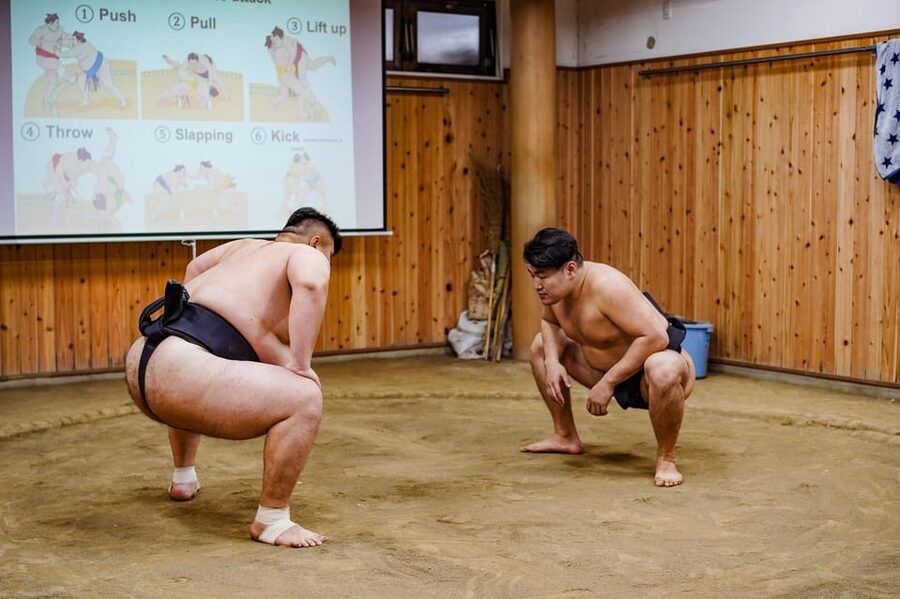
The guide then explains how a sumo match works. You learn about the ring, legal ways to win, basic movements, and the opening sequence before the wrestlers demonstrate a bout.
That preparation matters. Without it, a sumo match can seem brief and almost mysterious. Once you understand that a wrestler can win by forcing an opponent out of the ring or making any body part other than the feet touch the ground, you can watch the balance shifts and changes in position more closely.
The wrestlers also demonstrate how a match begins. This gives you a chance to see the ceremonial and physical sides together. Sumo is not just a test of bulk. A wrestler needs timing, footwork, leverage, and a good sense of when to push, pull, or redirect.
The explanations are supported by demonstrations, and previous departures have used pictures, video, and presentation slides to make the rankings and rules easier to follow. That makes this a good choice if you know very little about sumo but want more than a photo opportunity.
Your optional bout with a rikishi
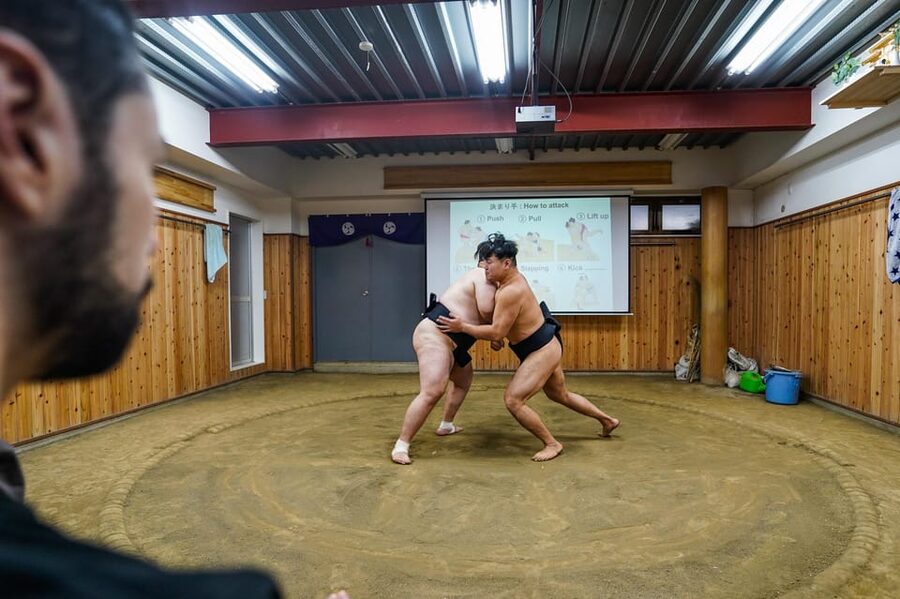
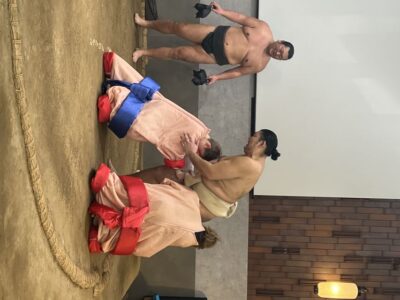
The most memorable part for many people is the chance to enter the ring and face a sumo wrestler. This is optional. You can watch the demonstrations and support the other participants without taking part.
If you do step in, expect a controlled and playful match rather than a serious contest. The wrestlers are vastly stronger than most visitors, and their careful handling of participants is part of the fun. You may find yourself pushed out almost instantly, or gently guided through a few moves while everyone laughs.
The activity is not designed to prove that you can defeat a rikishi. It lets you feel, for a few seconds, how difficult it is to move someone who has trained for this sport. The size difference is striking, but so is the wrestlers’ sense of humor and patience.
Some participants have also had the chance to dress in sumo clothing or a loincloth before entering the ring. The exact presentation can vary, so do not treat every costume or photo setup as guaranteed. Photos are included, and the tour has also included yukata or kimono pictures and other keepsakes.
You should be honest about your physical condition before joining the bout. The activity is not recommended for people with heart problems, a cold, high blood pressure, or pre-existing medical conditions. It is also a poor fit if you have walking problems or significant mobility limits.
A few more Tokyo half-days worth comparing
- 1-Day Tokyo Bus Tour
★ 5.0 · 14,250 reviews - Tokyo: TOKYO SKYTREE® Admission ticket
★ 4.5 · 11,192 reviews - Tokyo: teamLab Planets TOKYO Digital Art Museum Entry Ticket
★ 4.6 · 9,779 reviews - Tokyo: Shinjuku Food Tour (13 Dishes at 4 Local Eateries)
★ 5.0 · 6,603 reviews
Making chicken dumplings for chanko-nabe
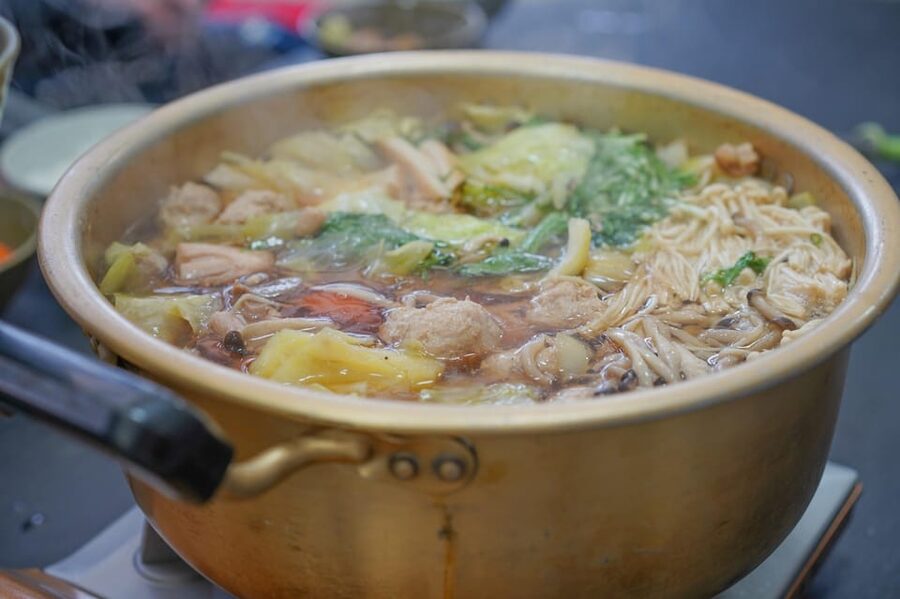
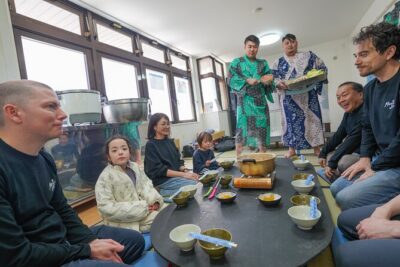
After the practice and demonstrations, the group sits down for chanko-nabe, the hot pot associated with sumo wrestlers. You help make chicken dumplings, then eat together around a table that was actually used in the sumo room.
Chanko-nabe is practical food. It is filling, warm, and made to support the demanding life of a wrestler. The meal gives you a useful connection between the training you just watched and the food traditionally prepared in a stable.
The cooking activity is simple, but it adds a hands-on moment before lunch. You are not just served a dish and sent on your way. You take part in preparing one of its components, then sit down with the wrestlers and guide.
The soup has received particularly strong praise, with one participant calling it among the best they had eaten in Japan. Another person requested a vegetarian meal in advance and received one. Still, you should contact the operator at least one day before the tour with dietary requests or allergies.
The food is prepared in kitchens that do not belong to MagicalTrip, so allergy-free meals cannot be guaranteed. Same-day requests may not be possible, and substitutions are not always available. If food safety is a serious concern, contact the operator before booking and understand that accommodation remains limited.
Asking questions over lunch
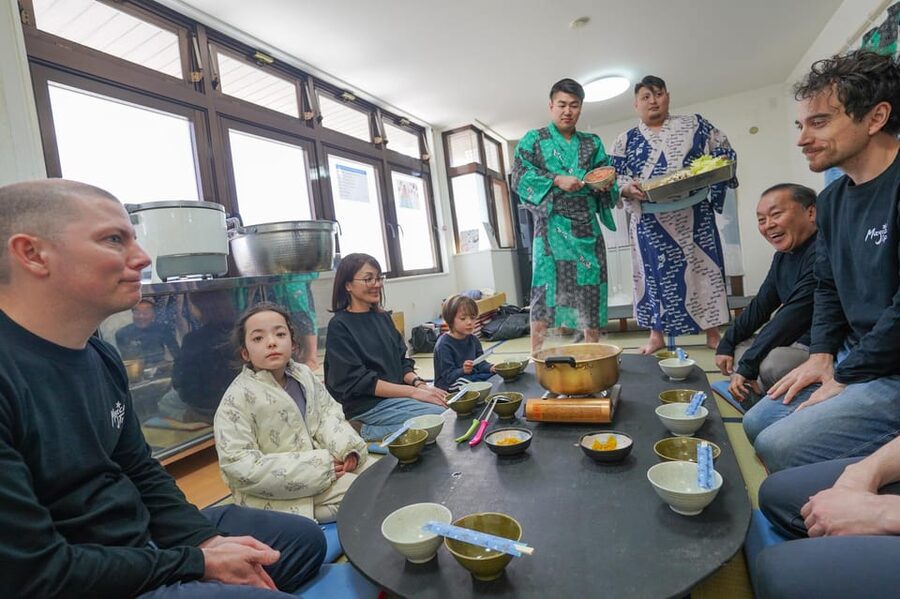
The shared meal is more than a final course. It is your best chance to ask the wrestlers about training, food, life in a stable, and the sport itself.
The atmosphere is informal. The wrestlers have been described as friendly, funny, and willing to joke about participants’ efforts in the ring. That makes the lunch especially useful for families and groups who want direct contact rather than a lecture.
Conversation can also correct some common assumptions. Sumo wrestlers are not simply large men who push each other. Their day is structured around practice, meals, rest, hierarchy, and strict customs. Hearing about those routines while sitting in the stable makes the information easier to remember.
You can take photos during the experience and make a memorial handprint on paper. A T-shirt is included, and the handprint gives you a more personal souvenir than a standard logo item.
One participant noted a sales pitch for T-shirts, kimono, and other items at the end. This is worth knowing if you prefer tours without any selling. You are not paying only for lunch or a souvenir, so consider the merchandise portion a possible minor annoyance rather than a reason to book or reject the experience on its own.
Is $166 a fair price?
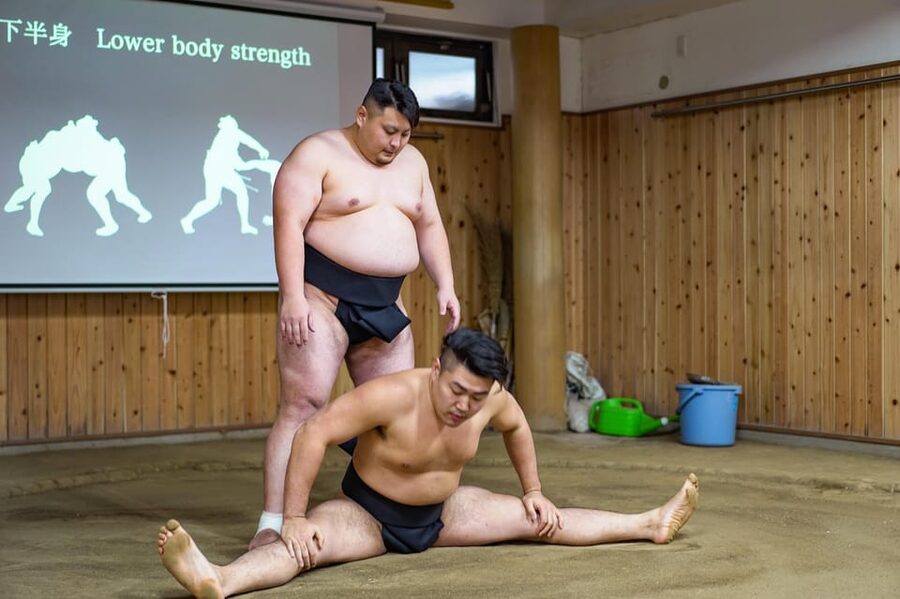
At $166 per person, this is not a cheap four-hour activity. You are paying for access to a former working sumo stable, an English-speaking guide, a meal with wrestlers, tour photos, a T-shirt, and a chance to participate in training and a bout.
The value depends on what you want from Japan. If you only want to watch sumo, a tournament ticket or televised match may cost less. If you want a direct look at how the sport works and a chance to stand in the ring, this experience offers something that a stadium seat cannot.
The meal also matters. You are not stopping at an ordinary restaurant for a bowl of hot pot. You help prepare chanko-nabe and eat at a table linked to the stable. The wrestlers’ presence turns lunch into part of the cultural lesson.
I would consider the price reasonable for a visitor who sees sumo as a major Japan interest, especially a family or small group willing to participate. It is less attractive if you dislike physical demonstrations, have strict dietary needs, or prefer independent sightseeing with no fixed schedule.
Who will enjoy this experience most
This tour suits first-time sumo fans particularly well. You do not need to know the rankings or rules in advance because the guide builds the lesson from the basics.
It also works for families, couples, friends, and people who want a break from temples, shopping, and city streets. The mix of watching, learning, practicing, eating, and talking keeps the morning varied.
You should book it if you enjoy:
- Hands-on cultural activities
- Meeting performers or athletes in a small setting
- Trying something slightly silly and physical
- Japanese food and shared meals
- Clear explanations in English
- Taking home photos and a simple souvenir
Think twice if you have mobility problems, a heart condition, a cold, high blood pressure, or another medical issue. The location is not fully accessible, the tour involves walking and physical activity, and the operator recommends a private tour for people with walking difficulties.
The schedule is strict. Arrive early at Shin-Kawasaki Station. If you miss the group, you cannot join later or receive a refund. Free cancellation is available up to two days in advance, which gives you some flexibility before the deadline.
Should you book the sumo stable visit?
Book this experience if you want to understand sumo from inside its daily setting, not just watch a match from a seat. The combination of morning practice, clear instruction, optional wrestling, dumpling-making, and lunch with the wrestlers gives you a full four-hour introduction.
I especially like that participation is optional. You can stay ringside and learn, or step into the ring and accept a brief lesson in humility. The former stable, direct questions over lunch, and the chanko-nabe preparation give the experience more substance than a quick photo stop.
Skip it if you need a fully accessible activity, cannot manage a firm start time, or require guaranteed allergy-free food. For everyone else, particularly families and first-time sumo fans, this is one of the more personal ways to meet Japan’s national sport.
FAQ
Where does the sumo experience meet?
Meet just outside the ticket gate at Shin-Kawasaki Station. There is only one ticket gate, and the meeting point is in front of the Kiyoken shumai shop.
How do I identify the guide?
The guide will hold a red or orange sign marked Magical Trip.
How long does the experience last?
The experience lasts four hours. Starting times vary, so check availability when booking.
Is the tour conducted in English?
Yes. The tour includes a live English-speaking guide.
How far is Shin-Kawasaki Station from Tokyo and Yokohama?
The meeting point is about 10 minutes from Yokohama Station and about 20 minutes from Tokyo Station.
Can I wrestle with a sumo wrestler?
Yes, participants who want to can enter the ring for a bout with a rikishi. Taking part is optional.
Do I have to participate in the physical exercises?
No. You can watch the training, demonstrations, and other participants without entering the ring.
Is lunch included?
Yes. Lunch with the sumo wrestlers is included, along with the chance to help make chicken dumplings for chanko-nabe.
Can dietary requests or allergies be accommodated?
Tell the operator at least one day before the tour. Requests made on the day cannot be accommodated, and allergy-free meals cannot be guaranteed because the food is prepared in kitchens that do not belong to MagicalTrip.
Is the experience suitable for wheelchair users or people with mobility problems?
Some locations are not accessible by wheelchair or stroller. The experience is not recommended for people with mobility issues, and a private tour is recommended if you have walking problems.
What is included besides lunch?
The price includes the guide, a sumo stable visit, lunch with the wrestlers, tour photos, and a T-shirt.
What is the cancellation policy?
You can cancel up to two days in advance for a full refund.
Who should not take part in the physical activity?
The experience is not suitable for people with heart problems, a cold, pre-existing medical conditions, or high blood pressure.
Just added around Tokyo
- Kawagoe Japanese Food Tour : Unagi Kaiseki and Sake near Tokyo★ 5.0 · 30 reviews
- Kawagoe 4hr Private Tour with Licensed Guide (Kawagoe Dep)★ 5.0 · 13 reviews
- Little EDO Sushi Making workshop in Kawagoe★ 5.0 · 18 reviews
- 【R34】Tokyo:Private Daikoku tour in Modified R34★ 4.9 · 92 reviews
- :Tokyo,Shibuya/ Pro Photography in Kimono / English-Friendly★ 5.0 · 26 reviews
- Tokyo:Celebrate Unique Japanese New Year Tradition Festivity★ 3.9 · 20 reviews
- Tokyo: Allstar Food Tour★ 4.7 · 29 reviews
- Tokyo: West-Side Cycling and Food Tour with Guide★ 5.0 · 37 reviews
Sumo Experiences, compared.
Sumo Show Experience with Chicken Hot Pot and a Photo
Our verdict →
Authentic Sumo Experience in Tokyo: Enter the Sanctuary
Our verdict →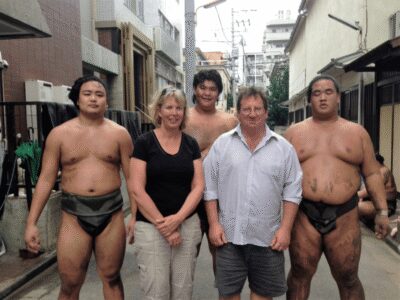

Browse the lists this tour appears in