
Reviewed · SUMO EXPERIENCES
Tokyo: Challenge Sumo Wrestlers and Enjoy Meal
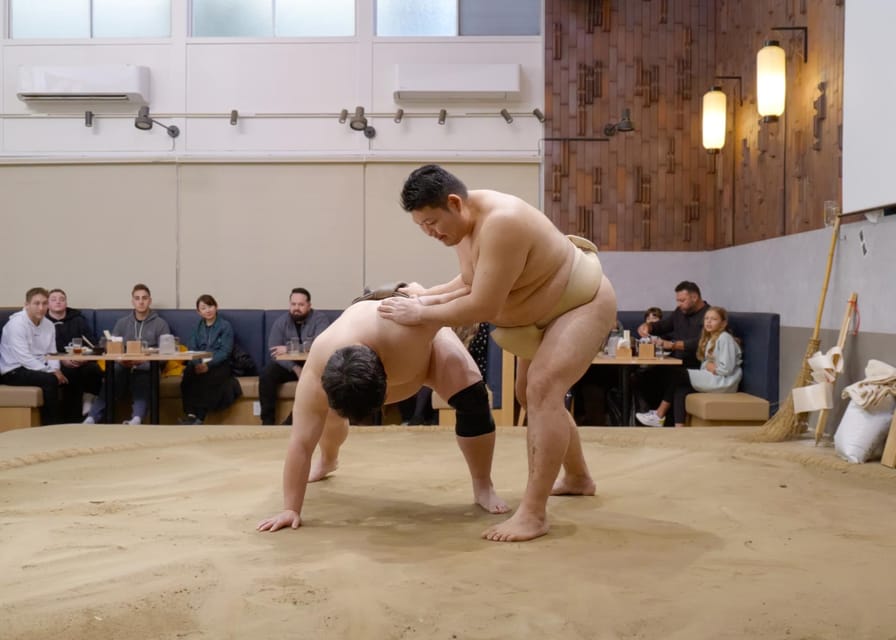
The best part of this Tokyo experience is the close-up look at sumo without needing to attend a grand tournament. Former wrestlers explain the sport, demonstrate its moves in the dohyo, and then invite you to test your strength in a padded sumo costume.
I like the mix of useful cultural explanation and silly fun, which works well for families and first-time visitors. I also like that the meal is built in, with tonkatsu at lunch or sukiyaki at dinner. The main drawback is the group setting: seats are assigned by booking order, and loud talk near you can make the commentary harder to hear.
Key points to know before booking
- Former wrestlers lead the show: You see trained athletes demonstrate sumo and answer questions.
- You can enter the ring: A sumo costume lets you try the sport without taking a serious physical risk.
- The meal depends on your time slot: Choose tonkatsu for lunch or sukiyaki for dinner.
- Kikukawa Station is the meeting point: The venue is about a five to eight-minute walk from Exit A1.
- English explanation is included: The host or greeter speaks English and Japanese.
- Book early for better seats: Seating is arranged by booking order, and groups may be split across tables.
Why this sumo experience works for first-time visitors
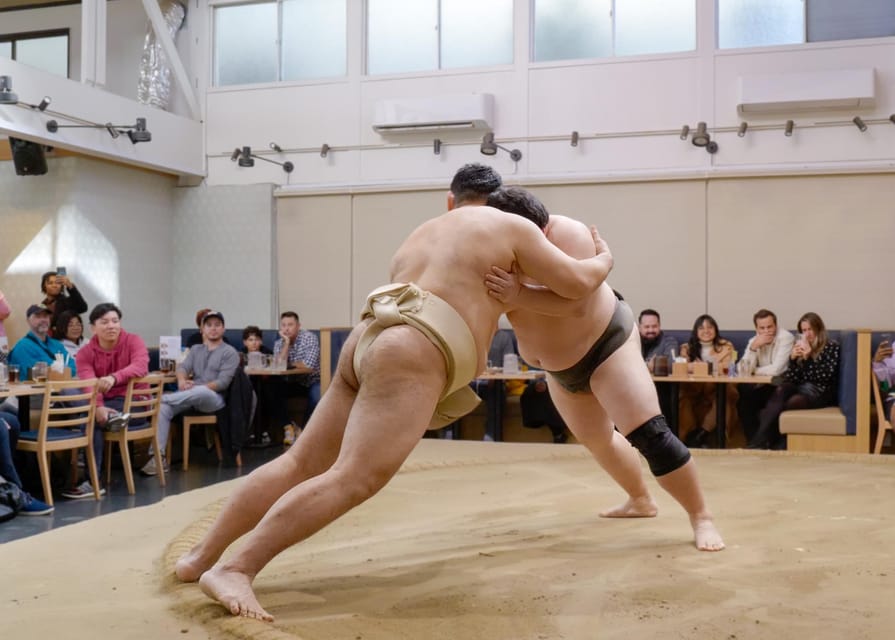
Sumo can look mysterious if you only catch a few seconds of a televised bout. The wrestlers stomp, slap, shove, and suddenly one man is outside the ring. This activity gives you the missing pieces: the meaning of the ring, familiar sumo terms, the basic techniques, and the role of ceremony in Japan’s national sport.
You are not simply watching a performance from a distance. Former professional wrestlers explain what they are doing, then demonstrate the physical force behind the movements. That matters because sumo is more than two large men pushing each other. Balance, timing, footwork, and position decide a match quickly.
The tone is light. There is humor, but the athletes are still capable of showing why sumo demands serious training. I like that balance. You get a cultural lesson without sitting through a long lecture, and you get entertainment without losing the connection to the real sport.
The activity is especially useful if a professional grand tournament is not taking place during your visit. It gives you a short, organized introduction to sumo at a time that fits a normal Tokyo sightseeing day.
More Sumo Experiences in Tokyo:
- Tokyo: Sumo Show Experience with Chicken Hot Pot and a Photo
★ 4.8 · 6,678 reviews - Tokyo: Sumo Show and Dining Experience
★ 4.8 · 2,742 reviews - the SUMO show
★ 5.0 · 1,960 reviews
Getting to the venue near Kikukawa Station
The meeting point is reached via the Shinjuku Line. Get off at Kikukawa Station and allow roughly five to eight minutes to walk from Exit A1.
This is not a hotel pickup activity, so you need to make your own way there. That is a small but important detail when planning your day. Check the route before you leave, and give yourself enough time to find Exit A1 and walk to the restaurant without rushing.
The experience ends at the same meeting point. You can pair it with other stops in eastern Tokyo, but the provided information does not specify nearby attractions or onward transportation. Plan your next move separately rather than assuming a transfer is included.
What happens during the 1.5-hour visit
The advertised duration is 1.5 hours, with starting times shown when you check availability. The exact flow can vary slightly depending on the selected meal and the pace of the group, but you should expect four main parts: explanation, demonstration, participation, and food.
The opening explanation introduces sumo and its connection with Japanese culture. You learn common terms while watching the former wrestlers prepare and explain their actions. For someone new to the sport, this short introduction helps you follow the action instead of seeing only a blur of movement.
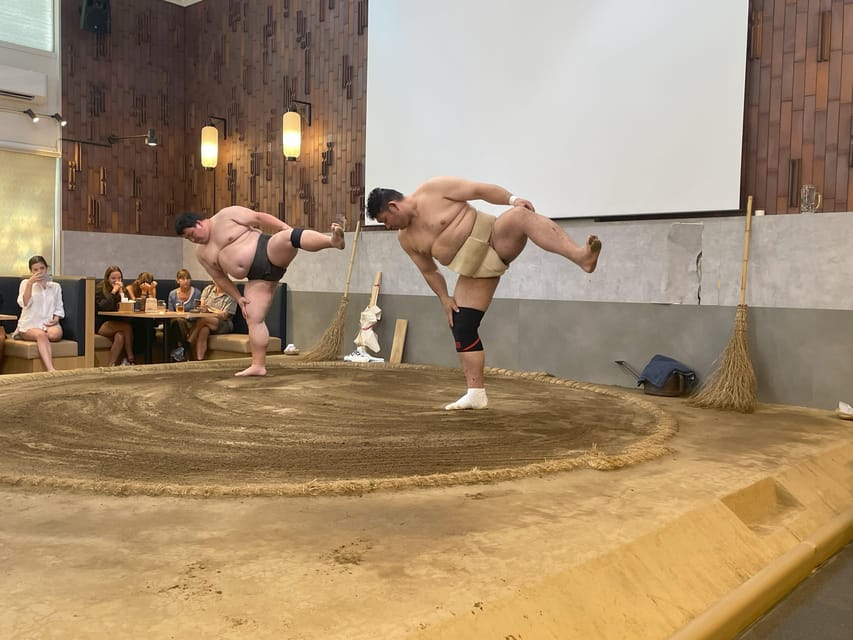
The demonstration is the serious part of the show. The wrestlers clash in the ring and display sumo techniques for the room. You get a close look at the strength and speed involved, along with the humor that makes the presentation approachable.
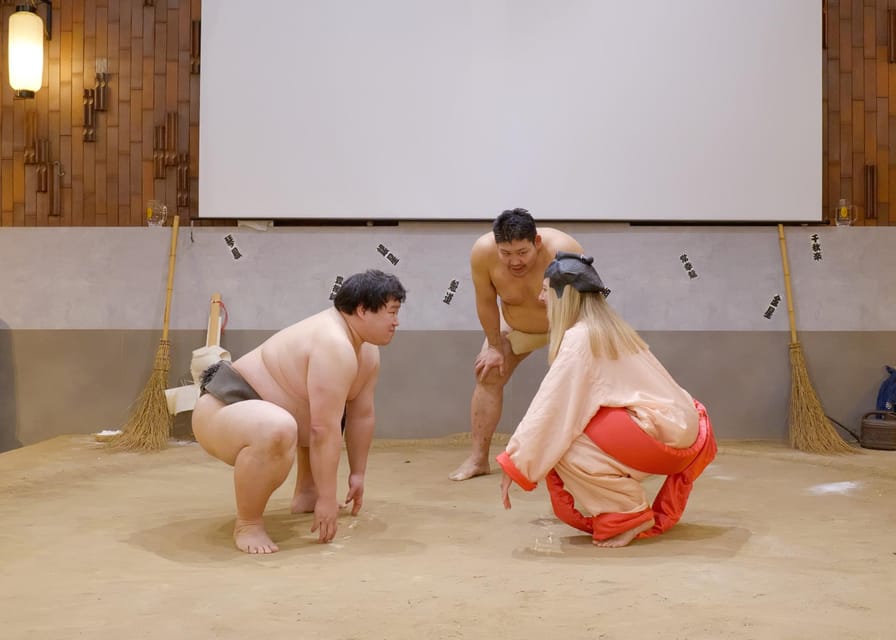
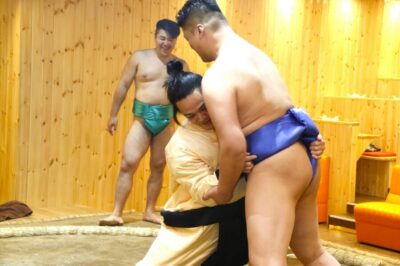
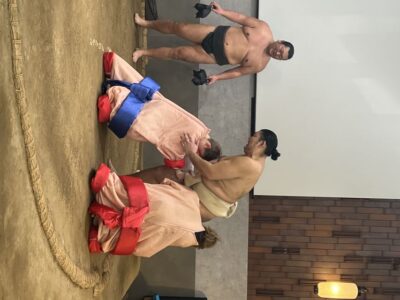
After the demonstration, you can put on a sumo costume and try the sport yourself. This is the hands-on moment, and it is likely to produce the biggest laughs in your group. You test your strength against the experts in a friendly setting, but you should follow every instruction from the staff and use good judgment.
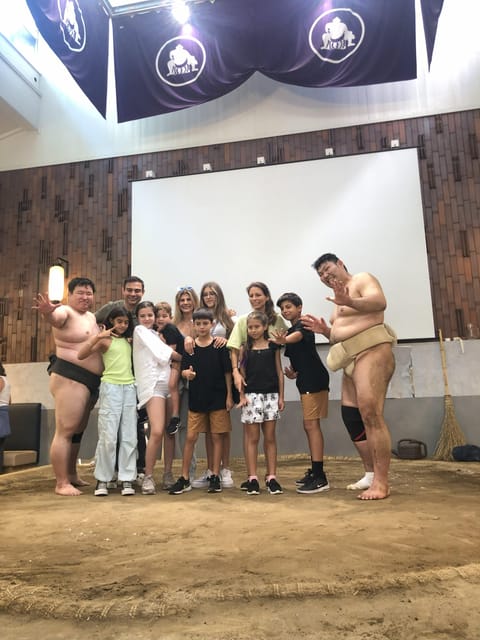
A photo opportunity follows, allowing you to pose with the wrestlers. You do not need to wrestle in the costume simply to get a picture. Everyone has a chance to take photos at the end, so you can enjoy the demonstration and skip the physical challenge if that suits you better.
The meal and question period round out the visit. Food may be served as part of the main presentation or toward the end, depending on the selected option and venue flow. The experience includes time for questions, which is useful if you want to ask about training, match technique, or the wrestlers’ former careers.
The sumo demonstration: serious skill with a friendly tone
The strongest part of the activity is the presence of former professional wrestlers. They are not simply actors wearing costumes. Their experience gives the demonstration weight, and their ability to handle questions adds a personal side to the sport.
You should expect a show designed for an international audience. The explanation is provided in English, with Japanese also available. One especially useful feature is the attention to sumo terminology. Hearing the words as you watch the techniques makes them easier to remember than reading a list in a museum.
The presentation also uses humor. That keeps the mood relaxed, particularly for children who may not care about the finer points of sumo at first. At the same time, the athletes can show enough power and control to make the sport feel real.
Your view depends partly on your seat. The best available seats are arranged by booking order. If you can choose when to book, earlier is better. A seat near the front may not change the overall view dramatically, but it can help you hear the commentary and question-and-answer portion.
Sound is worth considering. The venue is not a silent theater, and other people may talk during the presentation. If hearing every explanation matters to you, aim for a front seat and encourage your own group to keep conversations low.
A few more Tokyo half-days worth comparing
- 1-Day Tokyo Bus Tour
★ 5.0 · 14,250 reviews - Tokyo: TOKYO SKYTREE® Admission ticket
★ 4.5 · 11,192 reviews - Tokyo: teamLab Planets TOKYO Digital Art Museum Entry Ticket
★ 4.6 · 9,779 reviews - Tokyo: Shinjuku Food Tour (13 Dishes at 4 Local Eateries)
★ 5.0 · 6,603 reviews
Trying the sumo costume yourself
The costume portion changes the pace from watching to doing. You step into the ring area and face the former wrestlers in a friendly contest. It gives you a physical sense of how difficult it is to move and stay balanced in a sumo suit.
This part is optional in spirit, even though the activity presents it as a highlight. You should follow staff instructions and decide how much participation feels right for you. The photo opportunity does not require you to wrestle, so people who would rather observe can still take part in the social side of the experience.
Families may find this section particularly appealing. Children can see the wrestlers up close, laugh at the costumes, and take photos. Infant rates apply if the infant does not occupy a seat, but infant meals are not included. The supplied information does not give a separate minimum age for the activity.
The rules of the room matter. Staff may ask you to leave if your behavior becomes troublesome, and no refund is provided in that situation. That is standard advice for an interactive show, but it is worth taking seriously. Listen carefully, avoid rough behavior, and treat the wrestlers and other participants with respect.
Choosing tonkatsu lunch or sukiyaki dinner
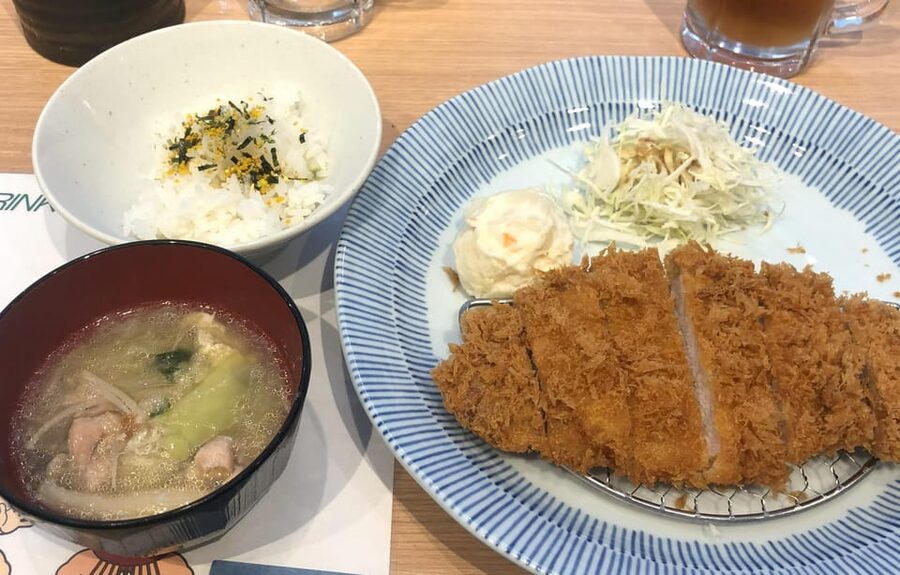
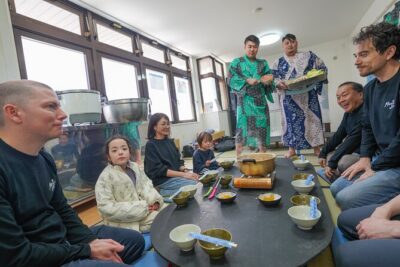
The food makes this more than a short stage presentation. At lunch, you receive tonkatsu, a deep-fried pork cutlet. At dinner, the meal is sukiyaki, a hot pot with beef and vegetables in a sweetened soy broth.
Tonkatsu is a straightforward choice for midday. It is filling, familiar enough for many children, and easy to enjoy after the demonstration. The food is not the reason to book the activity, but it adds real value by removing the need to arrange a separate meal around your sumo visit.
Sukiyaki gives the dinner option a more traditional feel. Beef and vegetables cook in a sweet soy-based broth, making the meal warmer and slower paced than a simple set lunch. Select the option that fits your schedule rather than choosing only by dish.
Some food details depend on the booking option. Additional food and drinks are not included, and you should advise the operator of specific dietary requirements in advance. You may bring your own food and drink, though you should still follow the venue’s instructions.
The meal may not satisfy someone expecting a full restaurant feast with a wide range of choices. Think of it as a convenient Japanese meal attached to a cultural activity. The experience’s main value is the combination of demonstration, participation, and conversation.
Value at $117 per person
At $117 per person, this is not a cheap meal or a casual photo stop. The price makes the most sense if you want several elements in one booking: former professional wrestlers, English explanation, live demonstration, a chance to enter the ring, a meal, and a photo opportunity.
It can also be good value for a family or small group that wants a planned cultural activity. You avoid the uncertainty of trying to find a sumo-related event on your own, and you receive a clear introduction in a setting made for international visitors.
The value is weaker if you only want to watch a short bout and take a picture. The meal and explanation are part of what you pay for, so those elements should matter to you. Likewise, someone seeking a full professional tournament will need to see an actual grand tournament instead. This activity is an introduction and demonstration, not tournament seating.
I would compare the price with the cost of arranging lunch or dinner separately, then ask how much you value direct contact with former wrestlers. If the answer is a lot, the package is easier to justify. If your interest in sumo is only mild, you may prefer to spend the money on a different Tokyo cultural activity.
Who will enjoy this most
I would recommend this to first-time sumo viewers, families with children, and anyone who wants an activity that is both informative and playful. It suits people who enjoy asking questions and joining in rather than sitting quietly through a formal lecture.
It is also a sensible choice for visitors who cannot attend a grand tournament or a sumo stable training session. One possible alternative, watching stable practice, may have age restrictions. The supplied information describes this activity as suitable for a wider family audience, though it does not give a specific minimum age.
You should think twice if you dislike group activities, physical participation, or arranged seating. The experience is social by design. You may share a table with other participants, and larger groups may be seated at different tables.
It is also not ideal if you need a fully flexible schedule. Confirmation arrives within 24 hours of booking and depends on availability. The activity is non-refundable, so make sure the date and time work before committing.
Practical tips for a better visit
Book as early as your plans allow if seat position matters to you. Seating is arranged by booking order, and front seats can make the English commentary and questions easier to hear.
Tell the operator about dietary requirements when booking. The lunch and dinner options are set by the selection you make, and extra food or drinks are not included.
Arrive with enough time to walk from Kikukawa Station’s A1 Exit. The walk is only about five to eight minutes, but Tokyo station exits can take a moment to navigate.
Keep your schedule flexible enough for the full 1.5-hour activity. It ends back at the meeting point, and you will need to arrange your own transportation afterward.
If you are with children, explain that the costume wrestling is friendly and controlled. The staff’s instructions are important, especially when several people are taking turns in the ring.
Bring a camera or phone for the final photo. The wrestlers are available for pictures, and this is the clearest keepsake from the visit.
Should you book this Tokyo sumo experience?
Book it if you want a compact, welcoming introduction to sumo with real former wrestlers, a meal, and a chance to participate. The combination of explanation, live demonstration, costume wrestling, questions, and photos gives you more than a quick staged performance.
Skip it if your main goal is to watch an official tournament, or if you want a quiet meal with no group interaction. At $117, the activity earns its price through personal contact and participation, not through the food alone.
For most first-time visitors, especially families and anyone visiting outside tournament season, this is a practical way to put sumo into context. Choose your meal, book early for the best possible seats, and treat the costume bout as optional fun rather than an obligation.
FAQ
Where does the sumo experience take place?
The meeting point is near Kikukawa Station in Tokyo’s Kanto Region. From the Shinjuku Line station, walk about five to eight minutes from Exit A1.
How long does the activity last?
The listed duration is 1.5 hours. Starting times are shown when you check availability.
What meal is included?
The lunch option includes tonkatsu, a deep-fried pork cutlet. The dinner option includes sukiyaki with beef and vegetables in a sweetened soy broth.
Is the explanation available in English?
Yes. English explanation is included, and the host or greeter speaks English and Japanese.
Can I try sumo wrestling myself?
Yes. You can put on a sumo costume and test your technique against the former wrestlers in a friendly contest.
Do I need to wrestle to take a photo with the wrestlers?
No. A photo opportunity is provided at the end, and you do not need to take part in the wrestling attempt simply to have your picture taken.
Is transportation included?
No. Hotel pickup, hotel drop-off, and transportation to and from the restaurant are not included. You make your own way to the meeting point and leave from there afterward.
Can I bring my own food or drink?
Yes, it is acceptable to bring your own food and drink. Additional food and drinks are not included in the activity.
Can I cancel for a refund?
No. The activity is non-refundable. Confirmation is sent within 24 hours of booking, subject to availability.
Just added around Tokyo
- Kawagoe Japanese Food Tour : Unagi Kaiseki and Sake near Tokyo★ 5.0 · 30 reviews
- Kawagoe 4hr Private Tour with Licensed Guide (Kawagoe Dep)★ 5.0 · 13 reviews
- Little EDO Sushi Making workshop in Kawagoe★ 5.0 · 18 reviews
- 【R34】Tokyo:Private Daikoku tour in Modified R34★ 4.9 · 92 reviews
- :Tokyo,Shibuya/ Pro Photography in Kimono / English-Friendly★ 5.0 · 26 reviews
- Tokyo:Celebrate Unique Japanese New Year Tradition Festivity★ 3.9 · 20 reviews
- Tokyo: Allstar Food Tour★ 4.7 · 29 reviews
- Tokyo: West-Side Cycling and Food Tour with Guide★ 5.0 · 37 reviews
Sumo Experiences, compared.
Sumo Show Experience with Chicken Hot Pot and a Photo
Our verdict →
Authentic Sumo Experience in Tokyo: Enter the Sanctuary
Our verdict →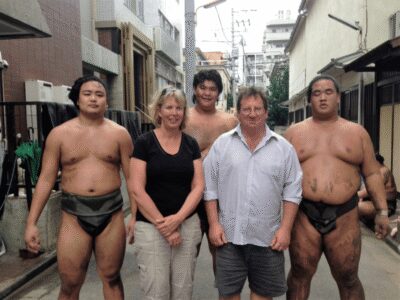
Browse the lists this tour appears in