
Reviewed · SUMO EXPERIENCES
Tokyo: Sumo Tournament Tour with Chair Seat Tickets
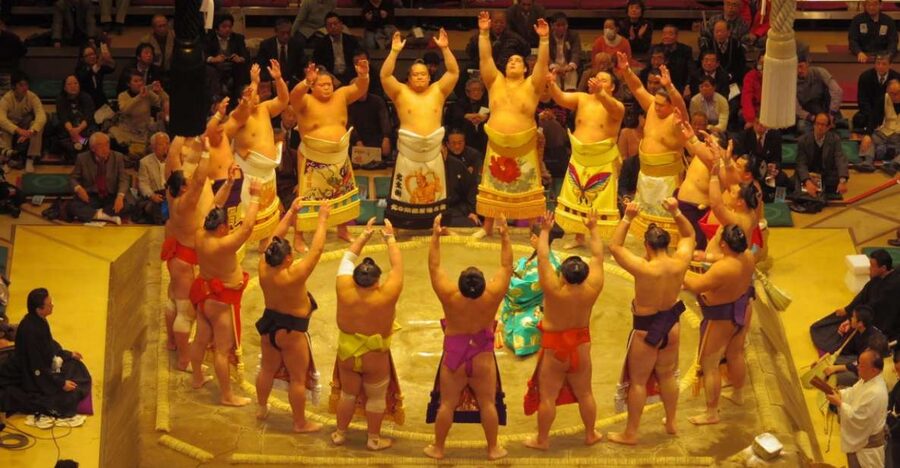
Tokyo sumo is not a staged dinner show or a tourist imitation. You watch an official tournament at Ryogoku Kokugikan, where wrestlers compete for real rankings, prizes, and pride. The afternoon builds toward the top divisions, with the Makuuchi ring-entering ceremony at 3:40 PM, the Yokozuna ceremony at 3:55 PM, and the main bouts from 4:10 PM.
I like two things most: the guide gives you the cultural keys that make each ritual and match easier to understand, and the ticket takes the hard work out of finding a seat during a tournament that can sell out quickly. Guides such as Mieko, Taka, Mia, and Hiro have been especially good at explaining wrestlers, techniques, and who deserves your cheer.
The main drawback is the seating. The 2F chair seats can be high and fairly small, though the arena is compact and the view remains good. If you want more space, choose the 1F box-seat option, but expect to pay more and sit in a shared or private box according to the option selected.
Key points to know before booking
- Watch an official tournament in Tokyo: You see real competition at Ryogoku Kokugikan, not a performance arranged for tourists.
- Arrive for the top-division ceremonies: The Makuuchi and Yokozuna ring-entering ceremonies begin at 3:40 PM and 3:55 PM.
- Get help making sense of sumo: Your English-speaking guide explains rankings, rituals, scoring, wrestler backgrounds, and match tactics.
- Choose your seat carefully: The standard option uses 2F chair seats, while the 1F option provides box seating and more personal space.
- Use the supporter kit: The cheering items help you take part in the crowd and back a favorite wrestler.
- Plan around a long afternoon: Meet at 2:15 PM and finish around 6 PM, with food and drinks purchased separately unless your chosen option includes lunch.
Why a real sumo tournament is worth your Tokyo afternoon
Sumo is easy to misunderstand if you only see a short clip. Two huge wrestlers step into a small ring, throw salt, stare each other down, and then the match may be over in seconds. The power is clear, but the customs around the bout are just as important.
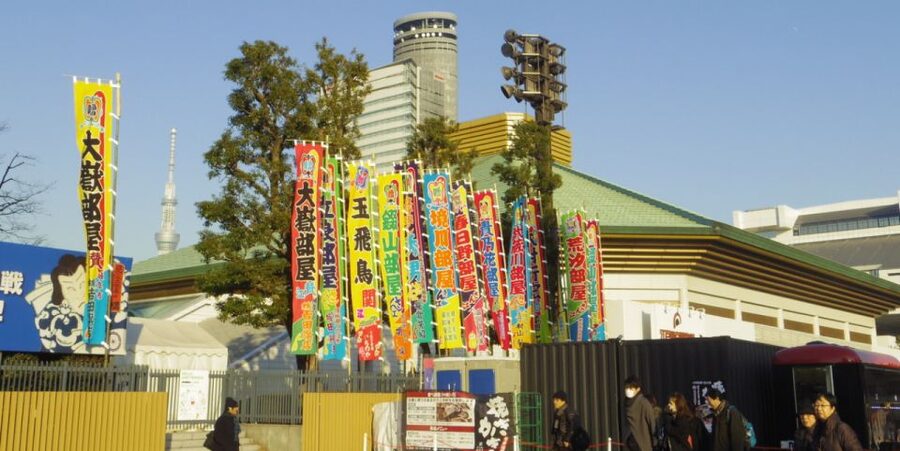
This tour gives you the setting needed to appreciate both. You watch the wrestlers prepare, follow the ceremonies, and see the crowd react to familiar names and styles. Your guide can explain why a wrestler receives more sponsorship banners, why the audience responds to a certain move, and how a victory affects a wrestler’s standing.
That context changes the day. Instead of seeing a series of quick shoves, you begin to notice footwork, balance, timing, and small changes in position. Several guides have also prepared bout sheets or notes showing the wrestlers competing that day, their rankings, and the significance of the match.
You are also seeing a sport with a limited annual schedule. Tokyo hosts only three of the six official tournaments each year, and each tournament runs for 15 days. If your visit lines up with one, this is one of the few chances to see top-level sumo in its proper home setting.
More Sumo Experiences in Tokyo:
- Tokyo: Sumo Show Experience with Chicken Hot Pot and a Photo
★ 4.8 · 6,678 reviews - Tokyo: Sumo Show and Dining Experience
★ 4.8 · 2,742 reviews - the SUMO show
★ 5.0 · 1,960 reviews
Meeting at 2:15 PM near JR Ryogoku Station
The usual meeting point is the West Gate of JR Ryogoku Station at 2:15 PM, though the exact location can vary by booking option. Ryogoku is the right neighborhood for this outing: the station and arena are close, and the district is closely tied to sumo.
Allow extra time to find your group. Several tours can meet in the same area, and the organizer may use group colors or numbers to sort people before departure. Check your booking instructions closely and keep them available on your phone. A few minutes of confusion at the start can feel stressful, especially if you arrive without internet access.
Once your group is assembled, your guide walks you toward the stadium. This is useful even if you are comfortable in Tokyo, since the guide handles the entry process and points you toward the correct entrance and seats. Guides such as Taka, Kent, and Mieko have been praised for staying with the group and answering questions throughout the visit.
The guided element varies by option and group. Some people receive plenty of explanation during the tournament, while others find the tour is mainly a ticket handoff, a short introduction, and an escort to the stadium entrance. If you want detailed commentary, ask questions early and sit near your guide when possible.
Inside Ryogoku Kokugikan before the main bouts
The tournament begins earlier in the day with lower-ranked divisions, but this experience focuses on the stronger divisions in the afternoon. That timing is practical for a sightseeing schedule. You do not have to spend the entire day in the arena, yet you still see the most important part of the program.
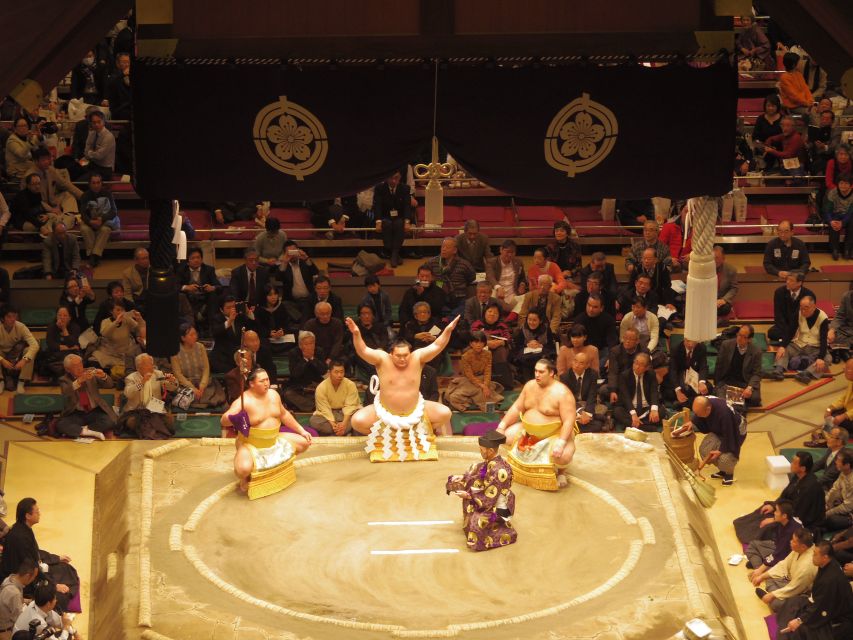
The main action starts building before the bouts. Sumo has a deliberate pace, and the ceremonies help you understand that the ring is more than a simple sports platform. The wrestlers’ gestures, the salt, the formal movements, and the ring-entering rituals all carry meaning.
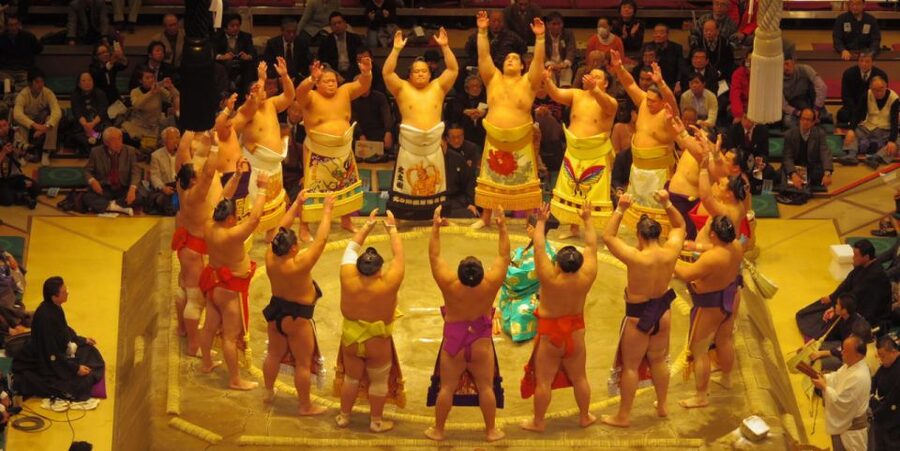
At 3:40 PM, the Makuuchi, or top division, performs its ring-entering ceremony. At 3:55 PM, the Yokozuna, or grand champion, division follows. These are key moments for first-time viewers because you see the leading wrestlers together before the individual contests begin.
Your guide can help you identify the wrestlers and explain the ranking system. That matters because sumo uses a hierarchy that affects prestige, matchups, and a wrestler’s future position. A guide might also point out which competitors are on a winning run, which ones need a victory, or why the crowd has taken a particular interest in one wrestler.
From 4:10 PM, the bouts become the main event
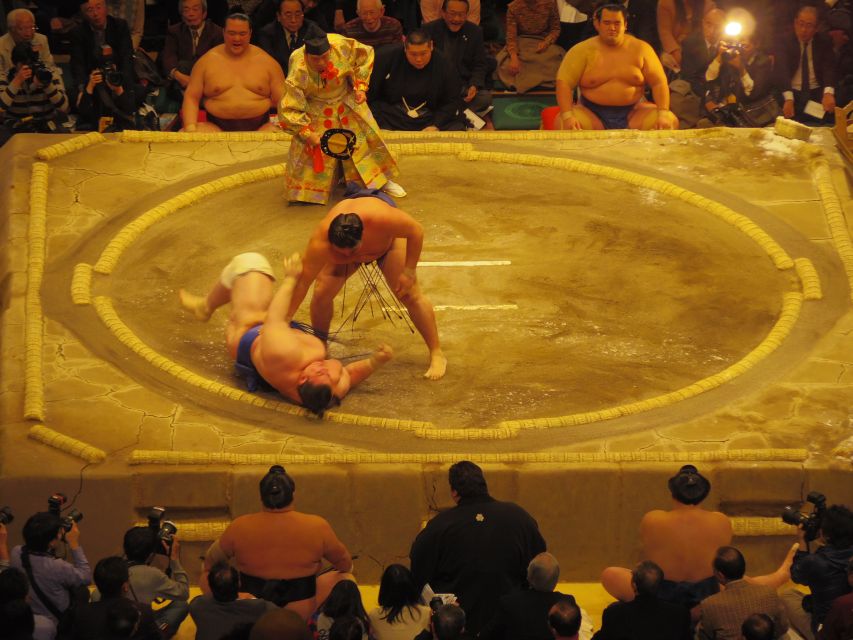
The Makuuchi bouts begin at about 4:10 PM and continue until the tournament ends around 6 PM. The matches themselves are short, but the buildup makes them exciting. Wrestlers face each other, perform the required preparations, and then explode into action.
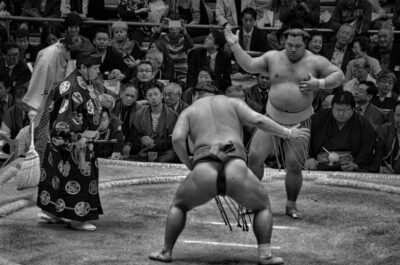
The basic objective is simple: force your opponent outside the circular ring or make any part of his body other than the soles of his feet touch the ground. The techniques are not simple. A wrestler may use a push, a belt grip, a throw, a leg trip, or a sudden change of direction.
The short duration can surprise people who expect a long wrestling match. There may be several minutes of ceremony and preparation for a contest that lasts only a few seconds. That contrast is part of sumo’s appeal. You watch two athletes remain calm under pressure, then make a decision with enormous force and speed.
This is where the guide adds the most value. The experienced guides on this tour have explained why one wrestler has more sponsor banners, what a certain grip suggests, and how different wrestlers favor different moves. Even a simple bout becomes easier to read when someone tells you what to watch for.
You can also cheer. The sumo supporter kit, available with selected options, gives you a way to join the atmosphere instead of sitting quietly as an outsider. Some guides encourage the group to support a favorite wrestler, which adds a light, social touch to the afternoon.
A few more Tokyo half-days worth comparing
- 1-Day Tokyo Bus Tour
★ 5.0 · 14,250 reviews - Tokyo: TOKYO SKYTREE® Admission ticket
★ 4.5 · 11,192 reviews - Tokyo: teamLab Planets TOKYO Digital Art Museum Entry Ticket
★ 4.6 · 9,779 reviews - Tokyo: Shinjuku Food Tour (13 Dishes at 4 Local Eateries)
★ 5.0 · 6,603 reviews
What the 2F chair seats are really like
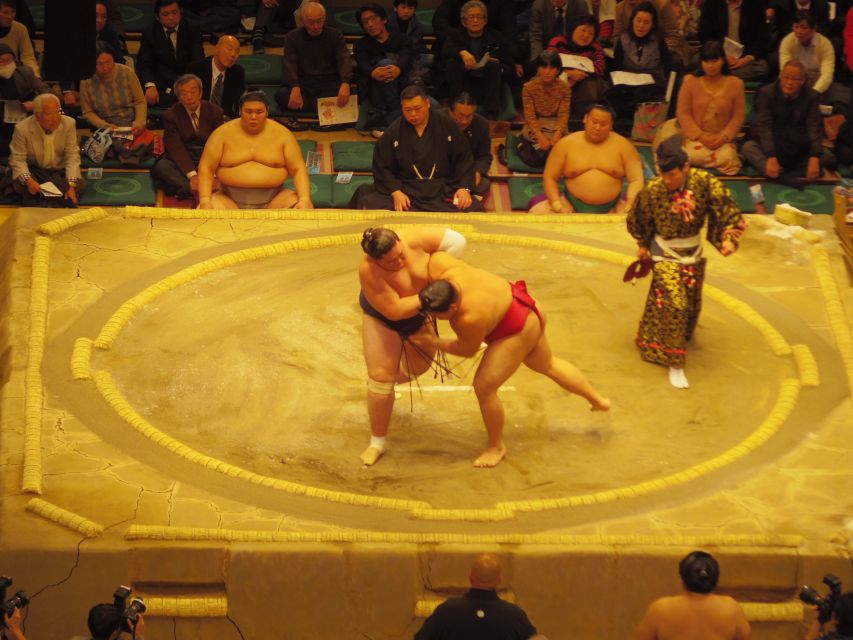
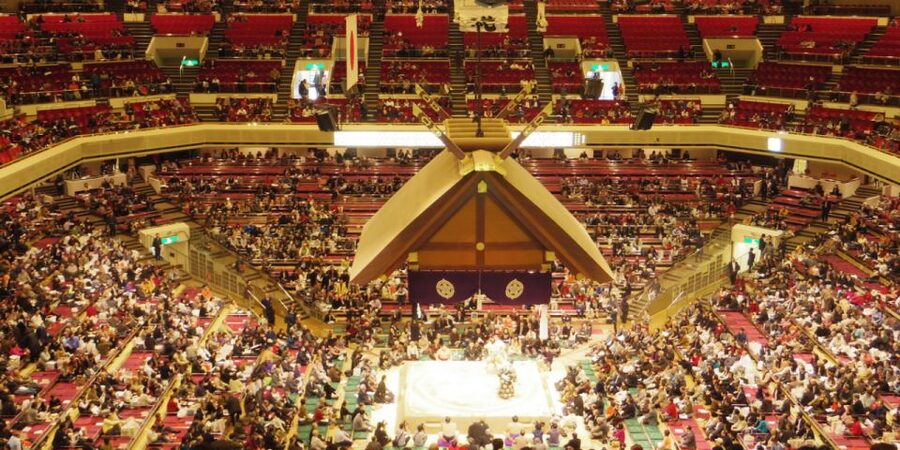
The standard ticket is for a 2F chair seat, and you cannot select the exact chair yourself. Some seats are near the top, which can look disappointing on a seating map. In practice, the arena is small enough that the view is generally clear, and you can follow the action from above.
Still, do not expect a close-up view of every expression or foot movement. If you want to study the wrestlers at close range, the 2F seats may feel distant. Several people have found the view more than adequate, while others wished they had been closer.
The chairs can also feel small, especially if you are tall or carrying extra belongings. Large luggage cannot be brought into the seating area, so travel light for this outing. Baby strollers are not allowed, and the experience is not suitable for wheelchair users.
The 1F option uses box seats rather than individual chairs. The information provided says those choosing 1F box seats can enjoy their own seating space without sharing with others. This is the better choice if personal space matters to you, but check the exact option carefully before booking because 1F seating is box seating only.
Children aged three and under can enter free, but they do not receive their own seat and must sit on an adult’s lap. Children aged four and older need their own tickets. That rule is worth considering before you select seats for a family.
Food, lunch options, and the four-hour schedule
Food and drinks are not included in the basic tour. You can buy refreshments inside the stadium, and the venue has been described as offering reasonably priced food and drinks. If your selected package includes lunch, read the details carefully so you know what is provided.
Some options include a packed lunch, while another version may include chanko nabe, the hearty stew associated with sumo stables. Dietary restrictions and allergies must be shared when you book or soon after making the reservation. Do not assume lunch is included simply because it appears in a package title.
The schedule leaves time to eat before the top bouts begin, but you should still check your specific option. The meeting is at 2:15 PM, the first major ceremony is at 3:40 PM, the main division starts at 4:10 PM, and the tournament finishes near 6 PM. This is a substantial afternoon, not a quick one-hour attraction.
Is $141 good value for a sumo ticket?
At $141 per person, this is not the cheapest way to spend an afternoon in Tokyo. You are paying more than the face value of a standard ticket, and some people have calculated the difference at roughly ¥3,500. The important question is what the extra cost does for you.
First, it can solve the ticket problem. Official sumo tickets can sell quickly, and the online purchase process may be difficult if you are unfamiliar with the Japanese system. An organized booking gives you a confirmed entry and removes the worry of searching for tickets after your Tokyo plans are already fixed.
Second, you receive help at the arena. Your guide leads you from the meeting point, handles the basic orientation, and explains the sport in English. For a first visit, that can be worth more than saving a little money, especially when the ceremonies and ranking system would otherwise be hard to follow.
The value is strongest if you have never seen sumo before, if official tickets are unavailable, or if you want cultural context instead of simply entering the building. It is weaker if you speak Japanese, already understand sumo, and can obtain a ticket directly through the official channel.
The tour has earned a strong overall rating of 4.6 from 753 ratings, with particular praise for guides such as Mieko, Mia, Taka, Hiro, Sho, Yuko, and Naomi. The common thread is not a fancy add-on. It is the guide’s ability to explain the match while keeping the group engaged.
Who should book this sumo experience?
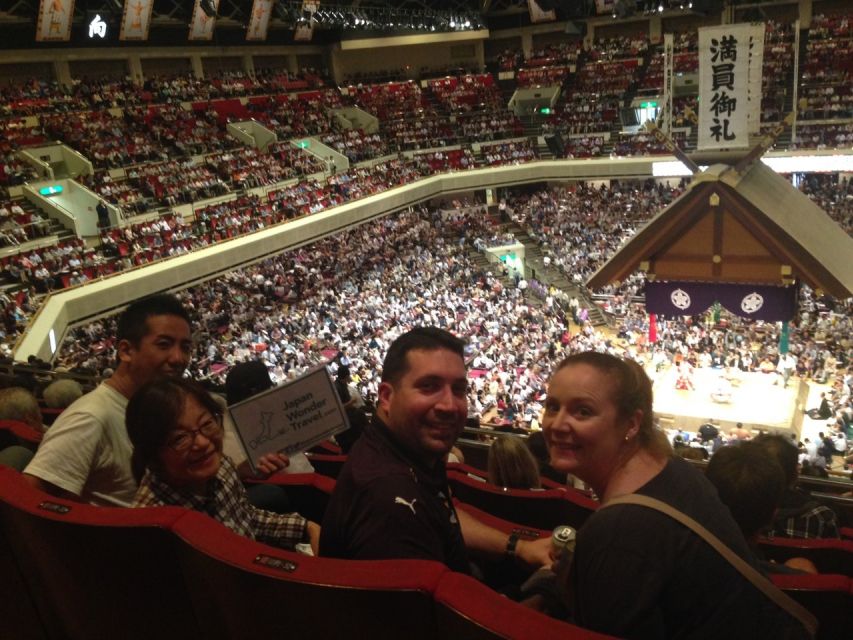
I would recommend it to a first-time visitor who wants one distinctly Japanese activity and has a Tokyo trip scheduled during a tournament. Families can enjoy it too, provided you are comfortable with the seating rules and the long afternoon.
It also suits sports fans who do not usually watch sumo. The matches are fast, the rules are clear once explained, and the atmosphere is very different from a standard international sporting event. You do not need prior knowledge to have fun.
You may want to skip the guided option if you prefer to explore alone and already have reliable access to official tickets. You may also prefer another option if you need wheelchair access, require a stroller, or dislike compact seating.
Should you book it?
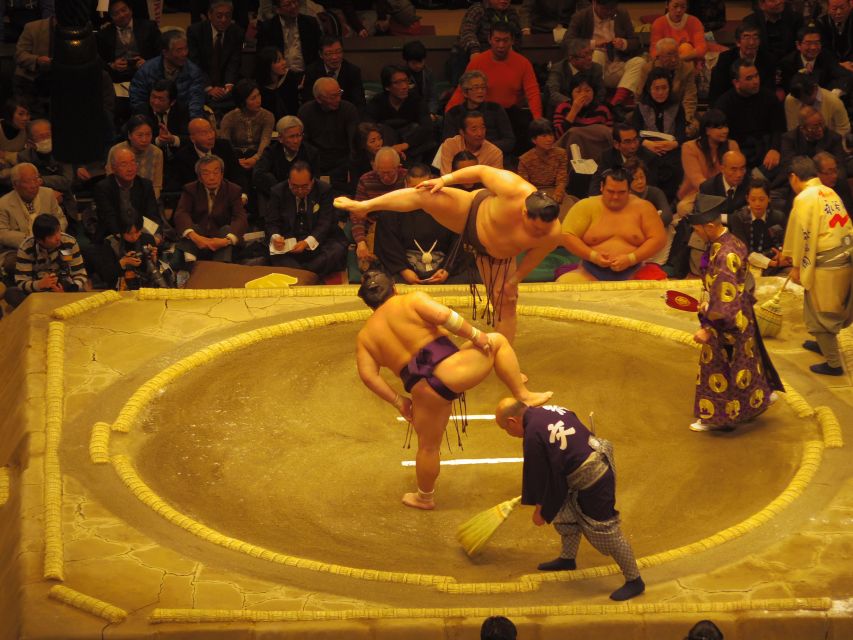
Book this tour if an official Tokyo tournament falls during your visit and you want a reliable ticket plus clear English explanations. The real value is not only the seat. It is the chance to understand why the ceremonies matter, how wrestlers are ranked, and what you are seeing when the bout ends almost as soon as it begins.
Choose 2F chair seats for the best balance of price and visibility. Pick 1F box seating if comfort and personal space matter more than saving money. Arrive early, follow the group-color instructions, travel without large luggage, and confirm exactly what your package includes for lunch and the supporter kit.
FAQ
Where does the sumo tour begin?
The usual meeting point is the West Gate of JR Ryogoku Station at 2:15 PM. The exact meeting point can vary by the option booked.
What time does the tournament finish?
The tournament portion finishes at about 6:00 PM, and the activity ends back at the meeting point.
What time do the main sumo events begin?
The Makuuchi ring-entering ceremony begins at 3:40 PM, the Yokozuna ring-entering ceremony begins at 3:55 PM, and the Makuuchi bouts start at 4:10 PM.
Are the seats on the second floor?
The standard option provides 2F chair seats, and you cannot choose a specific seat. The 1F option uses box seats instead.
Is food included?
Food and drinks are not included unless your selected package includes a lunch option. Any allergies or dietary restrictions should be provided when booking or after making the reservation.
Can young children enter?
Children aged three and under can enter free, but they must sit on an adult’s lap and do not receive their own seat. Children aged four and older need their own tickets.
Is the activity suitable for wheelchair users?
No. The experience is listed as unsuitable for wheelchair users. Baby strollers and large luggage are also not allowed in the seating area.
Just added around Tokyo
- Kawagoe Japanese Food Tour : Unagi Kaiseki and Sake near Tokyo★ 5.0 · 30 reviews
- Kawagoe 4hr Private Tour with Licensed Guide (Kawagoe Dep)★ 5.0 · 13 reviews
- Little EDO Sushi Making workshop in Kawagoe★ 5.0 · 18 reviews
- 【R34】Tokyo:Private Daikoku tour in Modified R34★ 4.9 · 92 reviews
- :Tokyo,Shibuya/ Pro Photography in Kimono / English-Friendly★ 5.0 · 26 reviews
- Tokyo:Celebrate Unique Japanese New Year Tradition Festivity★ 3.9 · 20 reviews
- Tokyo: Allstar Food Tour★ 4.7 · 29 reviews
- Tokyo: West-Side Cycling and Food Tour with Guide★ 5.0 · 37 reviews
Sumo Experiences, compared.
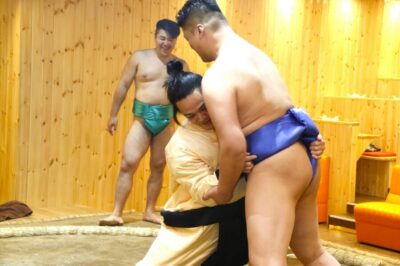
Sumo Show Experience with Chicken Hot Pot and a Photo
Our verdict →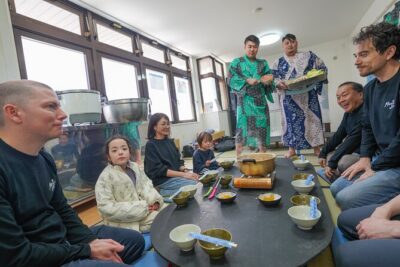
Authentic Sumo Experience in Tokyo: Enter the Sanctuary
Our verdict →
Sumo Tournament with Guide & Assigned Reserved Seat
Our verdict →
Browse the lists this tour appears in