
Reviewed · SUMO EXPERIENCES
Tokyo: Sumo Morning Practice Viewing Tour
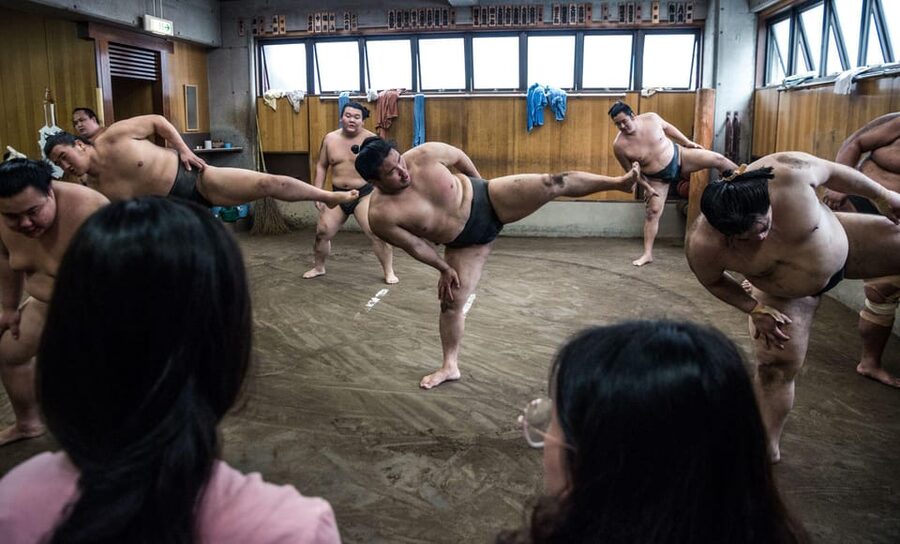
The remarkable part is not a staged bout or a restaurant show. You sit inside a working sumo stable, only a few feet from wrestlers as they practice the throws, pushes, footwork, and rituals that shape Japan’s national sport. The room is quiet, intense, and far more physical than sumo looks on television.
I like the close-up view and the way guides such as Yuko, Noriko, Mako, and Oku San explain what you are seeing without drowning out the action. I also like the genuine setting: this is where wrestlers live and train, not a performance built for tourists. The main drawback is that you must sit still and stay silent until practice ends, with no video, food, drinks, hats, or re-entry once you leave.
Key points to know before booking
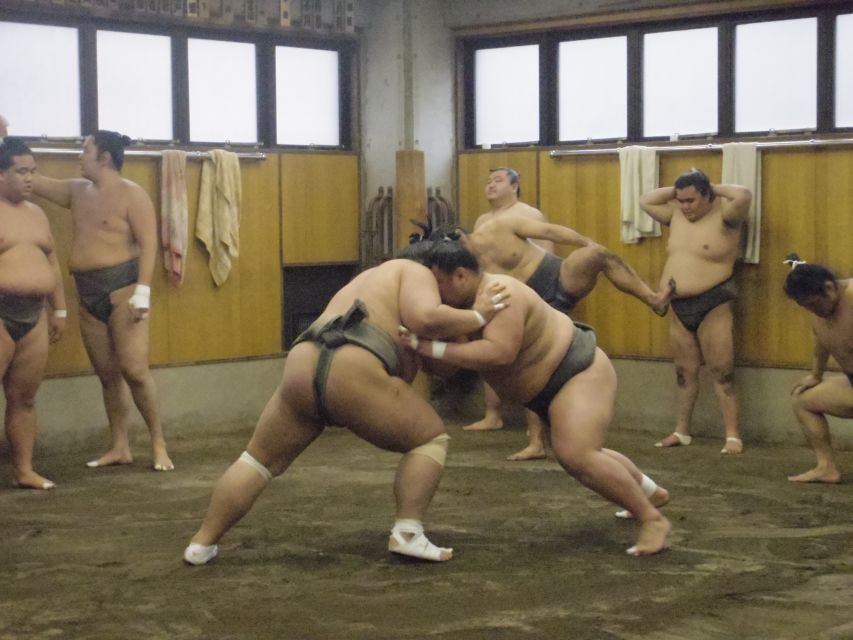
- Watch real morning training: See wrestlers work through drills and bouts inside a private stable rather than at a staged dinner show.
- Sit close to the action: Early arrival can help you get a front-row place, though seating depends on the day and other groups.
- Learn while staying quiet: Your English-speaking guide may use written notes or quietly passed information during practice.
- Expect a changing stable: The exact stable and wrestlers present can vary, which may lead to memorable sightings such as Isegahama or Arashio Stable.
- Allow up to two hours: Training usually lasts 60 to 90 minutes, and you must remain until the session finishes.
- Treat it as a place of work: Modest clothing, a silent phone, stillness, and respectful behavior are essential.
Why a sumo stable is more special than a stadium seat
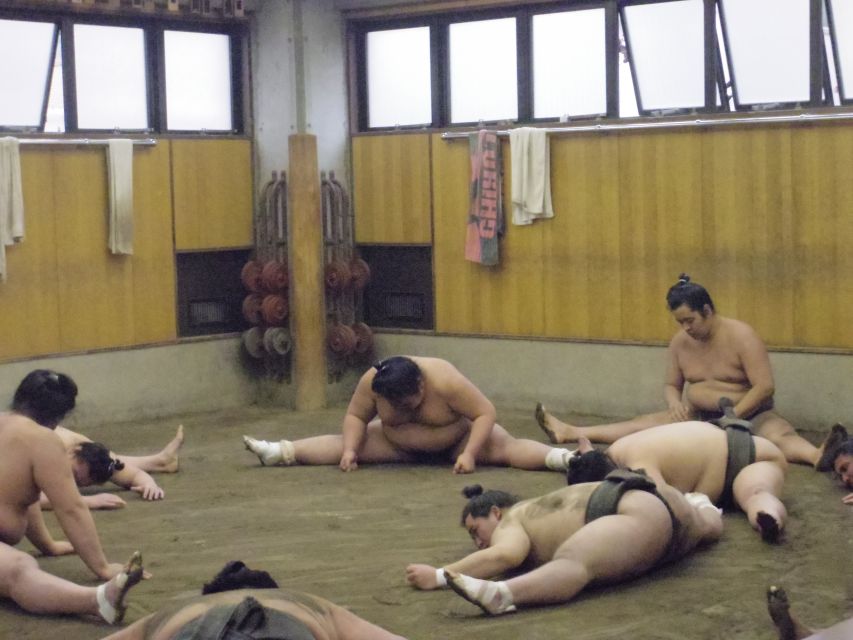
A tournament gives you the polished public version of sumo. This morning visit gives you the work behind it.
Sumo wrestlers, known as rikishi, train early in the day and live together at their stable. The stable is not normally an open public attraction. Access has traditionally been tied to sponsors and personal connections, so entering one in Tokyo is an unusual privilege, even for many Japanese residents.
That setting changes how you watch. You are not simply waiting for a match to begin. You see the wrestlers prepare, repeat movements, test balance, and face one another under the eye of the stable master. The bouts can be brief, but the effort behind each one is obvious.
The training also makes the sport easier to understand. Sumo has Shinto roots, and its customs, ring rituals, rank system, and strict daily routine can seem mysterious if you only see a few minutes of tournament coverage. A guide gives you the basic framework before you enter, then helps you follow the action without turning the session into a lecture.
I especially like this for anyone who has watched sumo and wondered what happens between tournaments. It is also a good choice if tournament tickets are unavailable. You will not get the crowd, ceremony, or full competitive drama of the Ryogoku Kokugikan, but you will see the athletes at work in a far more personal setting.
More Sumo Experiences in Tokyo:
- Tokyo: Sumo Show Experience with Chicken Hot Pot and a Photo
★ 4.8 · 6,678 reviews - Tokyo: Sumo Show and Dining Experience
★ 4.8 · 2,742 reviews - the SUMO show
★ 5.0 · 1,960 reviews
Meeting in Ryogoku, Tokyo’s sumo neighborhood
The stable is in Ryogoku, the part of Tokyo most closely tied to sumo. The National Sumo Arena is nearby, and the area includes several stables, sumo-related restaurants, and streets where the sport feels like part of everyday life rather than a museum display.
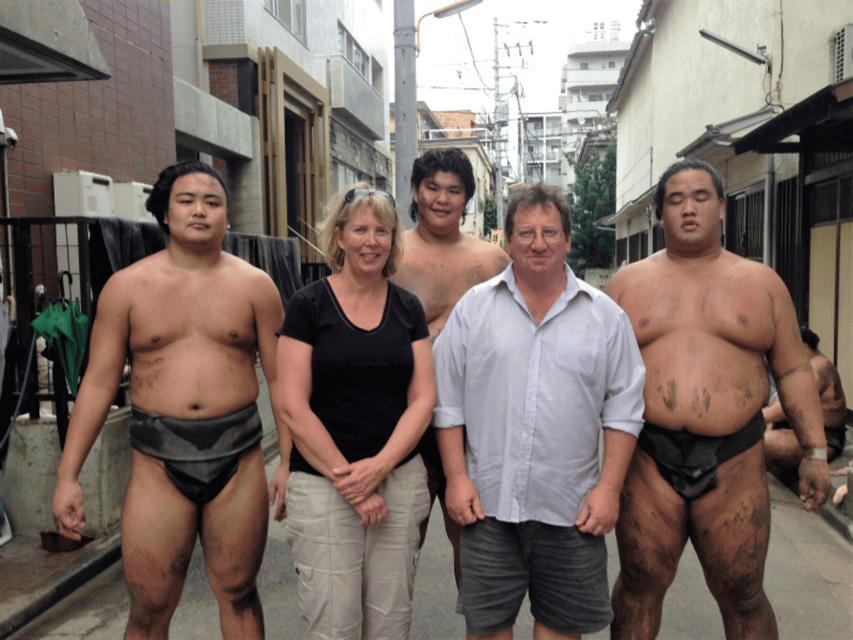
Your meeting point can vary by booking option. After meeting your guide, you may take a train to the stable, followed by a walk. Some groups have found their stable less than ten minutes from the National Sumo Arena, while others receive a short orientation about the surrounding neighborhood on the way.
Give yourself extra time to find the meeting place. One useful tip is to arrive early, since a few people have found the exact spot harder to identify than expected. The reward for getting there ahead of time is practical: groups are generally seated in arrival order, and early arrivals may get a front-row view.
The guide first explains the basics of sumo, including the sport’s history, customs, and simple rules. This briefing matters because the practice itself must be quiet. You get a chance to ask questions before entering, learn what behavior is expected, and understand what the wrestlers are doing once the room falls silent.
Entering the stable and taking your seat
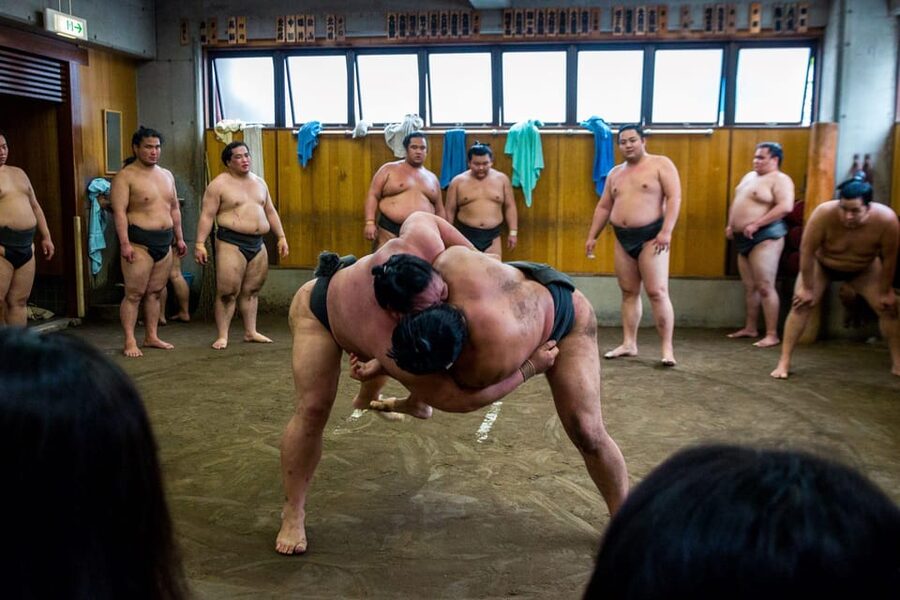
The stable is a workplace, not a visitor center. You will be asked to dress modestly, keep your phone silent, avoid moving around, and remain seated during practice. Hats and sunglasses are not allowed, and food and drinks must stay outside.
These rules may sound strict, but they protect the training session. The wrestlers are not stopping to perform for the group. They continue their routine while you watch, so the experience depends on your ability to fit quietly into the room.
Seating is generally on the floor or very low to the ground. The supplied information specifically warns that the activity is not suitable for people with mobility impairments or children under 11. I would take that seriously. You need to sit respectfully for a long period, and a restless child would have a hard time remaining quiet while the wrestlers work.
The group size can change. One person once had a particularly small group, while another session had around 30 people. A larger group may mean a second row or a less direct view, especially if another tour arrives first. The stable is intimate, but it is not guaranteed to feel private on every date.
Watching 60 to 90 minutes of hard training
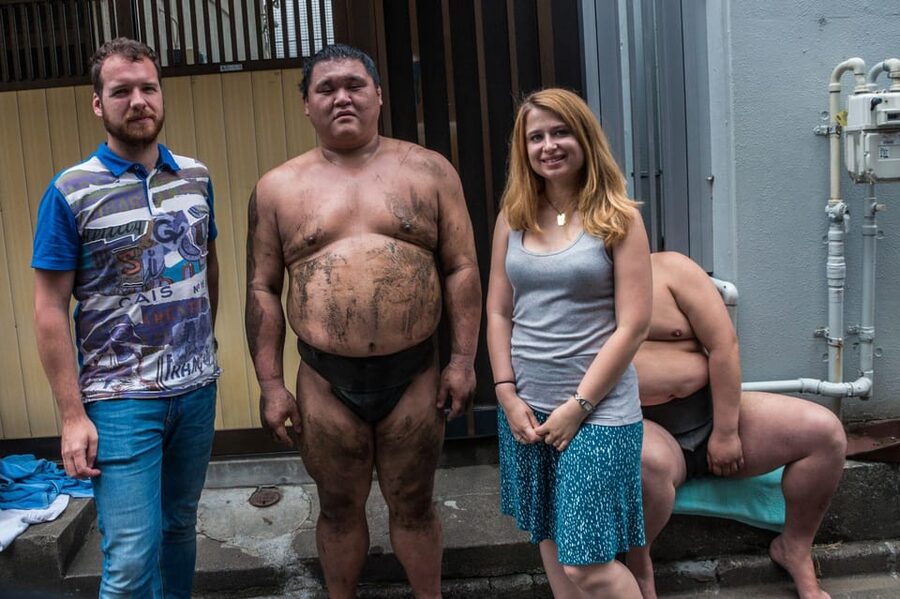
Once practice begins, the mood changes. Your guide cannot provide a running conversation in a normal speaking voice, since the stable must remain quiet. Instead, guides may pass around information sheets, name cards, or brief written notes that explain the techniques and identify wrestlers.
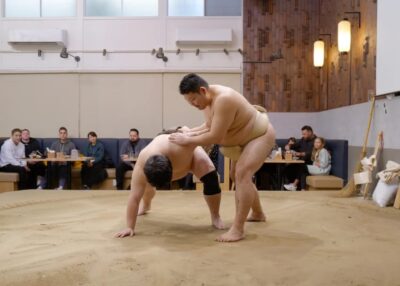
That quiet is part of the appeal. You hear the impact of bodies meeting, the force of a push, and the sudden change when one wrestler loses balance. The activity can look repetitive at first, but repetition is the point. Sumo demands control, timing, strength, and very little room for error.
The practice may include drills, technique work, and live bouts. You might see younger wrestlers working through exercises before more experienced rikishi take their turns. The exact order and intensity depend on the stable’s schedule, so you should not expect a fixed show with a guaranteed cast.
Training usually lasts 60 to 90 minutes. The total experience takes about 90 minutes to two hours, including the explanation and travel to the stable. The ending time can shift, so do not schedule a tight appointment immediately afterward. You are required to stay until practice ends, often around 9:00 to 10:00 in the morning, and leaving early means no re-entry.
This is the part I would carefully match to your interests. If you enjoy watching athletes refine technique, you may find the session absorbing. If you need constant narration, movement, or entertainment, it can feel long. The best approach is to watch the patterns: how wrestlers set their feet, how quickly a bout can turn, and how much work goes into movements that look simple from a distance.
More Morning Tours in Tokyo:
- Tokyo: Sumo Morning Training Visit
★ 4.4 · 370 reviews - Tokyo: Sumo Morning Practice Tour at Sumida City
★ 4.8 · 308 reviews - Tokyo Sumo Morning Practice Tour at Stable
★ 5.0 · 298 reviews - Tokyo Ryogoku Sumo Morning Practice + Photo Shoot with Wrestlers
★ 4.5 · 277 reviews
Guides who make the silence useful
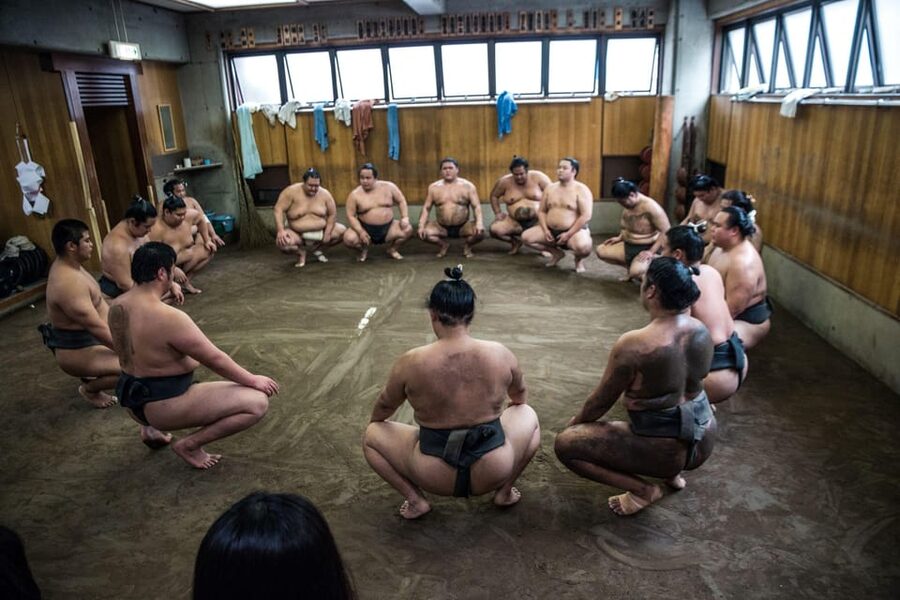
The English-speaking guide is especially important here. A guide cannot simply talk throughout the practice, so the quality of the pre-tour explanation and written support makes a real difference.
Yuko has been praised for giving clear information and quietly guiding groups through the session. Noriko is known for explaining the rules and history, while Mako has helped visitors understand the customs they must follow. Oku San has been described as funny, organized, and careful about keeping the group together on the walk to the stable. Other guides named by participants include Taku, Kaz, Nobu, Daigo, and Tad.
The names are useful because they show that the experience is not tied to one single presenter. The guide may change, but the strongest part of the job is consistent: explain the setting, keep you respectful, answer questions, and help you recognize what you are seeing.
Some guides use a printed sheet or pencil-and-paper questions during the practice. That is a smart solution. You get context without breaking the stable’s quiet, and you can ask about a wrestler, technique, or ritual afterward.
One limitation is sound. When a bout becomes loud, the guide may be speaking very softly so the wrestlers are not disturbed. You may miss a few comments, especially from the side or rear. I would focus first on the live action and save detailed questions for the end.
The possibility of meeting wrestlers afterward
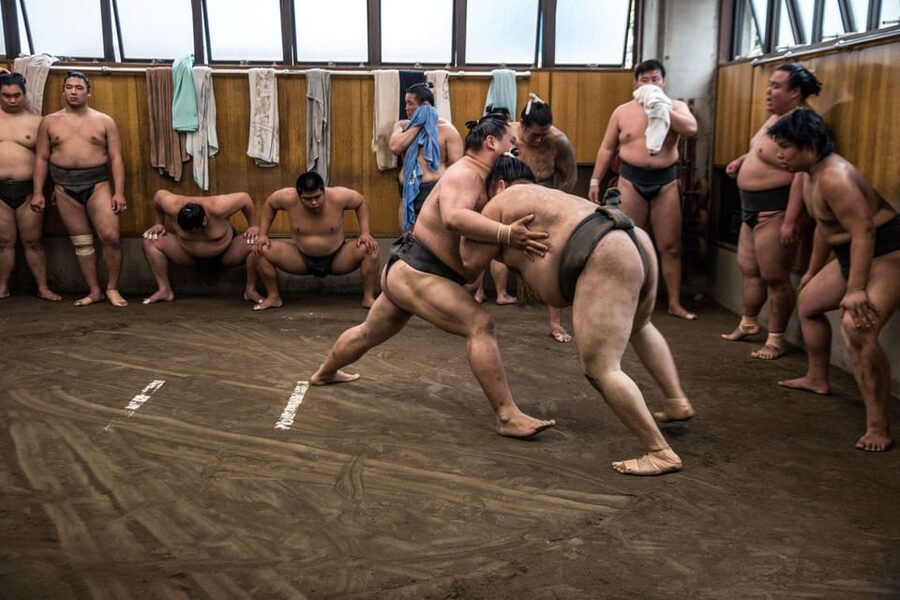
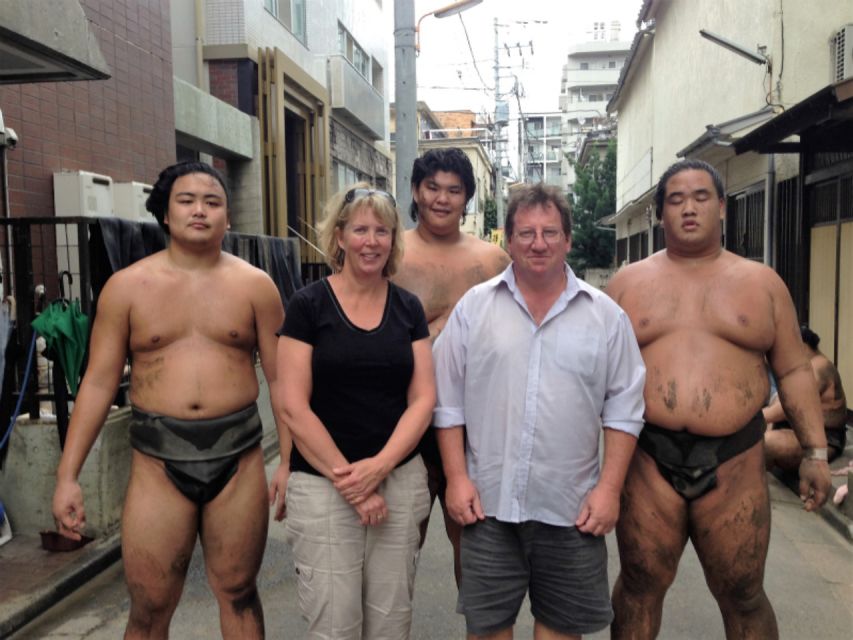
Photos with wrestlers may be available after practice, but they are not guaranteed. This depends on the day, the stable’s schedule, and the wrestlers’ availability.
When it happens, the photo is a pleasant extra rather than the main reason to book. You are not guaranteed a particular champion, stable, or famous wrestler. Some dates have included well-known figures or notable stables, while other sessions may feature athletes you do not recognize.
That uncertainty is actually part of the honesty of the experience. The stable is not assembling a cast for your camera. The wrestlers have a training schedule, and the guide must follow the stable’s wishes.
You may also get a chance to ask questions of the stable master or coach. Some sessions have included a question-and-answer period, and one former wrestler who ran a stable was able to explain the sport from personal experience. Again, this depends on the day, so treat it as a possible benefit rather than a promise.
Photography is limited. Flash photography and video recording are not allowed. You can take photos only when instructed, and you should keep your phone silent during practice. The ban on video may disappoint you, but it also keeps the room calm and encourages you to pay attention instead of holding a screen in front of the action.
What you will learn about sumo
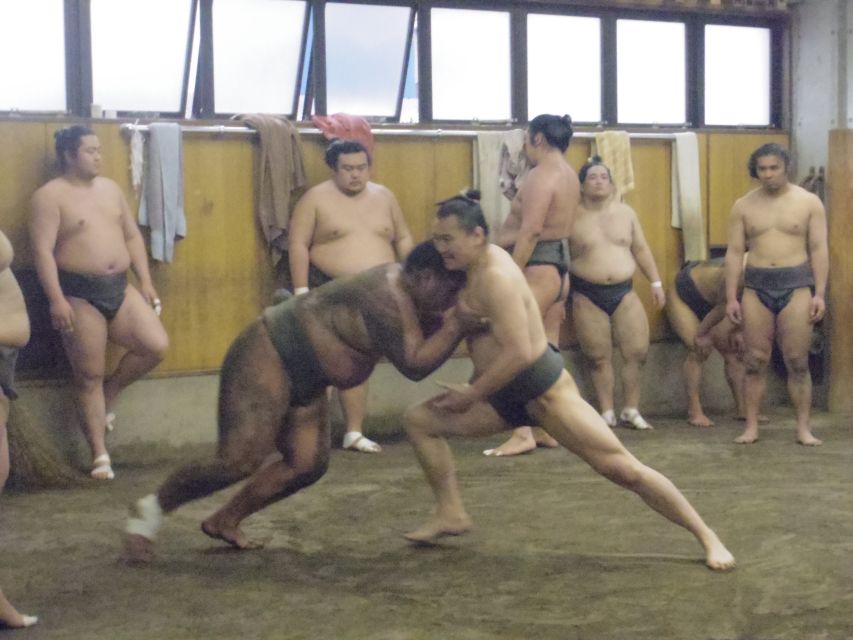
The guide introduces sumo as a traditional Japanese sport shaped by Shinto beliefs. The basic goal is simple: force your opponent outside the ring or make any part of the body other than the soles of the feet touch the ground.
The tactics are less simple. A match may be over in seconds, yet every step and hand placement matters. From a close seat, you can see why size alone is not enough. Timing, balance, grip, footwork, and the ability to respond instantly all come into play.
You will also learn why training is so demanding. Wrestlers train early, often daily, while living within the stable community. The session gives you a glimpse of the discipline behind the ceremonial image of sumo.
This background can make a later tournament much more enjoyable. One person combined the morning stable visit with an afternoon tournament at the Ryogoku Arena and found the live competition easier to follow afterward. If you are attending a tournament during your Japan trip, this is a strong companion activity. If not, it offers a smaller, more personal introduction to the sport.
Is $81 a fair price?
At $81 per person, this is not a cheap way to fill an hour. You are paying for access to a place that is normally closed to the general public, an English-speaking licensed guide, transport or walking guidance to the stable, and careful coordination with a working athletic facility.
The value depends on what you want from Tokyo. If you only want to see sumo once, a tournament ticket may offer more spectacle and a wider sense of the sport. A stadium also gives you the formal ceremonies, large crowd, and complete competition day.
The stable visit offers something different. You sit close to training, receive explanations in English, and see routines that a tournament audience does not. For someone curious about how sumo wrestlers prepare, the cost is easier to justify. For someone who wants a fast photo opportunity or a staged cultural show, it may feel expensive.
I would also factor in the rarity. You cannot simply wander into a stable and ask to watch. The access, small viewing area, and need to follow strict rules are exactly what make the experience valuable.
Free cancellation up to 24 hours before the start and a reserve-now, pay-later option reduce the risk if your Tokyo plans are still shifting. Check the available start time carefully, since morning practice has a fixed rhythm and the ending location may differ from the meeting point.
Who should book this morning experience?
I would book it if you are interested in Japanese customs, martial arts, sports training, or everyday life behind a famous national tradition. It is particularly useful for first-time sumo spectators who want the rules explained before attending a tournament.
It also suits adults who can sit quietly and watch closely. You do not need to know the difference between a yokozuna and a beginner before arriving. Curiosity is enough, as long as you are willing to listen and observe.
I would hesitate if you have limited mobility, cannot sit on the floor comfortably, or have a morning commitment you cannot move. Children under 11 are not permitted, and the quiet format is not designed for anyone who needs frequent movement.
Should you book the Tokyo sumo stable tour?
Book it if you want an authentic look at the effort behind sumo, not a polished tourist performance. The strongest parts are the close seating, the serious training, and guides who explain the sport while respecting the stable’s silence.
Go in with realistic expectations. You may not get a photo, a famous wrestler, or the exact stable you hoped for. You may sit in the second row, and practice can run shorter or longer than expected.
Still, at its best, this is one of Tokyo’s rare access experiences. Arrive early, wear modest clothing, leave your schedule open afterward, and prepare to sit quietly on the floor. If that sounds appealing, $81 buys a memorable morning in the heart of sumo country.
FAQ
How long does the sumo morning practice tour last?
The experience lasts about 90 minutes to two hours. The training portion usually takes 60 to 90 minutes, depending on the day.
What time does the practice usually finish?
You must stay until the end of practice, which is generally around 9:00 to 10:00 in the morning. The exact finish can vary.
Is the tour conducted in English?
Yes. The tour includes a live English-speaking guide.
Can I take photos with the sumo wrestlers?
Photos with wrestlers may be available after practice, depending on the day and the stable’s schedule. They are not guaranteed.
Can I record video inside the stable?
No. Video recording and flash photography are not allowed.
Do I have to stay for the entire practice?
Yes. You must remain until practice ends, and there is no re-entry after leaving the stable.
Is the tour suitable for children?
No. The tour is not suitable for children under 11. It also requires everyone to remain quiet and still during practice.
Can I eat or drink inside the stable?
No. Food and drinks are not allowed. Hats and sunglasses are also prohibited, and you should keep your phone on silent.
Just added around Tokyo
- Kawagoe Japanese Food Tour : Unagi Kaiseki and Sake near Tokyo★ 5.0 · 30 reviews
- Kawagoe 4hr Private Tour with Licensed Guide (Kawagoe Dep)★ 5.0 · 13 reviews
- Little EDO Sushi Making workshop in Kawagoe★ 5.0 · 18 reviews
- 【R34】Tokyo:Private Daikoku tour in Modified R34★ 4.9 · 92 reviews
- :Tokyo,Shibuya/ Pro Photography in Kimono / English-Friendly★ 5.0 · 26 reviews
- Tokyo:Celebrate Unique Japanese New Year Tradition Festivity★ 3.9 · 20 reviews
- Tokyo: Allstar Food Tour★ 4.7 · 29 reviews
- Tokyo: West-Side Cycling and Food Tour with Guide★ 5.0 · 37 reviews
Sumo Experiences, compared.
Sumo Show Experience with Chicken Hot Pot and a Photo
Our verdict →
Authentic Sumo Experience in Tokyo: Enter the Sanctuary
Our verdict →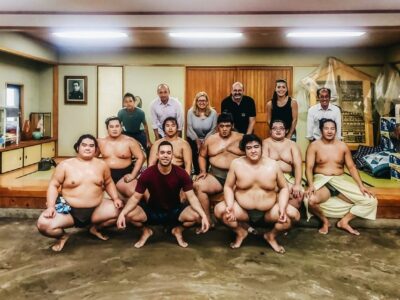

Browse the lists this tour appears in