
Reviewed · FOOD TOURS
Taste of Nishiki Market Walking Food Tour with Local guide
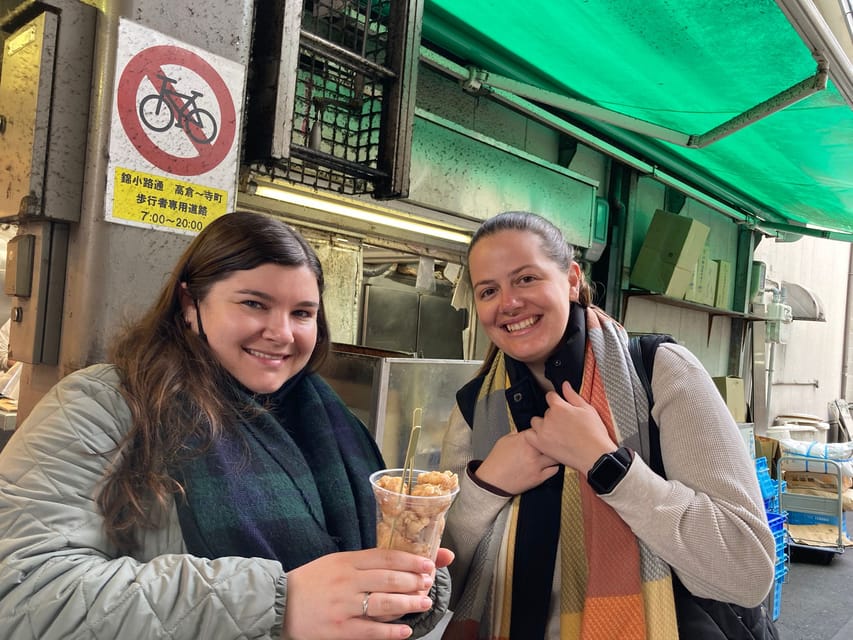
Kyoto’s best food tour may be the one that keeps moving. This walk links a quiet temple, a produce market, a department-store basement, and Nishiki Market, so you see how local food works at several levels, from everyday groceries to polished sweets and market snacks. I especially like the small group of six and the chance to taste 6 to 10 items rather than simply watch a demonstration.
I also like the practical shopping angle. Guides such as Kaoru and Rikka have been praised for tailoring the walk, recommending shops, explaining local customs, and even taking photos. The main catch is that the route includes crowded market lanes and walking, while the food may contain meat, seafood, wheat, or dairy. The published schedule also runs from 10:00 AM to 2:00 PM, although the experience is described as three hours, so confirm the exact timing before booking.
Key points at a glance
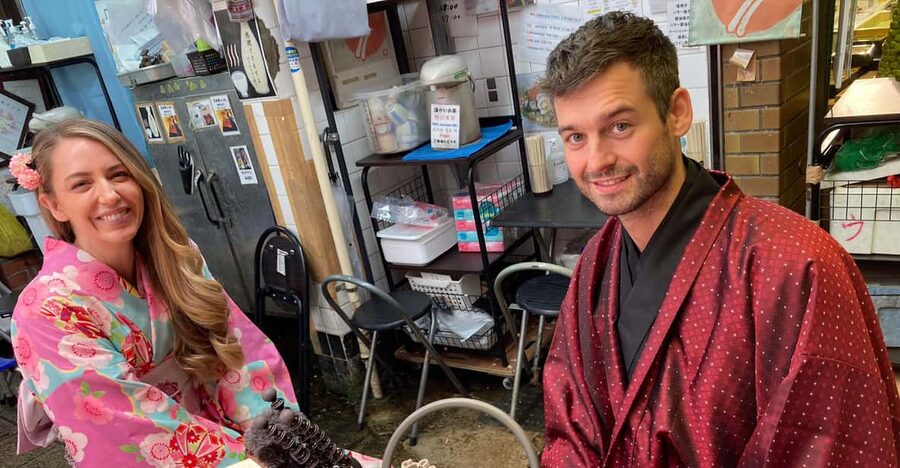
- Six-person maximum: A small group makes it easier to ask questions and keep up in narrow market lanes.
- Four different food settings: You visit Rokkakudo Temple, Yaoyaichi, Daimaru’s basement, Nishiki Market, and Nishiki Tenmangu Shrine.
- Six to 10 tastings included: Samples can include bread, nikuman, wagashi, sashimi, and skewered wagyu beef.
- Useful Kyoto shopping advice: Your guide points out shops, cafes, restaurants, food customs, and edible souvenirs.
- Guide quality matters: Kaoru and Rikka are named examples of guides who personalize the walk and explain local food and history.
- Walking comfort is important: Wear comfortable shoes, and leave large luggage behind.
Why this Kyoto food walk works
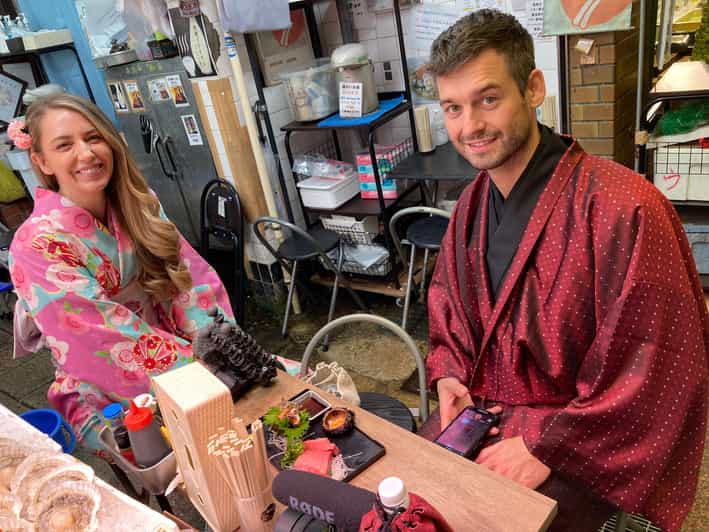
A market tour can easily become a quick march past colorful displays. This experience has a better shape because food is only part of the story. You begin at Rokkakudo Temple, move into local shopping areas, enter Daimaru’s basement food hall, and finish in Nishiki Market and at Nishiki Tenmangu Shrine.
That progression helps you understand Kyoto beyond its famous restaurants. You see a place of worship, a neighborhood produce market, a department store used for high-quality food shopping, and the city’s best-known food street. The tastings give you a reason to stop, but the guide’s explanations provide the context.
I like this format for a first visit to Kyoto. You get a short introduction to ingredients, sweets, prepared foods, and shopping customs without committing to a full cooking class or an expensive restaurant meal. It is also a useful first-day activity because the guide can point you toward food shops and restaurants to revisit later.
The group size is a real advantage. With no more than six participants, you can ask why a particular sweet is important, how a food is made, or what makes one shop different from another. In a crowded market, a small group is easier to manage than a large line of people.
More Food Tours in Kyoto
- Kyoto Night Foodie Tour in Gion (9+ dishes + 6 Sake tastings)
★ 5.0 · 1,762 reviews - Kyoto Nishiki Market Food and Culture Walking Tour
★ 5.0 · 412 reviews - Kyoto: Gion Food Tour 13 Dishes at 4 Eateries
★ 5.0 · 408 reviews
Starting at Rokkakudo Temple
The meeting point is the Starbucks Coffee Kyoto Sanjo Karasuma Building Store at 85-1 Mikura-cho, Nakagyo Ward. From there, the walk begins with Rokkakudo Temple, a quieter stop before the food portion gathers speed.
This opening is smart. A temple visit gives you a moment to slow down and see a small piece of Kyoto’s religious life before entering food markets and department stores. Your guide may also use the temple to explain local history and customs, as guides on this experience have been praised for doing.
Do not expect a long temple tour. Rokkakudo is an introduction and a change of pace, not the main attraction. Its value comes from placing the rest of the walk in context. Kyoto’s food traditions did not develop in isolation. They are tied to temples, seasons, celebrations, and everyday routines.
From the meeting point, you should be ready to walk right away. Comfortable shoes are specifically recommended, and that advice matters. You will cover several areas on foot, with periods of standing and stopping at food counters.
Yaoyaichi and the taste of seasonal Kyoto
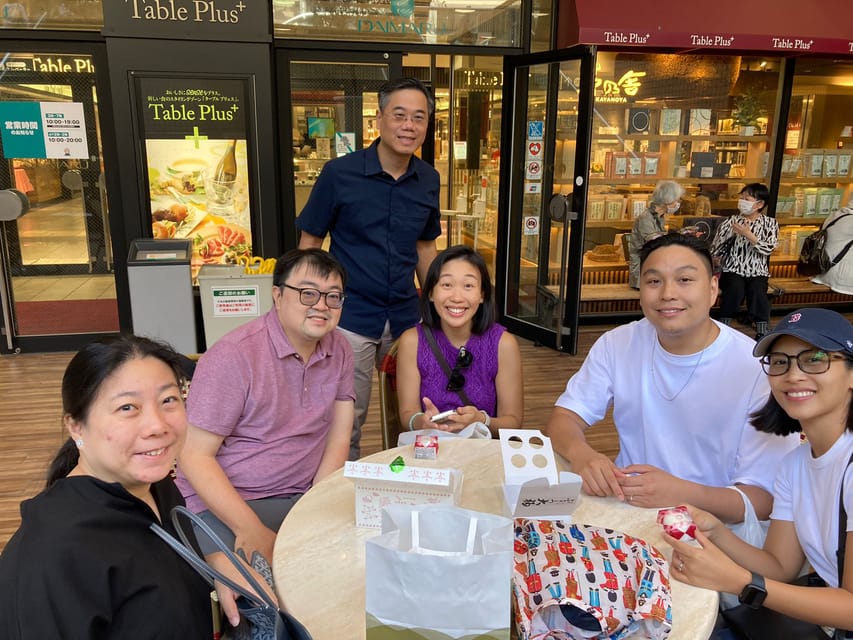
The next major stop is Yaoyaichi, a local market focused on produce and distinctive ingredients. This is one of the more useful stops for anyone who wants to understand what Kyoto residents buy and cook, rather than only sample tourist favorites.
The market can show you the seasonal side of Japanese food. Availability changes, so the exact products and tastings depend on what shops have that day and what suits the group. One example is bread popular with Japanese locals, a reminder that a food-focused Kyoto walk does not have to stick to obvious sushi or sweets.
I like the inclusion of bread and produce because it broadens the experience. You get a look at ordinary food habits, not just special-occasion dishes. The guide can also explain how ingredients are used and point out items that make good gifts.
This is a good place to ask questions. If you see a packaged ingredient, pickle, sweet, or snack that catches your eye, ask how it is eaten and how long it keeps. The tour includes recommendations for additional foods, so you can return to a shop after the official tasting or make notes for later.
The limitation is that Yaoyaichi may be less immediately exciting than Nishiki Market. It is valuable for local context, but you should not expect every stop to be a major tasting event. Some people will appreciate the everyday focus more than those looking only for dramatic food displays.
Daimaru’s basement food hall
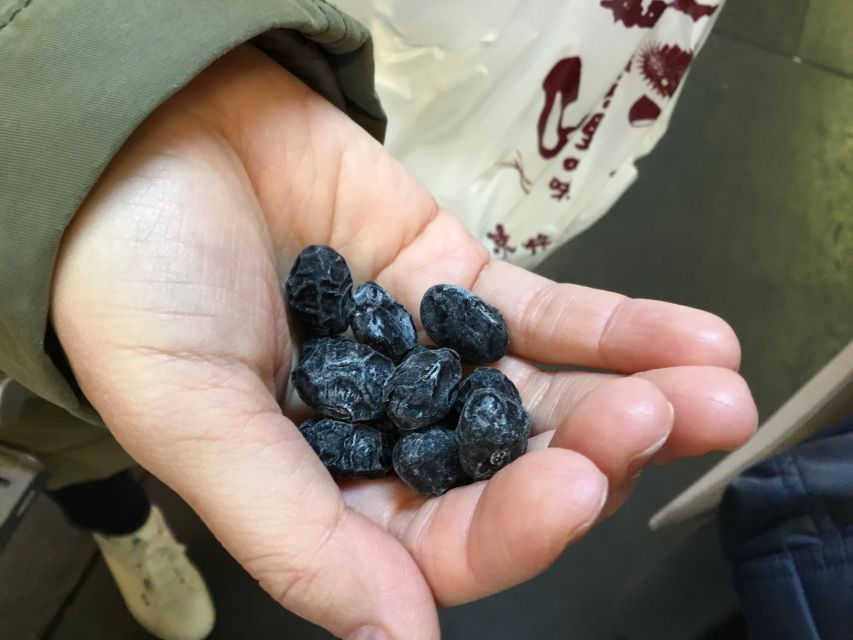
At about 11:30 AM in the published schedule, the route moves to the basement of Daimaru Department Store. Japanese department-store food halls are a strong part of the country’s food culture, and this stop gives you a polished contrast to the smaller markets.
Here, food is carefully presented and often designed for taking home or giving as a gift. It is a useful place to see how Kyoto’s food traditions are packaged for modern shoppers. You might sample nikuman, the steamed meat buns popular with local shoppers, along with wagashi from a wagashi shop with centuries of history.
The combination matters. Nikuman is warm, filling, and casual. Wagashi is more delicate and tied to Japanese sweets culture. Tasting both helps you compare the everyday and ceremonial sides of local food.
This is also one of the best places to think about souvenirs. You can ask your guide which items travel well, which need to be eaten quickly, and which sweets make sensible gifts. The experience includes food tastings, but extra food purchases are your responsibility.
Daimaru’s basement can feel more controlled than Nishiki Market, but it is not a street market. If your main goal is a rough-edged local shopping experience, this stop may seem more commercial. Still, it adds a useful layer and gives you food options that are easy to compare in one place.
More Market Tours in Kyoto
- Nishiki Market Brunch Walking Tour (7 Tastings + Brunch)
★ 5.0 · 1,355 reviews - Kyoto: Nishiki Market Tea Ceremony with Koto Performance
★ 4.8 · 294 reviews - Kyoto: Nishiki Market Brunch Walking Tour-7 Tastings+Brunch
★ 4.8 · 197 reviews - Kyoto: Local Food Tasting Tour at the Nishiki Market
★ 4.7 · 135 reviews
Walking through Nishiki Market
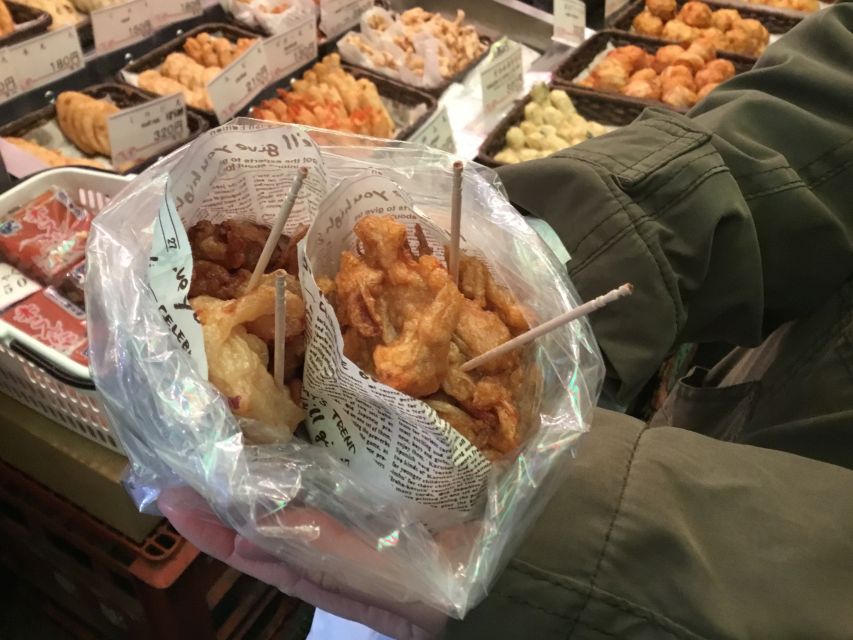
The main food stop is Nishiki Market, often called Kyoto’s Kitchen. It is a narrow food street packed with shops selling local specialties, prepared foods, sweets, seafood, and ingredients.
This is where the small group helps most. Market lanes can be crowded, and a guide can steer you toward selected shops instead of leaving you to guess what is worth trying. The route includes examples such as sashimi and skewered wagyu beef, but the exact tastings can change with availability and group preferences.
You should think of the included food as a sampling framework, not a complete lunch. Six to 10 items can be enough to make you comfortably full, especially when several are small portions, but you may want to buy something extra if you have a larger appetite. The tour does not include additional food.
The guide’s role is especially important here. A good guide does more than name the dish. You want to know how it is made, why it is associated with Kyoto, how locals eat it, and whether it is worth buying for later. The strongest feedback about this experience centers on guides who explain food and local history, answer questions, and adjust the route to personal interests.
Nishiki Market is not a calm setting. It can be crowded, and stopping in front of a small shop may require patience. It is also not the best place for large luggage. The tour specifically says not to bring luggage or large bags, so leave suitcases at your accommodation or another secure location.
Ending at Nishiki Tenmangu Shrine
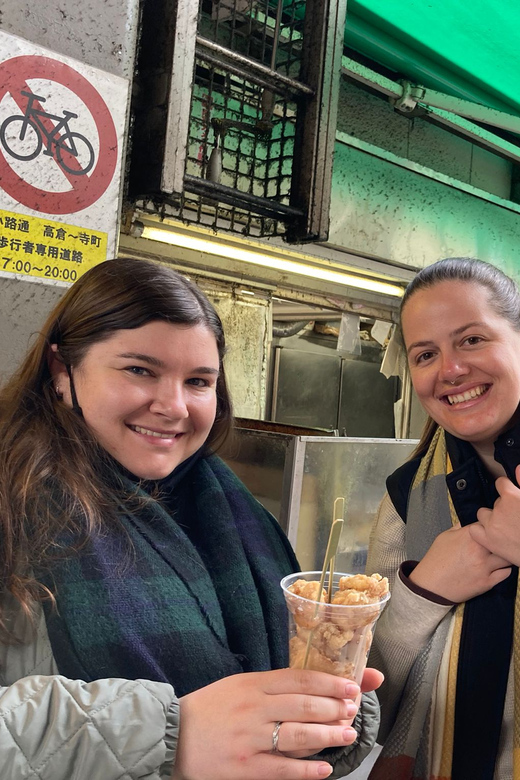
The walk ends at Nishiki Tenmangu Shrine, a peaceful finish after the market’s noise and close quarters. This final stop gives you time to reflect, ask last questions, and let the food experience settle.
I like this ending more than finishing beside a random shop. A shrine provides a clear sense of place and a calmer conclusion. It also means you finish near Nishiki Market, with the option to keep exploring independently if your schedule allows, although any extra food or transportation is on your own.
The shrine is not presented as a separate long sightseeing visit. Treat it as a closing cultural stop rather than expecting a full shrine-focused tour. Its purpose is to balance the busy food route with a quieter setting.
What you may taste
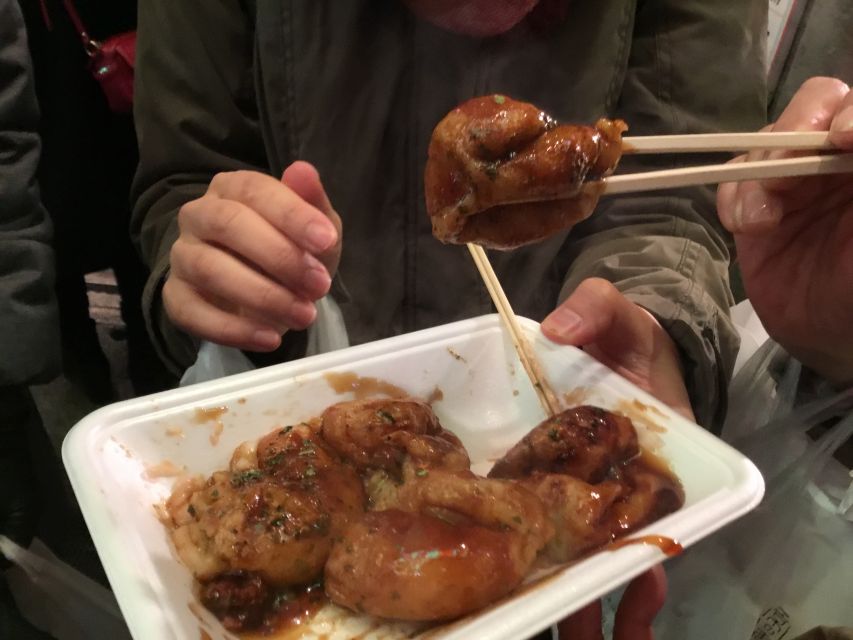
The food is not fixed, and that is worth understanding before you reserve. The guide chooses from available items and may take the group’s preferences into account. Examples include:
- Bread popular with Japanese locals at Yaoyaichi
- Nikuman, or steamed meat buns, at Daimaru
- Wagashi from a long-established sweets shop
- Sashimi at Nishiki Market
- Skewered wagyu beef at Nishiki Market
This range is one of the tour’s strengths. You are not limited to one category, and you can compare snacks, sweets, seafood, meat, and market ingredients in one outing.
It is also the main reason to contact the provider before booking if you have allergies or dietary restrictions. The included food may contain meat, seafood, wheat, and dairy. The supplied information does not promise a specific alternative menu, so ask in advance rather than assuming substitutions will be available.
The value of $77
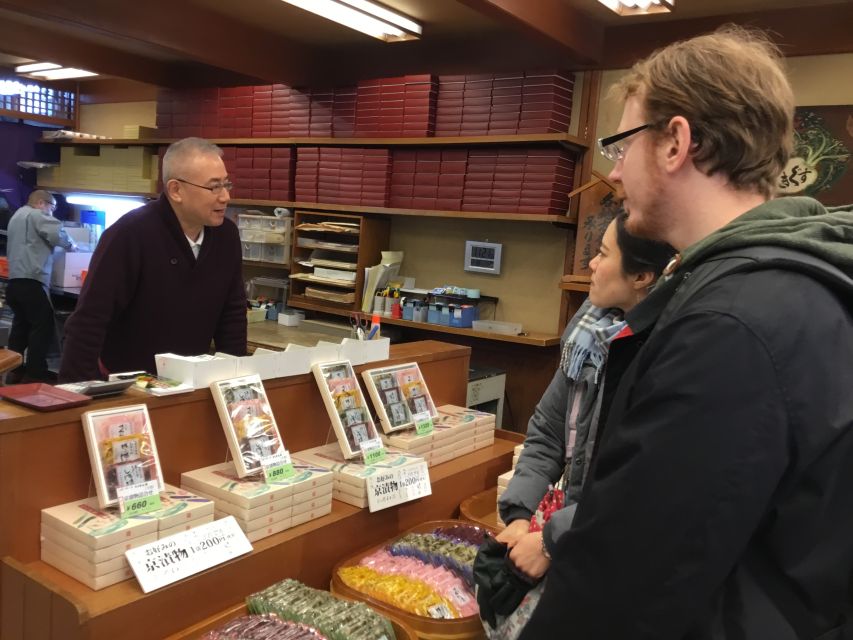
At $77 per person, the price is reasonable if you want guidance as well as food. You are paying for an English-speaking guide, a small group, local explanations, and 6 to 10 tastings across several stops. The value improves if you use the guide’s recommendations for later meals and souvenirs.
It is less attractive if you only want a cheap lunch. The included samples are not meant to replace a full restaurant meal, and additional purchases cost extra. A self-guided visit to Nishiki Market will cost less, but you will need to choose shops, understand unfamiliar foods, and manage the route yourself.
The small group is the key price difference. A six-person limit allows more personal attention than a large market tour. Specific guides, including Kaoru and Rikka, have been noted for adapting the walk to interests, answering questions, recommending restaurants, and taking photos. Guide quality can vary by date, but the format gives you a better chance for conversation.
The activity offers free cancellation up to 24 hours before departure and a reserve-now, pay-later option. Those terms are useful if your Kyoto plans are still shifting.
Who should book this walk
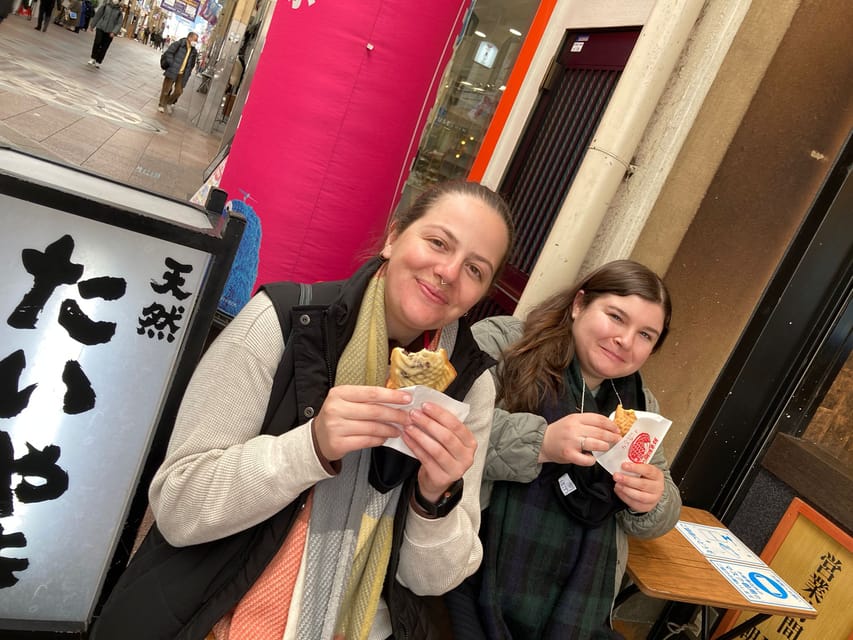
I would recommend it to first-time Kyoto visitors who want an easy introduction to local food and do not want to plan every stop themselves. It also suits curious eaters who value explanations and shopping advice as much as the number of dishes.
It is a good fit for:
- Couples or friends who want a small, social outing
- Families with older children who can manage several hours of walking
- Food lovers interested in both everyday products and traditional sweets
- Visitors who want edible souvenirs and restaurant suggestions
- People who prefer a guide to help navigate crowded market lanes
I would be cautious if you have limited mobility. The tour is not suitable for people with mobility impairments, and the route includes walking through markets and city streets. You should also reconsider it if you dislike seafood, meat, wheat, or dairy, unless the provider confirms suitable options before you book.
Practical details before you reserve
The experience is in English and uses a live guide. Transportation to the meeting point and away from the endpoint is not included, so plan your own way to and from the route.
The advertised duration is three hours, but the stated schedule shows a 10:00 AM start and a 2:00 PM finish. That is four hours, so check the current start and end times when selecting a date. This small mismatch is easy to overlook and matters if you have a train, reservation, or other Kyoto activity afterward.
Bring comfortable shoes and keep your hands free. Large bags and luggage are not allowed, which makes sense in tight market lanes.
Should you book it?
Book this tour if you want Kyoto food explained by a local guide, with enough tastings to learn the basics and enough free time afterward to buy more. The combination of Rokkakudo Temple, Yaoyaichi, Daimaru, Nishiki Market, and Nishiki Tenmangu Shrine gives you more range than a market-only walk.
Skip it if you want a long sit-down meal, have serious dietary restrictions that cannot be accommodated, or prefer to browse Nishiki Market alone. For most first-time visitors, the $77 cost is justified by the small group, the 6 to 10 samples, and the practical advice you can use for the rest of your stay.
FAQ
Where does the tour meet?
The meeting point is Starbucks Coffee Kyoto Sanjo Karasuma Building Store, located at 85-1 Mikura-cho, Nakagyo Ward, Kyoto City.
Where does the tour end?
The tour ends at Nishiki Tenmangu Shrine.
How long is the experience?
It is described as a three-hour tour. The published schedule shows a 10:00 AM start and a 2:00 PM finish, so confirm the exact timing when booking.
How many people are in the group?
The group is limited to six participants.
What language is the tour conducted in?
The live tour guide speaks English.
How many foods are included?
The tour includes 6 to 10 local foods.
What foods might be included?
Examples include local bread, nikuman, wagashi, sashimi, and skewered wagyu beef. The exact foods can change based on availability and participant preferences.
Is transportation included?
No. Transportation to and from the meeting and departure points is not included.
Can I bring luggage?
No. Luggage and large bags are not allowed. Comfortable shoes are recommended.
Is the tour suitable for people with mobility impairments?
No. The experience is not suitable for people with mobility impairments.
Can the tour accommodate food allergies?
The food may include meat, seafood, wheat, and dairy. If you have allergies or dietary restrictions, contact the provider before booking to discuss possible options.
What is the cancellation policy?
You can cancel up to 24 hours in advance for a full refund. A reserve-now, pay-later option is also available.
More Food & Drink in Kyoto
- 3-Hour Kyoto Insider Sake Brewery Tour with Tastings & Pairings
★ 5.0 · 917 reviews - Arashiyama Bamboo, Temple, Monkeys, or Secret Sake Brewery
★ 4.8 · 886 reviews - Kyoto: Insider Sake Brewery Tour with Sake and Food Pairing
★ 5.0 · 704 reviews - Kyoto Sake Brewery & Tasting Walking Tour
★ 5.0 · 623 reviews
More Walking Tours in Kyoto
- Kyoto Geisha Walking Tour: Gion District & Hidden Gems
★ 4.7 · 3,273 reviews - Kyoto: Gion Magical Night Walking Tour with Geisha Trivia
★ 4.9 · 2,393 reviews - Kyoto: Gion Geisha District Walking Tour – Stories of Geisha
★ 4.7 · 2,187 reviews - Night Walk in Gion: Kyoto’s Geisha District
★ 4.5 · 2,003 reviews
Just added around Kyoto
- Sekka Cotton Furoshiki Class★ 5.0 · 19 reviews
- Kyoto Sword Experience – includes Museum Ticket/Ninja Experience★ 4.5 · 149 reviews
- Scenic Green Tea Fields of Hidden Kyoto & Local Tea Exp (Private)★ 5.0 · 32 reviews
- Secret Eastern Kyoto Biking Adventure★ 5.0 · 44 reviews
- Private Sake Tasting in Central Kyoto with Sake Sommelier★ 5.0 · 32 reviews
- Samurai School in Kyoto: Samurai for a Day★ 5.0 · 202 reviews
- SHIRAKAWA Japanese Culture Experiences with private English staff★ 5.0 · 16 reviews
- A Privately Guided Photoshoot in Beautiful Kyoto by a Pro★ 5.0 · 18 reviews
Food Tours, compared.
Shinjuku Food Tour (13 Dishes at 4 Local Eateries)
Our verdict →
Kyoto Night Foodie Tour in Gion (9+ dishes + 6 Sake tastings)
Our verdict →
Osaka Local Foodie Walking Tour in Dotonbori and Shinsekai
Our verdict →
Food Tour in Ueno with 10+ Tastings of Japanese Classics
Our verdict →
Browse the lists this tour appears in