
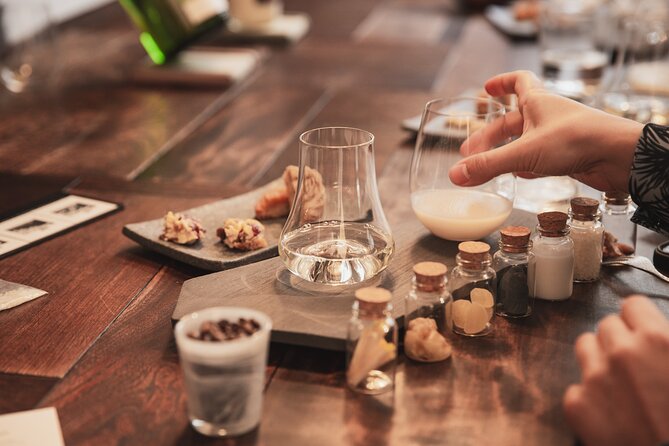
Reviewed · SUSHI EXPERIENCES
Sake Omakase in Tokyo: Guided Tasting by Certified Sommeliers
The clever part of this Tokyo tasting is that it treats sake as more than one drink. You work through seven Japan-exclusive sakes in four themed courses, seeing how rice, temperature, spices, herbs, and even the drinking vessel can change the result. It is a useful way to make sense of a drink that can seem mysterious at first.
I like the small group of six and the clear English guidance from certified sommeliers. I also like the setting: a designer tasting room organized around a handsome reclaimed wood table from a Showa-era building. The main consideration is simple: this is a serious amount of alcohol in about two hours, even with snacks, so it is not a good fit if you have an alcohol allergy or prefer a slow, light tasting.
Key points at a glance
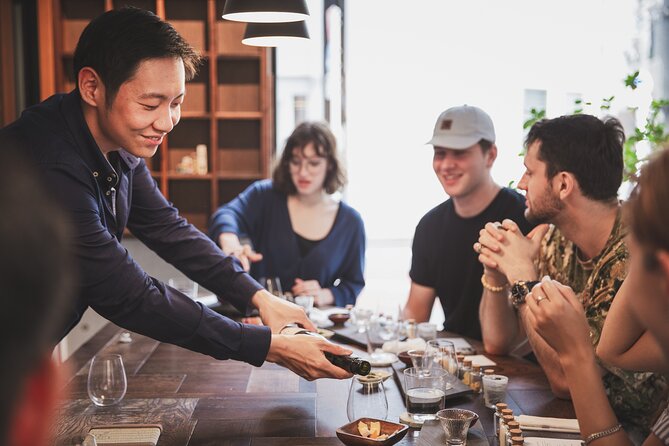
- Seven sakes, four themes: Compare different styles through rice, temperature, infused flavors, and glassware.
- Unlimited refills: The seven selected sakes are served free-flow throughout the tasting.
- A six-person format: The small group leaves room for questions and conversation.
- English-speaking sommeliers: Sessions are hosted in English, Japanese, and Chinese, with guides such as Eric, Aaron, Frank, and Phillip leading past tastings.
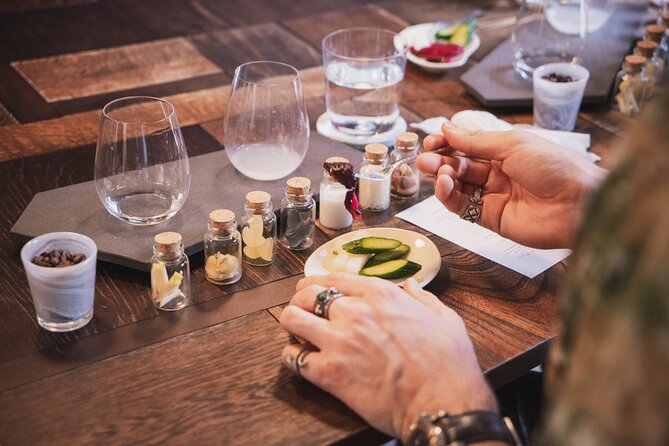
- Food with every course: Pickles, cheeses, cured meats, and dessert help show how sake works with food.
- Central Tokyo location: Meet at Linden House in Kanda Ogawamachi, with public transportation nearby.
A two-hour introduction to modern sake
This is not a quick flight of tiny pours followed by a sales pitch. The session is built as a guided lesson, with the sake and food changing together as the tasting moves along. You sit at a Showa-era wood table in a carefully designed room, then follow the sommeliers through four stages.
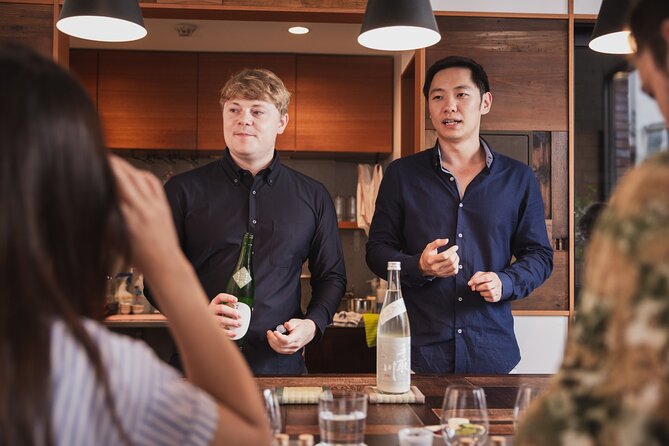
The guides have led more than 2,500 tasting experiences, and their job is to make the subject approachable. Past sessions have been led by Eric, Aaron, Frank, and Phillip. The exact guide may vary, but the format calls for fluent English, Japanese, and Chinese support.
That language access matters. Sake has its own vocabulary, and a short label can raise plenty of questions about rice, brewing, flavor, and serving temperature. Here, you can ask what you are drinking, why it tastes the way it does, and what might suit your palate next.
The group is limited to six people. I consider that a major advantage over a large bar tasting. You have a better chance to ask a personal question, compare impressions with the people beside you, and keep up with the explanations without feeling lost.
More Drinking Tours in Tokyo
- Tokyo Bar Hopping Tour in Shinjuku (All-You-Can-Drink + Dinner)
★ 5.0 · 3,587 reviews - Best of Shinjuku: Izakaya Food Tour (4 Stops, 14+ Tastings)
★ 5.0 · 1,863 reviews - Tokyo: Shinjuku Local Bar and Izakaya Guided Walking Tour
★ 4.9 · 1,794 reviews
Meeting the sake at the first course
The opening stage introduces the basic idea behind the tasting: sake is not a single, fixed flavor. The seven selections are chosen to show variety, rather than simply offering seven versions of the same clean, cold drink.
The first course uses a rice comparison. This gives you a practical way to think about sake production. Rice type affects the character of the finished drink, and tasting examples side by side is more useful than hearing a long technical explanation in isolation.
Small bites are served along with the sake. The food includes items such as pickles, cheese, and cured meats across the tasting. These are not meant to fill you up, but they give your palate something to work against and help you notice how food changes the drink.
If this is your first sake tasting, the rice comparison is likely to be one of the most helpful moments. You do not need prior knowledge. The sommelier explains the differences as you taste, and you can focus on what you actually like rather than trying to memorize terms.
Five temperatures, seven different impressions
The temperature course is one of the more unusual features. Sake is served at five different temperatures, showing how warmth and chill can alter its aroma, texture, and overall impression.
This is valuable because many people first meet sake in one standard form, often cold. The tasting makes clear that serving temperature is part of the drink, not a minor detail. A sake that seems quiet when chilled may show more character when warmer, while another may be more appealing at a lower temperature.
The format also gives you a practical takeaway for later meals in Japan. If you find a style you enjoy, you can ask how it should be served. You may also begin to notice why the same label can feel different from one restaurant to another.
The five-temperature section requires attention, especially as the alcohol begins to add up. I would treat the tasting as a guided progression, not a challenge to finish as much as possible. Unlimited refills are included, but you remain responsible for your own pace.
Herbs, spices, and the food pairing course
Another stage looks at sake with spice and herb infusions. This pushes the tasting beyond the standard categories and shows how added aromas can change the drinking experience.
For a sake beginner, this section can be a pleasant surprise. It gives you a bridge between sake and familiar cocktail or food-pairing ideas without turning the session into a cocktail class. You can compare the base drink with the infused version and think about which aromas work for you.
The small bites become especially useful here. Pickles, cured meats, and cheese can make a drink seem sharper, softer, sweeter, or more savory. The point is not to find one perfect pairing. It is to help you notice the relationship between what is in the glass and what is on the plate.
A dessert is also included during the four-course progression. That gives the tasting a final change of direction and helps show that sake does not have to be limited to one kind of Japanese meal.
More Sake Tastings in Tokyo
- Ramen and Sushi Cooking Class with Sake Pairing Set in Tokyo
★ 5.0 · 291 reviews - Sake Tasting Masterclass in Shinjuku (8+ Varieties with a Pro)
★ 5.0 · 271 reviews - Tasting All Types of Sake with Sommelier
★ 5.0 · 151 reviews - Wagyu & Sake Pairing in Shinjuku – Steak, Shabu-Shabu & More
★ 5.0 · 112 reviews
Why the drinking vessel matters
The final theme examines how the drinking vessel affects taste. This may sound like a small detail, but it is a practical lesson. The shape and material of a vessel can affect aroma, temperature, and how the drink reaches your mouth.
You get to see that sake is shaped by more than the bottle label. Rice, brewing choices, temperature, infusions, food, and glassware all play a role. By the end, you have several ways to explain why one sake appeals to you and another does not.
This is also where the omakase format makes sense. You are not selecting every bottle yourself. The sommelier chooses a progression that lets each course teach a different point. That removes some guesswork and keeps the two hours moving.
The tradeoff is that you have limited control over the exact bottles. If you already have a long list of specific breweries you want to try, a sake bar may give you more choice. If you want a guided introduction and a logical range of styles, this format is more useful.
Seven Japan-exclusive sakes with free-flow pours
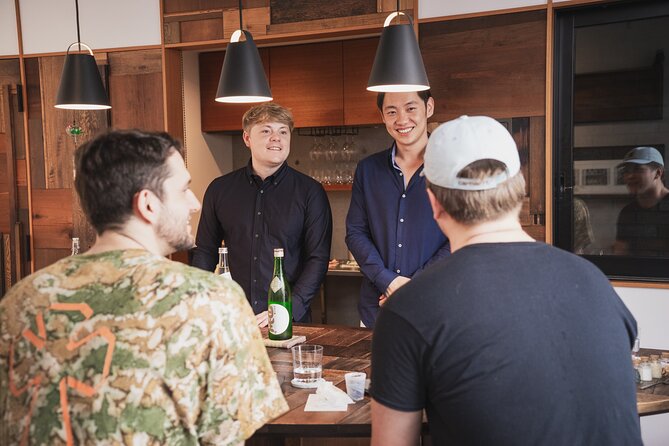
The package includes seven highly exclusive sakes available in Japan, served free-flow over the four courses. That wording is important: you are not paying separately for each glass, and refills are available during the session.
At $79.52 per person, the price is not the cheapest way to drink sake in Tokyo. It can still be fair value if you use the full format. You receive seven varieties, two hours of instruction, snacks throughout, access to a certified sommelier, and a group capped at six.
The value is strongest for someone who wants to learn what they like. A series of random drinks at a bar may cost less, but it may not tell you why one sake works for your palate. Here, the rice comparison, temperature changes, infusions, and vessels give you a framework you can use after the tasting.
The free-flow format also has a drawback. Seven sakes with refills can become a lot of alcohol in a short period. Eat something before arriving, use the snacks provided, and do not feel pressure to accept every refill. The tasting is about understanding the drinks, not proving you can keep up.
A polished room with a personal feel
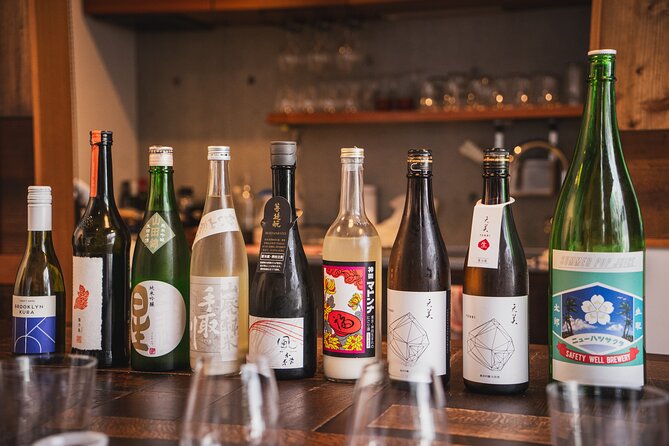
The setting is part of the appeal. The tasting room is designed around a reclaimed wood table from a Showa-era building, giving the session a more considered feel than a casual counter stop.
You are still in central Tokyo, but the room is intended for conversation and focus. That matters when the main activity is listening, smelling, tasting, and asking questions. The small group helps preserve that feeling.
The social side should not be overlooked. With only six people, you share the table with a compact group rather than moving through a crowded room. You might leave with new friends, especially if you enjoy talking about food and drink with people from different places.
This is an intimate format, so it may not suit anyone seeking a lively party atmosphere. The hosts are described as friendly and fun, but the core of the session is education and tasting, not nightlife.
Who will get the most from this tasting?
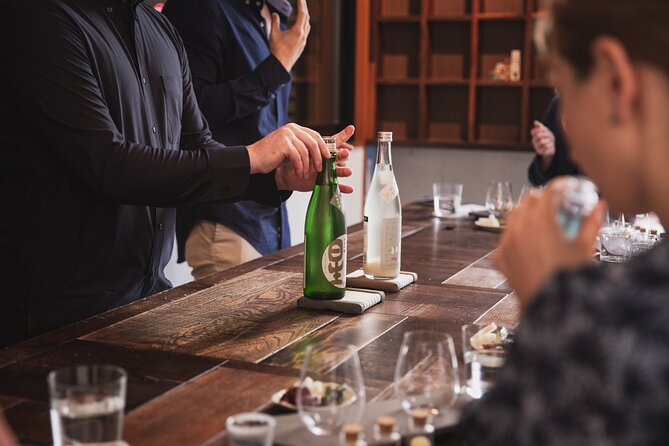
I would recommend it most strongly to four kinds of visitors:
- First-time sake drinkers: You get a clear introduction without needing to know technical terms.
- Sake drinkers who want direction: The tasting can help explain why you already prefer certain bottles.
- Food-focused visitors: The small bites show how sake behaves with pickles, cheese, cured meats, and dessert.
- Repeat visitors to Japan: Japan-exclusive selections and unusual serving comparisons offer something beyond a standard restaurant drink.
It also works well for couples, friends, and solo visitors who enjoy a social table setting. Since the group is limited to six, a solo participant is less likely to disappear into a large crowd.
I would be more cautious about booking it if you have an alcohol allergy, dislike guided tastings, or want complete control over the bottle list. It is also not the right choice if you are looking for transportation between attractions. You make your own way to Linden House at 1-chōme-9-9 Kanda Ogawamachi, Chiyoda City, and the session ends there.
Planning the timing and cancellation
The tasting lasts about two hours, so it fits well before dinner or as an evening activity. Allow enough time to reach Kanda Ogawamachi, since hotel pickup and drop-off are not included. The meeting point is near public transportation, and a mobile ticket is provided.
Most people can take part, but the alcohol content is the key practical issue. Have a meal or at least eat before the session, and plan your onward schedule with care. You may want to avoid booking an important late-night activity immediately afterward.
Free cancellation is available up to 24 hours before the local start time for a full refund. Changes or cancellations inside that window are not accepted and are not refunded. The experience also requires a minimum number of participants, so if the provider cancels because that minimum is not met, you receive a different date or experience, or a full refund.
Should you book the Sake Omakase?
I would book this if you want more than a few casual sips and you like the idea of learning through comparison. The strongest features are the six-person limit, the multilingual certified sommeliers, and the unusual structure that tests rice, temperature, infusions, and vessels rather than simply pouring seven unrelated drinks.
At $79.52, the experience asks you to pay for guidance and access, not just alcohol. That is a sensible price for a visitor who wants to understand sake and remember the lesson after leaving Tokyo.
Skip it if you want a quiet meal, a large selection chosen entirely by yourself, or a low-alcohol activity. For everyone else, this is a focused and friendly way to put Japanese sake into context, with enough variety to help you find a style you will want to order again.
FAQ
Where does the sake tasting take place?
The experience begins and ends at Linden House, 1-chōme-9-9 Kanda Ogawamachi, Chiyoda City, Tokyo 101-0052, Japan.
How long does the experience last?
The tasting lasts approximately two hours.
How many people can join?
The activity has a maximum of six participants.
How many sakes are included?
Seven varieties of sommelier-selected, Japan-exclusive sake are included.
Are refills included?
Yes. The seven sakes are served free-flow with unlimited refills during the four themed courses.
What food is served?
Small bites are provided with each course. They include items such as pickles, cheeses, cured meats, and dessert.
What languages are available?
The sommeliers host the tasting in English, Japanese, and Chinese.
Is transportation included?
No. Transportation to and from attractions and hotel pickup and drop-off are not included. The meeting point is near public transportation.
Can I cancel for a refund?
Yes. You can cancel at least 24 hours before the experience start time for a full refund. Cancellations or changes made less than 24 hours before the start time are not accepted or refunded.
More Food & Drink in Tokyo
- Tokyo: Shinjuku Food Tour (13 Dishes at 4 Local Eateries)
★ 5.0 · 6,603 reviews - Tokyo Tsukiji Fish Market Food and Culture Walking Tour
★ 5.0 · 3,184 reviews - Tokyo: Shinjuku Food Tour (15 Dishes and 4 Eateries)
★ 4.9 · 2,033 reviews - Tokyo: Tsukiji Fish Market Food and Walking tour
★ 5.0 · 1,724 reviews
More Sushi Experiences in Tokyo
- Sushi Making Tokyo Roll and Authentic Japanese Sushi Class
★ 5.0 · 3,971 reviews - Tokyo: Roll and Authentic Sushi Making Class in Asakusa
★ 4.9 · 1,957 reviews - Make Sushi and Create Unforgettable Memories in Tokyo
★ 5.0 · 1,413 reviews - Tokyo: Sushi Making Class in a Happi Coat near a Famous Spot
★ 4.9 · 1,377 reviews
Just added around Tokyo
- Kawagoe Japanese Food Tour : Unagi Kaiseki and Sake near Tokyo★ 5.0 · 30 reviews
- Kawagoe 4hr Private Tour with Licensed Guide (Kawagoe Dep)★ 5.0 · 13 reviews
- Little EDO Sushi Making workshop in Kawagoe★ 5.0 · 18 reviews
- 【R34】Tokyo:Private Daikoku tour in Modified R34★ 4.9 · 92 reviews
- :Tokyo,Shibuya/ Pro Photography in Kimono / English-Friendly★ 5.0 · 26 reviews
- Tokyo:Celebrate Unique Japanese New Year Tradition Festivity★ 3.9 · 20 reviews
- Tokyo: Allstar Food Tour★ 4.7 · 29 reviews
- Tokyo:Calligraphy &Make your original folding fan in Asakusa★ 5.0 · 62 reviews
Sushi Experiences, compared.
Sushi Making Tokyo Roll and Authentic Japanese Sushi Class
Our verdict →
Browse the lists this tour appears in