
Reviewed · SAKE TASTING
Tasting All Types of Sake with Sommelier
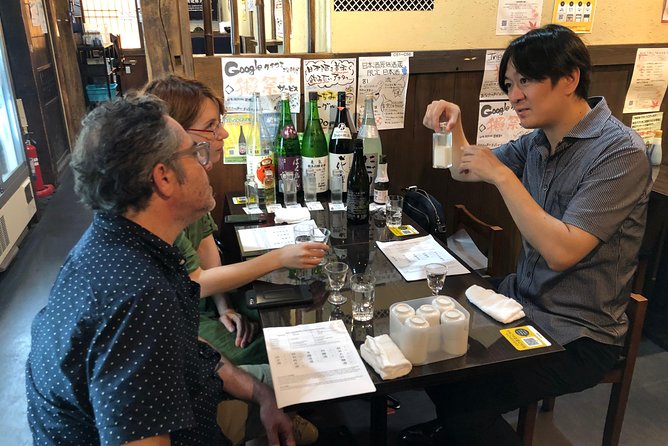
Sake tasting here is more than a round of drinks. Sommelier Aki leads you through six or seven styles, from sparkling and sweet to dry, hot, pasteurized, and unpasteurized bottles. You learn how rice, brewing, storage, and serving temperature change the taste.
I like the clear label lesson and the chance to try sake that can be difficult to find outside Japan. I also like the small-group setting, capped at 12 people, where you can ask about restaurants, nightlife, or what to buy for later. The main drawback is that $62.76 is a fair but not cheap price for a 90-minute tasting, and alcohol can catch up with you quickly if you arrive hungry.
Key points at a glance
- Six to seven styles in one sitting: Compare sparkling, sweet, dry, hot, pasteurized, and unpasteurized sake rather than sampling one familiar type.
- Aki makes labels less mysterious: You learn how to read a bottle and choose a style that fits your own taste.
- Small bar near Louis Vuitton Shinjuku: The tasting takes place in a compact sake bar in the heart of Shinjuku.
- Useful Tokyo orientation: The walk and conversation cover Shinjuku 3-chome, Kabukicho, Golden Gai, and local nightlife.
- Good timing for a first Tokyo evening: The 4 p.m. start leaves room for dinner or a night out afterward.
- English-friendly and capped at 12 people: Most people can take part, and the mobile ticket keeps arrival simple.
Why this Shinjuku sake tasting is worth your afternoon
Sake is often called rice wine, but that label can mislead you. It is brewed from rice, water, yeast, and koji, and its styles can differ sharply. One bottle may be crisp and dry, another fruity and fragrant, another gently sweet or lightly sparkling.
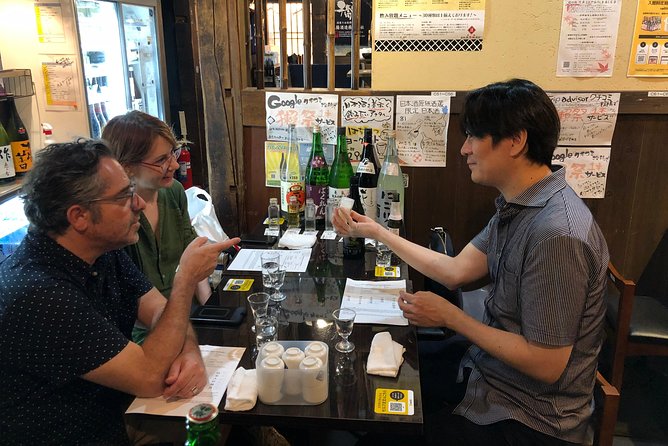
That range is the reason this experience works. Instead of ordering a random bottle at a restaurant and hoping for the best, you taste several types side by side. Aki explains what he notices in each glass and gives you a practical way to connect flavor with the information on the label.
I especially like that the lesson is aimed at people who want to make better choices after the tour. You are not simply told which sake is good. You learn how to spot useful clues on a bottle, ask for the type you prefer, and think about how it should be served.
The setting also helps. This is not a large factory visit or a formal lecture in a museum room. After a short orientation in Shinjuku, you go to a small sake bar close to Louis Vuitton Shinjuku. That puts the tasting in the middle of the city you came to explore, with Kabukicho, Golden Gai, shops, restaurants, and late-night streets close by.
More Drinking Tours in Tokyo
- Tokyo Bar Hopping Tour in Shinjuku (All-You-Can-Drink + Dinner)
★ 5.0 · 3,587 reviews - Best of Shinjuku: Izakaya Food Tour (4 Stops, 14+ Tastings)
★ 5.0 · 1,863 reviews - Tokyo: Shinjuku Local Bar and Izakaya Guided Walking Tour
★ 4.9 · 1,794 reviews
Meeting at Shinjuku San-chome at 4 p.m.
The meeting point is in front of Shinjuku San-chome, at 3-chome-4-8 Shinjuku. The start time is 4 p.m., and the activity returns to this same meeting point when it ends.
That location is practical, but Shinjuku can be confusing if you do not know which station exit you need. Give yourself extra time and keep the mobile ticket available on your phone. The meeting area is near public transportation, but large crowds and many storefronts can make a precise rendezvous harder than it looks on a map.
The first few minutes are spent talking about Shinjuku. Then Aki introduces the Shinjuku 3-chome area before leading you toward the bar. These short neighborhood stops are not sightseeing visits with admission tickets. Think of them as a quick orientation that helps place the tasting in the wider Tokyo night scene.
This is useful if you are new to the city. Shinjuku is not one single neighborhood in feel or purpose. Department stores, office towers, restaurants, bars, Kabukicho, and Golden Gai all sit close together, but they offer very different evenings.
From Shinjuku streets to a small sake bar
The main tasting takes place at a sake bar beside Louis Vuitton Shinjuku. The precise address is less important than the atmosphere: you move from a major shopping district into a compact place built for drinking and conversation.
A small bar has clear advantages. Aki can explain each pour without shouting across a large room, and you can ask questions as they come up. Several people have found the experience especially personal when only a few participants booked that day. The maximum group size is 12, so the session should remain more intimate than a large bus tour.
There is one point to keep in mind. The bar setting may feel close and informal rather than polished or spacious. If you want a grand brewery visit, a long meal, or a formal restaurant pairing, this is not that kind of activity. It is a guided tasting in the city, with the focus on learning and comparing drinks.
Six or seven sake styles, not just one familiar pour
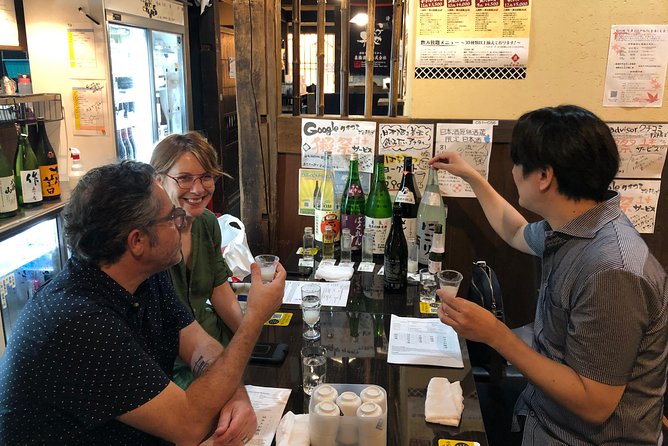
The tasting is designed to show how broad sake can be. You can expect several types, with descriptions of their flavor and the best way to drink them. The exact selection can vary, but the styles discussed include:
- Sparkling sake
- Sweet sake
- Dry sake
- Hot sake
- Pasteurized sake
- Unpasteurized sake
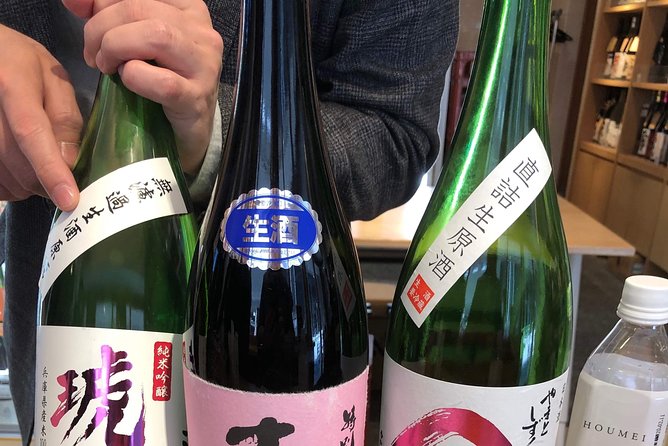
One particularly useful lesson is the difference between pasteurized and unpasteurized sake. Unpasteurized bottles can be difficult to find outside Japan because shipping and storage are more complicated. That makes this a good chance to try a style you may not encounter at home.
The tasting is also valuable for first-time drinkers. You do not need a trained palate or a long list of favorite bottles. Aki breaks down the process in plain language and encourages questions. You might find that a sake you expected to dislike works well at a different temperature, or that the dry and sweet labels do not match your usual assumptions about wine.
Some sessions include a welcome sake in addition to six main samples. A few people have also found that the conversation lasts close to two hours rather than exactly 90 minutes. The official duration is approximately one hour and 30 minutes, so do not schedule another fixed activity immediately afterward.
More Sake Tastings in Tokyo
- Ramen and Sushi Cooking Class with Sake Pairing Set in Tokyo
★ 5.0 · 291 reviews - Sake Tasting Masterclass in Shinjuku (8+ Varieties with a Pro)
★ 5.0 · 271 reviews - Sake Omakase in Tokyo: Guided Tasting by Certified Sommeliers
★ 5.0 · 239 reviews - Wagyu & Sake Pairing in Shinjuku – Steak, Shabu-Shabu & More
★ 5.0 · 112 reviews
Learning how to read a sake label
For me, the most practical part is the bottle lesson. Japanese sake labels can look intimidating when you cannot read every character. Aki provides an information sheet covering the basic production process and the main types of sake, then shows you how to use the label rather than ignore it.
You learn what to look for when deciding what to buy or order. The session connects the written information with the taste in your glass, which makes the lesson easier to remember. Instead of memorizing a long vocabulary list, you begin to see how style, sweetness, brewing choices, and serving temperature affect the result.
There is room for improvement here. The handout explains sake well, but it may not list every bottle served with details such as acidity, pasteurization, or other tasting data. If you find a particular sample appealing, ask Aki to repeat its name and key details before moving on.
That small habit can save you trouble later. Take a photo of a bottle or write down the name of a style you like. The whole point is to give you confidence at a restaurant, department-store food hall, or sake shop during the rest of your Japan trip.
Food pairings and drinking advice
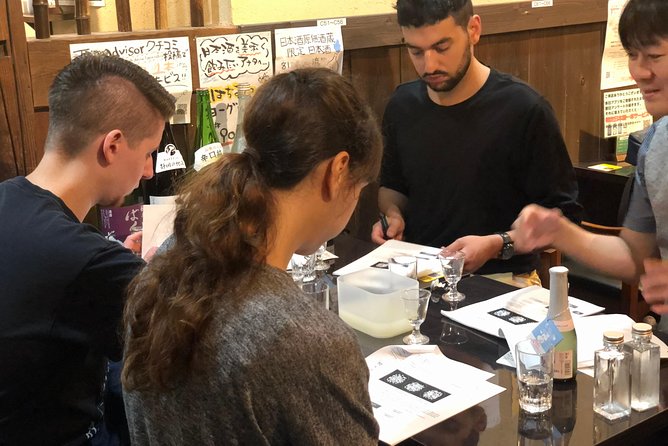
Aki explains which foods work well with different sake styles. The experience does not appear to be a full meal, so eat beforehand. One helpful rule is to avoid arriving on an empty stomach, since six or seven samples can feel like much more than a casual drink.
The food discussion adds value because sake is often ordered with a meal, not in isolation. A dry style may suit one dish, while a sweeter or fuller style may work better with another. You do not need to remember every pairing. Listen for the basic idea, then use it as a starting point when ordering.
The serving advice is just as useful. Some sake is better chilled, some may be served warm, and sparkling sake calls for a different approach from a still bottle. Trying the contrast in one session makes the information concrete.
Since this is an alcohol tasting, pace yourself. The session is friendly and relaxed, but it is still a tasting with multiple pours. Eating first and drinking water afterward are sensible choices, especially if you plan to continue into Kabukicho or Golden Gai.
Shinjuku, Kabukicho, and Golden Gai after the tasting
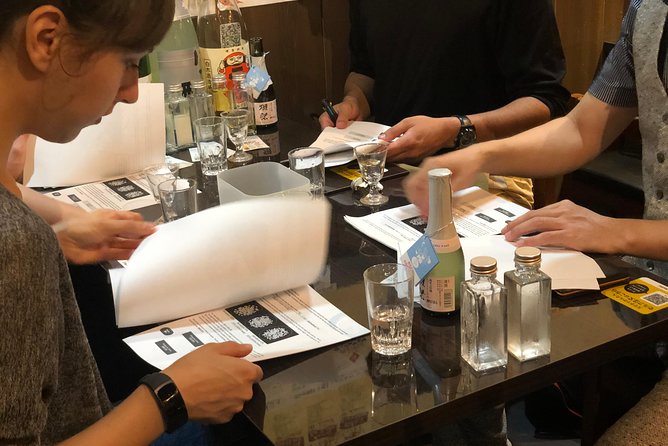
The neighborhood commentary is a bonus rather than the main event. Aki talks about Shinjuku, Kabukicho, and Golden Gai, along with Tokyo nightlife and places to visit or avoid. His background in sake, whiskey, and wine also gives the conversation a wider drinks angle.
This part suits you if you enjoy local advice with your tasting. You can ask about what to order in restaurants, where to continue the evening, and how to approach Japanese drinks more generally. Aki is also described as funny, welcoming, and comfortable speaking English, which helps keep the lesson from feeling stiff.
Do not book this as a dedicated walking tour of Shinjuku. The neighborhood stops are brief, about five minutes each in the early part of the route, and the main activity remains inside the bar. The value is the setting and the practical context, not a long list of monuments or detailed street-by-street sightseeing.
The 4 p.m. start is well chosen. You get daylight for the short orientation, then move into the evening as the entertainment districts begin to fill. When the tasting ends, you are already in a useful part of Tokyo for dinner or further exploration.
Is $62.76 a good value?
At $62.76 per person, this is not the cheapest way to drink sake in Tokyo. You could order one or two glasses at a bar for less. That comparison misses the main benefit, though. Here, your fee includes six or seven samples, instruction from a sommelier, label guidance, serving advice, food-pairing tips, and neighborhood orientation.
The price makes the most sense if you are new to sake or already enjoy it but want to understand the differences. A sake lover may value the harder-to-find Japanese bottles, especially unpasteurized selections. A first-timer may value the confidence to order again without relying on guesswork.
The cost is less appealing if you only want a quick drink or if you dislike structured tastings. This is an educational session, and Aki covers production, ingredients, aging, types, and the market in considerable detail. It can feel like a short introductory class with alcohol included.
The group cap of 12 helps protect the value. You are not paying for a crowded auditorium presentation. In a very small booking, the experience can become almost private, though you should not assume you will have the bar entirely to yourself.
Who should book this experience?
I would recommend it to:
- First-time sake drinkers who want a safe introduction
- Couples or families looking for a relaxed Tokyo activity
- Sake fans interested in bottles rarely shipped abroad
- People who want label and ordering advice before more restaurant meals
- Visitors who enjoy meeting a local guide in a small group
- Anyone planning an evening in Shinjuku after the tasting
It is less suitable for children, anyone avoiding alcohol, or people who want a brewery tour with a long production visit. It also may not suit you if you prefer to choose every drink yourself rather than follow a guided selection.
Most people can participate, and the activity is near public transportation. The mobile ticket keeps the booking simple. Free cancellation is available up to 24 hours before the 4 p.m. start, but changes or cancellations inside that window are not refunded.
Should you book Aki’s Shinjuku sake tasting?
Book it if you want more than a drink. The strongest reason to go is the combination of wide tasting range and practical instruction. You leave with a better idea of what you like, how to read a label, and how serving temperature can change the experience.
The best strategy is to schedule it early in your Tokyo stay, after you have adjusted to the time difference and eaten lunch or an early meal. Then use what you learn at restaurants and shops for the rest of your visit.
Skip it if your priority is a cheap bar stop, a full dinner, or a formal brewery tour. For everyone else, $62.76 buys a useful introduction to Japanese sake in a central Tokyo setting, with Aki’s humor and local advice helping the lesson go down easily.
FAQ
Where does the sake tasting begin?
It begins in front of Shinjuku San-chome at 3-chome-4-8 Shinjuku, Shinjuku City, Tokyo 160-0022, Japan.
What time does the experience start?
The scheduled start time is 4 p.m.
How long does the tasting last?
The listed duration is approximately one hour and 30 minutes. Some sessions may run longer, so leave extra time afterward.
How many types of sake will I taste?
You will taste approximately six to seven types of sake. A welcome sake may also be served.
What styles of sake are included?
The tasting can include sparkling, sweet, dry, hot, pasteurized, and unpasteurized sake. The exact selection may vary.
Is the tasting held at a brewery?
No. After a short introduction around Shinjuku and Shinjuku 3-chome, the tasting takes place at a sake bar beside Louis Vuitton Shinjuku.
What is the maximum group size?
The activity allows a maximum of 12 participants.
Does the tour end where it starts?
Yes. The activity ends back at the meeting point.
Can I cancel for a full refund?
Yes. You can cancel at least 24 hours before the experience start time for a full refund. Cancellations or changes made less than 24 hours beforehand are not refunded or accepted.
More Food & Drink in Tokyo
- Tokyo: Shinjuku Food Tour (13 Dishes at 4 Local Eateries)
★ 5.0 · 6,603 reviews - Tokyo Tsukiji Fish Market Food and Culture Walking Tour
★ 5.0 · 3,184 reviews - Tokyo: Shinjuku Food Tour (15 Dishes and 4 Eateries)
★ 4.9 · 2,033 reviews - Tokyo: Tsukiji Fish Market Food and Walking tour
★ 5.0 · 1,724 reviews
Just added around Tokyo
- Kawagoe Japanese Food Tour : Unagi Kaiseki and Sake near Tokyo★ 5.0 · 30 reviews
- Kawagoe 4hr Private Tour with Licensed Guide (Kawagoe Dep)★ 5.0 · 13 reviews
- Little EDO Sushi Making workshop in Kawagoe★ 5.0 · 18 reviews
- 【R34】Tokyo:Private Daikoku tour in Modified R34★ 4.9 · 92 reviews
- :Tokyo,Shibuya/ Pro Photography in Kimono / English-Friendly★ 5.0 · 26 reviews
- Tokyo:Celebrate Unique Japanese New Year Tradition Festivity★ 3.9 · 20 reviews
- Tokyo: Allstar Food Tour★ 4.7 · 29 reviews
- Tokyo: West-Side Cycling and Food Tour with Guide★ 5.0 · 37 reviews
Sake Tasting, compared.
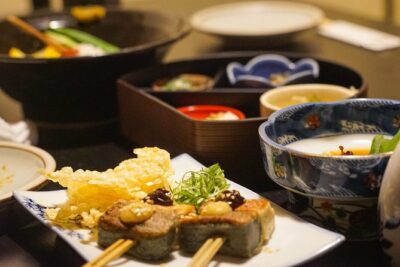
Kyoto Night Foodie Tour in Gion (9+ dishes + 6 Sake tastings)
Our verdict →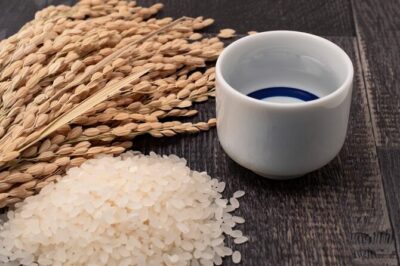
1-Day Snow Monkeys, Zenko-ji Temple & Sake in Nagano
Our verdict →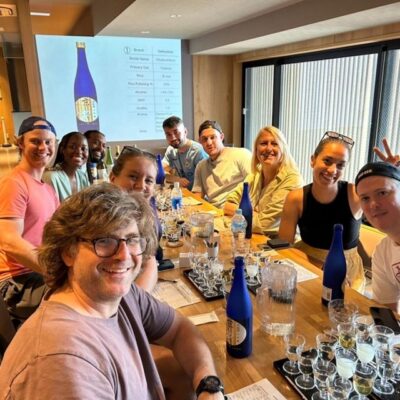
Insider Sake Brewery Tour with Sake and Food Pairing
Our verdict →
Sake Tasting Masterclass in Shinjuku (8+ Varieties with a Pro)
Our verdict →
Browse the lists this tour appears in