
Reviewed · SUSHI EXPERIENCES
Tokyo: Sushi Making Class in a Happi Coat near a Famous Spot
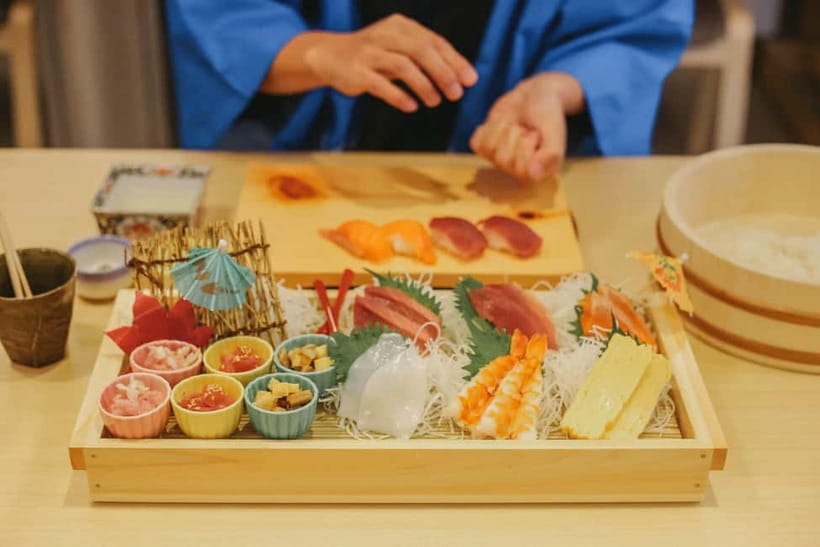
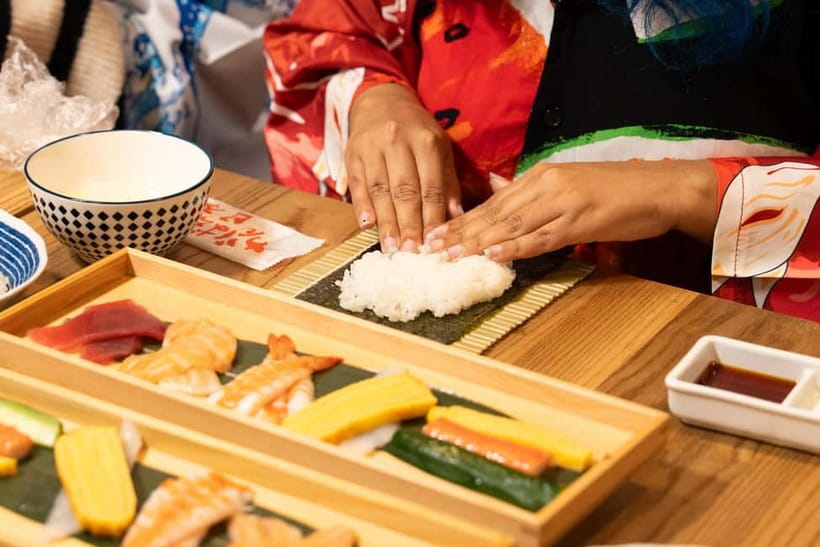
Tokyo’s sushi counter can feel like a place where you watch rather than touch. This 90-minute SUSHI GARYU class flips that idea around. You put on a happi coat, follow a sushi chef’s demonstration, shape tuna and salmon nigiri, make rolls, and eat your own work near one of Tokyo’s famous sights.
I like two things here. First, the lesson is genuinely hands-on, with clear steps for beginners and plenty of help at the table. Second, the food is substantial enough to serve as lunch, not just a tiny sample. The main consideration is that the meeting point depends on the option you book, and the small venue may seat you with other customers.
Key points to know before booking
- You make both nigiri and rolls: The class covers hand-shaped nigiri, maki, and, in some sessions, other simple sushi forms.
- The happi coat is part of the fun: You can wear a traditional Japanese tube-sleeved coat and take photos during the class.
- Chef-led instruction keeps it easy: English and Japanese are available, with guides such as Hide, Mikoto, Kohji, Ami, and Masa appearing in different sessions.
- The food can replace a meal: The portions are generous enough that you may leave full, especially after making several pieces.
- Dietary requests need advance notice: Vegetarian, vegan, and gluten-free versions are available, but you should message the provider before the day of the class.
- The value is strong at $42: You receive instruction, ingredients, a cultural activity, and a meal in one short Tokyo stop.
What happens during the 90-minute sushi class
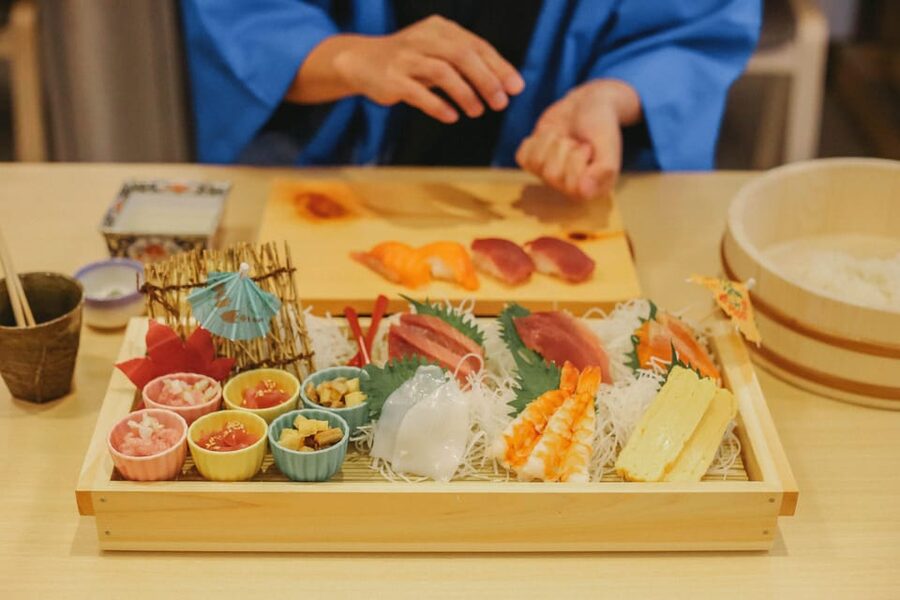
This is a compact workshop rather than a long culinary school session. The schedule gives you enough time to learn the basic movements, make several pieces, and sit down to eat without taking half a day from your Tokyo plans.
The class begins with an introduction to sushi and the ingredients in front of you. The chef explains the process before asking you to copy it. That order matters. You get to watch the hand movements first, rather than trying to work out the technique from a printed sheet.
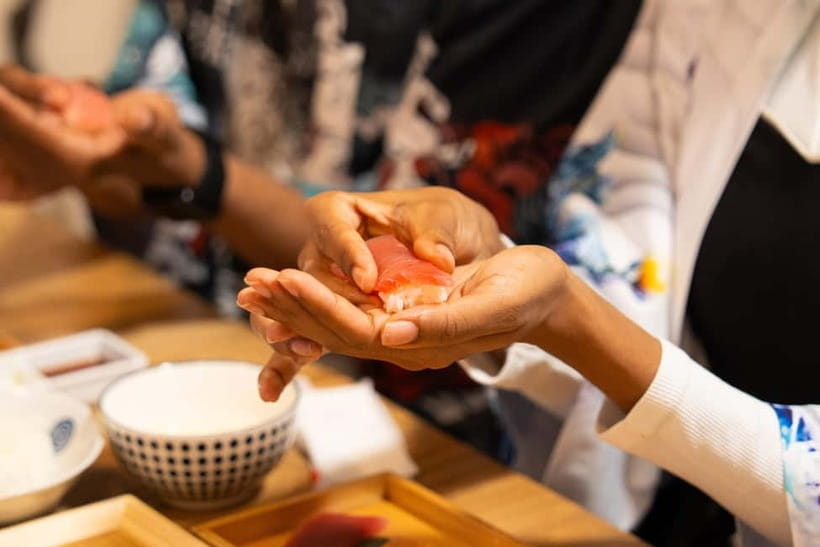
The core lesson focuses on nigiri sushi, the small oval of seasoned rice topped with fish. Tuna and salmon are the featured ingredients, two familiar choices that make the class approachable for first-timers. You learn how to handle the rice, place the fish, and form the sushi without crushing the grains.
You may also make maki or other simple rolls, depending on the session. Several classes include both nigiri and rolls, so the experience gives you more than one basic sushi method to take home.
After the demonstration, you work at your own station or shared table. The instructors move around, correct hand positions, answer questions, and help when a piece starts to fall apart. That personal help is one reason the class suits beginners who would feel lost at a formal sushi counter.
The final part is the reward. You eat the sushi you prepared yourself. Several sessions produce a generous amount of food, enough to feel like a proper lunch rather than a quick taste.
More Sushi Experiences in Tokyo
- Sushi Making Tokyo Roll and Authentic Japanese Sushi Class
★ 5.0 · 3,971 reviews - Tokyo: Roll and Authentic Sushi Making Class in Asakusa
★ 4.9 · 1,957 reviews - Make Sushi and Create Unforgettable Memories in Tokyo
★ 5.0 · 1,413 reviews
Why making nigiri is harder than it looks
Sushi seems simple because the finished pieces are small and tidy. The difficult part is getting the rice to hold together while keeping it light. Press too hard and the texture suffers. Press too little and the piece breaks before it reaches the plate.
A chef can show you the right pressure in a few seconds. That is more useful than reading a recipe. You also learn that the shape does not need to be perfect on the first try. The point is to understand the movement and enjoy the process.
The tuna and salmon make good teaching ingredients because they are easy to recognize and popular with many diners. They also let you compare how different fish look and feel when placed over the same rice base.
Do not expect professional sushi-chef training in 90 minutes. You will not master knife work, fish aging, rice seasoning, or the full discipline of a high-end omakase counter. You will learn the basic assembly skills needed to make attractive, tasty sushi at home.
That is a fair trade for the time and price. The class gives you a practical starting point, not an exaggerated promise of mastery.
The happi coat adds culture and a few good photos
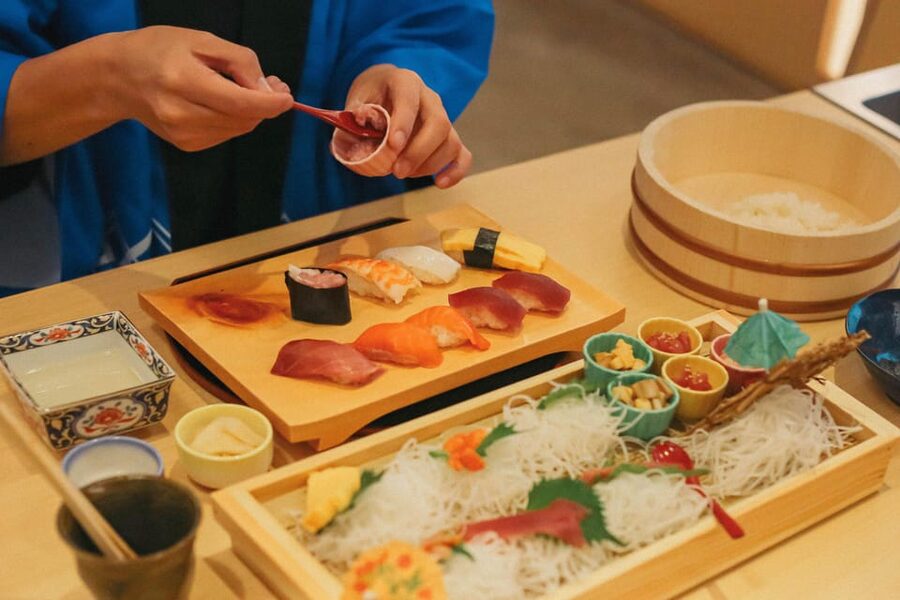
The happi is a traditional Japanese-style coat with wide, tube-like sleeves. Putting one on changes the mood at once. You are not simply sitting at a table with ingredients. You look and feel more like part of the kitchen.
The coat is also a useful photo prop. The class setting includes opportunities for pictures, and instructors may take photos or videos while you work. If you are planning a first trip to Japan, these images can be more memorable than another photo of a crowded shopping street.
This part is lighthearted, but it is not empty decoration. Clothing, food, and the chef’s demonstrations give you a small window into Japanese food culture. You learn through doing, which is often more lasting than reading a short explanation at a museum.
The class has a friendly tone rather than a strict restaurant atmosphere. Instructors such as Chef Hide, Mikoto, Kohji, Ami, and Masa have been praised for humor, patience, clear English, and personal attention. The exact teacher varies, so do not book expecting one particular chef unless your confirmation says so.
A friendly class for couples, families, and solo visitors
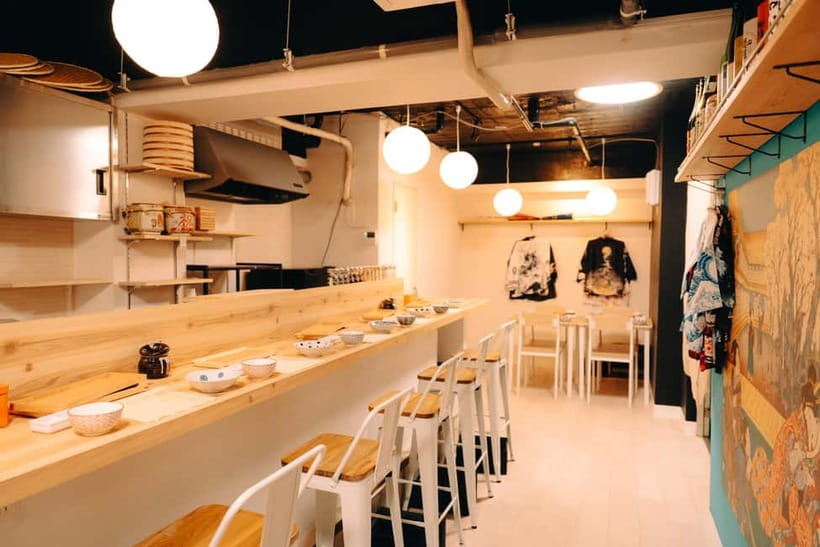
The activity works especially well for couples. You can make sushi side by side, compare the shapes you produce, and finish with a meal you created together. It is a relaxed date activity, with more to do than simply sit across from one another in a restaurant.
Families can also enjoy it. Children over four are charged according to the activity’s age policy, while younger children may share a dish. The hands-on format keeps children involved, but parents should still consider how well their child can follow short demonstrations and handle food carefully.
Solo visitors are not left out. If attendance is low, the session may feel close to a private lesson. One person has received individual instruction when no one else booked the same time, while other sessions use small groups with roughly five people per host.
The size can change. A quieter booking may give you more time for questions and conversation. A busy class may seat you with other customers. That can be a nice way to meet people, but it means the amount of one-to-one help depends on the day.
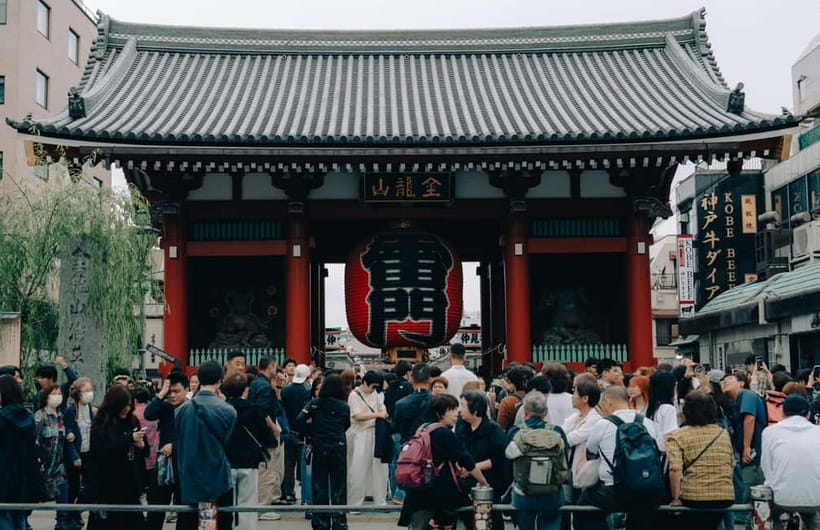
The class is also a good choice for a short Tokyo stop. At 90 minutes, it fits neatly between sightseeing plans. One especially practical use is a free morning or afternoon near a temple, market, or famous local sight, since the activity can be followed by more exploring in the area.
Same trip, a completely different kind of day:
- 1-Day Tokyo Bus Tour
★ 5.0 · 14,250 reviews - Tokyo: TOKYO SKYTREE® Admission ticket
★ 4.5 · 11,192 reviews - Tokyo: teamLab Planets TOKYO Digital Art Museum Entry Ticket
★ 4.6 · 9,779 reviews - Tokyo: Sumo Show Experience with Chicken Hot Pot and a Photo
★ 4.8 · 6,678 reviews
The instructors make the difference
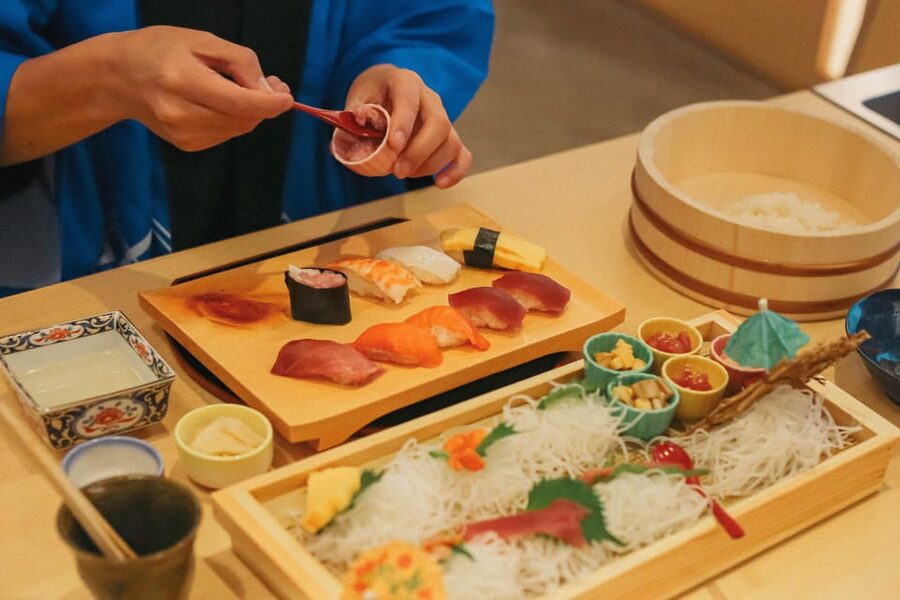
A sushi lesson rises or falls on the teacher. Here, the strongest pattern is clear instruction paired with a relaxed manner. You are shown what to do, given time to try it, and corrected without being made to feel clumsy.
English is available, and many sessions have been led by instructors with strong, easy-to-follow English. That matters because sushi technique depends on small details: how much rice to use, how to position the fish, and how firmly to shape the piece.
The teachers also add cultural context. They explain Japanese food customs and answer questions about sushi, local dining, and other places to eat. Some instructors have offered Tokyo or wider Japan recommendations after the lesson.
Do keep expectations sensible. This is not a lecture on every regional sushi tradition. The cultural material supports the cooking, rather than replacing it. You will learn enough to understand the basics and appreciate the food more, then spend most of your time making and eating.
The personal tone can vary from one guide to another. That is normal for a class with several instructors. The consistent feature is the beginner-friendly structure: demonstrate, practice, receive help, and taste the result.
Food, portions, and dietary requests
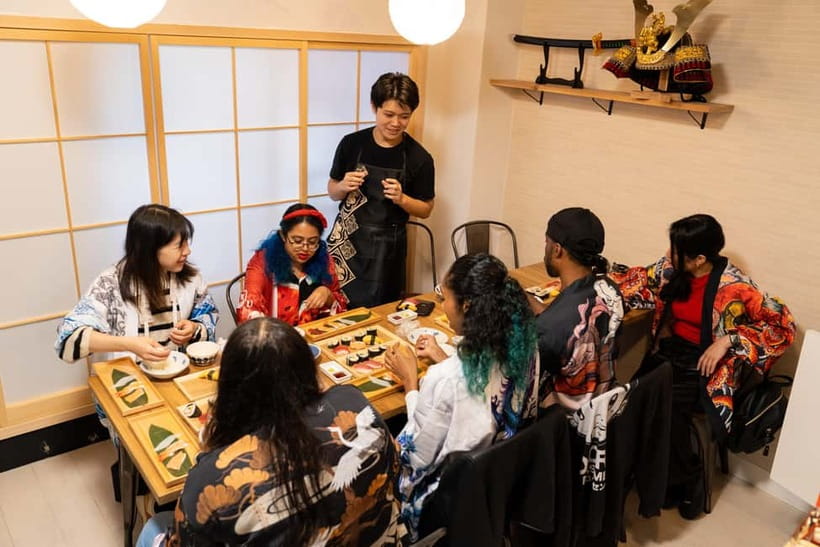
The featured fish are tuna and salmon, and the ingredients are prepared for the class before you arrive. The food is designed for learning as well as eating, so you can expect the pieces to be practical for a beginner to assemble.
Portions appear generous. You may make enough sushi to leave satisfied, which adds real value to the $42 price. You are paying for a lesson, ingredients, a teacher, and a meal in one package.
If you are vegetarian, vegan, or gluten-free, contact SUSHI GARYU in advance. These options are available, but the kitchen may not be able to adjust the class on the day itself. The same rule applies to allergies. Send the information by message before your visit and be specific.
The activity description highlights tuna and salmon, but alternative arrangements need to be confirmed ahead of time. Do not assume that a dietary request sent at the last minute can be handled.
Sake may be available for an additional charge. That is optional, not part of the listed class price. If you choose to drink, remember that the class includes food preparation and knife or kitchen work, so keep it modest.
Is $42 good value in Tokyo?
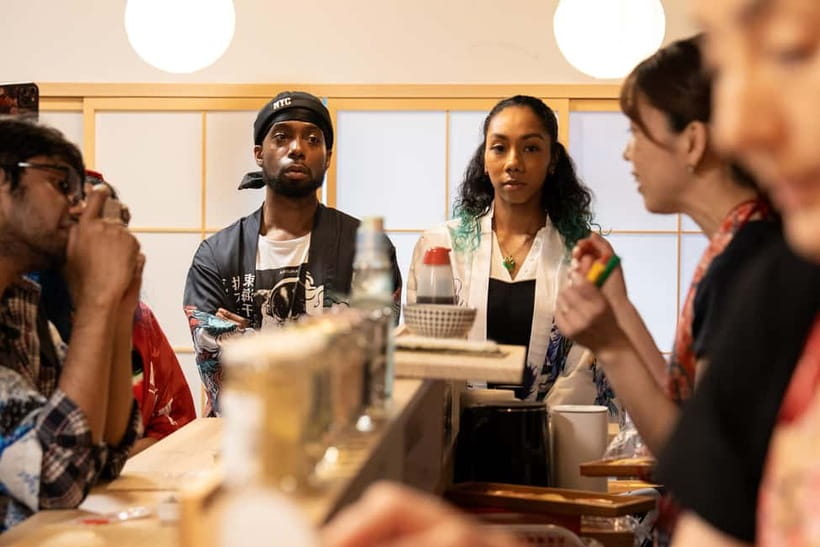
At $42 per person, this is a strong value if you want more than a restaurant meal. A sushi lunch alone gives you food. This class gives you food plus instruction, cultural background, photos, a traditional coat, and a skill you can try again at home.
The value improves if you are already planning to eat lunch during the same part of the day. The food portion can cover that meal, while the lesson becomes the main activity. You also avoid paying for a separate sightseeing stop during the 90 minutes.
The price is less compelling if you only want to eat excellent sushi without working for it. A specialist sushi restaurant will offer a more polished meal and a wider choice of fish. This class is about participation, not restaurant-level presentation.
I would also weigh the short format. Ninety minutes is convenient, but it limits how much technique you can cover. You get the essentials and a good amount of practice, not a full professional course.
For a first visit to Tokyo, that balance makes sense. You receive a hands-on cultural activity without giving up most of the day or paying the price of a long private cooking lesson.
Practical details that can affect your visit
Check the exact meeting point for your chosen option. The location may vary, so do not rely on a general map pin or assume every time slot begins at the same place.
Give yourself enough time to find the venue. One participant had some trouble locating it, even though the place was manageable once found. A few extra minutes are wise, especially in an unfamiliar Tokyo neighborhood or when you are coming from a temple, market, or train station.
The venue is described as clean, cozy, and welcoming. Seating may be shared when the class is busy. If you want the best chance of a quieter session, a less popular time may help, but no time slot guarantees a private class.
English and Japanese are offered. You should still tell the provider about allergies or dietary needs before the class, not at check-in.
Free cancellation is available up to 24 hours before the activity for a full refund. You can also reserve and pay later, which helps if your Tokyo schedule is still changing.
Who should book this sushi class?
You should book it if you want to do something active, enjoy Japanese food, and like the idea of learning a skill rather than only watching a demonstration.
It is a good match for:
- Couples looking for a casual date activity
- Families with children old enough to follow instructions
- Solo visitors who enjoy small-group classes
- First-time sushi makers
- Food lovers who want cultural context with lunch
- Visitors with a spare 90-minute window near a famous Tokyo sight
You may want another option if you dislike fish, need guaranteed private seating, or want advanced instruction in knife skills and sushi craftsmanship. The menu centers on sushi preparation, and the group setup can vary.
Should you book SUSHI GARYU?
I would book this class for a first Tokyo visit, especially if you want a meal and a memorable activity in the same 90 minutes. The strongest reasons are the clear beginner-level teaching, friendly English support, generous portions, and the chance to wear a happi coat while making your own food.
Book early if a particular time matters, and send all dietary information in advance. Check the meeting point carefully, then arrive ready to make imperfect but tasty sushi. At $42, the class gives you a practical skill, a cultural experience, and lunch without asking you to surrender half your day.
FAQ
How long does the sushi-making class last?
The class lasts 90 minutes.
How much does the activity cost?
The listed price is $42 per person.
What types of sushi will I make?
You will learn to make nigiri sushi with tuna and salmon. Depending on the session, you may also make maki or other simple rolls.
Is the class suitable for beginners?
Yes. The class is designed for beginners, with a chef demonstrating the techniques and helping you as you practice.
What languages are available?
Instruction is available in English and Japanese.
Can I wear a traditional Japanese coat?
Yes. You can wear a happi, a traditional Japanese-style coat, during the class.
Are vegetarian or vegan options available?
Yes. Vegetarian and vegan options are available if you request them in advance.
Can the class accommodate gluten-free diets?
Gluten-free options are available with advance notice. Contact the provider before the activity because same-day requests may not be possible.
Do I need to report food allergies?
Yes. You should send information about food allergies in advance by message.
Can I cancel for a refund?
You can cancel up to 24 hours before the activity for a full refund. Reserve now and pay later is also available.
Just added around Tokyo
- Kawagoe Japanese Food Tour : Unagi Kaiseki and Sake near Tokyo★ 5.0 · 30 reviews
- Kawagoe 4hr Private Tour with Licensed Guide (Kawagoe Dep)★ 5.0 · 13 reviews
- Little EDO Sushi Making workshop in Kawagoe★ 5.0 · 18 reviews
- 【R34】Tokyo:Private Daikoku tour in Modified R34★ 4.9 · 92 reviews
- :Tokyo,Shibuya/ Pro Photography in Kimono / English-Friendly★ 5.0 · 26 reviews
- Tokyo:Celebrate Unique Japanese New Year Tradition Festivity★ 3.9 · 20 reviews
- Tokyo: Allstar Food Tour★ 4.7 · 29 reviews
- Tokyo: West-Side Cycling and Food Tour with Guide★ 5.0 · 37 reviews
Sushi Experiences, compared.
Sushi Making Tokyo Roll and Authentic Japanese Sushi Class
Our verdict →
Sake Omakase in Tokyo: Guided Tasting by Certified Sommeliers
Our verdict →
Browse the lists this tour appears in