
Reviewed · SUSHI EXPERIENCES
Tokyo: Roll and Authentic Sushi Making Class in Asakusa
Making sushi in Asakusa gives you more than a meal. You learn how sushi developed, then put that lesson to work by preparing two distinct styles: rolled maki sushi and hand-shaped nigiri sushi. The class is light, social, and taught in English by local instructors who keep beginners moving.
I like the clear hands-on format, especially the balance between the sushi quiz and actual preparation. I also like the location, just three minutes from Asakusa Station and close to Sensoji Temple and Tokyo Skytree. The main point to consider is time: 100 minutes is enough for a satisfying meal and basic instruction, but some people may find the final stages a little quick.
Key points at a glance
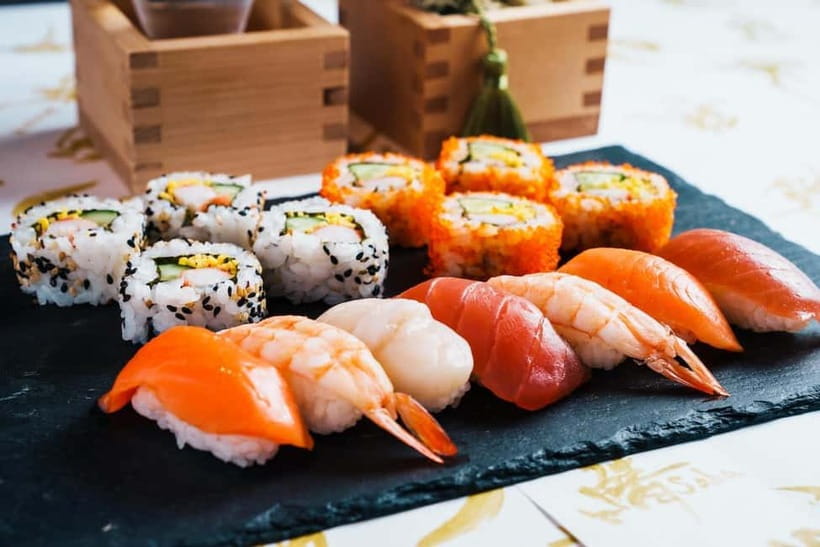
- Two classic sushi styles: Make both maki rolls and authentic Japanese nigiri.
- Sushi history with a playful twist: Learn through an interactive quiz rather than a long lecture.
- Friendly English instruction: Instructors such as Hitomi, Moe, Ken, Kaori, and Jun have led lively classes.
- A smart Asakusa stop: The meeting point is about three minutes from Asakusa Station, near Sensoji Temple.
- Good for families and solo visitors: The class welcomes groups, couples, children, and people booking alone.
- Dietary options need advance notice: Vegan, vegetarian, gluten-free, halal, and allergy-friendly menus can be arranged before the day.
Why this Asakusa class works so well
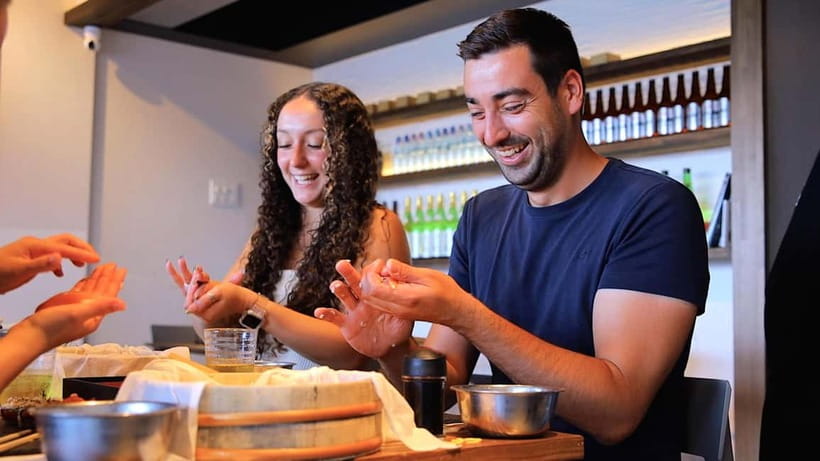
The best part of this activity is that you do not simply watch someone prepare sushi. You handle the ingredients, follow each step, and then eat what you made. That creates a useful sense of achievement, even if your first roll is a little crooked.
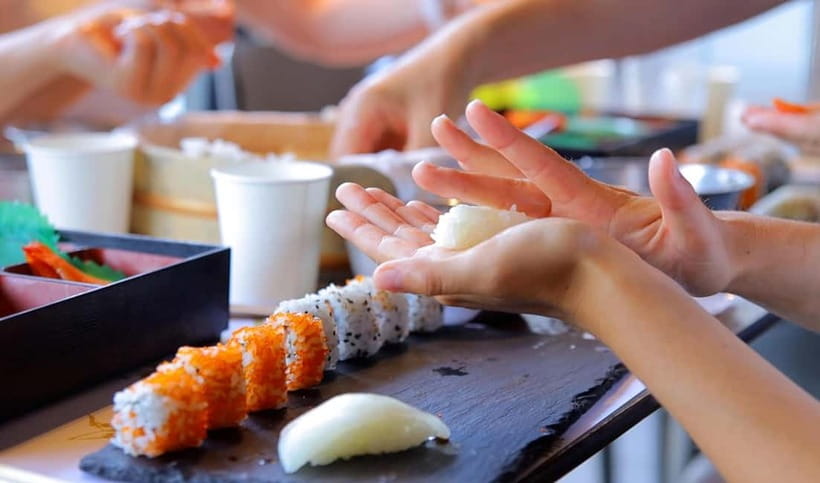
The class covers two forms of sushi that look similar on a restaurant menu but require different techniques. Maki uses a sheet of nori wrapped around rice and fillings, while nigiri is shaped rice topped with fish or another prepared ingredient. Learning both gives you a better feel for the craft than a class focused only on rolling.
The teaching style is designed for first-timers. You do not need cooking experience, and the instructors demonstrate the process with clear directions and physical examples. Names associated with recent sessions include Hitomi, Moe, Ken, Kaori, Jun, Ryouko, Kazu, and Kenshin. Staff assignments can change, but the format remains focused on patient guidance and group participation.
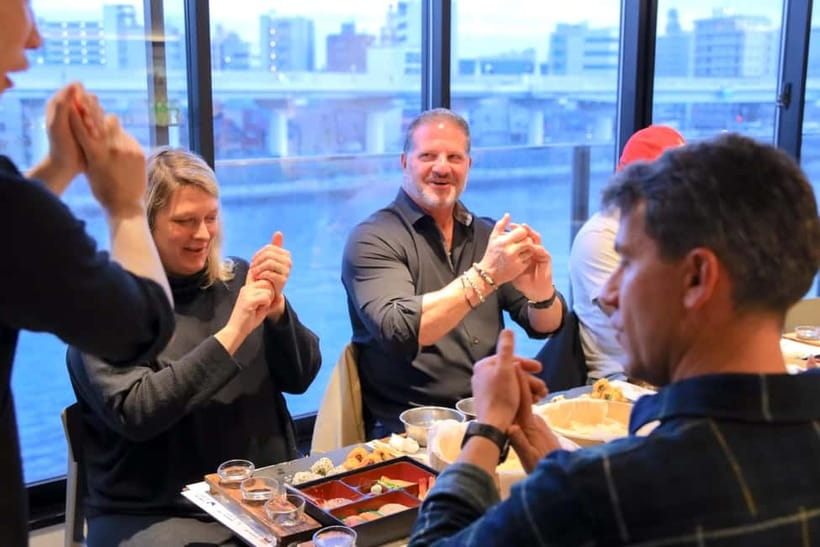
I especially like the way the class uses humor. Instructors encourage people, make room for mistakes, and keep the mood relaxed. That matters in a food class, since sushi can look simple until you try to form a neat roll or keep the rice from sticking everywhere.
There is also a social side. Solo participants can join a group without needing to arrive with a partner, while families can work through the steps together. Several sessions have worked well for children and teenagers, though younger children will likely need help with the more delicate parts of shaping and cutting.
More Sushi Experiences in Tokyo
- Sushi Making Tokyo Roll and Authentic Japanese Sushi Class
★ 5.0 · 3,971 reviews - Make Sushi and Create Unforgettable Memories in Tokyo
★ 5.0 · 1,413 reviews - Tokyo: Sushi Making Class in a Happi Coat near a Famous Spot
★ 4.9 · 1,377 reviews
The 100-minute schedule, from quiz to meal
The class begins with an introduction to sushi and its background. Rather than treating this as a formal history lesson, the instructors use an interactive quiz to get everyone involved. This is a good choice for a mixed group because it gives you useful context without asking you to sit quietly for too long.
You learn about sushi ingredients and the difference between traditional styles and the versions that have developed outside Japan. That context makes the practical work more meaningful. When you later prepare maki and nigiri, you understand that they are not just two ways to arrange rice and fish.
Next comes the demonstration. The instructors show the basic movements before you try them yourself. The teaching is in English, and the class is structured for people who may have never handled sushi rice, nori, or nigiri ingredients before.
The maki section usually feels like the more familiar activity. You spread rice, add the fillings, roll the sheet, and shape the sushi before cutting it. The process is satisfying, but it is also where you discover that even pressure matters. Too much filling can make a roll difficult to close, while uneven rice can produce slices of very different sizes.
Nigiri is a separate skill. You form a small portion of rice and place a topping over it. The goal is not simply to make the pieces look neat. You are learning how a compact amount of rice supports the topping while still being easy to eat.
The instructors move between demonstrations and individual help. That is important because sushi preparation is easier to understand when someone can correct your hand position or show you how much rice to use. The class is not intended to train you as a professional sushi chef, but it gives you a practical introduction you can remember and repeat at home.
Finally, you sit down and eat the sushi you prepared. This is more than a photo opportunity. You get to judge the texture, balance, and appearance of your own work. The meal is also the payoff for the concentration required during the preparation.
Some people have found the pace slightly fast, especially near the end. One useful tip is to listen closely during the first demonstration and avoid spending too much time perfecting one roll. If you work steadily, you will have more time to enjoy the finished sushi.
The food: fresh ingredients and a proper taste of your work
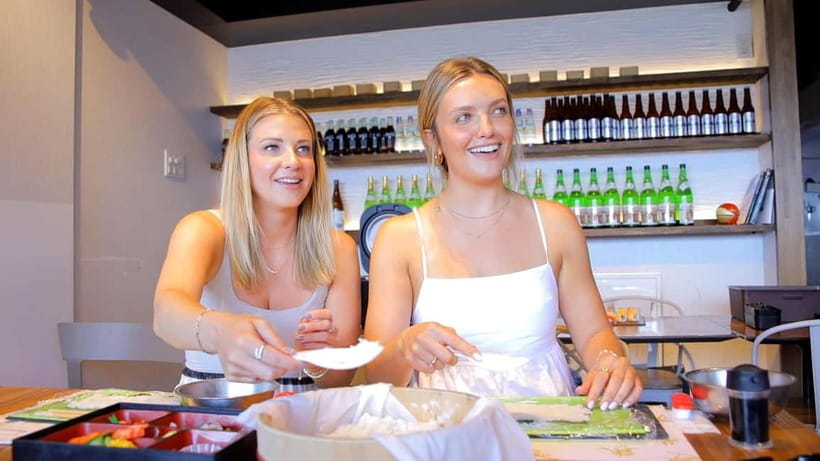
The ingredients are repeatedly praised for their freshness and quality, which matters a great deal in a sushi class. Since the menu is simple, there is nowhere for poor ingredients to hide. The rice, nori, and toppings all affect the result.
You should expect enough food for a proper light meal rather than a tiny tasting. Several sessions have included plenty of maki and nigiri, and some people finished feeling full. The exact amount can depend on the menu and your preparation, so this should not replace every meal plan for a very hungry eater.
One useful detail is that additional rice may not always be available. If you are someone who likes a high rice-to-topping ratio, pay attention to the portions during the demonstration and use the provided rice carefully. The instructors can guide your technique, but they may not be able to supply extra ingredients once the class is under way.
The class may also offer sake flights and beer, according to the activity information provided during some sessions. These are a possible addition rather than the main event. If you are booking this for children or want a purely food-focused lesson, the sushi itself remains the central part of the experience.
Why the Asakusa location adds value
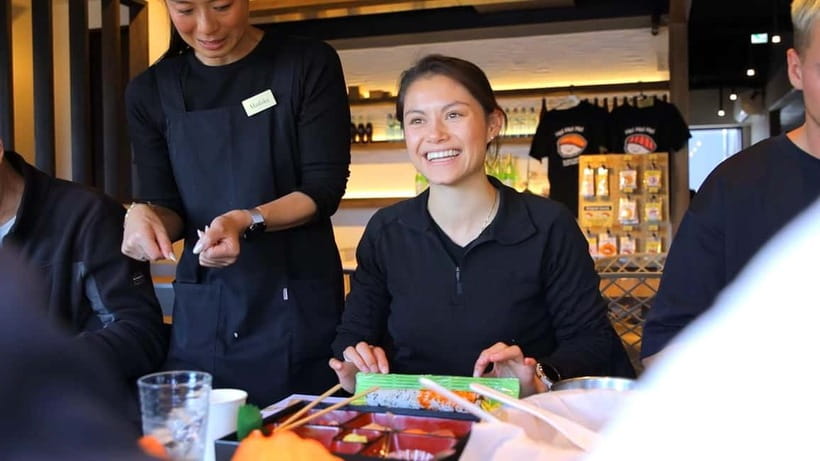
Asakusa is one of Tokyo’s best areas for pairing a food activity with sightseeing. The class is close to Sensoji Temple, and the meeting point is about three minutes from Asakusa Station. That makes it easy to fit into a morning or afternoon of exploring.
You can visit the temple area before the class, make sushi, and then continue toward the Sumida River or Tokyo Skytree. The location is especially useful on a first Tokyo visit because it places you in a traditional part of the city rather than in a modern office district.
The convenience also helps with timing. Since no hotel pickup or drop-off is included, you need to reach the meeting point on your own. The short walk from the station keeps that simple, but allow enough time to find the exact entrance and arrive ready to begin.
I would avoid scheduling the class too tightly against a major reservation on the other side of Tokyo. The stated duration is 100 minutes, yet getting seated, finishing the sushi, and leaving the area can take longer than the formal class time. A relaxed schedule will let you enjoy both the food and Asakusa.
Same trip, a completely different kind of day:
- 1-Day Tokyo Bus Tour
★ 5.0 · 14,250 reviews - Tokyo: TOKYO SKYTREE® Admission ticket
★ 4.5 · 11,192 reviews - Tokyo: teamLab Planets TOKYO Digital Art Museum Entry Ticket
★ 4.6 · 9,779 reviews - Tokyo: Sumo Show Experience with Chicken Hot Pot and a Photo
★ 4.8 · 6,678 reviews
Who should book this experience?
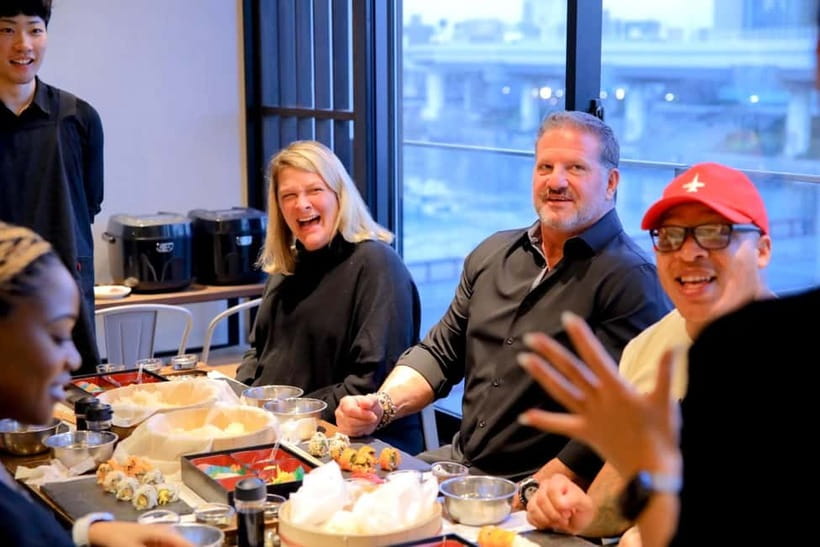
This is a strong choice for first-time sushi makers. You receive step-by-step instruction, and the class does not assume that you know how to handle a bamboo mat or shape nigiri.
Families are also well served. The activity has worked well for groups with children, and the hands-on format gives young participants something concrete to do. Adults should expect to provide some help if a child struggles with rice, cutting, or rolling.
Couples can treat it as a shared activity rather than another restaurant meal. You work side by side, compare your finished pieces, and eat together. It also suits solo visitors because the class brings people together in a structured way without requiring you to socialize before the lesson starts.
The experience is less suitable if you want an advanced chef-training session. You will learn useful techniques and sushi vocabulary, but the focus is on fun, clear instruction, and making a meal in a short period. It is also not ideal for someone who dislikes group activities or instructor-led participation.
The atmosphere includes jokes, encouragement, and group energy. One session received a mild criticism that the clapping and upbeat presentation felt more tourist-oriented than traditionally Japanese. That is a fair expectation to set: this is a welcoming cultural activity designed for international visitors, not a quiet apprenticeship in a sushi counter.
Dietary needs and menu changes
The activity can accommodate vegan, vegetarian, gluten-free, halal, and allergy-related menu changes. You must contact the provider when making the reservation so the kitchen can prepare the correct ingredients.
The stated menu excludes meat, nuts, fruits, and dairy. Still, you should explain your needs clearly at booking, especially if you have a serious allergy. The provider cannot respond to ingredient changes requested on the day, and it does not accept detailed ingredient specifications beyond the available menu adjustments.
Vegetarian participants have been accommodated successfully, so this option is practical for people who do not eat fish or meat. The exact substitute ingredients are not specified, so ask before booking if you need to know precisely what will be served.
Price and practical value at $58
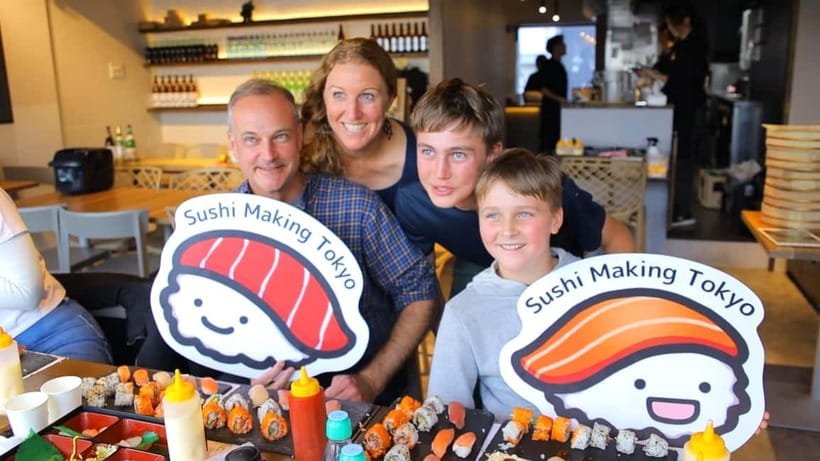
At $58 per person, this is not the cheapest way to eat sushi in Tokyo. You can certainly find a less expensive restaurant meal. The value comes from combining food, instruction, cultural background, and a convenient Asakusa location in one 100-minute activity.
I think the price is reasonable if you want a memorable activity rather than a standard lunch. You are paying for an English-speaking instructor, ingredients, preparation guidance, and the chance to eat the finished sushi. The class also solves a common Tokyo problem: finding a cultural experience that is easy to join without speaking Japanese.
The price is less compelling if your only goal is to eat premium sushi. This is a beginner class, and the food is part of a wider experience. Choose a sushi counter instead if you care most about watching a specialist prepare an intricate meal.
The free cancellation policy allows you to cancel up to 24 hours in advance for a full refund. You can also reserve now and pay later, which is useful when planning a Tokyo schedule that may change.
Access, language, and group comfort
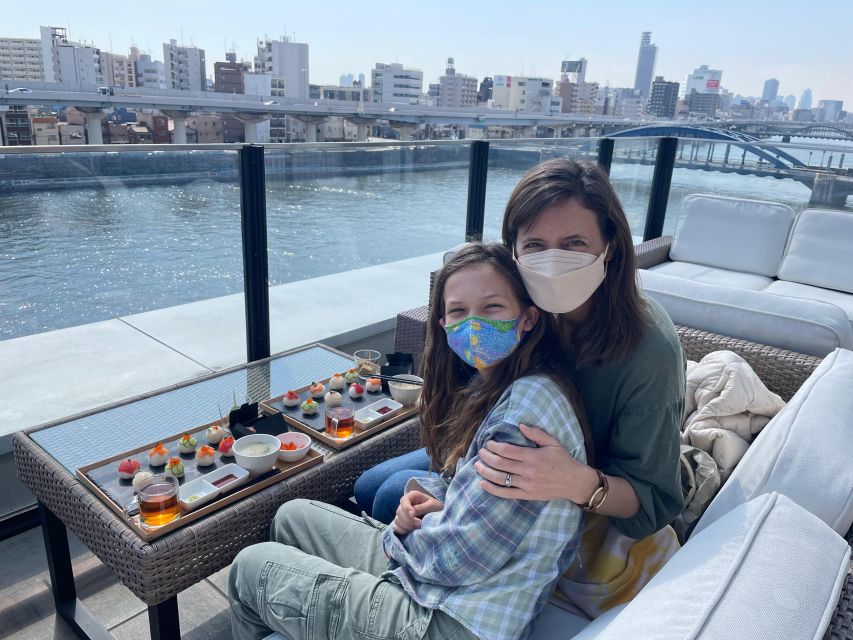
Instruction is provided in English. The activity welcomes both solo participants and groups, so you do not need to arrange a private booking to take part.
The experience is listed as wheelchair accessible. If you have particular mobility needs, it is still sensible to confirm the exact room setup when reserving, since the provided information does not describe seating or restroom details.
The strongest part of the class is the human guidance. Instructors such as Hitomi, Moe, Ken, and Kaori have been praised for patience, energy, and clear explanations. You should expect a warm, active teaching style rather than a formal culinary lecture.
That approach makes the activity comfortable for beginners, but it may feel a little theatrical to someone looking for a quiet and strictly traditional lesson. Decide what kind of cultural experience you want before booking. This class presents Japanese food traditions in an accessible format for an international audience.
Final verdict: should you book it?
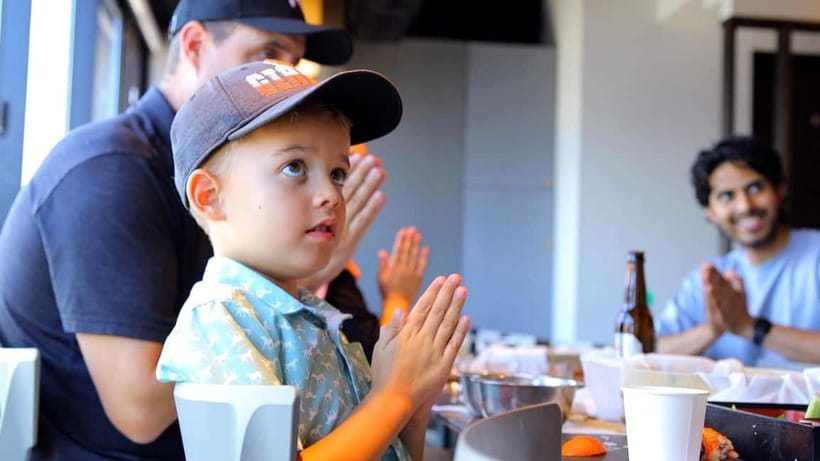
Book this class if you want to make your own maki and nigiri, eat a satisfying amount of sushi, and learn a little about the food while spending time in Asakusa. It is particularly well suited to families, couples, solo visitors, teenagers, and anyone who wants a practical Tokyo activity instead of another sightseeing stop.
The main drawbacks are the fixed group format and the possibility that the final portion feels rushed. The upbeat presentation also has a tourist-friendly tone, so it will not appeal to everyone seeking a quiet or highly traditional lesson.
For most first-time visitors, though, the combination is strong: fresh ingredients, English instruction, a central location, two sushi styles, and a meal you prepare yourself. If you already plan to visit Sensoji Temple, this is an easy activity to add nearby. At $58, it earns its price through participation and memories, not just the food on the plate.
FAQ
How long does the sushi-making class last?
The activity lasts 100 minutes. Some sessions have taken about 80 minutes, so the exact pace may vary.
Where does the class meet?
The meeting point is about three minutes from Asakusa Station in Tokyo.
Is the class near Sensoji Temple?
Yes. The activity takes place in the Asakusa area, close to Sensoji Temple and Tokyo Skytree.
Is the class taught in English?
Yes. The instructor language is English.
Do I need previous sushi-making experience?
No. The class is designed for beginners, and no previous experience is required.
What types of sushi will I make?
You will make two types: maki sushi, which is rolled sushi, and nigiri sushi, which is hand-shaped rice with a topping.
Can the class accommodate vegetarian or vegan diets?
Yes. Vegan and vegetarian menu changes are available when arranged at the time of reservation.
Can the class accommodate gluten-free, halal, or allergy-related needs?
Yes. Gluten-free, halal, and allergy-related menu changes are available if you contact the provider when booking.
Can I request a menu change on the day of the class?
No. Menu changes must be arranged when you make the reservation, and the provider cannot respond to requests made on the day.
Is hotel pickup included?
No. Hotel pickup and drop-off are not included. You must make your own way to the meeting point.
Can I cancel for a refund?
Yes. You can cancel up to 24 hours in advance for a full refund.
Is the activity wheelchair accessible?
Yes. The activity is listed as wheelchair accessible.
Can I reserve now and pay later?
Yes. The booking option allows you to reserve your place and pay later.
Just added around Tokyo
- Kawagoe Japanese Food Tour : Unagi Kaiseki and Sake near Tokyo★ 5.0 · 30 reviews
- Kawagoe 4hr Private Tour with Licensed Guide (Kawagoe Dep)★ 5.0 · 13 reviews
- Little EDO Sushi Making workshop in Kawagoe★ 5.0 · 18 reviews
- 【R34】Tokyo:Private Daikoku tour in Modified R34★ 4.9 · 92 reviews
- :Tokyo,Shibuya/ Pro Photography in Kimono / English-Friendly★ 5.0 · 26 reviews
- Tokyo:Celebrate Unique Japanese New Year Tradition Festivity★ 3.9 · 20 reviews
- Tokyo: Allstar Food Tour★ 4.7 · 29 reviews
- Tokyo: West-Side Cycling and Food Tour with Guide★ 5.0 · 37 reviews
Sushi Experiences, compared.
Sushi Making Tokyo Roll and Authentic Japanese Sushi Class
Our verdict →
Sake Omakase in Tokyo: Guided Tasting by Certified Sommeliers
Our verdict →
Browse the lists this tour appears in