
Reviewed · CALLIGRAPHY CLASSES
Kyoto Ninenzaka : Japanese Calligraphy Class in Townhouse
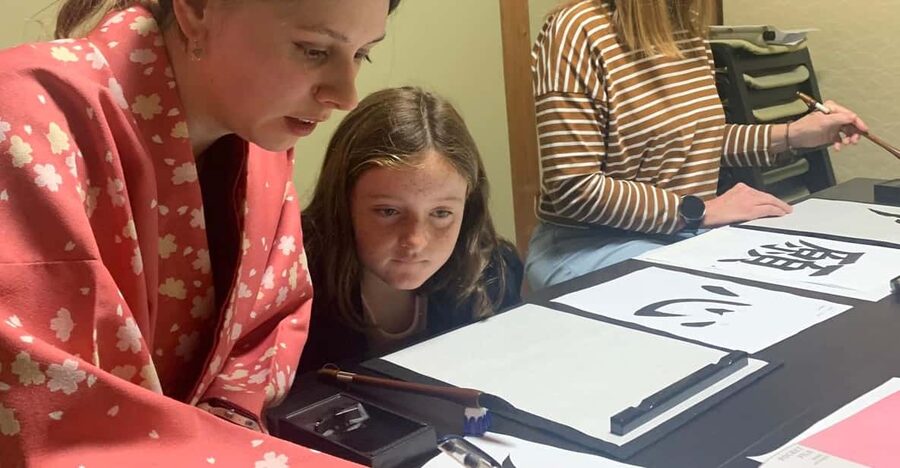
The best part of this Kyoto activity is that you do not simply watch Japanese calligraphy. You sit down, handle the brush, prepare the paper, and make your own kanji. The class takes place in a townhouse at the end of the alley beside the Starbucks on Ninenzaka, close to Kiyomizu Temple.
I like the small-class feel, which gives you time to ask questions and receive careful help. I also like the quiet ritual of preparing the ink, paper, and paperweight before writing. The main drawback is the short 50-minute session. You will get a clear introduction and a handmade souvenir, but not a long artistic course.
Key points at a glance
- Write your own kanji: You practice basic characters instead of only watching a demonstration.
- Learn the tools: The instructor explains brushes, ink sticks, inkstones, paper, and paperweights.
- Near Kyoto’s famous sights: The townhouse is close to Kiyomizu Temple and Ninenzaka.
- Beginner-friendly teaching: No Japanese language or art background is needed.
- A calm cultural break: The slow preparation and brushwork offer a quiet change from sightseeing.
- Bring socks and older clothes: Socks are required, and ink can stain clothing.
Why this 50-minute calligraphy class works in a busy Kyoto day
Kyoto sightseeing can become a parade of temples, gates, steps, and photographs. A short calligraphy class gives you a different way to connect with Japan. You are not just looking at an object or entering another famous site. You are learning a traditional practice through your own hands.
Shodō means Japanese calligraphy, but the class is about more than making attractive letters. You learn how brush pressure changes a line, how the paper is positioned, and why the writing process begins with care and preparation. Even a simple kanji character asks you to think about balance, spacing, and movement.
The setting helps. This is a townhouse near Ninenzaka, one of the most atmospheric walking areas around Kiyomizu Temple. You can pair the class with temple visits and a walk through the old streets, then step indoors for a quieter hour.
The timing is useful for families with older children, couples, solo visitors, and anyone who wants a cultural activity that does not take half a day. The minimum age is 10, so this is not designed for very young children. It is also not a casual drop-in craft table. You need to follow instructions and keep the room quiet.
More Calligraphy Classes in Kyoto
- Kyoto: Calligraphy class at Buddhist temple in city center
★ 5.0 · 167 reviews - Kyoto: Japanese Calligraphy Class
★ 4.8 · 89 reviews - Kyoto: Japanese Calligraphy Workshop
★ 4.7 · 84 reviews
Finding the townhouse beside Ninenzaka
The meeting point is near Kiyomizu Temple, at the end of the alley next to the Starbucks on Ninenzaka. That description matters because Ninenzaka has many lanes and shops, and the exact final turn may be easy to miss while you are looking at the old wooden buildings.
Allow enough time to find the alley. The activity does not include transportation, so you make your own way there. If you are coming from another part of Kyoto, plan your route before setting off and avoid arriving at the last minute.
The location is one of the class’s strongest features. You can schedule it before or after Kiyomizu Temple, though the surrounding streets can be crowded. Once inside, the calligraphy room offers a much calmer setting than the pedestrian lanes outside.
You need to bring socks. If you arrive without them, socks can be provided for a fee. Wear clothes that can get dirty, since ink may mark fabric. Large bags, luggage, selfie sticks, pets, and baby strollers are not allowed, so carry only what you need.
Beginning with the story and purpose of shodō
The lesson starts with an introduction to calligraphy and its place in Japanese traditions. This gives you a useful frame before you pick up a brush. You learn that the written character is only part of the work. The way you prepare, hold the brush, control pressure, and place each mark also matters.
That background keeps the class from feeling like a quick souvenir workshop. You gain a little cultural context, then put it to use immediately. The instructor also connects calligraphy with seasonal themes and expressions, showing how the practice can reflect the time of year and Japanese customs.
You should not expect a full academic lecture. The class lasts only 50 minutes, so the historical introduction needs to remain brief. That is a fair trade for more time with the brush, especially if your main goal is to create your own work.
English is available, with an English-speaking host or greeter. For bookings made the day before or on the same day, the class may be conducted in English if the requested arrangement cannot be accommodated. Either way, the activity is designed to guide beginners through the basic steps.
Learning the brush, ink, paper, and stone
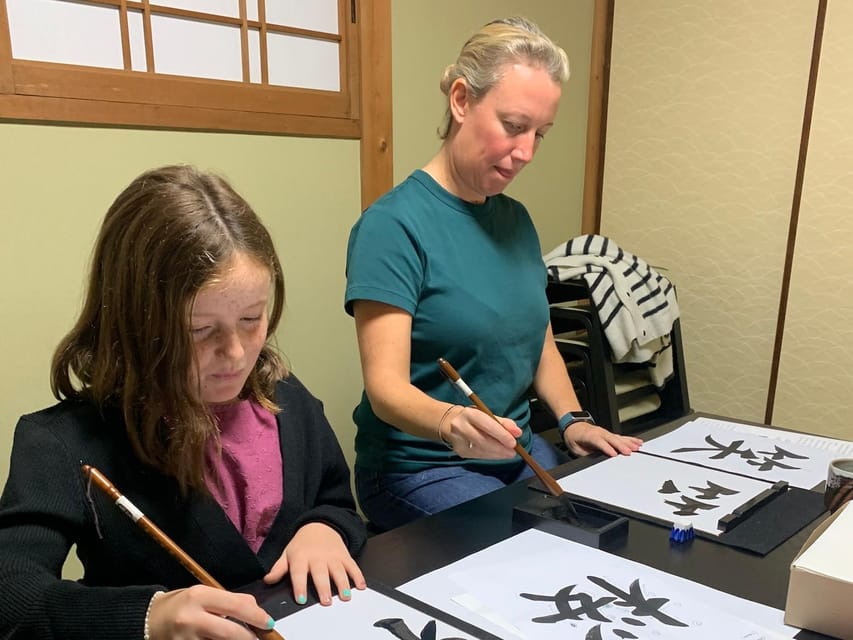
The tools are part of the pleasure. You are introduced to the brush, ink stick, inkstone, paper, and paperweight, rather than being handed a modern marker and told to copy a shape.
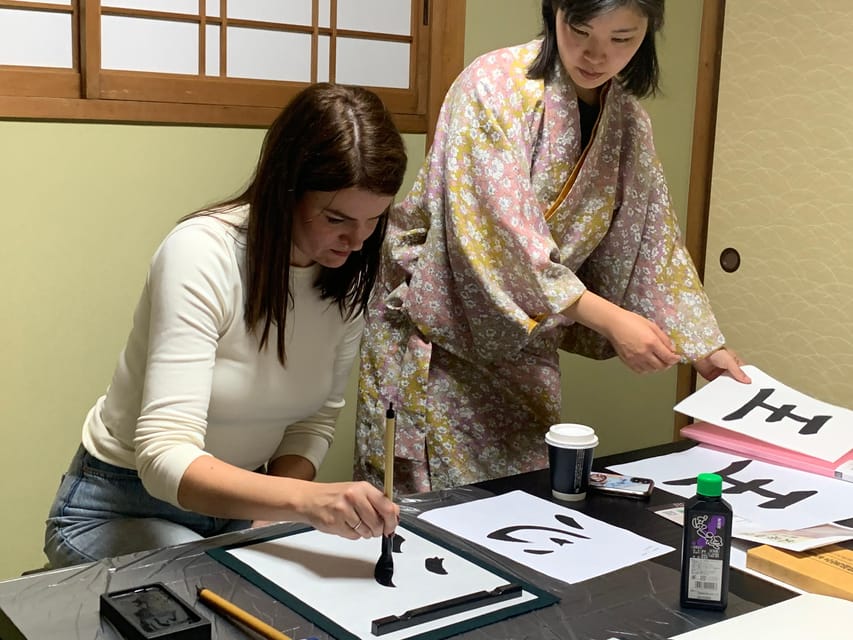
The ink stick and inkstone help explain the slower pace of traditional calligraphy. Preparing materials makes you stop and pay attention before you write. The paperweight keeps the sheet in place, while the brush requires a light but controlled grip.
The instructor explains how to use and care for the tools. That is helpful even if you never practice calligraphy again, because it shows how much thought goes into the objects used for a few simple marks.
You will also learn proper brush handling. The goal is not to grip the brush like a pencil and force it across the paper. You practice adjusting pressure, making lines, and controlling the direction of the brush. Small changes can make a stroke narrow, broad, dark, or light.
This is where patient guidance matters most. The supplied information identifies an experienced instructor and an assistant, and the class is structured around careful help. The exact teacher names are not provided, but the teaching team gives repeated demonstrations and helps you correct your technique.
Same trip, a completely different kind of day:
- PERFECT KYOTO 1-Day Bus Tour
★ 5.0 · 13,518 reviews - Kyoto: Fushimi Inari, Kinkakuji, Bamboo Grove 1 Day Bus Tour
★ 4.8 · 4,316 reviews - Kyoto: Tea Ceremony in a Traditional Tea House in Kiyomizu
★ 4.9 · 3,519 reviews - Kyoto Geisha Walking Tour: Gion District & Hidden Gems
★ 4.7 · 3,273 reviews
Preparing the paper and finding the quiet rhythm
Before writing characters, you prepare the paper and use the paperweight. This may sound like a minor step, but it is one of the most valuable parts of the activity. It slows you down and gives the class a clear rhythm: prepare, breathe, place the brush, make the stroke, and look at the result.
I like this part because it makes the class feel connected to the tradition rather than rushed toward a finished product. You get a brief taste of the concentration that calligraphy demands. The room’s calm atmosphere supports that focus.
Do not expect silence to be enforced like a formal ceremony, but making noise is not allowed. That rule tells you what kind of setting this is. The activity is meant to be peaceful and attentive, not a loud group craft.
The quiet approach also makes this a good choice after a busy morning around Kyoto’s major sights. You may arrive with tired feet and a full camera roll. The class asks you to stop looking outward for a while and concentrate on one brush and one sheet of paper.
Practicing lines, dots, and basic brushwork
The first actual exercises involve simple lines, strokes, dots, and sweeps. These are the building blocks of the characters you write later.
At this stage, you are not expected to produce elegant calligraphy. You are learning how the brush responds. A line can begin with a controlled touch, change under pressure, and finish with a deliberate lift. The basic exercises make the later kanji practice less mysterious.
The class is beginner friendly because the instructor breaks the process into small actions. You do not need to know Japanese, and you do not need previous art training. The focus is on following the method and getting a feel for the brush.
There is a limit to what 50 minutes can teach. You will not master advanced composition or develop a polished personal style in one session. Still, the short format gives you enough practice to understand why Japanese calligraphy requires patience and control.
Writing simple kanji and making a keepsake
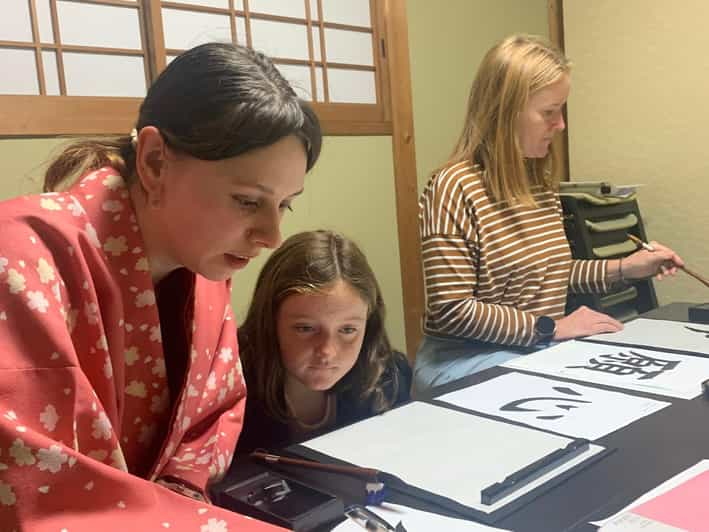
After the brush exercises, you write basic kanji characters. The instructor focuses on vertical and horizontal balance, the placement of each character, and the relationship between the strokes.
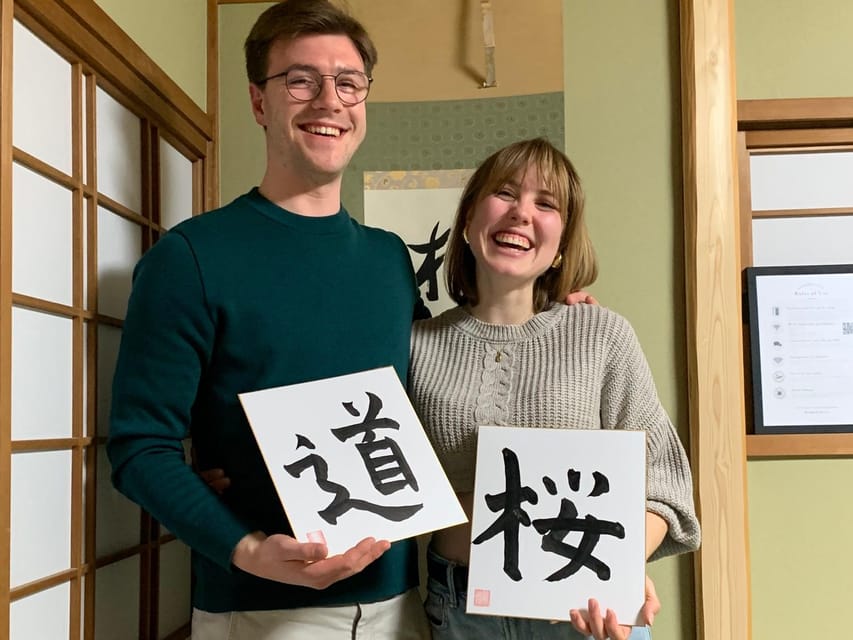
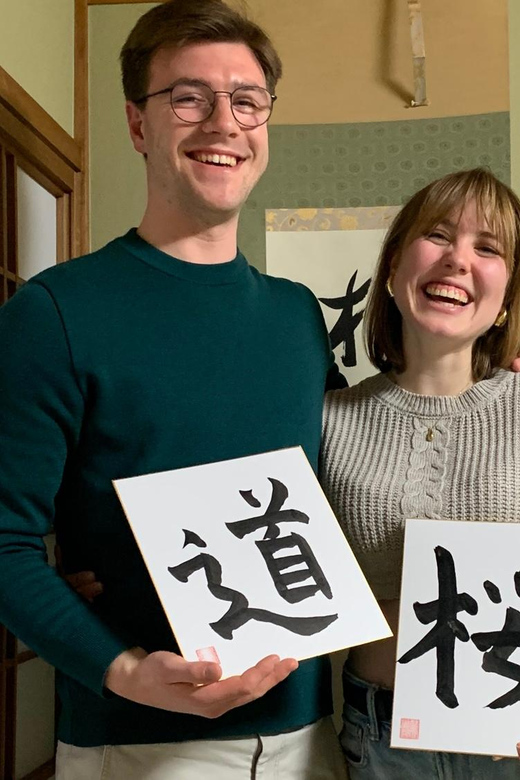
This is the point where the activity becomes personal. You are no longer practicing random marks. You are creating a piece of Japanese writing that you can keep. The finished work becomes a small souvenir with a direct connection to the time you spent in Kyoto.
One useful detail is that you should expect to make more than one attempt before producing the work you want to take home. That is not a failure. Calligraphy is built around repetition, and the early sheets help you understand pressure and spacing.
The class also makes room for questions. A small group is especially helpful here. You can ask why a stroke looks uneven, how to hold the brush, or where a character should sit on the page. The instructor and assistant can offer guidance instead of leaving you to copy a model from across the room.
The final piece may not look like professional calligraphy, and that is worth accepting before you book. The value is in the process and the memory, not in leaving with museum-quality artwork.
Why the Ninenzaka location adds real value
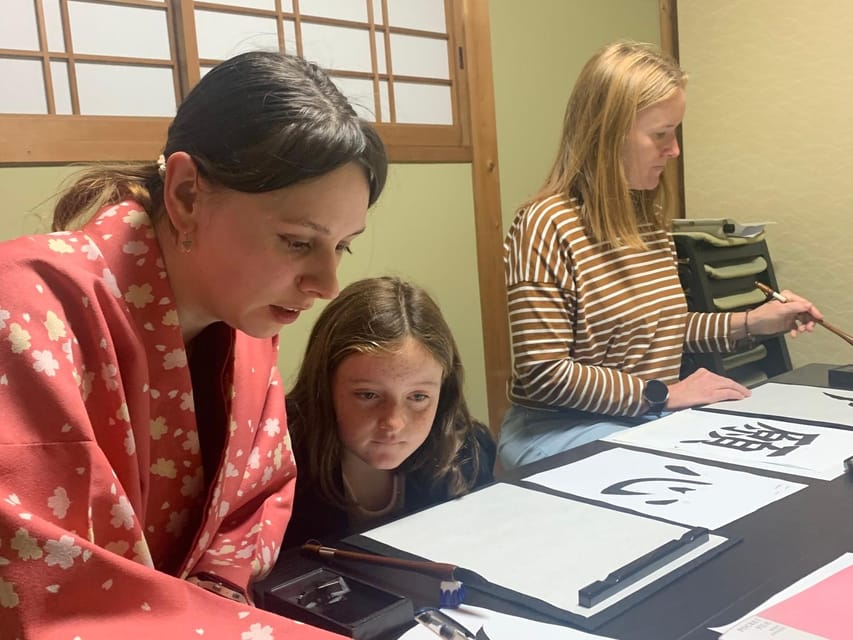
At $49 per person, this class is not the cheapest short activity in Kyoto. It earns its price through the instructor’s guidance, the supplied materials, the cultural explanation, and the take-home work.
The location adds value because you can combine the class with one of Kyoto’s best-known sightseeing areas. You do not need to make a separate trip across the city for a 50-minute lesson. Place it near your visit to Kiyomizu Temple and Ninenzaka, and the activity fits naturally into your day.
The price is easiest to justify if you want participation rather than another admission ticket. A temple visit lets you see and photograph. This class lets you learn a skill, handle traditional tools, and leave with something you made.
For a family, the cost adds up quickly, especially since children must be at least 10. For two adults, a pair of handmade calligraphy pieces and a short cultural lesson may feel like a fair Kyoto souvenir. If your budget is tight, you may prefer to spend the money on a longer activity or more major sights.
The original calligraphy booklet is included, along with the instructor’s careful guidance. Kimono is not included. A two-piece kimono option is available for an additional fee, but you should treat that as an optional add-on rather than part of the basic class.
Who should book this Kyoto activity
I would recommend this class to you if you want a quiet, hands-on cultural experience close to Kiyomizu Temple. It suits first-time visitors who want more than sightseeing, couples looking for a shared activity, and solo visitors who appreciate patient instruction.
It is also a good fit for older children who can sit quietly, follow directions, and handle the brush with care. The minimum age is 10. Younger children are not suitable for this class.
You do not need Japanese language skills or artistic talent. The lesson gives you the basic tools and techniques first, so you can approach the kanji with some confidence.
I would think twice if you want a long workshop, an advanced art lesson, or a relaxed activity where you can bring a large bag and move around freely. The session is short, the room has rules, and ink can stain clothing.
The activity is also a better choice for people who enjoy process over perfection. If you only want a quick photograph in traditional clothing, the optional kimono arrangement may interest you, but the calligraphy itself remains the central activity.
Practical details before you reserve
The session lasts 50 minutes, with starting times available according to the date. Because the class has limited time, arrive with your route planned and your socks on.
Free cancellation is available up to 24 hours before the activity for a full refund. You can also reserve now and pay later, which helps if your Kyoto schedule is still changing.
Smoking, alcohol, drugs, and indoor smoking are not allowed. Electric wheelchairs, non-folding wheelchairs, non-folding strollers, and large bags cannot be accommodated. The space also does not allow pets.
The experience is offered in English. If you book at the last minute, the class may be conducted in English even if another language arrangement was requested. That is worth checking before you commit if language support is important to you.
Should you book the Ninenzaka calligraphy class?
Book it if you want a short, calm, hands-on activity near Kyoto’s most famous temple district. The patient teaching, small-class setting, traditional tools, and handmade kanji make the $49 price reasonable for a one-time cultural experience.
Skip it if you want advanced instruction, a longer workshop, or a low-cost attraction. For most visitors who can spare 50 minutes and do not mind wearing socks and older clothes, this is a thoughtful way to add participation to a day of temple sightseeing.
FAQ
Where does the calligraphy class take place?
It takes place in a Kyoto townhouse near Kiyomizu Temple, at the end of the alley next to the Starbucks on Ninenzaka.
How long does the activity last?
The class lasts 50 minutes.
How much does the class cost?
The listed price is $49 per person.
Is the class suitable for beginners?
Yes. You do not need Japanese language skills or previous art experience.
What will I learn during the class?
You learn about the history and cultural background of shodō, calligraphy tools, brush handling, paper preparation, basic strokes, and simple kanji characters.
Can I take my calligraphy home?
Yes. You can keep your own calligraphy as a souvenir.
Are materials and instruction included?
Experienced instructors, careful guidance, and an original calligraphy booklet are included.
Do I need to bring anything?
Bring socks and clothes that can get dirty. Socks are required, and socks can be provided for a fee if you do not have them.
Are children allowed to join?
Children must be at least 10 years old. Children under 10 are not suitable for the activity.
Just added around Kyoto
- Sekka Cotton Furoshiki Class★ 5.0 · 19 reviews
- Secret Eastern Kyoto Biking Adventure★ 5.0 · 44 reviews
- Kyoto Sword Experience – includes Museum Ticket/Ninja Experience★ 4.5 · 149 reviews
- Scenic Green Tea Fields of Hidden Kyoto & Local Tea Exp (Private)★ 5.0 · 32 reviews
- Private Sake Tasting in Central Kyoto with Sake Sommelier★ 5.0 · 32 reviews
- Samurai School in Kyoto: Samurai for a Day★ 5.0 · 202 reviews
- SHIRAKAWA Japanese Culture Experiences with private English staff★ 5.0 · 16 reviews
- A Privately Guided Photoshoot in Beautiful Kyoto by a Pro★ 5.0 · 18 reviews
Calligraphy Classes, compared.
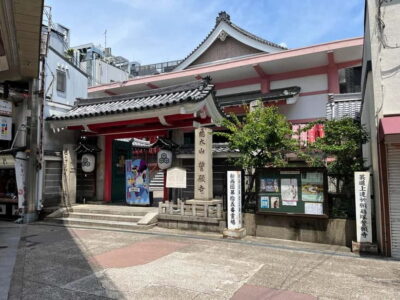
Calligraphy class at Buddhist temple in city center
Our verdict →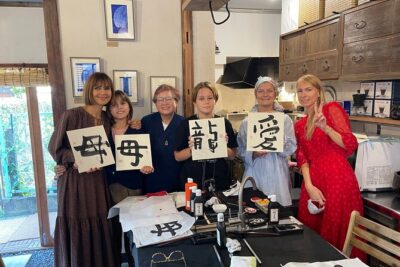
Let’s experience calligraphy in YANAKA, Taito-ku, TOKYO !!
Our verdict →
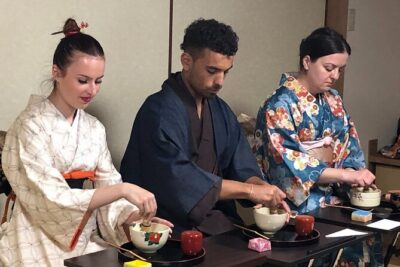
An Amazing set of Cultural experience: Kimono, Tea Ceremony and Calligraphy
Our verdict →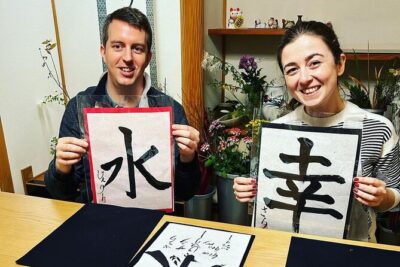
Private Japanese Calligraphy in Kyoto – Learn Shodō with a Master
Our verdict →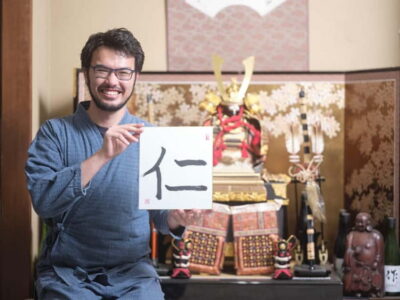
Browse the lists this tour appears in