
Reviewed · CALLIGRAPHY CLASSES
Private Japanese Calligraphy in Kyoto – Learn Shodō with a Master
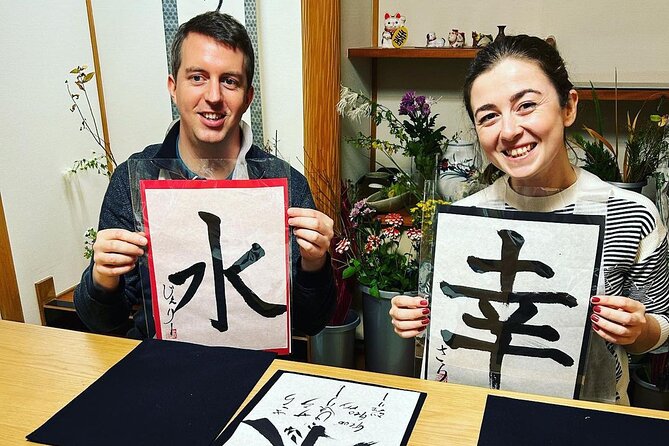
The most special part of this Kyoto activity is the setting: you enter a private home near Nijo Castle, remove your shoes, and work at a low table in a tatami room with Aya, a calligraphy teacher with more than 55 years of experience. This is not a large workshop where you copy a sample and leave. Your small group receives the instructor’s full attention.
I like the patient, hands-on teaching and the fact that you create something personal rather than simply watching a demonstration. I also like the quiet cultural setting, with time to learn about brush movements, kanji, and the role of the artist’s state of mind. The main drawback is the short one-hour format: if you want detailed instruction or hope to write a long Japanese name, the class can feel rushed.
Key points to know before booking
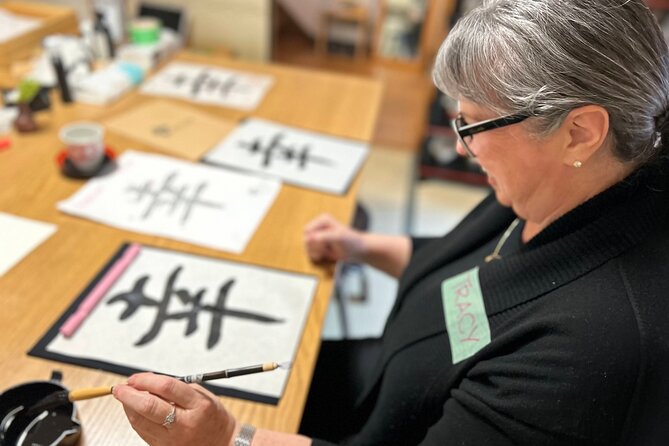
- Private home setting: Your group has the room and instructor to itself at SAKURA Experience Japanese Culture near Nijo Castle.
- Aya leads the lesson: She teaches in English and Japanese and has practiced calligraphy for over 55 years.
- You make a real keepsake: Choose a favorite kanji and write your name in Japanese, then take your artwork home.
- One hour goes quickly: The class suits beginners, but you need to arrive ready to work.
- Bring clean socks: The tatami room cannot be entered barefoot.
- Plan your arrival carefully: Arriving more than 15 minutes late can mean losing the class without a refund.
A private Kyoto home instead of a large cultural workshop
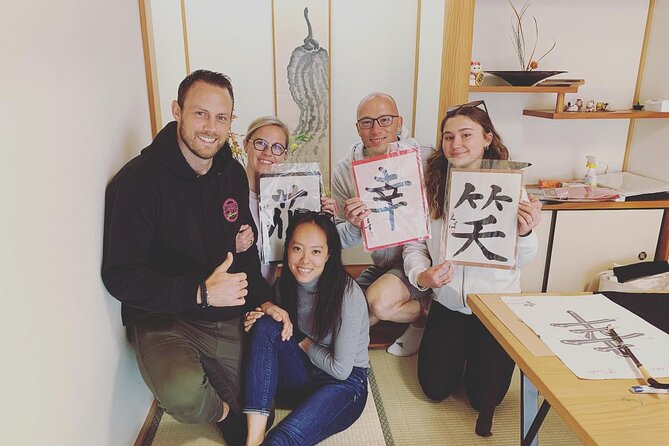
Japanese calligraphy, or shodō, looks simple from a distance. A brush touches paper, black ink spreads, and a single kanji seems to appear with effortless grace. In practice, each stroke has a set direction, pressure, speed, and finish. That difference between looking easy and being difficult is part of the fun.
At SAKURA Experience Japanese Culture, you learn in a private home about 200 meters west of Nijo Castle. The class is designed for your own group, so Aya can watch your hand position, correct the movement of your brush, and adjust the lesson to your pace. If you arrive with no experience, that personal attention matters far more than a formal lecture.
The atmosphere is calm and informal. Aya and her husband, Manabu, have welcomed many people into their home, and the space is arranged as a small studio. Some sessions include tea, traditional Japanese sweets, and photographs of your class that are later shared with you. Those touches are not the main reason to book, but they help the lesson feel like a meeting with a local host rather than a quick craft stop.
The private format also works well for couples, friends, and families with older children. Only your group participates, so you do not have to worry about keeping up with strangers or feeling self-conscious when your first strokes look uneven.
More Calligraphy Classes in Kyoto
- Kyoto: Calligraphy class at Buddhist temple in city center
★ 5.0 · 167 reviews - Kyoto: Japanese Calligraphy Class
★ 4.8 · 89 reviews - Kyoto: Japanese Calligraphy Workshop
★ 4.7 · 84 reviews
What happens during the one-hour lesson
The class takes place at one meeting point, and the activity ends there. There is no private transportation, so you make your own way to the home. The location is near public transportation and close to Nijo Castle, making it easy to pair with sightseeing in central Kyoto.
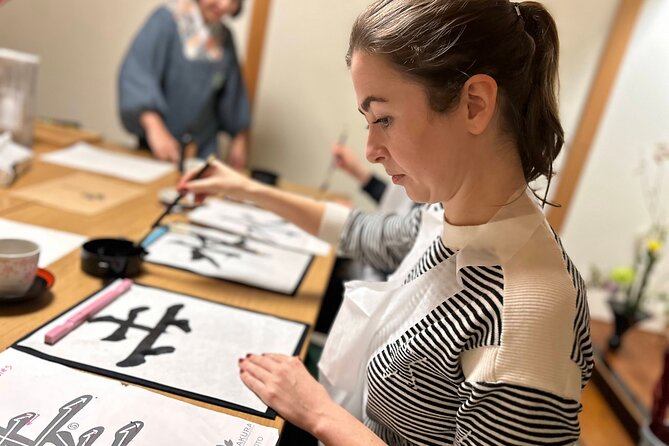
Once you arrive, expect an introduction to Japanese calligraphy and its basic tools. You will work with brushes, ink, and paper supplied for the class. Aya explains how to hold the brush and how to guide it across the page. The goal is not to produce perfect professional calligraphy. It is to help you understand the controlled movements behind each character and produce work that feels like your own.
You will practice before committing to your final sheets. This is important because the first attempt often reveals how much pressure you are putting on the brush. A stroke can become too thick, too faint, too fast, or too hesitant. Aya’s role is to help you find a steadier rhythm.
You can choose a kanji character that appeals to you. The character might represent an idea or quality that has personal meaning, but the useful point is that you are not limited to a generic souvenir selected for you. You also have the chance to write your name in Japanese. Keep your expectations realistic, especially if your name is long. With only one hour, a lengthy name may require more time than you have.
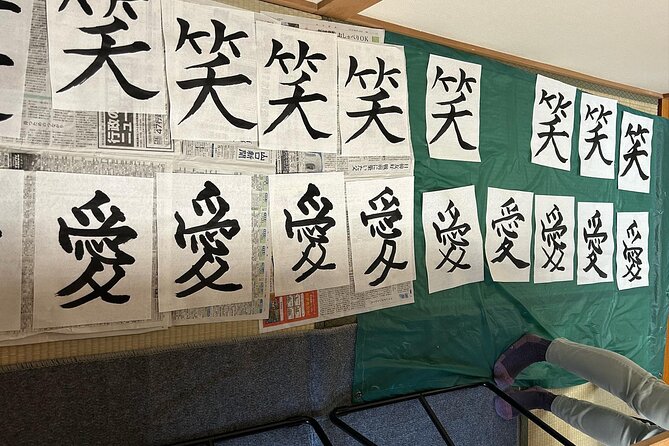
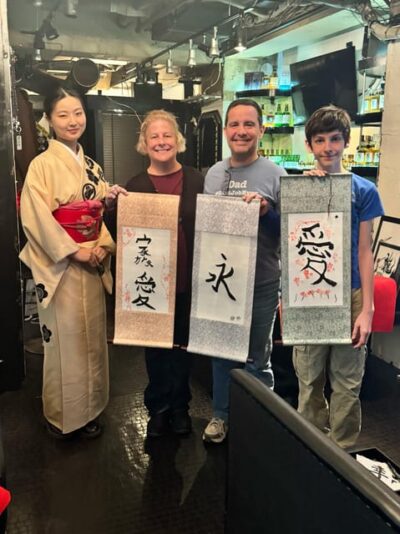
At the end, you take your finished calligraphy home. Depending on your pace and how much you practice, you may leave with several examples or a small collection of attempts and final pieces. The keepsake is more meaningful because you made it yourself, including the imperfect strokes.
Why Aya’s teaching style matters for beginners
The strongest reason to choose this class is the direct guidance. Calligraphy is not only about copying the shape of a character. Aya explains the order and quality of the strokes, and she encourages you to work without pressure. That approach helps if you feel artistic ability is required.
Beginners often arrive worried that their writing will look childish. You should expect the opposite lesson: the value lies in learning how the brush behaves, not in producing museum-quality work. Aya’s encouragement is especially useful for anyone who is nervous about making a mistake on the paper.
The class also gives you a glimpse of the discipline behind Japanese calligraphy. A character is built from separate movements, and the final result reflects the person making it. The calm pace, the brush held upright, and the attention given to each line provide a small but genuine connection to Japanese artistic practice.
Aya’s English is suitable for the lesson, and the activity is offered in English and Japanese. If you want a long discussion about art theory, ask questions early. The hour is short, and the balance usually favors practical brushwork over extended conversation.
The tatami room adds something a studio cannot
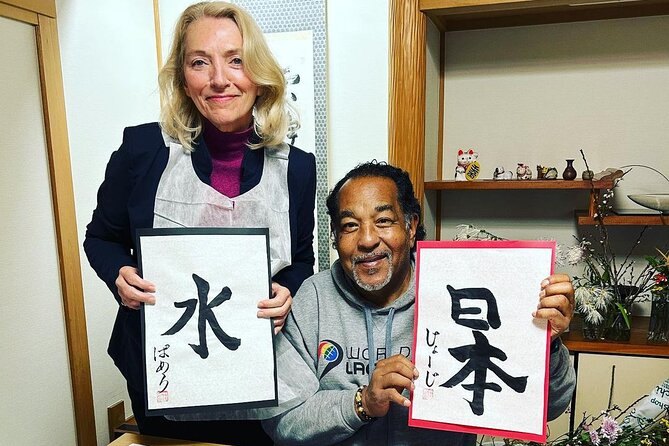
A commercial studio can be efficient, but this home setting gives the class a more personal character. You enter a traditional room, follow the local custom of removing your shoes, and work in a place that feels connected to everyday Japanese life.
Clean socks are required. This is a small detail, but it matters. Bring a pair if you are wearing sandals or expect to walk around Kyoto in shoes that do not include socks. Bare feet are not permitted on the tatami.
The setting is also useful on a rainy day. You can spend an hour indoors doing something connected to Kyoto rather than simply waiting out the weather in a café. One former participant even bought calligraphy equipment afterward from a recommended shop, which suggests that the class can become more than a one-time souvenir for people who enjoy the art.
Do not expect a grand temple hall or a formal museum demonstration. The appeal is the opposite: a quiet room, a teacher, and time to try the art yourself.
Same trip, a completely different kind of day:
- PERFECT KYOTO 1-Day Bus Tour
★ 5.0 · 13,518 reviews - Kyoto: Fushimi Inari, Kinkakuji, Bamboo Grove 1 Day Bus Tour
★ 4.8 · 4,316 reviews - Kyoto: Tea Ceremony in a Traditional Tea House in Kiyomizu
★ 4.9 · 3,519 reviews - Kyoto Geisha Walking Tour: Gion District & Hidden Gems
★ 4.7 · 3,273 reviews
Getting there without losing your appointment
The meeting address is SAKURA Experience Japanese Culture Nijo Home, at 660 Izumicho, Nakagyo Ward, Kyoto, postal code 604-0015. It is close to Nijo Castle, with the house located roughly 200 meters west of the castle’s front.
The location can still be confusing. The map pin is reported to be accurate, but street-view imagery may show a different place. Do not rely only on photographs while walking. Check the actual map position and use the entrance information sent by the host. If you provide a phone number at booking, make sure it is one you can access during your visit, since the host may need to contact you.
Allow extra time to find the house. Kyoto’s orderly streets can look similar, and arriving at the nearest landmark is not the same as reaching the correct entrance. A 15-minute late limit is strict. If public transportation or weather causes a delay, contact the operator as soon as possible.
This is one activity where arriving early improves the experience. You want time to find the home, put on clean socks, and settle into the room before handling ink and paper.
Is $77.51 a fair price?
At $77.51 per person, this is not the cheapest short activity in Kyoto. You are paying for a private class rather than a standard group workshop, though the total value depends on how much your group uses the hour.
For one person or a couple who want personal instruction, the price is reasonable. You receive the teacher’s attention, use of all tools and paper, guidance in selecting and writing kanji, and artwork to take home. A large group can also benefit from the private format, especially if the price drops through a group discount.
The value is less clear if you want only a quick brush-painting souvenir. The class requires travel to the home, careful arrival planning, and a willingness to practice. If you would rather spend an hour taking photographs or browsing shops, this may feel too structured.
I think the price works best for people who care about the process as much as the finished paper. The object you take home is not a professionally produced piece. It is your own work, and that is precisely why it has more personal value.
What the class does well
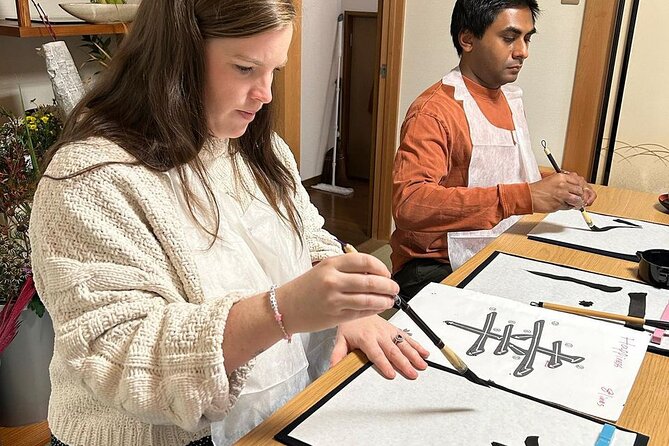
The most praised qualities are consistent: Aya is patient, warm, encouraging, and attentive. That combination matters because calligraphy can make beginners feel awkward. You receive enough correction to improve without being made to feel that every mistake is a failure.
The cultural explanation is another strong point. The activity includes background on Japanese calligraphy, not just instructions on how to copy symbols. You learn why brush movement matters and get a sense of the focus required in shodō.
The private format also allows for small personal moments. One participant created several pieces for grandchildren. Another wanted to write a particular concept but found that a long name was difficult to complete in the available time. These examples point to the same practical lesson: decide before class what you most want to produce.
The finished work is easy to value. You may frame it, give it to someone at home, or keep it with photographs from your Kyoto visit. The artwork carries the memory of sitting down, holding the brush, and trying to control the ink.
Where expectations need adjusting
The class is an introduction, not a full course in Japanese calligraphy. One hour is enough to explain the basics and let you create several pieces, but not enough for extended study. If you spend too long chatting or practicing without settling on a final character, the ending can feel hurried.
Some people also expect a more artistic session, with a long demonstration or extensive discussion of calligraphy’s background. The format gives you some cultural context, but the practical activity takes priority. You should book it for a hands-on introduction, not for advanced instruction.
The age rule is clear: children under 12 cannot be accommodated. Older children can participate if they are motivated and able to respect the quiet setting. The class is not designed as a noisy family entertainment session.
Language is another consideration. Instruction is available in English and Japanese. If you need a language other than those, this is not the right activity. The class depends on understanding the teacher’s guidance, especially when she explains brush direction and character form.
Who should book this Kyoto activity?
I would choose this class if you want a personal cultural experience that fits neatly into a Kyoto day. It suits couples, solo visitors, friends, and families with children aged 12 or older. It is also a good pick for a rainy afternoon or for anyone who prefers making something over visiting another display.
You will get the most from it if you arrive with one clear goal. You might want to write a favorite kanji, produce a piece for your home, or learn how your name appears in Japanese. Tell Aya that goal early so the lesson can make room for it.
This is less suitable if you want a long, formal art lesson or if you dislike strict appointment times. It is also not ideal for anyone unable to sit comfortably in the room’s traditional setting, since the available information does not describe alternative seating arrangements.
The activity is usually booked about 54 days ahead, so it is wise to reserve early if your Kyoto schedule is fixed. Free cancellation is available up to 24 hours before the start time. Changes or cancellations inside that window are not accepted, and arriving more than 15 minutes late can result in losing the session without a refund.
Should you book it?
Book this private calligraphy class if you want to meet a local teacher, learn the basics of shodō, and leave Kyoto with something you made yourself. Aya’s long experience, patient instruction, and home studio give the hour a personal feel that a large group workshop cannot match.
Go in knowing that the class is short and introductory. Arrive early, bring clean socks, choose your preferred kanji in advance, and protect time for writing your name if that matters to you. With those expectations, the $77.51 price buys more than paper and ink. It gives you a focused hour of Japanese culture and a souvenir tied to your own hand.
FAQ
Where does the Japanese calligraphy class take place?
The class takes place at SAKURA Experience Japanese Culture Nijo Home, at 660 Izumicho in Kyoto’s Nakagyo Ward. It is about 200 meters west of Nijo Castle.
How long does the experience last?
The calligraphy class lasts approximately one hour.
Is the class private?
Yes. Only your group participates, and the teacher gives your group her full attention.
Who teaches the calligraphy lesson?
Aya leads the class. She has more than 55 years of calligraphy experience and teaches in English and Japanese.
Can I take my calligraphy home?
Yes. Calligraphy tools and paper are provided, and you can take your finished artwork home with you.
Can children participate?
Children under 12 cannot be accommodated. Older children may participate, provided they can take part in the quiet learning environment.
Just added around Kyoto
- Sekka Cotton Furoshiki Class★ 5.0 · 19 reviews
- Kyoto Sword Experience – includes Museum Ticket/Ninja Experience★ 4.5 · 149 reviews
- Scenic Green Tea Fields of Hidden Kyoto & Local Tea Exp (Private)★ 5.0 · 32 reviews
- Secret Eastern Kyoto Biking Adventure★ 5.0 · 44 reviews
- Private Sake Tasting in Central Kyoto with Sake Sommelier★ 5.0 · 32 reviews
- Samurai School in Kyoto: Samurai for a Day★ 5.0 · 202 reviews
- Samurai Performance and Casual Experience: Kyoto Ticket★ 4.5 · 115 reviews
- SHIRAKAWA Japanese Culture Experiences with private English staff★ 5.0 · 16 reviews
Calligraphy Classes, compared.
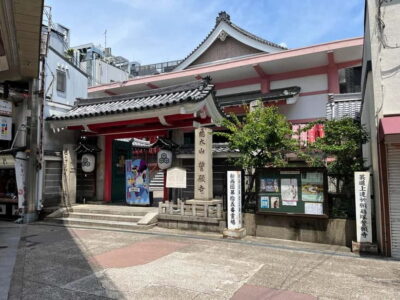
Calligraphy class at Buddhist temple in city center
Our verdict →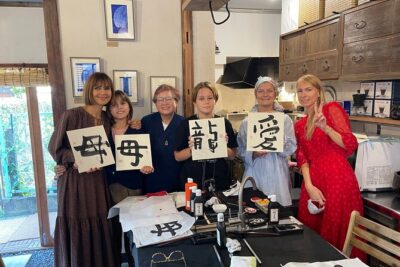
Let’s experience calligraphy in YANAKA, Taito-ku, TOKYO !!
Our verdict →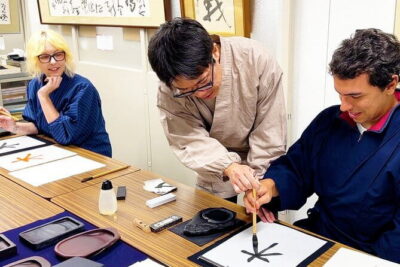
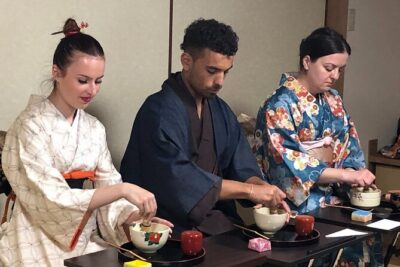
An Amazing set of Cultural experience: Kimono, Tea Ceremony and Calligraphy
Our verdict →
Japanese Calligraphy – Shodo – Lesson (near Kyoto Station)
Our verdict →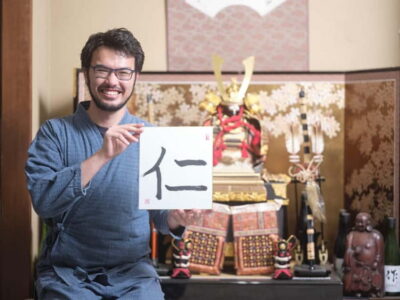
Browse the lists this tour appears in