
Reviewed · CASTLE TOURS
Kyoto: Nijo Castle and Kyoto Imperial Palace Guided Tour
Nijo Castle gives you a vivid look at shogun power, while Kyoto Imperial Palace offers a calmer view of imperial life, traditional design, and carefully planned gardens. The contrast between these two sites is the best reason to book this tour. Goku, Kayo, Nene, and Taku have all earned strong praise for making history clear, lively, and easy to follow.
I like the small groups, limited to nine people, and the way the tour links politics with architecture instead of treating each building as a pretty photo stop. I also like the 20-minute walk between the sites, which gives your guide time to answer questions and point out Kyoto townhouses and a cherry-blossom spot. The catch is that the Imperial Palace visit may focus mainly on exterior views, and the tour is mostly outside.
Key points to know before booking
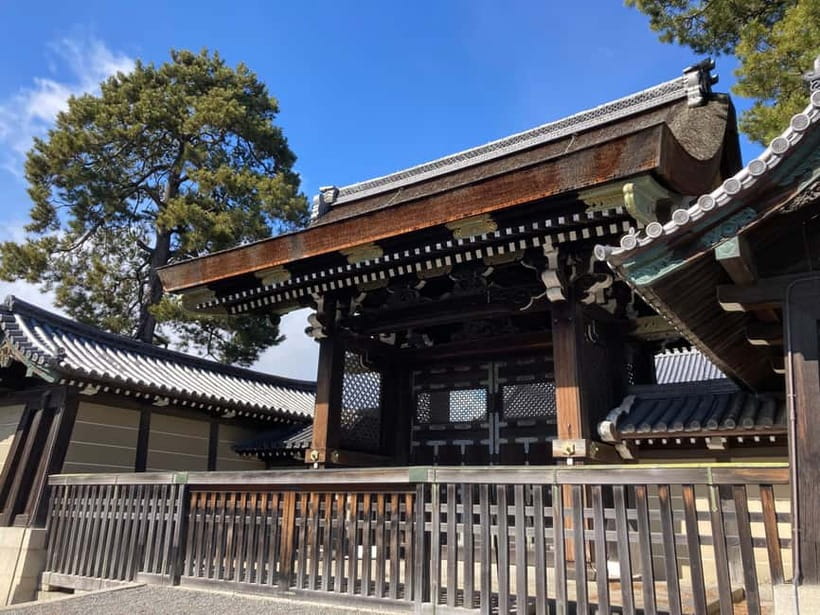
- Two major sites in three hours: Visit Nijo Castle and Kyoto Imperial Palace in one focused morning or afternoon.
- A useful historical contrast: See the shogun’s authority at Nijo Castle, then the refined imperial setting of the palace.
- Small-group format: Groups are limited to nine, making it easier to ask questions and request photos.
- Strong guide performance: Goku, Kayo, Nene, and Taku receive repeated praise for clear explanations, warmth, and flexibility.
- A walking-heavy visit: Plan for a 20-minute walk between the sites, plus outdoor time in palace gardens.
- Good flexibility: You can cancel up to 24 hours ahead for a full refund and reserve without paying immediately.
Why these two Kyoto sites work so well together
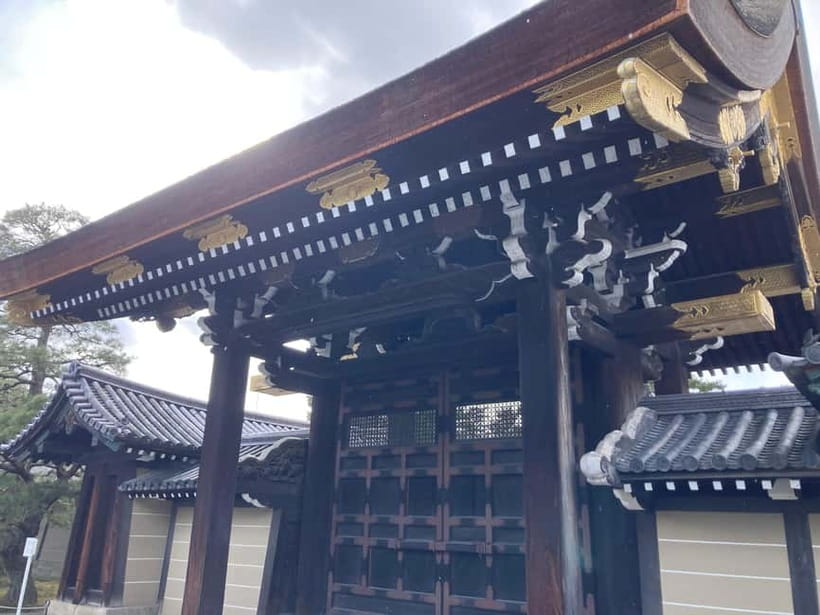
Kyoto can sometimes feel like a collection of temples, gardens, and grand wooden buildings without a clear political storyline. This tour fixes that. It puts two centers of power side by side: Nijo Castle, tied to the Tokugawa shogunate, and Kyoto Imperial Palace, the former home of Japan’s emperors.
I find that contrast more useful than visiting either place alone. At Nijo Castle, you are looking at authority expressed through gates, halls, decoration, and controlled movement. At the palace, the mood is more formal and restrained, with broad grounds, elegant buildings, and gardens designed around the changing seasons.
The guide’s job matters here. A good explanation helps you understand why these places look different and what that difference meant politically. Goku has been especially praised for explaining shoguns, emperors, Japanese culture, and even difficult modern history questions. Kayo has been noted for combining humor with clear historical detail, while Nene and Taku are often praised for patience and practical local advice.
The tour lasts three hours, which is enough for a strong introduction but not so long that the history becomes a blur. You will not see every corner of either complex. That is a fair trade if you want context and a manageable schedule rather than an all-day historical survey.
More Castle Tours in Kyoto
- Kyoto: Nijo-jo Castle and Ninomaru Palace Guided Tour
★ 4.7 · 1,020 reviews - Kyoto: Nijo Castle, Kiyomizu & Fushimi Inari Guided Tour
★ 4.7 · 700 reviews - Kyoto: Imperial Palace & Nijo Castle Guided Walking Tour
★ 4.7 · 453 reviews
Meeting your guide at Nakadachiuri Gate
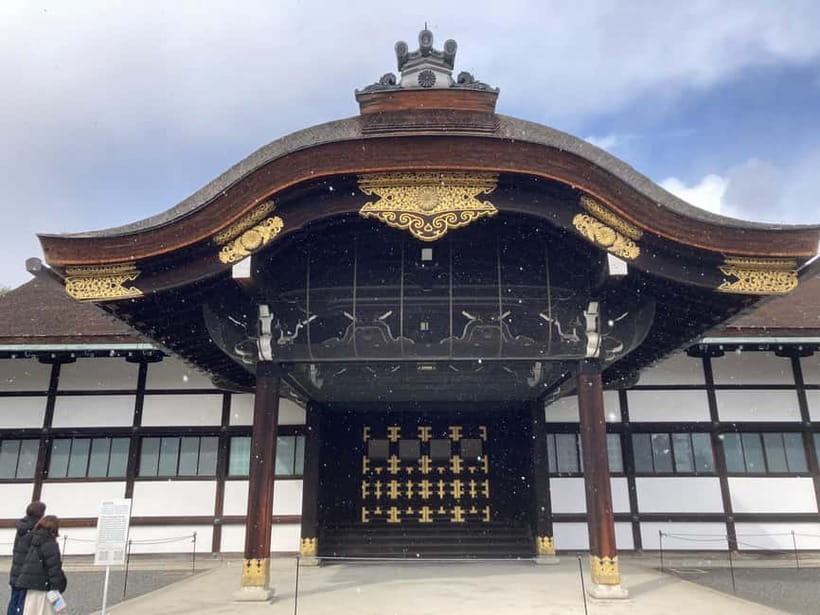
The meeting point is the Nakadachiuri Gate of Kyoto Imperial Palace. This is important: the tour begins at the palace, not at Nijo Castle, so allow time to reach the correct gate and get your bearings before the starting time.
The operator contacts you in advance with a description of the guide’s appearance and clothing. That is helpful at a large site, especially if several groups are gathering nearby. You should also keep your phone accessible in case you need to identify the meeting spot or receive a last-minute message.
Since the activity is built around walking, wear comfortable shoes. Shorts are not allowed, and pregnant women are advised not to take this tour. Bring a camera and some cash. The tour information does not specify a dress code beyond the restriction on shorts, but modest, practical clothing makes sense for a palace and castle visit.
Kyoto Imperial Palace: beauty, ceremony, and a possible limitation
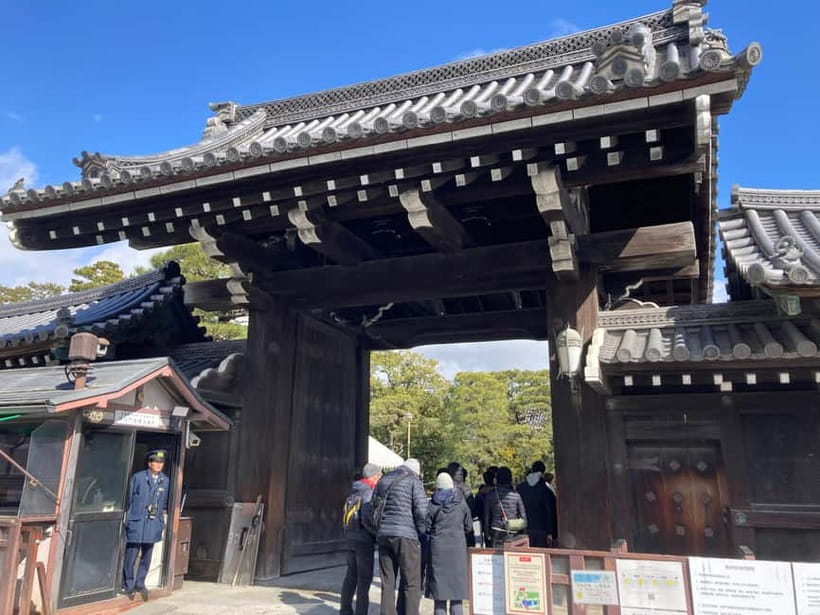
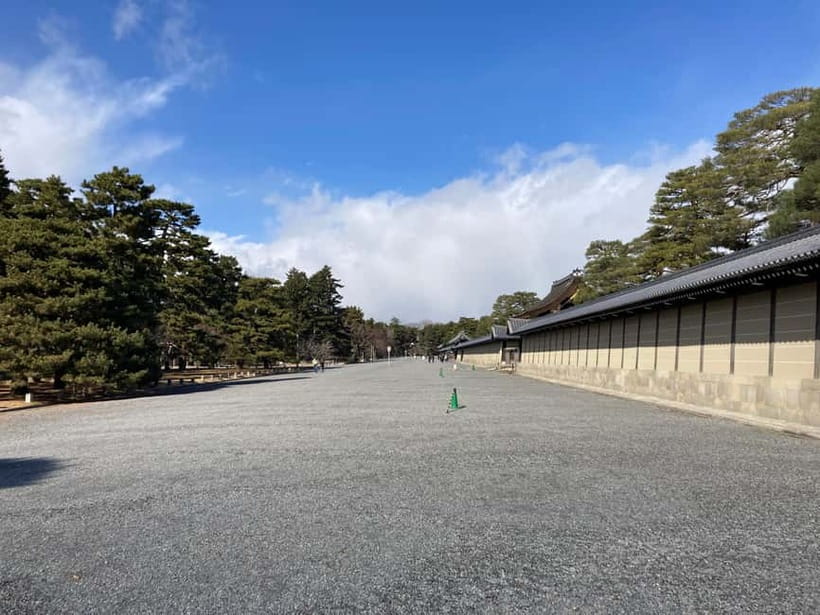
The palace section introduces you to the former residence of Japan’s emperors. You will see grand traditional architecture, spacious grounds, and gardens designed to make the most of seasonal changes. Spring blossoms are a particular draw, though the gardens have something to offer beyond one short flowering period.
I like this part of the tour for its atmosphere. Nijo Castle feels tied to military and political control. The Imperial Palace feels more ceremonial. The difference is not simply a matter of decoration. Your guide can explain how architecture, space, and garden design reflect different ideas of authority and tradition.
Expect to spend much of this section outdoors. That makes the experience especially pleasant in spring and other mild seasons, but less comfortable in rain, heat, or cold. Bring weather protection and be ready to walk at a steady pace.
Here is the main point to understand before booking: access to palace buildings can be limited. One visitor felt the Imperial Palace portion was not ideal because they could see only the exteriors. The precise experience can vary, but you should book this tour expecting an exterior-focused palace visit rather than a full indoor tour of every building.
That limitation does not make the palace unimportant. The grounds, gardens, scale, and relationship between buildings still give you a useful sense of imperial Kyoto. But if your main goal is detailed interior access, this may not be the right tour by itself.
The walk to Nijo Castle adds useful context
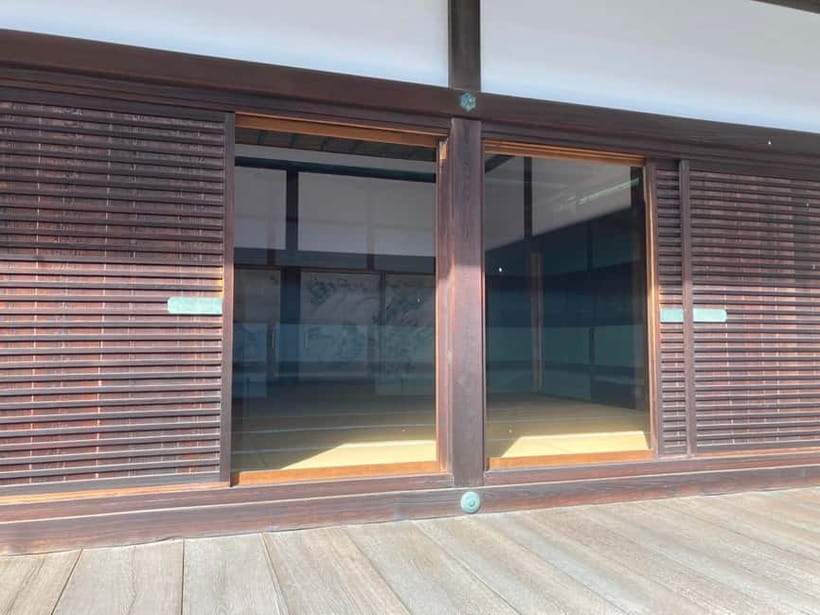
The route includes about 20 minutes of walking between the Imperial Palace and Nijo Castle. This is not dead time. The guide can continue the discussion of Western and Japanese culture, answer questions, and point out traditional Kyoto townhouses and a location known for cherry blossoms.
I prefer this sort of transfer to being rushed from one entrance to another by vehicle. You get a small taste of everyday Kyoto, not just its official monuments. At the same time, remember that the walk adds physical effort and can feel longer in summer or during a rainy spell.
The walking section also gives you a chance to ask for local suggestions. Taku has helped visitors with restaurant advice, including ramen recommendations near their hotels, while Goku has offered ideas after the tour. These tips are not the main product, but they can be useful when you are still deciding where to eat or what to do next.
The tour is described as a walking experience, so do not treat this as a coach excursion. One comment refers to transportation being comfortable, but the clear structure of the activity is a guided walk between major sites. Comfortable shoes matter more than anything else.
More Historical Tours in Kyoto
- Kyoto Gion: 2-Hour Geisha Culture & History Walking Tour
★ 5.0 · 1,186 reviews - Kyoto Gion Historical Walking Tour
★ 5.0 · 188 reviews - Historical Kyoto E-Bike Tour
★ 5.0 · 181 reviews - Kyoto: Nijo Castle World Heritage Guided Tour with Admission
★ 5.0 · 128 reviews
Inside Nijo Castle, power is written into the design
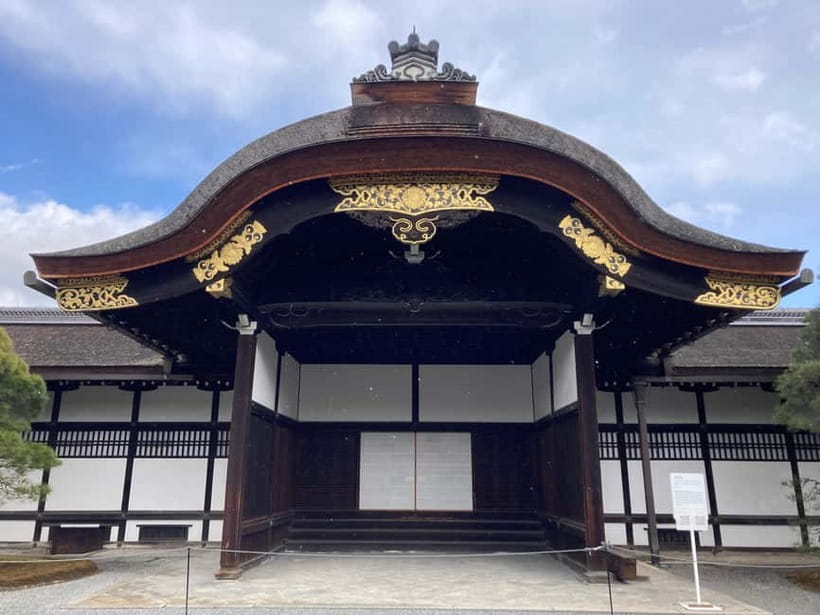
Nijo Castle is the stronger stop if you want political history. Built by Tokugawa Ieyasu, it represents the power of the shogunate and the authority of the military government. The buildings and interiors use lavish detail to communicate rank and control.
Your guide will explain the political climate of the period and connect it to what you are seeing. This is where a guided visit earns its price. Without context, you may notice painted screens, woodwork, and impressive rooms. With context, you start to ask why the approach to the castle was arranged in a certain way, why the interiors were so carefully decorated, and how the space helped reinforce the shogun’s position.
Admission includes Nijo Castle, Ninomaru Palace, and the Art Gallery. That gives the castle portion more substance than a quick look at the outer walls. The Ninomaru Palace is especially important because it lets you move from the idea of power to the rooms and design associated with it.
The Art Gallery adds another layer, although the tour’s main emphasis remains history, architecture, and politics. If you enjoy visual detail, keep some time to look carefully rather than simply following the group from room to room.
Nijo Castle can feel both impressive and calm. Its polished interiors and gardens create beauty, but the story behind them is about control, status, and political change. That tension is what makes the site memorable.
What the guides do best
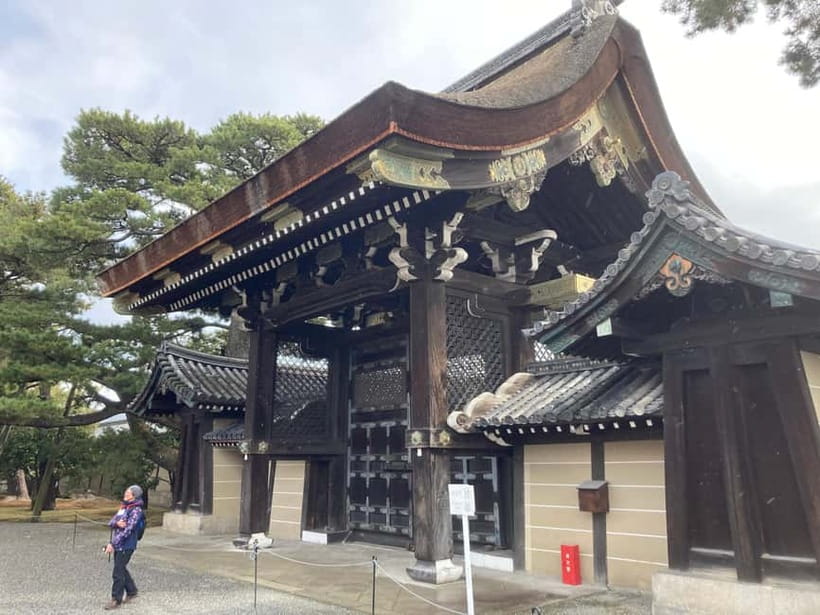
The most consistent strength of this experience is the guide. Across the available feedback, Goku receives especially high praise for his command of Japanese history, energy, and ability to answer difficult questions. Several people appreciated his detailed discussion of shoguns and emperors, while others liked his flexibility with mixed groups.
That flexibility matters. One group may want dates and political detail. Another may care more about gardens and photos. Goku has been praised for balancing both. He also helped a solo visitor take pictures, a small kindness that can make a difference when you are sightseeing alone.
Kayo is described as informative, funny, and engaging. That combination helps the three hours pass quickly. Nene is praised for being kind, patient, and clear, including when she took over at short notice. Taku receives similar praise for his historical explanations, local tips, and willingness to answer questions.
Your guide is assigned rather than chosen, so you cannot count on a specific person. Still, the repeated pattern is encouraging. If your guide is Goku, Kayo, Nene, or Taku, you can expect an active explanation rather than a silent escort. The tour supports English, French, Spanish, Japanese, Portuguese, and Russian.
Do not be shy about asking questions. The small group gives you a better chance to steer the discussion toward architecture, politics, culture, or practical Kyoto advice. A private tour would offer more control, but this group size gives you much of the benefit without the usual crowd.
Is $63 a fair price?
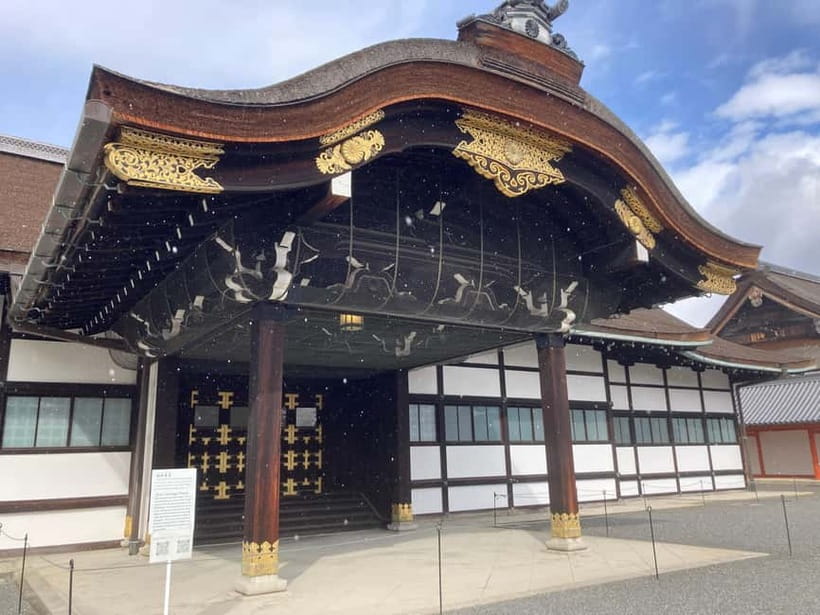
At $63 per person, this is not the cheapest way to enter the two sites. You are paying for admission, a professional guide, and three hours of organized sightseeing. The value depends on how much you want the historical explanation.
If you already know the Tokugawa period, imperial history, and Japanese architectural traditions well, you may find the price less compelling. You could prefer to visit independently and spend longer at whichever site interests you most.
For many first-time visitors, I think the cost is reasonable. You get two important locations, admission to Nijo Castle, Ninomaru Palace, and the Art Gallery, plus a guide who can explain the political connection between them. You also avoid the work of building your own route and trying to understand what you are seeing from signs alone.
The small-group limit of nine improves the value. You are not simply standing behind a guide with a large crowd. You can hear the explanation, ask follow-up questions, and get occasional help with photographs. The tour is also a practical way to make progress on a busy Kyoto itinerary without committing an entire day.
Reserve now and pay later if you want flexibility. Cancellation is free up to 24 hours before the tour for a full refund. That is useful when your Kyoto schedule may change, though you should still check the starting time before booking.
Who should book this tour?
I would recommend it to first-time Kyoto visitors who want a clear introduction to the city’s political past. It suits people who enjoy history but do not want a lecture detached from the places themselves.
It is also a good choice for solo visitors and couples who value conversation. A solo guest praised the guide’s help with photos, and a small group makes it easier to ask questions without holding up a large crowd.
Families with older children and teenagers may also appreciate the format, especially if they are curious about shoguns, emperors, or Japanese culture. One guide successfully kept two teenage sons interested by explaining historical events in detail while keeping the visit pleasant.
I would be more cautious if you dislike walking, need a fully indoor activity, or want extensive access inside palace buildings. The Imperial Palace section can be mostly exterior, and the route includes a 20-minute walk between the main sites. Pregnant women should choose another activity, and shorts are not permitted.
Practical tips for a better visit
- Wear supportive shoes: The tour covers two large historic sites and includes a walk between them.
- Check the weather: Much of the palace visit takes place outdoors, and garden views are best when you are comfortable.
- Bring a camera: The gardens, traditional architecture, and detailed castle interiors give you plenty to photograph.
- Carry cash: Cash is specifically recommended in the tour information.
- Arrive at the right gate: Meet at Nakadachiuri Gate of Kyoto Imperial Palace, not at Nijo Castle.
- Ask questions early: Tell your guide if you prefer political history, architecture, gardens, or local food advice.
- Keep the timing in mind: Three hours is enough for a focused visit, not a slow exploration of every corner.
- Expect a group walk: The group is limited to nine, but this is still a shared tour with a set pace.
Should you book it?
Book this tour if you want the story connecting Kyoto’s shoguns, emperors, buildings, and gardens. Its best feature is not simply seeing two famous sites. It is understanding why Nijo Castle feels like a display of military authority while the Imperial Palace expresses a more formal and refined tradition.
The $63 price makes sense for first-time visitors who value a strong guide, included admissions, and a small group. I would choose it especially in spring, when the palace gardens and cherry-blossom areas add seasonal appeal.
Skip it if you want a slow, independent visit, extensive indoor palace access, or a tour with little walking. For everyone else, this is a focused and useful way to put Kyoto’s political history into place.
FAQ
How long does the tour last?
The tour lasts three hours.
Where does the tour meet?
The meeting point is the Nakadachiuri Gate of Kyoto Imperial Palace.
What sites are included?
The tour visits Nijo Castle and Kyoto Imperial Palace. Admission includes Nijo Castle, Ninomaru Palace, and the Art Gallery.
How many people are in the group?
The group is limited to nine participants.
Which languages are available?
Guided tours are available in English, French, Spanish, Japanese, Portuguese, and Russian.
Is the tour mostly indoors or outdoors?
The tour includes substantial outdoor walking, especially at the Imperial Palace and in its gardens. One part of the visit may involve seeing palace buildings mainly from the exterior.
What should I bring?
Bring a camera and cash. Comfortable walking shoes and weather-appropriate clothing are also sensible for this walking tour.
Can I cancel the booking?
You can cancel up to 24 hours in advance for a full refund. You can also reserve now and pay later.
Just added around Kyoto
- Sekka Cotton Furoshiki Class★ 5.0 · 19 reviews
- Secret Eastern Kyoto Biking Adventure★ 5.0 · 44 reviews
- Kyoto Sword Experience – includes Museum Ticket/Ninja Experience★ 4.5 · 149 reviews
- Scenic Green Tea Fields of Hidden Kyoto & Local Tea Exp (Private)★ 5.0 · 32 reviews
- Private Sake Tasting in Central Kyoto with Sake Sommelier★ 5.0 · 32 reviews
- Samurai School in Kyoto: Samurai for a Day★ 5.0 · 202 reviews
- SHIRAKAWA Japanese Culture Experiences with private English staff★ 5.0 · 16 reviews
- A Privately Guided Photoshoot in Beautiful Kyoto by a Pro★ 5.0 · 18 reviews
Castle Tours, compared.
Tokyo Castle & Imperial PalaceーShogun Walking Tour
Our verdict →
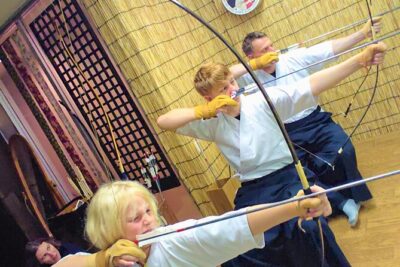
Japanesel Archery Experience HIROSHIMA CASTLE SHARAKU
Our verdict →
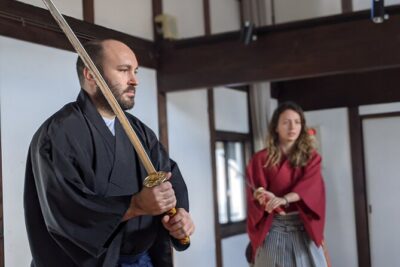
Browse the lists this tour appears in