
Reviewed · GEISHA & MAIKO EXPERIENCES
Kyoto 5-Star Geisha Night Walk: Small-Group Authentic Experience
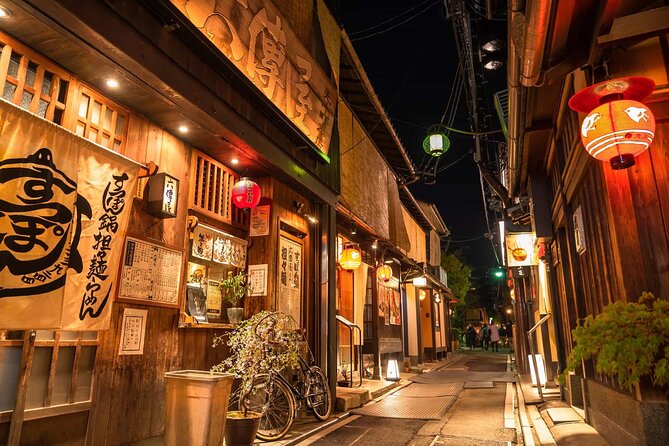
Kyoto’s geisha districts make the most sense after sunset, when lanterns glow, wooden townhouses feel less exposed, and the daytime tour groups thin out. This small-group walk with Richard connects Gion, Higashiyama, and Pontocho while explaining what you are actually seeing, from geisha training houses to shrine customs and traditional entertainment.
I like two things right away: the group limit of eight keeps the walk personal, and the route offers more than geisha facts. You get Kabuki theater, Zen, Shinto, historic streets, temples, and a Kyoto-style snack. The main drawback is the pace. Three and a half hours on foot, with steps and some uneven paths, is not a good fit if walking is difficult.
Key points at a glance
- Gion after dark: See Hanamikoji Street and nearby alleys when the district is generally calmer than during the day.
- Richard’s cultural storytelling: Expect clear explanations of geisha life, kimono, Shinto, Zen, architecture, and Japanese history.
- Eight-person maximum: A small group makes it easier to hear, ask questions, and adjust the discussion to your interests.
- A broad Kyoto route: The walk links Gion, Yasui-Konpiragu, Yasaka Pagoda, Ninenzaka, Yasaka Shrine, and Pontocho.
- Snack break included: Pause on Nene-no-Michi for a local Kyoto treat while Richard explains what you are eating.
- A serious walking commitment: Plan on 3.5 hours, steps, rocky sections, and time spent outdoors in changing weather.
Why an evening walk works so well in Gion
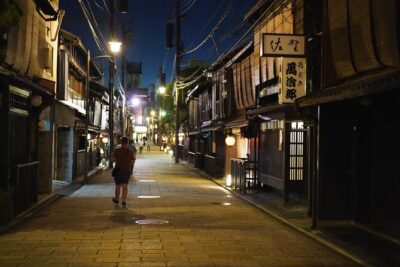
Gion is famous for geisha and maiko, but the district is more than a photo stop. It is a working neighborhood with tea houses, training spaces, restaurants, shrines, and streets lined with traditional wooden buildings.
The evening timing helps you see that world with less daytime congestion. It does not mean you will have Gion to yourself. Pontocho remains lively, and popular photo streets can still be busy, but the atmosphere is generally more subdued than in the middle of the day.
The best part of this experience is the explanation. Without a guide, it is easy to mistake a restaurant for a tea house, confuse geisha with maiko, or treat a private entrance as a backdrop for a photograph. Richard gives the streets context and explains how geisha arts, kimono, music, dance, and service fit together.
You should also approach the district respectfully. The route passes geisha houses and living quarters, but this is not a promise of a close encounter. Seeing a geisha or maiko depends on timing and chance, and photography must not become intrusive.
More Night Tours in Kyoto
- Night Walk in Gion: Kyoto’s Geisha District
★ 4.5 · 2,003 reviews - Kyoto Gion Night Walk & Geisha District Guided Tour
★ 5.0 · 786 reviews - Kyoto Bar Hopping Night Tour
★ 5.0 · 613 reviews
Meeting Richard near Kyoto’s main shopping district
The walk begins at the Disney Store in the Kotocross Hankyu Kawaramachi building, near the northeast corner of Shijo and Kawaramachi. The start time is 5:20 p.m., so plan to arrive with enough time to identify the meeting point in a busy commercial area.
The location is near public transportation, which makes it practical if you are coming from another part of Kyoto. The tour ends at Sanjo Ohashi Bridge, at the northern end of Pontocho Alley. That is useful because you finish near restaurants, bars, and transit rather than being returned to the starting point.
Richard is the guide named in the experience details and the person repeatedly praised for making complex subjects easy to follow. His background bridges American and Japanese culture, which helps when explaining customs that may not be obvious to an English-speaking audience.
He also welcomes questions. Past comments describe his answers as detailed and his style as engaging for families and mixed-age groups. If you enjoy asking about architecture, religion, food, or daily life, this is the sort of walking tour where those questions add to the evening rather than slow it down.
Kabuki theater and the first look at traditional entertainment
One early stop is the Kabuki theater. Richard explains the role of this traditional Japanese performance art and provides useful context before the route moves into Gion.
This is a smart opening. Geisha culture is often reduced to costumes and mystery, but traditional entertainment in Kyoto includes several connected arts and institutions. Learning about Kabuki first gives you a broader frame for understanding performance, training, makeup, movement, and the disciplined work behind a polished public appearance.
You will not attend a Kabuki performance as part of this walk. The theater is a stopping point for an explanation, so set your expectations accordingly.
Hanamikoji Street and the working world of geisha
Hanamikoji Street is the heart of the Gion portion. You walk along the main street and into narrower alleys while Richard explains geisha and maiko traditions, their training, their clothing, and the role of the houses where they work.
This is where the tour earns its price. A casual stroll can show you pretty façades, but it cannot explain why certain entrances are private, how a geisha district operates, or how a performer’s career develops. Richard’s explanations turn a picturesque street into a place with rules, work, and generations of tradition.
You also pass near geisha living quarters and working houses. That makes good behavior essential. Keep voices low, follow the guide’s instructions, and do not block entrances. The experience is strongest when you treat Gion as a real neighborhood rather than a stage set.
The route also passes Gion Corner, associated with geisha study and training. This gives you another chance to understand that the visible evening appearance is only one part of a much longer period of practice.
More Walking Tours in Kyoto
- Kyoto Geisha Walking Tour: Gion District & Hidden Gems
★ 4.7 · 3,273 reviews - Kyoto: Gion Magical Night Walking Tour with Geisha Trivia
★ 4.9 · 2,393 reviews - Kyoto: Gion Geisha District Walking Tour – Stories of Geisha
★ 4.7 · 2,187 reviews - Kyoto Gion Geisha District Walking Tour – The Stories of Geisha
★ 5.0 · 1,441 reviews
Zen, Shinto, and Yasui-Konpiragu
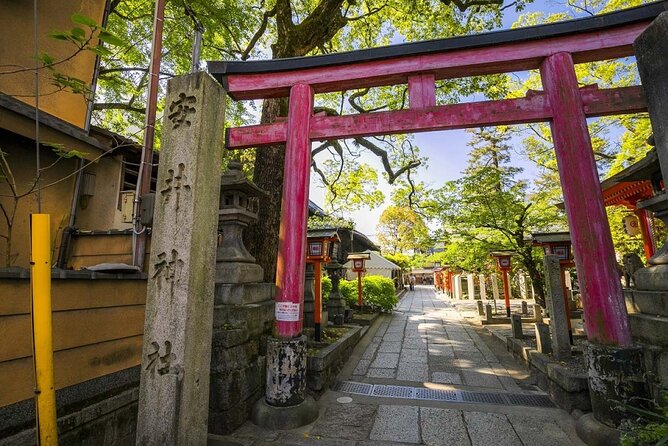
The walk continues past one of Kyoto’s oldest temples before reaching Yasui-Konpiragu Shrine. The temple stop brings in Zen ideas, while the shrine lets Richard explain Shinto customs and beliefs.
This pairing is valuable because Kyoto’s religious sites can look similar to a first-time visitor. A guide can point out differences in purpose, ritual, architecture, and atmosphere. You learn not only where to take a photograph, but also how the site functions.
Yasui-Konpiragu is smaller and more intimate than Kyoto’s major tourist temples. The half-hour stop gives you time to look around without treating the shrine as a quick checkpoint. Richard uses the setting to discuss old traditions and the continuing role of Shinto in Japanese life.
There is no admission charge listed for these stops, but remember that the tour fee pays for the walking route, interpretation, planning, and small-group access rather than entrance tickets.
Yasaka Pagoda and the lantern-lit streets of Higashiyama
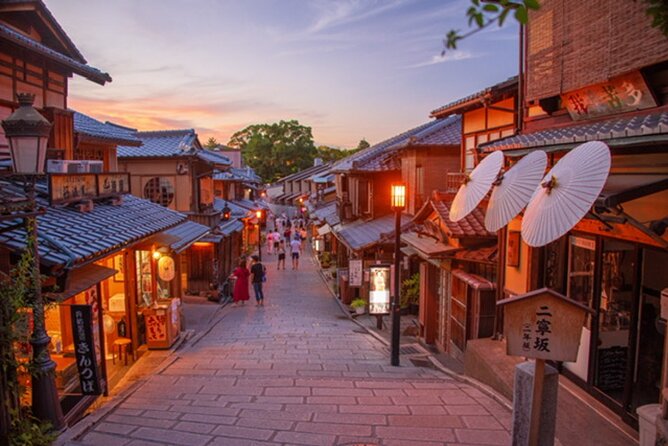
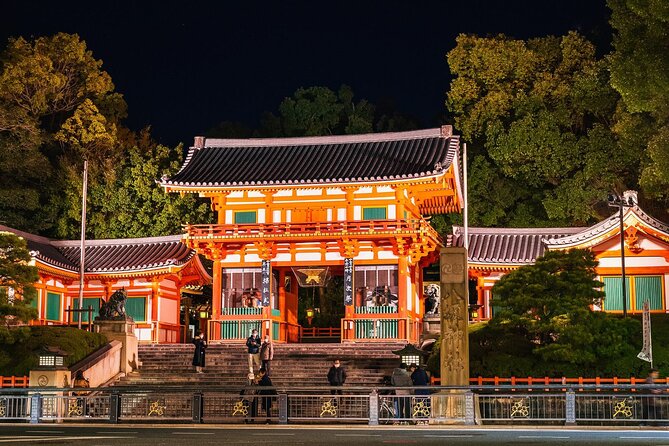
Hōkan-ji Temple, better known for its Yasaka Pagoda, is one of the most photogenic points on the route. The five-story pagoda rises above the historic Higashiyama streets, and evening light can make the area especially attractive for photography.
The stop is brief, about 15 minutes, so have your camera ready. You may find the best images come from the surrounding streets rather than from trying to capture every detail of the pagoda in a single frame.
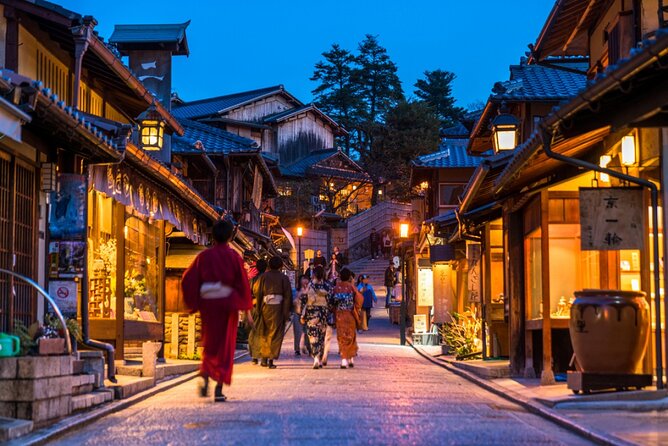
From there, the walk heads through Ninenzaka, a sloping stone-paved lane lined with traditional buildings and shops. At night, the street takes on a quieter mood, although uneven paving and steps require attention.
This is one of the places where comfortable shoes matter most. The route is not a flat pavement stroll through a modern shopping district. Strollers may need help over steps and unpaved rocky sections, and anyone with walking issues should consider a shorter activity.
Nene-no-Michi and the included Kyoto snack
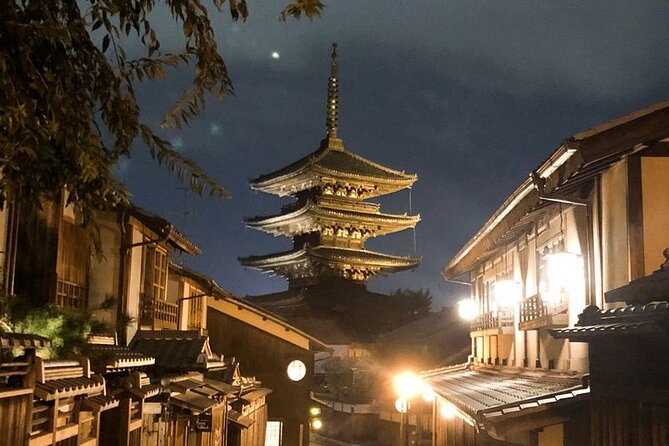
Nene-no-Michi brings a welcome pause after the temple and hillside streets. The break lasts about 30 minutes, and a local Kyoto snack is included.
The food is a small detail, but it gives the evening a practical rhythm. You can rest, ask follow-up questions, and try something local without needing to choose a restaurant while keeping up with the group. Richard also explains the snack, which adds cultural value even if the taste is not to your liking.
Do not expect a full meal. The snack is meant to refresh you, not replace dinner. Since the tour ends in Pontocho, you can easily continue with dinner afterward, using Richard’s local suggestions if you want advice.
Yasaka Shrine after sunset
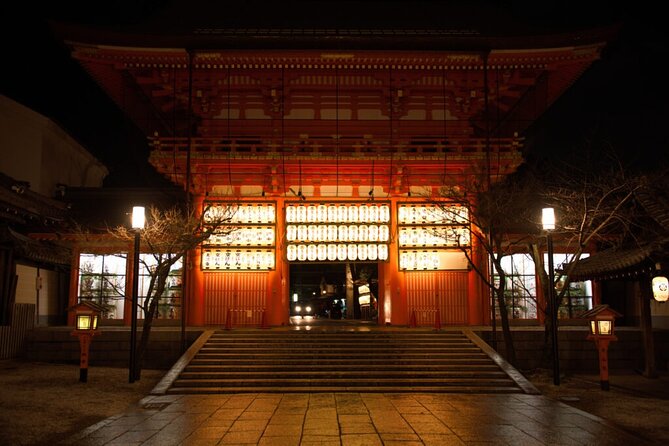
Yasaka Shrine is one of the major stops and one of Japan’s best-known Shinto shrines. Richard points out important features and explains how to read the space, including the difference between simply walking through a shrine and paying attention to its ritual setting.
The shrine is a fitting bridge between the quiet lanes of Higashiyama and the livelier final stretch. Its scale gives the tour a change of pace, while the evening setting lets you see the grounds in a different mood from a daytime visit.
This section also shows why the tour is not only for people fascinated by geisha. If you want to understand Kyoto’s religious customs, architecture, and old neighborhoods, the shrine visits make the route much broader and more useful.
A lesser-known geisha street before Pontocho
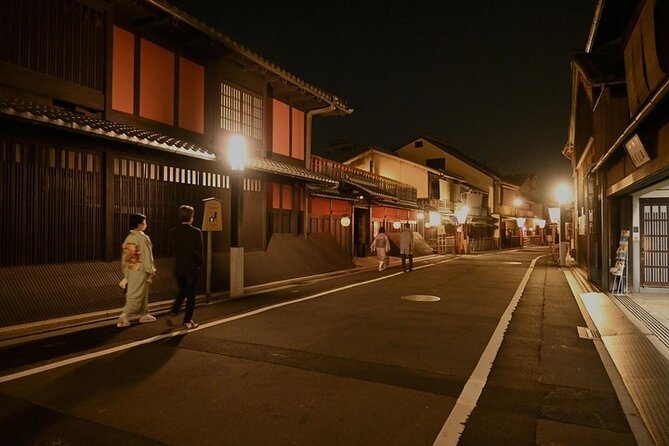
Later, Richard takes the group through another geisha street that is less familiar than the main Gion lanes. This part is particularly useful if you want to see how the district extends beyond the famous photograph spots.
The route includes a picturesque location that is easy to miss when exploring alone. These short transitions may sound minor on paper, but they help connect the districts into one continuous evening rather than a series of isolated attractions.
The small group matters here. Narrow streets are easier to navigate with eight people than with a large coach group, and you are more likely to hear explanations without needing to stand directly beside the guide.
Pontocho, Kyoto’s lively final act
The walk ends in Pontocho District, where a narrow alley mixes geisha houses, bars, restaurants, and nightlife. The atmosphere changes noticeably from the quieter shrine grounds and residential lanes.
Pontocho is a good ending because you finish with food and drink close at hand. It is also a useful place to see how traditional architecture and modern evening entertainment occupy the same small area.
The official end point is Sanjo Ohashi Bridge, at the northern end of Pontocho Alley. You can make your own dinner plans from there, but personal expenses are not included, so budget separately for food, drinks, or shopping.
Is $98 a fair price?
At $98 per person, this is not the cheapest way to walk through Gion. You can visit many of these streets and shrines without paying an admission fee.
The value comes from the guide and the structure. You receive 3.5 hours of clear English commentary, a route through several districts, a small local snack, and a maximum group size of eight. If you tried to gather the same context from scattered signs and guidebooks, you might see the sights but miss the connections between geisha culture, religion, architecture, and traditional entertainment.
I would consider the price fair for a first evening in Kyoto, especially if you want orientation and cultural background early in your stay. It is less compelling if you already have a private guide, have extensive knowledge of geisha culture, or prefer wandering silently at your own pace.
The mobile ticket is convenient, and confirmation is provided at booking. Tips are not included, and the operator appreciates gratuities, so include that in your budget if Richard’s guidance adds value to your evening.
Who should book this Kyoto night walk?
I would recommend it to first-time Kyoto visitors who want more than a quick photo at Yasaka Pagoda. It also suits families, couples, and small groups who enjoy asking questions and learning while walking.
You should book it if you want:
- A focused introduction to geisha and maiko culture
- Evening views of Gion and Higashiyama
- Clear English explanations of Shinto, Zen, and Japanese traditions
- A small group instead of a large city tour
- Restaurant suggestions and local orientation for the rest of your stay
You should think twice if you dislike walking, need a fully accessible route, or want guaranteed geisha sightings. The route includes steps, uneven ground, and rocky sections. It also depends on good weather, and poor conditions can lead to a new date or a full refund.
Cancellation is free up to 24 hours before the 5:20 p.m. start time. Inside that window, the payment is not refunded and changes are not accepted.
Final call: a strong choice for context and atmosphere
I would book this tour if Gion feels mysterious to you and you want someone to explain what lies behind the wooden doors and formal clothing. Richard’s strength is not simply pointing out famous streets. He connects geisha training, Kabuki, shrine practice, temples, food, and daily life into one understandable evening.
The best reason to choose it is the combination of access and explanation. You walk through several of Kyoto’s most atmospheric areas, but you also learn how to look at them.
Book it early in your Kyoto stay if possible. The route can help you understand later visits to Gion, Yasaka Shrine, and Higashiyama, while the Pontocho finish leaves you well placed for dinner. Just wear sturdy shoes, arrive ready for a long walk, and treat the district with the respect it deserves.
FAQ
How long does the Kyoto Geisha Night Walk last?
The tour lasts approximately 3 hours and 30 minutes.
What time does the tour begin?
The start time is 5:20 p.m.
Where does the tour meet?
The meeting point is the Disney Store at Kotocross Hankyu Kawaramachi, near the northeast corner of Shijo and Kawaramachi in Kyoto.
Where does the tour end?
The tour ends at Sanjo Ohashi Bridge, at the northern end of Pontocho Alley.
How many people can join the tour?
The maximum group size is eight travelers.
Is food included?
Yes. A local Kyoto snack is included during the break on Nene-no-Michi.
Is the tour suitable for people with walking difficulties?
No. The 3.5-hour route includes steps and unpaved rocky paths, and it is not suitable for anyone having walking issues.
Is the tour wheelchair or stroller friendly?
The route includes steps and uneven rocky paths. Strollers may need to be maneuvered through those sections.
What happens if the weather is poor?
The activity requires good weather. If it is canceled because of poor weather, you will be offered a different date or a full refund.
More Geisha Experiences in Kyoto
- Best of Kyoto: Gion, Geisha, Pagodas & Cobblestones
★ 4.9 · 2,058 reviews - Kyoto Gion: 2-Hour Geisha Culture & History Walking Tour
★ 5.0 · 1,186 reviews - Kyoto Gion Cultural Walk & Geisha Show with Dining Options
★ 5.0 · 518 reviews - Kyoto Gion Cultural Walk & Geisha Show with Dining Options
★ 5.0 · 483 reviews
Just added around Kyoto
- Sekka Cotton Furoshiki Class★ 5.0 · 19 reviews
- Kyoto Sword Experience – includes Museum Ticket/Ninja Experience★ 4.5 · 149 reviews
- Scenic Green Tea Fields of Hidden Kyoto & Local Tea Exp (Private)★ 5.0 · 32 reviews
- Secret Eastern Kyoto Biking Adventure★ 5.0 · 44 reviews
- Private Sake Tasting in Central Kyoto with Sake Sommelier★ 5.0 · 32 reviews
- Samurai School in Kyoto: Samurai for a Day★ 5.0 · 202 reviews
- SHIRAKAWA Japanese Culture Experiences with private English staff★ 5.0 · 16 reviews
- A Privately Guided Photoshoot in Beautiful Kyoto by a Pro★ 5.0 · 18 reviews
Geisha & Maiko Experiences, compared.

Kyoto Geisha Walking Tour: Gion District & Hidden Gems
Our verdict →
Dinner with Maiko in a Traditional Kyoto Style Restaurant Tour
Our verdict →
Browse the lists this tour appears in