
Reviewed · CASTLE TOURS
Hiroshima; Hiroshima Peace Memorial Museum and Castle Tour
Hiroshima’s most important sights can feel scattered and emotionally heavy. This three-hour walking tour gives them a clear shape, beginning at the Peace Memorial Museum and moving through the park, the Atomic Bomb Dome, the hypocenter, and Hiroshima Castle. Guides such as Maria, Ihsan, Leo, Mehak, and Bilal have been praised for explaining difficult history with care and adjusting the pace to each group.
I like two things here. First, the guide connects the museum displays to real places outside, including atomic-bombed buildings, a school, a bank, and a hospital. Second, the experience reaches beyond wartime history, adding Hiroshima’s culture, samurai past, local food suggestions, and the city’s recovery. The main drawback is the tight schedule: one hour in the museum and 40 minutes at the castle may feel short if you read every display carefully.
Key points at a glance
- The museum visit comes first: You enter the Peace Memorial Museum with a guide and have time to take in its difficult exhibits.
- The hypocenter adds physical context: You see where the bomb exploded and connect the museum’s objects to the city around you.
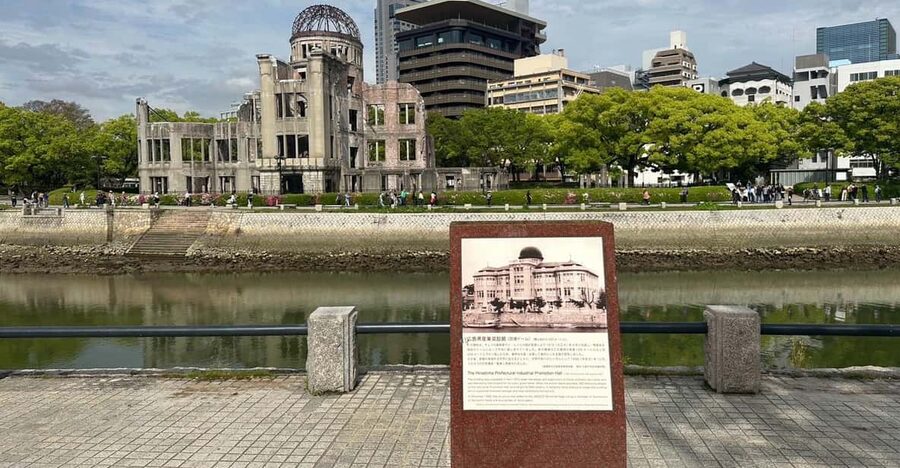
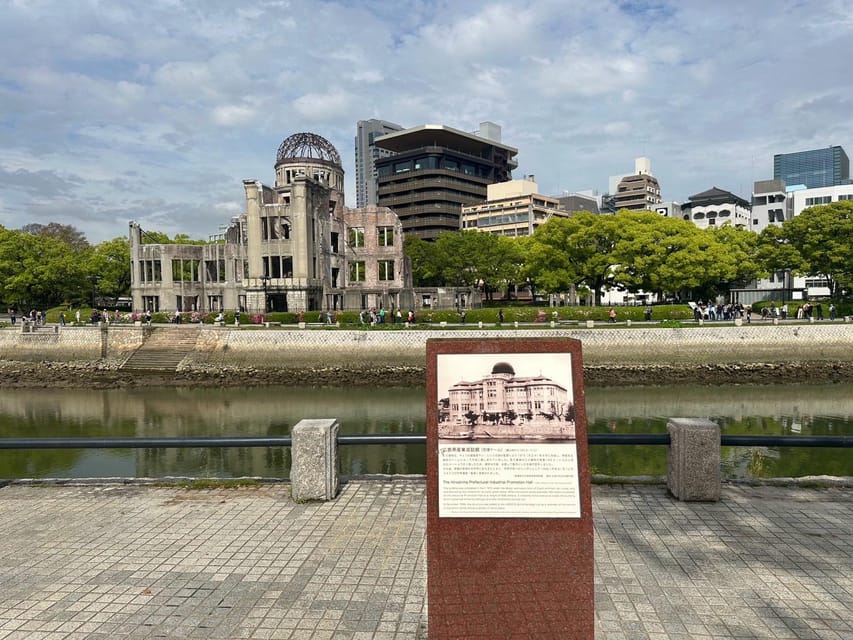
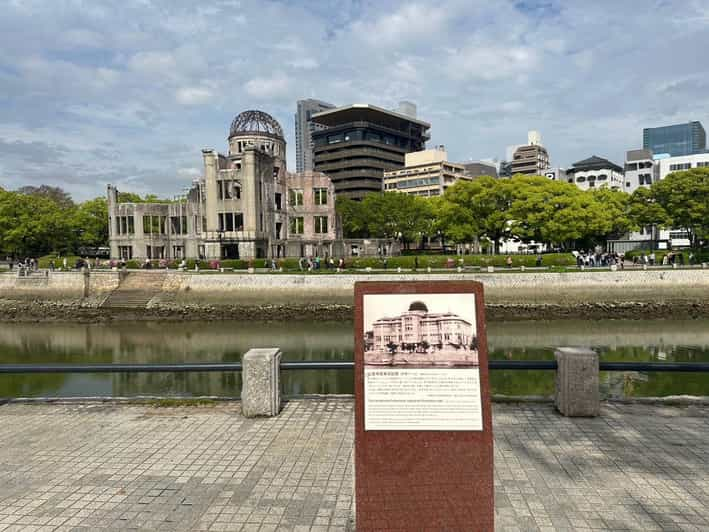
- The Atomic Bomb Dome is more than a photo stop: The guide explains its place in Hiroshima’s memory and postwar message.
- Less-visited buildings may be included: Depending on your guide, you might see a surviving bank, school, hospital, or other sites tied to daily life in 1945.
- Hiroshima Castle changes the subject: Samurai armor, swords, helmets, and castle history provide a useful second chapter after the memorial district.
- The price includes the museum ticket: At $67 per person, the value rests mainly in the guide’s interpretation and local knowledge, since castle admission and food are extra.
Why this Hiroshima tour works
The strongest reason to book this experience is simple: Hiroshima’s memorial district asks you to understand events, not just look at monuments. A guide can explain the purpose of the cenotaph, the ideas behind the memorials, and the way the city remembers the atomic bombing.
You will not simply move from one famous sight to the next. The route links the museum’s photographs, clothing, objects, and personal accounts with the streets outside. That connection matters. It helps you understand that Hiroshima was not only a military target or a place on a map. It was a working city where people went to school, opened shops, commuted, and lived ordinary lives.
The guide also helps with the emotional weight. The museum contains shocking and painful material, and you should be ready for graphic reminders of the bombing and its aftermath. A considerate guide can give context, allow quiet time, and answer questions without turning the visit into a rushed lecture.
The experience is offered in English, Hindi, Malay, and Urdu. Past guides have included Maria, Ihsan, Leo, Mehak, Bilal, Ali, James, and Waleed. Your guide will depend on the date and availability, but the most praised qualities are clear explanations, patience, warmth, and the ability to adapt the content to families, teenagers, and adults.
More Peace Memorial Tours in Hiroshima:
- Hiroshima Historical Walking Tour – Why A-Bomb was Dropped
★ 4.8 · 893 reviews - Hiroshima: Miyajima Peace Memorial Icons of Peace and Beauty
★ 4.9 · 361 reviews - Hiroshima/Guided Virtual Tour of Peace Park/PEACE PARK TOUR VR
★ 5.0 · 157 reviews
Starting near the Peace Memorial Museum
The meeting point is the taxi stand near the Peace Memorial Museum, around 1-2 Nakajimachō. That is useful because you begin close to the central memorial area rather than spending part of your three hours getting there.
Wear comfortable shoes. You will walk between the museum, Peace Memorial Park, the Atomic Bomb Dome, and Hiroshima Castle. The route includes a ten-minute walk before the castle portion, and the entire experience is best treated as a walking tour rather than a series of vehicle transfers.
At the start, tell your guide what you want from the visit. If you have already read about the bombing, you may want more attention on memorial symbolism, local recovery, or surviving buildings. If this is your first visit, you may need more background about World War II and the events leading up to August 1945.
Several guides have adjusted their explanations for children and teenagers. One guide was especially praised for making the subject work for children aged 8, 13, and 16. That does not make the museum easy viewing, but it does suggest that families can ask for a gentler pace and age-appropriate explanations.
One hour inside the Peace Memorial Museum
The museum is the emotional center of the tour. You will learn about the atomic bombing, the people affected, the destruction of Hiroshima, and the aftermath. The material is direct. Clothing, belongings, photographs, and personal stories make the event painfully human.
The planned museum visit lasts about one hour. That is enough for a guided introduction and a focused look at key displays, but it may not satisfy you if you want to read every panel. Some visitors have needed longer because they wanted to stop often or absorb the material quietly.
This is where the guide’s role can make a real difference. Maria has been praised for allowing time to move through the museum independently while explaining selected sections. That balance is sensible. You receive a framework, but you are not forced to follow a constant stream of commentary while facing difficult exhibits.
The optional audio guide is not included. You can ask about it before entering if you prefer to listen at your own pace. The basic museum ticket is included, and the tour offers skip-the-line access, which can protect your limited schedule.
Give yourself emotional space. The museum is not a light sightseeing stop, and it is perfectly reasonable to pause, sit, or ask your guide to change the pace. The activity information warns that some exhibits show the shocking horror of the atomic bomb, so this is not the right choice if you want to avoid upsetting material.
Reading Peace Memorial Park beyond the monuments
After the museum, you spend about an hour in Peace Memorial Park with a specialist guide. This is where the wider meaning of Hiroshima’s memorial program begins to make sense.
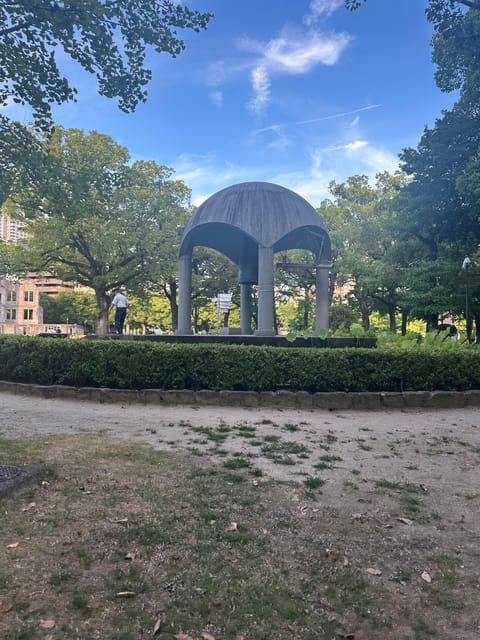
Your guide will discuss World War II, the memorial monuments, and the thoughts behind them. The park is not just an open green area with places to take photographs. Each major feature carries a message about loss, remembrance, or peace, and the guide helps you notice those connections.
I especially like this part because the outdoor setting gives you time to process what you saw inside. The museum presents evidence. The park gives that evidence a public and civic setting. You can ask questions, look around, and understand how Hiroshima presents its past while calling for a peaceful future.
The guide may also point out places that are easy to miss on your own. Depending on your guide, the walk can include surviving buildings connected to the bombing, including a bank where only one employee survived, a school, a hospital, or other structures. These stops bring the event down to street level. They show how the blast affected workplaces, students, patients, and ordinary routines.
Do not expect every possible site on every departure. The route can be shaped around the guide, the group’s pace, and your interests. If these less-known buildings matter to you, ask at the beginning.
More Castle Tours in Hiroshima:
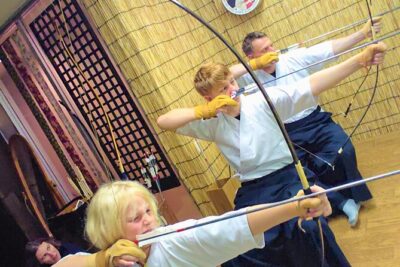
- Japanesel Archery Experience HIROSHIMA CASTLE SHARAKU
★ 5.0 · 387 reviews - Osaka Castle: Museum and Tower Entry Ticket
★ 4.5 · 2,380 reviews - Tokyo Castle & Imperial PalaceーShogun Walking Tour
★ 4.7 · 1,068 reviews - Kyoto: Nijo-jo Castle and Ninomaru Palace Guided Tour
★ 4.7 · 1,020 reviews
Ten minutes at the Atomic Bomb Dome
The Atomic Bomb Dome is a short stop, listed at about ten minutes, but it carries enormous weight. You will have time for photographs and a guided explanation of the building’s history and place in Hiroshima’s memory.
The Dome gives you a visible point of reference. After hearing about the bombing inside the museum and walking through the park, you can look at a surviving structure and understand the scale of destruction more clearly. Its damaged frame also makes the past feel close rather than abstract.
Ten minutes is not long. Think of this as a focused stop, not a full architectural visit. You will likely hear the key story, take photographs, and connect the building to the nearby memorial sites before continuing on foot.
From the memorial district to Hiroshima Castle
The transition to Hiroshima Castle changes the tone. After the museum, park, and Dome, the castle introduces the city’s earlier political and samurai history.
The castle portion lasts around 40 minutes and includes guided sightseeing. You can see displays connected with samurai life, including swords and helmets. The visit helps place Hiroshima in a longer historical frame. The city’s identity did not begin in 1945, and the castle offers a reminder of its prewar culture and feudal past.
The castle is also the most uncertain part of the experience in terms of value. One hour may be enough for a concise look, but 40 minutes can feel brief if you want to study every exhibit. Admission is not included in the $67 price, so you should budget separately for the castle ticket.
I would treat the castle as a useful final chapter rather than the main reason to book. If your priority is the atomic bombing and peace memorials, the castle adds variety without taking over the tour. If samurai history is your main interest, you may want more time there after the guided visit.
What $67 gets you
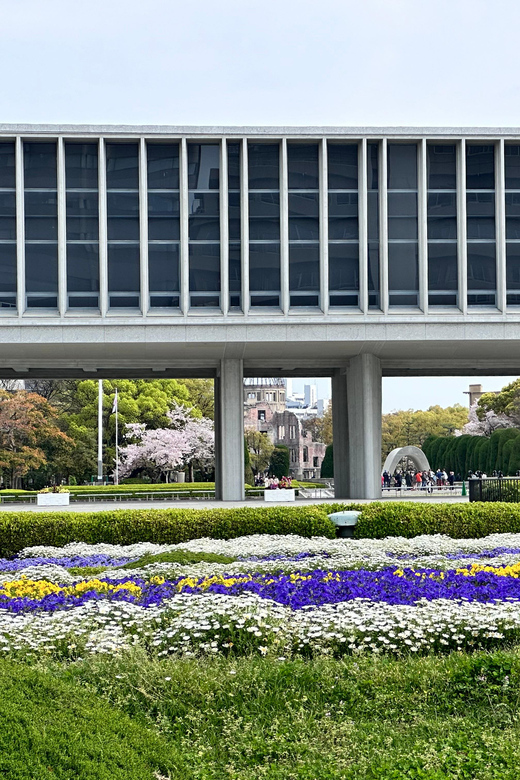
The cost is $67 per person. The museum ticket, walking tour, local guide, and traditional Hiroshima snacks are included. Food and drinks beyond those snacks are not included, and the optional museum audio guide and castle ticket cost extra.
The value depends on how much help you want with the memorial district. If you are comfortable reading independently and researching the background yourself, you can spend less by visiting on your own. But Hiroshima’s key sites are emotionally and historically layered, and a good guide can help you understand what you are seeing without wasting time.
The strongest value comes from the personal attention. Several guides have adapted the route, answered detailed questions, suggested restaurants, and offered ideas for using the rest of the day in Hiroshima. Some have also stayed longer than the scheduled three hours, though you should not assume extra time is guaranteed.
A private or small-group feel appears possible from the way guides have tailored visits to families and individual interests, but the exact group format is not clearly stated here. Ask before booking if group size matters to you.
Pacing, access, and practical limits
The tour lasts three hours, with roughly one hour at the museum, one hour in the Peace Memorial Park, ten minutes at the Atomic Bomb Dome, a ten-minute walk, and about 40 minutes at Hiroshima Castle. The timing is orderly, but it leaves little spare room for long breaks.
Comfortable clothes and walking shoes are important. You should also allow for the emotional effort of the museum. This is not a casual city stroll, even though the route is manageable in length.
The activity information describes the tour as wheelchair accessible, but it also lists wheelchair users under not suitable for. That is a clear inconsistency. If you use a wheelchair, contact the provider before booking and confirm the exact route, museum access, castle access, and walking conditions.
The activity also says it is not suitable for people over 95. Free cancellation is available up to 24 hours before the start, and you can reserve now and pay later. Those policies are useful if your Japan schedule is still changing.
Who will get the most from it
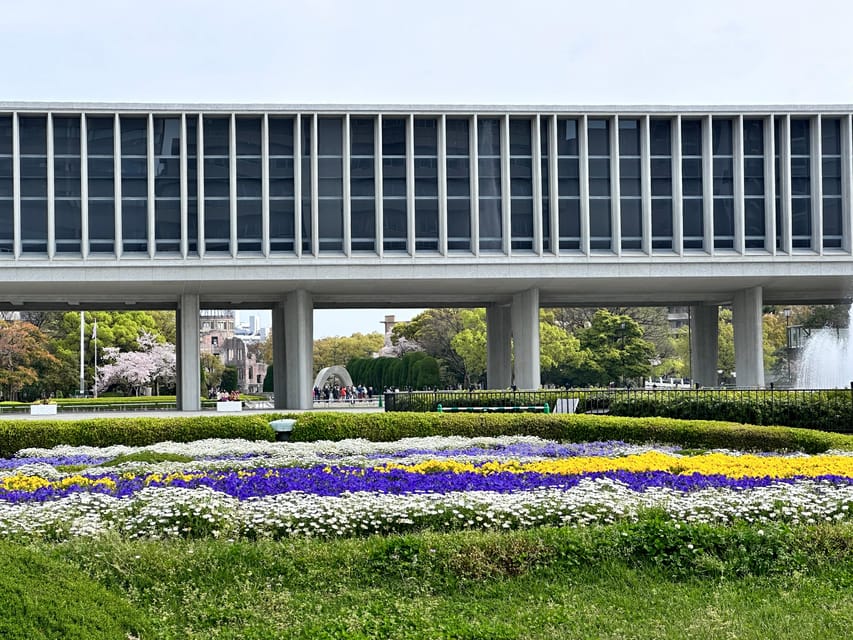
I would recommend this tour to a first-time visitor who wants a guided introduction to Hiroshima’s central memorial sites without spending an entire day on the subject.
It suits families especially well if the children are old enough to discuss war, loss, and peace. The guides have adjusted explanations for younger visitors, but parents should still prepare children for upsetting displays.
It also works for adults who want more than a standard history lesson. The extra buildings, local food suggestions, and discussion of Hiroshima’s recovery add texture to the main story. If you are interested in how a city remembers and rebuilds, ask your guide to focus on daily life and the less-visited sites.
You may not need it if you have already spent several days studying Hiroshima, know the museum well, and prefer to explore alone. The castle visit is also not a major draw for everyone, especially if you have limited interest in samurai displays.
Should you book it?
Book this tour if you want clear historical context, a careful guide, and an efficient route through Hiroshima’s most important memorial sites. The museum ticket and snacks help justify the price, but the real value is having someone connect the exhibits, park, Dome, hypocenter, surviving buildings, and modern city.
Go in prepared for difficult material and a fairly brisk schedule. Ask for time to read, mention any family concerns, and confirm accessibility before paying. If you do that, this tour can turn a powerful but confusing morning into a meaningful understanding of Hiroshima’s past and its message of peace.
FAQ
How long does the Hiroshima tour last?
The tour lasts three hours. The schedule includes about one hour at the Peace Memorial Museum, one hour in Peace Memorial Park, ten minutes at the Atomic Bomb Dome, a ten-minute walk, and 40 minutes at Hiroshima Castle.
What places are included?
The route includes the Hiroshima Peace Memorial Museum, Peace Memorial Park, the Atomic Bomb Dome, the hypocenter area, surviving atomic-bombed buildings, Hiroshima Gokoku Shrine, and Hiroshima Castle.
Is the museum ticket included?
Yes. The Peace Memorial Museum ticket is included, and the tour provides skip-the-line access.
Is the Hiroshima Castle ticket included?
No. Castle admission is not included in the $67 price.
Is an audio guide included at the museum?
No. The optional Peace Memorial Museum audio guide is not included.
Are food and drinks included?
Traditional Hiroshima snacks are included. Your wider food and drink bill is not included.
Which languages are available?
Live guiding is available in English, Hindi, Malay, and Urdu.
Is the tour suitable for wheelchair users?
The activity information gives conflicting details. It describes the tour as wheelchair accessible but also lists wheelchair users as unsuitable. Contact Fukuhara Tours before booking to confirm the current route and access arrangements.
What should I wear?
Wear comfortable clothing and walking shoes. You will walk between the memorial sites and the castle, and the tour lasts three hours.
More Museum Tours in Hiroshima
- Hiroshima: Atomic Bomb Dome and Peace Memorial Museum 3 hours
★ 5.0 · 20 reviews - Hiroshima: Tour of Atomic Bomb Dome & Peace Memorial Museum
★ 5.0 · 20 reviews - Tokyo: teamLab Planets TOKYO Digital Art Museum Entry Ticket
★ 4.6 · 9,779 reviews - Tokyo: Samurai Ninja Museum Guided tour and Experience
★ 4.6 · 1,010 reviews
Just added around Hiroshima
- Full Day Hiroshima and Miyajima Tour by Bullet Train from Kyoto★ 4.5 · 120 reviews
- Hiroshima Saijo Sake Tasting Tour with visit to 7 Breweries★ 5.0 · 104 reviews
- The Peace Memorial to Miyajima : Icons of Peace and Beauty★ 4.5 · 31 reviews
- Shore Excursion from Hiroshima Port : Private Tour in Hiroshima★ 5.0 · 17 reviews
- Okunoshima Rabbit Island Cycling Tour with Local Guide★ 4.5 · 17 reviews
- Hiroshima & Miyajima All-Inclusive Tour w/Licensed guide Pancho★ 5.0 · 54 reviews
- Private Full Day Hiroshima Tour★ 4.5 · 29 reviews
- Hiroshima Private Tour with a Local – Highlights & Hidden Gems★ 4.5 · 24 reviews
Castle Tours, compared.
Tokyo Castle & Imperial PalaceーShogun Walking Tour
Our verdict →
Japanesel Archery Experience HIROSHIMA CASTLE SHARAKU
Our verdict →
Browse the lists this tour appears in