
Reviewed · PEACE MEMORIAL TOURS
Hiroshima: Atomic Bomb Dome and Peace Memorial Museum 3 hours
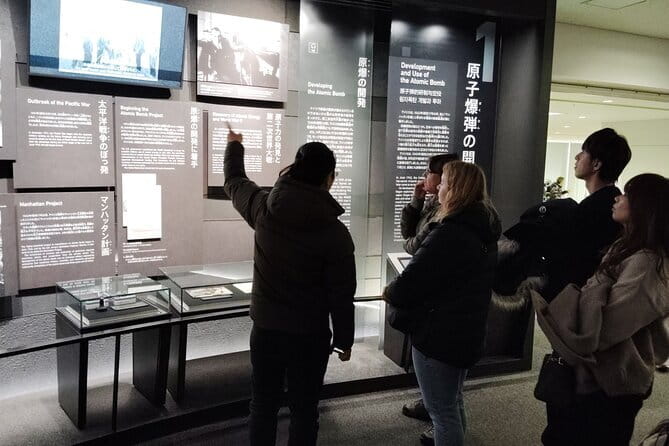
Hiroshima’s Atomic Bomb Dome and Peace Memorial Museum tour takes you through the city’s most important sites with a private guide, not just a museum audio track. You’ll see the ruined Dome, walk through Peace Memorial Park, and spend about two hours in the museum learning how August 6, 1945 changed Hiroshima and its people.
I like two things here. First, the guide gives the park meaning before you enter the museum. Second, the private format lets you ask questions and move at your group’s pace. The main consideration is that the tour costs $94.26 per person and covers only three hours, so it is a serious purchase for a focused, emotional visit.
Key points to know before you book
- The tour begins and ends at the Peace Memorial Museum, at 1-2 Nakajimacho, Naka Ward.
- The Atomic Bomb Dome and Peace Memorial Park are free, while museum admission is included in the price.
- You get a private tour for your own group, rather than joining a larger shared party.
- Guides vary, but past guides have included Naoka, Gordon, Naomi, Emiko, Ami, Takashi, Yumi, and Hiroyuki.
- Some guides have family connections to the bombing, which can add a personal dimension to the history.
- Museum guiding is quiet and restrained, with guides generally whispering and avoiding stops inside the galleries.
Why this three-hour Hiroshima tour works
You can visit the Atomic Bomb Dome and museum on your own. Hiroshima is easy to explore, and the central memorial area is well served by public transportation. But the power of this tour lies in the order and connection between the sites.
You begin with the Dome, see the park’s memorials, and then enter the museum with context already in place. That sequence helps you understand that the museum is not an isolated collection of objects. It is part of a living memorial area, built around the people of Hiroshima and the city’s decision to preserve memory rather than erase the ruins.
The tour is private, so you are not working around the needs of a large group. You can ask about a particular photograph, family story, or part of the city’s past. Past guides have been praised for answering questions, sharing family photographs, and explaining details that are easy to miss when you simply walk from display to display.
Still, this is not a casual sightseeing outing. The subject is painful, and the museum contains difficult material. You should choose this experience because you want to give Hiroshima’s history your full attention, not because you are looking for a light activity between lunch and shopping.
More Peace Memorial Tours in Hiroshima:
- Hiroshima Historical Walking Tour – Why A-Bomb was Dropped
★ 4.8 · 893 reviews - Hiroshima: Miyajima Peace Memorial Icons of Peace and Beauty
★ 4.9 · 361 reviews - Hiroshima/Guided Virtual Tour of Peace Park/PEACE PARK TOUR VR
★ 5.0 · 157 reviews
The Atomic Bomb Dome, 30 minutes of visible history
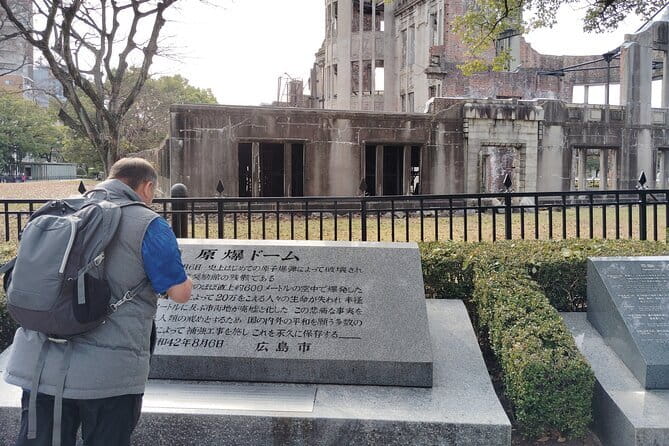
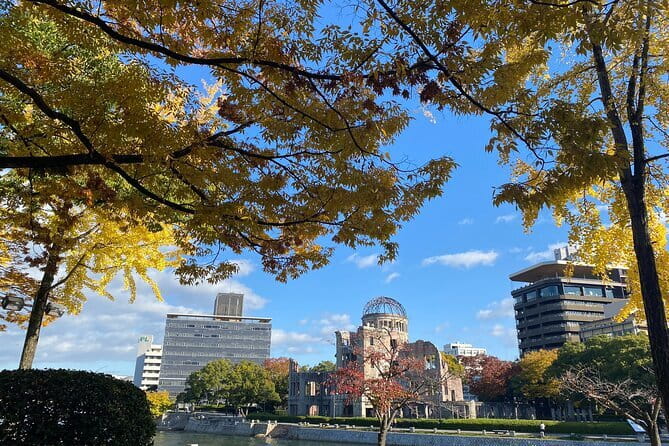
The Atomic Bomb Dome is the first major stop. Before the bombing, the building was a graceful structure. The heat rays and shock waves left it in ruins, while much of the city around it was destroyed.
The Dome’s survival gives the site its visual force. You are not looking at a reconstructed monument or a modern replica. You are looking at a damaged building that remained after the blast and was later preserved as a reminder of what happened.
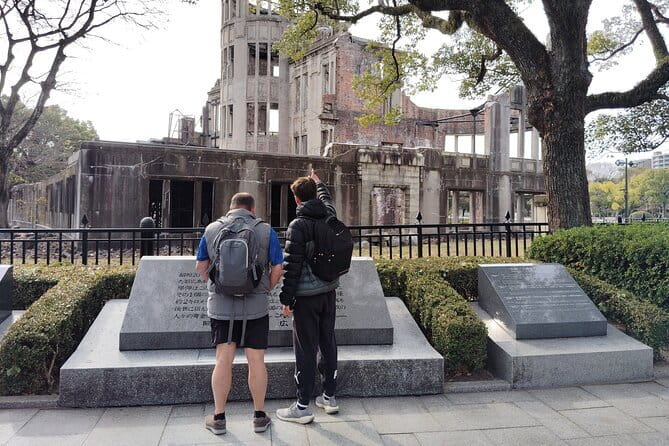
Your guide has about 30 minutes to explain the Dome and its place in Hiroshima’s story. That short period is useful because the building itself does not need a long lecture. Its shape tells part of the story. The guide helps you understand why the city debated demolishing it during reconstruction, and why preserving it became important.
I find this stop most useful when you take time to look closely rather than treat it as a quick photograph. The contrast between the preserved ruins and the rebuilt city around them is central to the experience.
The Dome is free to visit, but free does not mean insignificant. It is one of the few sites in Hiroshima where the physical remains of August 6 are immediately visible. Your guide can also connect it to the next stop, so the walk through the park feels like part of a single story.
Peace Memorial Park and the cenotaph
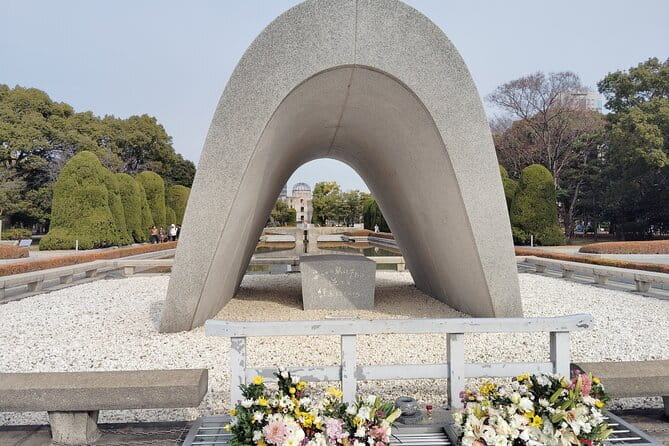
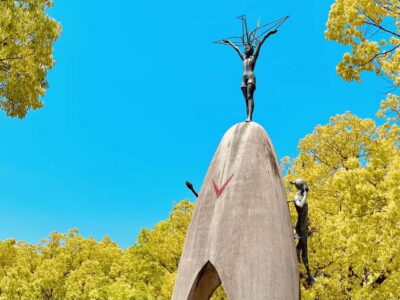
The tour then moves through Hiroshima Peace Memorial Park for about 20 minutes. This is more than a path between the Dome and museum. The park contains memorials designed to honor the dead and comfort the spirits of people affected by the bombing.
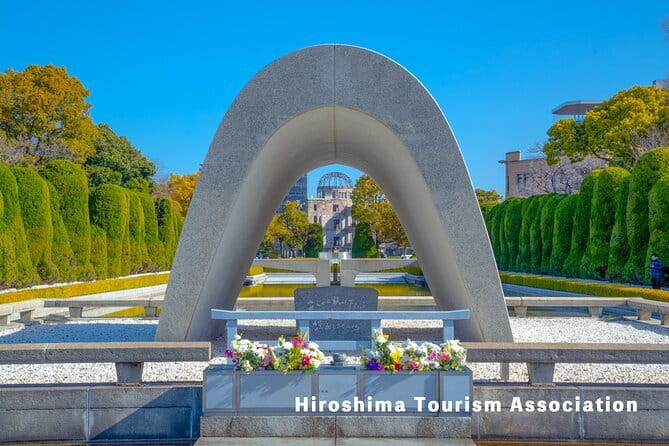
A cenotaph overlooks the Atomic Bomb Dome. That view is deliberate, and your guide can help you read the relationship between the memorial, the Dome, and the surrounding park. The setting encourages quiet reflection rather than hurried sightseeing.
The park section is also where the quality of the guide matters most. A list of dates will not tell you why a particular memorial was built or how the city remembers those who died. Guides including Gordon, Naomi, Takashi, and Yumi have been praised for explaining the monuments with care and for balancing historical facts with respect for the people involved.
The 20-minute timing is enough for an introduction, but it is not enough to study every monument in the park. If you want to return later and walk through the area slowly, this tour gives you a useful first orientation. You can then revisit the places that affected you most.
Two hours inside the Peace Memorial Museum

Most of the tour takes place at the Hiroshima Peace Memorial Museum. Admission is included, and you spend about two hours inside.
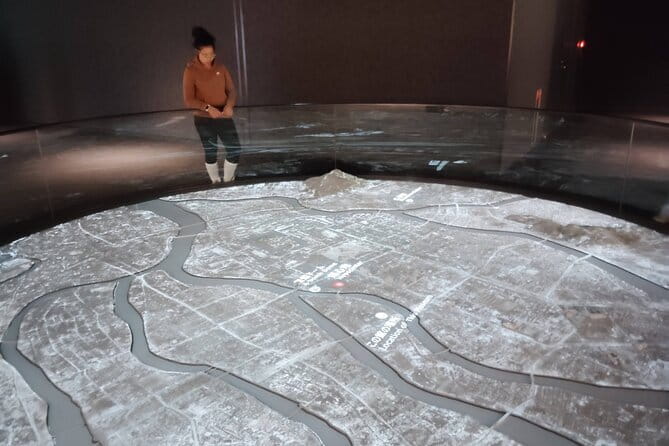
The museum presents Hiroshima before the bombing, the attack itself, and the effects on the city and its people. Its archives tell the story through objects, records, and accounts connected with that day. This is where the tour becomes more than a historical overview.
A guide can provide context as you move through the displays. You can ask what you are seeing, clarify dates, and connect the museum material to the Dome and park outside. Several guides have been praised for making difficult information easier to understand without turning the visit into a lecture.
Expect a quiet style of guiding. As a rule, guides whisper in the museum and do not stop for long explanations. You are asked to remain quiet as well. This matters for two reasons: the museum is a place for reflection, and large spoken explanations would disturb other people moving through the galleries.
The whispering format is also the tour’s main limitation inside the museum. If you want a guide to stop at every display and offer a long explanation, this may feel restrained. On the other hand, it allows you to see the exhibits for yourself while still having a guide nearby for questions and context.
The museum can be emotionally demanding. Give yourself permission to pause and take in the material at your own speed. The two-hour block is substantial, but the private format gives your group some room to respond naturally to what you see.
More Museum Tours in Hiroshima:
- Hiroshima; Hiroshima Peace Memorial Museum and Castle Tour
★ 5.0 · 89 reviews - Hiroshima: Tour of Atomic Bomb Dome & Peace Memorial Museum
★ 5.0 · 20 reviews - Tokyo: teamLab Planets TOKYO Digital Art Museum Entry Ticket
★ 4.6 · 9,779 reviews - Osaka Castle: Museum and Tower Entry Ticket
★ 4.5 · 2,380 reviews
Guides who add a personal connection
The strongest feature of this experience is the range of guides available. The exact guide depends on the booking, but named guides have included Naoka, Gordon, Naomi, Emiko, Ami, Takashi, Yumi, Hiroyuki, and others.
Some guides have family connections to the bombing. Naoka was described as a second-generation survivor, while Naomi and Takashi shared family stories connected to Hiroshima. Yumi was praised for making the visit a lasting part of the trip, and Hiroyuki guided alongside his mother, offering a family-centered connection to the subject.
These personal links can make the history feel closer, but they should not be treated as a guarantee that every booking includes a survivor account. Guide assignments vary. What you can expect is a local guide who explains the principal sites and answers questions within the three-hour schedule.
The best guides balance information with restraint. Gordon, for example, has been praised for connecting Hiroshima’s past with its present and for making room for reflection. Ami was also praised for kindness, useful explanations, and a good lunch suggestion after the tour.
There is one clear warning in the feedback: guide quality can vary. One guide was described as kind but reserved, and the group felt they learned little beyond what the museum already showed. The same group also arrived at the meeting point only at the scheduled time, leaving them unsure at first that they were in the right place.
That appears to be an exception rather than the usual experience, but it is worth keeping in mind. If the guide is quiet, ask direct questions early. You have paid for interpretation, so use the private setting to ask about the Dome, the memorials, the bombing, or the museum displays.
Is $94.26 good value?
At $94.26 per person, this is not the cheapest way to see Hiroshima’s memorial area. The Dome and Peace Memorial Park do not charge admission, so the value comes from the guide, the private format, and the included museum ticket.
I would view the price this way: you are paying for a focused three-hour history lesson in the actual places where the story unfolded. If you are traveling with family or friends and want one guide dedicated to your group, the cost may make sense, especially if you value the chance to ask questions.
The private format also avoids the common problem of a large tour group moving too quickly or waiting for people at every turn. Group discounts are available, though the exact reduction is not specified. Check the price for your party before booking.
If you are comfortable reading museum signs on your own and prefer a quiet, independent visit, you may find the price harder to justify. The museum admission is included, but the guide fee makes up much of the cost.
Timing, meeting point, and practical details
The tour starts and ends at the Hiroshima Peace Memorial Museum, 1-2 Nakajimacho, Naka Ward, Hiroshima, 730-0811. This simple arrangement is helpful because you do not need to arrange a separate return transfer or find a new meeting point across town.
The area is near public transportation, and most people can take part. A mobile ticket is available, and booking confirmation is provided at the time of booking.
Plan to arrive a little early, even though the official start is at the museum. One past group was uneasy because the guide arrived at the scheduled time rather than several minutes ahead. Arriving early gives you time to identify the entrance and settle your group before the tour begins.
The tour does not include lunch, coffee, or tea. That is not a problem in itself, but plan around it. Three hours can carry you from one meal to the next, especially with two hours inside a serious museum. Ami has been praised for suggesting lunch afterward, but food is not part of the booking.
Free cancellation is available if you cancel at least 24 hours before the start time. Changes or cancellations made less than 24 hours ahead are not accepted for a refund, and the cut-off uses Hiroshima local time.
Who will get the most from this experience?
I would choose this tour if you are visiting Hiroshima for the first time and want help understanding the memorial area. It suits couples, families, and small private groups who prefer to ask questions rather than follow a fixed group lecture.
It also suits anyone who wants the human side of the history. The family accounts shared by some guides can add meaning, while the park and museum provide the wider historical setting.
Parents should decide in advance how much difficult material their children can handle. The tour is open to most people, but the subject matter is serious. A private guide gives you a chance to ask questions in a way that may work better for a family than a large public tour.
You may prefer to visit independently if you need a lot of time at each museum display or want to explore the wider park at leisure. Three hours is focused and efficient, not leisurely.
Should you book it?
Book this tour if you want a private, guided introduction to Hiroshima’s Atomic Bomb Dome, Peace Memorial Park, and Peace Memorial Museum, all in one carefully ordered visit. The strongest reasons are the personal attention, included museum admission, and possibility of hearing family accounts from guides such as Naoka, Naomi, Takashi, or Yumi.
Skip it if you prefer to read at your own speed, already know the history well, or want a longer, slower visit. The museum guiding is quiet, the schedule is fixed, and the price is high for a three-hour activity.
For most first visits, I think the guide adds real value. The Dome shows you the damage, the park gives the story a place for remembrance, and the museum explains what happened to Hiroshima and its people. Taken together, the three stops make this a serious and worthwhile way to begin understanding the city.
FAQ
How long does the Hiroshima Atomic Bomb Dome tour last?
The experience lasts approximately three hours.
Where does the tour start and finish?
It starts and ends at the Hiroshima Peace Memorial Museum, 1-2 Nakajimacho, Naka Ward, Hiroshima, 730-0811, Japan.
What sites are included?
The tour includes the Atomic Bomb Dome, Hiroshima Peace Memorial Park, and the Hiroshima Peace Memorial Museum.
Is museum admission included?
Yes. Admission to the Hiroshima Peace Memorial Museum is included in the tour price.
Do I pay to enter the Atomic Bomb Dome or Peace Memorial Park?
No. The Atomic Bomb Dome and Peace Memorial Park are listed as free admission stops.
Is this a private tour?
Yes. Only your group participates in the activity.
Can I ask questions inside the museum?
Yes, but guides generally speak in a whisper and do not stop during the museum tour. You are also asked to remain quiet.
Can I cancel for a full refund?
Yes, if you cancel at least 24 hours before the experience start time. Cancellations or changes made less than 24 hours before the start are not accepted for a refund.
More 3-Hour Experiences in Hiroshima
- 3-Hour Kyoto Insider Sake Brewery Tour with Tastings & Pairings
★ 5.0 · 917 reviews - Tokyo Top Highlights 3h Guided E-bike Tour
★ 5.0 · 714 reviews - 3h Tokyo E-Bike Tour: Hidden Gems, and Local Life with guide
★ 5.0 · 670 reviews - Tokyo: 3-Hour Bike or E-Bike City Highlights Tour
★ 4.8 · 435 reviews
Just added around Hiroshima
- Full Day Hiroshima and Miyajima Tour by Bullet Train from Kyoto★ 4.5 · 120 reviews
- Hiroshima Saijo Sake Tasting Tour with visit to 7 Breweries★ 5.0 · 104 reviews
- The Peace Memorial to Miyajima : Icons of Peace and Beauty★ 4.5 · 31 reviews
- Shore Excursion from Hiroshima Port : Private Tour in Hiroshima★ 5.0 · 17 reviews
- Okunoshima Rabbit Island Cycling Tour with Local Guide★ 4.5 · 17 reviews
- Hiroshima & Miyajima All-Inclusive Tour w/Licensed guide Pancho★ 5.0 · 54 reviews
- Private Full Day Hiroshima Tour★ 4.5 · 29 reviews
- Hiroshima Country Cycling: Explore Rural Life 1 HR from City★ 5.0 · 22 reviews
Peace Memorial Tours, compared.
Hiroshima Historical Walking Tour – Why A-Bomb was Dropped
Our verdict →
Hiroshima: Miyajima Peace Memorial Icons of Peace and Beauty
Our verdict →Browse the lists this tour appears in