
Reviewed · PEACE MEMORIAL TOURS
Hiroshima/Guided Virtual Tour of Peace Park/PEACE PARK TOUR VR
Hiroshima’s Peace Park is powerful on foot, but this small-group tour adds another layer: VR scenes rebuild the city before the atomic bombing, then show the destruction and long recovery around the same places you are visiting. I like the way the experience links digital images with real landmarks, and I like its short walking distance, which keeps the focus sharp rather than tiring you out.
The guide-led format is another strong point. You get help with the goggles, time to ask questions, and a closing moment to reflect at the Rest House. The main caution is value: at $33.03 per person, the tour is brief, and the VR clips may feel basic if you have already used polished commercial VR programs or visited the Peace Memorial Museum.
Key points to know before booking
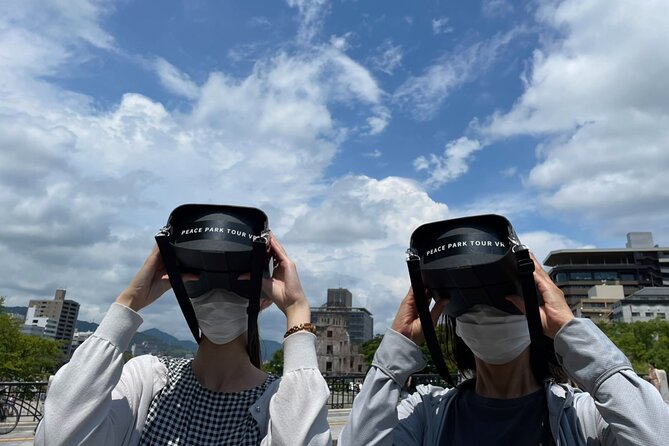
- Five stops in about 80 minutes: The route begins and ends at the Peace Park Rest House, with the Peace Clock Tower, Aioi Bridge, and Motoyasu Bridge along the way.
- VR tied to real places: The headset shows Hiroshima before and after August 6, 1945, while you stand near the landmarks being discussed.
- A small group of no more than six: This gives you a better chance to hear the guide and ask questions.
- English-speaking guidance included: The guide explains the equipment, the historical scenes, and the personal stories behind them.
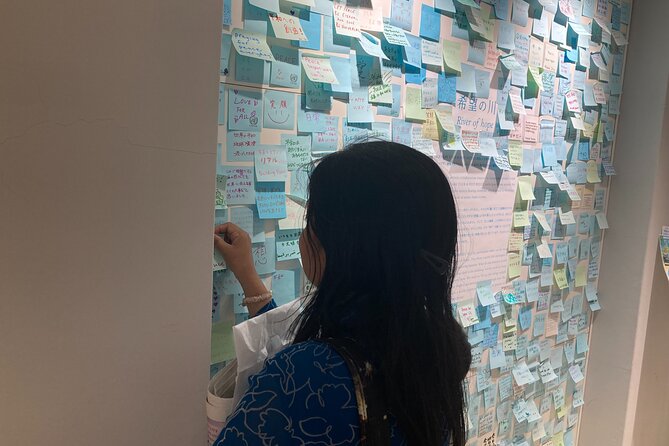
- A serious but personal ending: You can write a message on the River of Hope wall and express your condolences.
- Best for a focused introduction: The tour suits you if you want context in a short visit, but it may not replace the Peace Memorial Museum.
Seeing Hiroshima before the bombing through a headset
The tour starts at the Hiroshima Peace Park Rest House at 10:30 am. This building is not just a convenient meeting place. You first receive the VR goggles there, then go down to the basement for the opening section.
The first story follows Eizo Nomura, described as the only survivor inside the fuel building. That detail gives the tour a human scale from the start. Instead of beginning with a broad lecture about war, you are introduced to one person and one place, then asked to picture daily life before the city was destroyed.
The VR material draws on historical photographs, survivor testimony, and fact-based reenactments. That combination matters. A photograph can show what a street looked like, while a testimony can suggest what it felt like to live through the attack. The virtual recreation helps connect those pieces to the ground beneath your feet.
I like this opening because it gives the Rest House a role beyond a check-in point. You begin with an actual location tied to the park, then enter a personal story before walking outside. The 20-minute stop is also long enough to explain the equipment and establish the tone without taking up most of your morning.
You should expect the goggles to be a tool for historical interpretation, not a theme-park ride. The material deals with death, destruction, and suffering. That makes the guide important, since a calm explanation can help you understand what you are seeing rather than treating the images as a visual effect.
More Peace Memorial Tours in Hiroshima:
- Hiroshima Historical Walking Tour – Why A-Bomb was Dropped
★ 4.8 · 893 reviews - Hiroshima: Miyajima Peace Memorial Icons of Peace and Beauty
★ 4.9 · 361 reviews - Hiroshima: Peace Memorial Park and Atomic Bomb Dome Tour
★ 4.9 · 91 reviews
The Peace Clock Tower and the Atomic Bomb Dome
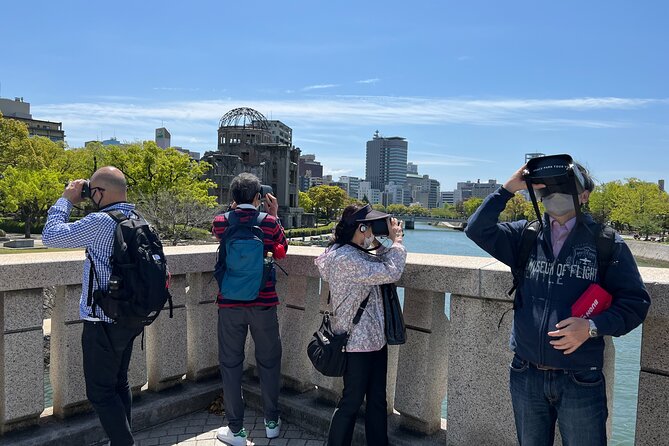
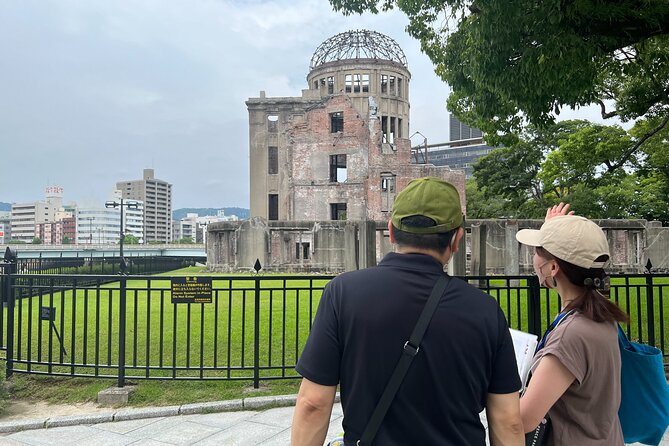
The second stop is the Peace Clock Tower, where the VR sequence focuses on the moment of the bombing and its aftermath. You see how the Atomic Bomb Dome was damaged and how it came to look as it does today.
This is one of the tour’s most useful ideas: the Dome is not presented as an isolated ruin. You can compare its current appearance with the building before the blast and with the destruction immediately afterward. The real structure gives the virtual images a fixed point, making the change easier to grasp.
The stop lasts about 15 minutes. That is enough for a focused explanation, though not enough for a full architectural study or a long discussion about preservation. If you want detailed information about the Dome’s construction, conservation, or World Heritage status, you will need to set aside additional time elsewhere in the park.
The Atomic Bomb Dome was registered as a World Heritage site in 1996. On this tour, that fact is connected to what you can see, rather than left as a date to memorize. The building is one of the few surviving visual records of the bombing, and the headset helps you picture the structure and surrounding streets before they became ruins.
The VR quality is worth considering. One person who found the tour less satisfying felt that the clips were not as polished as other VR games and videos. That criticism is fair. You are paying for the guide, the setting, and the carefully chosen historical material as much as for technical spectacle. If you expect modern gaming graphics, $33.03 may feel high. If you value location-based interpretation and personal testimony, the same price can make more sense.
Aioi Bridge and the city two months later
At Aioi Bridge, the tour moves beyond the instant of destruction. The VR presentation shows Hiroshima roughly two months after the bombing, with the city reduced to a field of fire and wreckage. Survivor testimony accompanies the images, giving the scene a human voice.
This section helps correct a common problem with historical sites: the tendency to focus only on the single dramatic moment. The bombing was not over when the flash faded. People faced injuries, loss, displacement, hunger, and the hard task of understanding what had happened. Aioi Bridge becomes a place to discuss that continuing crisis.
The guide also connects the area to an episode that began after the bombing. The supplied details do not specify every part of that story, so you should think of this stop as a guided introduction rather than a full course in postwar Hiroshima. Still, the sequence has value because it shifts your attention from destruction to human response.
The 15-minute timing keeps the tour moving. That will suit you if you have a packed Hiroshima schedule or if you find extended discussions at memorial sites emotionally draining. It can feel short if you want to ask many questions or examine the changing city in detail.
I would treat Aioi Bridge as one of the most important stops for understanding the tour’s purpose. You are not only looking at a place that survived. You are using that place to imagine a city that had to begin again with very little left.
Motoyasu Bridge and the road toward recovery
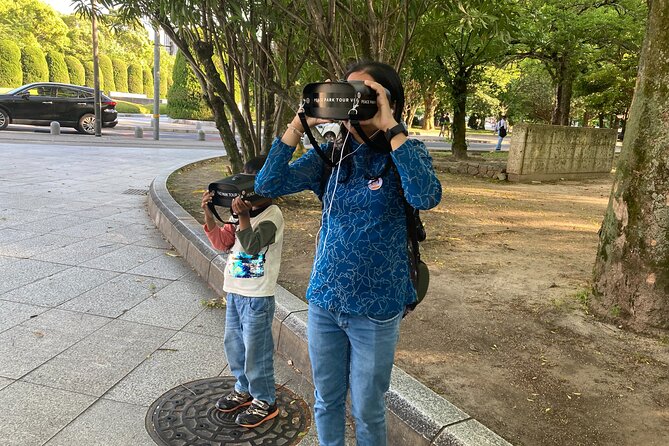
The fourth stop is Motoyasu Bridge, where the story reaches from the first year after the bombing to the present day. The focus turns to people who began rebuilding amid chaos and took practical steps toward recovery.
This section gives the tour needed balance. A visit to Hiroshima should never soften the facts of the bombing, but it should also recognize the work of the people who rebuilt their homes, streets, institutions, and community life. The tour’s message is not simply that Hiroshima was destroyed. It is that people continued to act, organize, and appeal for peace.
The bridge is a useful setting for that transition because you can look around a living city while hearing about its difficult early recovery. The contrast between present-day Hiroshima and the VR scenes is part of the lesson. The city you see now did not appear by accident, and the route asks you to consider the years of effort behind it.
Again, the stop lasts about 15 minutes. I would use this time to ask the guide about the specific recovery stories included in the presentation. The tour is limited to six people, so the format should give you a better chance to ask questions than a large walking group.
The guide’s role can make a real difference here. Kazuko, one guide associated with this experience, has been specifically praised for answering questions and bringing the material to life. You cannot request that guide based on the information provided, but the example shows why the human explanation matters. The VR can show a changed street. The guide helps you understand the choices and sacrifices behind the rebuilding.
A few more Hiroshima half-days worth comparing
- Peaceful Hiroshima & Miyajima UNESCO 1 Day Bus Tour
★ 5.0 · 5,309 reviews - Hiroshima: Hiroshima and Miyajima UNESCO Sites 1-Day Tour
★ 4.9 · 2,330 reviews - Hiroshima / Miyajima Full-day Private Tour with Government Licensed Guide
★ 5.0 · 1,298 reviews - Osaka/Kyoto: Hiroshima Miyajima Bus Tour & Shinkansen Ticket
★ 4.7 · 919 reviews
Returning to the Rest House for a quiet finish
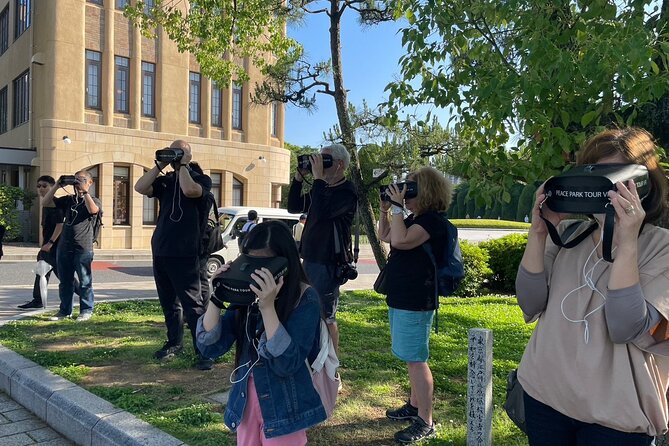
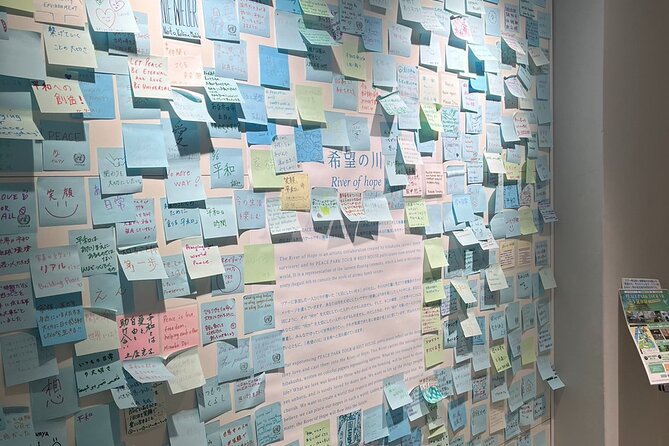
The final 15-minute stop brings you back to the Peace Park Rest House. The tour closes with a chance to consider what you have seen, write a comment on the River of Hope wall, and express your condolences.
I appreciate this ending because it gives the experience a clear pause. The earlier sections present images and testimony. The final stop asks you to respond in your own way. You do not have to make a speech or join a formal ceremony. You simply have space to leave a message for peace.
The closing activity also keeps the tour from ending abruptly at a bridge. After seeing the city before the bombing, the devastation, and the first steps toward recovery, you return to the starting point with a chance to collect your thoughts.
Some visitors may find this personal response meaningful. Others may prefer to spend that time in the museum or walking alone through the park. Neither approach is wrong. The strength of the tour is that it offers a structured ending, while the short format leaves you free to continue exploring afterward.
What $33.03 buys you in practical terms
The price is $33.03 per person. That includes the VR goggles and an English-speaking guide, but not transportation to the meeting point, food, or drinks.
The tour lasts about one hour and 20 minutes, so the cost is roughly the price of a short guided experience rather than a half-day activity. You are paying for three things: equipment, a small group, and an organized interpretation of several major Peace Park sites.
The group limit of six is important. A headset-based tour can become awkward if many people are waiting, adjusting equipment, or trying to hear instructions. With no more than six participants, the guide can explain the goggles and respond to questions without the whole experience feeling rushed.
The value depends heavily on your plans. I see stronger value if you have limited time in Hiroshima, want an English explanation, or find it helpful to connect present-day landmarks with historical images. I see weaker value if you have already visited the Peace Memorial Museum, read extensively about the bombing, and mainly want high-end VR production.
One useful approach is to treat this as a supplement, not a replacement, for the museum. The tour covers a short walking route and gives you a guided visual connection to the park. The museum provides a larger collection of objects, documents, and historical information. If you have only time for one, your choice depends on whether you learn better from a museum collection or from a guide moving through real locations.
The experience is booked, on average, 37 days ahead. That does not guarantee that every date sells out, but it is a sensible reason to reserve early if the 10:30 am start fits your schedule.
Timing, meeting point, and physical demands
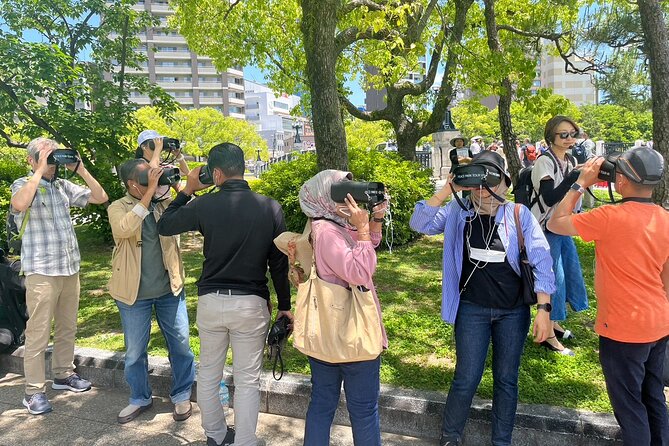
You meet at the Hiroshima Peace Park Rest House, at 1-1 Nakajimacho, Naka Ward, Hiroshima 730-0811. The activity ends at the same place, so you do not need to arrange a return transfer.
Transportation to the Rest House is not included. You should plan your own way there and arrive ready for the 10:30 am start. The route covers a short distance, with stops at the Peace Clock Tower, Aioi Bridge, and Motoyasu Bridge before returning to the Rest House.
The available information says most people can participate, but it does not provide detailed accessibility information. If you have specific mobility, vision, hearing, or headset concerns, ask the provider before booking. The tour includes a basement visit at the Rest House and walking between several park locations, so those details may matter to you.
Food and drinks are not included. For an 80-minute morning activity, that is easy to manage, but plan any breakfast or later meal separately.
The tour accepts mobile tickets, which is convenient for a morning visit. Confirmation is sent within 48 hours of booking, subject to availability. Free cancellation is allowed up to 24 hours before the start time. Cancel later than that, or make a change inside the 24-hour window, and you should not expect a refund.
Who will get the most from this Peace Park tour?
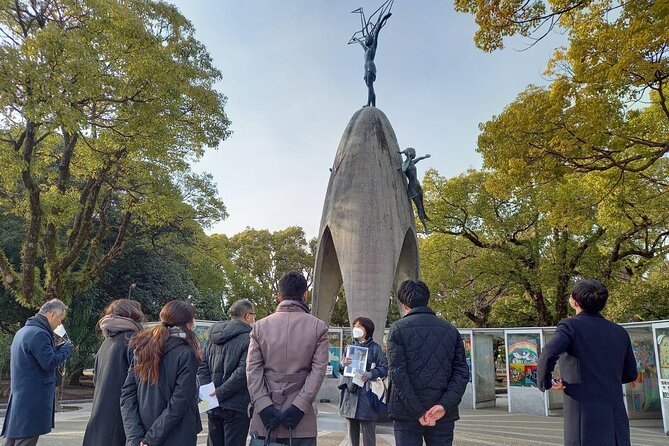
I would recommend it most strongly to you if this is your first visit to Hiroshima and you want a compact introduction before exploring on your own. The VR gives you a visual before-and-after comparison that can be hard to create from modern streets alone.
It also suits families and small groups who prefer a guided activity with a clear start and finish. The group size is small, and the route is not a long march. The subject matter is serious, so parents should decide if the historical material is suitable for younger children.
The tour is a good fit for visitors who want an English-speaking guide but do not want a long lecture. It is also useful if you have already seen the park and want a different way to connect the Atomic Bomb Dome, the bridges, and the Rest House.
I would hesitate if your main reason for booking is cutting-edge VR. The material is based on historical facts and testimony, but the visual production may not match commercial VR games or premium films. I would also hesitate if you have only one paid cultural activity in your budget and have not yet visited the Peace Memorial Museum.
Should you book PEACE PARK TOUR VR?
Book this experience if you want a short, focused walk through Hiroshima’s central memorial sites, guided by historical images, survivor testimony, and VR reconstructions. The best parts are the small group, the link between virtual scenes and real landmarks, and the thoughtful closing at the River of Hope wall.
Skip it if you expect a long tour, advanced VR graphics, or a complete replacement for the museum. At $33.03, the price is reasonable for a personal guide and a six-person maximum, but it is less convincing if you judge the experience mainly by the number or polish of the videos.
For many first-time visitors, the tour works well as a morning orientation. You finish back at the Rest House after 80 minutes, with the rest of the day free for the museum, the wider park, or further time at the Atomic Bomb Dome.
FAQ
Where does the tour begin?
The tour begins at the Hiroshima Peace Park Rest House in Nakajimacho, Naka Ward, Hiroshima.
What time does the tour start?
The scheduled start time is 10:30 am.
How long does the experience last?
The experience lasts approximately one hour and 20 minutes.
Where does the tour end?
The activity ends back at the Hiroshima Peace Park Rest House, the same place where it begins.
Is an English-speaking guide included?
Yes. An English-speaking guide is included in the experience.
Are the VR goggles included?
Yes. The rental fee for the VR goggles is included.
How many people can join the tour?
The tour has a maximum of six participants.
Can I cancel for a full refund?
Yes, if you cancel at least 24 hours before the experience start time. Cancellations or changes made less than 24 hours before the start time are not accepted for a refund.
Just added around Hiroshima
- Full Day Hiroshima and Miyajima Tour by Bullet Train from Kyoto★ 4.5 · 120 reviews
- Hiroshima Saijo Sake Tasting Tour with visit to 7 Breweries★ 5.0 · 104 reviews
- The Peace Memorial to Miyajima : Icons of Peace and Beauty★ 4.5 · 31 reviews
- Shore Excursion from Hiroshima Port : Private Tour in Hiroshima★ 5.0 · 17 reviews
- Okunoshima Rabbit Island Cycling Tour with Local Guide★ 4.5 · 17 reviews
- Hiroshima & Miyajima All-Inclusive Tour w/Licensed guide Pancho★ 5.0 · 54 reviews
- Private Full Day Hiroshima Tour★ 4.5 · 29 reviews
- Hiroshima Private Tour with a Local – Highlights & Hidden Gems★ 4.5 · 24 reviews
Peace Memorial Tours, compared.
Hiroshima Historical Walking Tour – Why A-Bomb was Dropped
Our verdict →
Hiroshima: Miyajima Peace Memorial Icons of Peace and Beauty
Our verdict →Browse the lists this tour appears in