
Reviewed · TRADITIONAL CRAFTS
Bamboo LED Lantern Making Experience in Kyoto Arashiyama
Arashiyama’s bamboo grove is beautiful, but a walk through it can feel brief and crowded. This three-hour experience gives you a reason to slow down. Noriko meets you at Saga-Arashiyama Station, explains the bamboo and local area as you walk, then takes you to a family workshop where you make a bamboo LED lantern with your own hands.
I like two things here. First, the small group keeps the lesson personal, with the published details listing a maximum of six people, although the general description says up to eight. Second, you do not leave with a factory-made trinket. You choose a piece of bamboo, select or adapt a pattern, and create a useful souvenir. The main drawback is that fresh green bamboo can develop mold if wrapped too tightly before it dries, so ask about the best way to pack and care for your lantern.
Key things to know before you book
- You meet at Saga-Arashiyama Station: The activity begins at 2:00 pm and ends back at the meeting point.
- The bamboo grove is part of the experience: Noriko leads a walk through part of the famous forest and explains the plant, local sights, and culture.
- You make the piece yourself: You choose bamboo and a design, then use workshop tools with careful instruction.
- The group is small: The stated maximum is six people in the additional details, while the overview says the class can reach eight.
- The workshop is family-friendly: Children have used the drill press with close supervision, and most people can take part.
- The souvenir needs care: Fresh bamboo may still contain moisture, so drying and unpacking it properly matters.
Why this Arashiyama workshop offers more than a bamboo-forest walk
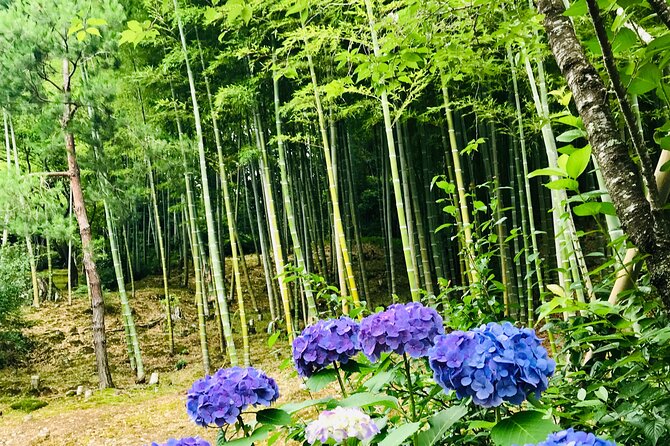
The famous bamboo forest is one of Kyoto’s most photographed sights. You can stroll beneath the tall stalks, take a few pictures, and move on. This activity adds a useful second chapter: you learn what bamboo is like as a material and see how it becomes something you can take home.
Noriko leads the walk from the station. Her explanations cover bamboo, the surrounding area, local history, shrines, and Japanese culture. The walk is not presented as a long hiking tour. It is a gentle route through part of the grove and nearby streets before you reach the workshop.
I like this format because it gives the bamboo forest a little context. Instead of treating the grove as a photo stop, you begin to understand why bamboo matters in Japanese craft. You also get a pleasant break from the standard Kyoto routine of temples, gardens, and packed sightseeing lanes.
The walk may vary in feel depending on the season and the crowds. Arashiyama is a popular part of Kyoto, and the forest itself can be busy. The workshop portion is where the experience becomes quieter and more personal.
More Craft Workshops in Kyoto
- Authentic knife making experience at a blacksmith in Kyoto
★ 4.8 · 350 reviews - Roketsu dyeing experience: M course Roketsu Dyeing Experience
★ 5.0 · 163 reviews - Kyoto Michelin Ramen Workshop or Painting Ramen Essentials
★ 4.9 · 100 reviews
Meeting Noriko at Saga-Arashiyama Station
Your meeting point is Saga-Arashiyama Station, at 11-1 Sagatenryuji Kurumamichicho in Kyoto’s Ukyo Ward. The start time is 2:00 pm. Noriko meets you there rather than asking you to find a private workshop on your own, which makes the first part simple.
The tour is listed as mobile-ticket friendly and near public transportation. That is useful in Arashiyama, where the station area is much easier to locate than a workshop hidden among residential streets. Plan to arrive early enough to find the station exit and get settled before the 2:00 pm start.
The activity returns to the meeting point at the end. This makes it easier to continue sightseeing in Arashiyama afterward or catch a train back toward central Kyoto. Lunch is not included, so eat before the afternoon begins or plan a meal after the class.
The published information describes the class as intimate. The additional details give a maximum of six people, while the general description says the group is capped at eight. Either way, this is a much smaller setup than a standard bus tour, and the limited size matters when you are using tools or asking questions.
Walking through the bamboo forest with a local guide
From the station, you walk toward the bamboo forest. Noriko explains the bamboo itself and points out features of Arashiyama and its nearby shrines. She speaks English well, according to the experience details, and past participants have particularly valued her clear explanations and friendly manner.
Do not expect a full-day guided tour of every sight in Arashiyama. The walk is one part of a three-hour activity, and the main purpose is to introduce you to bamboo before the craft session. Some routes pass through the grove and then leave the busiest section for a quieter neighborhood walk.
That change of setting is welcome. The bamboo forest is striking, but it is also the part of Arashiyama most likely to feel crowded. Walking into the neighborhood gives you a different view of the area and leads you toward the family workshop.
The pace sounds suited to a broad range of ages. One child who could not manage the forest walk was still able to join the workshop after Noriko helped with transportation, but that arrangement was specific to that situation and should not be assumed. The standard meeting point remains Saga-Arashiyama Station.
Inside the family workshop
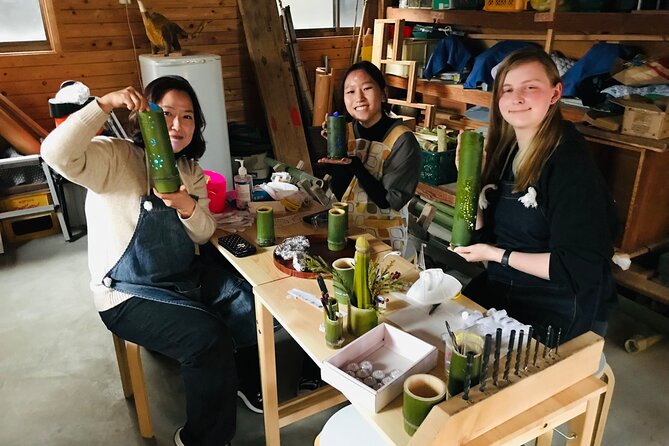
The workshop is held at Noriko’s house, with her husband helping during the craft session. It is described as clean, bright, and comfortable. You are not simply handed a piece of bamboo and left alone. Noriko explains the process, and her husband assists with cutting and tool use.
The family setting is a large part of the appeal. You have room to ask questions about bamboo, Japanese culture, and the craft itself. The atmosphere is more relaxed than a production class with a strict assembly line.
You first choose the type of item you want to make. The bamboo LED lantern is the central option, but the activity also lists choices such as a sake cup, sake bottle, teacup, or smartphone holder. The exact selection may depend on the workshop and available materials, so ask at the start if you have your heart set on one particular object.
For the lantern, you select a piece of bamboo and choose a prepared paper pattern. You can also modify a design or create something more personal. If you already have an idea, make a simple sketch before the class. One useful tip from the experience is that prepared patterns make the process easy, but a little planning lets you produce a more personal shape.
Same trip, a completely different kind of day:
- PERFECT KYOTO 1-Day Bus Tour
★ 5.0 · 13,518 reviews - Kyoto: Fushimi Inari, Kinkakuji, Bamboo Grove 1 Day Bus Tour
★ 4.8 · 4,316 reviews - Kyoto: Tea Ceremony in a Traditional Tea House in Kiyomizu
★ 4.9 · 3,519 reviews - Kyoto Geisha Walking Tour: Gion District & Hidden Gems
★ 4.7 · 3,273 reviews
Cutting, drilling, and designing your lantern
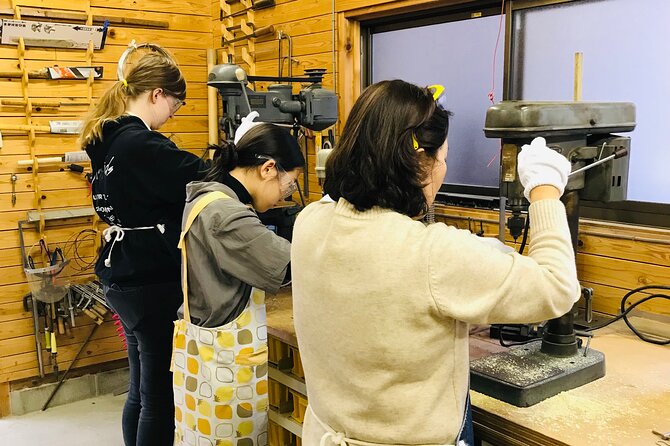
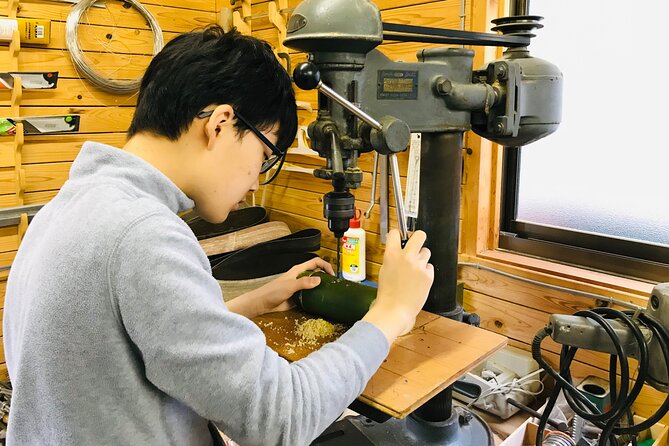
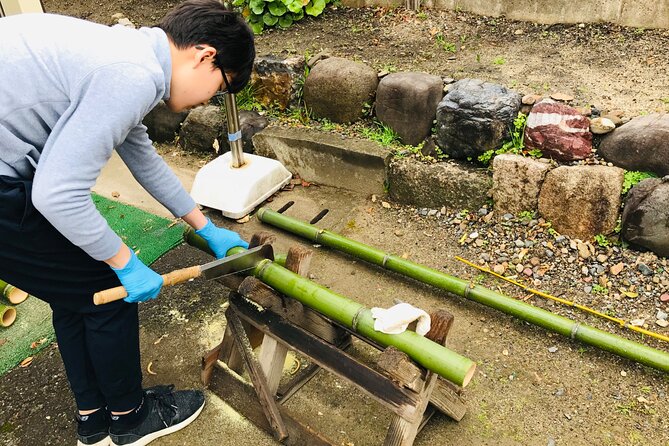
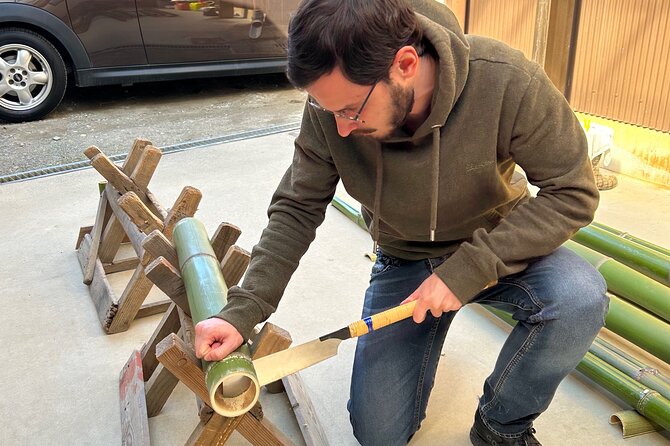
The hands-on work is straightforward but still feels like real craft. The bamboo is cut to size, the paper pattern is attached, and you drill holes through the bamboo to create the pattern. Materials and the use of tools and machines are included in the price.
The drill press is one of the memorable parts of the session. Noriko and her husband explain how to use it and provide practice before you work on your chosen piece. That matters for children and for anyone who has never used workshop machinery.
The instructions are designed to be accessible. An 11-year-old child was able to work the machines after a short lesson, and a seven-year-old took part with close adult supervision and help. That does not mean every child will be ready for every tool. Parents should stay involved, follow the instructors’ directions, and judge their child’s comfort level.
You can expect help throughout the process. The goal is not speed. It is to understand what you are doing and produce a finished object with a pattern you like. Tea and snacks have also been provided during a break, though these should be viewed as a kind gesture rather than a guaranteed meal or formal refreshment service.
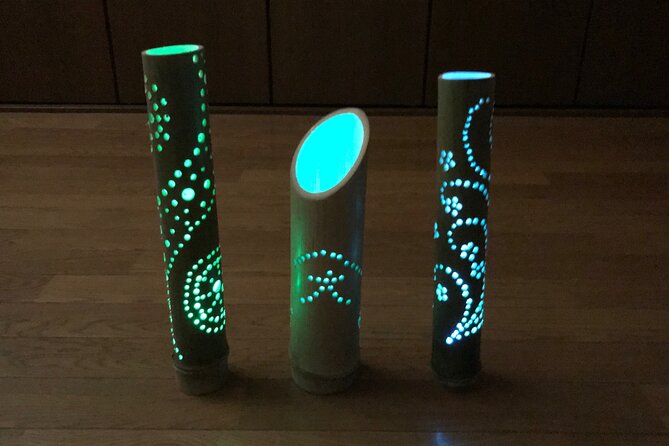
The final lantern is a practical souvenir. Add a small light at home and it becomes mood lighting rather than a keepsake that sits in a drawer. The workshop supplies the materials and tools, but check exactly what is included in the lantern kit and how the LED light is packed before leaving.
The fresh bamboo issue you should understand
The main caution concerns the material itself. Some lanterns are made from fresh green bamboo, which still holds moisture. One participant reported serious mold after the lamp was wrapped in bubble wrap and taken home.
The provider responded directly by explaining that the bamboo was fresh and that the wrapping method would be improved. The workshop also planned to introduce heated, dried bamboo, made from the same type of bamboo but more stable and longer lasting.
This is not a reason to dismiss the class, but it is a reason to ask a practical question before you leave: Is my piece fresh green bamboo or dried bamboo, and how should I store it during the trip? If your lantern is still moist, it may need air circulation rather than tight wrapping. Do not place it straight into a sealed suitcase for days without guidance.
The material issue also helps you understand what you are buying. This is not a mass-produced souvenir designed to survive any conditions without care. It is a handmade object made from a natural plant. That is part of its charm, but it also means you should handle it thoughtfully.
What the $79.26 price gets you
At $79.26 per person, this is not the cheapest way to see the Arashiyama bamboo grove. You can walk through the forest without booking a class. The price makes more sense if you value the guide, the small group, the workshop instruction, the use of tools, and the handmade item you carry home.
You are paying for about three hours, not just a short demonstration. The experience includes the station meeting, guided walk, explanations about bamboo and Arashiyama, workshop materials, machine use, instruction, and the finished craft.
The value is strongest for people who enjoy making things. If you only want photographs of the grove, this class may feel expensive. If you want a calm afternoon activity and a souvenir with a personal story, the price is easier to justify.
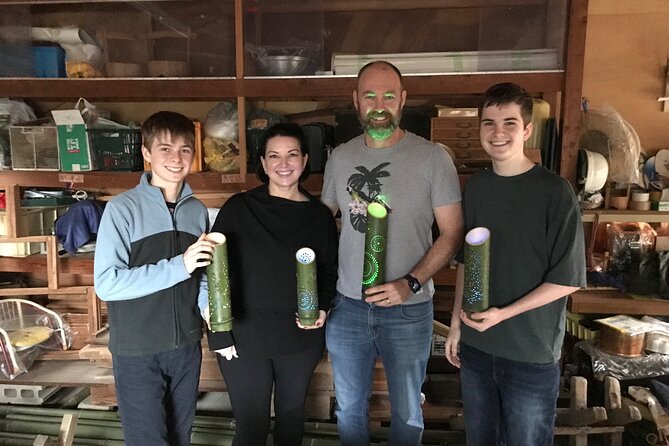
It also works well as a family activity. Several children have made lanterns with support from Noriko and her husband. Adults can choose a more detailed design, while younger participants can work with close supervision. Couples and solo participants can also take part, and the small group leaves room for conversation.
The price does not include lunch. Since the start is at 2:00 pm, that is easy to manage. Eat beforehand, or save your appetite for Arashiyama restaurants after the activity.
Who will enjoy this experience most
I would recommend this class to you if you want more from Arashiyama than a quick walk and a photograph. It suits people who like practical cultural activities, small groups, family-run workshops, and souvenirs with a story attached.
It is especially good for:
- Families with children who enjoy making things
- Couples looking for a shared afternoon activity
- Solo visitors who want conversation and local guidance
- Craft lovers who like choosing materials and patterns
- Visitors who have already seen the main Kyoto sights and want something hands-on
You should think twice if you dislike using tools, want a polished professional finish, or prefer a completely passive tour. The craft is accessible, but you still need to cut, attach, drill, and make design choices.
The activity is listed as suitable for most people, near public transportation, and open to service animals. The walking portion and workshop tools may still affect your personal comfort, so ask the provider if you have specific mobility or safety concerns.
Timing, group size, and booking advice
The experience lasts about three hours and starts at 2:00 pm. Since it ends back at Saga-Arashiyama Station, it can fit neatly into a day focused on Arashiyama. You could visit other sights before the class, then use the workshop as a slower afternoon activity.
It is often booked about 16 days ahead. That suggests you should not leave it until the last minute if your Kyoto dates are fixed, especially if you need a particular afternoon.
The cancellation policy is friendly but strict near the start time. You can receive a full refund if you cancel at least 24 hours before the local start time. Changes or cancellations inside that window are not accepted or refunded. The experience also requires a minimum number of participants, and if the provider cancels for that reason, you receive a different option or a full refund.
Should you book the bamboo lantern class?
Book it if you want a personal Kyoto memory, not just another sightseeing stop. The combination of a bamboo-forest walk, Noriko’s local explanations, a small family workshop, and a handmade lantern gives the afternoon a clear sense of place.
I especially like that you choose the bamboo and design yourself. The craft is simple enough for many families but still satisfying for adults. Just ask about green versus dried bamboo and follow the packing advice carefully.
Skip it if your priority is a low-cost visit to the forest or if you have no interest in making a craft. For everyone else, this is a thoughtful way to turn Arashiyama’s famous bamboo into something you understand and use.
FAQ
Where does the bamboo lantern activity begin?
It begins at Saga-Arashiyama Station, at 11-1 Sagatenryuji Kurumamichicho in Kyoto’s Ukyo Ward.
What time does the activity start?
The activity starts at 2:00 pm.
How long does the experience last?
It lasts approximately three hours.
Does the activity include a walk through the bamboo forest?
Yes. Noriko leads a walk through part of the bamboo forest and explains bamboo, the area, nearby shrines, and local culture.
Where does the craft session take place?
The craft session takes place at the guide’s family workshop and home.
What can I make during the workshop?
The main activity is a bamboo LED lantern. Other listed choices include a sake cup, sake bottle, teacup, and smartphone holder.
Are tools and materials included?
Yes. The materials and use of the workshop tools and machines are included.
Is lunch included?
No. Lunch is not included.
Can I cancel for a full refund?
Yes, if you cancel at least 24 hours before the experience start time. Cancellations or changes made less than 24 hours before the start are not accepted or refunded.
Just added around Kyoto
- Sekka Cotton Furoshiki Class★ 5.0 · 19 reviews
- Kyoto Sword Experience – includes Museum Ticket/Ninja Experience★ 4.5 · 149 reviews
- Scenic Green Tea Fields of Hidden Kyoto & Local Tea Exp (Private)★ 5.0 · 32 reviews
- Secret Eastern Kyoto Biking Adventure★ 5.0 · 44 reviews
- Private Sake Tasting in Central Kyoto with Sake Sommelier★ 5.0 · 32 reviews
- Samurai School in Kyoto: Samurai for a Day★ 5.0 · 202 reviews
- SHIRAKAWA Japanese Culture Experiences with private English staff★ 5.0 · 16 reviews
- A Privately Guided Photoshoot in Beautiful Kyoto by a Pro★ 5.0 · 18 reviews
Traditional Crafts, compared.
Tokyo Sumo Experience: Chanko & Mochi with a Former Pro
Our verdict →
Kintsugi Experience: Art of Golden Joinery in Tokyo
Our verdict →

Matcha Making Experience with Mochi Sweets in Asakusa
Our verdict →
Authentic knife making experience at a blacksmith in Kyoto
Our verdict →
Roketsu dyeing experience: M course Roketsu Dyeing Experience
Our verdict →Browse the lists this tour appears in