
Reviewed · GEISHA & MAIKO EXPERIENCES
Kyoto: The Geisha Districts of Kyoto Walking Tour
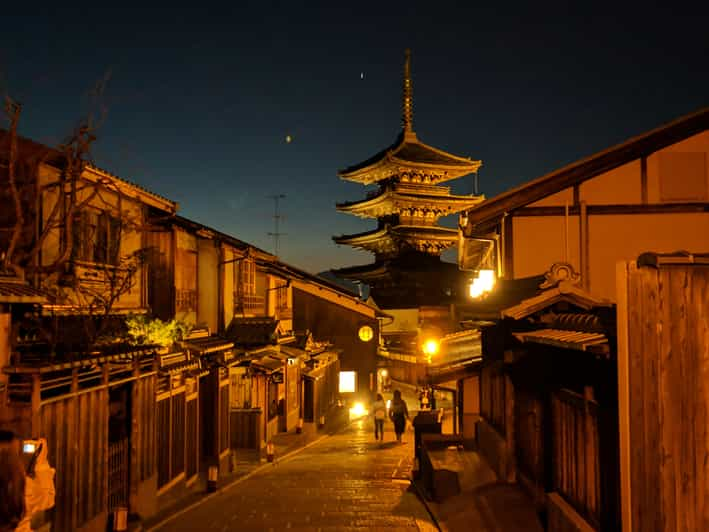
Kyoto’s geisha districts are best understood on foot, where a quiet doorway, painted lantern, or discreet tea house tells you more than a quick photograph ever could. This two-hour walk takes you through four of Kyoto’s five hanamachi, with an indoor introduction before you head into the narrow streets.
I like the welcome lounge, where you can settle in with a drink, see a slideshow, and try games linked to geisha entertainment. I also like the small-group format and the broad cultural focus: guides such as Ben and Kevin explain Japanese customs as well as geisha life. The main drawback is simple: two hours on foot can be tiring, especially in rain, and the tour is not suited to people with mobility impairments.
Key points before you book
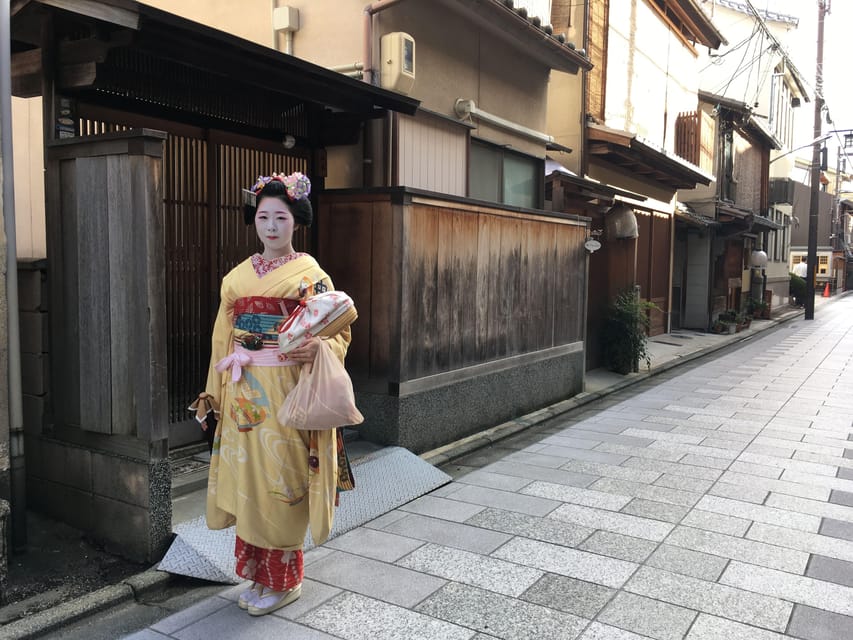
- Four hanamachi in one walk: You visit four of Kyoto’s five traditional geisha districts rather than seeing only Gion’s best-known lanes.
- A useful indoor introduction: The lounge session includes a welcome drink, slideshow, games, and background on tea house culture.
- Strong guide focus: Ben and Kevin have been praised for explaining both geisha traditions and wider Japanese culture.
- Historic sights along the route: Kenninji Temple, Yasui Kompira-Gu Shrine, Ninenzaka, and Yasaka Shrine add temples and old streets to the cultural story.
- Small groups or private outings: This can make questions easier and reduce the rushed feeling of a large walking tour.
- Plan your shoes and weather gear: The walk lasts about an hour outdoors, with narrow streets and several historic areas to cover.
Why the lounge makes this Kyoto walk different

Many walking tours begin with a guide pointing out buildings. This one begins indoors at a traveler lounge in Miyagawacho, one of Kyoto’s traditional entertainment districts. That is a smart start because the subject needs some groundwork.
You first get an introduction to the world of geisha, including the customs connected with tea houses and entertainment districts. The slideshow gives you a visual frame for what you will see outside. Games associated with geisha entertainment make the session more active, too. You are not simply listening to a long talk before the walk begins.
A welcome drink is included at the lounge. The activity also lists food and drinks as not included, so I would treat the welcome drink as the specific refreshment provided and not expect a meal or extra beverages during the tour.
This opening is especially useful if you are curious about the difference between a geisha district and an ordinary historic neighborhood. The point is not only to spot a woman in formal dress. You learn why certain streets, houses, and customs exist, and how the public image of geisha connects with the working world behind closed doors.
The lounge also gives you a chance to ask questions before you are outside. That matters in Kyoto, where the quiet appearance of these districts can make them seem simple at first glance. The stories behind them are not simple.
More Walking Tours in Kyoto
- Kyoto Geisha Walking Tour: Gion District & Hidden Gems
★ 4.7 · 3,273 reviews - Kyoto: Gion Magical Night Walking Tour with Geisha Trivia
★ 4.9 · 2,393 reviews - Kyoto: Gion Geisha District Walking Tour – Stories of Geisha
★ 4.7 · 2,187 reviews
Miyagawacho, where the walk begins
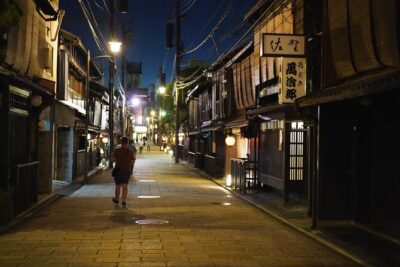
The walking portion starts in Miyagawacho, a geisha district with old lanes and tea houses. You can expect the guide to point out the character of the area and explain how it fits into Kyoto’s wider entertainment culture.
The promise of seeing hundreds of real tea houses is a major reason to choose this tour. You will not be entering all of them, and the experience is not presented as a series of private performances. Instead, you pass the buildings and learn how to read the district respectfully.
That distinction is important. A geisha district is a working neighborhood, not a stage set made for photographs. You may catch a glimpse of women in full costume, but there is no guarantee of a particular sighting. The real value is learning what you are looking at without treating people as attractions.
The Miyagawacho section lasts about 20 minutes. That is enough time for an introduction without using up the entire tour before you reach the other districts.
Kenninji Temple and the quieter side of Gion

The route continues to Kenninji Temple, with about 15 minutes allocated for the visit. This stop gives the tour a religious and artistic counterpoint to the entertainment districts.
Kenninji is useful in the context of this walk because Kyoto’s temples and pleasure districts have long existed near one another. The tour does not treat geisha culture as an isolated curiosity. Instead, it places it within the broader setting of old Kyoto.
You should keep your expectations realistic. This is a short stop within a two-hour walk, not a full temple tour. If you want extensive time inside every temple or detailed coverage of Buddhist art, you will need a separate visit.
Still, the pause helps break up the street walking. It also gives you a better sense of the mix of sacred and social spaces in central Kyoto.
Yasui Kompira-Gu Shrine and local customs
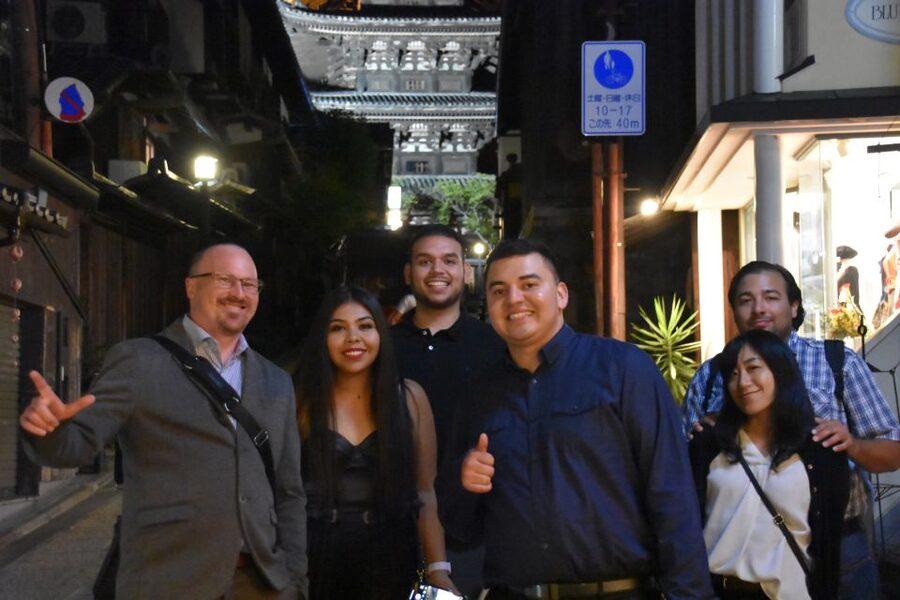
The next scheduled stop is Yasui Kompira-Gu Shrine, also for around 15 minutes. The shrine is another chance to see how local belief and everyday customs fit into the old neighborhoods.
The guide can connect the shrine visit with the customs and habits that shape life in Kyoto. This wider cultural angle is one of the tour’s strengths. The guide is not limited to explaining clothing, performances, or tea houses. You also hear about Japanese history and culture more broadly.
That matters because the term geisha can tempt visitors into a narrow picture. A good tour should show the setting around the tradition, not just repeat familiar images. The information from the guides is aimed at giving you that wider view.
The shrine visit is brief, so it works best as one part of a sequence rather than the main attraction. If your priority is shrine architecture alone, a dedicated shrine tour would offer more time.
More Geisha Experiences in Kyoto:
- Best of Kyoto: Gion, Geisha, Pagodas & Cobblestones
★ 4.9 · 2,058 reviews - Night Walk in Gion: Kyoto’s Geisha District
★ 4.5 · 2,003 reviews - Kyoto Gion Geisha District Walking Tour – The Stories of Geisha
★ 5.0 · 1,441 reviews - Kyoto Gion: 2-Hour Geisha Culture & History Walking Tour
★ 5.0 · 1,186 reviews
Ninenzaka, old streets and careful sightseeing
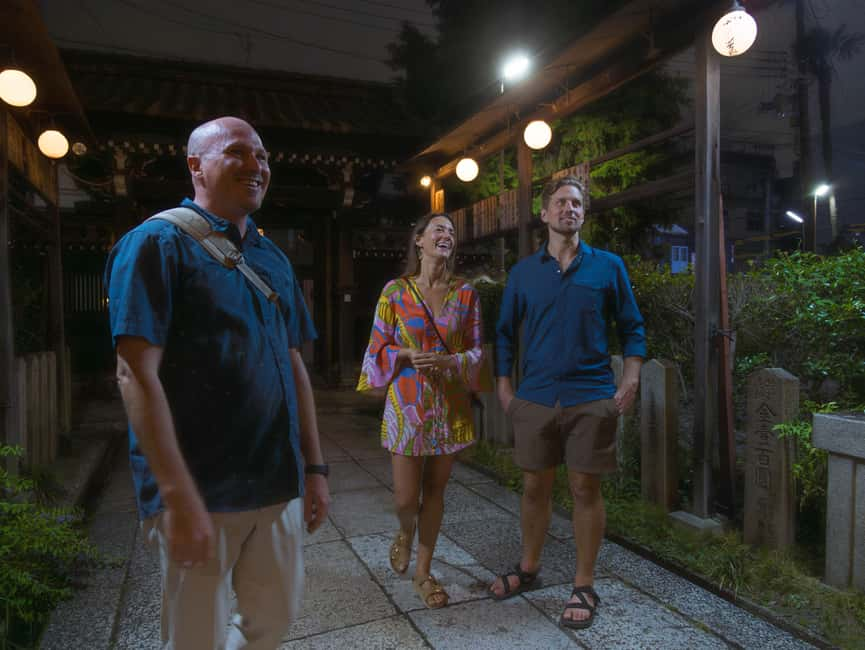
The walk then reaches Ninenzaka, where roughly 20 minutes are set aside for a guided visit. This is one of Kyoto’s well-known old-street areas, with traditional-looking lanes and a strong connection to the Higashiyama district.
Here, the guide helps you understand how the streets fit into the historic part of Kyoto. You will want comfortable shoes because the tour involves steady walking through old lanes, and the surface may not feel as easy as a modern pavement.
Ninenzaka can be one of the more crowded sections of a Kyoto visit. That is worth keeping in mind. The tour’s small-group or private options may make it easier to stay with the guide, but they cannot make the area empty.
This is also a place where respectful behavior matters. Narrow streets and working businesses leave little room for careless stopping. Listen to the guide’s advice, keep your group together, and avoid treating private entrances as photo backdrops.
Yasaka Shrine, the final major stop
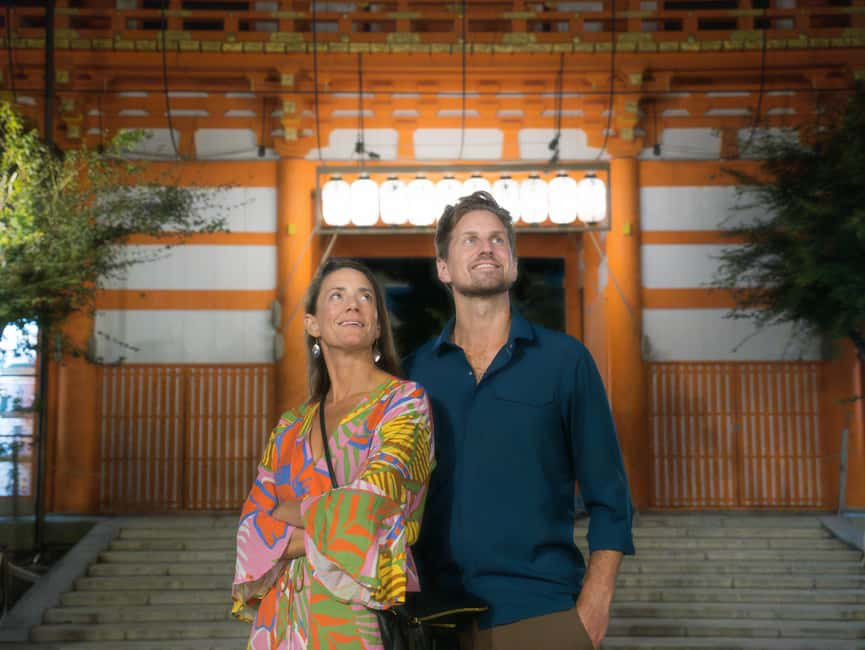
The planned route ends at Yasaka Shrine, with about 20 minutes of guided coverage. This is a natural finish for a walk through Gion and Higashiyama because it brings together the area’s religious, historic, and social character.
The guide can help you connect the different pieces of the tour: Miyagawacho’s tea houses, the temples and shrine, the old lanes, and the entertainment districts. By this point, you have seen more than one neighborhood, so the final explanation has some context behind it.
The tour ends after the walk, and the guide can suggest places for dinner. That is a useful practical touch in Gion, where the choice of restaurant can feel difficult after a long day of sightseeing. The activity does not include dinner, so plan to pay separately.
The route is described as close to one hour of walking after the lounge session, with the full activity lasting two hours. The listed stop times add up to about 90 minutes, so the exact pace may vary. Ask the guide at the start how the timing will work if you want extra time at a particular shrine or temple.
What the guide adds to the experience
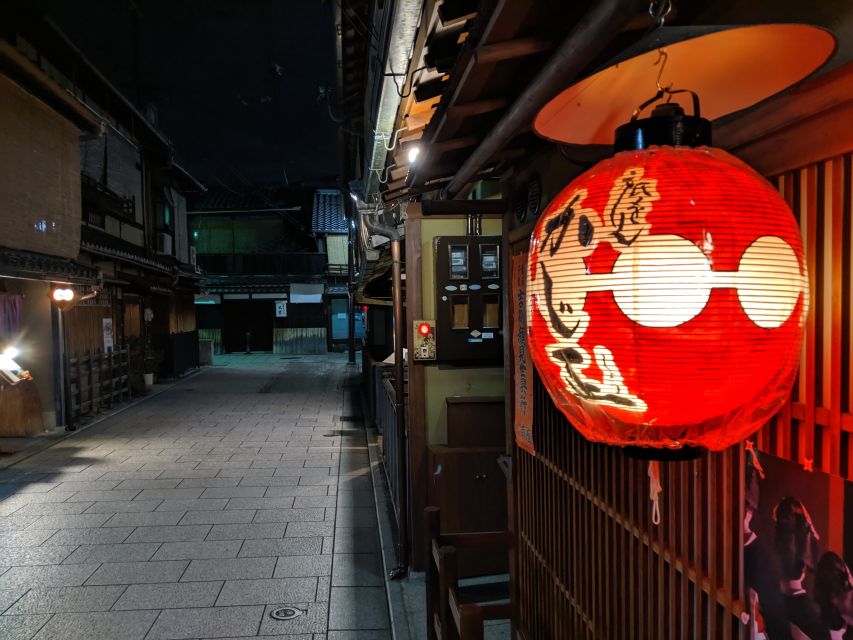
The guide is central here. Without good explanation, a walk through Gion can become a hunt for costume sightings and attractive doorways. With good explanation, the same streets become a lesson in etiquette, work, tradition, and local identity.
English and French tours are available. Ben and Kevin are among the guides associated with the experience, and both have been praised for covering more than geisha culture. Their approach includes Japanese history and everyday customs, which helps if you want context rather than a short list of facts.
The tour is available as a private or small-group experience. I would choose the smaller option if you have questions or want a calmer pace. A private walk can also be useful for families or couples with a particular interest in geisha culture, though the provided price of $38 per person may vary by booking option.
You should not expect a geisha performance. The experience is a cultural walking tour with an indoor presentation and games. That makes it a better fit for someone who wants explanation and observation rather than a formal show.
Is $38 a fair price?
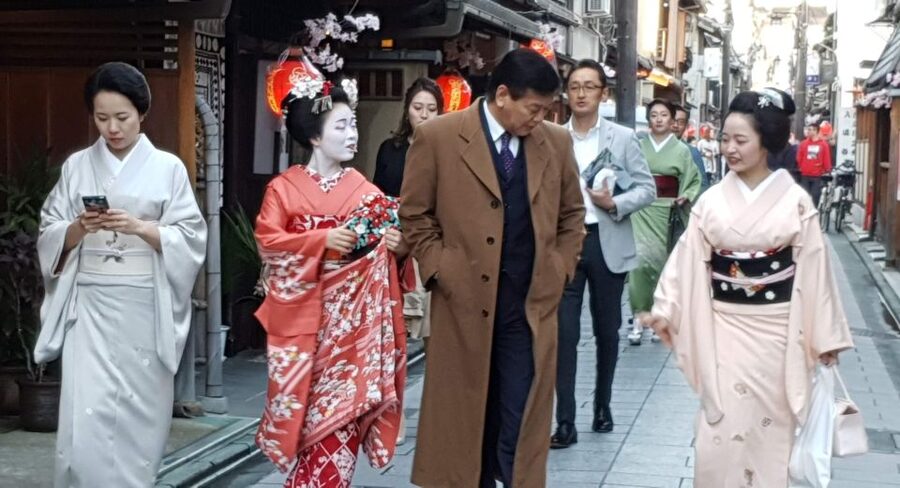
At $38 per person, the tour is reasonably priced for a two-hour guided experience in central Kyoto, especially because it combines an indoor session with a route through several districts and historic sights.
You are paying for more than a walk from point A to point B. The price covers a bilingual guide, the lounge introduction, the slideshow, the games, and the interpretation of four hanamachi. It also saves you from trying to work out the meaning of the streets on your own.
The value depends on your interests. If you only want photographs of old lanes, you can explore parts of Gion without a guide. If you want to understand why the districts exist and how to behave around them, the guided format earns its cost.
Food and additional drinks are not included, apart from the welcome drink described at the lounge. There is no stated temple admission charge for the route, but the activity information does not promise entry into every site. I would ask about any admission details when booking if that matters to your budget.
Weather, walking and practical comfort
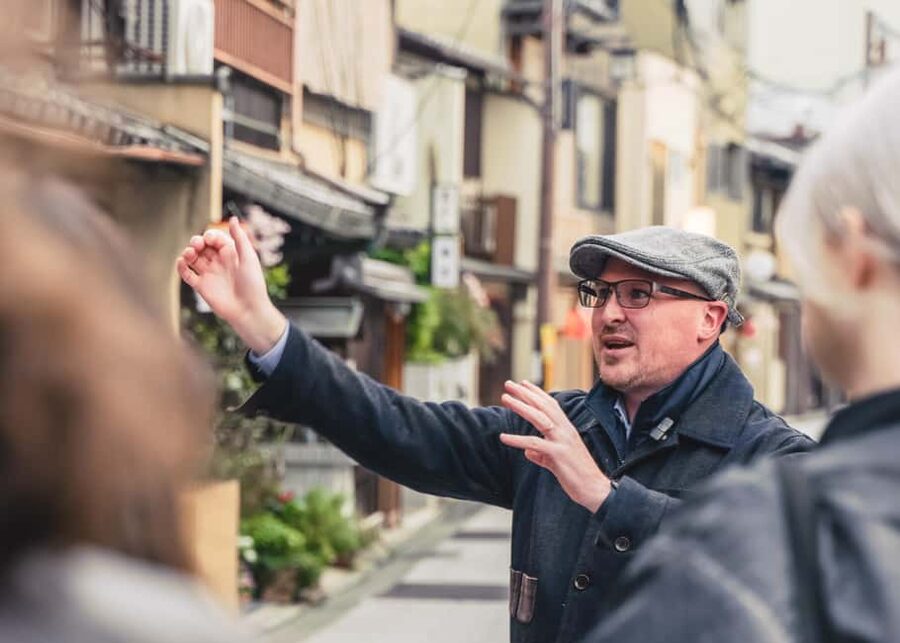
This is an outdoor walking tour, so weather can shape the experience. A rainy day may leave you wet after two hours, and the narrow streets can be less pleasant when you are focused on umbrellas and slippery footing.
Wear comfortable shoes and bring weather protection. The activity is not suitable for people with mobility impairments, and the route includes several historic districts rather than a single accessible venue.
The tour has two starting location options, including Kyoto Fun at 河松マンション. The exact meeting point may depend on the option you book, so check it carefully before setting out. A wrong starting point can cost you valuable time in Kyoto’s busy central districts.
Cancellation is flexible up to 24 hours before the start for a full refund, and you can reserve now and pay later. Those terms help if your Kyoto plans are still moving, though you should still confirm the start time and meeting address before the day.
Who will enjoy this most?
I would recommend this tour to you if geisha culture is high on your Kyoto list and you want a respectful introduction before exploring on your own. It also suits first-time visitors who want Gion, Higashiyama, temples, shrines, and traditional streets in one compact outing.
The tour works well for people who enjoy asking questions. The lounge and small-group setting give you a better chance to discuss customs than a large street-only group would.
It may not suit you if you want a formal geisha performance, a long temple visit, or a relaxed tour with very little walking. It also may disappoint if your main goal is a guaranteed meeting with a geisha. The activity offers a chance to catch a glimpse, not a promise of one.
Families and older visitors should think about the walking pace and weather. The private option may help with flexibility, but the basic route still covers several outdoor areas.
My verdict on the Kyoto geisha districts walk
Book this tour if you want the human and cultural context behind Gion, not just its photogenic streets. The lounge introduction, traditional games, bilingual guides, and route through four hanamachi give the experience more substance than a quick stroll through the main lanes.
I would skip it if you prefer to explore silently at your own pace or want a performance-based evening. For most visitors with a real interest in geisha culture, though, $38 is a fair price for a clear introduction, a useful walking route, and guidance on seeing these working districts with care.
FAQ
How long does the tour last?
The tour lasts two hours.
How much does the tour cost?
The listed price is $38 per person.
Which areas does the tour visit?
The tour covers Gion and Higashiyama, including Miyagawa-chō, Kenninji Temple, Yasui Kompira-Gu Shrine, Ninenzaka, and Yasaka Shrine.
How many geisha districts are included?
The walk visits four of Kyoto’s five hanamachi, or traditional geisha districts.
Is a welcome drink included?
The experience includes a welcome drink at the traveler lounge. Food and additional drinks are listed as not included.
Are the games connected with geisha culture?
Yes. The lounge session includes games associated with those done by real geisha.
Which languages are available?
The live guided tour is available in English and French.
Is the tour private?
Private and small-group options are available.
Where does the tour meet?
There are two starting location options, and the meeting point may vary according to the option booked. One listed location is Kyoto Fun at 河松マンション.
Can I cancel for a refund?
You can cancel up to 24 hours in advance for a full refund. The activity also allows you to reserve now and pay later.
Just added around Kyoto
- Sekka Cotton Furoshiki Class★ 5.0 · 19 reviews
- Kyoto Sword Experience – includes Museum Ticket/Ninja Experience★ 4.5 · 149 reviews
- Scenic Green Tea Fields of Hidden Kyoto & Local Tea Exp (Private)★ 5.0 · 32 reviews
- Secret Eastern Kyoto Biking Adventure★ 5.0 · 44 reviews
- Private Sake Tasting in Central Kyoto with Sake Sommelier★ 5.0 · 32 reviews
- Samurai School in Kyoto: Samurai for a Day★ 5.0 · 202 reviews
- SHIRAKAWA Japanese Culture Experiences with private English staff★ 5.0 · 16 reviews
- A Privately Guided Photoshoot in Beautiful Kyoto by a Pro★ 5.0 · 18 reviews
Geisha & Maiko Experiences, compared.

Kyoto Geisha Walking Tour: Gion District & Hidden Gems
Our verdict →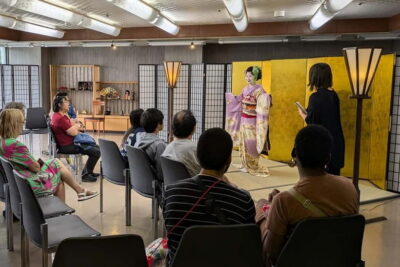
Dinner with Maiko in a Traditional Kyoto Style Restaurant Tour
Our verdict →
Browse the lists this tour appears in