
Reviewed · GEISHA & MAIKO EXPERIENCES
Kyoto: Tea Ceremony with Maiko Premium
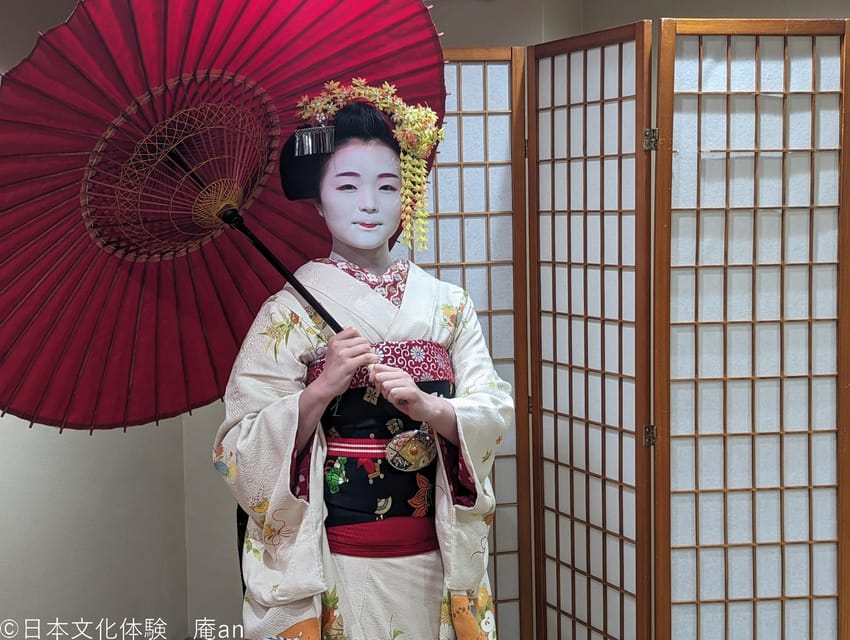
A Maiko tea ceremony gives you something most Kyoto sightseeing does not: a direct look at a living performance tradition. You will learn to whisk matcha, ask about a Maiko’s training and daily life, watch two graceful dances, and take a photo beside her. I especially like the Q&A session and the simple game, which turn a formal display into a friendly cultural exchange.
I also like the 90-minute format. It gives you enough time for tea, sweets, conversation, photographs, and dancing without taking half a day. The main drawback is the setting. This is held in a modern building with tables, stools, and branded signs, not in a traditional tatami room or ochaya. That matters if atmosphere is your top priority.
Key points to know before booking
- Meet a Maiko or Geiko up close: Depending on the day, a Geiko may appear instead of a Maiko.
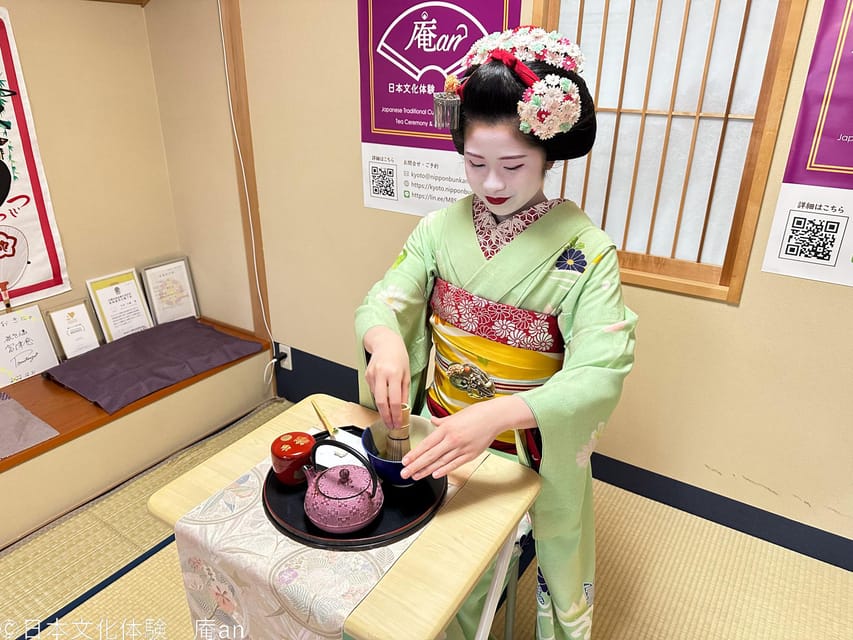
- Make your own matcha: The tea lesson includes matcha and two dried Japanese sweets.
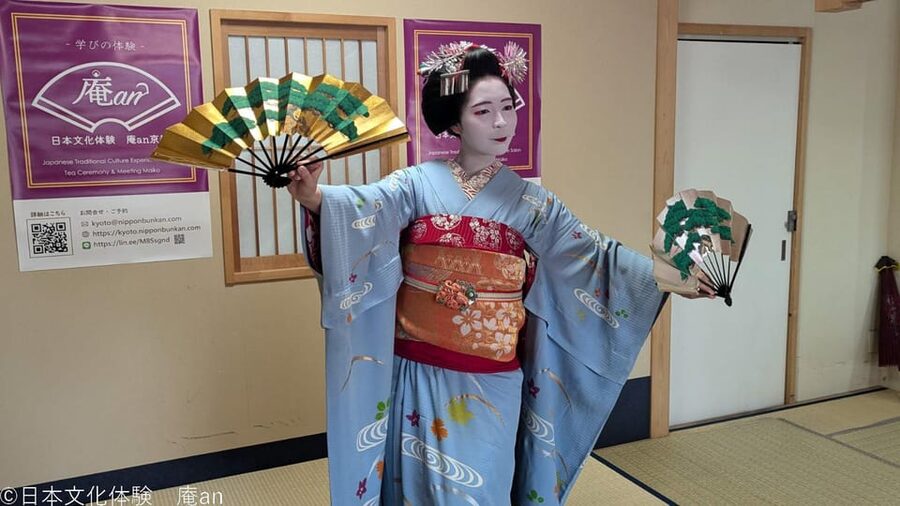
- Watch two traditional dances: The dances reflect seasonal beauty, love stories, or everyday life.
- Ask direct questions: The Q&A can cover training, customs, clothing, and daily routines.
- Premium includes the fun extras: Photos, a Senjafuda charm, and an interactive game are part of the program.
- Modern venue, easy access: The building is one minute from Exit 1 at Gojo Station, but you must use stairs.
Meeting a Maiko near Gojo Station
The experience begins close to Gojo Station on the Subway Karasuma Line. From Exit 1, the venue is about a one-minute walk, and the entrance faces Gojo-dori. That is useful after a long day of temples and shops, since you do not need to search through a maze of narrow lanes.
The venue is on an upper floor of a building with no elevator. You will need to climb stairs, so plan accordingly if anyone in your party has mobility concerns. Arriving about 15 minutes early is sensible. The program cannot wait for late arrivals, regardless of the reason.
Do not arrive expecting the quiet architecture of a Kyoto tea house. The room uses tables and stools, and the performance area can have company advertising and QR codes behind the Maiko. This plain backdrop has been the clearest weakness for photographs. You can still get close photos, but the setting does not provide the visual finish of a traditional room.
That trade-off keeps the experience accessible and relatively affordable. At about $50 per person, you are paying for direct contact, a performance, instruction, and a structured cultural program rather than an expensive private tea gathering.
More Tea Ceremony Experiences in Kyoto
- Kyoto: Tea Ceremony in a Traditional Tea House in Kiyomizu
★ 4.9 · 3,519 reviews - Kyoto: Tea Ceremony Ju-An at Jotokuji Temple
★ 4.9 · 3,207 reviews - Kyoto: 45-Minute Tea Ceremony Lesson Experience
★ 4.3 · 2,378 reviews
A clear introduction to Maiko culture
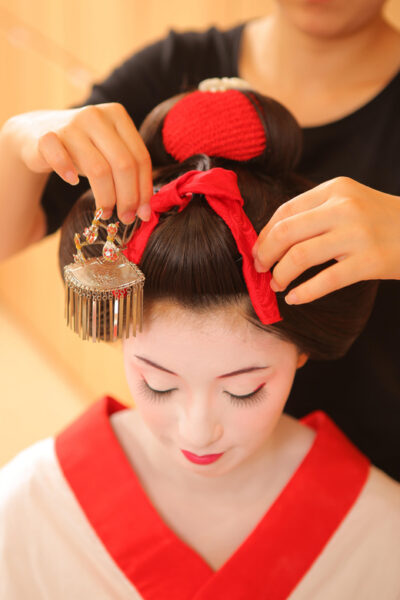
A Maiko is an apprentice performer in Kyoto’s traditional entertainment world. Her kimono, hairstyle, makeup, dance, music, and manners are all part of a demanding way of life. The program explains this world through conversation rather than asking you to observe from a distance.
This is a useful distinction. You are not simply watching someone in formal dress pose for pictures. You can ask about her training, routines, traditions, and path toward becoming a Geiko. One example discussed during the program is the lengthy training period, which can take about five years.
The exact person appearing may vary. The advertised experience centers on a Maiko, but a Geiko may be invited instead. That is not a downgrade. A Geiko is a fully trained performer, while a Maiko is still in apprenticeship. The tone and content can change slightly depending on who appears, but both offer a close look at Kyoto’s traditional entertainment culture.
English translation is provided as much as possible when requested. The instructor is Japanese, and the primary language is Japanese, so you should contact the provider ahead of time if English assistance is important to you. The quality of translation may shape how much detail you can draw from the Q&A.
Making matcha and tasting two sweets
The tea portion is hands-on. First, the Maiko demonstrates how to prepare matcha and explains what to do. Then you make your own bowl of tea.
This is not presented as a long, highly formal tea ceremony with every movement treated as a ritual. It is a practical introduction designed for an international audience. You get to handle the whisk, prepare the tea, and taste the result. If you have never made matcha before, this is more memorable than simply watching someone else do it.
Two dried Japanese sweets are included. Their sweetness helps balance matcha’s bitter, grassy flavor. The food is modest rather than a full meal, so do not book this as a substitute for lunch or dinner.
The tea itself is a basic preparation, not an advanced lesson in every school of tea ceremony. That keeps the pace moving and makes it suitable for families and first-time visitors. If you already study tea ceremony, you may find the instruction introductory. For most people, the value is in making the tea while sitting close to a Maiko and then having the chance to ask questions.
The program may take place while other people are having lunch or dinner. That means the room can feel more like a cultural dining venue than a private ceremony room. Keep your expectations clear, and the casual setting makes more sense.
The Q&A is the heart of the experience
The question period is where this activity becomes more than a performance. You can ask the Maiko directly about her life and work, and the host helps guide the exchange.
Good questions might cover her training, the meaning of her clothing, her hairstyle, the transition from Maiko to Geiko, and what a normal day involves. The answers give context to details you might otherwise photograph without understanding.
The Maiko may hear similar questions often, but the format still feels personal because you are speaking to the person in front of you rather than reading a museum panel. Several sessions have included a Maiko who answered patiently and warmly, and some hosts have handled both Japanese and English for mixed-language groups.
This part works best when you come prepared with a few questions. In a group, you cannot assume every subject will be covered automatically. Families can also take part, although younger children may enjoy the game more than the history and customs.
The room can hold a fair number of people, so do not mistake this for a private meeting. It is a group activity. Still, the program allows time for questions, and the schedule does not feel like a quick photograph followed by an immediate exit.
More Geisha Experiences in Kyoto:
- Kyoto Geisha Walking Tour: Gion District & Hidden Gems
★ 4.7 · 3,273 reviews - Kyoto: Gion Magical Night Walking Tour with Geisha Trivia
★ 4.9 · 2,393 reviews - Kyoto: Gion Geisha District Walking Tour – Stories of Geisha
★ 4.7 · 2,187 reviews - Best of Kyoto: Gion, Geisha, Pagodas & Cobblestones
★ 4.9 · 2,058 reviews
Two dances that show the skill behind the costume
The Maiko performs two traditional dances. Their themes may express the seasons, a love story, or ordinary life. The appeal is not just the kimono and makeup. Watch the controlled pace, hand positions, eye movement, turns, and careful use of the sleeves.
The dances provide the most formal part of the program. Tea preparation is participatory and the game is playful, but the performance shows why Maiko training requires discipline. Small gestures carry meaning, and the slow rhythm gives you time to notice the details.
You can take photos and videos during the presentation, according to the practical details provided for the experience. Be considerate of the room and other people’s view. The backdrop may include large advertisements, which can be distracting in photographs. If your pictures matter a great deal, pay attention to your seat and angle rather than assuming every shot will look like a polished promotional image.
Optional seating upgrades are available. First-row SS seating costs an additional 3,300 yen, second-row S2 seating costs 2,200 yen, and third-row S3 seating costs 1,100 yen. The standard price is the better deal for most people, but a front seat may help if you want a closer view of the dance or clearer photographs.
The game keeps the mood relaxed
After the formal dance, the Maiko leads a simple traditional game. Volunteers can participate, while everyone else can clap and watch.
This is a smart part of the program. A Maiko’s appearance, makeup, and costume can make the first moments feel formal. The game breaks that distance without treating the tradition carelessly. It gives children something active to do and lets adults enjoy the humor of trying to compete with a trained professional.
You do not need to volunteer. Watching can be just as entertaining, especially if your group is shy or if you are concerned about language. The activity is designed to make the room feel like a shared occasion rather than a lecture.
Families with children around preschool and school age can find this section especially useful. Young children may not follow every part of the Q&A, but the tea making, photo opportunity, dance, and game create several different ways to stay engaged.
Photos and the Senjafuda keepsake
The photo opportunity lets you stand beside the Maiko for a commemorative picture. It is one of the strongest reasons to choose the Premium option, since the combination of close interaction and a formal costume creates a lasting memory of Kyoto.
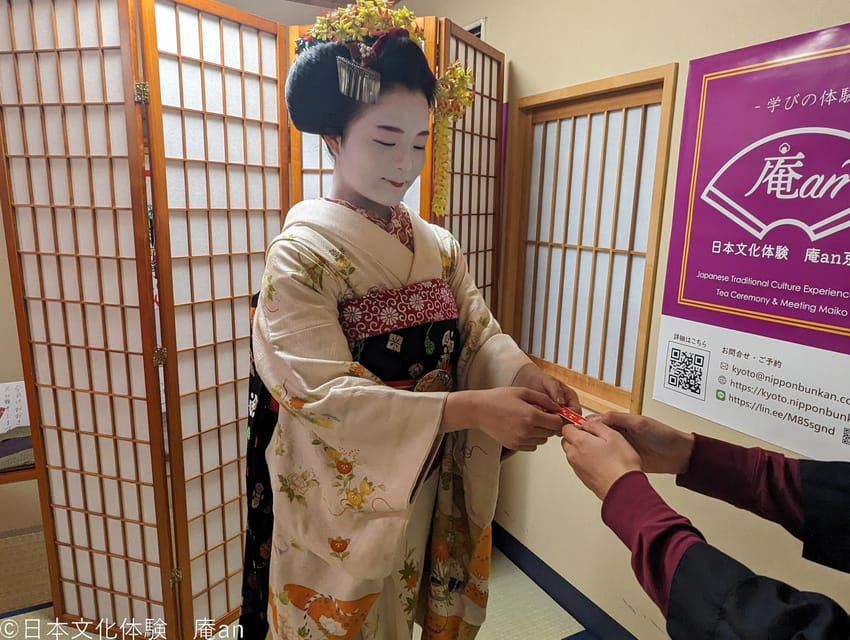
You also receive a Senjafuda, a small lucky charm associated with the Maiko. It is a more meaningful keepsake than a generic souvenir because it connects directly to the person and performance you encountered.
The photo area is not especially atmospheric. Company signs and QR codes may appear behind you, and the wall can look more like an event backdrop than a traditional Japanese interior. I would treat the photograph as a record of the meeting rather than expect a postcard-perfect portrait.
The close access is still valuable. Kyoto has many places where you can see the exterior of the geisha districts, but arranging a respectful conversation and photo with a Maiko is much harder on your own. This program provides that access in a clear, organized way.
Is $50 good value?
At $50, the price is reasonable for a 90-minute program that includes matcha, two sweets, a Maiko or Geiko appearance, two dances, questions, a game, a photo opportunity, and the Senjafuda charm.
The value depends on what you want from a tea experience. If your ideal is a quiet, highly formal ceremony in an old wooden house, this is not the right match. The modern room and group format will disappoint you if atmosphere matters more than personal contact.
If you want several Kyoto traditions in one compact activity, the price works well. You receive instruction, entertainment, conversation, and a keepsake without committing to a full evening. The Premium format is especially worthwhile because the dance and game add the elements that make the program feel complete.
The basic tea preparation alone would not justify the cost for everyone. The real value comes from the Maiko interaction and the performance. I would choose Premium for a first visit to Kyoto, particularly if you want an experience that works for both adults and children.
Optional seat upgrades can push the total higher. They are not required to take part. Standard seating should be enough if your priority is the overall experience rather than the best possible view.
Timing, language, and practical details
The listed duration is 90 minutes. The planned schedule has the main program ending around 75 minutes, followed by a short period for chatting before room departure at 90 minutes. In practice, some sessions may feel closer to 70 minutes, so do not build a tightly timed connection immediately afterward.
The sequence is generally:
- Greeting from the Maiko
- Matcha preparation with two dried Japanese sweets
- Questions and answers
- Photo with the Maiko
- Senjafuda presentation
- Two traditional dances
- Interactive game
- Departure and informal chatting
The experience operates between 10:00 and 17:00, and booking requests received after 17:00 are processed the next day. The stated instructor language is Japanese, with English translation provided as much as possible if requested.
Cancellation is free up to eight days before the scheduled date for a full refund. After the cancellation fee applies, changing the date or time can also create a charge. The provider will not cover your travel costs if the activity is canceled, and late arrivals cannot be accommodated.
Children under two are free when seated on a parent’s lap. If a seat or meal is needed, the adult fee applies. Anyone not participating cannot enter the experience area.
Who should book this Maiko experience?
I would recommend it to first-time Kyoto visitors who want a clear introduction to Maiko culture without arranging a difficult private booking. It also suits families, couples, and small groups who prefer a program with several parts rather than a silent ceremony.
It is a good choice if you want to ask questions, take photos, and see a live performance in one sitting. The relaxed tone also helps if you are unsure about tea ceremony etiquette. You do not need special preparation.
I would be more cautious if you are seeking a traditional room, an intimate atmosphere, or a highly formal tea ceremony. The plain modern venue, group seating, possible advertising in the background, and occasional translation limits are real compromises.
Arrive early, request English help in advance, and bring a few questions. If photography is important, consider seating near the front, but weigh the extra fee against the fact that the backdrop may still be modern.
Should you book it?
Book this Premium experience if you want personal contact with a Maiko or Geiko and a lively introduction to Kyoto’s traditional performing arts. The Q&A, two dances, game, matcha lesson, photo, and Senjafuda create a well-filled 90 minutes at a fair price.
Skip it if you need a historic tea house or a quiet, private ceremony. For everyone else, the modern venue is a manageable flaw, and the direct conversation is the part you will remember. It offers a respectful way to meet a living tradition rather than simply look at it from across a street.
FAQ
Where is the Maiko tea ceremony held?
The venue is a one-minute walk from Exit 1 of Gojo Station on the Subway Karasuma Line. The entrance faces Gojo-dori.
How long does the experience last?
The stated duration is 90 minutes. The main program ends at about 75 minutes, followed by chatting time before leaving the room.
How much does the experience cost?
The listed price is $50 per person. Optional seating upgrades cost 3,300 yen for SS first-row seating, 2,200 yen for S2 second-row seating, and 1,100 yen for S3 third-row seating.
Is a Maiko guaranteed to appear?
The program is designed around meeting a Maiko, but a Geiko may appear instead depending on the situation.
What is included with the tea ceremony?
The experience includes matcha preparation, two dried Japanese sweets, free snacks and a drink, the Maiko or Geiko program, dancing, a game, the photo opportunity, and a Senjafuda charm.
Can I ask the Maiko questions?
Yes. A Q&A session is part of the program, and you can ask about her life, training, and traditions.
Is English available?
The instructor’s language is Japanese. English translation is provided as much as possible if requested, so contact the provider in advance if you need English assistance.
Is the venue a traditional tea house?
No. The experience takes place in a building with a relaxed atmosphere, tables, and stools. It is not an ochaya or traditional Japanese house.
Is the building accessible by elevator?
No. There is no elevator, and you must use stairs to reach the venue.
Can children attend?
Children under two can attend free when sitting on a parent’s lap. If a separate seat or meal is needed, the standard per-person fee applies. Children who do not participate cannot enter.
Just added around Kyoto
- Sekka Cotton Furoshiki Class★ 5.0 · 19 reviews
- Kyoto Sword Experience – includes Museum Ticket/Ninja Experience★ 4.5 · 149 reviews
- Scenic Green Tea Fields of Hidden Kyoto & Local Tea Exp (Private)★ 5.0 · 32 reviews
- Secret Eastern Kyoto Biking Adventure★ 5.0 · 44 reviews
- Private Sake Tasting in Central Kyoto with Sake Sommelier★ 5.0 · 32 reviews
- Samurai School in Kyoto: Samurai for a Day★ 5.0 · 202 reviews
- Samurai Performance and Casual Experience: Kyoto Ticket★ 4.5 · 115 reviews
- SHIRAKAWA Japanese Culture Experiences with private English staff★ 5.0 · 16 reviews
Geisha & Maiko Experiences, compared.

Kyoto Geisha Walking Tour: Gion District & Hidden Gems
Our verdict →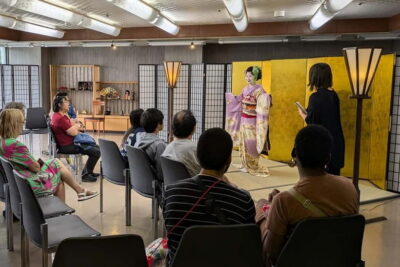
Dinner with Maiko in a Traditional Kyoto Style Restaurant Tour
Our verdict →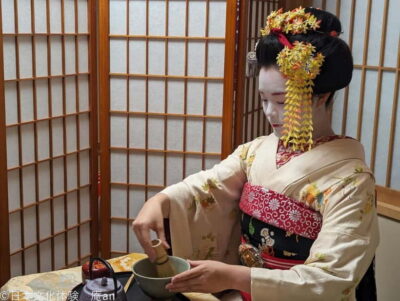
Browse the lists this tour appears in