
Reviewed · GEISHA & MAIKO EXPERIENCES
Kyoto: Gion Geisha District Walking Tour – Stories of Geisha
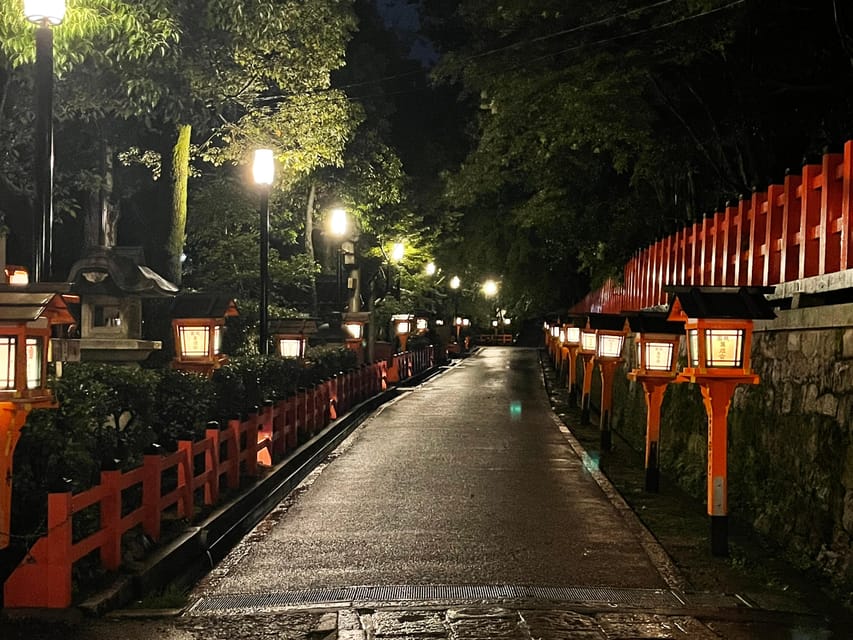
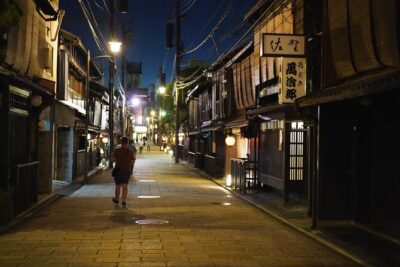
Kyoto’s geisha districts are most atmospheric after sunset, when lanterns glow outside old wooden teahouses and narrow lanes begin to feel wonderfully secretive. This two-hour walk takes you through Pontocho and Gion, with local guides explaining the lives, training, and traditions of geiko and maiko.
I like the easy pace, which leaves room for questions, and the route’s mix of famous places and quieter lanes. I also like the chance to learn respectful viewing habits rather than treating geiko and maiko as photo props. The main drawback is simple: sightings are never guaranteed, and some stops are easier to appreciate before it gets fully dark.
Key points
- Nighttime route through two historic districts: Walk Pontocho Alley, Gion, Hanamikoji Street, and the lanes around Yasaka Shrine.
- Stories beyond the costume: Learn about geiko and maiko training, work, traditions, and their place in Kyoto culture.
- A guide-led look at local history: Stop at the statue of Izumo-no-Okuni, linked to the origins of kabuki.
- Good value at $20: Two hours with a local guide costs less than many paid Kyoto attractions.
- English and Spanish tours: Guides including Yuki, Nami, Yukari, Deborah, Manuel, and others lead the walks.
- Sightings depend on timing: You may see geiko or maiko heading to appointments, but the tour is primarily a cultural walk.
Why Gion Works Best After Dark
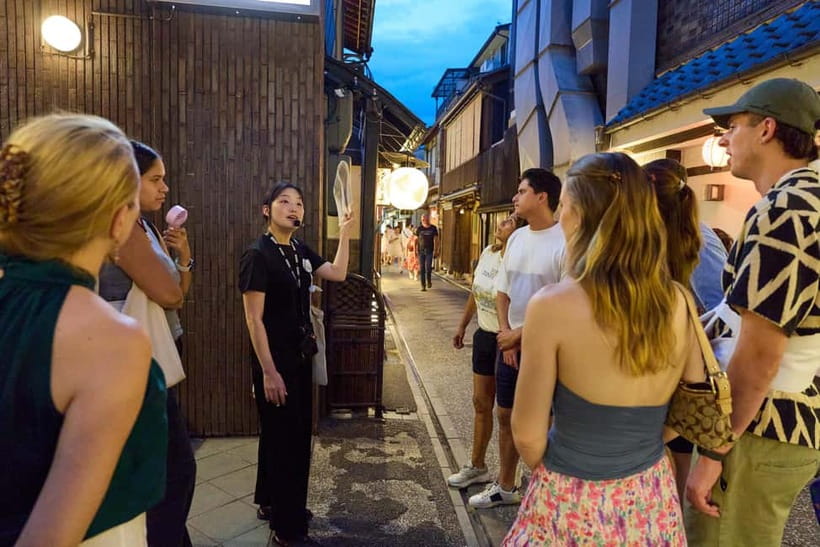
Gion can look polished and quiet by day, but nighttime changes its mood. Lanterns shine against dark timber, restaurant doors open onto narrow lanes, and the old entertainment quarter feels tied to its working traditions rather than simply preserved for sightseeing.
That is the useful idea behind this tour. You are not just walking past attractive buildings and hoping to spot someone in formal dress. Your guide explains what happens in these districts and why the streets still matter.
The tour begins near Ben’s Cookies Kyoto Shijo, a central and easy-to-identify meeting point. Your guide holds a sign board, then leads the group toward Pontocho. Bring water and wear shoes you can walk in comfortably. The route lasts two hours, with several stops for explanation and questions.
The atmosphere is a major part of the appeal, but keep your expectations sensible. Gion is an active neighborhood, not a stage set. Some lanes are busy, some are quiet, and the number of geiko or maiko you see depends on the evening.
More Walking Tours in Kyoto
- Kyoto Geisha Walking Tour: Gion District & Hidden Gems
★ 4.7 · 3,273 reviews - Kyoto: Gion Magical Night Walking Tour with Geisha Trivia
★ 4.9 · 2,393 reviews - Night Walk in Gion: Kyoto’s Geisha District
★ 4.5 · 2,003 reviews
Pontocho Alley and Kyoto’s Narrow Night Streets
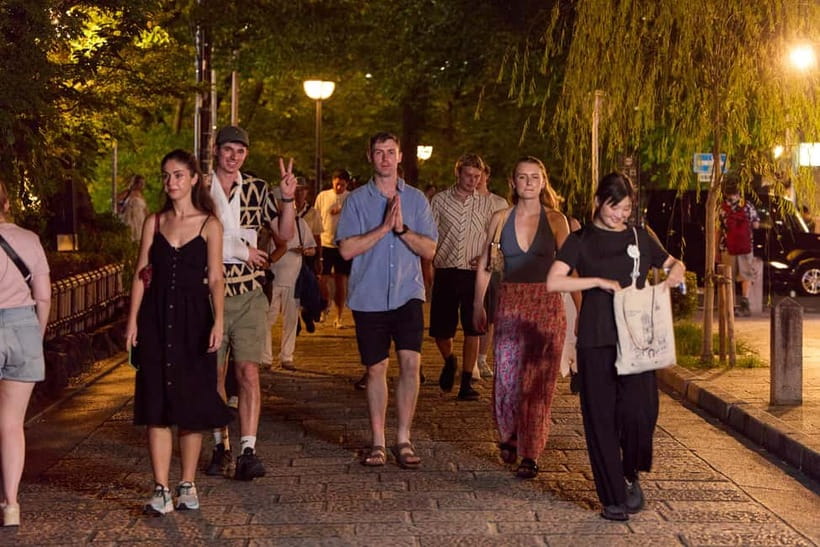
Pontocho Alley is one of the most memorable parts of the walk. It is narrow, lined with traditional eateries and exclusive clubs, and closely associated with Kyoto’s evening entertainment culture.
Your guide gives you a way to read the street. Without context, you might simply notice dark wooden facades and small entrances. With an explanation of the area’s customs and history, those details become easier to understand.
I especially like this part for first-time visitors who want to see Kyoto beyond temples and gardens. Pontocho offers a different side of the city, one shaped by dining, performance, ceremony, and private hospitality.
The drawback is that the alley itself is not a museum. You will not enter the elite clubs or teahouses as part of this walking tour. You see the setting from public streets and learn how the district functions from outside.
That limitation is also a sign of respect. These are working establishments, and the tour does not pretend that every closed door is yours to open. The best experience comes from observing the architecture and listening to the guide rather than expecting access to private rooms.
Izumo-no-Okuni and the Story Behind Kabuki
After walking through Pontocho, the route crosses the river and stops at the statue of Izumo-no-Okuni. She is associated with the invention of kabuki, making this a useful pause in a tour focused on Kyoto’s performance traditions.
This stop gives the walk a wider frame. Geiko and maiko culture is not an isolated curiosity. It belongs to a city with long connections to music, dance, theater, formal hospitality, and visual presentation.
I value short historical stops like this because they prevent the tour from becoming a simple search for costumes. The story of Izumo-no-Okuni helps connect Kyoto’s entertainment quarters with the development of Japanese performance.
The stop is scheduled for about 15 minutes, so expect a focused explanation rather than a long museum-style lecture. Ask questions here if you want to connect kabuki, dance, and the traditions discussed later in Gion.
Entering Gion Through Yasaka Shrine
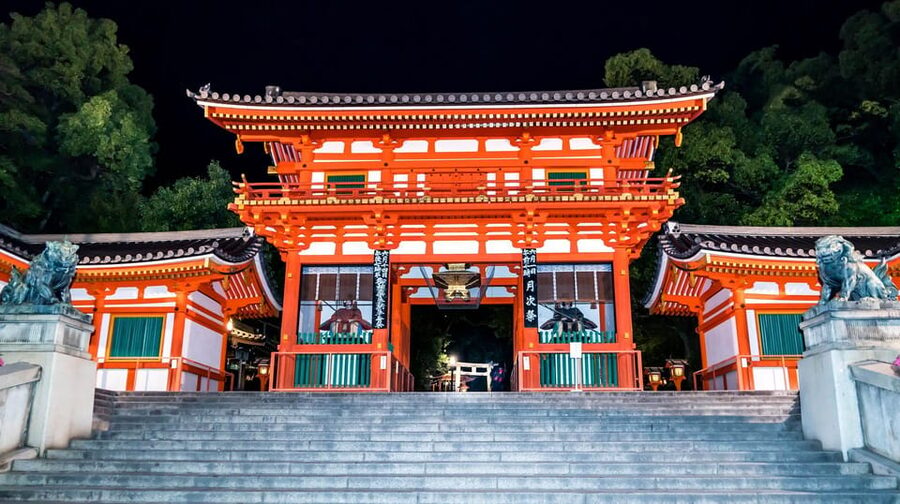
Gion is Kyoto’s best-known geisha district, and the walk spends the largest portion of its time here. The route includes about 30 minutes exploring Gion, followed by a visit to Yasaka Shrine.
Yasaka Shrine provides an important change of setting. After the tight lanes and restaurant fronts of Pontocho, the shrine offers a more open and ceremonial place to hear about Kyoto’s religious and cultural life.
The guide may point out how the surrounding district developed around entertainment and hospitality while remaining linked to the city’s older traditions. I find that combination helpful because it shows why Gion cannot be reduced to one label. It is a historic area, a workplace, a religious neighborhood, and a popular sightseeing stop all at once.
Expect some walking between stops and regular pauses for explanations. The pace has been praised as easy to follow, with time for photographs and questions. That makes the tour suitable for many adults who want information without a hurried march from one landmark to the next.
Children under 10 are not suitable for this activity, so families with younger children should choose another Kyoto outing. The evening setting and subject matter are better suited to older children, teenagers, and adults.
More Geisha Experiences in Kyoto:
- Best of Kyoto: Gion, Geisha, Pagodas & Cobblestones
★ 4.9 · 2,058 reviews - Kyoto Gion Geisha District Walking Tour – The Stories of Geisha
★ 5.0 · 1,441 reviews - Kyoto Gion: 2-Hour Geisha Culture & History Walking Tour
★ 5.0 · 1,186 reviews - Kyoto Gion Night Walk & Geisha District Guided Tour
★ 5.0 · 786 reviews
Hanamikoji Street and Respectful Sightings
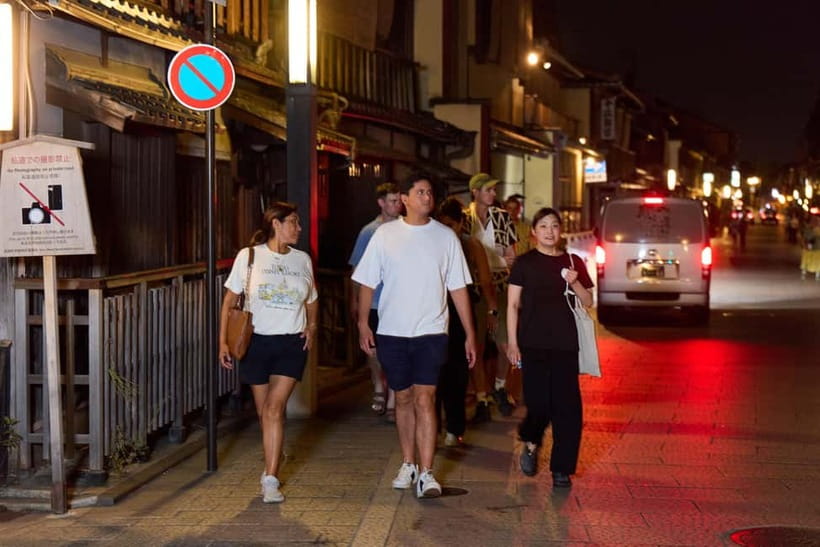
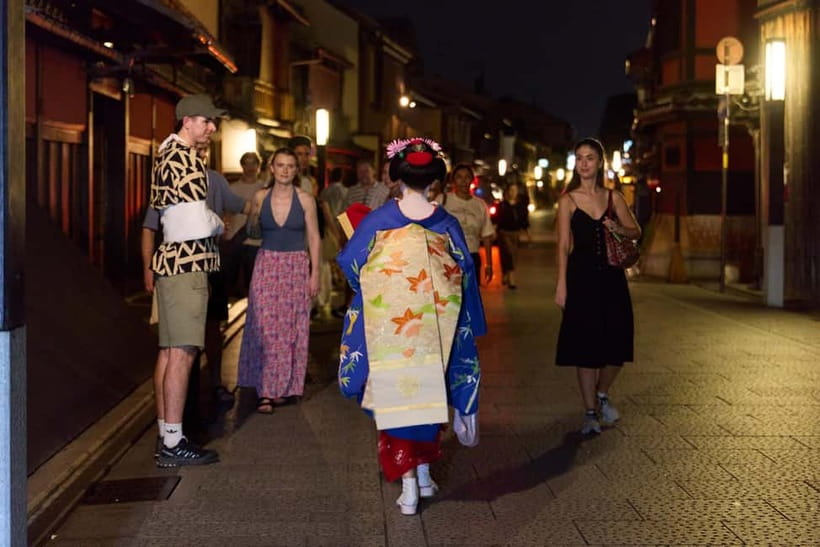
Hanamikoji Street is one of Gion’s most recognizable lanes. Its traditional wooden buildings and carefully maintained appearance make it an obvious place to look for geiko and maiko on their way to appointments.
You may encounter them, but nobody can promise it. Several outings have included sightings, while others have had few or none. Weather, season, evening timing, and the performers’ schedules all affect what you see.
This is where a good guide matters most. The useful goal is not to chase someone down the street or block a doorway. Your guide can help you notice people respectfully and explain what you are seeing without turning a working person into a public display.
Several guides receive especially warm praise for making this subject clear and engaging. Yuki is described as friendly, proud of Kyoto, and careful about the city’s traditions. Nami is praised for checking the group’s pace and making space for questions. Yukari, Deborah, Manuel, Kenji, Michael, Ann, and others have also led well-received walks.
Guide assignments can change, so you may not be able to choose a particular person when booking. Still, the range of names and nationalities represented by the guides is useful. The experience is not dependent on one scripted personality.
What You Learn About Geiko and Maiko
The strongest part of the tour is the explanation of geiko and maiko life. Your guide discusses their history, training, clothing, work, and place in Japanese culture, while also answering questions about present-day traditions.
The terms geiko and maiko are central to the Kyoto setting, and the guide helps you understand the difference between them. You also hear why training and ceremony matter, rather than seeing formal dress as a costume with no context.
Some guides use photographs to explain details that are hard to spot from a distance. That is especially helpful in the evening, when lighting can make clothing, hairstyles, and accessories difficult to see clearly.
I would treat the tour as an introduction rather than a complete course. Two hours gives you a strong foundation, but it cannot explain every custom or the full history of Kyoto’s entertainment districts. The benefit is that you leave with enough background to notice more during the rest of your stay.
One good strategy is to book this walk early in your Kyoto visit. You will then have a better sense of the districts before returning on your own, dining nearby, or attending another cultural activity.
Gion Corner and the Final Part of the Route
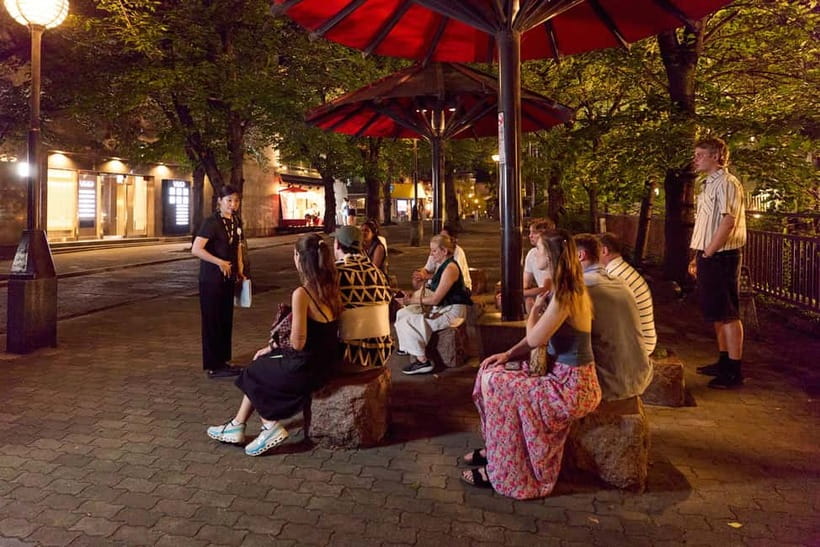
The route includes a stop at Gion Corner, with about 10 minutes for a guided visit. This keeps the focus on Kyoto’s performing arts and gives your guide another chance to connect the district’s streets with the traditions practiced inside its venues.
The final stop is Hanamikoji Street, scheduled for about 15 minutes. This is a natural place to finish because it brings together the architecture, atmosphere, and geiko culture that define the evening.
Pay attention to the ending point. The walk starts near Ben’s Cookies Kyoto Shijo, but one person noted that the tour did not finish where it began. That is not a serious problem in central Kyoto, but you should listen carefully to the guide’s closing directions and make sure you know where you are before separating from the group.
Is $20 Good Value for Two Hours?
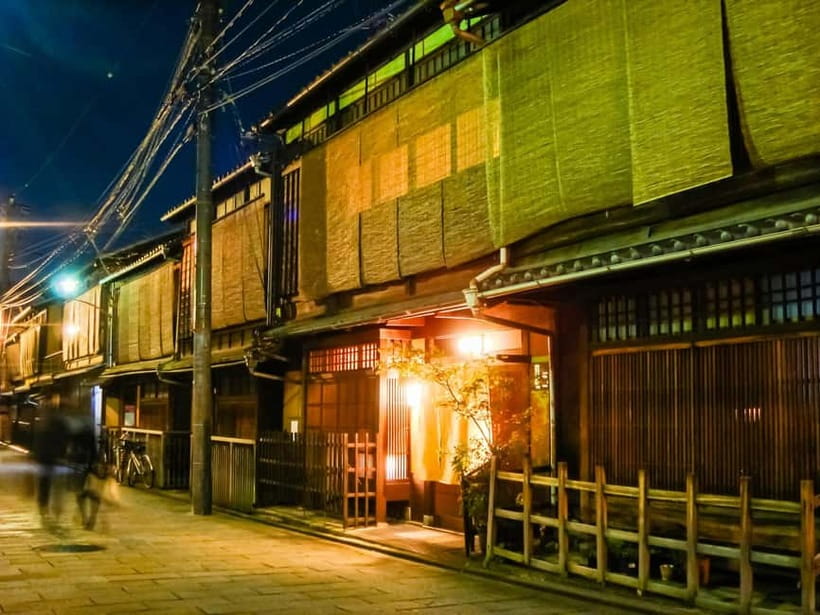
At $20 per person, this is a strong-value introduction to Gion. You receive two hours of guided walking, local commentary, and a planned route through districts that can be confusing to interpret on your own.
The value is not in guaranteed access to a geisha house or a formal performance. Those are not included. You are paying for orientation, stories, local context, and the chance to see the districts at a time when they feel most connected to their evening purpose.
A self-guided walk costs nothing, of course. But without a guide, you may pass Pontocho and Hanamikoji without understanding the difference between a restaurant, a teahouse, a club, and a historic facade. At this price, the explanation is the main purchase.
Free cancellation up to 24 hours before the start gives you some flexibility, and you can reserve now and pay later. The tour is offered in English and Spanish. Check the available starting times because the evening setting is a central part of the experience.
Group Size, Pace, and Weather
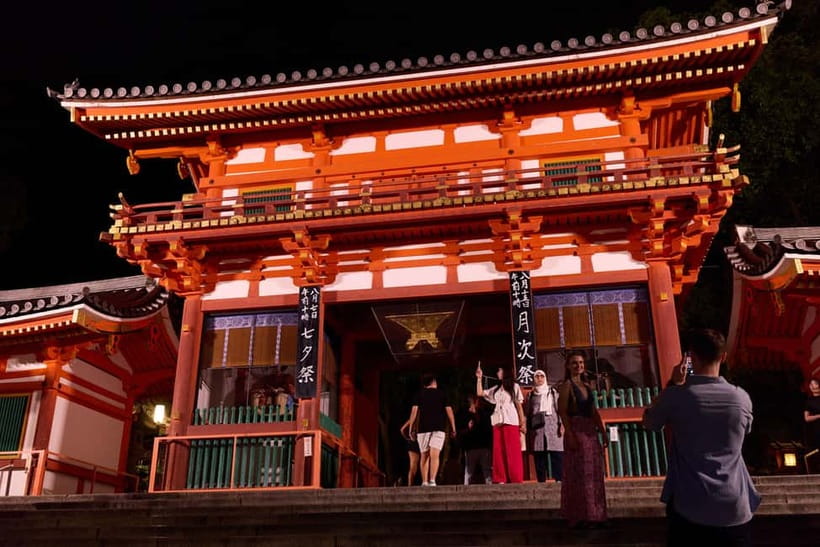
Group size can vary. Some outings have been described as small, including a group of six, while another included around 13 people. A smaller group makes it easier to hear the guide and ask questions, but you should not assume every departure will have the same number of people.
The pace is generally comfortable. Guides have been praised for stopping often enough to explain details, take photographs, and check that everyone is keeping up. That makes the walk a good fit if you want substance without an exhausting schedule.
Weather can affect the experience. Rain does not cancel the cultural value of the route, but it can make narrow streets and outdoor stops less pleasant. One guide adapted by finding sheltered places to talk. Bring water, and check the forecast so you can dress sensibly for an evening outdoors.
The tour is not built around sitting down for a meal or tasting food, despite the surrounding restaurants. Plan dinner separately, perhaps before or after the walk, and remember that the route finishes away from its starting point.
Who Should Book This Kyoto Walk?
I would choose this tour if you are curious about geiko and maiko culture but do not want a staged show as your only introduction. It is also useful if you have limited time in Kyoto and want one evening to combine local history, old streets, and cultural explanation.
It suits adults, older children, solo visitors, couples, and families with children aged 10 or above. The English and Spanish options make it accessible to a broad range of visitors, and the open question period helps if you arrive with little prior knowledge.
I would be more cautious if your main goal is a guaranteed sighting. You might see a maiko or geiko, but the tour cannot control who is working that night. You should also skip it if you dislike walking outdoors after dark or prefer private indoor attractions.
The best attitude is respectful curiosity. Treat any performer you see as a person heading to work, not as a character waiting for your camera. The tour’s strongest guides, including Yuki, Nami, Yukari, Deborah, and Manuel, help set that tone while giving you practical background.
Should You Book It?
Yes, if you want an affordable and thoughtful introduction to Gion and Pontocho. For $20, the two-hour route gives you more than attractive streets: you get the stories that explain why the districts look and function as they do.
Book it early in your Kyoto stay if possible. That way, you can return to Gion with better manners and better context. Just remember that the experience is a walking tour, not a performance ticket, and that seeing geiko or maiko is a lucky possibility rather than the product being promised.
FAQ
How long does the Gion and Pontocho walking tour last?
The tour lasts two hours.
What is the price of the tour?
The listed price is $20 per person.
Where does the tour meet?
Meet your guide in front of the Ben’s Cookies Kyoto Shijo shop. The guide will be holding a sign board.
Which languages are available?
The tour is offered in English and Spanish.
Can I see a geiko or maiko during the walk?
You may encounter geiko or maiko traveling to appointments, but sightings are not guaranteed.
Is the tour suitable for young children?
The activity is not suitable for children under 10.
What should I bring?
Bring water. You should also wear comfortable shoes for the two-hour walk.
Just added around Kyoto
- Sekka Cotton Furoshiki Class★ 5.0 · 19 reviews
- Kyoto Sword Experience – includes Museum Ticket/Ninja Experience★ 4.5 · 149 reviews
- Scenic Green Tea Fields of Hidden Kyoto & Local Tea Exp (Private)★ 5.0 · 32 reviews
- Secret Eastern Kyoto Biking Adventure★ 5.0 · 44 reviews
- Private Sake Tasting in Central Kyoto with Sake Sommelier★ 5.0 · 32 reviews
- Samurai School in Kyoto: Samurai for a Day★ 5.0 · 202 reviews
- SHIRAKAWA Japanese Culture Experiences with private English staff★ 5.0 · 16 reviews
- A Privately Guided Photoshoot in Beautiful Kyoto by a Pro★ 5.0 · 18 reviews
Geisha & Maiko Experiences, compared.

Kyoto Geisha Walking Tour: Gion District & Hidden Gems
Our verdict →
Dinner with Maiko in a Traditional Kyoto Style Restaurant Tour
Our verdict →
Browse the lists this tour appears in