
Reviewed · WORKSHOPS
Chopstick Making Workshop in Ginza
Making chopsticks by hand is a fine way to see Tokyo from a different angle. At this Ginza workshop, you start with a plain piece of wood and finish with something useful, personal, and made by your own hands. The work is simple to understand, but the planing takes real arm strength.
I like the choice of 24 woods, which lets you pick something plain and affordable or pay more for a special timber. I also like the name engraving, especially for a family gift or a souvenir you will use at home. The main drawback is that most wood types cost extra, and the planing can be tiring if you expect a gentle craft class.
Key points at a glance
- Choose your material: Five wood types are included, while 19 higher-grade options cost extra.
- Use traditional hand tools: You shape the chopsticks with a plane, then smooth them with sandpaper.
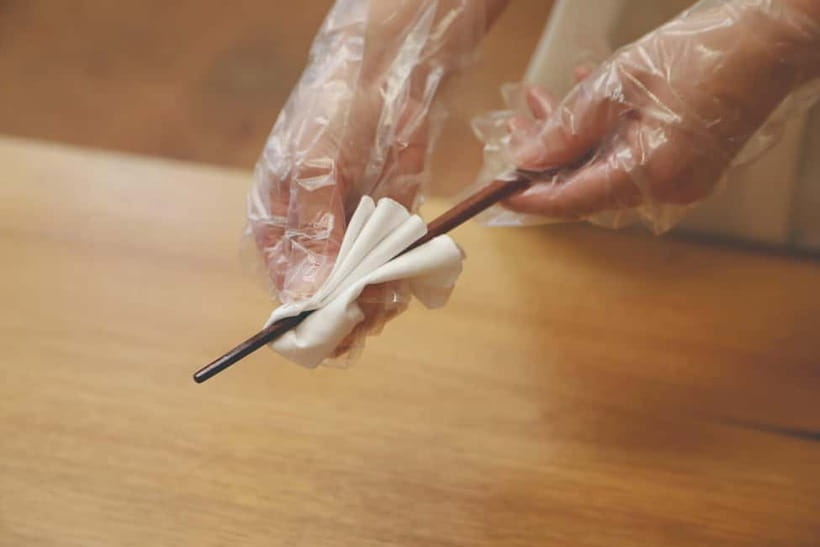
- Finish the pair yourself: Oil gives the wood a polished surface before you take the chopsticks home.
- Personalize the souvenir: Name or phrase engraving is available in Japanese or your own language for ¥1,100 per pair.
- Plan for hands-on work: The process can feel sporty, especially during the planing stage.
- Good for a short Ginza break: The workshop lasts about one hour and has English and Japanese support.
Why a Ginza chopstick class is worth your time
Ginza is known for polished department stores, luxury shops, and expensive restaurants. This workshop gives you a more practical side of the district. You are not just buying a finished Japanese product. You are learning how it is shaped and taking part in the process.
The activity costs $25 per person, with an English-speaking guide fee of ¥1,000 included. That is a fair price for an hour of instruction, use of the tools, materials, and a finished pair of chopsticks you can use every day.
Still, the advertised price is only the starting point if you want one of the special woods or engraving. Five types of wood are free. The other 19 are higher-grade choices and require an additional payment. Ask clearly about the price before choosing, since one English-language review described confusion over the different wood charges.
That extra cost can make sense for a meaningful gift. It is less attractive if you simply want inexpensive chopsticks. You can buy ordinary pairs for less elsewhere, but those will not carry the memory of shaping them yourself.
A few more Tokyo half-days worth comparing
- 1-Day Tokyo Bus Tour
★ 5.0 · 14,250 reviews - Tokyo: TOKYO SKYTREE® Admission ticket
★ 4.5 · 11,192 reviews - Tokyo: teamLab Planets TOKYO Digital Art Museum Entry Ticket
★ 4.6 · 9,779 reviews
Choosing between 24 woods and two lengths
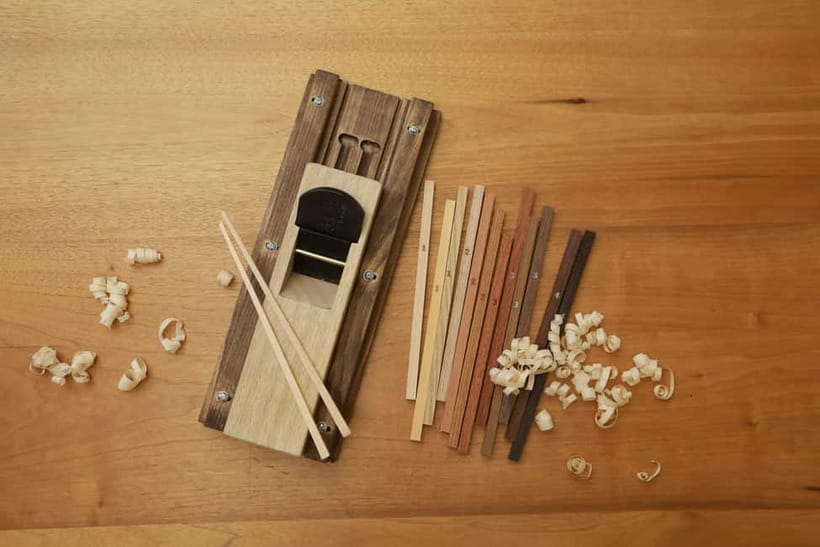
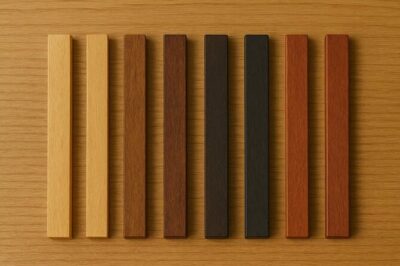
Your first important decision is the wood. The workshop offers 24 types, including five choices covered by the basic fee and 19 upgraded woods. The selection gives the class a real woodworking character rather than making it feel like a prepackaged souvenir project.
You also choose between two lengths. This matters if you are making chopsticks for different family members or if you already have a preferred size. A shorter pair may suit a child, while an adult may prefer the longer option, but the supplied information does not assign exact measurements to either length.
The wood choice affects the work. Oak and beech have been used successfully in the class, while olive wood can be harder to shape. That difference is part of the fun, but it also changes how much effort you need to put into the planing.
If this is your first time, I would begin by asking the instructor which woods are easiest to work with. If you enjoy hands-on projects and want a more distinctive grain, an upgraded wood may be worth the extra fee. If you are making chopsticks with children, a simpler wood can keep the focus on the activity rather than the struggle.
Planing the chopsticks takes real effort
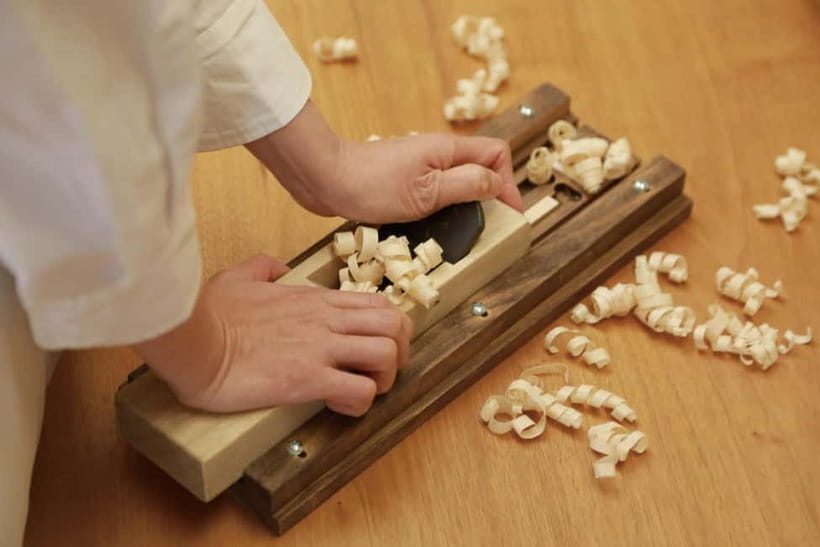
After choosing your wood and length, you place the chopsticks on a stand and use a hand plane to remove material. This is the heart of the workshop. You are not decorating a finished object. You are gradually shaping the wood.
The plane needs firm, controlled pressure. Several people found this more physical than expected, with the effort felt in the arms and shoulders. That does not make the workshop unsuitable for beginners, but you should not arrive expecting a passive demonstration.
The instructors show you how to position the chopsticks and guide the tool. Once you find the right pressure, the process becomes satisfying. Each pass removes a little wood, and the pair begins to look less like two square sticks and more like eating utensils.
There is one small point that can cause confusion: the chopstick can flip while you are shaving it. If you are unsure which side should face upward, stop and ask for help. The English-speaking staff are there to correct your technique rather than let you keep working in the wrong direction.
The class is designed for beginners, and the instructors explain each stage. Staff members named Tina and Waka have been praised for patient, helpful instruction in past sessions, while Kotoha, Shion, and Koko have also led classes. You may not have the same instructor, but English and Japanese assistance is part of the activity.
Sanding creates the final shape
Planing gets the basic form right. Sandpaper does the quieter, more precise work. You smooth the tips and corners, taking away rough edges and deciding how refined you want the final pair to feel.
This stage rewards patience. You can finish within the one-hour schedule, but careful sanding may take longer. One participant returned to make a second pair and spent about two hours because of detailed sanding. Another group was allowed a little extra time to get the finish right.
Do not rush through this part. The sandpaper is where your chopsticks become comfortable to hold. You can feel the change as the corners soften and the surface loses its roughness.
The class has a relaxed feel, but the room can be busy. Several instructors may be helping people at different stages at once. Most participants found the support easy to access, though a busy session could make it harder to get immediate help. If you are someone who wants constant one-on-one instruction, choose a quieter time if availability allows.
More Hands-On Experiences in Tokyo:
- Sushi Making Tokyo Roll and Authentic Japanese Sushi Class
★ 5.0 · 3,971 reviews - Tokyo: Roll and Authentic Sushi Making Class in Asakusa
★ 4.9 · 1,957 reviews - Tokyo Shinjuku Chopsticks Making Class
★ 5.0 · 1,763 reviews - Tokyo: Sushi Making Class in a Happi Coat near a Famous Spot
★ 4.9 · 1,377 reviews
Oil gives the wood a finished look
Once you are happy with the shape and smoothness, you apply oil. This brings out the wood and gives the chopsticks a more finished appearance. It is a small step, but it changes the project from a rough craft item into a usable pair.
The oiling also helps explain why the choice of wood matters. Different woods have different grain and color, and the final coat can make those details more visible. The point is not just to make something that looks attractive in a photograph. The workshop focuses on creating chopsticks that can last and be used at home.
The process covers the main stages from wood selection to final treatment. That in-house approach gives the class a stronger connection to woodworking than a quick souvenir-painting session. You see how the material changes as you work with it.
Engraving makes the souvenir personal
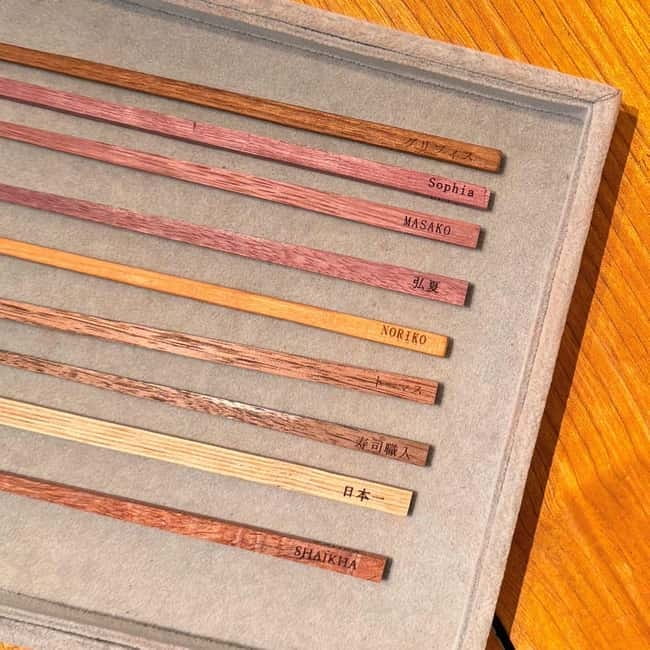
Name engraving is optional and costs ¥1,100 per pair. You can add your name or a favorite phrase in Japanese or in your own language.
The engraving is done with a high-performance laser designed to put gentle stress on the wood. You do not operate the laser yourself. The staff handle this finishing step after you decide what you want engraved.
For couples, families, and birthday celebrations, I think the extra charge is worthwhile. One family added names to pairs made for a 12th birthday celebration and found that the engraving turned the chopsticks into a more personal keepsake. Other participants used Japanese translations for a stronger connection to the trip.
Be sure to confirm the price per pair. If two people are making two pairs, the engraving charge applies to each pair, not simply to the booking. A family of four should also check the total before choosing several upgrades.
A useful souvenir instead of another trinket
The best part of this workshop is that the finished item has a job. You can take the chopsticks home on the same day, and they are designed for regular use rather than sitting only on a shelf.
That makes the activity especially useful if you are tired of buying souvenirs that have no place in your luggage or daily life. Every meal at home can remind you of your time in Tokyo. The memory is built into something practical.
The workshop also works well for families with older children. Children around eight, ten, and twelve have enjoyed the activity, and teenagers have found it engaging rather than childish. The planing requires care and some strength, so younger children will need close help.
The official age restriction says the activity is not suitable for children under three or people over 70. Some mixed-age families have included a four-year-old and a person aged 72, but the stated limits should guide your booking decision. This is a hands-on tool activity, not simply a craft table.
What the one-hour schedule feels like
The class is short enough to fit between Ginza shopping, lunch, or another Tokyo activity. In a smooth session, the hour covers:
- Selecting your wood and length
- Learning how to use the plane
- Shaving the chopsticks into shape
- Sanding the tips and corners
- Applying oil
- Arranging optional engraving
The exact pace depends on your wood and how carefully you work. Softer or easier wood may move quickly. A tougher specialty wood can require more strength and patience.
One hour is enough for many people, but it can feel tight if you work slowly or if the room is full. The workshop has sometimes allowed participants to stay longer, but you should not rely on extra time if you have a train, restaurant booking, or timed attraction afterward.
The activity is wheelchair accessible, and instruction is available in English and Japanese. The meeting point is 2-9-13 Ginza, Chuo-ku, Tokyo. Check the address carefully before setting out, since one participant initially went to the wrong location.
Who will enjoy this workshop most
I would recommend this to you if you want a souvenir with a story attached to it. It suits couples, families, friends, and solo visitors who like making things with their hands.
It is also a strong choice for a rainy afternoon. The class is indoors, lasts only an hour, and gives you something useful to carry home. The compact schedule makes it easier to fit into a full day in Tokyo.
You should think twice if you dislike physical work, have limited hand strength, or want a completely effortless activity. The planing is not dangerous when you follow instructions, but it does demand pressure and control. Even some adults found the first stage tiring.
For children, the sweet spot appears to be school age and above. A young child may enjoy the idea but struggle with the plane. Older children and teenagers can take real pride in producing a finished pair, especially if you add engraving.
Price, upgrades, and what you really receive
At $25 per person, the basic package offers good value. You receive instruction, tools, materials, access to the five included wood choices, and a finished pair to take home. The English support is especially useful because tool technique is easier to learn when you can ask a quick question.
The value changes with upgrades. Specialty wood costs extra, and engraving adds ¥1,100 per pair. The final price can rise quickly if you choose premium timber for several people and personalize every pair.
That is not necessarily a problem. You are paying for a guided activity as well as the object. The premium makes the most sense for a birthday, anniversary, family gift, or a pair you expect to use for years.
Free cancellation up to 24 hours before the activity and the option to reserve now and pay later give you some planning flexibility. The workshop is also wheelchair accessible. Children under three and people over 70 are listed as unsuitable, so check your group before booking.
Should you book the Ginza chopstick workshop?
Book it if you want a short, practical cultural activity and do not mind using your arms. The combination of wood selection, hand planing, sanding, oiling, and optional engraving gives you much more involvement than buying a finished souvenir.
I would choose one of the included woods for a first attempt unless you have a strong preference for a specialty timber. Then add engraving if the chopsticks are a gift or a family keepsake. Ask about all extra charges before committing, and leave a little breathing room after the class in case you need more time to finish the sanding.
Skip it if you want a purely relaxing class with no physical effort. For everyone else, this is a smart Ginza break: affordable at the basic price, easy to fit into a Tokyo itinerary, and likely to produce something you will actually use.
FAQ
How long does the chopstick-making workshop last?
The workshop lasts one hour. Some participants have taken longer when making a second pair or spending extra time on detailed sanding.
Where is the meeting point?
The meeting point is 2-9-13 Ginza, Chuo-ku, Tokyo.
How many types of wood can I choose from?
You can choose from 24 types of wood and two different chopstick lengths. Five wood types are included, while 19 higher-grade options require an additional charge.
Is name engraving available?
Yes. You can add your name or a favorite phrase in Japanese or your native language. Engraving costs an additional ¥1,100 per pair.
Can I take the chopsticks home immediately?
Yes. You can take the finished chopsticks home on the day of the workshop.
Is the workshop available in English?
Yes. English-speaking staff assist with the activity, and instruction is available in English and Japanese.
Is the workshop wheelchair accessible?
Yes. The activity is wheelchair accessible. It is not considered suitable for children under three or people over 70.
Just added around Tokyo
- Kawagoe Japanese Food Tour : Unagi Kaiseki and Sake near Tokyo★ 5.0 · 30 reviews
- Kawagoe 4hr Private Tour with Licensed Guide (Kawagoe Dep)★ 5.0 · 13 reviews
- Little EDO Sushi Making workshop in Kawagoe★ 5.0 · 18 reviews
- 【R34】Tokyo:Private Daikoku tour in Modified R34★ 4.9 · 92 reviews
- :Tokyo,Shibuya/ Pro Photography in Kimono / English-Friendly★ 5.0 · 26 reviews
- Tokyo:Celebrate Unique Japanese New Year Tradition Festivity★ 3.9 · 20 reviews
- Tokyo: Allstar Food Tour★ 4.7 · 29 reviews
- Tokyo: West-Side Cycling and Food Tour with Guide★ 5.0 · 37 reviews
Workshops, compared.
Sushi Making Tokyo Roll and Authentic Japanese Sushi Class
Our verdict →
Chopsticks Making Workshop in Gion with Engraving Option
Our verdict →
Ninja 1-hour Hands-on Lesson by Japanese master in Kyoto -Entry
Our verdict →
Browse the lists this tour appears in