
Reviewed · CALLIGRAPHY CLASSES
Kyoto: Local Home Visit and Japanese Calligraphy Class
The most memorable part of this Kyoto activity is the setting: you enter a local home near Nijo Castle rather than a large studio or tourist workshop. Aya guides you through the careful brush movements behind Japanese calligraphy, then helps you create a finished piece with a character that has personal meaning. I like the private format and the chance to talk with local hosts. I also like that you leave with something you made yourself, not a mass-produced souvenir.
The main limitation is time. One hour is enough to learn the basics and produce a pleasing keepsake, but not enough to master calligraphy. You will need to arrive five minutes early, wear socks, and accept that a late arrival cuts into your lesson.
Key points at a glance
- A real Kyoto home: The class takes place about 200 meters west of Nijo Castle, giving you a more personal setting than a standard cultural demonstration.
- Aya’s hands-on teaching: Aya explains calligraphy’s background and shows how each brushstroke should begin, move, and finish.
- Your choice of kanji: You can select a character linked to love, peace, strength, wisdom, or another idea that matters to you.
- A personal souvenir: You add your name in Japanese and take your finished work home on traditional washi paper.
- Private, English-friendly format: The lesson is offered in English and Japanese for private groups.
- Strict timing and footwear rules: Bring socks, remove your shoes indoors, and do not arrive more than 15 minutes late.
A Kyoto calligraphy lesson with a personal setting
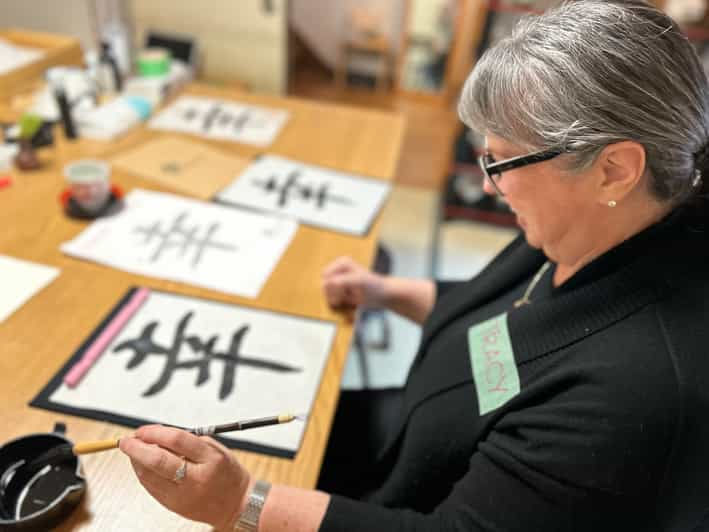
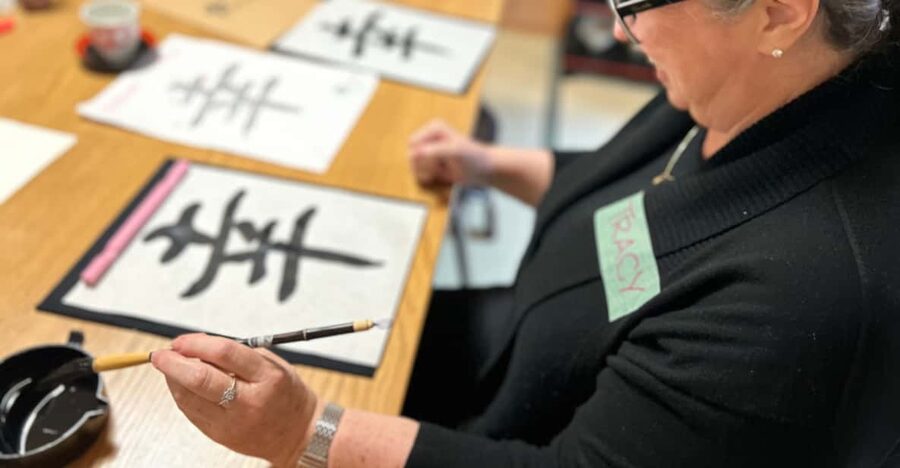
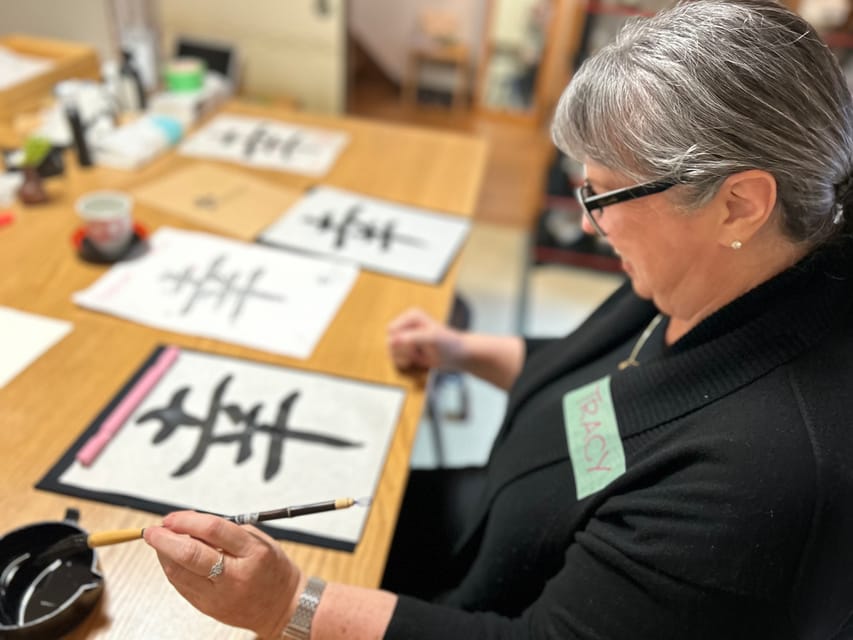
Japanese calligraphy, or shodo, is not simply handwriting with a fancy brush. The movement matters. So does the pressure, speed, balance, and order of each stroke. Even a simple kanji character can look completely different depending on how the brush touches the paper.
This class gives you a practical introduction without pretending that one hour can turn you into a master. You begin with instructions and explanations about the art form, then practice the brush movements under guidance. The lesson is built for first-timers, so you do not need to know Japanese or have artistic training.
I like that the setting supports conversation. The experience takes place in a local home close to Nijo Castle, and the hosts make room for questions about calligraphy and life in Kyoto. Julia from Canada especially valued the chance to visit a private home and talk with the hosts. That human contact is a major part of the appeal.
You should think of this as a calm cultural meeting with a hands-on craft, not as a formal art course. The aim is to help you understand the rhythm of calligraphy, enjoy the process, and make one or more pieces you will be pleased to display.
More Calligraphy Classes in Kyoto
- Kyoto: Calligraphy class at Buddhist temple in city center
★ 5.0 · 167 reviews - Kyoto: Japanese Calligraphy Class
★ 4.8 · 89 reviews - Kyoto: Japanese Calligraphy Workshop
★ 4.7 · 84 reviews
Finding the home west of Nijo Castle
The meeting point is about 200 meters west of Nijo Castle, on the north side of Ebisugawa Street, just west of Nishinotoin Street. Across the road, you will see the Lions Mansion building. This puts the class in a useful part of central Kyoto, especially if you are already visiting Nijo Castle.
Pay close attention to the directions when using a map app. You are asked to search for the venue name rather than entering only the street address because Kyoto has several locations with similar names. If you take a taxi, give the driver the provided phone number. This is one of those small details that can prevent a very avoidable start to your lesson.
Arrive five minutes before your scheduled time. There is no waiting area if you arrive much too early, so do not plan to show up half an hour ahead. At the same time, do not cut it close. The lesson cannot be provided if you are more than 15 minutes late, and a shorter delay still reduces your calligraphy time.
What happens during the one-hour session
The class begins with an explanation of Japanese calligraphy and its basic tools. You will use rented calligraphy equipment, ink, and Japanese washi paper, so you do not need to pack supplies.
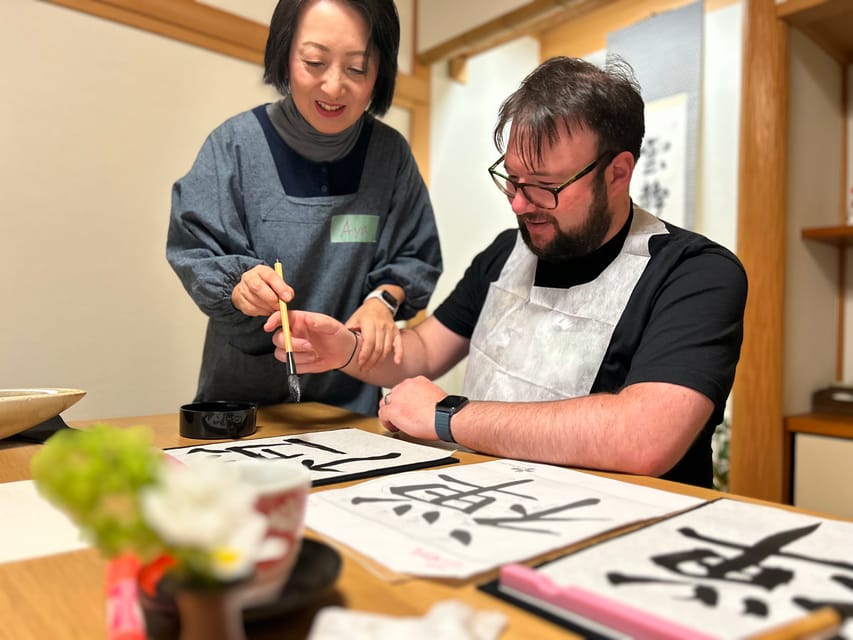
Aya has been praised for explaining how she learned the art herself and for putting the technique into understandable steps. She covers the background of calligraphy, then shows you how to handle the brush and make the main stroke patterns. This is where the lesson earns its value: you are not merely copying a finished character. You are learning why the brush should move in a certain way.
Expect to practice several times. Your first attempts may look uneven, which is perfectly normal. Calligraphy depends on controlled movement, and most people are still getting used to the brush by the time the class ends. Aya and her assistant offer corrections and encouragement as you work.
The private group format helps here. If you are the only student or part of a small booking, you can receive close attention and ask questions as they arise. Radoslav from the United States described receiving one-on-one instruction with an experienced teacher, while Andrea from Austria enjoyed writing several kanji with help from Aya and her assistant.
The mood is gentle rather than rushed. Jonas from Germany found the activity relaxing even as a beginner, and that makes sense. The need to slow down and concentrate on each stroke gives you a break from Kyoto’s crowded sightseeing schedule.
Choosing a kanji with meaning
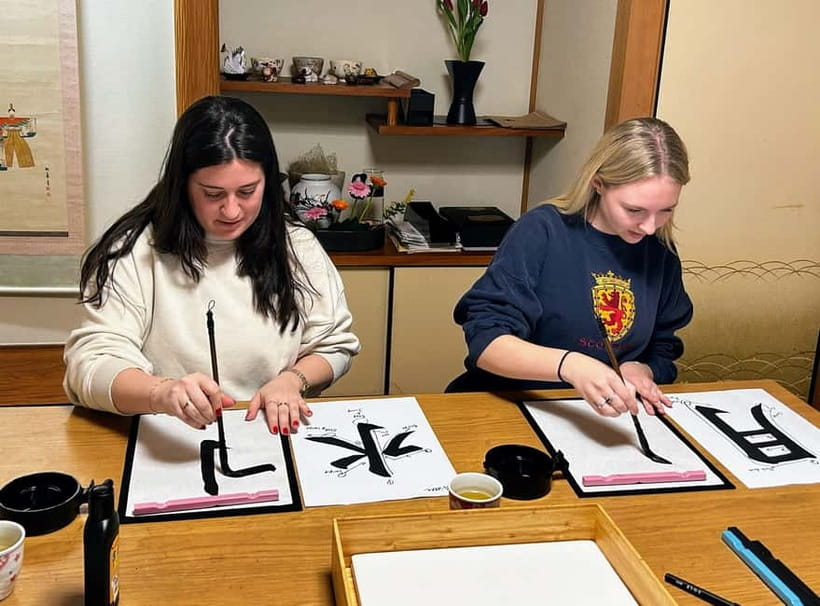
After learning the basic movements, you choose a kanji that speaks to you. Possible themes include love, peace, strength, and wisdom. The choice turns the activity from a generic craft lesson into a personal project.
You do not need to understand Japanese characters before arriving. The instructor helps you select and work with the character, then shows you how to write it in a balanced way. This is also a good moment to ask about the meaning and feel of the character you choose.
You will also have the chance to add your own name in Japanese. That small detail makes the artwork feel like yours rather than a practice sheet. It gives you a souvenir that records both the place and your participation.
Do not expect every character to look identical to Aya’s example. That is not the point. Japanese calligraphy values the energy and confidence of the stroke, and your finished piece will show the fact that you made it by hand. Alicia from the United States enjoyed leaving with artwork suitable for display at home, while Harriet and George used theirs as a special reminder of their honeymoon in Japan.
Same trip, a completely different kind of day:
- PERFECT KYOTO 1-Day Bus Tour
★ 5.0 · 13,518 reviews - Kyoto: Fushimi Inari, Kinkakuji, Bamboo Grove 1 Day Bus Tour
★ 4.8 · 4,316 reviews - Kyoto: Tea Ceremony in a Traditional Tea House in Kiyomizu
★ 4.9 · 3,519 reviews - Kyoto Geisha Walking Tour: Gion District & Hidden Gems
★ 4.7 · 3,273 reviews
Learning from Aya and the teaching style
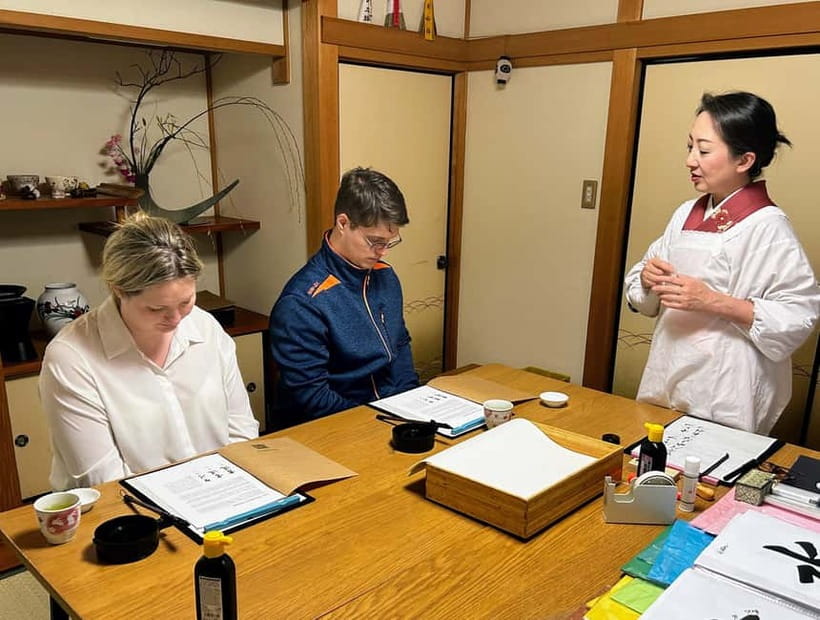
Aya is the central figure in the class, and the feedback about her teaching is unusually consistent. She is described as patient, warm, skilled, and generous with explanations. She also answers questions about other traditional Japanese artistic techniques, according to Martina from Austria.
Her teaching style seems well suited to beginners. She demonstrates, lets you try, and then gives practical direction. Ellen from the United Kingdom appreciated the constructive advice she received after several practice attempts. Scarlett from Austria was pleased to produce a decent kanji with Aya’s help, even without prior experience.
The class is taught in English and Japanese. You should still be ready for a hands-on lesson in which watching carefully matters as much as listening. A calligraphy instructor can explain the right motion, but your own hand must learn the pressure and pace.
The activity also has a friendly social side. Alicia recalled plenty of laughter during the class, while Rhys from the United Kingdom found the support from the instructor especially helpful. If you are nervous about making mistakes, this is a reassuring format. The lesson treats mistakes as part of practice, not as a test.
Your finished washi artwork
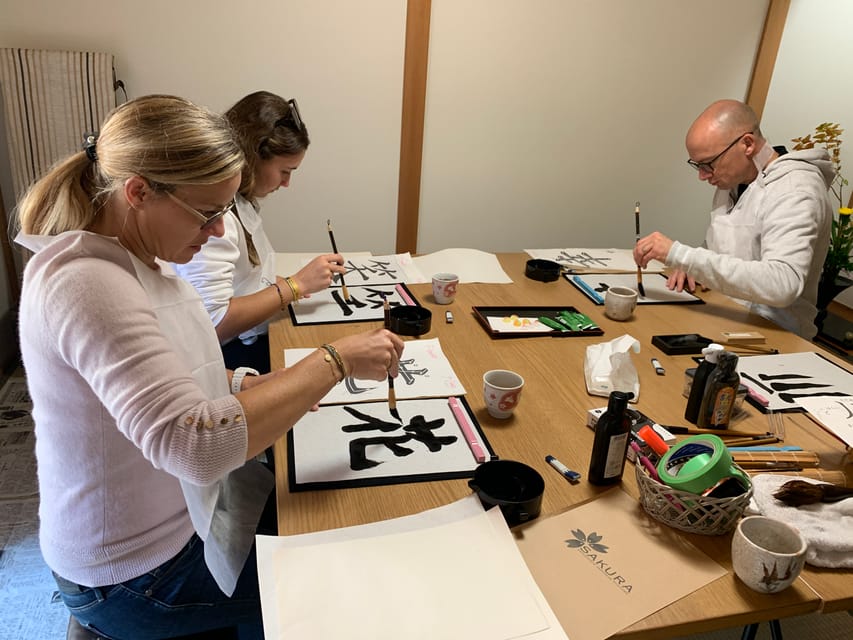
The best practical feature is that your calligraphy does not end as a disposable practice exercise. You create a final piece on Japanese washi paper and take it home.
Washi has a different feel from ordinary printer paper. It gives the finished character a more traditional appearance and makes the piece worth protecting in your luggage. You may want to bring a rigid folder or place it between sturdy books afterward, although no special packing service is listed.
Your artwork can become a small wall decoration, a framed memory, or simply a reminder of a quiet hour in Kyoto. I prefer this kind of souvenir to something bought in a shop because it carries a story: you selected the character, practiced the strokes, and worked with a local teacher to complete it.
Some sessions also include photos or video. Harriet and George thanked the hosts for photos of their experience, and another couple appreciated the instructor’s husband taking photos and video. This is not described as a guaranteed formal photography service, so I would treat it as a welcome possibility rather than a reason to book.
Is $66 good value for one hour?
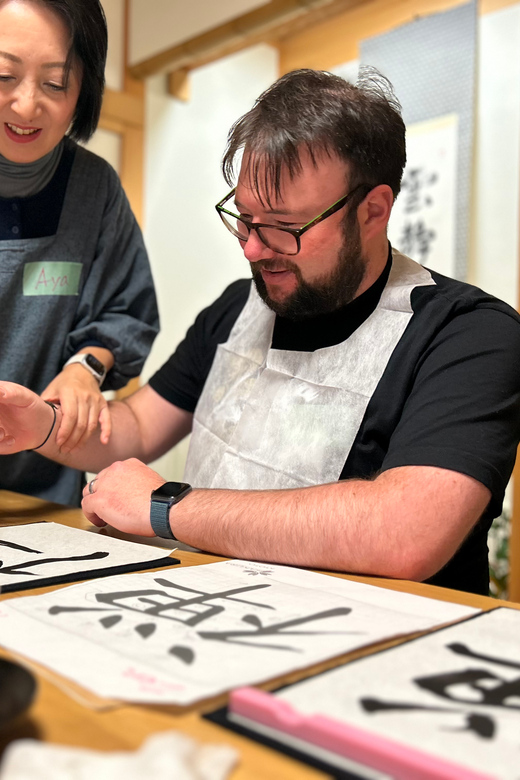
At $66 per person, this is not the cheapest one-hour activity in Kyoto. The value depends on what you want from it.
If you only want to buy a calligraphy souvenir, you can spend less in a shop. If you want a long, technical course, one hour will feel short. You are paying for several elements together: instruction from a skilled calligrapher, use of the tools and ink, washi paper, a private home setting, English-language support, and the chance to create a personal piece.
The private format is important. You are not being moved through a large group while an instructor gives the same speech to everyone. You can receive direct corrections and ask about the character you choose. For couples, families with older children, and small groups of friends, that personal attention adds real value.
The price also compares well with a tightly planned Kyoto day if you want a break from temples and walking. The class lasts only an hour, so you can fit it around Nijo Castle and nearby sightseeing. You should not book it expecting a full course in calligraphy. Book it for a focused introduction and a meaningful object to take home.
Who should book this activity
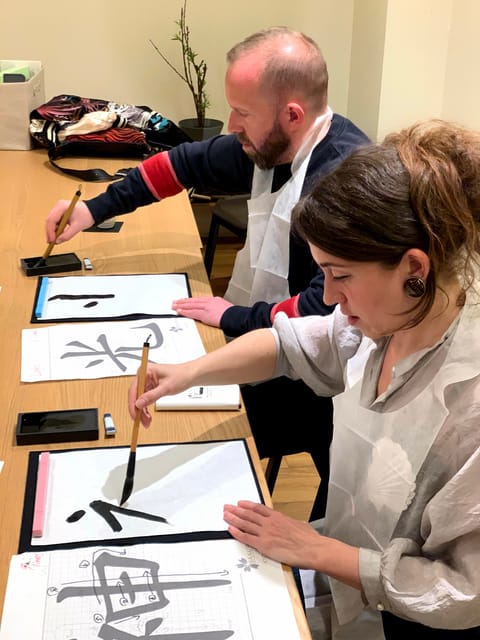
I would recommend it most strongly for adults and teenagers aged 13 or older who want a cultural activity with a creative result. It suits couples particularly well because you can choose different kanji and compare your finished pieces afterward.
It is also a good option for honeymooners and special trips. Harriet and George found it a memorable way to mark their honeymoon, and the personal artwork gives the experience a lasting link to the trip.
This class works well for anyone who wants a slower hour in Kyoto. The concentration required by calligraphy can feel refreshing after busy streets, hot weather, or a full day of sightseeing. Martina enjoyed using the lesson as a break from the Kyoto summer heat.
You might want to skip it if you dislike quiet, careful activities or want a fast-paced attraction. You should also think twice if your schedule is so tight that arriving on time will be difficult. The lesson cannot accommodate a delay of more than 15 minutes.
The activity is wheelchair accessible, but the class takes place indoors in a home, where shoes are removed. If you have mobility questions about the interior, confirm the details before booking.
Small rules that matter
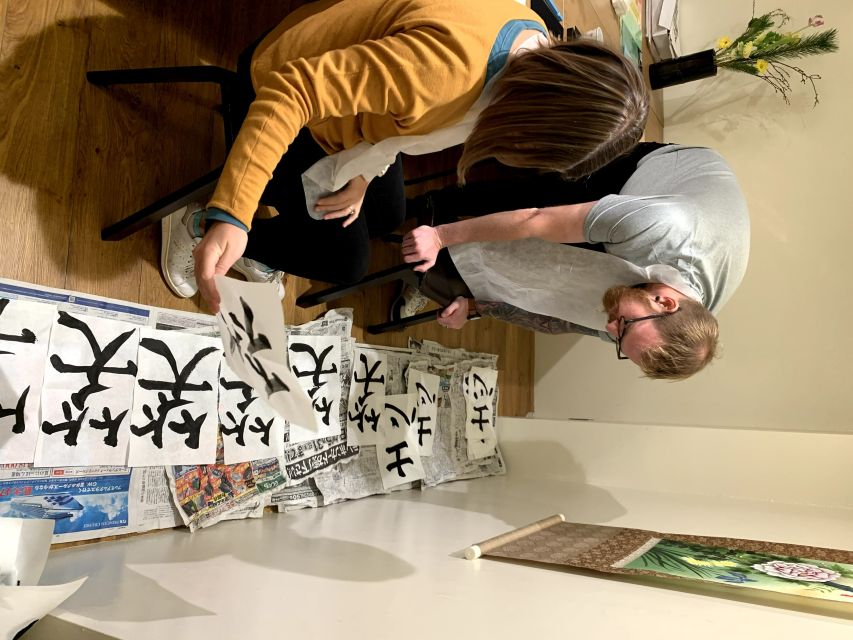
You must wear socks. Bare feet are not accepted, and socks may be available for an additional charge if you arrive without them. You will remove your shoes indoors, so choose clean, comfortable socks rather than treating footwear as an afterthought.
Smoking, indoor smoking, vaping, alcohol, and drugs are not allowed. Strong fragrances are also prohibited. These rules fit the home setting and help keep the room comfortable for everyone.
Children under 13 cannot take part. The instructor speaks English and Japanese, and the group type is private. Cancellation is free up to 24 hours before the start time, and you can reserve now and pay later if that option helps you keep your Kyoto schedule flexible.
Should you book the Kyoto calligraphy class?
Book this experience if you want personal contact with local hosts, patient instruction from Aya, and a handmade souvenir that carries more meaning than a shop purchase. The location near Nijo Castle makes it easy to pair with sightseeing, and the one-hour length keeps the commitment manageable.
Go in with realistic expectations. You will learn the basics, practice several strokes, choose a meaningful kanji, and create a finished piece. You will not become an expert in one session.
For me, the strongest reasons to book are the private-home setting and the chance to slow down with a traditional art form. Bring socks, arrive five minutes early, and leave room in your bag for the washi artwork. If those details suit your plans, this is a warm, useful way to spend an hour in Kyoto.
FAQ
Where does the calligraphy class take place?
It takes place in a local home about 200 meters west of Nijo Castle. The venue is on the north side of Ebisugawa Street, just west of Nishinotoin Street. The Lions Mansion building is across the street.
How long does the activity last?
The class lasts one hour. If you arrive late, the lesson time is shortened. The class cannot be offered if you arrive more than 15 minutes after the scheduled start.
Is the class taught in English?
Yes. Instruction is available in English and Japanese.
What is included in the price?
The activity includes calligraphy instruction and explanations, rental of the calligraphy tools, ink, and Japanese washi paper.
Can I take my calligraphy artwork home?
Yes. You create your own calligraphy artwork and take it home as a souvenir.
Do I need to bring anything?
You need to bring socks or wear socks to the class. Bare feet are not allowed, and socks may be available for an additional charge if needed.
Is the activity suitable for children?
The activity is not suitable for children under 13.
Can I cancel the booking for a refund?
Yes. You can cancel up to 24 hours in advance for a full refund. Reserve now and pay later is also available.
Just added around Kyoto
- Sekka Cotton Furoshiki Class★ 5.0 · 19 reviews
- Kyoto Sword Experience – includes Museum Ticket/Ninja Experience★ 4.5 · 149 reviews
- Scenic Green Tea Fields of Hidden Kyoto & Local Tea Exp (Private)★ 5.0 · 32 reviews
- Secret Eastern Kyoto Biking Adventure★ 5.0 · 44 reviews
- Private Sake Tasting in Central Kyoto with Sake Sommelier★ 5.0 · 32 reviews
- Samurai School in Kyoto: Samurai for a Day★ 5.0 · 202 reviews
- SHIRAKAWA Japanese Culture Experiences with private English staff★ 5.0 · 16 reviews
- A Privately Guided Photoshoot in Beautiful Kyoto by a Pro★ 5.0 · 18 reviews
Calligraphy Classes, compared.
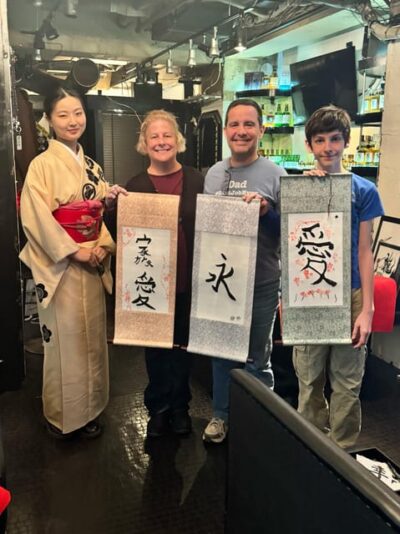
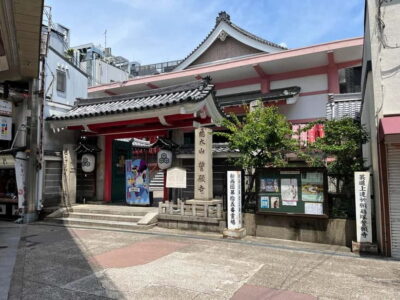
Calligraphy class at Buddhist temple in city center
Our verdict →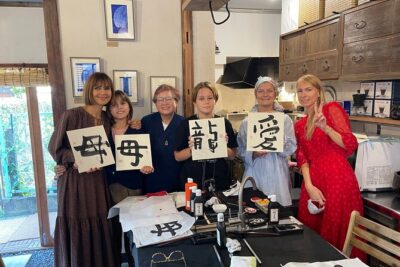
Let’s experience calligraphy in YANAKA, Taito-ku, TOKYO !!
Our verdict →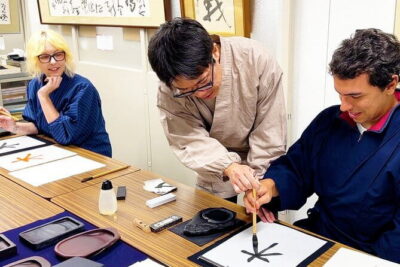
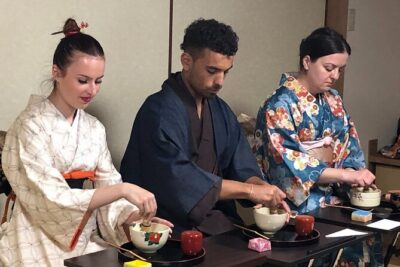
An Amazing set of Cultural experience: Kimono, Tea Ceremony and Calligraphy
Our verdict →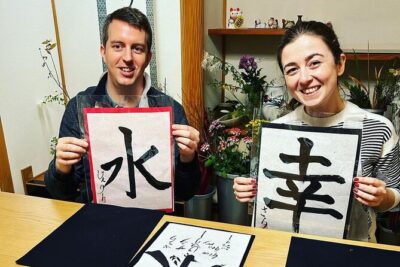
Private Japanese Calligraphy in Kyoto – Learn Shodō with a Master
Our verdict →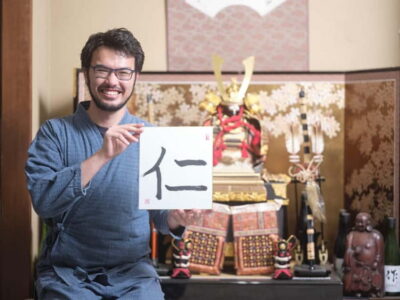
Browse the lists this tour appears in