
Reviewed · TRADITIONAL CRAFTS
Kyoto: Kintsugi Jewelry Workshop with Natural Stones
Broken pottery gets a second life here, not as a repaired bowl, but as a small piece of jewelry you can wear. In a 100-year-old Kyoto townhouse near Fushimi Inari Taisha, instructor Natsuka explains kintsugi, then helps you turn pottery shards, natural stones, and gold powder into something personal.
I like the calm, hands-on pace and the wide choice of materials, from Arita and Oribe pottery to shells, pearls, and stained glass. I also like that you leave with a useful souvenir rather than another mass-produced trinket. The main consideration is that the workshop is not suitable for wheelchair users, and the narrow lane has no parking.
Key points at a glance
- A quiet craft break near Fushimi Inari: The atelier is about a three-minute walk from Fushimi Inari Taisha.
- Japanese pottery with a story: Choose shards from Arita, Karatsu, Oribe, Kyoto, Shigaraki, and Hagi pottery.
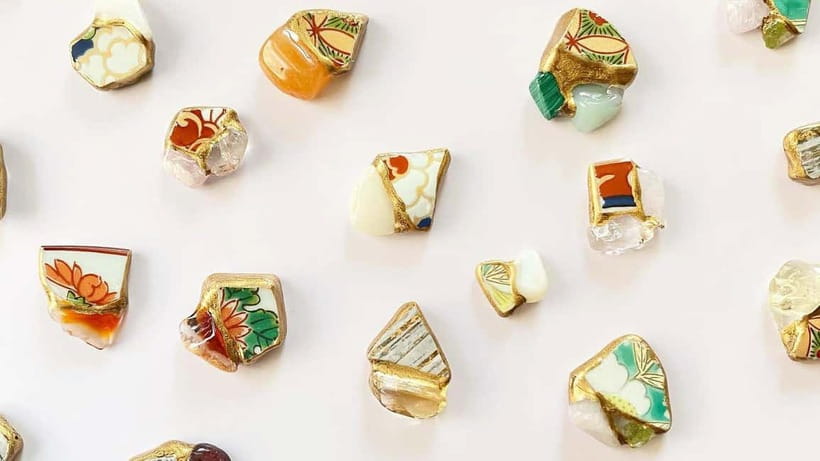
- Your design is genuinely your own: Add natural stones, shells, pearls, stained glass, and gold-colored kintsugi lines.
- A patient English-speaking instructor: Natsuka explains each stage in English or Japanese and gives hands-on help.
- A small-group setting: No more than 10 people take part, allowing time for questions and design choices.
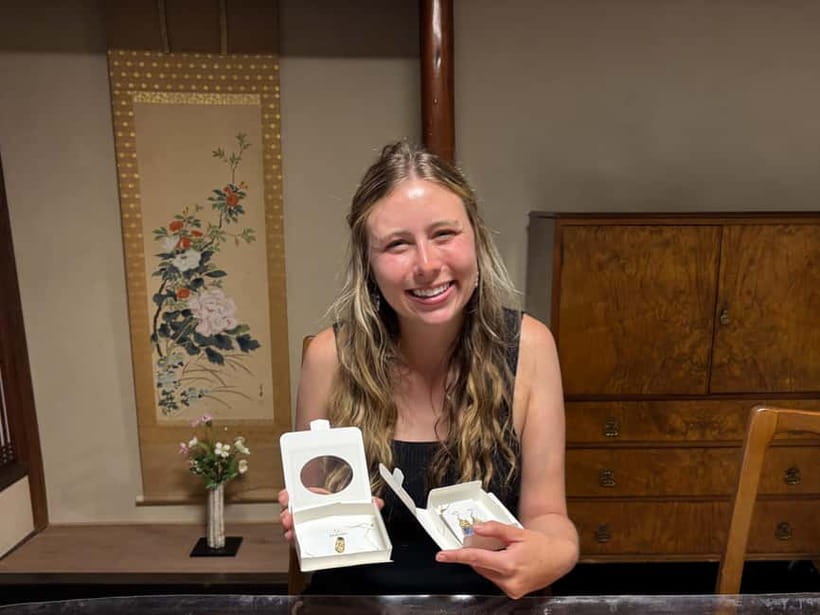
- A practical Kyoto keepsake: Finished jewelry can be taken home the same day.
A townhouse workshop beside Fushimi Inari
The setting does much of the work before the craft begins. You meet at a traditional one-story Kyoto house with a white noren, or entrance curtain, hanging at the front. The atelier is close to one of Kyoto’s most famous sights, yet the workshop offers a change of pace from shrine paths and camera-ready crowds.
The location is about a five-minute walk from either Keihan Ryukoku Daimae-Fukakusa Station or JR Inari Station. It is also listed as roughly three minutes from Fushimi Inari Taisha, so this fits neatly before or after a shrine visit.
Look for the white entrance curtain and use the supplied photo map to guide you from the station. The street in front is a narrow alley, so do not plan to arrive by car. There is no parking at the atelier, and the lane is not suitable for vehicles.
The old house is more than a backdrop. Kintsugi is about giving damaged objects a new life, and working with broken pottery inside a traditional Kyoto home gives that idea some proper context. You are not simply assembling a souvenir at a modern craft counter.
More Craft Workshops in Kyoto
- Authentic knife making experience at a blacksmith in Kyoto
★ 4.8 · 350 reviews - Roketsu dyeing experience: M course Roketsu Dyeing Experience
★ 5.0 · 163 reviews - Kyoto Michelin Ramen Workshop or Painting Ramen Essentials
★ 4.9 · 100 reviews
What kintsugi means here
Kintsugi is the Japanese practice of repairing broken ceramics while making the repair visible. Instead of hiding a crack, the maker highlights it with lacquer and gold. The result values the object’s past rather than pretending the break never happened.
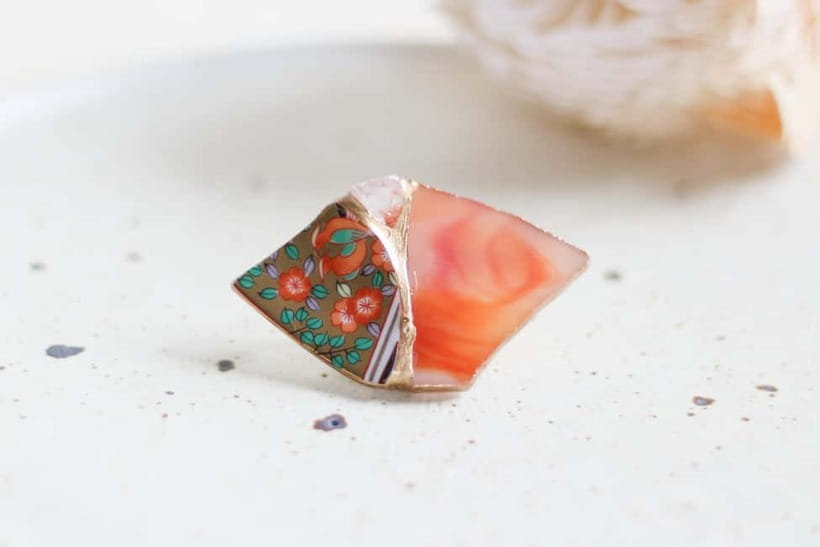
In this class, you apply that idea to jewelry. The pieces are small, so the work is less about restoring one complete bowl and more about combining fragments into a fresh design. A pottery shard becomes a pendant, brooch, earring, ring, tie pin, or cufflink.
Natsuka also explains the background of kintsugi, Japanese pottery, and wabi-sabi, the appreciation of imperfection, age, and change. That short cultural explanation matters. Without it, the gold lines might look like a decorative trick. With it, the finished piece has a clearer connection to Japanese ideas about beauty.
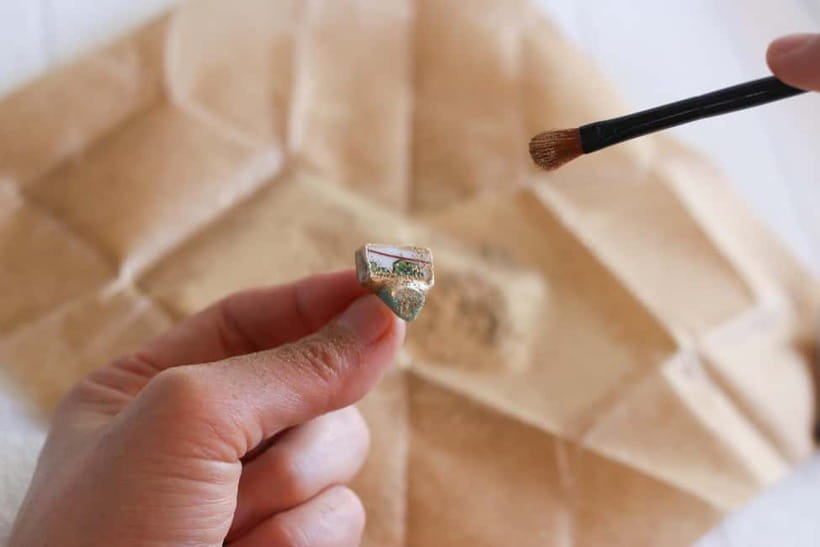
You should also note that the workshop uses synthetic lacquer. This choice helps avoid allergic reactions and makes the activity more suitable for an international group. It is a practical workshop material rather than a claim that you are training in every part of a professional restoration studio.
Choosing pottery from across Japan
The material selection is one of the strongest parts of the experience. You can choose from shards linked with Arita, Karatsu, Oribe, Kyoto, Shigaraki, and Hagi pottery traditions. Each type can bring a different color, glaze, texture, or shape to your piece.
That choice gives you room to make something that feels personal. You might prefer a quiet earth tone, an irregular glaze, or a bold green Oribe-style fragment. The exact options available on your day may vary, but the activity provides more than one kind of broken ceramic.
Natural stones add another layer. You can combine pottery with colorful stones, shells, pearls, and stained glass. This is where the workshop becomes less like a fixed souvenir project and more like a design session. The raw materials are selected from what is available, then combined by you.
Do not rush this stage. Several participants found the design process as enjoyable as the actual kintsugi work. The instructor allows time to consider the shape and color before you commit. If you tend to make quick choices, give yourself permission to pause and compare several combinations.
From fragment to finished jewelry
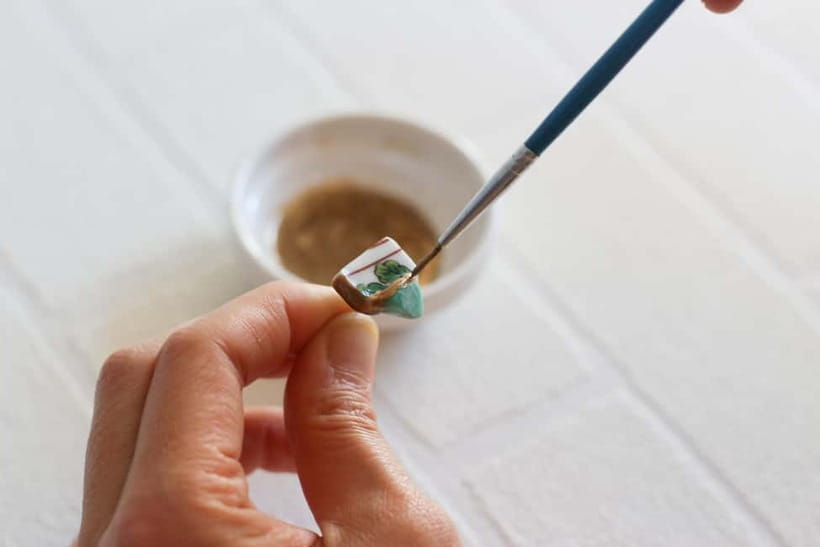
The 150-minute session gives you enough time to work carefully. First, you learn what kintsugi is and see how the materials are used. Natsuka then explains the steps in order, helping you understand the role of the synthetic lacquer and gold powder.
You select a pottery fragment and decide what other materials belong with it. Depending on your choice, you can make earrings, a ring, necklace, brooch, tie pin, cufflinks, or another accessory offered during the session. The format gives couples and friends room to make different kinds of pieces rather than producing identical souvenirs.
The gold powder is the visual signature of the craft. It draws attention to the join between materials and makes the repaired or combined section part of the design. The finished jewelry does not try to look untouched. Its appeal comes from the visible line, the uneven edge, and the fact that the original pottery has been repurposed.
Many participants make two pieces during the class, though the exact result depends on your design and working speed. If you work slowly, you may prefer one carefully finished item. That is not a flaw. The instructor is described as patient and does not pressure people to hurry, even when a group takes longer than expected.
Natsuka’s teaching style is a good fit for beginners. Instructions are given step by step in English or Japanese, and help is available as you work. You do not need prior jewelry-making experience. The small group, limited to 10 people, also means you are not left to figure out every stage alone.
Same trip, a completely different kind of day:
- PERFECT KYOTO 1-Day Bus Tour
★ 5.0 · 13,518 reviews - Kyoto: Fushimi Inari, Kinkakuji, Bamboo Grove 1 Day Bus Tour
★ 4.8 · 4,316 reviews - Kyoto: Tea Ceremony in a Traditional Tea House in Kiyomizu
★ 4.9 · 3,519 reviews - Kyoto Geisha Walking Tour: Gion District & Hidden Gems
★ 4.7 · 3,273 reviews
Why the slow pace is part of the value
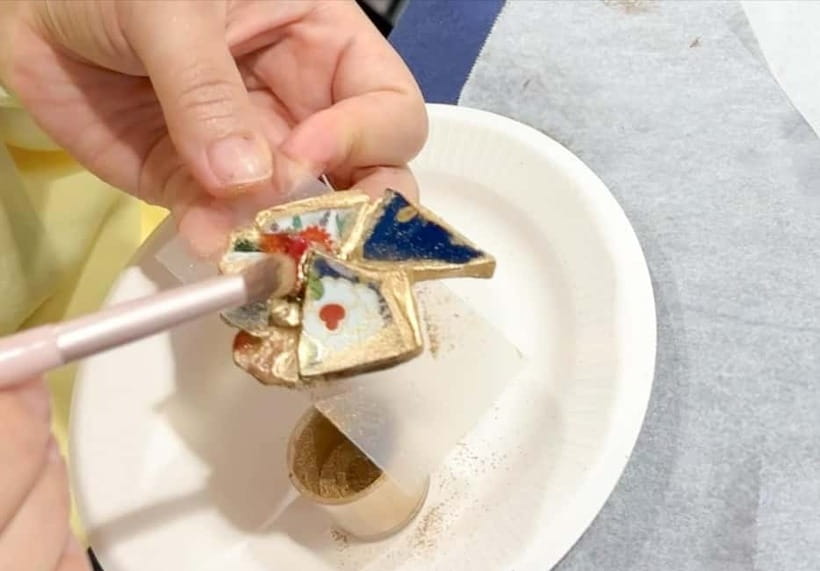
Kyoto can demand a lot from you. Fushimi Inari Taisha brings long shrine paths, many steps, and plenty of people moving through the same famous route. This workshop gives you a chair, a table, and one focused task.
The activity has a quiet, almost meditative quality. You handle small pieces, compare colors, and pay attention to a narrow line of gold. That makes it a useful rainy-day plan, but you do not need bad weather to enjoy it. It works well when you want to balance temples and sightseeing with something creative.
The instructor’s patience is especially useful for children and cautious beginners. One parent completed the activity with an eight-year-old daughter and found the setting and teaching suitable. Still, younger children may need close help with the small materials and careful craft steps. The available information does not state a minimum age, so confirm that point before booking for a child.
You also get a social element without the noise of a large class. With no more than 10 participants, you can work independently while still sharing a table or room with other people. It is a good middle ground for solo visitors, couples, families, and small groups.
How the $106 price works for you
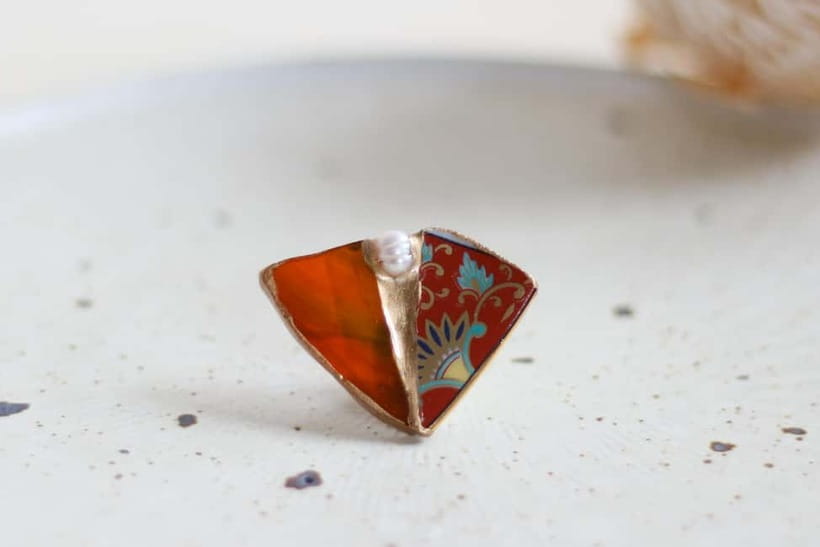
At $106 per person, this is not a cheap drop-in craft activity. The value depends on what you want from a Kyoto souvenir.
You are paying for 150 minutes of instruction, the use of pottery and decorative materials, synthetic lacquer and gold powder, access to a range of accessory styles, and an item you can take home the same day. You also receive cultural context about kintsugi, Japanese pottery, and wabi-sabi. For a handmade piece created under an artisan’s guidance, the price is easier to justify than it would be for a short demonstration with no finished object.
The material choice adds to the value. A ready-made necklace may be attractive, but it does not carry the same connection to your time in Kyoto. Here, you choose the fragment, select the stone or pearl, and take part in the joining process. The result may not be perfectly symmetrical, and that is part of its character.
The price is less appealing if you want a formal lesson in museum-grade ceramic restoration. This is a jewelry workshop using a modern, accessible format. It introduces the spirit and visual language of kintsugi, but it is not presented as professional conservation training.
Practical limits before you book
Plan to arrive on foot or by train. The nearest options are JR Inari Station and Keihan Ryukoku Daimae-Fukakusa Station, both about a five-minute walk away. Use the route map carefully because the atelier sits in a narrow lane and may not look like a commercial storefront.
The house is not suitable for wheelchair users. The information provided does not describe other mobility details, so contact the provider if you have access needs that go beyond wheelchair access.
The class is offered in English and Japanese. That makes it practical for international visitors, and Natsuka has guided English-speaking groups through the process. If you are choosing among Kyoto activities, language support is an important advantage here because the cultural explanation and small technical instructions shape the experience.
You can cancel up to 24 hours in advance for a full refund, and the reserve-now, pay-later option can help if your schedule is still moving. Starting times vary, so check availability for the day you want.
Who will enjoy this most
I would choose this for someone who likes making things, not just seeing them. It also suits a visitor who wants a souvenir with a clear link to Japanese culture and a story behind its materials.
It is particularly good for:
- Couples who want matching or complementary jewelry
- Solo visitors looking for a calm social activity
- Families with older children who can handle small craft materials
- Repeat visitors who have already seen Kyoto’s main temples
- Rainy-day planners who want an indoor activity
- Anyone interested in Japanese pottery, repair, design, or sustainable crafts
It may not suit you if you want a fast activity, dislike making design choices, or need a fully step-free venue. You should also avoid treating the workshop as a simple stop between train connections. The 150-minute duration, plus walking to the house, calls for a real block of time.
Is this sustainable souvenir making?
The workshop gives broken pottery a second use instead of sending it straight to waste. That does not make every material fully sustainable, but it does give you a thoughtful form of upcycling. You are working with damaged ceramics, leftover decorative pieces, and natural materials to create something with a new purpose.
The idea fits kintsugi well. The crack or break is not erased, and the old object is not treated as worthless. It becomes part of a new design. That message can stay with you longer than a quick purchase from a souvenir shop.
I also like that the materials connect the jewelry to several Japanese pottery regions. You are not only taking home a gold-colored accessory. You may also remember the contrast between a pottery shard, a polished stone, and the old Kyoto house where you made it.
Should you book the Kyoto kintsugi workshop?
Book it if you want a personal, quiet, hands-on experience close to Fushimi Inari Taisha. The patient instruction, small group, wide material choice, English support, and same-day finished jewelry make the $106 price reasonable for visitors who value time and meaning over a bargain.
Skip it if you need wheelchair access, have only a short gap in your schedule, or want a serious course in traditional ceramic restoration. For everyone else, this is a smart way to slow down in Kyoto and leave with a souvenir that you designed yourself, imperfections included.
FAQ
Where does the kintsugi jewelry workshop take place?
It takes place at Kintsugi Jewelry engrace, a traditional 100-year-old Kyoto townhouse near Fushimi Inari Taisha in Kyoto, Japan.
How long does the workshop last?
The scheduled duration is 150 minutes.
How much does the activity cost?
The listed price is $106 per person.
Which stations are near the atelier?
The atelier is about a five-minute walk from Keihan Ryukoku Daimae-Fukakusa Station or JR Inari Station.
What materials can I use?
Materials include Japanese pottery shards, synthetic lacquer, gold powder, natural stones, stained glass, shells, and pearls.
Which pottery types are available?
The workshop offers pottery pieces from Arita, Karatsu, Oribe, Kyoto, Shigaraki, and Hagi traditions.
What kind of jewelry can I make?
Available accessory types include earrings, rings, necklaces, brooches, tie pins, cufflinks, and other jewelry options.
Is the workshop taught in English?
Yes. Instruction is available in English and Japanese.
Can I take my jewelry home the same day?
Yes. You can take your finished creation home on the day of the workshop.
Just added around Kyoto
- Sekka Cotton Furoshiki Class★ 5.0 · 19 reviews
- Kyoto Sword Experience – includes Museum Ticket/Ninja Experience★ 4.5 · 149 reviews
- Scenic Green Tea Fields of Hidden Kyoto & Local Tea Exp (Private)★ 5.0 · 32 reviews
- Secret Eastern Kyoto Biking Adventure★ 5.0 · 44 reviews
- Private Sake Tasting in Central Kyoto with Sake Sommelier★ 5.0 · 32 reviews
- Samurai School in Kyoto: Samurai for a Day★ 5.0 · 202 reviews
- Samurai Performance and Casual Experience: Kyoto Ticket★ 4.5 · 115 reviews
- SHIRAKAWA Japanese Culture Experiences with private English staff★ 5.0 · 16 reviews
Traditional Crafts, compared.
Tokyo Sumo Experience: Chanko & Mochi with a Former Pro
Our verdict →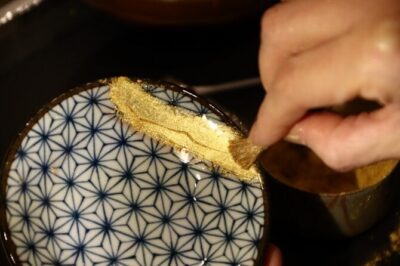
Kintsugi Experience: Art of Golden Joinery in Tokyo
Our verdict →

Matcha Making Experience with Mochi Sweets in Asakusa
Our verdict →
Authentic knife making experience at a blacksmith in Kyoto
Our verdict →

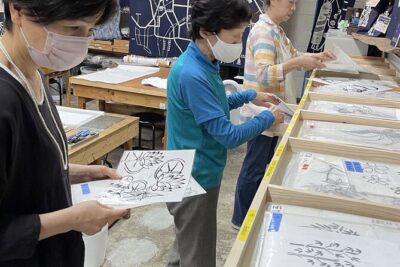
Roketsu dyeing experience: M course Roketsu Dyeing Experience
Our verdict →Browse the lists this tour appears in