
Reviewed · WORKSHOPS
Kyoto: Japanese Koto & Shamisen Concert and Koto Class
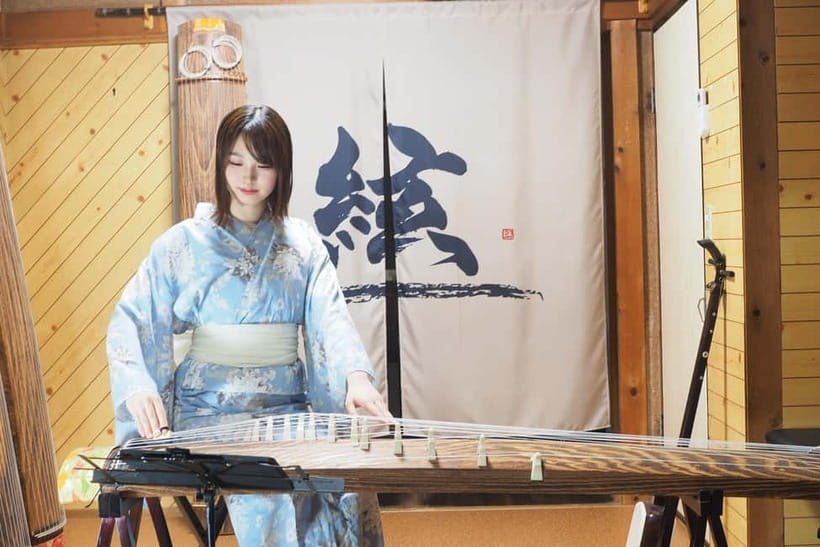
Kyoto’s traditional music is at its best when you can hear it close up, not from the back row of a large theater. This koto and shamisen concert takes place in an old, small Japanese house, where the music feels personal and the performers are near enough for you to see every hand movement.
I like two things right away: you hear more than one style of music, from classical works to contemporary and original pieces, and you get to try the koto yourself. The main consideration is the setting. The house can be hard to spot in a residential lane, and one booking reports a dark alley and a short wait outside before the doors opened.
Key points to know
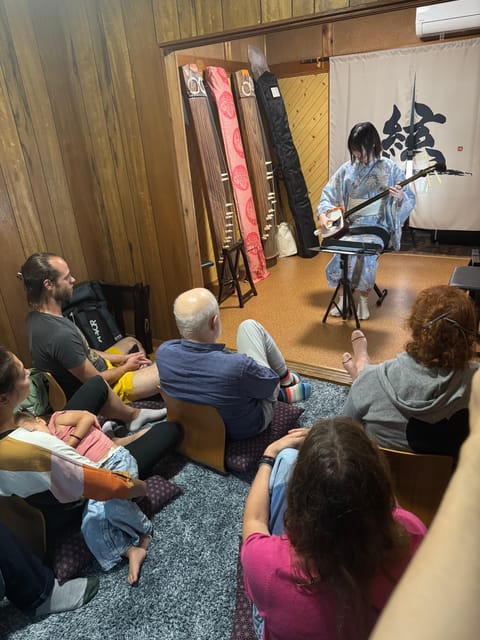
- A concert inside a home: Expect a warm, intimate room rather than a formal temple or concert hall.
- Classical and contemporary music: The program may include traditional songs, modern pieces, original compositions, and vocals.
- A real hands-on lesson: You can play a simple piece on the koto with help from a professional musician.
- Close contact with the performers: The program includes questions, conversation, photos, and explanations of the instruments.
- A good fit for beginners: You do not need musical training, and the lesson is designed to introduce the basics quickly.
- Useful Kyoto location: The area works well with visits to Arashiyama, Nijo Castle, Kinkakuji, or Nishiki Market.
A small Kyoto house instead of a formal concert hall
The first surprise is the setting. You are not walking into a grand theater, a temple courtyard, or one of Kyoto’s famous traditional townhouses. You enter a small, old Japanese home, with a cozy atmosphere that feels closer to being invited into a family’s music room.
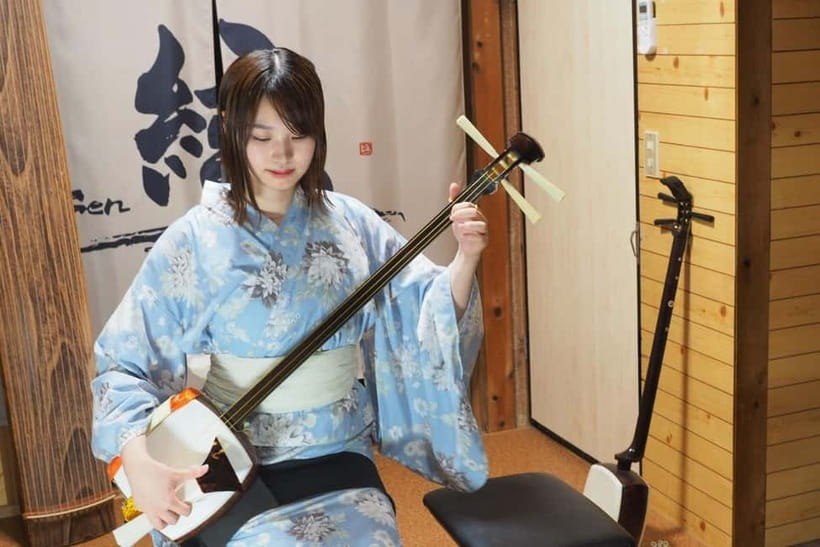
That setting changes how you hear the instruments. The koto is a long, wooden zither with strings stretched across a low frame. The shamisen is a three-stringed instrument with a strong, clear sound. In a large hall, you might focus on the melody. Here, you can also notice the pluck of each string, the changes in tone, and the performer’s technique.
The room is part of the experience, but it also means the session is not designed for a large crowd. Private and small-group options are available, and some sessions may be very small. One booking had only one person present besides the performer and guides, which gives you an unusually direct view of the music.
The program lasts between one hour and 100 minutes, depending on the option and schedule. That is long enough to hear a proper performance and have a practical introduction without taking over your entire day in Kyoto.
More Taiko & Music Experiences in Kyoto:
- Kyoto: Nishiki Market Tea Ceremony with Koto Performance
★ 4.8 · 294 reviews - Shamisen Discovery in Kyoto 【Group】
★ 5.0 · 24 reviews - Private Koto Lesson in Kyoto with a Professional Koto Performer
★ 5.0 · 13 reviews
What happens before the music begins
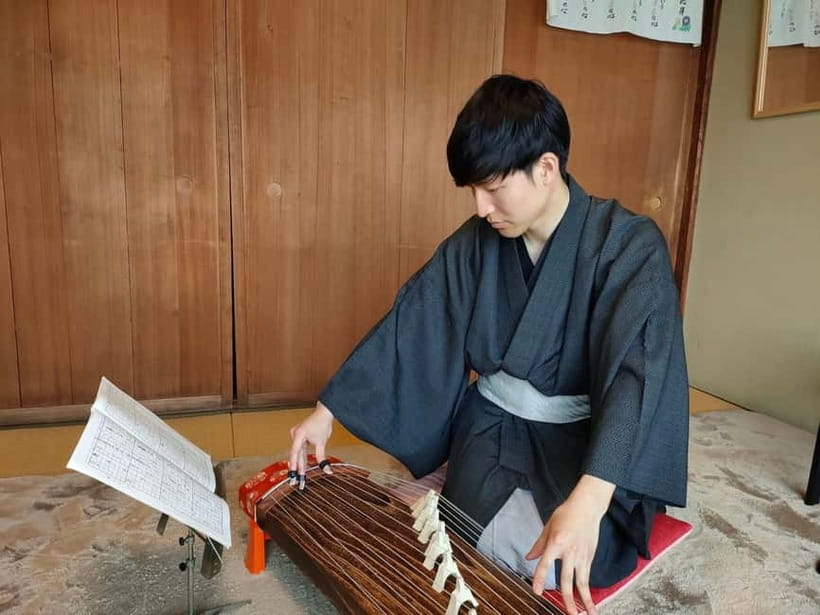
The program starts with a short explanation of the instruments. You learn basic facts about the koto and shamisen, along with how their music is written.
Japanese traditional music uses sheet music that may look unfamiliar if you are used to Western notation. Seeing the score and hearing how it connects to the instrument gives you useful context before the performance begins. You are not simply listening to sounds from another culture with no explanation. You get a simple guide to what you are hearing.
The English and Japanese instruction makes this easier for international visitors. The English-speaking presenter or interpreter explains the instruments and helps with questions. The tone is informal, so you can ask about the music, the instruments, or the techniques without feeling that you need specialist knowledge.
This short introduction matters because the koto is not just a decorative Japanese object. The sound changes depending on how the string is plucked, pressed, or shaped. The shamisen also has its own attack and tone. A few minutes of explanation help you notice those differences during the concert.
Listening to koto and shamisen up close
The performance is the heart of the experience. The musicians play a changing selection of classical pieces, contemporary compositions, and original works. The exact program depends on the season and the performer, so you should not book expecting one fixed set list.
That variety is useful. Classical pieces give you a sense of the instruments’ older traditions, while contemporary and original works show how musicians use them today. Some traditional pieces include vocals, adding another layer to the sound. Other selections bring more energy and modern feeling.
Aoi is one of the performers associated with the experience. Her koto playing and singing have received especially strong praise, and the performance can include different techniques that produce different tones. You may hear the koto sound delicate in one passage, then sharper and more forceful in another.
The shamisen gives the program contrast. Its sound is more direct and percussive, while the koto can produce a flowing, ringing tone. Hearing the instruments together helps you understand why both remain important parts of Japanese music.
The small room makes the concert feel less formal and more focused. You can watch the performer’s hands at close range. That is a real advantage for anyone curious about instruments, music, or performance technique. You are not guessing how the sound is made from a distant seat.
The question period and photographs
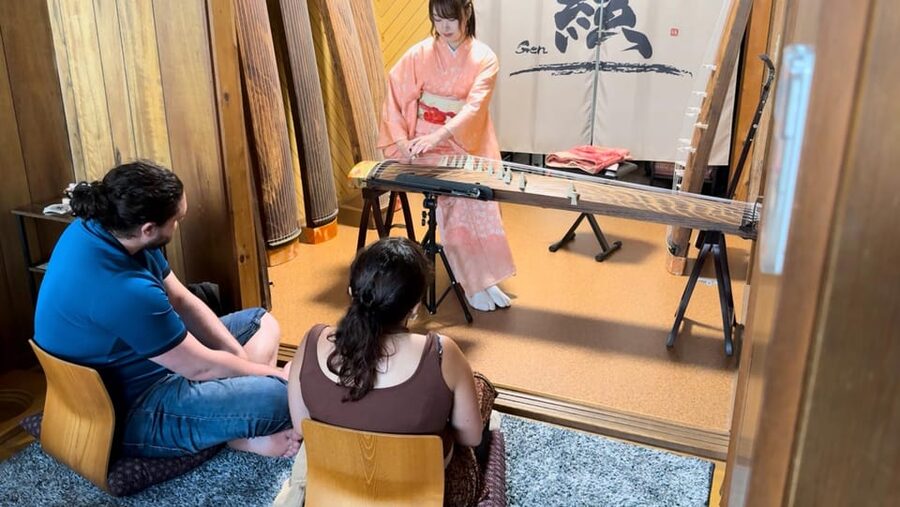
After the performance, the session shifts from concert to conversation. You can ask questions directly and speak with the performer through the English-speaking support provided.
This is one of the strongest parts of the experience for curious people. You can ask about the instrument’s construction, the music score, the difference between techniques, or the performer’s approach to a piece. The discussion is not just a formal speech, so the session can respond to your interests.
There is also time for photos. The organizers provide photos of your experience, including images of you trying the instrument. That is more useful than a quick snapshot taken from your seat because it records the hands-on part of the program.
Special requests may sometimes be possible, but you should not count on a particular song unless it has been arranged in advance. One birthday booking included a birthday song, so it may be worth asking ahead of time if you are marking a special occasion.
More Concerts in Kyoto:
- Kyoto: Traditional Concert at Townhouse or Bathhouse
★ 4.9 · 224 reviews - Concerts Played with Traditional Instruments in Kyoto
★ 5.0 · 50 reviews
Trying the koto for yourself
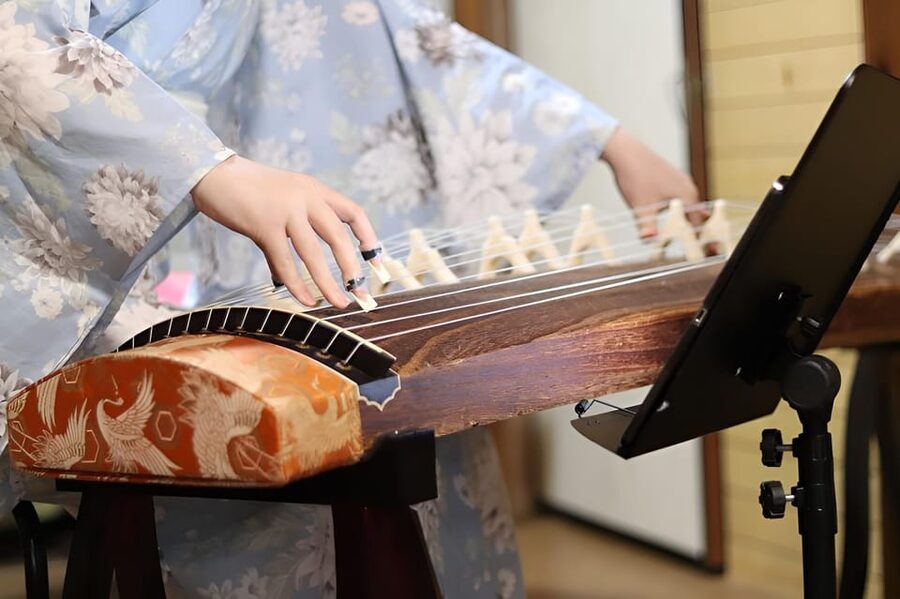
The final section lets you sit at the koto and play a simple piece. A professional instructor guides you through the basics, so you are not left trying to work out the instrument alone.
This is beginner-friendly in the best sense. You do not need previous musical training, and the goal is not to turn you into a koto player in one hour. Instead, you get a short, clear taste of the instrument and the physical work behind the music.
The lesson also gives you a better ear for the concert. After you have tried to place your fingers and produce a clean note, you will listen differently to the performer’s control and speed. Even a simple exercise shows how much skill goes into shaping the music.
The instructors are encouraging, especially for people who feel they have no musical ability. Some participants have been able to play a short piece with the performer. You may even have a chance to try your own ideas, but the exact lesson depends on the instructor and the time available.
Do not expect a long technical class. The lesson is an introduction, not a full course in koto performance. If you want an extended study session, you should check the option details before booking. The performance-only option may also be available at a lower price for people who want music without the practical lesson.
How much value do you get for $38?
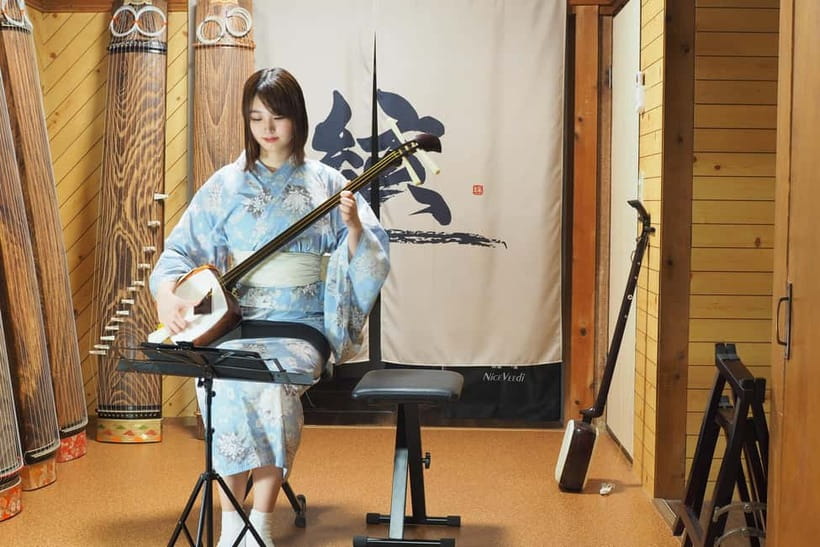
At $38 per person, this is a strong value if you want both a concert and a hands-on activity. Your price includes the performance, instrument use, materials, instruction, a cultural introduction, and photos. You also get access to musicians in a private or small-group setting, rather than simply watching from a distant seat.
The value comes from the combination. A short concert alone can feel limited if you are building a full day around it. A basic music class alone may not give you a sense of what the instrument can do. Here, you hear professionals first, then try the koto with that sound still fresh in your mind.
The price is especially reasonable for a family or small private group, provided everyone is old enough for the setting. The experience is not suitable for children under four, and the booking information also lists restrictions for children under three, children under two, and babies under one. Since those categories overlap, families with very young children should confirm the age policy before paying.
Meals, drinks, transport, souvenirs, and extra koto accessories are not included. That is not a major issue, but you should treat this as a focused cultural activity rather than a full evening package.
Finding the house and planning the timing
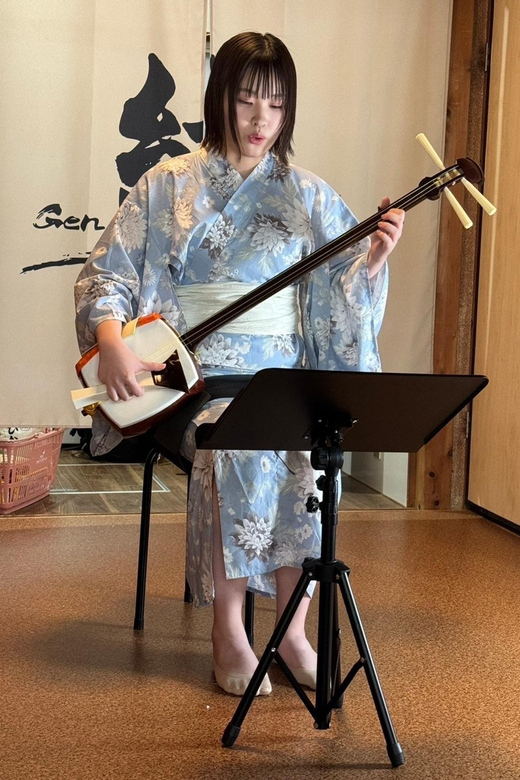
The meeting point can vary by the option you book, so check your confirmation carefully. The house is in a residential area rather than at a major landmark, and the entrance may not be obvious.
Allow extra time to find it. One booking found the small house difficult to locate, while another arrived by taxi and found the place manageable but noted that the alley was dark. You may also need to wait outside until about five minutes before the performance begins.
Late arrival can shorten your session. That matters more here than on a large group tour because the concert and lesson run on a compact schedule. Arrive early, keep your phone charged, and have the address ready for a taxi driver if you are not comfortable navigating the residential lanes.
Transportation is not included. The location is useful for combining with several major Kyoto sights, but you should check the exact meeting point before calculating travel time. The nearby connections make this easier than the home setting might suggest.
From Saiin Station, you can reach Arashiyama in about 25 minutes by train and on foot. Saiin is a useful transfer point between the Hankyu Line and the Randen Line. Nijo Castle takes about 20 minutes by train and on foot, with the castle area accessible from the Tozai Line.
Kinkakuji takes roughly 20 to 25 minutes by bus and on foot from the Nishioji Sanjo bus stop. Nishiki Market is about 25 minutes by train and on foot, with a direct Hankyu Line ride toward Karasuma or Kawaramachi.
These estimates are best used for rough planning, not a promise of exact door-to-door time. Kyoto traffic, walking speed, and the precise house location can change the trip. I would pair the concert with one nearby sight, not cram it between several timed attractions.
Who will enjoy this most
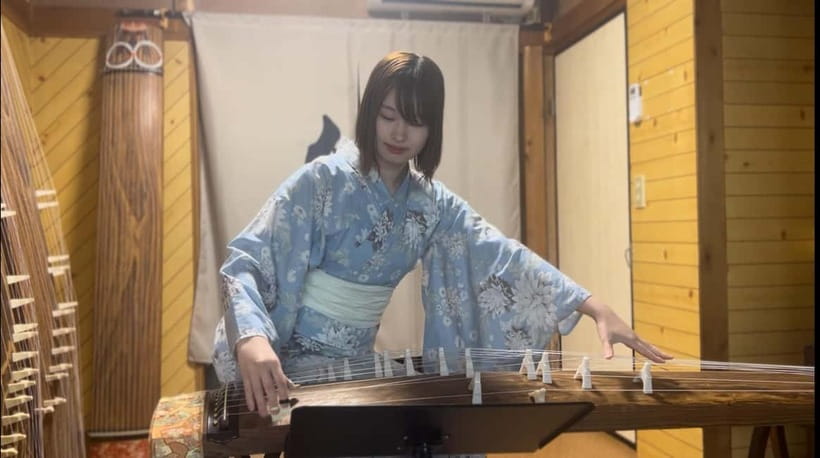
I would recommend this to anyone who wants a cultural experience that asks you to listen and participate. It works particularly well if you enjoy music, handmade instruments, Japanese arts, or small local settings.
Families with older children can get more from it than from a standard performance because the lesson gives everyone something to do. The private or small-group format also makes it easier to ask questions and keep the experience at a comfortable pace.
It is a good choice for a special occasion, too. The intimate room, close contact with the performers, and optional birthday song can make it feel personal without requiring a full evening event.
You do not need to know anything about Japanese music. The explanations are short and accessible, and the teachers guide beginners through a simple piece. Musicians may enjoy the session even more because they can ask about technique and try the instrument themselves.
You may want to choose another activity if you need a polished theater production, a large-scale show, or a completely predictable program. The repertoire changes, the house can take some effort to find, and the lesson is brief. Those are reasonable tradeoffs for a small, personal experience, but they are worth knowing before you book.
Practical details before you reserve
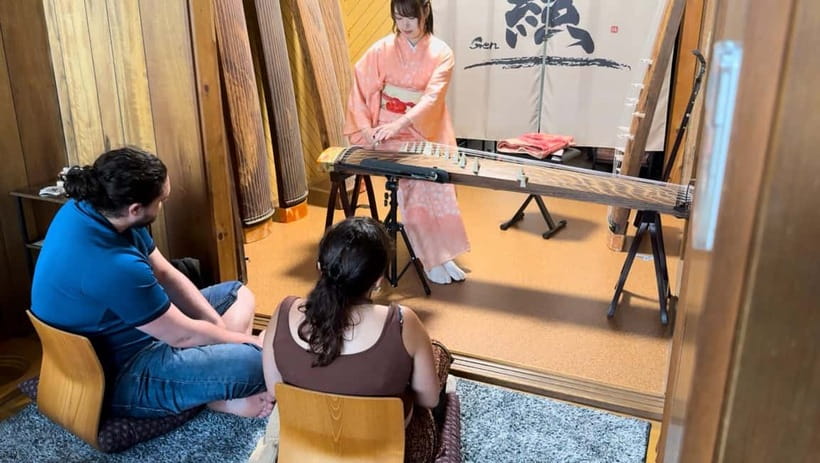
The activity is offered in English and Japanese. A presenter or interpreter supports the explanations, and the musician leads the performance and koto lesson.
Tell the organizers about physical limitations or allergies in advance. The session involves sitting and handling the instrument, so sharing relevant information early can help the staff prepare.
Free cancellation is available up to 24 hours before the start time for a full refund. A reserve-now, pay-later option is also offered, which helps if your Kyoto schedule is still changing.
The experience has a 4.9 rating from 31 reviews, with particularly strong praise for the musicianship, warm instruction, close setting, and chance to ask questions. The most consistent strength is not one isolated song or performance. It is the full sequence: explanation, professional music, conversation, and your own first attempt at the koto.
Should you book the koto and shamisen concert?
Book it if you want an authentic-feeling Kyoto activity that is intimate, musical, and hands-on. For $38, you receive far more than a short demonstration, especially if your option includes the lesson and photos.
I would make this a priority for music lovers, families with older children, couples seeking a quieter evening, and anyone who prefers meeting skilled local performers to moving through another busy sightseeing stop. Arrive early, confirm the meeting point, and leave room in your schedule for the residential setting.
Skip it if you want a large concert hall, a fixed program, or a long technical music class. For everyone else, the chance to hear the koto and shamisen at close range, then place your own hands on the koto, makes this one of Kyoto’s more personal cultural activities.
FAQ
How long does the koto and shamisen experience last?
The experience lasts between one hour and 100 minutes. The exact duration depends on the option you choose and the available start time.
What instruments will I hear?
You will hear the traditional Japanese koto and shamisen. The program can include classical pieces, contemporary compositions, original works, and vocals in some traditional pieces.
Can beginners try playing the koto?
Yes. At the end of the program, a professional instructor guides you through playing a simple piece. No previous musical training is required.
Is the experience available in English?
Yes. The experience is offered in English and Japanese, with an English-speaking presenter or interpreter available for explanations and questions.
Is transportation included?
No. Transportation to and from the location is not included. The meeting point may vary depending on the option you book.
Can I cancel for a refund?
You can cancel up to 24 hours in advance for a full refund. A reserve-now, pay-later option is also available.
Just added around Kyoto
- Sekka Cotton Furoshiki Class★ 5.0 · 19 reviews
- Kyoto Sword Experience – includes Museum Ticket/Ninja Experience★ 4.5 · 149 reviews
- Scenic Green Tea Fields of Hidden Kyoto & Local Tea Exp (Private)★ 5.0 · 32 reviews
- Secret Eastern Kyoto Biking Adventure★ 5.0 · 44 reviews
- Private Sake Tasting in Central Kyoto with Sake Sommelier★ 5.0 · 32 reviews
- Samurai School in Kyoto: Samurai for a Day★ 5.0 · 202 reviews
- Samurai Performance and Casual Experience: Kyoto Ticket★ 4.5 · 115 reviews
- SHIRAKAWA Japanese Culture Experiences with private English staff★ 5.0 · 16 reviews
Workshops, compared.
Sushi Making Tokyo Roll and Authentic Japanese Sushi Class
Our verdict →
Ninja 1-hour Hands-on Lesson by Japanese master in Kyoto -Entry
Our verdict →
Browse the lists this tour appears in