
Reviewed · WORKSHOPS
Private Koto Lesson in Kyoto with a Professional Koto Performer
The most memorable part of this Kyoto activity is getting your hands on a real koto, the long Japanese zither used in formal ceremonies and traditional music. A professional performer guides you through the instrument, then helps you play Sakura, one of Japan’s best-known songs.
I like two things here: the lesson is private, so the teacher can adjust it to your group, and the price includes the instrument, lesson, music notation, taxes, tea break, and performance. The teacher’s patience also makes this a good choice for a child, as one son managed to master Sakura by the end.
The main consideration is time. At about 80 minutes, this is a focused introduction rather than a full music course. You will learn one song and the basics of the instrument, but you should not expect a wide repertoire or a long Kyoto sightseeing program.
Key points to know before you book
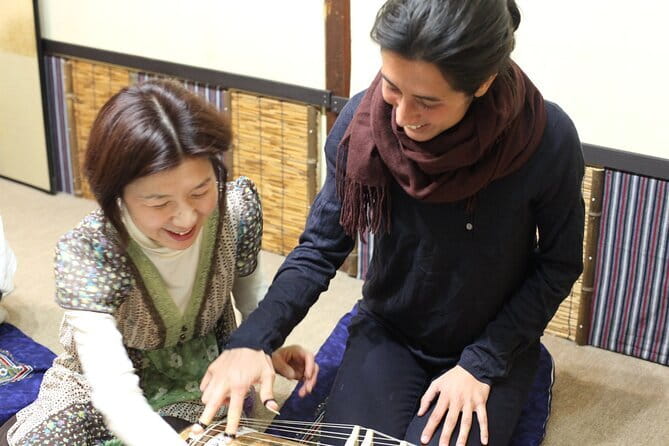
- You learn on a traditional koto: The instrument and all lesson materials are supplied, so you do not need musical experience or equipment.
- A professional performer teaches you: Instruction covers how to play, along with the history and traditions connected to the koto.
- Sakura is the practical goal: You work toward playing a recognizable Japanese song during the lesson.
- The activity is private: Only your own group takes part, which allows the teacher to work at your pace.
- Tea and a performance follow the lesson: After playing, you can take a break and hear the teacher perform.
- The meeting point is in Kyoto’s Kamigyo Ward: The activity begins and ends at Soushunan, near public transportation.
What the 80-minute koto lesson is really like
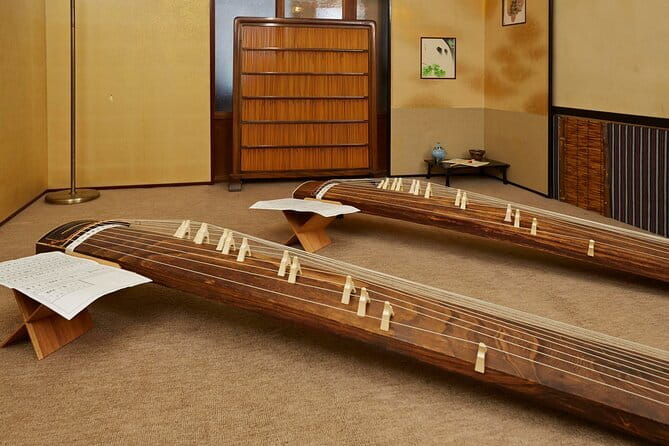
This experience gives you a direct way to meet Japanese culture through sound and touch. Instead of only watching a performance, you sit with the instrument and learn how it works under the guidance of someone who performs professionally.
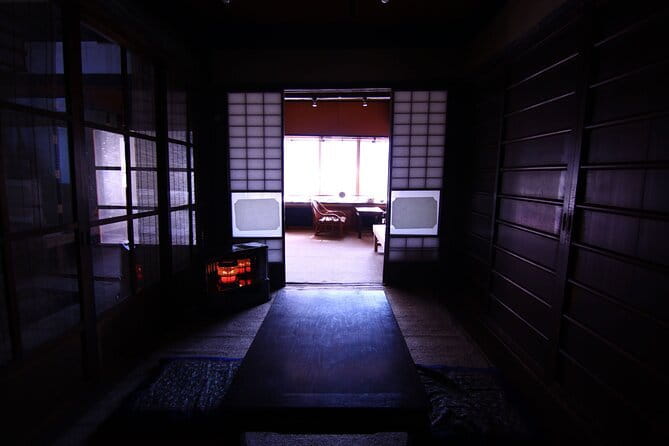
The lesson takes place at Soushunan, at 288-2 Higashishinmeicho in Kyoto’s Kamigyo Ward. You meet there and return there when the activity ends. Private transportation is not included, so you need to make your own way to the studio.
The session lasts about one hour and 20 minutes. That is enough time for a clear introduction without turning the lesson into an exhausting appointment. You should expect the time to be divided between instruction, practice, cultural background, and the closing tea break and performance.
The exact teaching sequence is not set out in detail, so the pace may depend on your group. A complete beginner may need more time to understand the instrument and notation, while a child or music student might move more quickly toward the song.
More Taiko & Music Experiences in Kyoto:
- Kyoto: Nishiki Market Tea Ceremony with Koto Performance
★ 4.8 · 294 reviews - Kyoto: Japanese Koto & Shamisen Concert and Koto Class
★ 4.9 · 31 reviews - Shamisen Discovery in Kyoto 【Group】
★ 5.0 · 24 reviews
Learning Sakura on a traditional Japanese instrument
The koto is a traditional Japanese string instrument associated with formal ceremonies and classical performance. The lesson lets you see the instrument as more than a decorative object. You learn how to approach it and how a professional player produces music from it.
The stated song for the session is Sakura. This is a sensible choice for a short lesson because it gives you a clear target. Rather than practicing disconnected notes, you work toward a familiar traditional melody that can make the lesson feel like a real musical achievement.
Do not assume that playing a full concert version will happen in 80 minutes. The useful goal is a basic version of the song, supported by the teacher’s guidance. One child was able to play some pieces and master Sakura during the lesson, which suggests that the instruction can work well for young beginners when they are willing to practice.
Music notation is provided. That matters because you do not have to rely only on memory or copy every movement perfectly. The notation gives you something concrete to follow during the session, though you should still expect the teacher to guide you through the notes and technique.
The activity is open to a wide age range, from children age three to elderly participants. That does not mean every three-year-old will sit comfortably through a lesson, of course, but it does show that previous musical training is not required. A family can take part together rather than sending one person off to a separate class.
Why a private lesson helps
The private format is one of the strongest features. Only your group participates, so you are not trying to keep up with a room full of strangers. The teacher can give more attention to a child who needs repeated instructions, or move faster if an adult already has some musical experience.
This format also makes the activity easier for mixed-age groups. A parent and child may have very different levels of concentration and coordination. Private instruction gives the teacher a chance to manage those differences without making anyone feel behind.
It is also a better setting for questions. You can ask about the instrument, the music, and the traditions behind it without worrying about interrupting a larger class. The teacher is described as kind and patient, qualities that matter when you are handling an unfamiliar instrument for the first time.
There is a practical limit here. Private does not mean completely self-paced or open-ended. The session still lasts about 80 minutes, and the planned focus is the koto and Sakura. If your main goal is to study several songs or learn advanced technique, this is not the right format.
The teacher’s performance and tea break
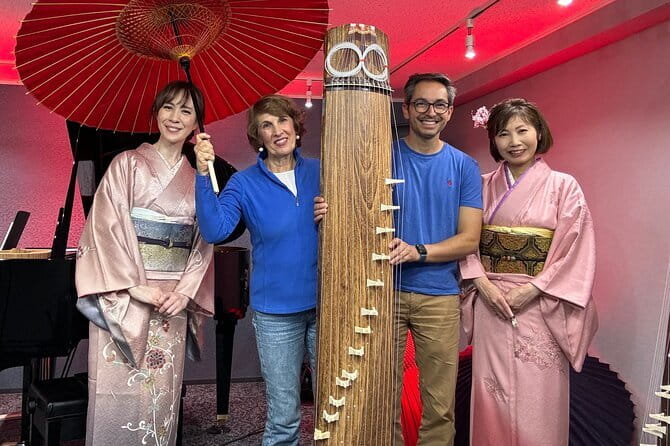
After the playing portion, you can take a tea break and enjoy a performance by your teacher. This gives you a useful contrast. First, you hear and try the instrument as a beginner. Then you hear what a professional performer can do with the same type of instrument.
That closing performance may be the most revealing part for anyone who is curious about traditional Japanese music. Your own first attempts will be simple, while the teacher can show greater control and musical expression. It helps put the basic lesson in context without requiring a separate concert booking.
The tea break also gives the session a calmer finish. It is not only a technical class that ends as soon as the final note is played. You have time to pause and enjoy the cultural setting with the instructor.
The supplied information does not specify the type of tea, the length of the performance, or the exact refreshments. Keep your expectations modest. Think of it as a short cultural break included with the lesson, not as a formal tea ceremony.
A few more Kyoto half-days worth comparing
- PERFECT KYOTO 1-Day Bus Tour
★ 5.0 · 13,518 reviews - Kyoto: Fushimi Inari, Kinkakuji, Bamboo Grove 1 Day Bus Tour
★ 4.8 · 4,316 reviews - Kyoto: Tea Ceremony in a Traditional Tea House in Kiyomizu
★ 4.9 · 3,519 reviews - Kyoto Geisha Walking Tour: Gion District & Hidden Gems
★ 4.7 · 3,273 reviews
What the $60 price includes
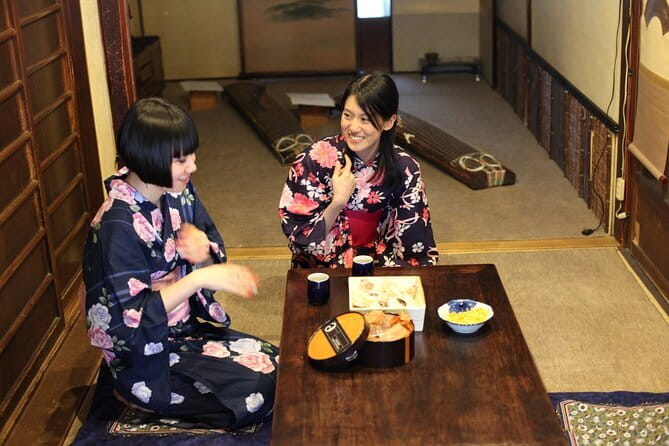
At $60 per person, the value depends on how much you want from your Kyoto activities. This is not simply an admission ticket. The fee covers the use of the koto, the lesson, music notation, and all fees and taxes.
You also receive direct instruction from a professional performer and a teacher performance after the lesson. For someone who wants a personal cultural activity, those elements make the cost easier to justify than a brief demonstration where you only watch.
The price is especially practical for a first attempt. You do not need to rent or buy an instrument, purchase sheet music, or pay a separate instruction fee on arrival. The experience states that there are no additional fees for the necessary lesson equipment and service.
Still, the value will be lower if you are looking for a long session or a broad musical course. You are paying for an introduction and a guided experience, not a series of lessons. A person who already plays the koto may find the basic content too limited.
Who should take this Kyoto activity
I would recommend this lesson to anyone who wants a hands-on cultural activity rather than another passively observed performance. It works particularly well for families, since the age range is unusually broad and the private format lets the teacher adjust the pace.
It also suits first-time musicians. You do not need to bring an instrument or know how to read Japanese music. The instructor supplies the musical notation and gives direct help with the playing.
This can be a good choice for an adult who wants a quieter Kyoto experience. The lesson takes place indoors, lasts less than an hour and a half, and centers on one clear cultural subject. It may fit well between sightseeing stops, provided you allow enough time to reach the meeting point in Kamigyo Ward.
The activity may not suit you if you want a highly structured tour of Kyoto, a long concert, or extensive instruction in several pieces. There is no sightseeing transport, and the experience begins and ends at Soushunan.
How the family experience may differ
A child can take part from age three, but the best experience will depend on attention span and interest. The teacher’s patient approach is important here. One young student was able to work hard, play some pieces, and master Sakura by the end.
For families, I would treat the lesson as a shared activity rather than a performance test. Children may enjoy the novelty of the instrument, while adults may be more interested in the traditions and the teacher’s playing. The private setting reduces the pressure that can come with a public class.
Older participants are welcome too. The activity does not require athletic ability, and most people can participate. Service animals are allowed, and the meeting point is near public transportation.
The information does not provide detailed accessibility specifications for the venue or seating. If your group has specific mobility needs, contact the provider before booking rather than assuming the room setup will work for you.
Getting to Soushunan and planning your time
The meeting point is Soushunan, 288-2 Higashishinmeicho, Kamigyo Ward, Kyoto, 602-8162, Japan. The activity ends back at the same location, so you do not need to arrange a separate pickup.
Public transportation is nearby, but transportation to the lesson is not included. Build in time to find the exact address, especially if your day already includes several Kyoto stops. The experience does not include a city transfer or a guide who meets you elsewhere.
Confirmation is sent within 48 hours of booking, subject to availability. The activity is often booked well ahead, with an average booking lead time of 57 days. That does not guarantee that every date requires such advance planning, but it is a useful warning for a fixed Kyoto itinerary.
The free cancellation policy allows a full refund if you cancel at least 24 hours before the local start time. Changes or cancellations made inside that 24-hour window are not accepted for a refund. Keep that cutoff in mind if your sightseeing plans may shift.
The cultural value beyond playing one song
The lesson explains the history and traditions behind the koto while you learn to play. That connection matters. You are not just handling an unusual instrument for a photo; you are being shown why it has a place in Japanese ceremonies and music.
A short activity cannot cover the full story of the koto or every form of Japanese traditional music. It can, however, give you a physical reference point. After you have felt the instrument, followed notation, and heard a professional performance, traditional music may seem less distant when you encounter it elsewhere in Japan.
The experience also avoids a common problem with cultural activities: keeping the visitor at arm’s length. Here, your own imperfect playing is part of the lesson. You learn by doing, with the teacher close by to correct and encourage you.
That hands-on element is the main reason to choose this over simply attending a performance. If you want a polished musical evening, book a concert. If you want to understand the instrument through your own attempt, choose the lesson.
Should you book the private koto lesson?
Book it if you want an intimate, beginner-friendly Kyoto activity with a clear cultural focus. The strongest reasons are the professional instruction, private format, wide age range, included equipment, and chance to hear the teacher perform after you try Sakura yourself.
I would especially recommend it for families and curious first-time musicians. The $60 price is fair when you use the full package of instruction, instrument, notation, tea break, and performance.
Skip it if you want advanced training, several songs, or an activity that includes transportation and sightseeing. For everyone else, this is a focused way to spend 80 minutes learning something you cannot get from a standard Kyoto walking tour.
FAQ
Where does the koto lesson take place?
The lesson begins at Soushunan, located at 288-2 Higashishinmeicho, Kamigyo Ward, Kyoto, 602-8162, Japan.
Where does the activity end?
The activity ends back at the meeting point at Soushunan.
How long does the lesson last?
The experience lasts approximately one hour and 20 minutes.
How much does the experience cost?
The listed price is $60 per person.
Is the koto provided?
Yes. Koto instrument use is included, along with the lesson and music notation.
Do I need musical experience?
No previous musical experience is stated as a requirement. The lesson is designed for beginners, and people from age three to elderly participants can take part.
What song will I learn?
The lesson teaches Sakura, a traditional Japanese song.
Is the activity private?
Yes. Only your group participates in the private activity.
Is transportation included?
No. Private transportation is not included, so you must make your own way to the meeting point.
Can I cancel for a refund?
Yes. You can receive a full refund if you cancel at least 24 hours before the experience start time. Cancellations or changes made less than 24 hours before the start time are not accepted for a refund.
Just added around Kyoto
- Sekka Cotton Furoshiki Class★ 5.0 · 19 reviews
- Kyoto Sword Experience – includes Museum Ticket/Ninja Experience★ 4.5 · 149 reviews
- Scenic Green Tea Fields of Hidden Kyoto & Local Tea Exp (Private)★ 5.0 · 32 reviews
- Secret Eastern Kyoto Biking Adventure★ 5.0 · 44 reviews
- Private Sake Tasting in Central Kyoto with Sake Sommelier★ 5.0 · 32 reviews
- Samurai School in Kyoto: Samurai for a Day★ 5.0 · 202 reviews
- SHIRAKAWA Japanese Culture Experiences with private English staff★ 5.0 · 16 reviews
- A Privately Guided Photoshoot in Beautiful Kyoto by a Pro★ 5.0 · 18 reviews
Workshops, compared.
Sushi Making Tokyo Roll and Authentic Japanese Sushi Class
Our verdict →
Ninja 1-hour Hands-on Lesson by Japanese master in Kyoto -Entry
Our verdict →
Browse the lists this tour appears in