
Reviewed · CALLIGRAPHY CLASSES
Kyoto: Japanese Calligraphy Workshop
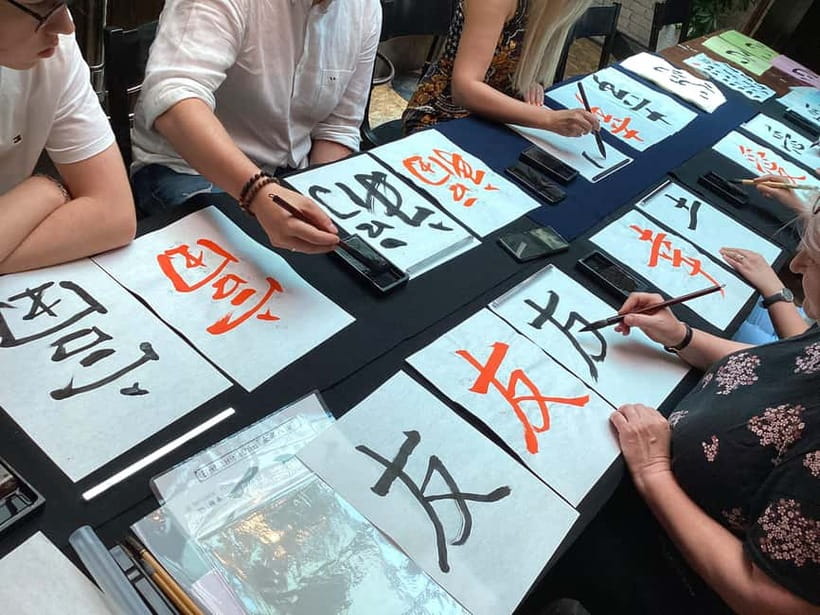
Japanese calligraphy is not just pretty writing. At this Kyoto workshop, you learn how a brush, ink, and a few careful strokes can turn a character into a small work of art. The setting at Gojo Paradiso, beside the Takase River, gives this one-to-two-hour class a calm break from Kyoto’s crowded sightseeing routes.
I like the step-by-step teaching, which makes shodo approachable even if your handwriting is usually best described as hurried. I also like that you leave with your own finished calligraphy on rice paper, signed with your name in kanji and stamped by the teacher. The main consideration is age: children under 10 cannot join, and the class requires a reservation at least one day ahead.
Key points for your Kyoto itinerary
- Practice comes before the finished artwork: You learn basic brush strokes before attempting kanji.
- Teacher Takako offers patient guidance: Her clear English instruction and one-on-one help are especially useful for first-time students.
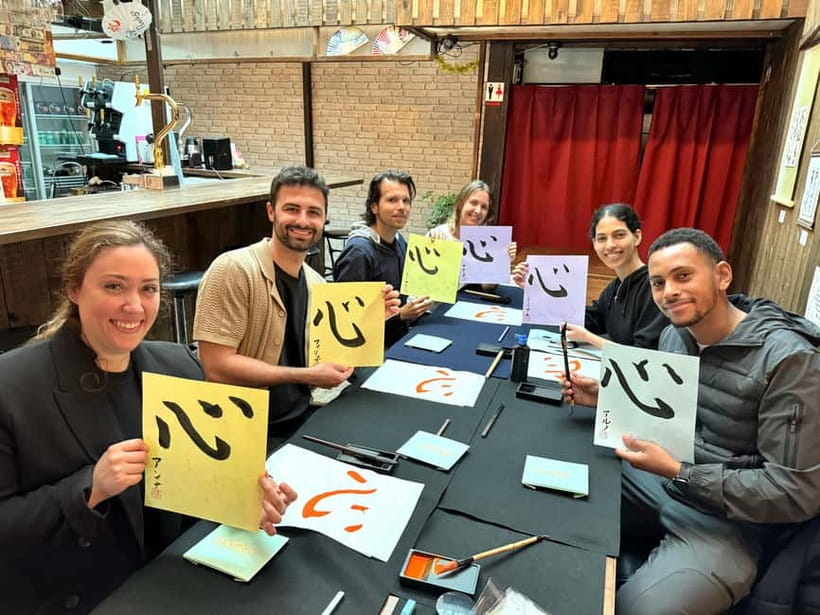
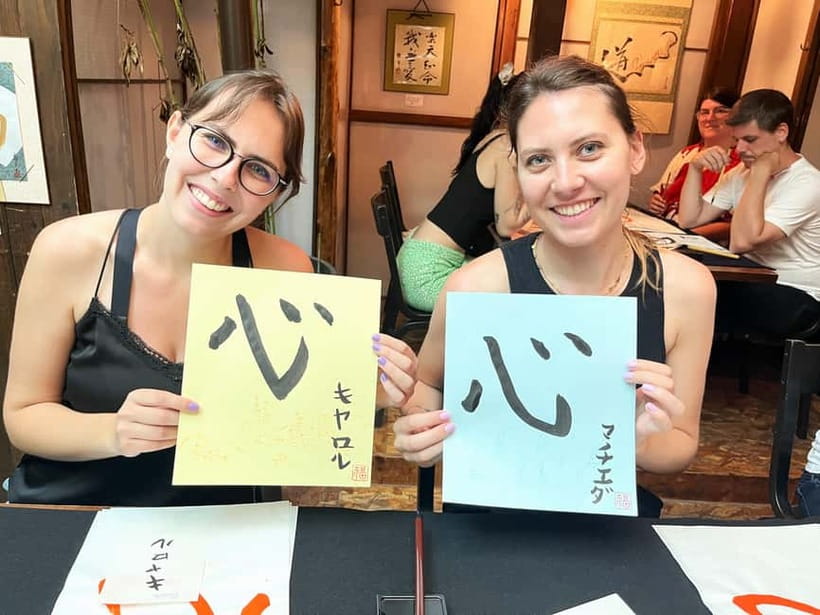
- Your final piece is personal: Write a character and your name in Japanese, then take home the finished work.
- The class stays small: A maximum of 10 participants allows time for individual correction and encouragement.
- The location is easy to reach: Gojo Paradiso is about a five-minute walk from Keihan Kiyomizu Gojo Station.
- The price is modest for a hands-on class: At $32 per person, supplies, instruction, and a take-home artwork are included.
Why shodo makes a good Kyoto activity
Kyoto offers temples, gardens, markets, and museums by the dozen. Those sights give you plenty to look at, but a calligraphy workshop asks you to slow down and make something yourself. That change of pace is the real appeal.
Shodo, the Japanese art of calligraphy, uses brush pressure, ink, spacing, and movement to create kanji characters. You are not simply copying printed letters. You are learning how a stroke begins, changes direction, thickens, and ends.
You do not need artistic training. The workshop is designed for complete beginners, and the instruction starts with the basics. If you have practiced calligraphy before, you can still benefit from the teacher’s corrections and the chance to work with Japanese characters.
I especially like this kind of activity for a first or second day in Kyoto. It gives you a cultural experience without taking up an entire morning or afternoon. It also leaves you with something more meaningful than another photograph on your phone.
More Calligraphy Classes in Kyoto
- Kyoto: Calligraphy class at Buddhist temple in city center
★ 5.0 · 167 reviews - Kyoto: Japanese Calligraphy Class
★ 4.8 · 89 reviews - Kyoto: Local Home Visit and Japanese Calligraphy Class
★ 5.0 · 66 reviews
Arriving at Gojo Paradiso beside the Takase River
The meeting point is Gojo Paradiso on Kiyamachi Street, along the Takase River. From Keihan Kiyomizu Gojo Station, it is roughly a five-minute walk, or about 386 meters. From Keihan Shichijo Station, allow about 10 minutes on foot.
That central location makes the workshop easy to pair with other Kyoto plans. You can schedule it near the Kiyomizu Gojo area or use it as a quieter stop between sightseeing outings. Since starting times vary, check the available time before planning the rest of your day.
The setting matters. A riverside location feels removed from the noise of major streets, even though you remain in central Kyoto. The class takes place in a quiet environment, which suits an activity that depends on concentration and controlled movement.
Give yourself enough time to find Gojo Paradiso. The walk is short, but Kyoto’s streets can be confusing if you are navigating for the first time. A map app and the exact meeting-point details will help you avoid arriving in a rush.
The opening lesson: calligraphy before the brush touches paper
The workshop begins with an introduction to the history and meaning of Japanese calligraphy. This gives you a little context before you start handling the materials.
That opening is useful because kanji characters are more than decorative shapes. Their form, balance, and order matter. Even if you cannot read Japanese, learning what a character represents helps you treat it as a piece of writing rather than a random design.
The teacher explains the tools and shows you how the brush should be held. You then begin practicing basic strokes. This is the part to take seriously. It may feel simple at first, but the amount of ink, the pressure of the brush, and the speed of your movement all affect the result.
Do not worry if your first attempts look uneven. The practice stage is there so you can get a feel for the brush. You may find that slow, deliberate movements work better than trying to force the shape into place.
Stroke practice and one-on-one corrections
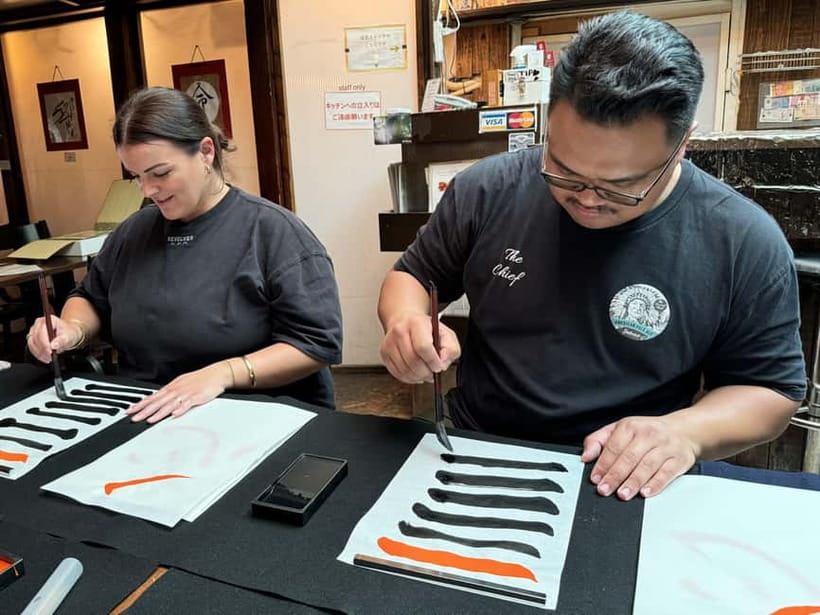
The workshop’s strongest feature is its practical structure. Instead of handing you a brush and expecting you to copy a finished character, the teacher breaks the process into smaller tasks.
You practice different types of strokes, then use those strokes to build characters. Teacher Takako has been described as holding a degree in calligraphy and receiving awards in the field. More important for a beginner, she provides patient explanations and individual help during the exercises.
English is available, as is Japanese. Clear English instruction is particularly helpful when the teacher is explaining brush order, pressure, and shape. The class also has support from assistants, according to the detailed class account, which can make it easier to receive help without stopping the whole group.
The group size is limited to 10 people. That is small enough to preserve a personal feel, though it is not a private lesson. Your experience will depend partly on the number of people booked that day. Still, the format allows the instructor to move around and give direct feedback.
This is where the class becomes more than a craft activity. You are learning to notice small differences in line weight and spacing. You may also find the repetitive practice calming. The focus required by the brush leaves little room for checking your phone or thinking about the next temple.
Same trip, a completely different kind of day:
- PERFECT KYOTO 1-Day Bus Tour
★ 5.0 · 13,518 reviews - Kyoto: Fushimi Inari, Kinkakuji, Bamboo Grove 1 Day Bus Tour
★ 4.8 · 4,316 reviews - Kyoto: Tea Ceremony in a Traditional Tea House in Kiyomizu
★ 4.9 · 3,519 reviews - Kyoto Geisha Walking Tour: Gion District & Hidden Gems
★ 4.7 · 3,273 reviews
Writing kanji and your name in Japanese
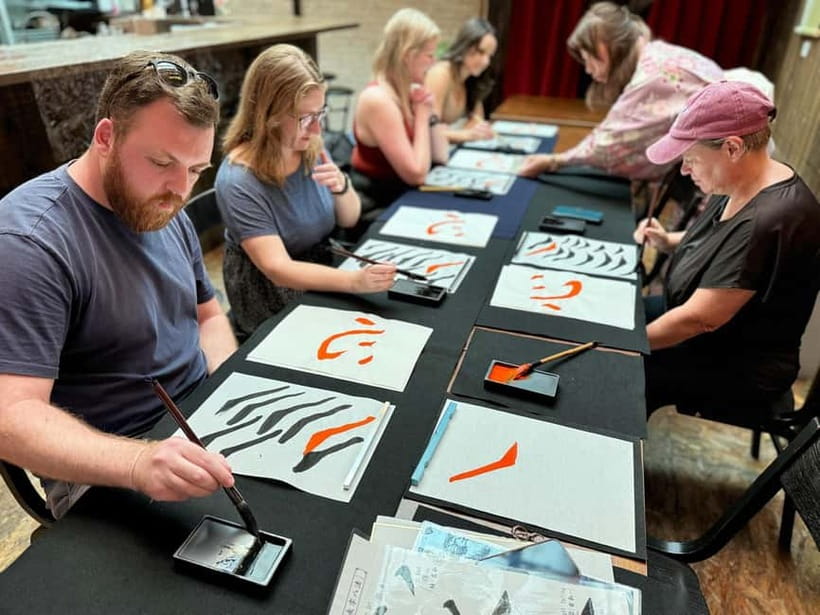
After practicing strokes, you move on to writing a kanji character. The particular character may depend on the class, your preference, or the teacher’s guidance. You also have the chance to write your name in kanji.
Writing your name is one of the most memorable parts because it gives the finished work a direct connection to you. You are not simply reproducing a symbol chosen by someone else. You are creating a piece that records your time in Kyoto.
The teacher encourages you as you work and helps you improve the balance of the character. Do not expect every attempt to look like a master’s work. The value is in seeing your progress from the first practice strokes to the final piece.
The workshop is suitable for beginners, but it still rewards patience. If you rush, the brush can produce heavy or uneven lines. If you slow down and follow the instruction, you give yourself a better chance of producing something you will want to display.
Creating the final artwork on rice paper
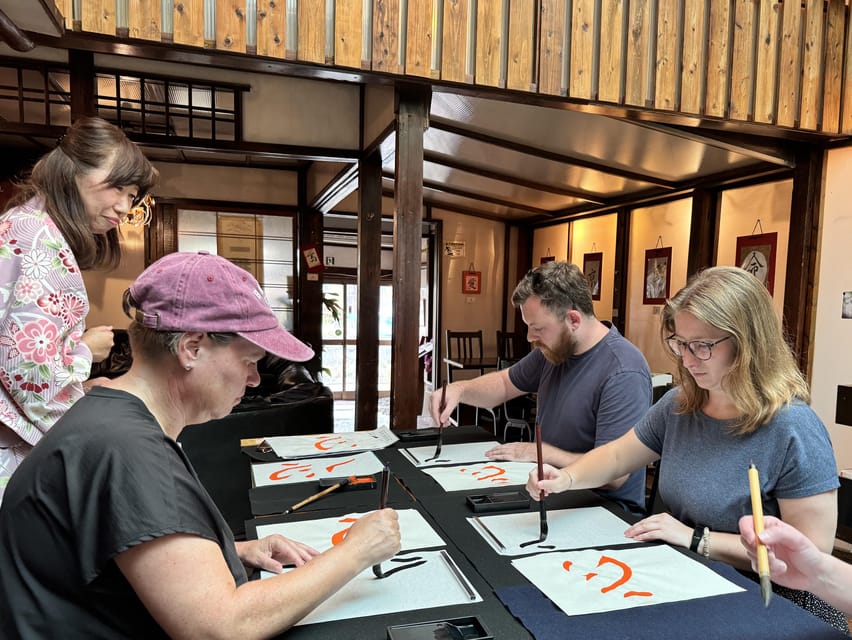
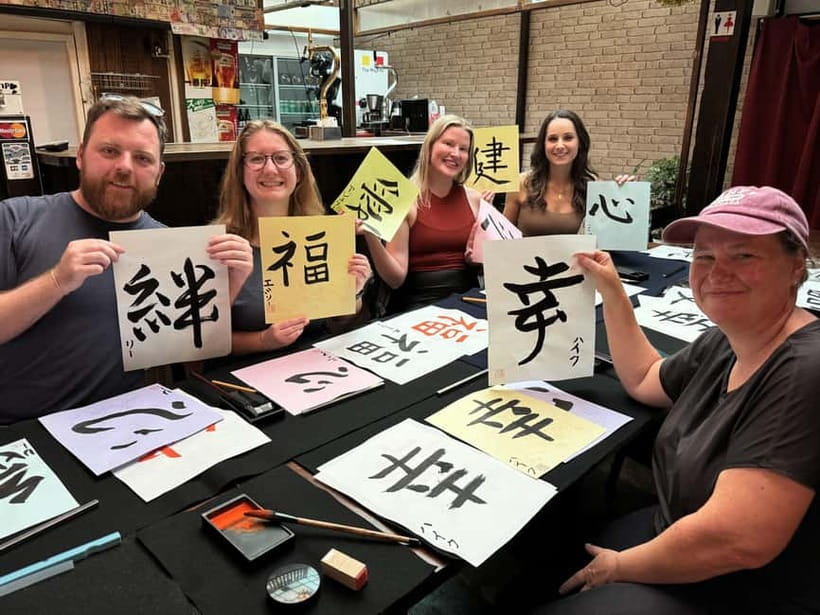
The final stage is your chance to make a finished calligraphy piece. You use the skills from the practice exercises to write a character and your name on beautiful rice paper.
The materials are included, and the available supplies are described as high quality. That matters because the paper and brush affect the finished appearance. A casual pen-and-paper exercise would not have the same sense of occasion.
Once the piece is complete, the teacher signs and stamps it. That small finishing detail gives the artwork a traditional look and makes it feel complete. You can take it home as a one-of-a-kind souvenir of Kyoto.
One class also includes a handmade calligraphy gift with gold accents. Since individual extras can depend on the session, I would treat this as a welcome possibility rather than the main reason to book. The confirmed value of the workshop is the instruction, supplies, and your own finished work.
Think about how you will carry the rice paper afterward. The activity information confirms that you take the artwork home, but it does not specify protective packaging. A flat folder or firm envelope in your day bag would be a sensible precaution.
Photos, gallery time, and special orders
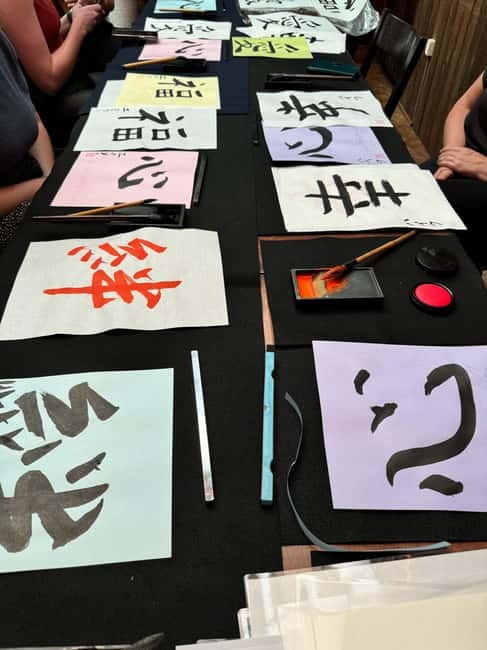
The last part of the workshop gives you time to take photographs and explore the gallery. This is a useful ending because it lets you see calligraphy beyond your own beginner piece.
You can also place special orders. The details of those orders are not specified, so ask at the workshop if you are interested in buying additional work or arranging something custom.
The photo opportunity is practical as well as fun. You can record the finished piece, your name in kanji, or the process itself. If you are traveling with a partner, this gives you a shared activity and a clear memento from the trip.
The class is not built around a long gallery visit. The main event remains the lesson. Treat the gallery as a short extra rather than a separate attraction.
What the $32 price really covers
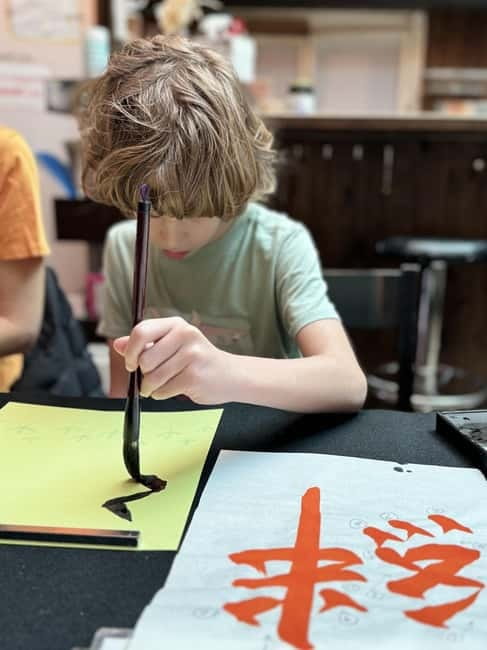
At $32 per person, this is a good-value cultural activity if you want more than a demonstration. You receive instruction from a trained calligraphy teacher, all necessary materials, a small-group class, and a finished artwork to take home.
The price also includes something harder to measure: time with an instructor who can correct your technique. Buying a brush or watching a calligraphy demonstration would not give you the same personal guidance.
The value is strongest for people who want a hands-on experience. If you only want to see traditional Japanese calligraphy, a gallery or cultural display may be enough. If you want to try the brush yourself and keep the result, the workshop makes better use of your money.
The class lasts one to two hours. That range gives the session some flexibility, but you should check the exact starting time and expected duration when booking. It is short enough for most itineraries, yet long enough to include background, practice, a final artwork, and photos.
Who will enjoy this workshop most
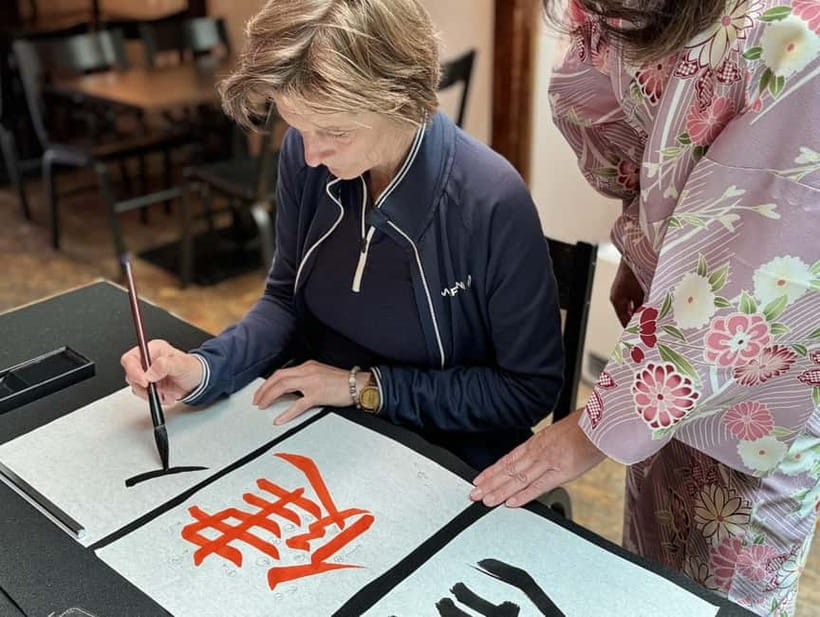
I would recommend this class to adults, couples, friends, and solo visitors who want a quiet cultural activity in central Kyoto. It also suits people who prefer learning by doing instead of sitting through a formal demonstration.
Beginners are the natural audience. You do not need to know Japanese, and English instruction is available. The teacher’s patient style and individual corrections should help you feel comfortable even if your first brush strokes are clumsy.
It is also a good choice for anyone seeking a personal souvenir. A shop-bought print can be attractive, but your own imperfect character, name, signature, and stamp tell a more personal story.
The minimum age is 10. Families with younger children will need to choose another activity, and older children should be comfortable sitting still, listening, and handling brush and ink with care.
People with mobility needs can consider this experience because it is listed as wheelchair accessible. For specific seating or access questions, confirm the arrangements when you reserve.
Practical details before you book
Reserve at least one day in advance. This is not an activity to count on finding at the last minute, especially if your Kyoto schedule is tight.
The group limit is 10 people, which keeps the class fairly intimate. A smaller group may allow more individual attention, while a full session will feel more social. The instructor speaks English and Japanese.
The meeting point is easy to reach by train, but check your route carefully. Gojo Paradiso is closest to Keihan Kiyomizu Gojo Station, with Shichijo Station also within walking distance.
The booking terms are flexible. You can cancel up to 24 hours ahead for a full refund, and the reserve-now, pay-later option lets you hold a place without paying at the time of booking. These terms are helpful when your Kyoto plans depend on weather, train schedules, or changing sightseeing days.
Should you book the Kyoto calligraphy workshop?
Book it if you want a calm, personal Kyoto experience that fits into half a day and gives you something to carry home. The combination of patient teaching, English support, small-group attention, quality materials, and a finished rice-paper artwork makes the $32 price sensible.
I would skip it only if you are looking for a major sightseeing landmark, a fully private lesson, or an activity for children under 10. This is a focused workshop, not a broad tour of Kyoto.
For most adults and older children interested in Japanese culture, it offers a pleasant change from looking at historic sites. You learn a few brush skills, write your name in kanji, and leave with a souvenir made by your own hand. That is a pretty good use of one quiet hour in Kyoto.
FAQ
Where does the calligraphy workshop take place?
The workshop takes place at Gojo Paradiso on Kiyamachi Street, beside the Takase River in central Kyoto.
How far is Gojo Paradiso from the nearest station?
It is about a five-minute walk, or approximately 386 meters, from Keihan Kiyomizu Gojo Station. Keihan Shichijo Station is about a 10-minute walk away.
How long does the workshop last?
The activity lasts approximately one to two hours. Starting times vary, so check availability when booking.
Is the class suitable for complete beginners?
Yes. The teacher gives step-by-step instruction, beginning with basic brush strokes before moving on to kanji characters and names in Japanese.
Is English instruction available?
Yes. The instructor speaks English and Japanese.
What do I take home?
You create your own calligraphy artwork on rice paper and can take it home. The activity also includes the necessary supplies for the class.
Can children join the workshop?
Children under 10 are not permitted to participate.
Is the workshop wheelchair accessible?
Yes. The activity is listed as wheelchair accessible.
Do I need to reserve in advance?
Yes. Reservations are required at least one day in advance. You can cancel up to 24 hours before the activity for a full refund.
Just added around Kyoto
- Sekka Cotton Furoshiki Class★ 5.0 · 19 reviews
- Scenic Green Tea Fields of Hidden Kyoto & Local Tea Exp (Private)★ 5.0 · 32 reviews
- Secret Eastern Kyoto Biking Adventure★ 5.0 · 44 reviews
- Kyoto Sword Experience – includes Museum Ticket/Ninja Experience★ 4.5 · 149 reviews
- Private Sake Tasting in Central Kyoto with Sake Sommelier★ 5.0 · 32 reviews
- Samurai School in Kyoto: Samurai for a Day★ 5.0 · 202 reviews
- SHIRAKAWA Japanese Culture Experiences with private English staff★ 5.0 · 16 reviews
- A Privately Guided Photoshoot in Beautiful Kyoto by a Pro★ 5.0 · 18 reviews
Calligraphy Classes, compared.
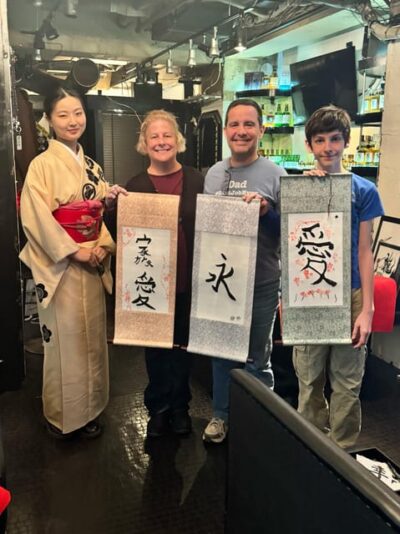
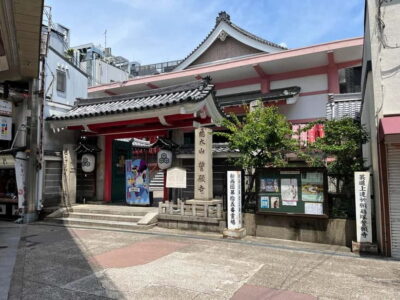
Calligraphy class at Buddhist temple in city center
Our verdict →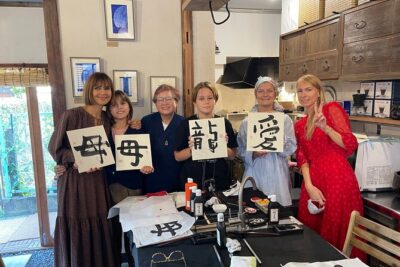
Let’s experience calligraphy in YANAKA, Taito-ku, TOKYO !!
Our verdict →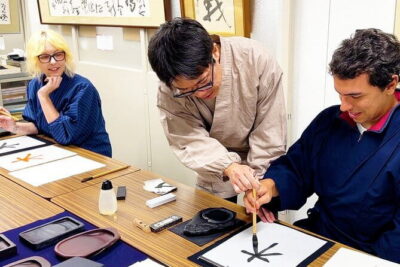
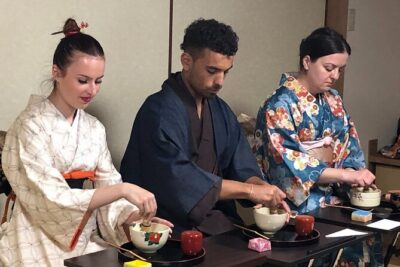
An Amazing set of Cultural experience: Kimono, Tea Ceremony and Calligraphy
Our verdict →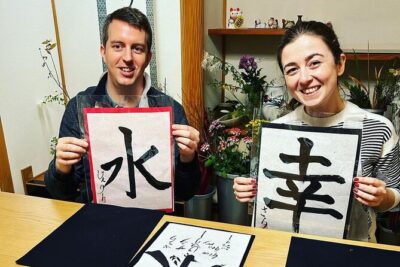
Private Japanese Calligraphy in Kyoto – Learn Shodō with a Master
Our verdict →
Browse the lists this tour appears in