
Reviewed · GEISHA & MAIKO EXPERIENCES
Kyoto: Gion Geisha District Walking Tour and Hidden Gems
Gion is more than lanterns and wooden teahouses. This three-hour walk connects the district to northern Higashiyama, showing you how geisha traditions, Buddhist temples, and ordinary city life fit together. I especially like the route’s finish at Kiyomizu-dera, and the way guides such as Ben, J, and Jay add history, anecdotes, and practical answers rather than simply naming buildings.
I also like the excellent value at $25, especially because the walk covers several major sights and less obvious lanes. The main caution is physical: you will walk for three hours and tackle plenty of steps, so this is not a relaxed stroll for anyone with low fitness.
Key points at a glance
- A point-to-point route: Start near Ben’s Cookies Kyoto Shijo and finish at Kiyomizu-dera’s Niomon Gate.
- Gion and northern Higashiyama together: The walk links famous streets with quieter back lanes, shrines, and temple grounds.
- Strong storytelling: Ben, J, and Jay have been praised for explaining Kyoto history, Japanese daily life, samurai, the Shinkansen, and local customs.
- A useful geisha introduction: You learn about maiko and geisha training, work, traditions, and place in Kyoto culture.
- A real walking workout: Expect steps, uneven routes, and a full three hours on foot.
- Flexible booking: You can cancel up to 24 hours before the start for a full refund and reserve without paying immediately.
Why this Kyoto walk works so well
Many first visits to Kyoto become a race between major temples. You see a gate, take a photo, hear a name, and move on. This walk gives those places a connecting story.
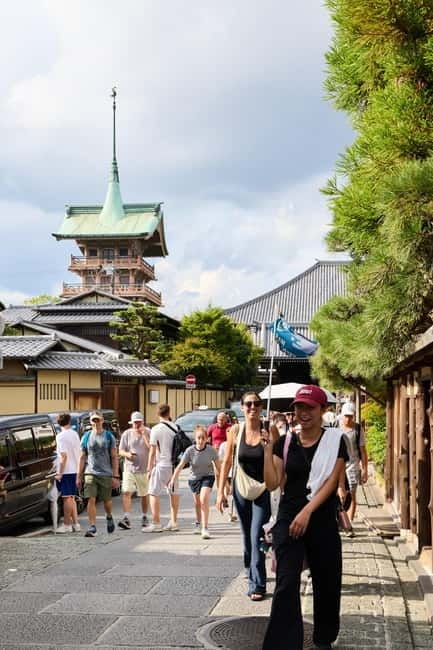
The route begins in the modern Shijo area, passes into Gion, then continues toward the temple and shrine district of northern Higashiyama. That change matters. You watch central Kyoto give way to traditional wooden buildings, narrow lanes, religious sites, and old paths leading uphill toward Kiyomizu-dera.
The guide is the key part of the experience. The walk is offered in English, and the guides named in the feedback include Ben, J, and Jay, with one review referring to Mr J. Their strength is not just listing dates. They explain how Kyoto changed from imperial capital to modern cultural center, and they welcome questions about present-day Japan as well as the past.
That makes the tour useful if you want context without committing to a full-day history program. One three-hour outing can help you understand several parts of Kyoto before you explore them on your own.
More Hidden Gems Tours in Kyoto
- Kyoto Geisha Walking Tour: Gion District & Hidden Gems
★ 4.7 · 3,273 reviews - Private Kyoto Tour with a Local, Highlights & Hidden Gems, Personalised
★ 5.0 · 1,543 reviews - Arashiyama Bamboo Forest & Hidden Gems Bike Tour (Early Bird)
★ 5.0 · 613 reviews
Starting near Ben’s Cookies Kyoto Shijo
The meeting point is in front of Ben’s Cookies Kyoto Shijo, where the guide holds a sign. This is a practical central starting place, but you should pay attention to the exact meeting instructions and arrive ready to begin on foot.
The first ten minutes are listed as a guided introduction at the starting area. Do not expect a long visit focused on the cookie shop itself. Its main purpose is to bring the group together and set the scene for the walk.
From here, the route moves toward Gion. This opening stretch helps you shift from modern shopping streets to Kyoto’s older cultural quarter. If you are arriving after a long train journey or a morning of sightseeing, drink some water before you start. Water is the one item specifically recommended, and there are no indications that the tour pauses for a meal.
Gion Tatsumi Bridge and the world of geisha

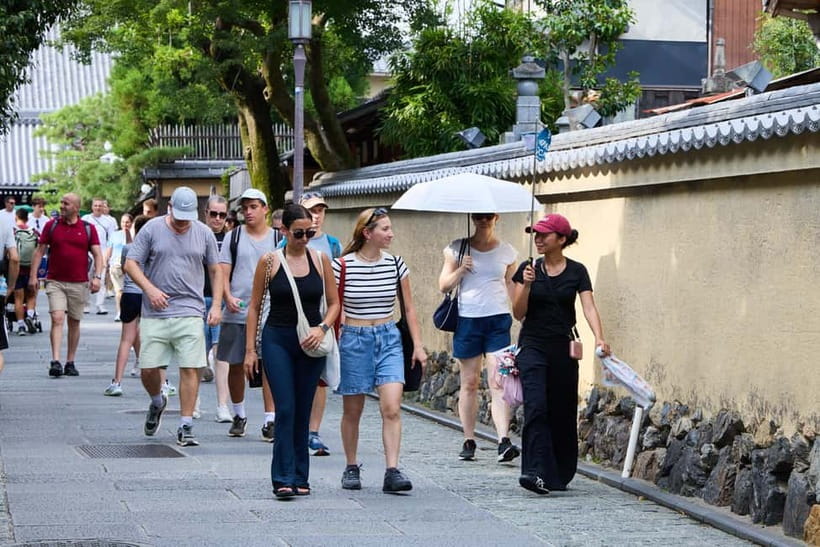
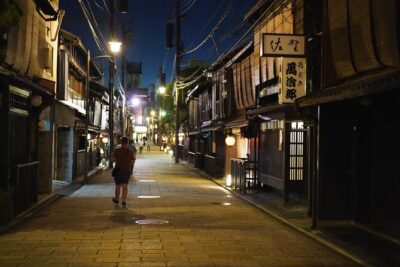
Gion Tatsumi Bridge is one of the most atmospheric points on the route. The surrounding area is known for traditional wooden townhouses, teahouses, narrow lanes, and a long association with geisha culture.
Here, the guide explains the difference between maiko and geisha, including how they train and work. That background is valuable because Gion can otherwise feel like a stage set. The tour helps you see it as a working neighborhood with strict customs and a living cultural tradition.
You should also approach this part of Kyoto with care. Traditional streets are not a theme park. People live and work in the area, and the tour’s value comes from learning how to look respectfully rather than treating every doorway as a photo prop.
The bridge stop lasts about 20 minutes, enough time for explanation and photographs without turning the visit into a long wait. The route’s photo opportunities are strongest here and later around the old lanes near Kiyomizu-dera.
Chion-in: a major temple with room for questions
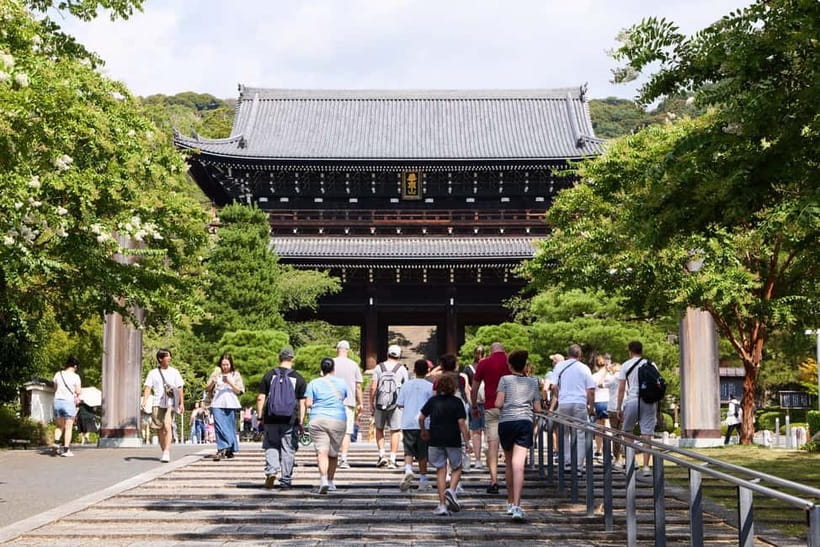
The walk continues to Chion-in, where the guided visit lasts about 30 minutes. This is the longest scheduled stop, and that gives the guide time to explain religious traditions rather than rushing you through the entrance.
You will hear about Kyoto’s Buddhist setting and the way religious sites shaped the city. The walk does not treat Chion-in as an isolated monument. Instead, it places the temple within the wider story of Kyoto, where imperial power, religious institutions, art, and everyday customs developed side by side.
This is also a good point to ask questions. The strongest feedback about the guides focuses on their ability to handle questions about Japanese history and daily life. One guide was praised for having a degree in history, while other comments highlight explanations about samurai, the Shinkansen, and tanuki. Those subjects suggest a guide who can move beyond a prepared speech when the group shows interest.
There is a practical concern here: temple grounds can involve stairs and uphill walking. If steps are difficult for you, Chion-in and the later route toward Kiyomizu-dera may be tiring.
More Walking Tours in Kyoto
- Kyoto: Gion Magical Night Walking Tour with Geisha Trivia
★ 4.9 · 2,393 reviews - Kyoto: Gion Geisha District Walking Tour – Stories of Geisha
★ 4.7 · 2,187 reviews - Night Walk in Gion: Kyoto’s Geisha District
★ 4.5 · 2,003 reviews - Kyoto Gion Geisha District Walking Tour – The Stories of Geisha
★ 5.0 · 1,441 reviews
Maruyama Park and a quieter pause
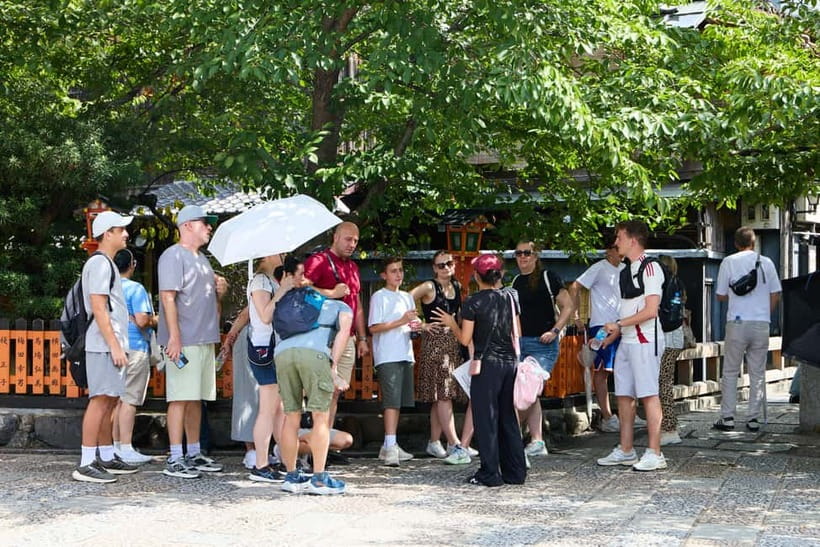
Maruyama Park receives about 20 minutes of guided attention. It provides a change of pace after the temple visit, with open space and a break from the tight lanes of Gion.
The park is useful for understanding how Kyoto’s historic areas are not made up only of buildings. Parks, paths, shrines, and temple grounds create breathing room between the old neighborhoods. Your guide can also connect the park to Kyoto’s seasonal and religious traditions.
This is one of the places where the route feels less like a checklist. You are not simply moving from one famous facade to the next. You are walking through the spaces that connect them.
Still, do not mistake this for a long rest stop. The schedule gives the park 20 minutes, and the total route continues for another substantial stretch. Use the time to drink water and adjust your footwear if needed.
Hōkan-ji and the famous Yasaka pagoda view
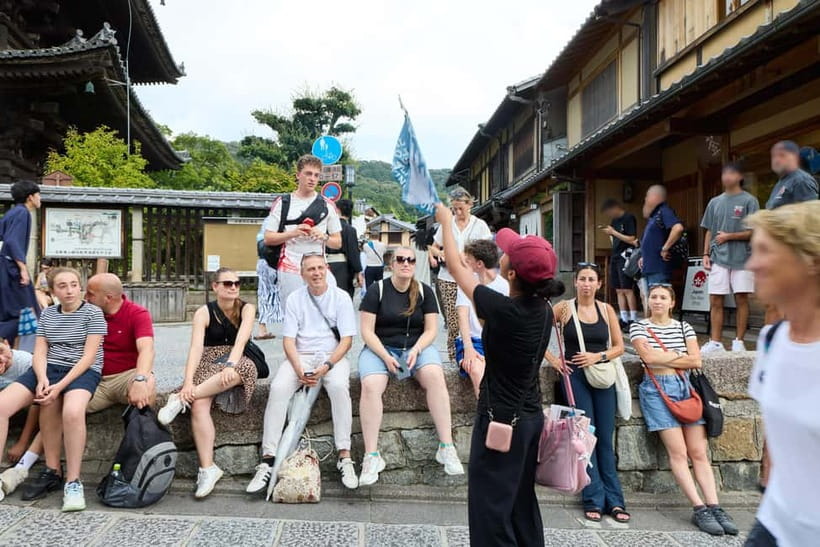
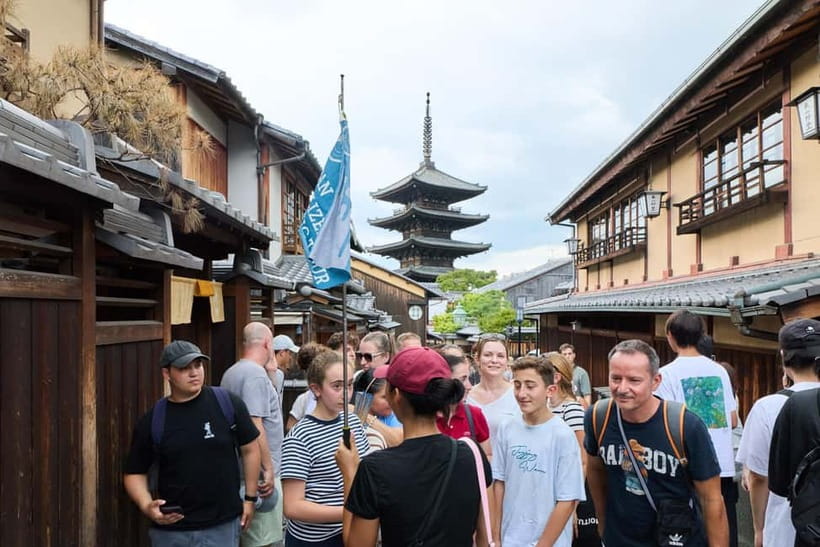
Hōkan-ji is a short ten-minute stop, but its location makes it memorable. The temple is associated with the familiar pagoda view in the Higashiyama area, and the surrounding streets are among the most photographed in Kyoto.
The brief stop works well as part of a walking route because the point is to place the temple in its neighborhood rather than spend a full hour inside. You get a quick explanation, a chance to take in the architecture, and then continue along the historic streets.
This is also where crowd levels may affect your experience, although no fixed crowd conditions are provided. The area is popular, so follow the guide closely and keep your expectations realistic. The tour can show you the setting, but it cannot make a famous lane private.
Ninen Zaka and Sannenzaka
Ninen Zaka and Sannenzaka are traditional sloping paths lined with preserved buildings, shops, and cultural sights. The scheduled explanation at each is only about five minutes, so these stops are more about walking through the setting than receiving a long lecture.
The short talks are helpful because the paths can be confusing when you explore alone. Your guide gives you a sense of where you are and explains why the streets matter within Kyoto’s old approach to Kiyomizu-dera.
The drawbacks are clear. These paths include slopes, steps, and busy sections, and five minutes is not enough for extensive shopping or independent browsing. If you want to buy gifts, sample snacks, or enter every shop, you may prefer to return later on your own.
I like the way these lanes act as the final approach to the tour’s endpoint. You see Kyoto’s traditional streets in motion, with visitors, shopfronts, old houses, and the steady uphill route toward the temple gate.
Finishing at Kiyomizu-dera Niomon Gate
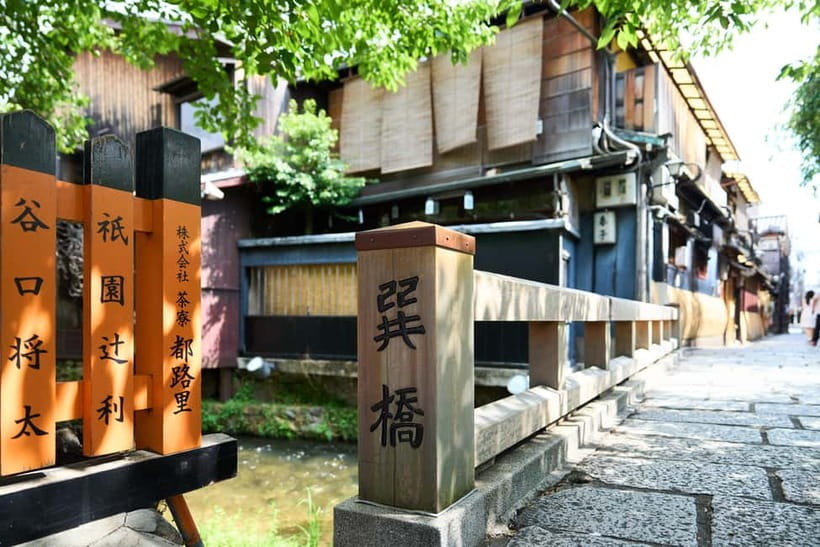
The tour ends at Kiyomizu-dera Niomon Gate, not where it began. That point-to-point design is one of the route’s best features. You cover more ground than you would on a short loop, and you finish in one of Kyoto’s most important sightseeing areas.
The final location also gives you a useful choice. You can continue exploring Kiyomizu-dera if you have admission plans, or use the area as a base for food, shopping, and further walks. The supplied details do not state that temple admission is included, so you should treat the guided tour and temple entry as separate matters unless your booking information says otherwise.
Ending at the gate can make the last part feel special, but it also means you need to plan your next move. You are not returned to Shijo, so check your route afterward and carry only what you want to manage over three hours of walking.
The guides and the style of explanation
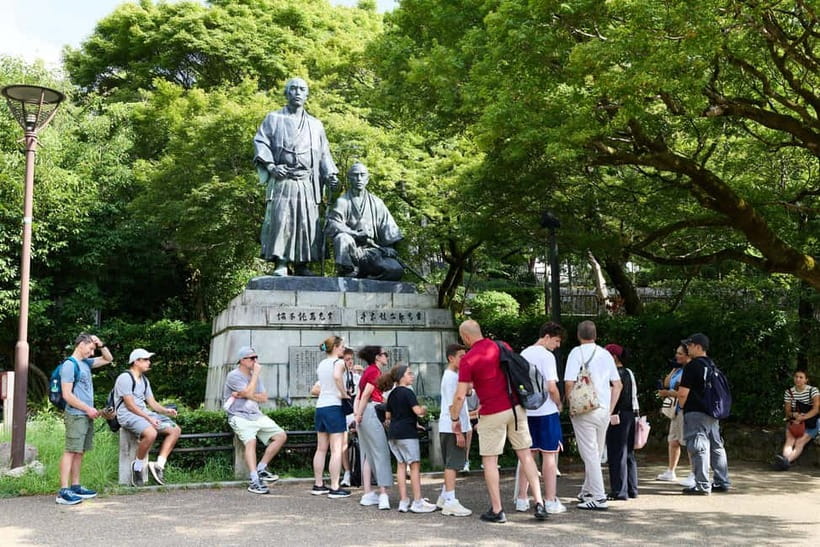
The most praised feature is the guiding. Ben is described as informative, accommodating, and able to explain Kyoto’s history at length. J is praised for his history background, patience, and ability to answer questions. Jay is described as sociable and clear enough for a group that included children aged 11 and 15 and a grandparent aged 79.
That range matters. The tour appears suited to mixed-age groups because the explanations are not limited to academic detail. You can ask about daily life in Japan, historical change, or the meaning of what you are seeing.
The guide names may vary by departure. You should not book solely on the expectation of one specific person, but the repeated pattern is encouraging: expect an English-speaking guide who uses stories and conversation to explain the route.
Group size can also vary. One particularly small group created an almost private experience, but there is no promise that every departure will be that intimate. The tour should still work with a larger group, though you may need to stay near the guide on narrow streets.
Is $25 a good value?
At $25 per person, I consider this a strong-value introduction to Gion and northern Higashiyama. The price covers three hours with a live English guide and a route linking several well-known areas: Gion Tatsumi Bridge, Chion-in, Maruyama Park, Hōkan-ji, Ninen Zaka, Sannenzaka, and the Kiyomizu-dera gate.
You are paying for interpretation and route planning, not admission to a series of attractions. That distinction matters. The tour’s value is highest if you want someone to explain what you are seeing and connect separate sights into one story.
It is less useful if you prefer to wander alone, shop at length, or spend a long time inside each temple. The scheduled stops are brief in places, and the group keeps moving.
A rating of 4.9 from 14 reviews suggests strong satisfaction, but the sample is small. I would treat that as a positive sign, not a guarantee that every guide, group, and weather condition will be identical.
Who should book this walk?
I would recommend it to first-time Kyoto visitors who want a clear introduction to Gion and Higashiyama. It is also a good fit if you like history, ask questions, or want help understanding geisha culture without booking a separate specialist lecture.
Families may find the format workable. The feedback includes children and an older adult enjoying the explanations, though fitness still matters. The route is not suitable for people with low fitness, and the number of steps should be taken seriously.
You should also consider it if you have limited time in Kyoto. Three hours covers a large part of the northern Higashiyama area, and the one-way route reduces the need to retrace your steps.
I would skip it if your priority is a slow morning in one neighborhood, extensive temple visits, or a food-focused walk. Alcohol and drugs are not allowed, and the tour is built around walking and cultural explanation rather than dining.
Practical details before you go
Wear comfortable shoes and bring water. The route includes many steps, slopes, and extended periods on foot, so shoes matter more than a polished outfit.
The tour lasts three hours, and starting times depend on availability. It is offered in English with a live guide. The meeting point is in front of Ben’s Cookies Kyoto Shijo, where the guide holds a sign.
You can cancel up to 24 hours in advance for a full refund. The reserve-now, pay-later option is useful if your Kyoto plans are still moving, since you can hold a place without paying immediately.
Because the tour ends at Kiyomizu-dera Niomon Gate, plan your afternoon from there rather than assuming you will return to the starting point. That finish is convenient for continuing your sightseeing, but it is an important detail for anyone arranging transport or a timed reservation elsewhere.
Should you book the Gion walking tour?
Book it if you want history, cultural explanation, and a broad walking route for a modest price. The guides appear particularly good at connecting old Kyoto with modern Japan, and the route gives you both famous sights and quieter streets without requiring a full day.
Think twice if steps are a problem or if you want plenty of free time at each temple. For everyone else, this is a sensible way to get your bearings in Gion and northern Higashiyama, then return later to the places that deserve a slower look.
FAQ
Where does the Kyoto walking tour start?
It starts in front of Ben’s Cookies Kyoto Shijo. The guide will be holding a sign.
Where does the tour finish?
The tour finishes at Kiyomizu-dera Niomon Gate. It does not finish at the starting point.
How long does the walking tour last?
The tour lasts three hours.
What language is the tour offered in?
The tour is offered in English with a live guide.
How much does the tour cost?
The price is $25 per person.
What sights are included on the route?
The route includes Gion Tatsumi Bridge, Chion-in, Maruyama Park, Hōkan-ji Temple, Ninen Zaka, Sannenzaka, and the area around Kiyomizu-dera Niomon Gate.
Will there be many steps?
Yes. The tour includes many steps, and it is not suitable for people with a low level of fitness.
What should I bring?
Bring water. Comfortable footwear is also a sensible choice for the three-hour walk.
Can I cancel or pay later?
You can cancel up to 24 hours in advance for a full refund. The reserve-now, pay-later option lets you book without paying immediately.
More Geisha Experiences in Kyoto
- Best of Kyoto: Gion, Geisha, Pagodas & Cobblestones
★ 4.9 · 2,058 reviews - Kyoto Gion: 2-Hour Geisha Culture & History Walking Tour
★ 5.0 · 1,186 reviews - Kyoto Gion Night Walk & Geisha District Guided Tour
★ 5.0 · 786 reviews - Kyoto Gion Cultural Walk & Geisha Show with Dining Options
★ 5.0 · 518 reviews
Just added around Kyoto
- Sekka Cotton Furoshiki Class★ 5.0 · 19 reviews
- Kyoto Sword Experience – includes Museum Ticket/Ninja Experience★ 4.5 · 149 reviews
- Scenic Green Tea Fields of Hidden Kyoto & Local Tea Exp (Private)★ 5.0 · 32 reviews
- Secret Eastern Kyoto Biking Adventure★ 5.0 · 44 reviews
- Private Sake Tasting in Central Kyoto with Sake Sommelier★ 5.0 · 32 reviews
- Samurai School in Kyoto: Samurai for a Day★ 5.0 · 202 reviews
- SHIRAKAWA Japanese Culture Experiences with private English staff★ 5.0 · 16 reviews
- A Privately Guided Photoshoot in Beautiful Kyoto by a Pro★ 5.0 · 18 reviews
Geisha & Maiko Experiences, compared.

Kyoto Geisha Walking Tour: Gion District & Hidden Gems
Our verdict →

Dinner with Maiko in a Traditional Kyoto Style Restaurant Tour
Our verdict →
Browse the lists this tour appears in