
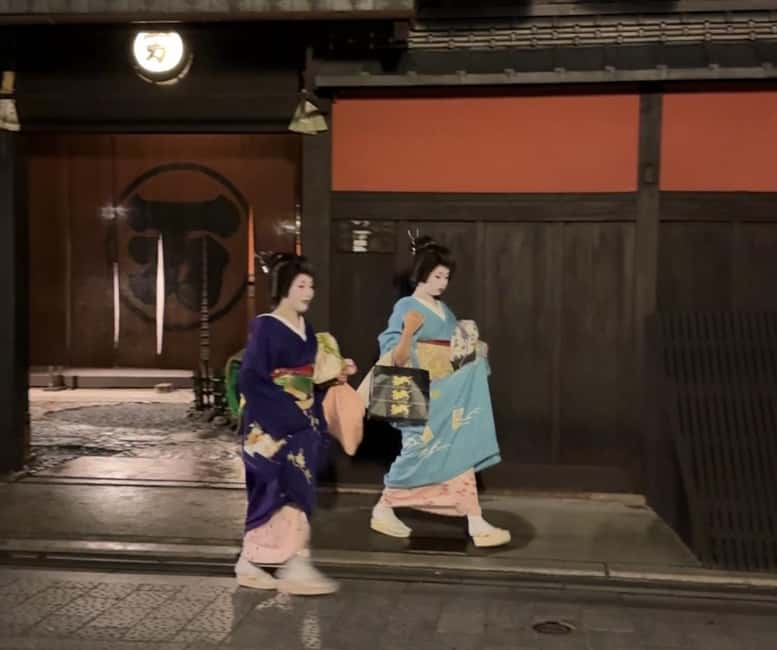
Reviewed · GEISHA & MAIKO EXPERIENCES
Kyoto: Gion Magical Night Walking Tour with Geisha Trivia
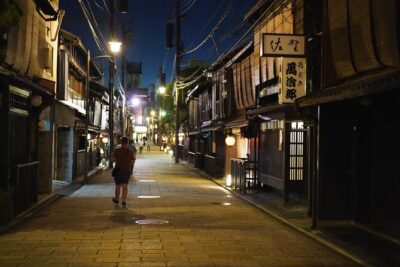
Gion changes after sunset. The bright shop signs fade, lanterns glow, and the old lanes grow quieter. This small-group walk takes you from Minamiza Theatre through Hanamikoji and beyond the geisha district, with stories about geiko, maiko, shrines, and local customs along the way. If luck is on your side, you may spot a geisha, but the tour is not a geisha-meeting service.
I like the groups of up to 10, which gives you room to ask questions and stay close to the guide. I also like the mix of geisha culture and spiritual Kyoto: you see a matchmaking shrine, an illuminated Buddhist pagoda, quiet side paths, and a shrine more than 1,000 years old. The main drawback is the route’s stairs, which make it unsuitable for wheelchairs, baby carriages, and people with limited mobility.
Key points
- Nighttime Gion: See Hanamikoji, temples, shrines, and lantern-lit lanes after much of the daytime crowd has gone.
- Small groups: The tour usually has no more than 10 people, so guides such as Shino, Hina, Masami, and Sho can answer questions.
- Geisha culture explained: Learn the differences between geisha and maiko, along with rules about respectful behavior and photography.
- More than Hanamikoji: The route includes a matchmaking shrine, an illuminated Buddhist pagoda, lesser-known paths, and a shrine over 1,000 years old.
- Good value: At $24 for 100 minutes, the tour costs little more than a casual meal while adding local context and a photography service.
- Plan for stairs: Wear comfortable shoes and arrive at least five minutes before departure in front of Minamiza Theatre.
Why Gion feels different after sunset

Gion is famous for its traditional wooden buildings, narrow lanes, lanterns, tea houses, and geisha culture. In daylight, the district can feel crowded and hurried. At night, the same streets take on a softer mood, especially when shrines and pagodas are lit.
That change is the main reason I would choose this walk instead of simply visiting Gion on your own. You get time to look up at the architecture, notice the lanterns, and walk at an easy pace while the guide explains what you are seeing.
The tour begins in front of Minamiza Theatre, one of Gion’s best-known landmarks. Look for the guide holding a TravelinGood sign. The listed time is the departure time, not the time to arrive, so I would reach the theater at least five minutes early. If you are coming by bus or taxi, allow extra time because traffic can slow you down.
The route lasts 100 minutes. That is long enough to see several important parts of eastern Kyoto without turning the evening into a tiring march. It is still a walking tour, though, and the route includes stairs.
More Walking Tours in Kyoto
- Kyoto Geisha Walking Tour: Gion District & Hidden Gems
★ 4.7 · 3,273 reviews - Kyoto: Gion Geisha District Walking Tour – Stories of Geisha
★ 4.7 · 2,187 reviews - Night Walk in Gion: Kyoto’s Geisha District
★ 4.5 · 2,003 reviews
Hanamikoji and the world of geisha and maiko
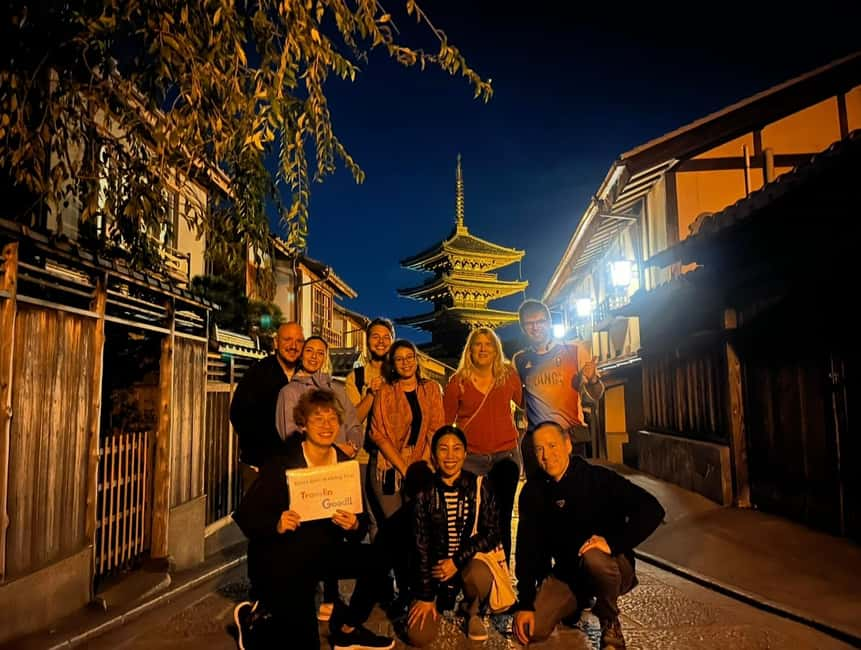
From Minamiza, the walk heads toward Hanamikoji, the best-known geisha district in Gion. This is where the tour’s central subject comes into focus.
A good guide can make a major difference here. Guides named Shino, Hina, Masami, Sho, Kevin, Pam, Yuri, and others have led these walks, and the tone can vary from one guide to another. The strongest descriptions point to guides who combine clear explanations with easy conversation. That matters because geisha culture can be confusing if it is reduced to costumes and photo opportunities.
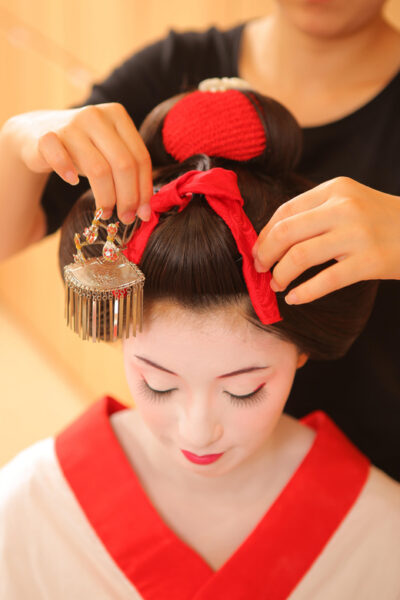
You will learn about the difference between geisha, also called geiko in Kyoto, and maiko, who are in training. Guides may use photos and videos to show the differences in clothing, hairstyles, makeup, and age of training. You will also hear about the customs and rules that shape life in the district.
The guide explains how to behave around geisha and maiko. That is useful in a place where people sometimes forget that performers are also working residents. You are not promised a sighting, and you should not expect an arranged meeting. If you happen to see a geisha or maiko entering or leaving a taxi, the proper response is to give space and avoid blocking the way.
This respectful approach is one of the tour’s strongest points. You get cultural background without treating Gion like a stage set.
Quiet lanes and details you might miss alone
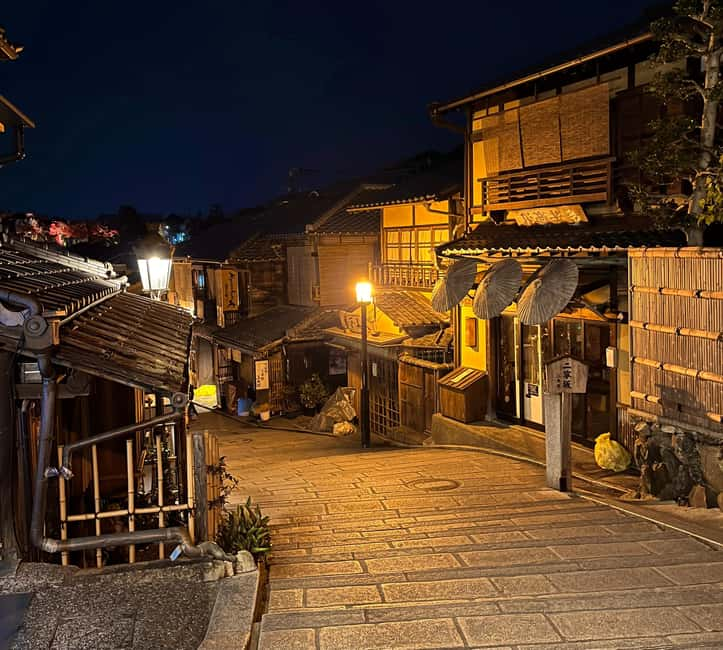
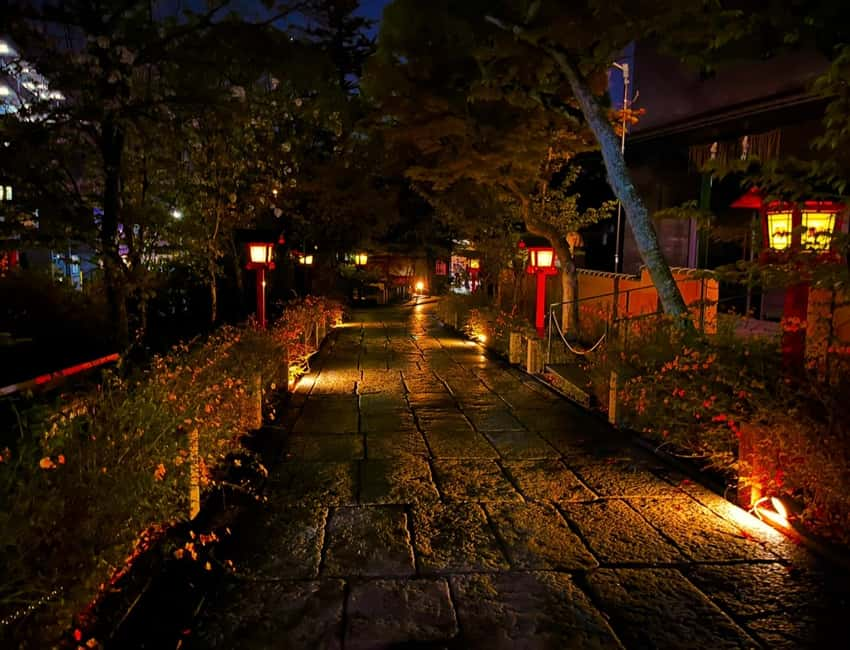
After Hanamikoji, the route continues through side streets and less obvious paths. The exact feel of this part depends on the evening, the guide, and the group’s walking pace, but the purpose is clear: to show you more than the main photo stops.
The guides point out lanterns, private clubs, traditional buildings, and small details that are easy to pass without context. A guide with local experience can explain what different places are used for and how the district functions beyond its public image.
This is also where a small group helps. With 10 people or fewer, you can stop without spreading across the street. You can ask why a particular lantern is there, how to tell a shrine from a temple, or what a building’s signs mean. In a larger group, those questions are harder to manage.
The walking pace is generally relaxed. One participant described the route as manageable even for an older person, while another said the walk was not too much walking. Still, do not confuse a gentle pace with a fully accessible route. Stairs are part of the experience, and anyone with limited mobility should choose another way to see Gion.
Matchmaking shrine and Kyoto’s spiritual side
The tour does not stay focused only on geisha culture. One stop is a shrine associated with matchmaking. That adds a different layer to the evening, since Japanese shrines often connect daily hopes with long-standing religious practices.
Your guide can show you how to approach and pray at a Shinto shrine. Several guides have taken time to explain the ritual step by step, even helping participants practice it. This is the sort of small instruction that makes a visit feel less awkward. You are not left guessing which gesture comes first or what other people are doing.
The guide also explains the difference between Shinto and Buddhism. That distinction is useful in Kyoto, where shrines and Buddhist temples can appear close together and where local customs often overlap in everyday life.
You may hear legends and stories connected with the shrines. These explanations give the stops a sense of place rather than making them simple backdrops for nighttime photographs. If you are visiting Kyoto early in your trip, this part can help you recognize and understand similar religious sites later.
More Geisha Experiences in Kyoto:
- Best of Kyoto: Gion, Geisha, Pagodas & Cobblestones
★ 4.9 · 2,058 reviews - Kyoto Gion Geisha District Walking Tour – The Stories of Geisha
★ 5.0 · 1,441 reviews - Kyoto Gion: 2-Hour Geisha Culture & History Walking Tour
★ 5.0 · 1,186 reviews - Kyoto Gion Night Walk & Geisha District Guided Tour
★ 5.0 · 786 reviews
The illuminated Buddhist pagoda
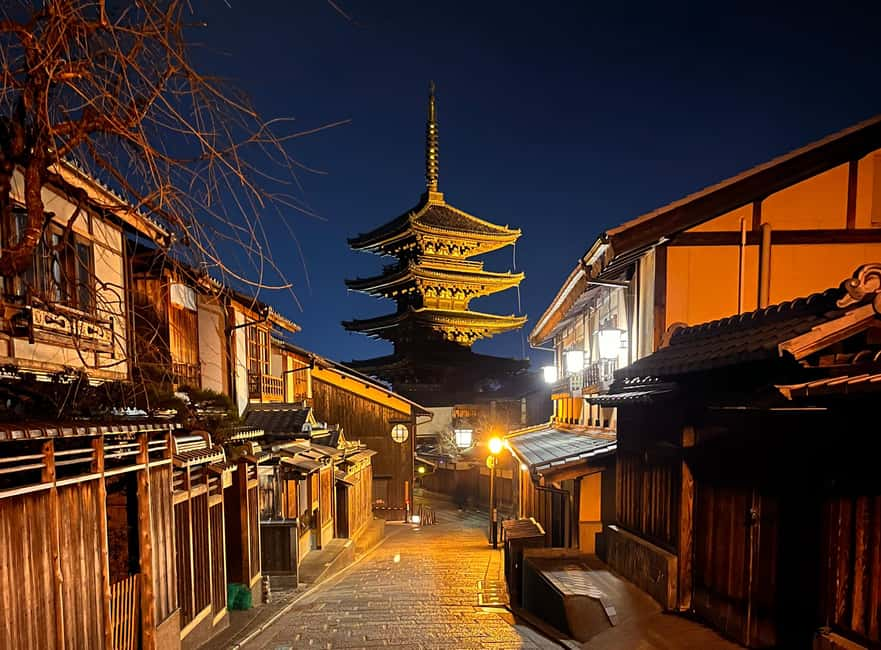
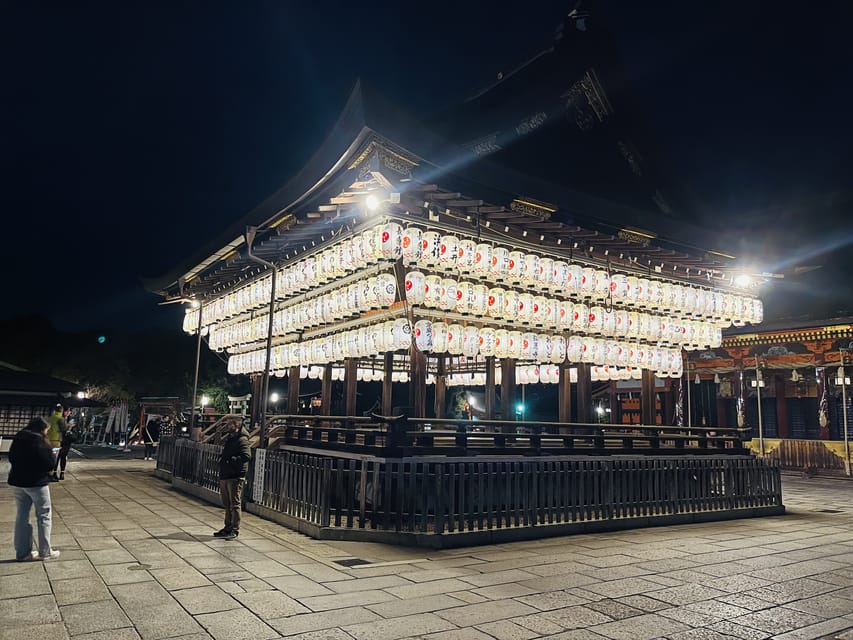
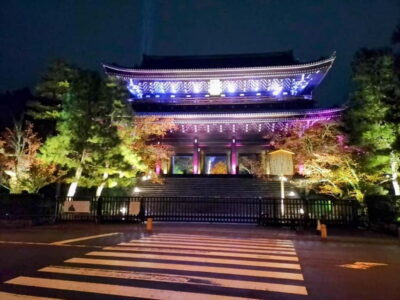
One of the most striking stops is a Buddhist pagoda outside the main geisha district. The pagoda is illuminated at night, giving it a different appearance from the daytime view.
This is likely to be a highlight if you enjoy photography. The light picks out the structure against the darker surroundings, and the evening setting makes the scene feel calm. The guide also provides a photography service, which can be handy for couples, families, or solo visitors who want a picture with everyone in it.
Keep your expectations realistic. This is a walking tour, not a dedicated photography session, and the activity information does not promise professional portraits or a set number of photos. Think of the service as a useful extra during the route.
The pagoda also gives the walk a change of rhythm. Hanamikoji is tied closely to Gion’s entertainment culture. The pagoda brings you into a quieter religious setting. That contrast helps explain why Kyoto can feel both intimate and grand within a few blocks.
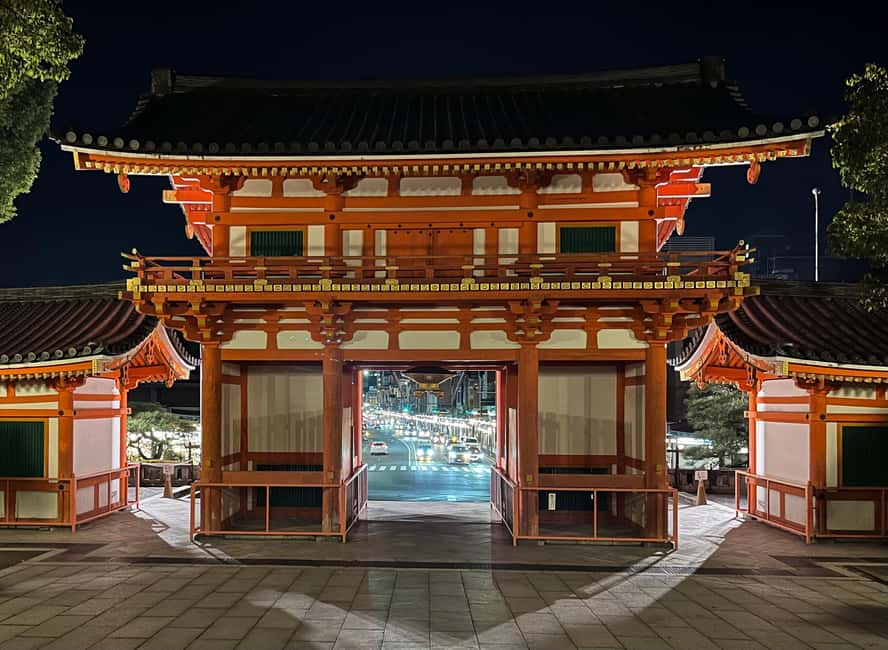
Finishing at a shrine more than 1,000 years old
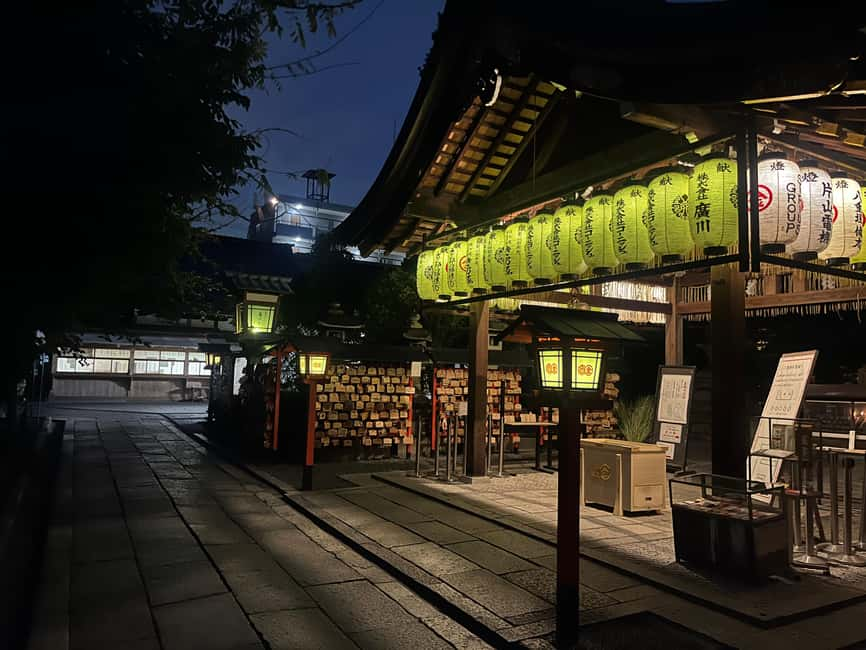
The final stop is a shrine more than 1,000 years old. The route builds toward this ending by moving from the busy image of Gion into quieter streets, illuminated religious sites, and places with stories of their own.
I like this structure because the walk does not end after a quick look at Hanamikoji. You get a wider picture of the area, including local beliefs and older landmarks. The final shrine offers a natural place for the guide to answer last questions about Kyoto, Gion, food, or places to visit during the day.
Several guides have shared restaurant suggestions and daytime sightseeing ideas at the end. Those tips can be useful if you are staying nearby and want to continue exploring. They are not a formal meal or restaurant visit, so plan your dinner separately.
Is $24 a fair price?
At $24 per person, this is a strong value if you want cultural explanation rather than just a walk through attractive streets. A self-guided evening in Gion costs nothing beyond transport and food, but it will not give you the same help with geisha customs, shrine rituals, local stories, or the difference between Shinto and Buddhism.
The price also covers an English-speaking guide and a photography service. The small group is important here. You are paying not just for the route, but for the chance to ask questions without competing with a large crowd.
The value is best for a first visit to Gion or for anyone who has already seen the area by day and wants a quieter second look. If you already know Kyoto’s geisha culture well, the explanations may feel basic in places. One participant found the tour better suited to first-time visitors for that reason.
The 100-minute length keeps the cost and time commitment modest. You can schedule dinner afterward, though you should leave enough time to reach your reservation after the tour ends.
Choosing the right time and season
The usual focus is a night walk, but a special February option begins at 3 p.m. This earlier departure suits you if you have evening plans or prefer to see the first part of the route in daylight.
A late-afternoon start changes the mood. You may see Gion as the light fades rather than experiencing every stop in full darkness. The night departures are the better choice if your priority is illuminated temples, shrines, and quieter streets.
Winter evenings can be cold. One guide even offered a hand warmer to a participant, but you should dress for the weather rather than rely on that. Comfortable shoes matter more than stylish footwear, and a warm layer will make the pauses at shrines more pleasant.
The activity is offered in English. Guide quality can vary in personality, but the strongest guides are described as friendly, clear, patient, and able to explain Japanese customs in accessible English. Names that have received particular praise include Shino, Hina, Masami, Sho, Kevin, Pam, Yuri, and Sora.
Who will enjoy this walk most?
I would recommend this tour to you if you want:
- A first introduction to Gion and its traditional streets
- A respectful explanation of geisha and maiko culture
- A small group instead of a large crowd
- Night photography and illuminated religious sites
- Help understanding shrine customs
- Local suggestions for food and daytime sightseeing
- A short evening activity that fits around dinner
Families can enjoy it too. Children aged 9 and 11 have taken part successfully, and the explanations can work well for older children who are curious about Japanese culture. Children under 6 do not need a ticket.
I would be more cautious if you have already spent a great deal of time studying geisha culture. The tour offers an introduction and practical context, not an academic seminar. It is also not right for wheelchair users, baby carriage users, people with limited mobility, babies under 1 year, or people with a cold.
Meeting point, cancellation, and small practical details
Meet in front of Minamiza Theatre, on the front side of the building. The guide will hold a TravelinGood sign. Arrive before the stated start time because the group leaves at that time.
Your ticket is valid only for the date and time you booked. Do not join a different departure without confirmation. This rule protects the small group size and keeps the guide from waiting for people assigned to another tour.
You can cancel up to 24 hours before the start for a full refund. You can also reserve now and pay later, which helps if you are still arranging your Kyoto schedule.
Should you book the Gion Magical Night Walking Tour?
I would book it if you want a compact, affordable introduction to Gion that includes more than the usual street photographs. The best parts are the small group, the respectful geisha explanations, the quiet nighttime atmosphere, and the route’s variety. You see Hanamikoji, side streets, a matchmaking shrine, an illuminated pagoda, and an ancient shrine in one evening.
Choose the 3 p.m. February departure if you prefer daylight or have dinner plans. Choose a night departure if the glow of lanterns and lit temples is the main reason you are going.
Skip it if stairs are a problem or if you expect a guaranteed geisha sighting. For everyone else, $24 buys a friendly guide, useful cultural context, and a much better chance of understanding what you are seeing in Gion.
FAQ
Where does the Kyoto Gion night tour meet?
Meet in front of Minamiza Theatre, on the front side of the theater. Your guide will hold a sign saying TravelinGood.
Is the listed time the meeting time?
No. The listed time is when the group leaves the meeting point. Arrive at least five minutes before the stated start time.
How long does the tour last?
The walking tour lasts 100 minutes.
What language is the tour conducted in?
The live tour guide speaks English.
How large is the group?
The tour is limited to 10 participants and is typically conducted in a small group.
Will I definitely meet a geisha?
No. You might spot a geisha or maiko, but the tour is not designed to arrange meetings with them.
Are children under 6 required to buy a ticket?
No. Children under 6 years old do not need to purchase tickets.
Is the route accessible for wheelchairs and baby carriages?
No. The route includes stairs and is not suitable for wheelchair users, baby carriages, or people with limited mobility.
Can I cancel for a full refund?
Yes. You can cancel up to 24 hours before the booked time for a full refund.
Just added around Kyoto
- Sekka Cotton Furoshiki Class★ 5.0 · 19 reviews
- Secret Eastern Kyoto Biking Adventure★ 5.0 · 44 reviews
- Kyoto Sword Experience – includes Museum Ticket/Ninja Experience★ 4.5 · 149 reviews
- Scenic Green Tea Fields of Hidden Kyoto & Local Tea Exp (Private)★ 5.0 · 32 reviews
- Private Sake Tasting in Central Kyoto with Sake Sommelier★ 5.0 · 32 reviews
- Samurai School in Kyoto: Samurai for a Day★ 5.0 · 202 reviews
- SHIRAKAWA Japanese Culture Experiences with private English staff★ 5.0 · 16 reviews
- A Privately Guided Photoshoot in Beautiful Kyoto by a Pro★ 5.0 · 18 reviews
Geisha & Maiko Experiences, compared.
Kyoto Geisha Walking Tour: Gion District & Hidden Gems
Our verdict →
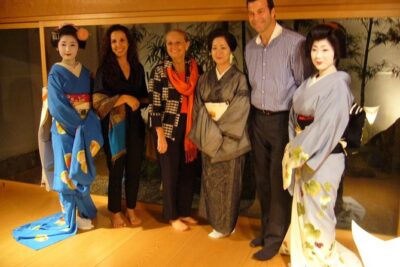
Dinner with Maiko in a Traditional Kyoto Style Restaurant Tour
Our verdict →
Browse the lists this tour appears in