
Reviewed · SUMO EXPERIENCES
Ultimate Sumo Tournament: Tokyo, Osaka, Nagoya, Fukuoka
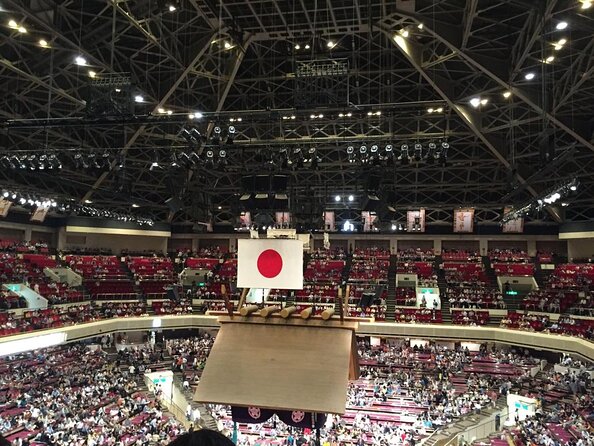
The best part of this experience is that it turns a fast, formal Japanese sport into something you can follow. A guide such as Hiro, Myoko, Taku, or Izumi explains the rituals, rankings, and techniques while you watch the action from reserved seats. I especially like the live audio commentary and the chance to add a chanko hot pot dinner. One drawback is that the standard seats are on the second floor, and the tour does not include transport to the arena.
I also like the practical help with obtaining tickets. Official basho tickets can sell out within minutes, so a reserved seat has real value even before the explanations begin. The main caution is timing: tournaments run only in January, March, May, July, September, and November, and the booking is non-refundable.
Key points to know before booking
- Six tournaments each year: Tokyo hosts January, May, and September, with Osaka in March, Nagoya in July, and Fukuoka in November.
- Four hours at the arena: You receive reserved seating, a ranking sheet, and commentary through an audio headset.
- Standard seats are upstairs: Join-in groups generally sit in second-floor B or C chair seats, while private tours use closer S or A seats.
- Chanko dinner is optional: The hot pot meal can include vegetarian arrangements if requested in advance.
- Off-season dates are different: The morning stable option near Warabi includes practice and chanko lunch, but no tournament ticket.
- Book early: Group tickets may not be released until four to seven weeks before the event, and arrangements are best made around three months ahead.
Why sumo is easier with a guide
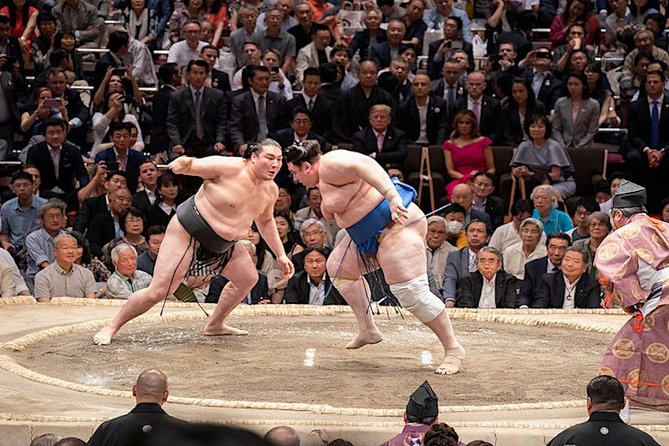
Sumo looks simple at first: two wrestlers face each other, charge, and try to force the other out of the ring. In person, though, the ceremony and rules quickly become harder to follow. The long pauses, hand-clapping, salt throwing, foot stamps, ring entering, and pre-match stares all carry meaning.
A good guide gives you the basic map. You learn how the ranking table works, why wrestlers wear different belts, what counts as a winning technique, and how the tournament day is organized. The guide can also explain famous wrestlers and point out changes in style, age, rank, and form.
That help matters because the bouts are short. If you are looking down at the program or trying to work out who is who, the match may be over before you understand what happened. The supplied audio headset lets you listen without sitting beside the guide, which is useful in a noisy hall.
Guides named in the feedback include Hiro, Myoko, Taku, Izumi, Yumi, Junka, Shunsuke, Hiroshi, Duke, and Seizo. Your guide will depend on the date and group, so do not book based on one particular person. Still, the repeated praise for clear commentary and passion for sumo suggests that the human side of this experience is its strongest feature.
There is one fair criticism to keep in mind. A four-hour arena visit is not automatically a full lesson in sumo. One guide may offer steady explanations throughout, while another may give more information at the start and then leave you to watch. If you want a detailed cultural introduction, tell the guide what you hope to understand and ask questions early.
More Sumo Experiences in Tokyo:
- Tokyo: Sumo Show Experience with Chicken Hot Pot and a Photo
★ 4.8 · 6,678 reviews - Tokyo: Sumo Show and Dining Experience
★ 4.8 · 2,742 reviews - the SUMO show
★ 5.0 · 1,960 reviews
Arriving at Japan’s official basho
The meeting time is listed as 2:00 p.m., though the exact meeting point is sent by email at least one week before the date. The meeting point differs by city and venue, so you should not head to the arena using a general assumption. Hotel pickup and transport are not included.
The four tournament locations are:
- Tokyo’s Ryogoku Kokugikan
- Osaka’s EDION Arena Osaka
- Nagoya’s IG Arena
- Fukuoka Kokusai Center
Each city hosts its official tournament during a fixed month. The event lasts 15 days, beginning and ending on a Sunday. That gives you some date flexibility within a tournament period, but you still need your Japan itinerary to line up with the basho calendar.
In Tokyo, Ryogoku is the traditional home of sumo and the most obvious choice if your trip includes the capital during a tournament month. Osaka, Nagoya, and Fukuoka offer the same basic idea in different halls. The attraction is not just the building. You are entering an event that is part sporting contest, part religious ceremony, and part local day out.
You should expect some waiting before taking your seat. The group may need to wait for matches to finish before entering, and the Sumo Museum can become congested. In a large group, your guide may ask you to visit the museum on your own rather than lead everyone through a crowded space.
Inside the arena: rituals before the action
The guide normally gives you an introduction to the stadium and the sport before the main bouts. You receive a sumo information pamphlet and a banzuke-hyo, the official ranking table. Keep it handy. It turns a series of unfamiliar names into a useful guide to status and matchups.
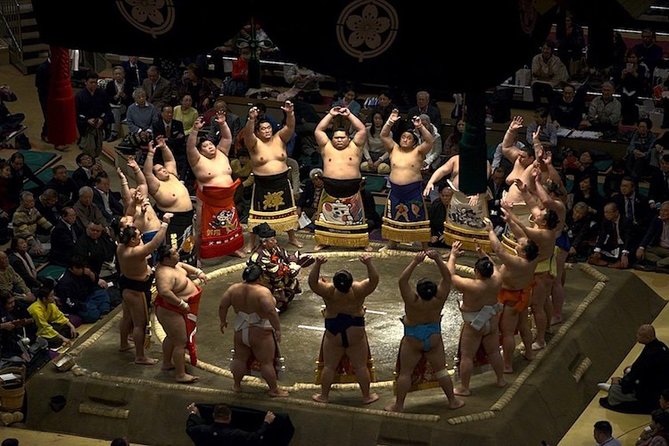
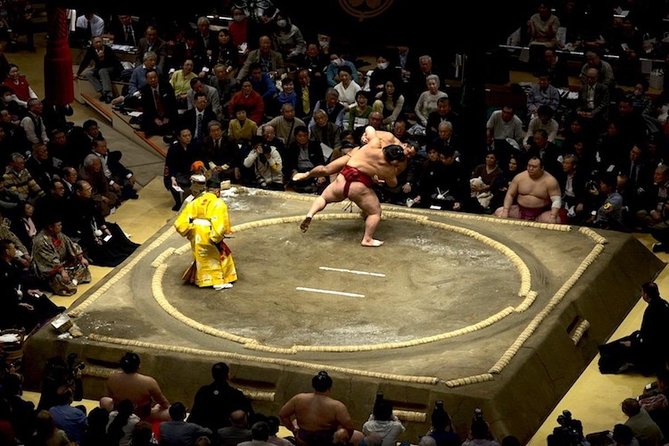
The pre-bout rituals are worth watching closely. Wrestlers perform formal movements, prepare themselves, and use salt in the ring. These gestures can seem repetitive if you do not know what they mean, but the guide helps you see that the pauses are part of the contest, not empty time.
The audio system is a major practical benefit. A guide can explain the wrestler’s rank, style, age, record, or likely approach before a bout, then add a short explanation afterward. One useful warning: a headset may be loud even at its lowest setting. Bring ear protection if you are sensitive to sound, and adjust the volume before the matches get underway.
You will not sit beside the guide in every seat arrangement. The audio connection allows a larger group to hear the explanation while still watching independently. The standard join-in group can include up to 20 people seated in the same general area.
Food and drinks are available from vendors inside the arena, but outside food and drinks are not allowed. The hall may feel warm, so light clothing is sensible, particularly in the Tokyo venue. A soft-serve ice cream stand on the second floor has also earned a special place in the practical advice file.
What you see from standard and private seats
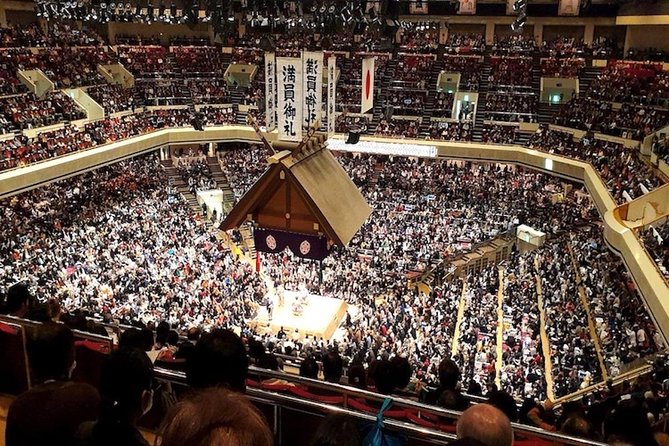
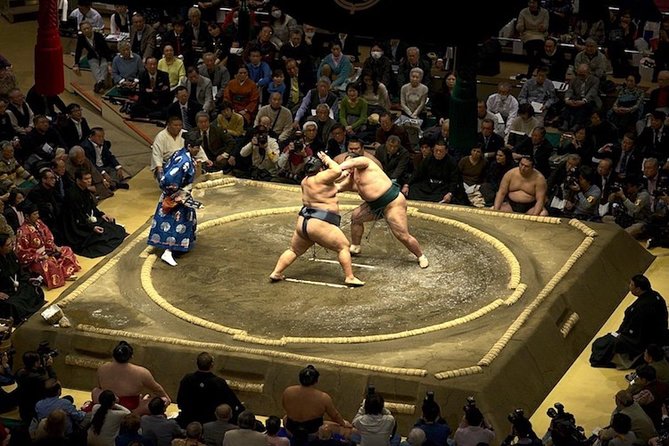
The standard tour uses B-class or C-class chair seats, generally on the second floor. B seats are usually in rows 7 through 11, though the exact allocation can vary. These seats give you a broad view of the ring and the entire hall, but you will not get the same close look at the wrestlers as someone sitting near the dohyo.
That distance is the chief tradeoff at the listed price of $184.38 per person. You are paying not only for a seat, but also for ticket arrangement, a guide, the ranking material, and the audio equipment. Since official tickets can disappear very quickly, the booking service may be worth the cost if getting a seat independently would be difficult.
The private option includes S-class or A-class seating closer to the ring. It should suit you if proximity matters, if you want more personal attention, or if you are marking a special occasion. The supplied information does not give a separate private-tour price, so check the total at checkout rather than assuming the standard price applies.
For most first-time spectators, the standard seats are a sensible compromise. You get the full atmosphere and a clear view of the ring, while the guide fills in the details. If your priority is seeing the wrestlers’ expressions, footwork, and impact up close, pay attention to the private upgrade.
A few more Tokyo half-days worth comparing
- 1-Day Tokyo Bus Tour
★ 5.0 · 14,250 reviews - Tokyo: TOKYO SKYTREE® Admission ticket
★ 4.5 · 11,192 reviews - Tokyo: teamLab Planets TOKYO Digital Art Museum Entry Ticket
★ 4.6 · 9,779 reviews - Tokyo: Shinjuku Food Tour (13 Dishes at 4 Local Eateries)
★ 5.0 · 6,603 reviews
The tournament schedule and what you actually watch
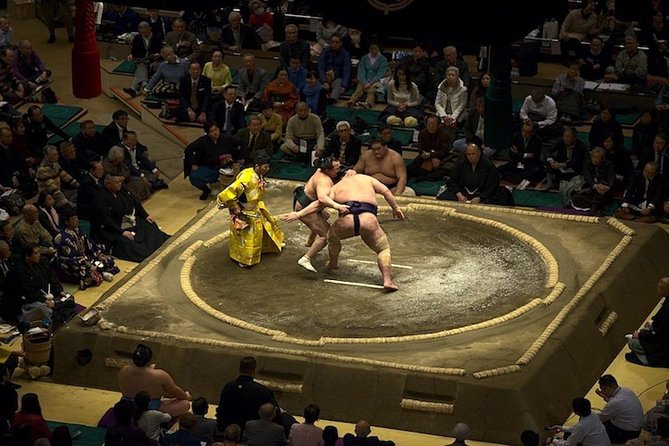
The tournament day is longer than the guided portion. This experience is described as a four-hour visit, and the guide focuses particularly on helping you understand the competition as it unfolds. You may see all of the top-division Makuuchi bouts and about half of the second-division Juryo bouts, depending on the schedule and timing.
The top division is where the highest-ranked wrestlers compete, so this is the part most people especially want to see. The earlier matches can help you understand the rhythm of the day, while the later contests bring greater attention and stronger crowd reactions.
The guide may give a short explanation before each match rather than talk continuously. That is a good balance when it works well. You need enough context to follow the contest, but also quiet time to watch, cheer, eat, and explore the arena.
You should not expect a staged performance for visitors. The bouts are official competitions, and the ceremonies follow sumo tradition. That is why this experience feels more substantial than a demonstration, but it also means the pace and amount of explanation can vary with the live event.
Adding the chanko hot pot dinner
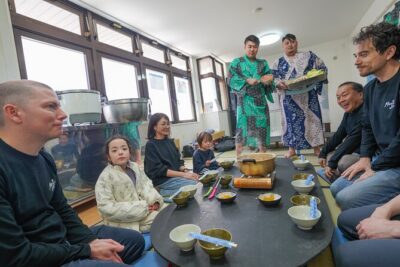
The optional dinner is one of the most appealing additions. Chanko nabe is the hot pot associated with sumo stables, usually made with chicken stock, vegetables, and other ingredients. It is designed to be cooked in a large quantity, which suits the hungry wrestlers who eat it after training.
Dinner is arranged at a local chanko restaurant and does not include drinks. The standard meal uses a traditional broth that may contain pork or chicken. You can request a vegetarian version or other dietary needs in the special requirements field at checkout, but changes cannot be made one week before the tour date once the request is accepted.
The meal adds cultural context without pretending that you are eating like a professional wrestler for a day. It gives you a chance to connect the sport with everyday food, training, and group life in a sumo stable. If you have room in your budget, I think it is a worthwhile addition, especially if sumo is one of your main reasons for visiting Japan.
Be precise about dietary needs. Vegetarian broth may be substituted by the restaurant, but you should not assume that every ingredient will be suitable without making the request in advance.
The off-season stable visit near Warabi
If your dates do not overlap with a tournament, the alternative is a morning practice visit at a sumo stable near Warabi Station, about 30 minutes from Tokyo Station. The session runs from 8:00 a.m. to noon and is designed for a join-in group of eight to 16 people.
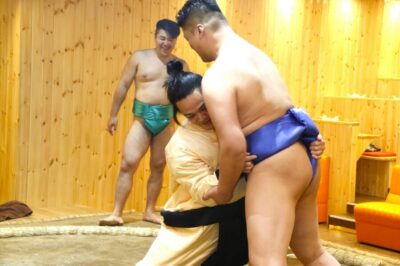
This is a different product, not a replacement seat at a basho. You watch wrestlers train at an active stable, hear explanations through an audio headset, and have chanko lunch after the practice. The directions to the meeting point are sent one week before the date.
The stable setting may appeal to you more than the arena if you want to see training and daily discipline at close range. At the same time, the information supplied makes the limit clear: this option does not include a tournament ticket because no tournament is taking place during the off-season.
Choose the stable visit only if you understand that distinction. If you want the crowd, ceremony, and top-division bouts, select a tournament date instead.
Price, groups, and the booking risk
At $184.38 per person, the standard experience is not a cheap afternoon activity. The price becomes easier to judge when you separate the parts: a reserved seat, ticket arrangement, an English-speaking guide, audio equipment, written sumo information, and access to an event that may be difficult to book independently.
Group discounts are available, though the exact saving is not given. The standard group can reach 20 people, so this is not a private lesson. A private booking buys better seats and a more personal format, but you need to confirm its price before paying.
Book as early as you can. Around three months before your date is recommended, with one month as the minimum suggested window. Group tickets are released by the Sumo Association only four to seven weeks before the tournament date. If tickets cannot be obtained, you may be offered another date or a full refund.
The booking is otherwise non-refundable and cannot be changed for personal reasons. The activity can also be canceled if the minimum number is not reached or, according to the stated policy, because of poor weather. In those cases, you are offered another date or a full refund.
Who will enjoy this sumo experience
This suits you if you are new to sumo and want someone to explain the basics as the matches happen. It also works well for families, couples, and anyone who tried to obtain tickets independently and found the process too competitive.
It is particularly good for people who value cultural context over a simple seat in the arena. Guides such as Hiro and Myoko have been praised for making the history, rules, and wrestler details accessible, while guides including Shunsuke and Hiro have also helped connect the tournament with the optional meal.
You may prefer to book independently if you already understand sumo, want complete freedom to move around, or dislike group schedules. The standard option is not ideal if you need a close ringside view, and the tour does not arrange your transportation.
Should you book it?
Book this experience if your Japan dates match a tournament and you want a reliable way to obtain a seat plus clear explanations of what you are seeing. The guide, audio headset, banzuke sheet, and optional chanko dinner give the event more meaning than simply watching unfamiliar bouts from the stands.
Think twice if you are not ready to commit to a fixed date or if you need a refundable booking. Also check the seat category carefully. Standard means second-floor seating, while the private option costs more but moves you closer to the ring.
For a first sumo tournament, I would choose the standard tour and add dinner if your schedule and diet allow it. For an off-season trip, choose the Warabi stable visit only if morning practice and lunch sound better to you than an official tournament.
FAQ
Where do the sumo tournaments take place?
The experience is available at Ryogoku Kokugikan in Tokyo, EDION Arena Osaka, IG Arena in Nagoya, and Fukuoka Kokusai Center.
Which months have official sumo tournaments?
The official tournaments take place in January, March, May, July, September, and November. Tokyo hosts January, May, and September. Osaka hosts March, Nagoya hosts July, and Fukuoka hosts November.
How long is the tournament experience?
The guided tournament visit lasts about four hours.
What time does the tour start?
The listed start time is 2:00 p.m. Your exact meeting point is sent by email at least one week before the tour.
Are sumo tickets included?
Yes. A reserved tournament seat is included for the tournament options. Standard tours use B-class or C-class second-floor seats, while private tours use S-class or A-class seats closer to the ring.
Is transportation included?
No. Hotel pickup and transportation are not included. The meeting point is near public transportation, and the detailed location is provided before the tour.
Is dinner included?
Dinner is optional and must be selected at checkout. The chanko hot pot meal does not include drinks.
Can I request vegetarian food?
Yes. You can request a vegetarian option or other dietary requirements in the special requirements field at checkout. Requests should be made before the stated one-week deadline.
What happens if I visit during the off-season?
The off-season option is a morning visit to a sumo stable near Warabi Station. It includes guided practice viewing and chanko lunch, but it does not include a tournament ticket.
How far ahead should I book?
Booking around three months before your travel date is recommended, and one month is the minimum suggested time. Group tickets may be released only four to seven weeks before the tournament date.
Just added around Tokyo
- Kawagoe Japanese Food Tour : Unagi Kaiseki and Sake near Tokyo★ 5.0 · 30 reviews
- Kawagoe 4hr Private Tour with Licensed Guide (Kawagoe Dep)★ 5.0 · 13 reviews
- Little EDO Sushi Making workshop in Kawagoe★ 5.0 · 18 reviews
- 【R34】Tokyo:Private Daikoku tour in Modified R34★ 4.9 · 92 reviews
- :Tokyo,Shibuya/ Pro Photography in Kimono / English-Friendly★ 5.0 · 26 reviews
- Tokyo:Celebrate Unique Japanese New Year Tradition Festivity★ 3.9 · 20 reviews
- Tokyo: Allstar Food Tour★ 4.7 · 29 reviews
- Tokyo: West-Side Cycling and Food Tour with Guide★ 5.0 · 37 reviews
Sumo Experiences, compared.
Sumo Show Experience with Chicken Hot Pot and a Photo
Our verdict →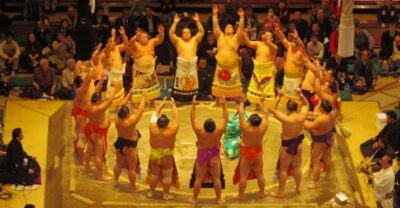
Authentic Sumo Experience in Tokyo: Enter the Sanctuary
Our verdict →
Browse the lists this tour appears in