
Reviewed · CASTLE TOURS
Nijo Castle and Imperial Palace Visit with Guide
The most useful feature here is the link between Nijo Castle and Kyoto Imperial Palace. One was the power base of the shogun, the other the home of the emperor, so you get a clear look at two sides of Japan’s political past in a single outing. I like the guide-led access to the castle interior, and I like that the guide handles the public transit between sites.
The $79.18 price is fair if you want context rather than a quick walk through grand buildings. Guides such as Mia, Mie, and Choko have been praised for clear English, humor, visual aids, and answers to specific questions. The main consideration is pace: the tour gives roughly one hour at each site, and both places involve a good deal of walking.
Key points at a glance
- Two different centers of power: See the shogun’s castle and the emperor’s palace in one compact tour.
- Nijo Castle includes the interior: You do not only view the grounds and outer walls.
- Guided public transit is included: The guide takes you from the castle to the palace during the tour.
- Morning or afternoon choice: You can fit the visit around the rest of your Kyoto plans.
- Strong guide focus: Mia, Mie, Choko, and other guides have been praised for history, humor, visual aids, and clear English.
- Walking shoes matter: The castle, palace grounds, and transfer make this an active two-and-a-half-hour visit.
Why these two Kyoto sites belong together
Kyoto can give you beautiful gates, gardens, and tiled roofs without explaining who had power inside them. This tour fixes that problem by putting Nijo Castle and the Imperial Palace side by side in your understanding, even though they are separate sites.
Nijo Castle brings you into the world of the shogun. The castle was tied to the Tokugawa Shogunate, the military government that controlled Japan for much of the Edo period. The Imperial Palace then adds the other half of the story, including the emperor’s family, court life, and the transfer of power connected with Emperor Meiji.
I find that contrast more useful than visiting either place alone. At Nijo Castle, you can think about military authority and formal meetings. At the palace, you can consider the older imperial line and the ceremonial side of government. The guide’s job is to connect those pieces, rather than leave you with two attractive but separate sightseeing stops.
The tour lasts about two hours and thirty minutes. The formal site visits are listed at about one hour each, with the remaining time used for meeting, orientation, and public transportation. That is enough for a focused introduction, but not enough for a slow examination of every building and garden.
More Castle Tours in Kyoto
- Kyoto: Nijo-jo Castle and Ninomaru Palace Guided Tour
★ 4.7 · 1,020 reviews - Kyoto: Nijo Castle, Kiyomizu & Fushimi Inari Guided Tour
★ 4.7 · 700 reviews - Kyoto: Imperial Palace & Nijo Castle Guided Walking Tour
★ 4.7 · 453 reviews
Entering Nijo Castle and the shogun’s world
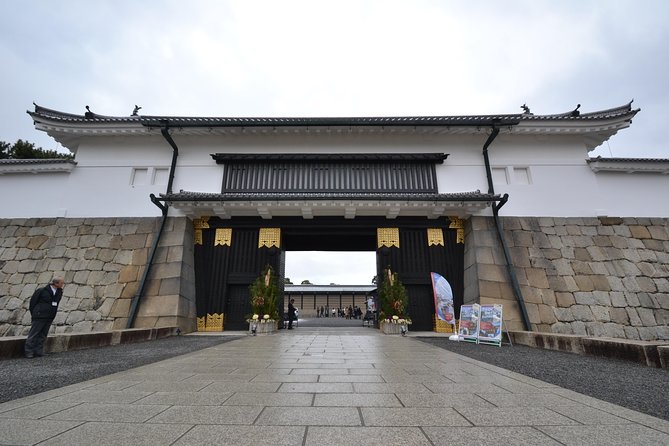
You meet the guide in front of Nijo Castle’s large white main gate at 541 Nijojocho. This is a practical meeting point, and the gate is easy to identify. The tour offers a morning or afternoon time slot, which helps if you are fitting the castle around temples, meals, or a train schedule.
Inside, the guide explains how the castle worked during the shogun’s rule. The emphasis is not just on dates. You learn about the meetings held there, the people who used different spaces, and the symbols built into the architecture. Several guides have used visual aids to make family connections and political changes easier to follow.
The interior is a major reason to choose this tour. You walk through the castle buildings rather than seeing only the outer walls and grounds. The rooms and formal spaces make the shogun’s authority easier to picture, especially when your guide points out where important audiences and meetings took place.
You may also hear about the famous floor design associated with the castle, though the supplied tour details do not promise a particular feature at a particular moment. The safe expectation is a guided visit through the castle interior and its grounds, with historical explanation along the way.
The guide-led format helps most when you want to understand small details. A room can look plain at first glance, while its arrangement, decoration, or position says something about rank. Guides such as Mia have been praised for explaining those details without burying the group in dates.
The main drawback is the one-hour limit. Nijo Castle has more to see than can fit into a quick visit, especially if you want time for photographs or a relaxed look at the gardens. I would treat this as a strong introduction, not a complete study of the site.
The public-transit connection between the sites
After Nijo Castle, you travel to Kyoto Imperial Palace by public transportation with the guide. The fare is included, so you do not need to work out the route or buy a separate ticket during the tour.
That transfer is more useful than it may sound. Kyoto’s major historic sites are spread across the city, and a first visit can involve a fair amount of map checking. Here, the guide keeps the group moving and can continue explaining the shift from shogun rule to imperial authority during the journey.
The transfer also creates a natural break between the two sites. You are not simply walking from one gate to another and rushing into the second visit. Still, the total schedule is tight. If you like to stop for snacks, browse shops, or take long photographs, plan those activities for before or after the tour.
The tour ends at Kyoto Gyoen National Garden, in front of the Imperial Palace. This matters when planning your day. You do not return to Nijo Castle, and hotel pickup and drop-off are not included. Since public transportation is included during the experience, you can continue exploring from the palace area once the guide leaves.
Kyoto Imperial Palace and the imperial side of the story
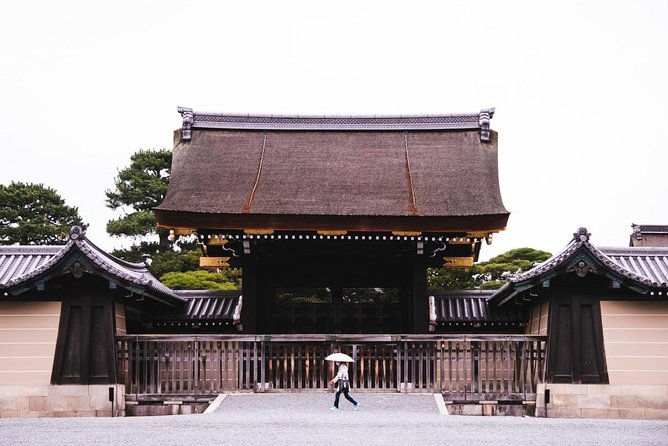
The second one-hour guided visit takes place at Kyoto Imperial Palace. The palace grounds offer a different mood from the shogun’s castle, and the guide helps explain the role of the imperial family and the older capital of Kyoto.
This is where the tour’s historical comparison becomes most useful. Nijo Castle helps you understand the shogun’s political and military control. The Imperial Palace gives you a way to think about the emperor, court tradition, and the restoration of imperial power associated with Emperor Meiji.
The guides praised most warmly for this tour do not stop at a list of rulers. Mia, in particular, has been described as clear, funny, and good at explaining the symbolism at both venues. Other guides, including Mie and Choko, have also been praised for answering questions and adding cultural context.
Expect open grounds, formal buildings, and a visit shaped by the palace’s ceremonial purpose. The supplied details do not promise access to every interior room, so you should not book this expecting the same type of interior tour as Nijo Castle. The value here lies in the setting, the buildings, and the explanation of the imperial role.
An event can occasionally affect access. One visitor found the Imperial Palace closed because of an event, while the Nijo Castle portion still went ahead. That is not presented as the normal arrangement, but it is a useful reminder that official sites can have closures or restricted areas. The tour requires good weather, and poor weather can lead to a different date or a full refund.
More Historical Tours in Kyoto
- Kyoto Gion: 2-Hour Geisha Culture & History Walking Tour
★ 5.0 · 1,186 reviews - Kyoto Gion Historical Walking Tour
★ 5.0 · 188 reviews - Historical Kyoto E-Bike Tour
★ 5.0 · 181 reviews - Kyoto: Nijo Castle World Heritage Guided Tour with Admission
★ 5.0 · 128 reviews
The guides make the short schedule work
A two-hour-thirty-minute tour succeeds or fails on the guide. There is not enough time for a slow, self-guided wander followed by a long history lecture. You need someone who can select the useful details and keep the story moving.
Mia receives especially strong praise for her mix of historical information, humor, and personal warmth. Several descriptions highlight her explanations of the Tokugawa Shogunate, the change in power under Emperor Meiji, and the emperor’s family line. She is also noted for visual aids, which can help when names and political relationships begin to pile up.
Mie is also mentioned as warm, clear, and able to share the right amount of information without overwhelming the group. Choko is praised for friendly explanations and for answering questions about both Japanese history and the sites themselves. Another guide is referred to as Mike, with similar praise for explanations of shogun and imperial history.
Guide assignments can vary, so you should not assume that one named guide is guaranteed. The consistent point is the kind of guidance to expect: English-language explanations, cultural background, historical context, and time for questions.
I especially value the chance to ask about details that interest you. One group used the tour to ask about Japanese culture and politics, while another received a restaurant recommendation for Kobe beef. Those personal exchanges can make a short visit feel less like a memorized script.
Group size, private format, and what to clarify
The experience is presented as a private tour for you and your party, but the operating details also describe a small group of fewer than eight people and a maximum of eleven. That wording is worth clarifying before you pay if having a fully exclusive guide is essential to you.
In practice, the format is designed to stay small. One booking ended up with the guide and the party alone, creating a very personal visit. A smaller group gives you more space to ask questions and makes it easier to hear the guide inside busy historic buildings.
The stated maximum of eleven is still far more manageable than a large coach tour. Yet it is not the same as a guaranteed one-party private tour. Check the booking terms for your date and group size, especially if the private format is the main reason you are considering the experience.
Is $79.18 a good value?
At $79.18 per person, the tour costs more than entering the sites independently. You are paying for more than admission, though. The fee includes entrance tickets to both locations, public transportation during the tour, and an English-speaking guide who explains the political and cultural setting.
I think the value is strongest for a first visit to Kyoto, especially if you want to understand the shogun and emperor without spending hours reading background material. The guide also removes the small hassles of moving between the sites and figuring out how the two locations fit into the city.
The value is weaker if you prefer to set your own pace, photograph every garden corner, or spend a long time inside one building. One hour per site is a useful overview, but it leaves little room for lingering.
Food and drinks are not included. Hotel pickup and drop-off are also not included, so allow for your own journey to the castle and your onward plans from the Imperial Palace. The tour ends at Kyoto Gyoen National Garden, not at the starting gate.
Who will enjoy this tour most?
I would recommend it to a first-time Kyoto visitor who wants a clear explanation of Japanese political history. It suits couples, families, and small groups who enjoy asking questions and prefer a guide to provide structure.
It is also a good choice if the terms shogun, emperor, Edo period, and Meiji restoration are familiar but still a little muddled. Seeing the two sites in one outing gives those ideas physical places to attach to.
Families can benefit from the short format and the guide’s use of humor and visual aids. The activity is suitable for most people, and service animals are allowed. You should still expect substantial walking and wear comfortable shoes.
History fans may wish the schedule were longer. If you already know Nijo Castle and the Imperial Palace well, you may prefer independent visits with more time at each site. For most first-time visitors, however, the guide adds enough context to justify the extra cost.
Practical details before you book
Meet at the large main gate of Nijo Castle, at 541 Nijojocho in Nakagyo Ward. The tour finishes in front of Kyoto Imperial Palace within Kyoto Gyoen National Garden.
Choose between the morning and afternoon departure that fits your day. Because the route includes two historic sites and public transportation, arrive with enough time to find the meeting point. Comfortable shoes are more important than formal clothing.
The experience is confirmed within 48 hours of booking, subject to availability. You can cancel for a full refund up to 24 hours before the start time. Changes or cancellations made inside that 24-hour window are not accepted for a refund. If poor weather cancels the activity, you are offered another date or a full refund.
Should you book Nijo Castle and Imperial Palace with a guide?
Book this tour if you want the story behind Kyoto’s grand buildings, value a clear English-speaking guide, and like the idea of seeing the shogun’s castle and the emperor’s palace in one morning or afternoon.
The strongest reasons are the castle interior, the included transit, and the guides’ ability to explain political change without making the visit feel like a lecture. Mia, Mie, and Choko are especially well regarded for humor, visual aids, and thoughtful answers.
Skip it if you want a slow, independent visit or need guaranteed exclusive use of the guide. Also check the private-tour wording if your party must be alone. For everyone else, $79.18 is a reasonable price for a compact, well-organized introduction to two of Kyoto’s most important historic sites.
FAQ
How long does the tour last?
The experience lasts approximately two hours and thirty minutes.
What sites does the tour visit?
It visits Nijo Castle and Kyoto Imperial Palace in Kyoto.
How much time is spent at each site?
The planned visit includes about one hour at Nijo Castle and one hour at Kyoto Imperial Palace, with time between them for public transportation.
Is admission included?
Yes. Entrance fees for both Nijo Castle and Kyoto Imperial Palace are included.
Is public transportation included?
Yes. Public transportation between the castle and the palace is included in the tour price.
Where does the tour start?
It starts in front of the main gate of Nijo Castle at 541 Nijojocho, Nakagyo Ward, Kyoto.
Where does the tour end?
It ends in front of Kyoto Imperial Palace in Kyoto Gyoen National Garden.
Is the tour offered in the morning and afternoon?
Yes. You can choose from morning or afternoon time slots.
Is the tour private?
The experience is described as private for your party, while the operating information also gives a small-group size of fewer than eight and a maximum of eleven people. Confirm the format for your chosen date if exclusivity is important.
What is not included?
Food and drinks, as well as hotel pickup and drop-off, are not included.
Can I cancel for a full refund?
Yes, if you cancel at least 24 hours before the experience start time. Poor-weather cancellations offer a different date or a full refund.
Just added around Kyoto
- Sekka Cotton Furoshiki Class★ 5.0 · 19 reviews
- Kyoto Sword Experience – includes Museum Ticket/Ninja Experience★ 4.5 · 149 reviews
- Scenic Green Tea Fields of Hidden Kyoto & Local Tea Exp (Private)★ 5.0 · 32 reviews
- Secret Eastern Kyoto Biking Adventure★ 5.0 · 44 reviews
- Samurai School in Kyoto: Samurai for a Day★ 5.0 · 202 reviews
- Private Sake Tasting in Central Kyoto with Sake Sommelier★ 5.0 · 32 reviews
- SHIRAKAWA Japanese Culture Experiences with private English staff★ 5.0 · 16 reviews
- A Privately Guided Photoshoot in Beautiful Kyoto by a Pro★ 5.0 · 18 reviews
Castle Tours, compared.
Tokyo Castle & Imperial PalaceーShogun Walking Tour
Our verdict →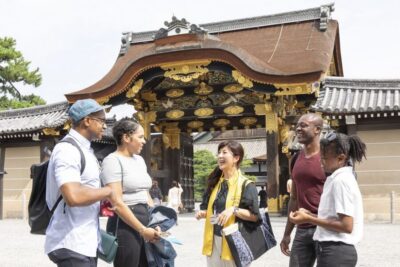
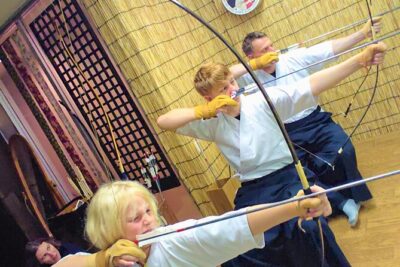
Japanesel Archery Experience HIROSHIMA CASTLE SHARAKU
Our verdict →
Browse the lists this tour appears in