
Reviewed · CALLIGRAPHY CLASSES
Japanese Calligraphy – Shodo – Lesson (near Kyoto Station)
Japanese calligraphy becomes much more memorable when you leave with something you made yourself. In this one-hour shodo class near Kyoto Station, you learn brush control, ink application, basic kanji, and a creative version of your own name. It is a hands-on souvenir, not just a demonstration.
I like the small group size, capped at 10, because the instructor can correct your brush technique and help explain the meaning behind each character. I also like that brushes, ink, and washi paper are included, so you can arrive with nothing but curiosity. The main drawback is finding the meeting point: look for the MK Taxi VIP Station near the Hachijo Exit, rather than expecting an obvious calligraphy studio sign.
Key points to know before booking
- You practice before creating: The session starts with brush handling and ink technique, giving beginners a useful foundation.
- Your name becomes a keepsake: Staff help choose approximate kanji for your name and explain the meaning of the characters.
- The class is close to Kyoto Station: The meeting point is at the MK Taxi VIP Station by the Hachijo Exit, near the ibis Styles Kyoto Station.
- You can take home several creations: The activities include basic characters, a scroll, and personalized calligraphy.
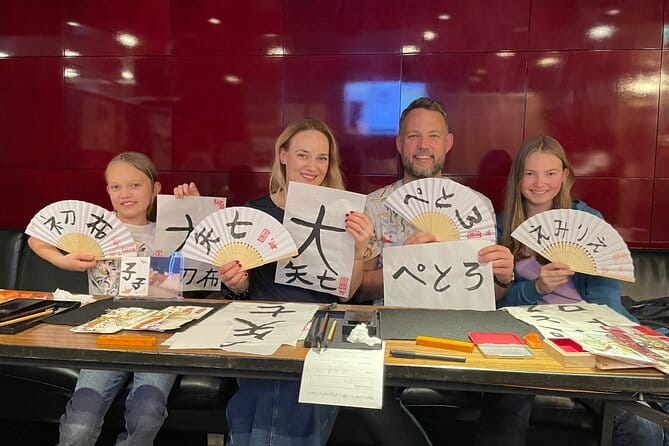
- Children can take part: The class suits families, with activities that work for younger participants.
- English help is available: Staff have been praised for clear, patient assistance, and Haruko is one instructor named in the class feedback.
What this Kyoto calligraphy class is really about
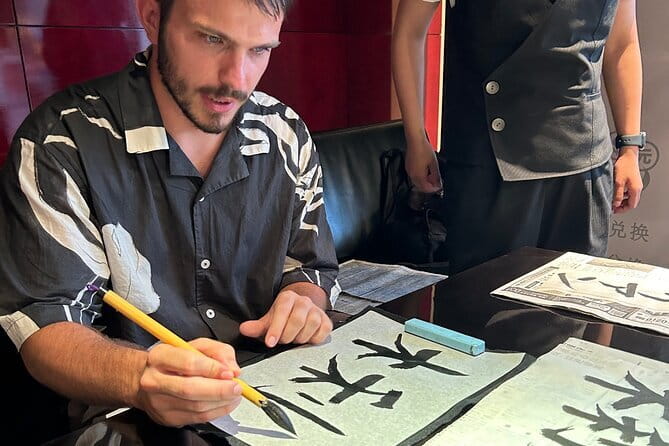
Shodo is Japanese brush calligraphy, and this class gives you a practical introduction rather than asking you to sit quietly and watch an expert work. You hold the brush, load it with ink, make the strokes, and learn why pressure and movement matter.
That makes the activity a good fit for a first encounter with Japanese writing. You do not need artistic training or prior knowledge of kanji. The instructor explains how to use the brush and how to apply ink before asking you to create your own work.
The class lasts about one hour. That is short enough to fit into a busy Kyoto schedule, especially on arrival day or before a train, but long enough to produce finished pieces. You will not become a calligraphy master in 60 minutes. You will, however, leave with a better feel for the tools and a souvenir tied to your own effort.
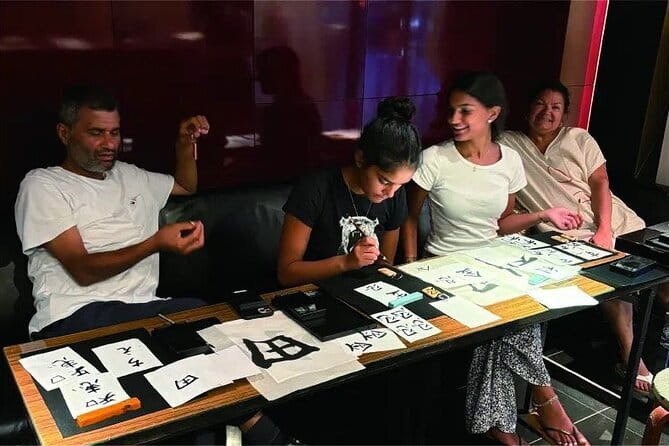
The class is run by Kyoto MK and takes place near Kyoto Station. The group maximum is 10 people, which matters here. Brush work is easier when you can see the instructor clearly and ask for help without competing with a large crowd.
More Calligraphy Classes in Kyoto
- Kyoto: Calligraphy class at Buddhist temple in city center
★ 5.0 · 167 reviews - Kyoto: Japanese Calligraphy Class
★ 4.8 · 89 reviews - Kyoto: Japanese Calligraphy Workshop
★ 4.7 · 84 reviews
Starting with brush, ink, and washi paper
The first part covers the basic tools. You receive the brush, ink, and washi paper needed for the session, so there is no need to buy supplies before you arrive. That is a small but important convenience. Japanese calligraphy equipment can be unfamiliar, and shopping for the right brush or paper would take time from your sightseeing.
The instructor shows you how to hold and use the brush and how to apply ink. For a beginner, this is more useful than it may sound. A brush does not behave like a ballpoint pen. The amount of ink, the angle of the brush, and the pressure of your hand all affect the stroke.
You should expect to make mistakes at this stage. That is part of the point. The practice allows you to get used to the brush before working on a more polished piece. The teaching style has been described as patient and engaging, with staff willing to explain things carefully in English.
If you are bringing a child, the early practice is helpful because it gives younger participants something to do right away. Children may not care about perfect stroke order, but they can still enjoy the physical act of painting characters and seeing a blank sheet change.
Practicing four simple kanji characters
After the introduction, you work on basic characters. The class uses kanji for one, A, forever, and Kyoto. The selection gives you a manageable set of shapes while also connecting the activity to Japan and your time in the city.
The character for one is particularly suitable for a first attempt because it is simple in form. Other characters require more control and may help you notice how different strokes fit together. The goal is not to produce museum-quality writing. It is to learn enough technique to make something personal and presentable.
I like this part because it gives the class a clear progression. You begin with tools, move to practice, and then use what you have learned to create a finished item. You are not simply handed a brush and told to copy a random symbol.
The instructor can help with technique as you work. In a group of up to 10, you should have a reasonable chance to receive individual guidance, although the exact amount depends on the group and how much help each person needs.
Making a scroll you can pack in your suitcase
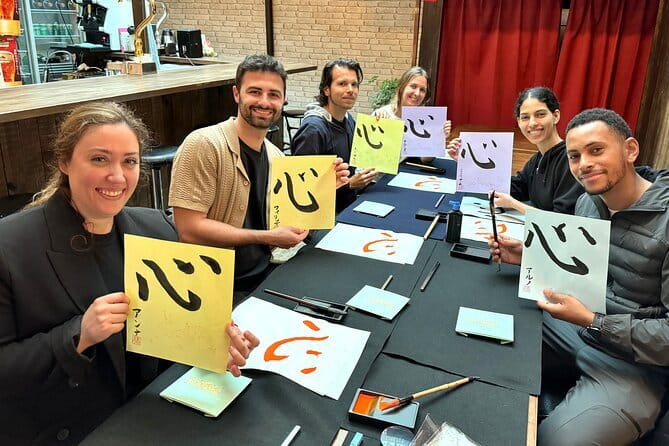
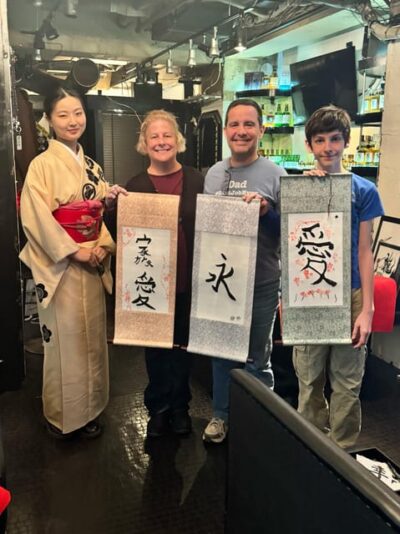
The characters you write can be made into a scroll for you to take home. This is one of the stronger reasons to choose the class over a short cultural demonstration. You leave with something connected to your own hand, rather than a generic shop purchase.
A scroll is also more useful as a souvenir than a loose sheet of paper. It gives your calligraphy a finished form and makes it easier to display or store. You should still handle it with care during the rest of your trip, since washi paper is delicate and ink needs time to settle.
The finished work will reflect your level as a beginner. Some strokes may be uneven, and that is normal. The appeal is the memory attached to the piece. You will remember learning how much ink to use, trying to keep the brush steady, and making a character that looked strange at first but gradually came together.
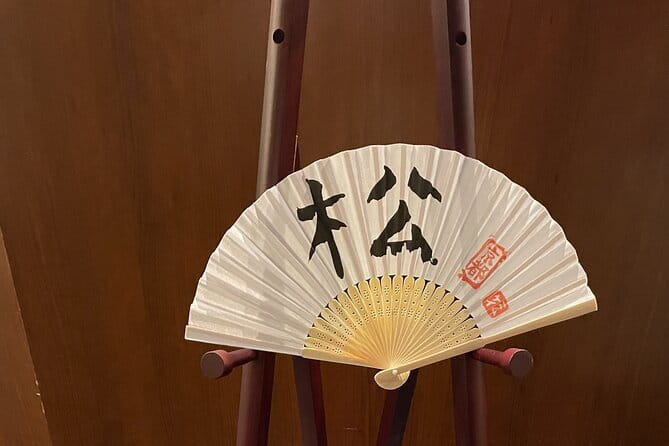
The class may also include other decorative items. Specific sessions have offered fans, photo frames, and additional pieces to decorate. These extras are not described as guaranteed parts of every booking, so I would treat them as possible additions rather than build your decision around them.
Same trip, a completely different kind of day:
- PERFECT KYOTO 1-Day Bus Tour
★ 5.0 · 13,518 reviews - Kyoto: Fushimi Inari, Kinkakuji, Bamboo Grove 1 Day Bus Tour
★ 4.8 · 4,316 reviews - Kyoto: Tea Ceremony in a Traditional Tea House in Kiyomizu
★ 4.9 · 3,519 reviews - Kyoto Geisha Walking Tour: Gion District & Hidden Gems
★ 4.7 · 3,273 reviews
Turning your name into Japanese characters
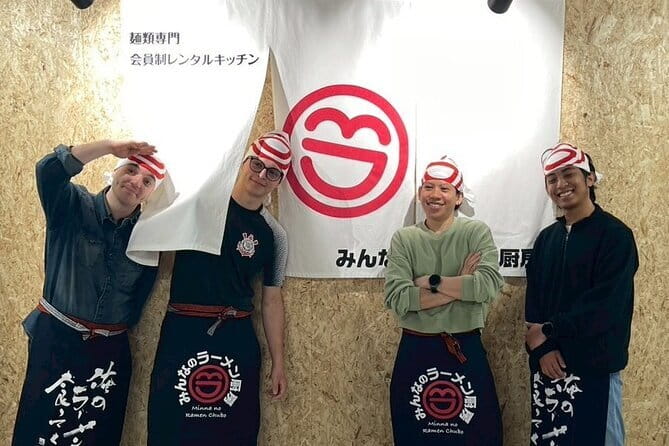
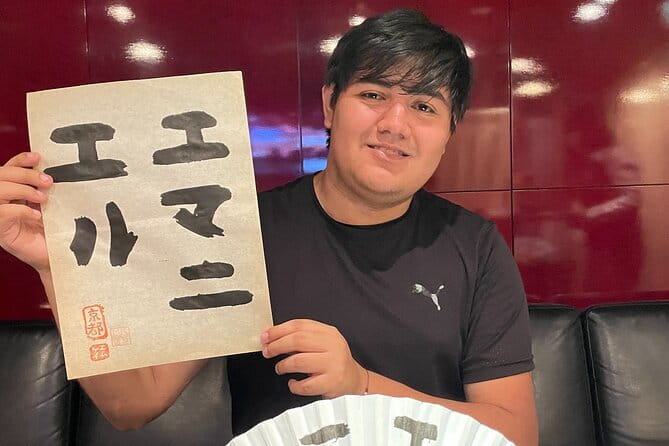
The most personal section is the name activity. Staff help you create an approximate version of your name in kanji and explain the meanings behind the chosen characters.
This is not a direct translation in the same way you might translate a sentence. Foreign names often need to be represented by selecting Japanese characters for their sound, meaning, or a mixture of both. The result can be playful and unusual.
For example, Brian may become characters suggesting martial courage, courtesy, and peace. Liz may be represented with characters associated with a pear and painting. These examples show why the activity is more than writing your name in another alphabet. You get a small lesson in how meaning can shape a Japanese name.
The staff assist with possible choices, so you do not have to arrive with a preferred kanji spelling. Listen to the explanations, then choose the version that feels most meaningful to you. Since the name is approximate, the result should be treated as a creative interpretation, not an official Japanese name.
This part works especially well for families and couples. Each person can leave with a different set of characters and a story about why those particular meanings were selected.
Why the location near Kyoto Station matters
The meeting point is the MK Taxi VIP Station at the Kyoto Station Hachijo Exit, near the ibis Styles Kyoto Station. It is close to public transportation, which makes this one of the easier cultural activities to fit into a Kyoto day.
The location can be confusing. The important clue is to look for the MK Taxi stand or the MK building diagonally across from the station exit. Do not assume you are looking for a large calligraphy sign. Some people have found the class difficult to locate at first, even though it is very close to the station.
Give yourself extra time to find the meeting point, especially if you are carrying luggage or arriving during a busy station transfer. Once you locate the MK Taxi VIP Station, you are at the correct starting place. The activity ends back there, so you do not need to arrange a second pickup point.
This location also works well on a travel day. You could schedule it near your arrival or departure, but keep your train timing realistic. The class is about an hour, and you will need time to find the meeting spot and handle any luggage. The supplied information does not specify luggage storage or a precise end time beyond the one-hour duration, so do not book it immediately before a train you cannot miss.
A good choice for families and first-time learners
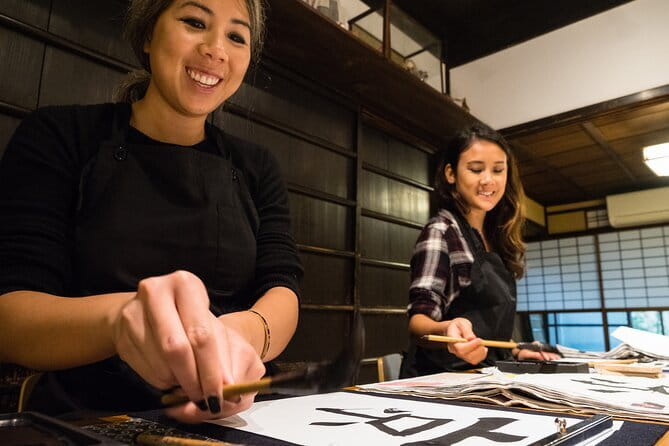
The class is family-friendly, and children have plenty to do. They can practice brush strokes, write simple characters, and create personalized souvenirs. The activity has also worked well for parents and children together, since the adults can focus on meaning and technique while younger participants enjoy the visual side of the craft.
I would choose this for a child who likes drawing, crafts, or making things with their hands. It may be less suitable for a child who expects a fast-moving attraction, since the activity involves sitting, listening, and repeating strokes.
Adults do not need to feel self-conscious about their artistic ability. The instructor is there to guide you, and the finished work does not need to be perfect to be worthwhile. Staff have been described as friendly, patient, and conversational, with good English support.
The class also suits solo visitors who want a quiet, structured activity. The small group creates an easier setting for questions, and the personalized name work gives you a natural point of interaction with the instructor.
What the $50.40 price gives you
At $50.40 per person, this is not the cheapest way to spend an hour in Kyoto. The value depends on what you want from the activity.
You are paying for instruction, a small group setting, all brushes, ink, and washi paper, plus finished calligraphy to take home. You also avoid the time and uncertainty of finding materials yourself. If you want a cultural activity that produces a personal souvenir, the price is easier to justify.
The class is less compelling if you are only looking for a quick photo opportunity or a low-cost craft session. Kyoto offers many free sights, and the lesson will not replace time at a temple, garden, or museum. Its value is in the guided participation and the personalized result.
A current rating of 4.9 from 37 ratings, with 100 percent recommending it, points to a consistently strong experience. Still, those numbers do not remove the practical drawbacks. You must find the right meeting point, the lesson is brief, and your finished calligraphy will be beginner work.
For many people, that last point is part of the fun. Your uneven strokes are proof that you made it yourself.
What the teaching style adds
The strongest part of the experience is the human help. You get direct advice on how to use the brush and apply ink, plus assistance choosing kanji for your name. That kind of correction is hard to get from a book or a quick online tutorial.
Haruko is one staff member named in the class feedback, and she is described as kind, friendly, and patient. Other sessions have included Yoshimura and May, although those names appear in connection with broader guiding help and should not be taken as a guarantee that either will lead your calligraphy class.
The staff can also add cultural context while you work. You may learn about differences among kanji, hiragana, and katakana, especially when creating names or favorite words. The supplied details do not promise a formal lecture on Japanese writing systems, so expect useful explanations tied to your project rather than a full language lesson.
That balance is right for a one-hour class. You get enough context to understand what you are doing without spending the whole session listening.
Practical details before you go
Confirmation is provided when you book, and mobile tickets are accepted. The activity is near public transportation and most people can participate.
Bring a willingness to make a slightly messy first attempt. The materials are provided, but ink and paper still reward care. Listen closely during the opening demonstration, since the early instructions will help you avoid using too much ink or pressing too hard.
The group maximum is 10 people. A smaller group should make the lesson more personal, but it does not guarantee one-to-one instruction at every moment. If you need extensive individual assistance, tell the instructor clearly and ask questions as you work.
Free cancellation is available if you cancel at least 24 hours before the local start time. Cancellations or changes made within 24 hours are not accepted for a refund.
Should you book this Kyoto shodo lesson?
I would book this class if you want a short, hands-on cultural activity near Kyoto Station and like the idea of taking home something personal. It is especially well suited to families, first-time visitors, couples, and anyone who wants more than a shop-bought souvenir.
I would think twice if your schedule is very tight, if you dislike craft activities, or if you need a perfectly polished piece of calligraphy. The meeting point also deserves attention, so plan to find the MK Taxi VIP Station before the class begins.
For the right person, the $50.40 price buys a useful introduction, patient guidance, supplied materials, and a keepsake with your own story in it. That is a fair trade for an hour in Kyoto, especially when you want to slow down and make something rather than simply take another photograph.
FAQ
How long does the Japanese calligraphy class last?
The activity lasts approximately one hour.
Where does the class meet?
It meets at the MK Taxi VIP Station Kyoto Station Hachijo Exit, at the taxi stand and Kyoto sightseeing reception near the ibis Styles Kyoto Station.
What materials are included?
Brushes, ink, and washi paper are included.
Can I take my calligraphy home?
Yes. You can take home your calligraphy creations, including a scroll made from the kanji characters you write.
Is the class suitable for children?
Yes. The experience is family-friendly and includes activities available for kids.
What happens if I need to cancel?
You can receive a full refund if you cancel at least 24 hours before the experience start time. Cancellations or changes made less than 24 hours before the start time are not accepted for a refund.
Just added around Kyoto
- Sekka Cotton Furoshiki Class★ 5.0 · 19 reviews
- Kyoto Sword Experience – includes Museum Ticket/Ninja Experience★ 4.5 · 149 reviews
- Scenic Green Tea Fields of Hidden Kyoto & Local Tea Exp (Private)★ 5.0 · 32 reviews
- Secret Eastern Kyoto Biking Adventure★ 5.0 · 44 reviews
- Private Sake Tasting in Central Kyoto with Sake Sommelier★ 5.0 · 32 reviews
- Samurai School in Kyoto: Samurai for a Day★ 5.0 · 202 reviews
- SHIRAKAWA Japanese Culture Experiences with private English staff★ 5.0 · 16 reviews
- A Privately Guided Photoshoot in Beautiful Kyoto by a Pro★ 5.0 · 18 reviews
Calligraphy Classes, compared.
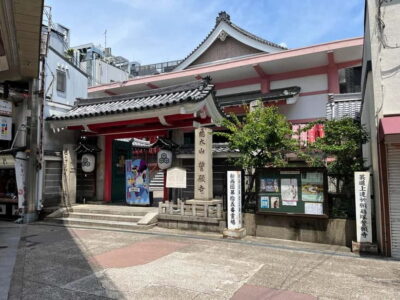
Calligraphy class at Buddhist temple in city center
Our verdict →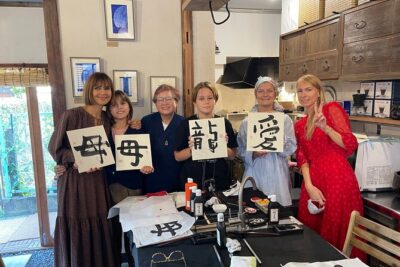
Let’s experience calligraphy in YANAKA, Taito-ku, TOKYO !!
Our verdict →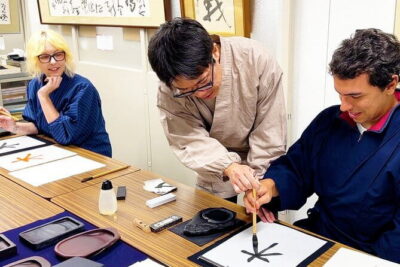
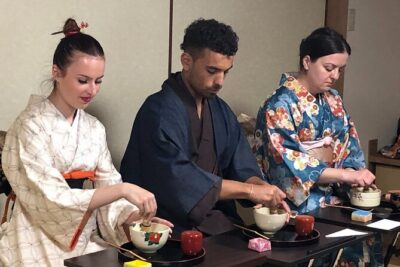
An Amazing set of Cultural experience: Kimono, Tea Ceremony and Calligraphy
Our verdict →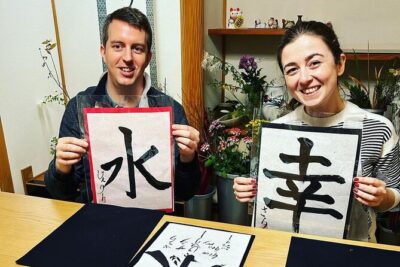
Private Japanese Calligraphy in Kyoto – Learn Shodō with a Master
Our verdict →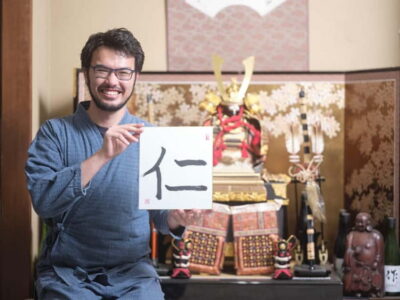
Browse the lists this tour appears in