
Reviewed · GEISHA & MAIKO EXPERIENCES
Kyoto: Gion and Geisha District Walking Tour
Gion is best understood on foot, and this tour gives you the stories that can be hard to find while wandering alone. You move from Yasaka Shrine and Maruyama Park into old lanes, shrine grounds, and Hanamikoji Street, with explanations about geiko and maiko culture, samurai traditions, tea houses, and local customs.
I like the small group of up to 10 and the practical guidance about where you might spot geisha. I also like the range of stops: this is not just a stroll down one photogenic lane, but a short route through shrines, parks, historic streets, and traditional neighborhoods.
The main drawback is pace. Two hours is enough for an introduction, not a full study of Gion, and the route includes several stops outside the district proper. You will also spend much of the time on foot over stone streets and slopes, so comfortable shoes matter.
Key points to know before booking
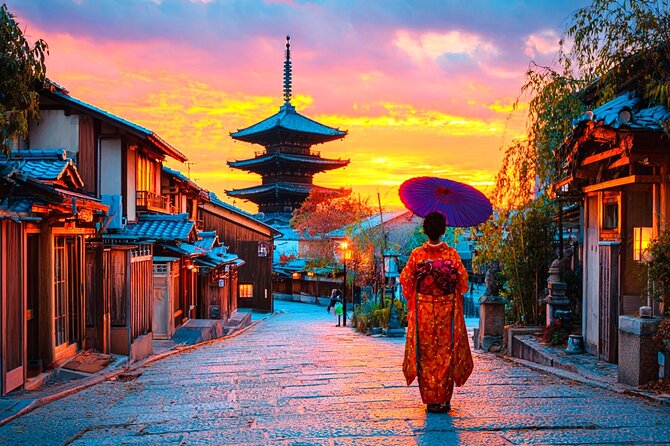
- A compact route through Gion and Higashiyama: Yasaka Shrine, Maruyama Park, Nene-no-Michi, Ninenzaka, Yasui-Konpiragu, and Hanamikoji Street all fit into about two hours.
- Geisha culture explained with care: Your guide discusses geiko, maiko, tea houses, traditional entertainment, and places where you might see geisha.
- A small group capped at 10 people: The size should make it easier to hear the guide and ask questions.
- Several guides receive especially warm praise: Guides named Amy, Maria, Sam, Shin, Tim, and Naoya are singled out for clear English, friendly help, and strong storytelling.
- Good value at $22.55: You pay for an English-speaking guide and local context rather than admission to paid sights.
- A walking tour with free cancellation until 24 hours before start time: Changes made within 24 hours are not accepted, and the amount paid is not refunded.
Why Gion makes a good guided walk
Gion can look simple at first. You see wooden townhouses, lanterns, narrow lanes, and people taking photographs. The harder part is understanding what you are looking at and knowing which customs deserve respect.
That is where this tour earns its price. Your guide connects the streets to Kyoto’s traditional performing arts, samurai stories, shrine rituals, and tea culture. You also receive useful orientation for the rest of your time in Kyoto, including tips on places where geisha might appear.
The route begins at the Starbucks Coffee in the Kyoto Gion Hotel, at 555 Gionmachi Minamigawa in Higashiyama Ward. The activity returns to that same meeting point. Confirmation arrives when you book, and a mobile ticket is provided, which keeps the arrival process simple.
At $22.55 per person, this is a modest spend for two hours of personal explanation. You are not paying for entry to a major attraction, since the listed sites are free. You are paying for interpretation, route planning, and the chance to ask questions in a small group.
That distinction matters. If you are happy to read signs and wander without help, you can visit the same public places on your own. If you want to understand what you are seeing, the guide adds the real value.
More Walking Tours in Kyoto
- Kyoto Geisha Walking Tour: Gion District & Hidden Gems
★ 4.7 · 3,273 reviews - Kyoto: Gion Magical Night Walking Tour with Geisha Trivia
★ 4.9 · 2,393 reviews - Kyoto: Gion Geisha District Walking Tour – Stories of Geisha
★ 4.7 · 2,187 reviews
Yasaka Shrine sets the tone
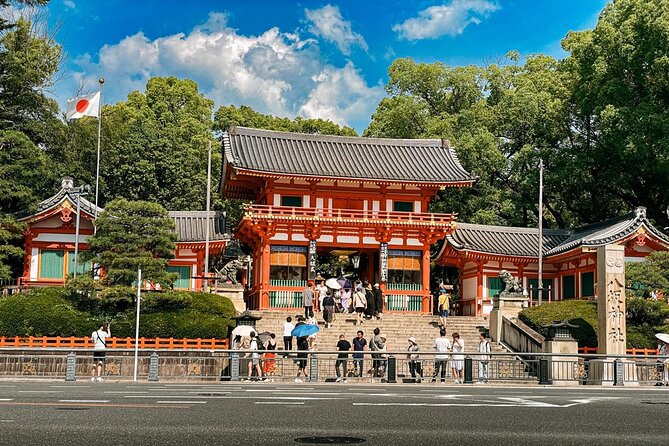
The first stop is Yasaka Shrine, with about 20 minutes to look around. This centuries-old Shinto shrine sits between Gion and Higashiyama, making it a natural starting point for the walk.
The shrine is known for its vermilion gate, lantern-lit paths, and connection to local celebrations. Your guide can help explain the setting and shrine rituals, turning a quick photo stop into a useful introduction to Kyoto’s religious traditions.
Twenty minutes is not long, but that is part of the appeal. You get a focused visit rather than an extended lecture. The stop also gives you an early sense of how religious spaces and ordinary city life sit close together in this part of Kyoto.
Bring your camera, but listen closely before rushing to photograph every lantern. Details that seem decorative at first often make more sense after your guide explains their purpose.
Maruyama Park offers a quieter pause
From Yasaka Shrine, the route continues to Maruyama Park for about 10 minutes. This is Kyoto’s oldest public park and is especially known for its seasonal beauty and large weeping cherry trees.
The short stop gives the walking route some breathing room. Instead of moving through streets the entire time, you get a moment among trees and open paths. Your guide may also connect the park to seasonal celebrations and local traditions, which adds useful context to the scenery.
The timing is brief, so do not expect a long park visit. Think of Maruyama Park as a scenic pause and a chance to understand how Kyoto residents use public space. If cherry blossoms are not in season, the park still helps break up the route, but the famous tree will not have the same visual impact.
Nene-no-Michi shows old Kyoto at street level
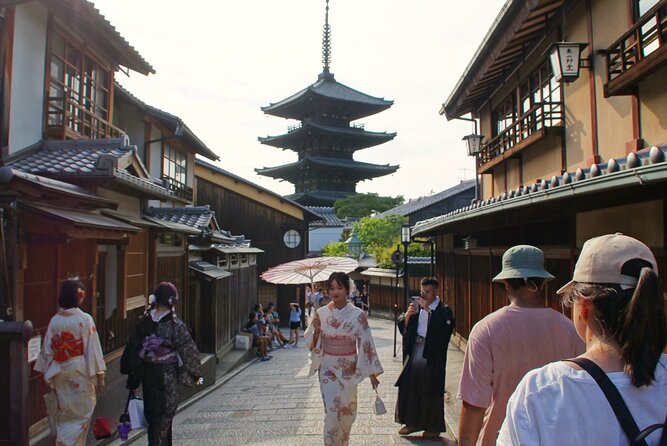
Nene-no-Michi is a picturesque lane named after Nene, the wife of samurai warlord Toyotomi Hideyoshi. You spend about 10 minutes here, walking past preserved architecture, small shops, and teahouses.
This is one of the places where a guide can point out things you might miss alone. The lane’s wooden buildings and careful presentation are attractive, but their real interest comes from understanding how this district relates to Kyoto’s past and traditional arts.
Do not expect a museum-style visit. Nene-no-Michi works best as a walking stop. You see the architecture from the street, hear its background, and continue through the old quarter.
Photography can be tempting here, particularly when the lane is quiet. Keep in mind that this is a living neighborhood, not a stage set. A guide can help you enjoy the setting without treating every doorway as a prop.
More Geisha Experiences in Kyoto:
- Best of Kyoto: Gion, Geisha, Pagodas & Cobblestones
★ 4.9 · 2,058 reviews - Night Walk in Gion: Kyoto’s Geisha District
★ 4.5 · 2,003 reviews - Kyoto Gion Geisha District Walking Tour – The Stories of Geisha
★ 5.0 · 1,441 reviews - Kyoto Gion: 2-Hour Geisha Culture & History Walking Tour
★ 5.0 · 1,186 reviews
Ninenzaka and Sannenzaka bring the slopes
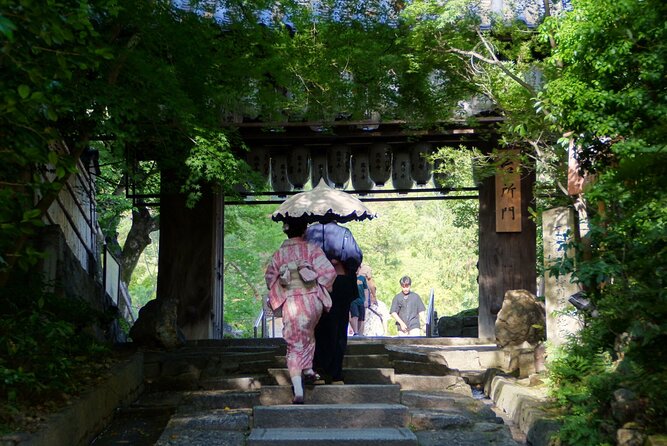
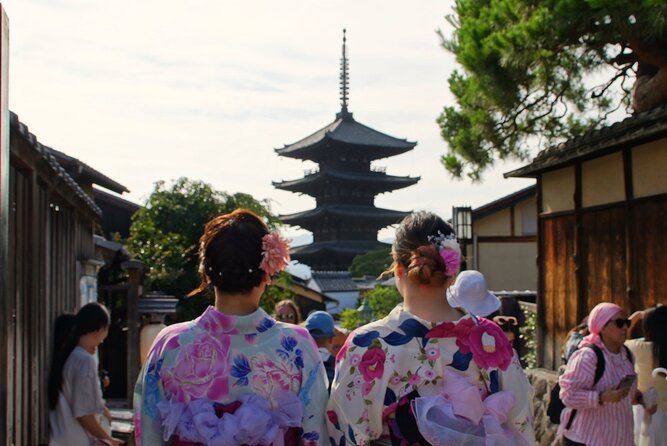
The route then reaches the historic Ninenzaka and Sannenzaka area for about 15 minutes. These stone-paved paths are lined with wooden buildings, artisan shops, and small businesses.
This part often feels like the most immediately photogenic section of the walk. The slopes, traditional facades, and narrow street views give you a strong sense of old Kyoto. Your guide adds stories about how the streets looked and functioned in earlier periods, including connections to samurai traditions.
There is a practical point here: the path is not flat. You will be walking over stone and descending charming but potentially tiring slopes. Wear shoes with a good grip, especially if the surface is wet.
Fifteen minutes gives you an introduction rather than time to browse every shop. If you want to return for shopping or photographs, the tour helps you identify the area first. You can then come back later with a better idea of where you want to spend time.
Yasui-Konpiragu explains the Power Stone
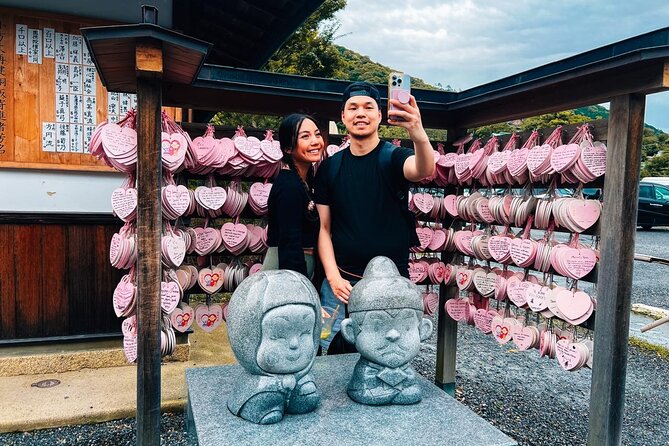
Yasui-Konpiragu is a smaller shrine with a memorable custom. Its Power Stone archway is linked to relationships. People crawl through it to pray for a strong relationship or to break ties with the past.
The tour allows about 10 minutes here. That is enough to hear the story, see the shrine, and understand why the ritual remains meaningful. The custom is unusual enough to stick in your mind, and the guide can explain it in a way that makes an old practice feel relevant rather than remote.
This stop also adds variety. After broad shrine grounds, a park, and famous lanes, Yasui-Konpiragu feels more personal and specific. It shows how Kyoto’s spiritual life includes both grand public sanctuaries and intimate local traditions.
The passage through the stone archway may not suit everyone physically. The tour information does not promise that every participant must do it, so treat it as an optional point of interest unless your guide says otherwise.
Hanamikoji Street is the Gion centerpiece
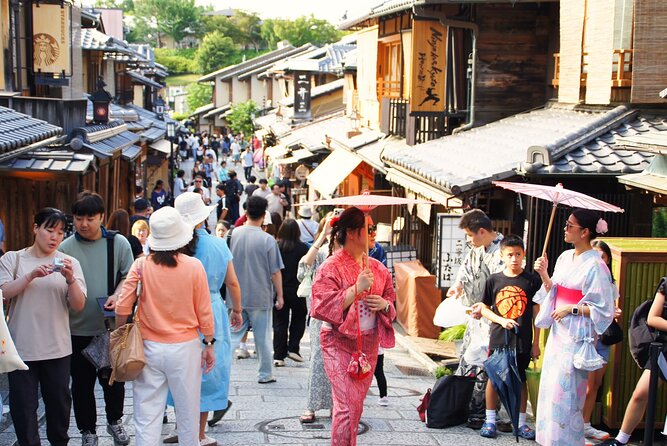
Hanamikoji Street is the final listed stop and one of the strongest reasons to choose this experience. You spend about 15 minutes in the heart of Gion, among preserved machiya townhouses, traditional teahouses, and lantern-lit streets.
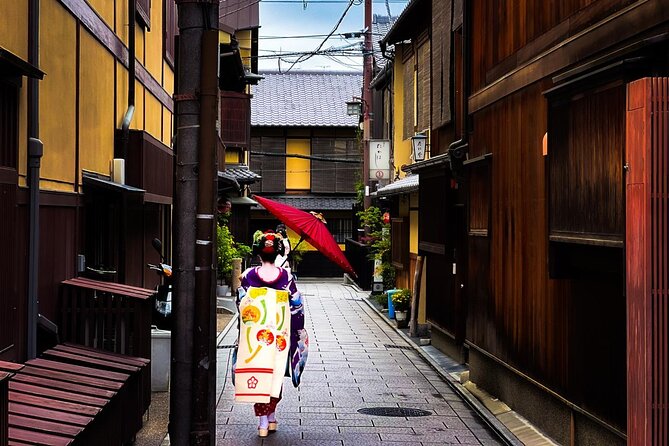
This is where the geisha theme becomes most direct. Your guide explains the world of geiko and maiko, traditional entertainment customs, tea ceremonies, and the role of the teahouses. You also get tips about places where you might spot geisha.
Keep your expectations realistic. The tour does not promise a geisha sighting, and you should never treat one as a photo opportunity without regard for privacy. The value here is learning how the district works and why these streets matter, not collecting a guaranteed encounter.
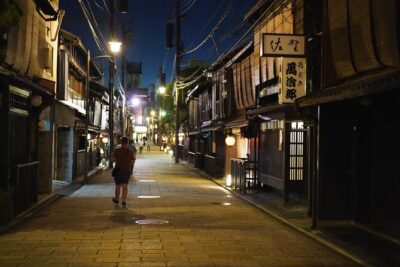
Hanamikoji can be especially atmospheric after dark. One guide named Naoya is praised for bringing the lantern-lit alleys and geisha stories to life on an evening walk. The tour description does not guarantee a night departure, so check the time you select before booking if evening scenery is important to you.
The guides shape the experience
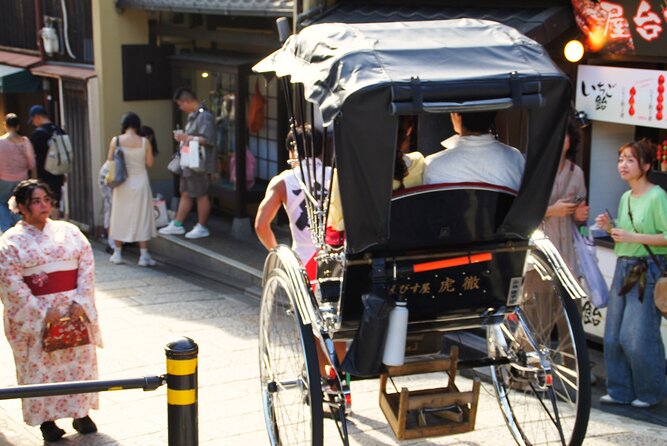
A walking tour succeeds or fails on the guide. Here, several guide names receive specific praise for different strengths.
Amy is described as engaging and clear when explaining Kyoto’s history and culture. Sam is praised for strong English, flexibility, and a friendly approach. Shin is noted for giving a useful introduction to Gion and its sights.
Tim is remembered for being friendly and well informed. Maria is praised for sending helpful information before the walk, staying organized, and seeking shade during hot weather. Naoya is associated with a memorable evening experience and vivid geisha stories.
You may not receive any particular guide, so do not book on the assumption that Amy, Maria, or another named guide will lead your group. Still, the range of comments suggests that the provider uses guides who can handle both factual explanation and personal questions.
The small group matters here. With a maximum of 10 people, you have a better chance of hearing the guide in narrow streets and asking about details that catch your eye. It also feels less formal than a large coach group.
What you will learn about geiko and maiko
The tour uses the word geisha in its public description, but the subject is broader than spotting a woman in traditional dress. You learn about the traditional entertainment world connected to Gion, including geiko and maiko, tea houses, training, and local customs.
That context helps correct a common misunderstanding. The women you may see in Gion are not simply costumed performers placed there for photographs. The district has working traditions and private spaces, and your guide can explain how to observe respectfully.
The strongest comments about the experience focus on storytelling. Guides connect narrow streets to local legends, traditional arts, maiko training, and tea ceremonies. This is useful because the district’s beauty can otherwise become a series of disconnected images.
You should still view the tour as an introduction. Two hours cannot cover every part of geiko culture, the history of Kyoto’s entertainment districts, or the full training system. It gives you a foundation for noticing more during the rest of your stay.
Who will get the most from this walk
I would choose this tour for a first visit to Kyoto, especially if you want an easy introduction to Gion without committing to a long cultural program. It also suits anyone curious about geisha culture but unsure how to approach the district respectfully.
It works well for:
- First-time visitors who want orientation in Gion and Higashiyama
- People who prefer a small group to a large guided walk
- Visitors interested in shrines, traditional streets, samurai stories, and geiko culture
- Photographers who want to understand the setting before returning independently
- Those who want practical suggestions for the rest of their Kyoto stay
It may be less suitable if you want a slow photography session, extensive shopping time, or a long visit inside a single shrine. The itinerary moves through six places, so the experience favors variety over lingering.
Most people can participate, according to the tour information, but you should still consider the stone streets and slopes. If you have mobility concerns, ask the provider before booking because the route includes Ninenzaka and Sannenzaka.
Timing, group size, and simple planning tips
The tour lasts about two hours. The listed stop times add up to roughly 80 minutes, leaving the remaining time for walking between locations and explanations along the route.
Meet at the Starbucks Coffee in the Kyoto Gion Hotel. The tour ends at the same location, which makes it easier to plan another activity afterward. Public transportation is nearby, and the mobile ticket means you do not need a printed voucher.
Wear comfortable shoes and bring water, especially in warm weather. Maria’s effort to keep a group in the shade is a useful reminder that Kyoto’s summer heat can affect a walking tour.
The route includes busy sightseeing areas, narrow lanes, and historic stone surfaces. Stay close enough to hear the guide, and leave room for ordinary pedestrians. A respectful attitude is especially important around teahouses and possible geisha sightings.
Free cancellation is available if you cancel at least 24 hours before the start time. Within 24 hours, the amount paid is not refunded, and changes are not accepted.
Is $22.55 a fair price?
At $22.55, the tour is priced as an accessible introduction rather than a premium cultural program. You receive an English-speaking guide, a planned route, and explanations at six public locations. The sights themselves do not charge admission, so the question is whether the guide adds enough value.
For me, the answer is yes if you are new to Kyoto or especially interested in Gion’s traditional arts. A guide can explain the difference between a shrine and a park, point out architectural details, give background on the Power Stone, and place Hanamikoji Street within the wider world of geiko culture.
The value is lower if you already know Gion well or prefer to explore at your own speed. You could visit Yasaka Shrine, Maruyama Park, Nene-no-Michi, Ninenzaka, Yasui-Konpiragu, and Hanamikoji Street without paying for entry. The fee buys context and company, not exclusive access.
Because the group is limited to 10, the price is also reasonable for a more personal format. Do not expect a private tour, but you should get a closer experience than you would with a large crowd.
Should you book the Gion and Geisha District Walking Tour?
Book it if you want a well-priced, two-hour introduction to Gion with clear explanations of geiko culture, shrines, old streets, and local customs. The route covers a lot without requiring a full day, and the small group should keep the walk manageable.
I would especially recommend it early in a Kyoto visit. The guide’s tips can help you return to Hanamikoji Street or Ninenzaka later, when you have more time for photographs and shops.
Skip it if you want a slow, unstructured wander or a guaranteed geisha sighting. For everyone else, the combination of six varied stops, friendly English-speaking guides, and a $22.55 price makes this a sensible way to get your bearings in Kyoto’s most famous traditional district.
FAQ
How long is the Gion and Geisha District Walking Tour?
The tour lasts approximately two hours.
What is the tour price?
The price is $22.55 per person.
Where does the tour begin?
The meeting point is Starbucks Coffee in the Kyoto Gion Hotel, at 555 Gionmachi Minamigawa in Kyoto’s Higashiyama Ward.
Where does the tour end?
The activity ends back at the meeting point.
What places are included on the route?
The route includes Yasaka Shrine, Maruyama Park, Nene-no-Michi, Ninenzaka and Sannenzaka, Yasui-Konpiragu, and Hanamikoji Street.
Is an English-speaking guide included?
Yes. An English-speaking guide is included.
How large is the group?
The tour has a maximum of 10 participants.
Are admission tickets included?
Entry and admission to Gion and Hanamikoji Street are included. The listed stops have no admission charge.
Is a mobile ticket available?
Yes. The booking includes a mobile ticket, and confirmation is provided at the time of booking.
Can I cancel for a full refund?
Yes, if you cancel at least 24 hours before the experience start time. Cancellations within 24 hours are not refunded, and changes during that period are not accepted.
Just added around Kyoto
- Sekka Cotton Furoshiki Class★ 5.0 · 19 reviews
- Kyoto Sword Experience – includes Museum Ticket/Ninja Experience★ 4.5 · 149 reviews
- Scenic Green Tea Fields of Hidden Kyoto & Local Tea Exp (Private)★ 5.0 · 32 reviews
- Secret Eastern Kyoto Biking Adventure★ 5.0 · 44 reviews
- Private Sake Tasting in Central Kyoto with Sake Sommelier★ 5.0 · 32 reviews
- Samurai School in Kyoto: Samurai for a Day★ 5.0 · 202 reviews
- Samurai Performance and Casual Experience: Kyoto Ticket★ 4.5 · 115 reviews
- SHIRAKAWA Japanese Culture Experiences with private English staff★ 5.0 · 16 reviews
Geisha & Maiko Experiences, compared.

Kyoto Geisha Walking Tour: Gion District & Hidden Gems
Our verdict →

Dinner with Maiko in a Traditional Kyoto Style Restaurant Tour
Our verdict →
Browse the lists this tour appears in