
Reviewed · FOOD TOURS
Kyoto: Gion & Pontocho Food Tour with 13 Dishes
Kyoto’s best introduction to Japanese food may happen after dark, when this small-group tour leads you from Yasaka Shrine through Gion and Pontocho, then sits you down for up to 13 dishes at a restaurant and izakaya. It is part food sampler, part neighborhood walk, and part cultural orientation.
I like the two included drinks, since you can choose alcoholic or non-alcoholic options, and I like the small maximum of 10 people. The main catch is timing: at 7 p.m., you will see Gion’s evening atmosphere, but you should not count on spotting geisha. The price is also a serious commitment for a three-hour food outing, though much of your dinner is covered.
Key points to know before booking
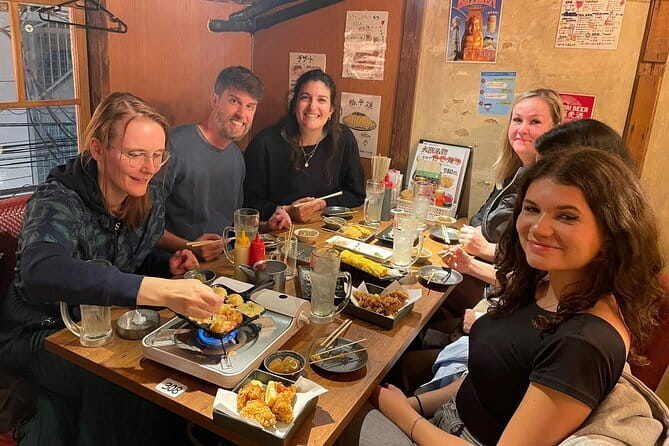
- Thirteen dishes in two settings: Expect a broad tasting menu at one restaurant and one izakaya, with foods such as tempura, sashimi, tofu, and Japanese fried chicken.
- A useful first-night orientation: Your guide explains the food, translates when needed, and helps you get familiar with Gion and Pontocho.
- Yasaka Shrine adds cultural context: The evening begins near one of Kyoto’s best-known Shinto shrines, with about 30 minutes there.
- Small group, capped at 10: This makes it easier to ask questions and follow your guide through narrow streets.
- Two drinks are included: Alcoholic and non-alcoholic choices are available, but extra drinks cost more.
- Expect a three-hour evening walk: Wear comfortable shoes and plan to finish near Kyoto-Kawaramachi Station.
A food tour that begins with Kyoto after dark
This experience gives you more than a string of restaurant stops. You begin at the FamilyMart at 300 Gionmachi Kitagawa at 7 p.m., then walk with a local guide toward Yasaka Shrine, Gion, and Pontocho.
That order works well. You get a quick look at one of Kyoto’s major religious sites before moving into the city’s old entertainment districts. Food becomes easier to understand when your guide can explain what you are eating, how to order it, and why certain neighborhoods developed around dining and nightlife.
The tour lasts about three hours. It is not a long formal lecture, and it is not simply a restaurant reservation with a guide attached. The appeal is the combination of movement, explanation, and a substantial set menu.
The tour provider keeps the group to 10 people at most. That matters in Gion and Pontocho, where lanes can be tight and noisy. A small group also gives you a better chance to ask about ingredients, customs, Kyoto sights, or what to do later in your trip.
Several guides have drawn particular praise for their approach. Kohtaro is described as friendly and helpful with food, city sights, matcha shopping, and the best times to visit popular places. Meiko is noted for explaining both old and modern Kyoto, while Takuma is praised for discussing food, religion, language, and local culture. Yuna and Moto are also singled out for clear explanations and an easy manner.
Guide assignments can change, so you should not book expecting one particular person. Still, the range of guide feedback suggests that the human side of this tour is a major part of its value.
More Food Tours in Kyoto
- Kyoto Night Foodie Tour in Gion (9+ dishes + 6 Sake tastings)
★ 5.0 · 1,762 reviews - Kyoto Nishiki Market Food and Culture Walking Tour
★ 5.0 · 412 reviews - Kyoto: Gion Food Tour 13 Dishes at 4 Eateries
★ 5.0 · 408 reviews
Yasaka Shrine gives the evening a proper start
The first stop is Yasaka Shrine, with about 30 minutes set aside and no admission charge. Located in Gion, the shrine is more than a quick photo stop. It gives you a place to pause before the food portion begins and introduces a side of Kyoto that can be missed when you focus only on restaurants and shopping.
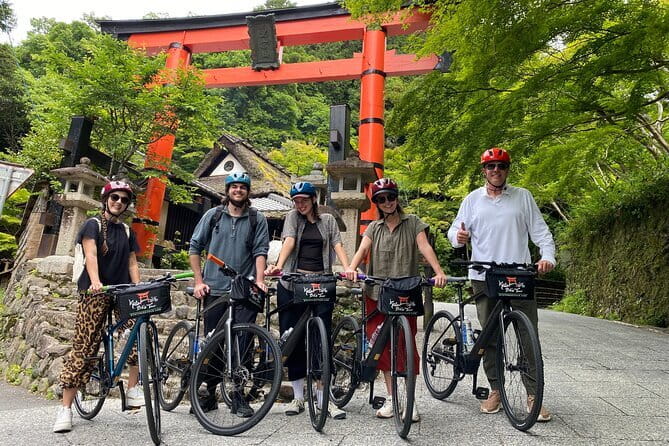
The shrine is more than 1,350 years old and is known for its red main gate and lantern-lit paths. At night, the lighting gives the site a different mood from a daytime visit. Your guide can also help explain the role of a Shinto shrine and point out details that may otherwise seem easy to overlook.
Do not expect a long temple tour. Thirty minutes is enough for orientation and a walk around the main areas, not an exhaustive visit. That is probably the right balance for a food-focused evening, especially if you are hungry and the main meal is still ahead.
Yasaka Shrine also gives your guide a natural place to explain Gion’s setting. You are not being rushed directly from the meeting point to a table. Instead, the route starts with a cultural landmark, then moves into the streets where Kyoto’s dining traditions are still part of everyday life.
Gion: traditional streets, real evening atmosphere
After the shrine, the tour spends about an hour in Gion. This is Kyoto’s most famous geisha district, known for wooden machiya houses, teahouses, and streets such as Hanami-koji.
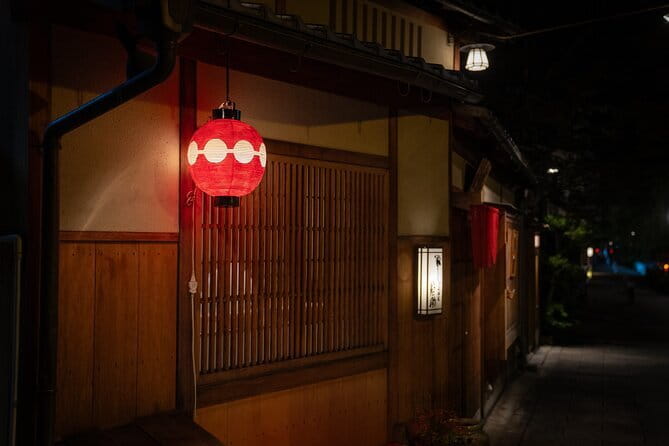
Gion is at its most atmospheric when lanterns glow and the old wooden façades begin to blend into the evening. A guide helps you read the neighborhood with more care. You can learn about the buildings, the area’s cultural role, and the difference between seeing a historic district and treating it like a stage set.
The tour description points to geisha spotting as part of Gion’s appeal, but you should keep your expectations sensible. One person specifically noted that night is not the best time to see geisha. A guide can explain local customs, but no walking tour can promise a sighting, and it is important to give people working in the district plenty of space.
This is one reason the tour works better as a neighborhood introduction than as a geisha hunt. You get a guided walk through a famous part of Kyoto, along with context about the food and culture you are about to encounter.
Gion can also be a tricky place for first-time visitors to navigate at night. Signs and menus may not always be easy to understand, and some restaurants are tucked into traditional buildings. Your guide handles the route and language gap, which removes a good deal of guesswork.
Pontocho brings the walk toward dinner
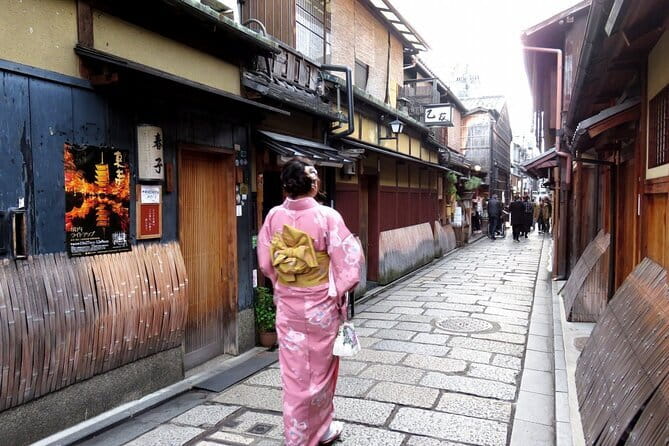
The tour then continues to Pontocho, another historic dining district running between the Kamogawa River and Kiyamachi Street. Its narrow lane is lined with traditional wooden buildings and restaurants, giving it a more concentrated, evening-oriented feel.
Pontocho is a good place to see how Kyoto’s older architecture and modern dining life sit side by side. The lane is narrow, and it can feel intimate even when many people are out for dinner. Your guide can help you notice the restaurant entrances and explain the area instead of leaving you to wander past without knowing what you are seeing.
The one-hour stop is not simply a walk through a pretty lane. It helps connect the sightseeing portion to the meal. By the time you reach the dining venues, you have seen two of Kyoto’s best-known evening districts and learned why they matter.
The route ends at Kyoto-Kawaramachi Station, a useful finish if you want to continue exploring central Kyoto or return by train. The starting point is also near public transportation. Since the tour ends at night and includes walking through old streets, comfortable shoes are a practical choice.
Same trip, a completely different kind of day:
- PERFECT KYOTO 1-Day Bus Tour
★ 5.0 · 13,518 reviews - Kyoto: Fushimi Inari, Kinkakuji, Bamboo Grove 1 Day Bus Tour
★ 4.8 · 4,316 reviews - Kyoto: Tea Ceremony in a Traditional Tea House in Kiyomizu
★ 4.9 · 3,519 reviews - Kyoto Geisha Walking Tour: Gion District & Hidden Gems
★ 4.7 · 3,273 reviews
What you actually eat: a broad Japanese sampler
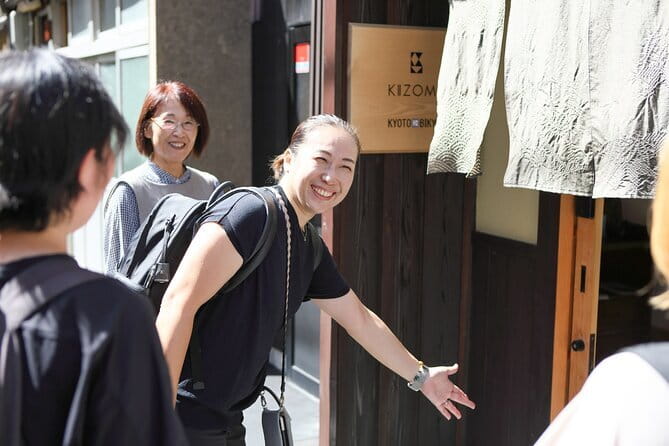
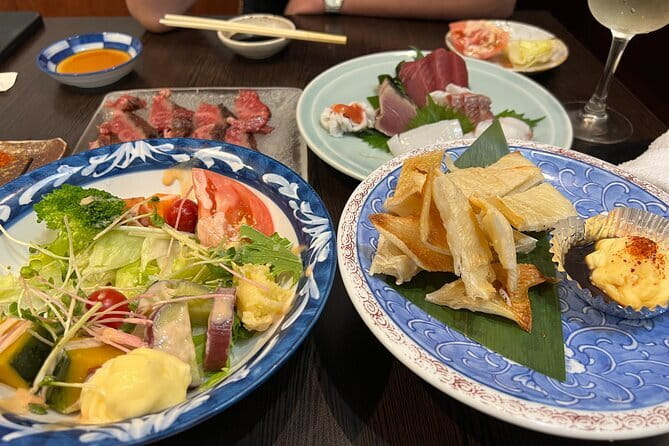
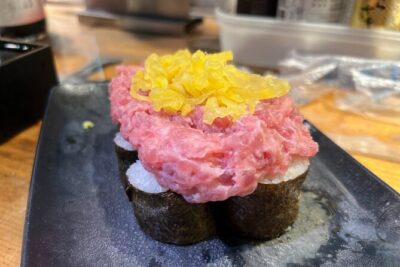
The food is served at one restaurant and one izakaya, with up to 13 dishes included. The exact menu can vary, but the experience is designed to give you a spread rather than one large plate of a single specialty.
Expect examples such as:
- Crispy tempura
- Fresh sashimi
- Japanese fried chicken
- Tofu
- Other traditional Japanese dishes served as part of the set menu
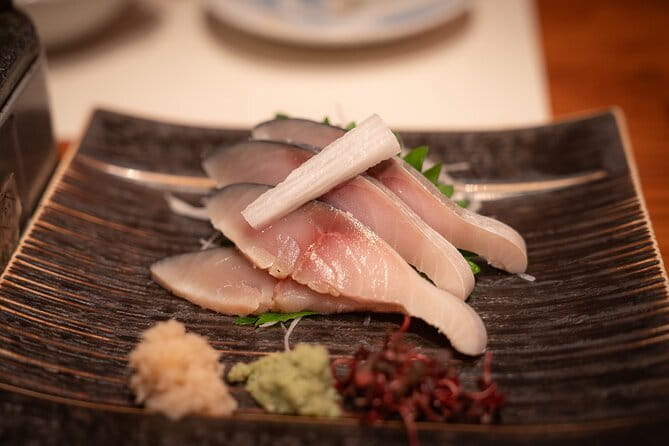
The variety is the point. You can compare different textures, cooking methods, and flavors in one evening. If this is your first time trying Japanese food, the guide can explain what each dish is and how it is commonly eaten. If you already know Japanese food, the walk and local explanations add interest beyond a standard restaurant meal.
The two venues also give the night some rhythm. An izakaya is a casual Japanese drinking and dining place, where small dishes are often shared alongside drinks. Pairing that setting with a restaurant means you are not eating the same style of food in the same type of room for three hours.
The tour includes two drinks, and you can choose alcoholic or non-alcoholic options. That is useful for couples or groups with different preferences. If you plan to drink more than two, budget for extra purchases. The included package is generous enough for the stated tour, but it is not an open bar.
The food count deserves a small clarification. The experience is advertised around 13 dishes, while the general description also refers to about 10 tastings. Treat 13 as the upper figure for the included set menu, not a promise that every evening will contain 13 identical portions. The important point is that you receive a full tasting meal rather than one or two token samples.
Why the guide matters more than the menu
A food tour can be disappointing if it only points at dishes and leaves you to work out the rest. Here, the guide is meant to translate and explain, which can make a real difference in Kyoto.
Menus, ordering customs, and unfamiliar ingredients can create friction even in a good restaurant. A local guide gives you someone to ask about preparation, etiquette, and the meaning of what arrives at the table. This is especially helpful if Japanese food is new to you.
The guide also adds value outside the meal. Kohtaro, for example, has helped visitors with matcha shopping and advice on quieter times for popular sights. Meiko has been praised for covering both past and present Kyoto, while Takuma has handled questions about language, religion, and food. Those details suggest a tour that can serve as a useful first-evening briefing for the rest of your stay.
You should still keep your expectations practical. A three-hour tour cannot explain every Kyoto tradition, and the guide will have to divide attention among the group. The maximum of 10 helps, but it is not a private tour.
Is $105.71 a fair price?
At $105.71 per person, this is not a cheap way to eat dinner in Kyoto. The fair comparison is not just the cost of walking around Gion. You are paying for a guided route, translation help, a meal at two venues, up to 13 dishes, two drinks, and the convenience of having the evening organized.
That package can make sense if you are new to Kyoto or nervous about choosing restaurants on your own. It also has value for first-time Japanese diners who want help understanding the food. You avoid spending your first evening guessing at menus, missing the best-known streets, or ordering only familiar items.
The value is weaker if you already know Gion and Pontocho well, speak Japanese comfortably, or prefer to choose your own restaurants. You might spend less by eating independently, though you would give up the explanations, translation, and planned progression through the neighborhoods.
The 98 percent recommendation rate and 4.8 rating from 81 reviews point to a consistently well-received experience, but the price still deserves thought. I would view it as an orientation dinner, not simply a meal. If you plan to use the guide’s local advice for the rest of your Kyoto visit, the cost becomes easier to justify.
Who should book this evening?
This tour fits first-time visitors who want a confident start in Kyoto. It is also a strong choice for solo travelers and couples who would rather join a small group than make dinner plans from scratch.
Food-curious visitors should benefit most, especially if you want to try sashimi, tofu, tempura, and fried chicken in one evening. People who enjoy local context will also get more from the shrine and neighborhood walks than from a restaurant-only tasting.
Families and older visitors should note the walking format and three-hour duration. The information says most people can participate, but it does not promise a fully accessible route or provide detailed mobility information. If that matters to you, ask the provider before booking.
This is less suitable for anyone seeking a private, luxury dinner, a guaranteed geisha sighting, or a tour built around heavy drinking. Extra drinks are not included, and the evening is structured around food, walking, and cultural explanation.
You can cancel for a full refund if you do so at least 24 hours before the 7 p.m. start time. Cancellations or changes within 24 hours are not refunded, so do not book this as a flexible last-minute placeholder.
The best way to decide
Book this tour if you want a guided first taste of Kyoto’s food and evening districts, with enough dishes to make dinner and enough walking to give the meal context. The small group, two drinks, and translation help strengthen the package.
Skip it if you prefer spontaneous dining, already know Gion and Pontocho, or think $105.71 is too much for a set evening meal. Also skip it if seeing geisha is your main goal. For everyone else, especially first-time visitors arriving without Japanese language skills, this looks like a useful and well-balanced introduction to central Kyoto after dark.
FAQ
How long does the Gion and Pontocho food tour last?
The tour lasts approximately three hours, including the shrine visit, neighborhood walks, and food stops.
What time does the tour begin?
It begins at 7:00 p.m. The meeting point is the FamilyMart at 300 Gionmachi Kitagawa in Kyoto’s Higashiyama Ward.
Where does the tour finish?
The tour ends at Kyoto-Kawaramachi Station in Kyoto’s Shimogyo Ward.
How many dishes and drinks are included?
Food at one restaurant and one izakaya is included, with up to 13 dishes. Two alcoholic or non-alcoholic drinks are also included.
How large is the group?
The group can include a maximum of 10 people.
Can I cancel for a refund?
Yes. You can receive a full refund if you cancel at least 24 hours before the experience starts. Cancellations or changes made less than 24 hours before the start time are not refunded.
More Food & Drink in Kyoto
- 3-Hour Kyoto Insider Sake Brewery Tour with Tastings & Pairings
★ 5.0 · 917 reviews - Arashiyama Bamboo, Temple, Monkeys, or Secret Sake Brewery
★ 4.8 · 886 reviews - Kyoto: Insider Sake Brewery Tour with Sake and Food Pairing
★ 5.0 · 704 reviews - Kyoto Sake Brewery & Tasting Walking Tour
★ 5.0 · 623 reviews
Just added around Kyoto
- Sekka Cotton Furoshiki Class★ 5.0 · 19 reviews
- Kyoto Sword Experience – includes Museum Ticket/Ninja Experience★ 4.5 · 149 reviews
- Scenic Green Tea Fields of Hidden Kyoto & Local Tea Exp (Private)★ 5.0 · 32 reviews
- Secret Eastern Kyoto Biking Adventure★ 5.0 · 44 reviews
- Private Sake Tasting in Central Kyoto with Sake Sommelier★ 5.0 · 32 reviews
- Samurai School in Kyoto: Samurai for a Day★ 5.0 · 202 reviews
- SHIRAKAWA Japanese Culture Experiences with private English staff★ 5.0 · 16 reviews
- A Privately Guided Photoshoot in Beautiful Kyoto by a Pro★ 5.0 · 18 reviews
Food Tours, compared.
Shinjuku Food Tour (13 Dishes at 4 Local Eateries)
Our verdict →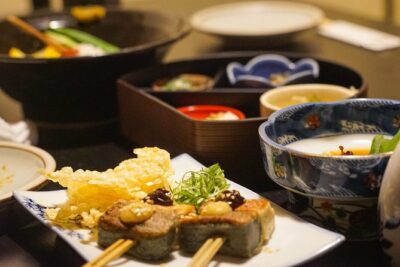
Kyoto Night Foodie Tour in Gion (9+ dishes + 6 Sake tastings)
Our verdict →
Osaka Local Foodie Walking Tour in Dotonbori and Shinsekai
Our verdict →
Food Tour in Ueno with 10+ Tastings of Japanese Classics
Our verdict →
Browse the lists this tour appears in