
Reviewed · GEISHA & MAIKO EXPERIENCES
Kyoto Gion Night Walk & Geisha District Guided Tour
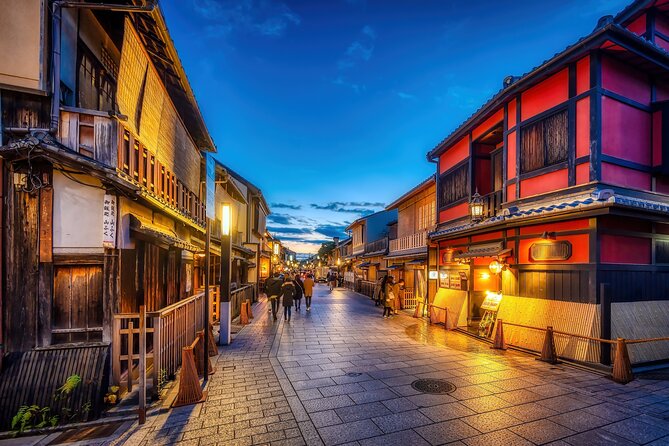
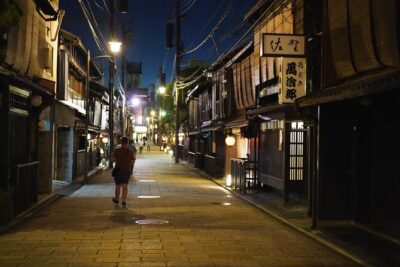
Gion after dark is Kyoto at its most atmospheric. Lanterns glow outside teahouses, narrow lanes lead past old wooden buildings, and the district’s traditional customs make more sense when a local guide explains them. I especially like the route through Hanamikoji Street, followed by quieter corners that are easy to miss on your own.
The price is a strong point: at about $18 per person, you get roughly three hours of walking and cultural background. Guides such as Naoki, Jasmine, Shingo, Raphael, and Miyake have earned praise for clear explanations, patience, humor, and useful restaurant advice. The main caution is that this is a long walk over dinner hours, and seeing a geisha or maiko is never promised.
Key points to know
- Gion after sunset: Lanterns, teahouses, restaurants, and traditional streets give the district a different feel from daytime.
- Hanamikoji Street: One of Kyoto’s best-preserved historic streets, with plenty of photo opportunities.
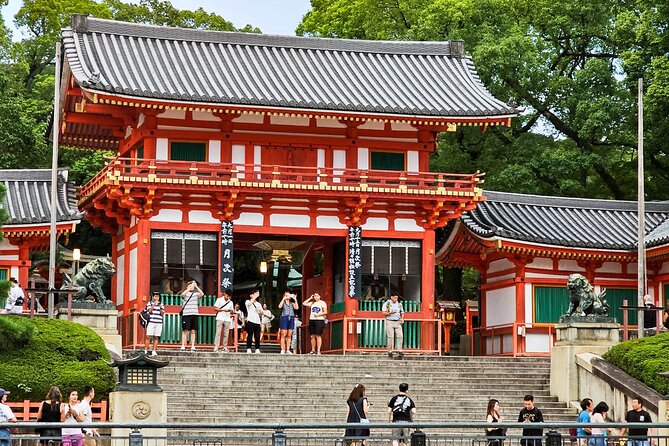
- Yasaka Shrine: A major cultural stop that adds temple and shrine context to the walk.
- Small-group format: The tour is described as limited to no more than nine people, with a private option also available.
- Three hours on foot: Wear comfortable shoes and plan around the fact that breaks are limited.
- Geisha sightings are possible, not certain: You may see a maiko or geisha, but the tour is more dependable as a cultural walk than as a wildlife-style spotting mission.
Why Gion works best after sunset
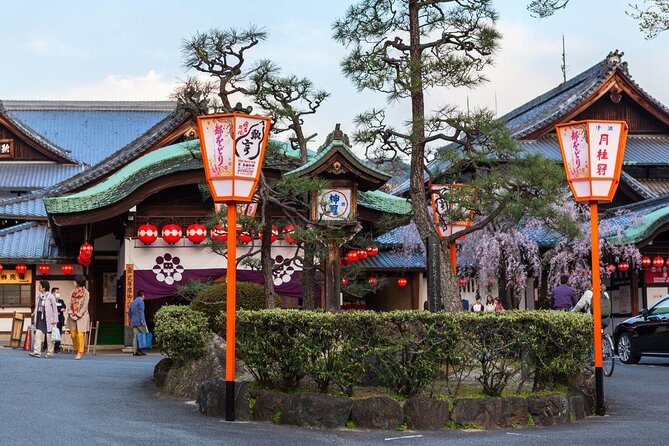
Gion is attractive at any hour, but night gives it a special sense of place. Once the sun drops, lanterns shine over traditional facades, and the narrow streets feel tied to the old entertainment quarter that shaped Kyoto’s image around the world.
You will not be walking through a theme park. Gion is still a working district, with restaurants, bars, teahouses, homes, and businesses tucked along its lanes. That is why a guide helps. The most interesting parts are often not the grand sights, but the customs, architecture, and small details that explain how the neighborhood functions.
The evening timing has one practical downside. The tour takes place across normal dinner hours, so you may finish hungry. In winter, the same timing can leave you cold by the end. I would eat something light before meeting the group, then plan a proper meal after the walk unless your schedule allows dinner beforehand.
The mood also depends on the night. One outing may feel quiet, with some restaurants closed. Another may offer more activity and a better chance of seeing people heading to evening appointments. The atmosphere is part of the appeal, but it is not fully predictable.
More Night Tours in Kyoto
- Night Walk in Gion: Kyoto’s Geisha District
★ 4.5 · 2,003 reviews - Kyoto Bar Hopping Night Tour
★ 5.0 · 613 reviews - Kyoto Nighttime All-Inclusive Eats and Streets, Gion and Beyond
★ 4.5 · 464 reviews
A walk through Gion’s narrow lanes
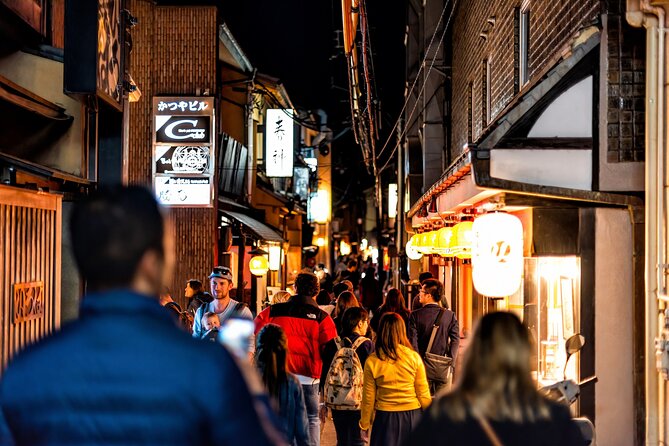
The main Gion portion takes about two hours. That is enough time to go beyond the obvious street and get a feel for the district’s layout, customs, and traditional buildings.
Expect a steady walking pace through narrow back streets, with stops for explanations and photographs. The route includes temples and shrines that many first-time visitors would pass without noticing. A strong guide can turn an ordinary lane into a useful lesson in Kyoto’s past and present.
Guides vary, but the best accounts describe a personal, conversational style. Naoki has been praised for explaining Kyoto and Japanese culture in a way that stays engaging. Jasmine is noted for answering questions patiently and making sure everyone in the group can follow. Shingo is described as pleasant and clear in English, while Raphael and Miyake have received strong praise for their background in Kyoto and Japanese history.
That variation matters. The route is fixed in broad terms, but your guide shapes the evening. Some guides may add restaurant suggestions or explain a side street that is not part of the basic plan. Others may focus more heavily on history, architecture, or geisha customs.
I would set your expectations correctly. This is not a formal lecture, and it may not produce one perfectly ordered story about Kyoto. A few people have found the information somewhat fragmented. If you want a tidy, academic timeline, you may find the format loose. If you enjoy asking questions and learning as you walk, the open conversation can work well.
Hanamikoji Street and the geisha district
Hanamikoji Street is the clearest architectural highlight. It is one of the best-preserved historic streets in the area, lined with traditional buildings and connected lanes. The guide explains what you are seeing rather than simply pointing out old facades.
This is also one of the better places for photographs, though you should use common sense and respect local rules. Gion is a living neighborhood, not a stage set. Do not block entrances, enter private spaces, or photograph people without permission.
The tour’s title may lead you to expect a guaranteed geisha encounter. That is not how Gion works. You might see a geisha or maiko near Hanamikoji Street, and some outings have included sightings, but many do not. One quiet evening produced no sightings, while another group happened to spot one geisha and two maiko.
I consider that a healthy way to view the experience. If your only goal is to see a geisha, this walk carries too much uncertainty. If you want to understand the district where geisha and maiko work, learn the difference between the terms, and see the streets associated with that tradition, the tour has much stronger value.
A good guide also helps prevent awkward behavior. The district has dealt with problems caused by people chasing performers for photos. Cultural context is useful here, because it reminds you that the women you may see are working professionals, not costumed attractions.
Yasaka Shrine adds a different side of Kyoto
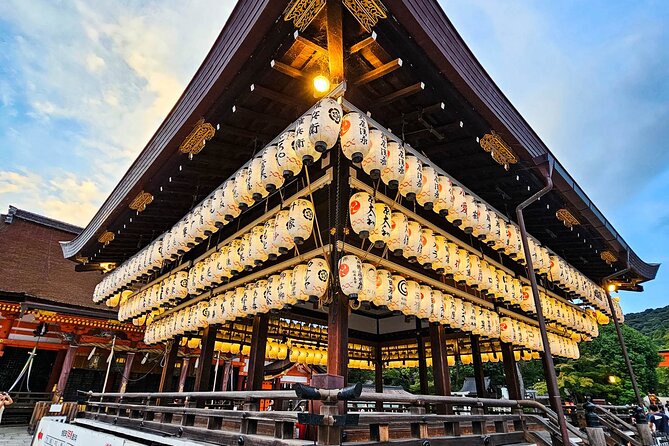
The walk includes Yasaka Shrine, also called Gion Shrine, for about 30 minutes. This gives the evening a useful shift in focus. Gion is not only about teahouses and entertainment. The shrine connects the district to religious practice, festivals, architecture, and local customs.
Your guide explains the shrine’s history and design, as well as the traditions connected with the area. That context helps tie the various pieces together. You see a restaurant street, an old lane, a shrine, and a traditional building, then learn how they fit into Kyoto’s wider culture.
The shrine is also a natural place to pause, although this is still primarily a walking tour. The route has limited breaks, and the full outing can feel long for children or anyone with limited stamina. One useful review specifically warned that younger legs may struggle with the timing and distance.
I would not book this expecting a relaxed, sit-down sightseeing experience. You will cover a lot of ground in three hours. That is part of the value, but it means comfortable shoes matter more than stylish footwear.
More Walking Tours in Kyoto
- Kyoto Geisha Walking Tour: Gion District & Hidden Gems
★ 4.7 · 3,273 reviews - Kyoto: Gion Magical Night Walking Tour with Geisha Trivia
★ 4.9 · 2,393 reviews - Kyoto: Gion Geisha District Walking Tour – Stories of Geisha
★ 4.7 · 2,187 reviews - Kyoto Gion Geisha District Walking Tour – The Stories of Geisha
★ 5.0 · 1,441 reviews
What the guide can add to your evening
The best part of the tour is the human explanation. Gion has many layers, and a guide can connect them in a way that a self-guided stroll often cannot.
Naoki has been praised for turning the walk into a memorable lesson in Kyoto and Japanese culture. Miyake has received strong praise for detailed historical explanations, patience, and help when a participant had trouble finding the meeting point. Jasmine is frequently described as warm, attentive, and willing to answer questions in detail.
Other guides have added restaurant advice at the end of the walk. That is useful because the tour finishes near central Kyoto, and you may want dinner or a drink afterward. A guide can also help you make sense of what you have seen instead of leaving you with disconnected facts.
Still, guide quality can vary. The tour provider has many guides, and not every outing will have the same personality or depth. One less successful experience involved weak communication and an uncomfortable suggestion to inspect a private teahouse. That is not a reason to dismiss the entire tour, but it is a reminder to stay aware of boundaries and ask for clarification if something feels unclear.
The group size should help. The tour is presented as a small outing of no more than nine people, although the additional booking information lists a maximum capacity of 25. I would confirm the exact group size and ticket type before booking if a very intimate walk is important to you. A private upgrade is available, with multiple language options mentioned.
Is $18 a good value?
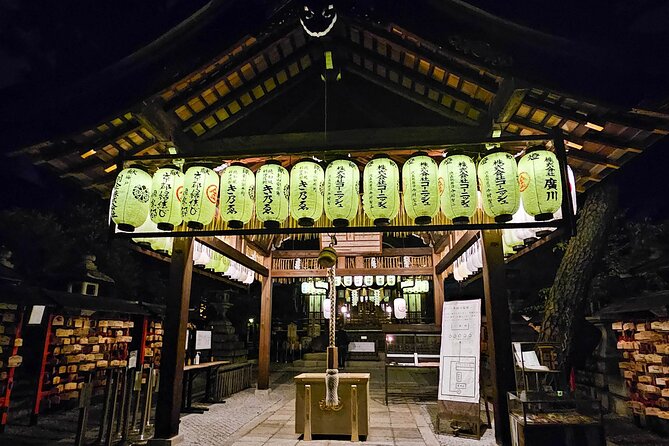
At $18, the tour is inexpensive for a three-hour guided walk in one of Kyoto’s most sought-after districts. You are paying mainly for the guide’s local explanations and route planning, not for expensive admissions or transportation.
That is a good arrangement in Gion. The streets, shrine, and district atmosphere are the main attractions, so there is no need for a costly package. The tour also accepts mobile tickets, and last-minute reservations are available, which helps if your Kyoto plans change.
The standard booking includes an English-speaking guide and the walking tour. A snack is included only with the Premium Group and Private Tour options, so do not assume every ticket includes food. Water and snack details should be checked against the exact option you choose.
The price is especially fair for first-time visitors who want an introduction to Gion without committing to a costly private guide. If you already know Kyoto well, the standard walk may feel less essential. The private option becomes more appealing if you want to ask many questions, need a different language, or prefer a pace built around your interests.
Meeting point, finish, and practical planning
The meeting point is Kyoto Kawaramachi Garden at 68 Shinchō in Shimogyo Ward. The tour ends at Sanjō Ōhashi Bridge in Nakagyo Ward. Both points are near public transportation, but the start can be confusing because the surrounding street may have several guides and groups.
Give yourself extra time to locate the correct guide. The meeting point is on a busy street, and one person found it slightly difficult to identify the right group. Have your booking details ready and look for the guide rather than assuming the first tour group you see is yours.
The ending point is not Kyoto Station. One booking description elsewhere may create that impression, but the supplied route ends at Sanjō Ōhashi Bridge. Plan your return journey from there, or use the guide’s restaurant suggestions to continue your evening nearby.
The walk requires ordinary mobility, but it is still three hours on foot. Most people can participate, yet the length, limited breaks, winter cold, and dinner-hour timing all deserve attention. I would bring a warm layer in colder months and avoid booking this immediately before another fixed evening appointment.
Free cancellation is available up to 24 hours before the start time. Changes or cancellations inside that window are not refunded, and poor weather can lead to a rescheduled date or full refund.
Who should book this Gion night walk?
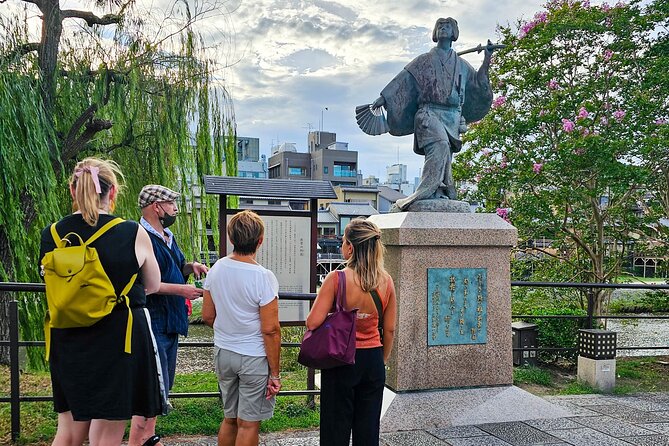
I would choose this tour if you are visiting Kyoto for the first time, want an affordable orientation to Gion, or prefer learning through conversation rather than reading signs alone. It also suits curious families with older children, provided everyone is ready for a long walk.
It is a good first or second-night activity because it gives you restaurant ideas and helps you recognize the district when you return on your own. History fans may especially enjoy guides such as Naoki and Miyake, while people interested in everyday customs may prefer a guide who encourages questions and explains etiquette.
I would hesitate if you need frequent seating, dislike walking during dinner hours, or want a guaranteed geisha performance. I would also consider the private option if your group includes an older parent, has specific language needs, or wants a slower pace.
Should you book it?
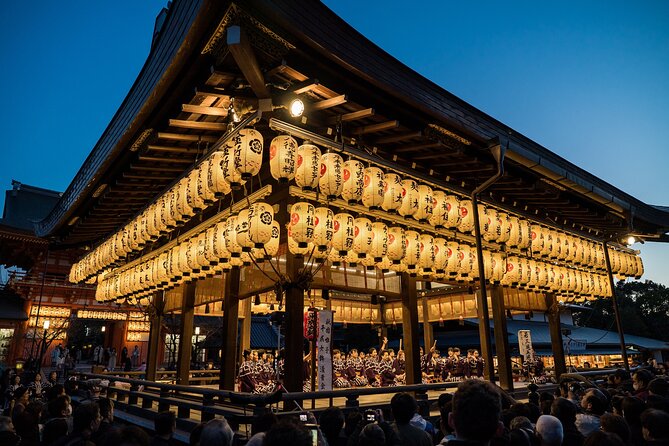
Book it if you want a low-cost, guide-led introduction to Gion after dark, with Hanamikoji Street, Yasaka Shrine, traditional lanes, and useful cultural context. The strongest value comes from the guide, and names such as Jasmine, Naoki, Shingo, Raphael, and Miyake have been linked with particularly warm and informative outings.
Just keep your expectations grounded. You may see a geisha or maiko, but you may not. The route can be long, the meeting spot takes care, and the quality of the evening depends partly on your assigned guide and the night’s atmosphere.
For most first-time visitors, I think the $18 price makes this an easy choice. Eat a little beforehand, wear good shoes, bring a warm layer, and treat the geisha sighting as a bonus rather than the whole point.
FAQ
How long does the Kyoto Gion Night Walk last?
The tour lasts approximately three hours. The Gion portion takes about two hours, followed by roughly 30 minutes at Hanamikoji Street and 30 minutes at Yasaka Shrine.
What places are included?
The route includes Gion, Hanamikoji Street, and Yasaka Shrine, also known as Gion Shrine. It also includes narrow back streets, temples, shrines, and other areas within the district.
Is the tour conducted in English?
The standard tour includes an English-speaking guide. A private Kyoto walking tour is also available in multiple languages.
Will I definitely see a geisha or maiko?
No. You may see a geisha or maiko, particularly around Hanamikoji Street, but sightings are not guaranteed.
How large is the group?
The tour is advertised as having no more than nine people per outing. The additional booking information lists a maximum of 25 participants, so confirm the group size for your specific booking if this matters to you.
Is a snack included?
A snack is included with the Premium Group and Private Tour options. The standard tour includes the walking tour and English-speaking guide, but food and other drinks are not generally included.
Where does the tour start and finish?
The tour starts at Kyoto Kawaramachi Garden, 68 Shinchō, Shimogyo Ward. It finishes at Sanjō Ōhashi Bridge in Nakagyo Ward.
Can I cancel for a full refund?
You can cancel at least 24 hours before the start time for a full refund. Cancellations or changes made less than 24 hours before the start time are not refunded, and poor weather may lead to a new date or a full refund.
More Geisha Experiences in Kyoto
- Best of Kyoto: Gion, Geisha, Pagodas & Cobblestones
★ 4.9 · 2,058 reviews - Kyoto Gion: 2-Hour Geisha Culture & History Walking Tour
★ 5.0 · 1,186 reviews - Kyoto Gion Cultural Walk & Geisha Show with Dining Options
★ 5.0 · 518 reviews - Kyoto Gion Cultural Walk & Geisha Show with Dining Options
★ 5.0 · 483 reviews
Just added around Kyoto
- Sekka Cotton Furoshiki Class★ 5.0 · 19 reviews
- Kyoto Sword Experience – includes Museum Ticket/Ninja Experience★ 4.5 · 149 reviews
- Scenic Green Tea Fields of Hidden Kyoto & Local Tea Exp (Private)★ 5.0 · 32 reviews
- Secret Eastern Kyoto Biking Adventure★ 5.0 · 44 reviews
- Private Sake Tasting in Central Kyoto with Sake Sommelier★ 5.0 · 32 reviews
- Samurai School in Kyoto: Samurai for a Day★ 5.0 · 202 reviews
- SHIRAKAWA Japanese Culture Experiences with private English staff★ 5.0 · 16 reviews
- A Privately Guided Photoshoot in Beautiful Kyoto by a Pro★ 5.0 · 18 reviews
Geisha & Maiko Experiences, compared.

Kyoto Geisha Walking Tour: Gion District & Hidden Gems
Our verdict →
Dinner with Maiko in a Traditional Kyoto Style Restaurant Tour
Our verdict →
Browse the lists this tour appears in