
Reviewed · WALKING TOURS
2 Hour Night Walking Tour Throughout Gion with snack
Gion after dark is less about checking off monuments and more about understanding how Kyoto’s old neighborhoods still function. You’ll visit Yasaka Shrine, walk Hanamikoji Street, and follow the evening flow toward Kiyamachi and the Kamo River with local guide Simon.
I like the useful restaurant advice and the look at the difference between geiko and maiko. I also like the small-group limit of 10 people and the chance to see quieter corners beyond the main streets. The drawback is crowd control: several people found the pace too quick or lost sight of Simon when Kyoto was especially busy.
Key points
- A 2-hour evening walk: The route covers Yasaka Shrine, Hanamikoji Street, Kiyamachi Street, and the Kamo River.
- Simon leads the walk: His English-language explanations include local customs, Gion culture, and restaurant suggestions.
- Geiko and maiko explained: Hanamikoji Street is the setting for learning how these two types of performers differ.
- Food advice is part of the value: You’ll receive recommendations for restaurants that may not require reservations.
- A snack is included in the experience description: You can expect a traditional Japanese snack and a geisha chocolate, while dinner is not provided.
- Crowds can affect the evening: The route is easy to locate, but busy periods may make it hard to keep up with the guide.
Why an evening walk works so well in Gion
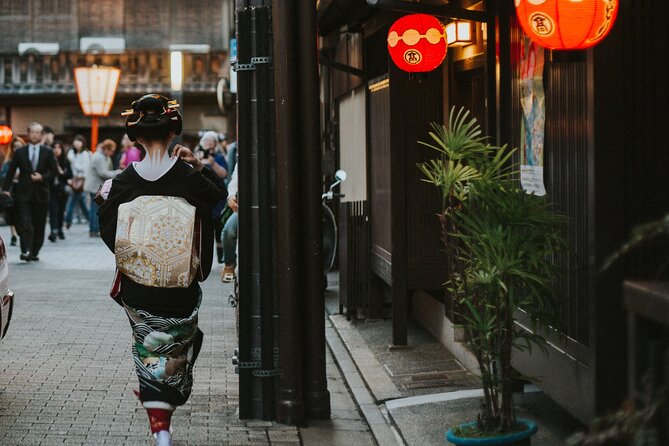
Gion is a different place at night. The streets around Yasaka Shrine and Hanamikoji take on a quieter, more watchful mood, while nearby Kiyamachi turns toward restaurants, bars, and evening entertainment. A walk links these two sides of Kyoto in a way a daytime sightseeing stop often does not.
This experience gives you a local frame for the area. Instead of only photographing traditional façades, you’ll hear about the people and customs connected with them. The focus is on the community, the entertainment districts, and the way traditional life fits beside modern Kyoto.
The tour lasts about two hours. That is enough time to get your bearings without using up an entire evening. I think it works particularly well early in a Kyoto stay, since Simon’s suggestions can help you decide where to eat and what to explore over the next few days.
The walk is conducted in English, and Simon’s humor and personal experience are part of his style. That can make the evening feel relaxed and conversational. It also means the amount of time spent on formal site history may vary, so you should book this for local context and practical orientation rather than a tightly scripted lecture.
More Walking Tours in Kyoto
- Kyoto Geisha Walking Tour: Gion District & Hidden Gems
★ 4.7 · 3,273 reviews - Kyoto: Gion Magical Night Walking Tour with Geisha Trivia
★ 4.9 · 2,393 reviews - Kyoto: Gion Geisha District Walking Tour – Stories of Geisha
★ 4.7 · 2,187 reviews
Starting at Yasaka Shrine
The meeting point is the Disney Store at Kyoto Shijo-Kawaramachi, at the northeast corner of Shijo Street and Kawaramachi Street. This is a central location near public transportation, but the surrounding streets can be busy, so allow a little time to identify the exact corner and find the guide.
From there, the group visits Yasaka Shrine for about 30 minutes. The shrine is one of the most important religious sites in Kyoto, and it gives Simon a natural place to explain the background of the area before the walk moves into Gion.
You’ll have time to pause, take photographs, and listen to an explanation of the shrine’s history. Since admission is free, the value here comes from interpretation rather than an entrance ticket. That is useful if you want more than a quick look at the gates and grounds.
A shrine visit also sets up the rest of the evening. Gion is not simply a collection of pretty streets. Religious sites, shops, restaurants, traditional houses, and entertainment venues occupy the same compact part of town. Starting at Yasaka helps you see how these pieces connect.
The stop is scheduled for 30 minutes, so do not expect an exhaustive tour of every building. It is an introduction, and the main emphasis shifts soon afterward to Gion’s streets and customs.
Walking Hanamikoji and learning about geiko and maiko
The longest traditional-area stop is Hanamikoji Street, where you’ll spend about 40 minutes. This is one of the best-known streets in Gion and one of the clearest places to see the architectural character associated with Kyoto’s hanamachi, or geisha districts.
The important point is that hanamachi are working communities, not open-air stages. Geiko and maiko live and work within a system of appointments, performances, training, and private establishments. The walk gives you context for that world rather than treating it as a photo opportunity.
Simon explains the difference between geiko and maiko. In Kyoto, geiko are experienced professional entertainers, while maiko are apprentices. Their clothing, hairstyles, makeup, and stage of training differ, and learning those distinctions makes a chance sighting far more meaningful.
You may see a geiko or maiko during the walk, but this should not be treated as a guarantee. If you do, remember that people are moving to work. Give them space, avoid blocking the street, and follow local rules about photography. The best part of this stop is understanding the neighborhood, not chasing a picture.
Hanamikoji can become very crowded. At busy times, a group can stretch out quickly, especially when people stop to take photos. Several participants found the pace difficult in heavy crowds, and one person lost sight of Simon near the end of the walk. Stay close, keep the guide in view, and listen for the next meeting point.
The route is free to enter, but that does not make it cost-free to maintain. Your payment here is for the guide’s time, explanations, and local perspective. If you already know Gion well, this section may feel basic. If you are seeing the district for the first time, it can prevent a lot of confusion.
The modern side of Kyoto on Kiyamachi Street
Kiyamachi Street shifts the mood. After the traditional buildings and entertainment customs of Hanamikoji, the walk enters one of Kyoto’s modern evening districts. The route shows that Gion is not frozen in the past. People still meet, eat, work, and go out here.
This stop lasts about 40 minutes, making it as important as Hanamikoji. Simon uses the area to talk about restaurants and local places to eat, including options where you may not need a reservation. That advice can be especially useful if you are trying to find dinner on the same night.
Dinner is not included, so you should budget separately. The snack and geisha chocolate add a small food element to the walk, but they are not a replacement for a meal. Think of the recommendations as part of the practical benefit, not as a dining tour.
Restaurant advice is also where a local guide can save you time. Kyoto’s popular dining areas can be confusing, and a list of famous names does not always tell you which places fit your budget, schedule, or willingness to wait. Simon’s suggestions are based on his familiarity with the area, though you should still confirm opening hours and current reservation rules yourself.
The drawback is that a 40-minute walk through Kiyamachi cannot cover every side street. You will get a useful orientation and some ideas for later, not a complete food guide to central Kyoto. I would keep your evening flexible rather than booking an expensive dinner immediately after the tour.
Same trip, a completely different kind of day:
- PERFECT KYOTO 1-Day Bus Tour
★ 5.0 · 13,518 reviews - Kyoto: Fushimi Inari, Kinkakuji, Bamboo Grove 1 Day Bus Tour
★ 4.8 · 4,316 reviews - Kyoto: Tea Ceremony in a Traditional Tea House in Kiyomizu
★ 4.9 · 3,519 reviews - Kyoto: Tea Ceremony Ju-An at Jotokuji Temple
★ 4.9 · 3,207 reviews
Pausing beside the Kamo River
The final stop is the Kamo River, with about 10 minutes set aside for the riverfront. This is a short pause, but it gives the evening a calm finish after the tighter streets of Gion and Kiyamachi.
The river is presented as the center of Kyoto’s entertainment district, a place where people gather and performers appear. You’ll hear about the role the river plays in local evening life and have a chance to take in the sound of the water and the movement around it.
Do not expect a long riverside stroll. Ten minutes is enough for a brief look and a few photographs, but not enough to explore the full riverfront. The stop works as a closing scene rather than a separate attraction.
Afterward, the activity ends back at the meeting point. That return makes the tour convenient if you want to continue your evening nearby, use Simon’s restaurant suggestions, or head back to your accommodation.
What the snack adds to the evening
The experience includes a traditional Japanese snack and a geisha chocolate according to its description. These are small details, but they give the walk a pleasant break and connect the tour to Kyoto’s food culture.
You should keep your expectations modest. This is not a tasting menu, dinner, or dedicated food walk. The snack is a complement to the neighborhood tour, and dinner remains your responsibility.
The food element may also be useful if you begin the walk before your evening meal. Still, I would not arrive hungry and assume the snack will carry you through the night. Plan a separate meal, especially since the tour guide’s restaurant advice is one of the stronger practical features of the experience.
Group size, pace, and the crowd problem
The stated maximum is 10 people, which is a sensible size for narrow streets. A smaller group makes it easier to hear explanations and ask questions. It also keeps the walk more personal than a large coach-based outing.
The actual feel of the group can change with the season and the day. Some participants found the group too large, while others said the walking pace was comfortable. That difference makes sense in Gion, where a group of 10 can move easily on a quiet street but become difficult to manage when the sidewalks fill.
Simon’s guiding style is lively and personal. He uses humor, answers questions, and shares his own experiences in Japan and Kyoto. Some people will appreciate that informal approach. If you prefer a guide who sticks closely to dates, names, and formal site explanations, you may find parts of the walk less focused than expected.
The practical solution is simple: arrive early, identify Simon before the start, remain near the front or middle of the group, and pause if the crowd separates you. It is also worth confirming the tour is operating if you book only a couple of hours before departure. One scheduled walk failed because the time slot had already been canceled, though a full refund was arranged.
Is $32.58 a fair price?
At $32.58 per person, the price is reasonable if you want a compact introduction to Gion with restaurant advice included. You are paying for two hours of guiding, local explanations, a snack element, and help understanding where the traditional and modern parts of the district meet.
The value is strongest for a first evening in Kyoto. Simon can explain the difference between geiko and maiko, point out the character of the entertainment districts, and suggest places for the rest of your stay. Those details can shape several later evenings, not just the two hours on the route.
The value is weaker if you already know Gion or want substantial access to temples, shrines, or geisha performances. There are no admission tickets included, and dinner is not part of the price. The experience is about orientation and interpretation.
The tour is commonly booked about eight days ahead, so reserving in advance is sensible if your Kyoto dates are fixed. Free cancellation is available up to 24 hours before the start. Within 24 hours, cancellation or changes are not accepted for a refund. Poor weather can also lead to a new date or full refund because the activity requires suitable conditions.
Who will get the most from this walk?
I would recommend this experience to first-time Kyoto visitors who want to understand Gion before exploring it alone. It also suits anyone who enjoys asking questions, learning local customs, and receiving practical food suggestions rather than only listening to a formal history talk.
It is a good fit for couples, solo visitors, and small groups who can keep moving together. Most people can participate, and service animals are allowed. Since the route is on foot and crowd conditions can make the pace uneven, you should be comfortable walking for two hours and staying alert in busy streets.
I would be more cautious if your main goal is a guaranteed geisha sighting, a full meal, a slow photography walk, or a detailed academic account of Kyoto’s history. You may also prefer another option if losing sight of a guide in a crowd would cause stress.
Should you book the Gion night walk?
Book it if you want a friendly, practical introduction to Gion on your first night or early in your stay. The strongest reasons are Simon’s local advice, the explanation of geiko and maiko, and the mix of Yasaka Shrine, Hanamikoji, Kiyamachi, and the Kamo River.
Skip it if you already know the district, need a guaranteed small group, or want a meal and paid cultural performance included. The main risk is pace during busy periods, so stay close to the guide and arrive prepared for crowds.
For $32.58, this is a useful way to get the lay of the land and pick up ideas for the rest of your Kyoto visit. Just treat it as a guided orientation with a snack, not as a complete Gion experience.
FAQ
How long does the walking tour last?
The tour lasts approximately two hours.
Where does the tour start?
It starts at the Disney Store at Kyoto Shijo-Kawaramachi, at the northeast corner of Shijo Street and Kawaramachi Street in Kyoto.
Where does the tour end?
The activity ends back at the meeting point.
Which places does the tour visit?
The route includes Yasaka Shrine, Hanamikoji Street, Kiyamachi Street, and the Kamo River.
Who guides the tour?
The tour is led by Simon, an English-speaking local guide associated with Tour Kyoto.
Does the tour include a snack?
The experience description includes a traditional Japanese snack and a geisha chocolate.
Is dinner included?
No. Dinner is not included, though the guide provides restaurant recommendations.
How many people can join?
The maximum group size is 10 people.
Can I cancel for a full refund?
Yes. You can cancel at least 24 hours before the start time for a full refund. Cancellations and changes made within 24 hours are not refunded. If poor weather causes the tour to be canceled, you will be offered another date or a full refund.
More 2-Hour Experiences in Kyoto
- Kyoto Gion: 2-Hour Geisha Culture & History Walking Tour
★ 5.0 · 1,186 reviews - Ninja 2-hour Hands-on Lesson by Japanese master in Kyoto -Medium
★ 5.0 · 218 reviews - Kyoto: 2-Hour Maiko Makeover and Photo Studio Shoot
★ 4.7 · 122 reviews - Kyoto 2 Hours Genuine Kendo / Samurai Experience In Japan
★ 5.0 · 57 reviews
Just added around Kyoto
- Sekka Cotton Furoshiki Class★ 5.0 · 19 reviews
- Kyoto Sword Experience – includes Museum Ticket/Ninja Experience★ 4.5 · 149 reviews
- Scenic Green Tea Fields of Hidden Kyoto & Local Tea Exp (Private)★ 5.0 · 32 reviews
- Secret Eastern Kyoto Biking Adventure★ 5.0 · 44 reviews
- Private Sake Tasting in Central Kyoto with Sake Sommelier★ 5.0 · 32 reviews
- Samurai School in Kyoto: Samurai for a Day★ 5.0 · 202 reviews
- SHIRAKAWA Japanese Culture Experiences with private English staff★ 5.0 · 16 reviews
- A Privately Guided Photoshoot in Beautiful Kyoto by a Pro★ 5.0 · 18 reviews
Walking Tours, compared.
Kyoto Geisha Walking Tour: Gion District & Hidden Gems
Our verdict →
Imperial Palace and Shogun Historical Walking Tour
Our verdict →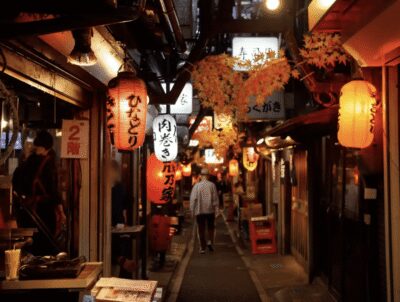
Shinjuku Local Bar and Izakaya Guided Walking Tour
Our verdict →
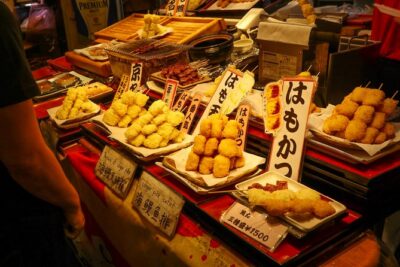
Nishiki Market Brunch Walking Tour (7 Tastings + Brunch)
Our verdict →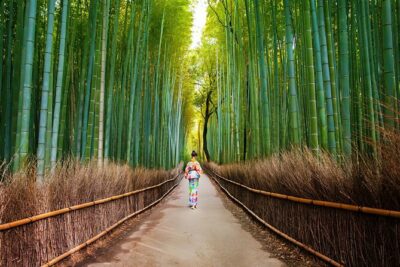
Kyoto Arashiyama Walking Tour: Bamboo, Monkeys, Gardens & Secrets
Our verdict →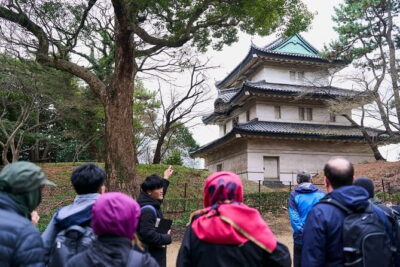
Tokyo Castle & Imperial PalaceーShogun Walking Tour
Our verdict →Browse the lists this tour appears in