
Reviewed · GEISHA & MAIKO EXPERIENCES
Kyoto Geisha District Walking Tour in Gion
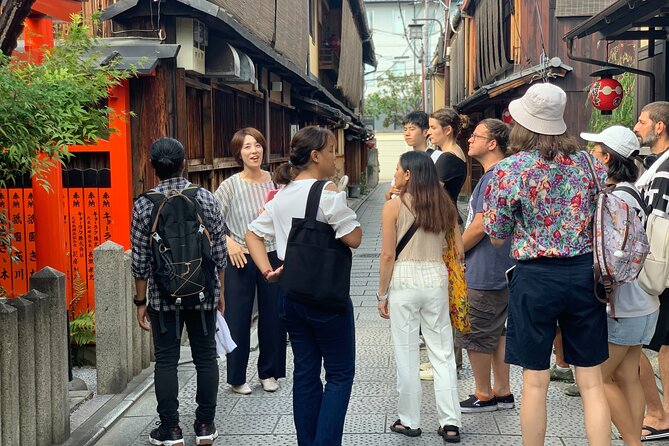
Gion is best understood on foot, and this tour gives you a useful local thread through its wooden lanes, shrines, waterways, and tea-house streets. The guide explains geiko and maiko customs while helping you find places that are easy to miss on your own, including Tatsumi Shrine and the quiet Shirakawa Canal.
I like the small group of up to 10 people, which makes questions easier and keeps the walk from feeling like a parade. I also like the two-hour length and the modest $29.85 price. The main caution is that the quality depends heavily on your guide. Most visitors praise guides such as Takuma, Yuko, Yoko, Yuji, Tom, and Eric, but a few found the explanations disorganized or too basic.
Key points to know before booking
- Gion in two focused hours: The route covers Yasaka Shrine, Tatsumi Bridge, Shirakawa Canal, Hanamikoji Street, and several parts of Gion.
- Small group format: The maximum group size is 10 people, a good fit if you want to ask questions.
- Strong cultural focus: Expect explanations of Shinto, geiko and maiko life, traditional houses, and Gion’s entertainment district.
- Best photo stops: Shirakawa Canal, Tatsumi Bridge, Yasaka Shrine, lantern-lit lanes, and Hanamikoji Street provide the most atmospheric scenes.
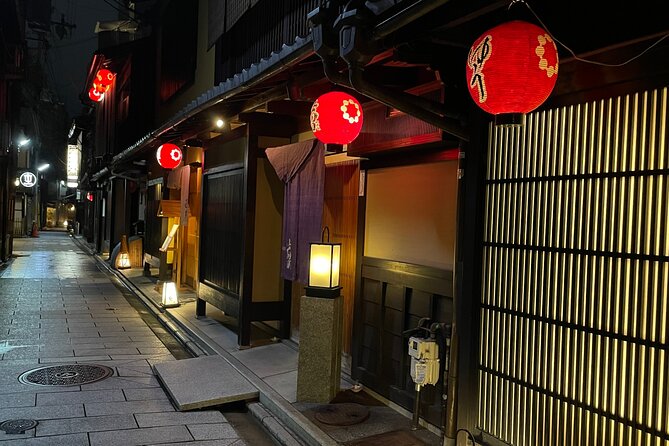
- Evening can be rewarding: Some departures take place after dark, when Gion’s lanterns and narrow lanes feel especially atmospheric.
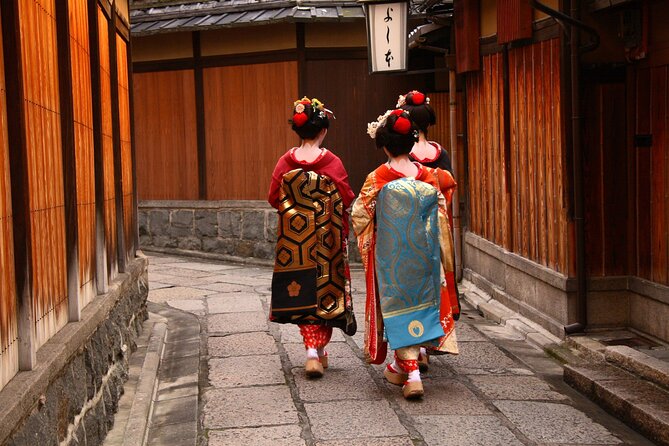
- Sightings are never promised: You may see a geiko or maiko heading to an appointment, but the tour is about understanding Gion, not chasing performers.
Why Gion works better with a guide
Gion can look simple on a map. In practice, it is a patchwork of shrine grounds, narrow lanes, private tea houses, restaurants, canals, and streets where the best details are not always obvious. A guide gives you the basic orientation first, then adds the cultural context that turns attractive buildings into meaningful places.
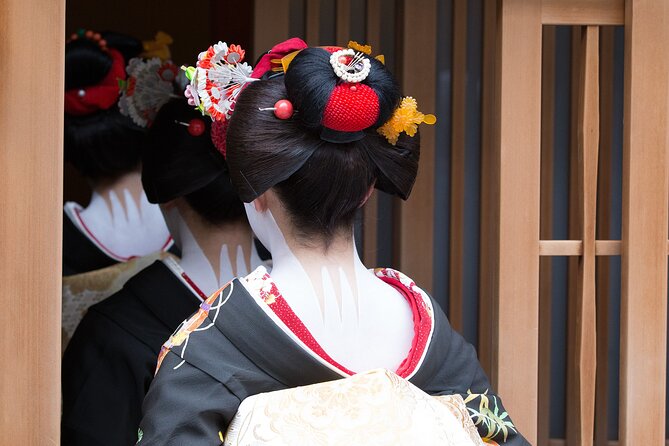
That context matters. The word geisha is familiar to most visitors, but Gion’s working world is more precise than the popular image suggests. Guides explain the distinction between geiko and maiko, the training and customs connected with them, and how the district’s traditional entertainment businesses fit into Kyoto life.
The small group is one of the better features here. With no more than 10 people, you should be able to hear the guide in narrow streets and stop to ask questions without holding up a large crowd. The tour is also short enough to fit around a day at Kiyomizu-dera, Fushimi Inari, or another Kyoto sight.
Guides named in the feedback include Takuma, Yuko, Yoko, Yuji, Tom, Eric, Hide, and others. Takuma receives especially warm praise for his humor, clear explanations, and enthusiasm for geisha customs. Yuko and Yoko are noted for making the walk friendly and informative, while Tom is praised for explaining the shrine, religions, and Gion’s old houses. One evening group even found that Takuma spoke some Spanish, which helped make the conversation more comfortable.
There is a fair warning here. Guide quality is not perfectly uniform. A small number of participants found one guide distracted, hard to understand, or too focused on taking group photos. Another felt the questions and explanations were aimed at children. If you want an academic lecture on Kyoto’s social history, this may feel light. If you want a clear introduction with time for questions, it is more likely to suit you.
More Walking Tours in Kyoto
- Kyoto Geisha Walking Tour: Gion District & Hidden Gems
★ 4.7 · 3,273 reviews - Kyoto: Gion Magical Night Walking Tour with Geisha Trivia
★ 4.9 · 2,393 reviews - Kyoto: Gion Geisha District Walking Tour – Stories of Geisha
★ 4.7 · 2,187 reviews
Yasaka Shrine gives you the right starting point
The walk begins at Gion Kōbu Kaburenjō and heads to Yasaka Shrine, one of Kyoto’s best-known Shinto shrines. You have about 40 minutes here, making it the longest named stop on the route.
Yasaka Shrine is a sensible place to begin because it links Gion’s religious life with the surrounding entertainment district. You can look at the shrine architecture, lanterns, gates, and open grounds while your guide explains Shinto customs and the role of shrines in daily life.
I like having this stop at the front of the walk. It gives you time to settle into Kyoto’s visual language before moving into the tighter streets of Gion. You also get a chance to take photographs without the first few minutes feeling rushed.
Admission is free. The shrine grounds can be busy, and the tour will not give you a long private visit, so treat this as an introduction rather than a full shrine tour. If Yasaka Shrine matters greatly to you, return later and explore at your own pace.
The first Gion lanes explain the district
From Yasaka Shrine, the route enters Gion proper. One section lasts about 20 minutes, with additional time spent in another part of the district later in the walk.
Here you begin to see the traditional wooden machiya houses and narrow streets that give Gion its familiar character. The important point is that these are not simply preserved film sets. Some buildings remain connected with restaurants, tea houses, and the district’s traditional arts.
This is where the guide’s commentary earns its keep. You learn how geiko and maiko relate to the area, how visitors should behave around private establishments, and why a quiet lane may be more significant than a famous photograph suggests.
Gion is also a working neighborhood. Keep your voice low, avoid blocking doorways, and do not treat people heading to appointments as photo props. The possibility of seeing a geiko or maiko is part of the excitement, but respectful distance matters more than getting a close picture.
Tatsumi Daimyojin Shrine adds a quieter pause
Tatsumi Daimyojin Shrine is a very short stop, listed at about five minutes. It is dedicated to protection, good fortune, and safety, especially for travelers and warriors, and it dates to the Heian period.
The shrine is small, but that is exactly why it works as part of a walking route. After the larger Yasaka Shrine, this brief pause shows you a more intimate side of Kyoto’s religious spaces. The guide can also connect the shrine to the surrounding neighborhood and its older customs.
Do not expect a major monument or a long visit here. Think of it as a compact cultural detail that helps break up the walk and gives you another view of Shinto practice.
More Geisha Experiences in Kyoto:
- Best of Kyoto: Gion, Geisha, Pagodas & Cobblestones
★ 4.9 · 2,058 reviews - Night Walk in Gion: Kyoto’s Geisha District
★ 4.5 · 2,003 reviews - Kyoto Gion Geisha District Walking Tour – The Stories of Geisha
★ 5.0 · 1,441 reviews - Kyoto Gion: 2-Hour Geisha Culture & History Walking Tour
★ 5.0 · 1,186 reviews
Tatsumi Bridge and Shirakawa Canal are the photo highlights
Tatsumi Bridge takes about 10 minutes and is one of the most scenic points on the route. The small traditional bridge, wooden houses, and nearby lanes create the kind of Kyoto scene many people hope to find without spending the entire day searching for it.
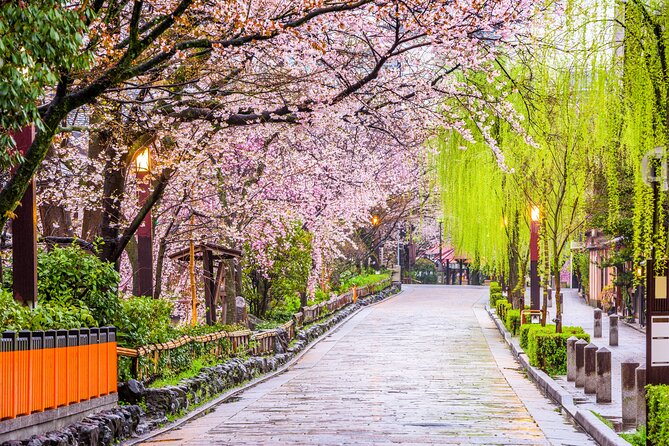
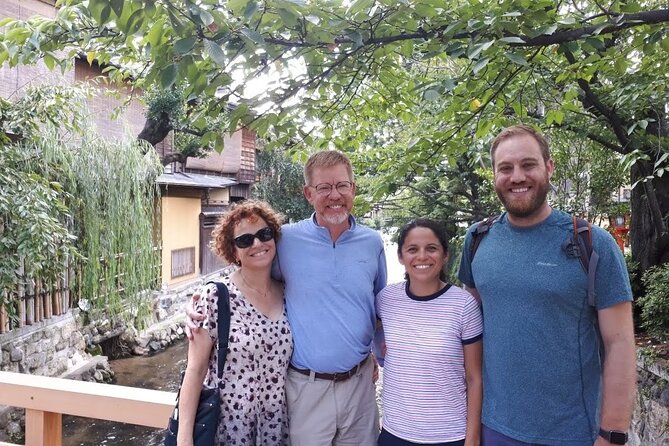
Just beyond it, Gion Shirakawa follows the canal. The waterway is lined with traditional machiya buildings and, in season, weeping cherry trees. The canal area feels calmer than the larger streets, and it gives you a welcome change of pace.
This section is especially good for photographs, but it is also one of the places where a guide can help you look beyond the obvious. Ask about the buildings, the canal, and the role of this part of Gion in the district’s traditional entertainment culture.
The itinerary does not give a separate duration for Shirakawa Canal, so the timing may depend on the guide and the group. That is not necessarily a problem. A little flexibility is useful here, especially if the light is good or the group has questions.
Hanamikoji Street shows Gion at its most polished
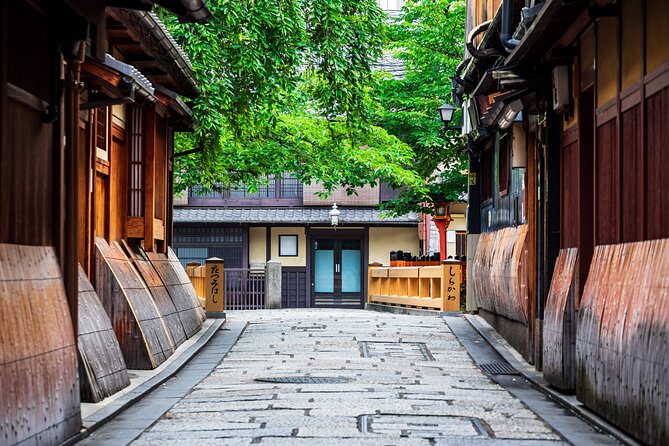
Hanamikoji Street is another brief stop, listed at about 10 minutes. It is one of Gion’s main streets, lined with traditional machiya houses, tea houses, shops, and restaurants.
The street presents the polished public face of old Gion. You see the architecture, the restrained signs, and the narrow frontage that makes the neighborhood feel different from modern shopping areas. Your guide can explain how the street relates to geiko and maiko work, rather than leaving you with only a pretty backdrop.
The short time here may feel limiting if you want to browse shops or stop for a meal. That is intentional: this is a walking introduction, not a shopping tour or restaurant visit. You can return later if a particular lane catches your eye.
Near the end, the route also passes Gion Corner, a venue that presents several traditional Japanese arts. The supplied schedule does not say that this walking tour includes a performance or admission, so do not book it expecting a show. It is best treated as a cultural reference point on the route.
Day or night makes a real difference
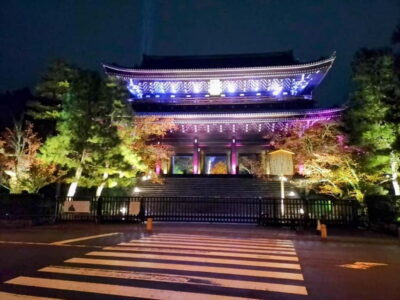
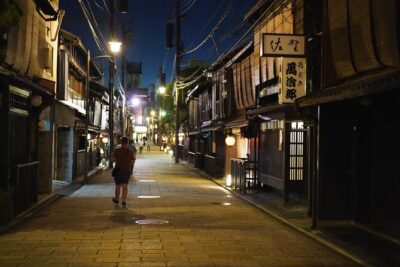
Gion changes as the light fades. Paper lanterns begin to glow, the wooden façades become more dramatic, and the narrow streets feel more hushed. Several participants found the evening atmosphere especially memorable, and some were fortunate enough to see maiko or geiko moving between appointments.
Still, I would not choose this tour only for a sighting. Geiko and maiko appearances depend on timing and chance, and the experience should not become a hunt. The reliable part is the walk, the architecture, the shrines, and the guide’s explanation.
A daytime departure gives you clearer views of details on the wooden houses and canal. An evening walk offers mood and the possibility of seeing the district during its working hours. Check the departure time when booking and choose based on your priorities.
Is $29.85 good value?
At $29.85 per person, this is a reasonable price for a two-hour guided walk in one of Kyoto’s most confusing districts. You are paying for orientation, cultural explanation, and a small group rather than transportation, food, or admission tickets.
The value is strongest if this is your first visit to Gion. In two hours, you get a useful introduction to Yasaka Shrine, Shinto customs, geiko and maiko culture, traditional architecture, the canal area, and Hanamikoji Street. Exploring the same area alone costs less, but you may miss the context and spend time guessing which lanes matter.
The value is weaker if you already know Gion well or prefer to walk silently with a camera. It is also less suitable if you expect a formal lecture, a geisha performance, or guaranteed sightings. The tour does not include hotel pickup, transport to the meeting point, food, drinks, or personal expenses.
Meeting point, walking demands, and practical details
The tour starts and ends at Gion Kōbu Kaburenjō, at 570-2 Gionmachi Minamigawa in Higashiyama Ward. The guide can help you find your way back to the starting point at the end.
You receive a mobile ticket, and confirmation is provided when you book. The meeting point is near public transportation, but transport to and from it is not included, so allow enough time to arrive.
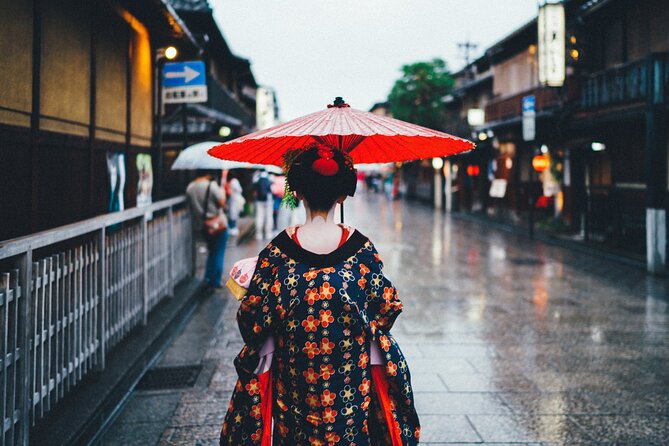
Wear comfortable walking shoes. The tour takes place in rain or shine, and Kyoto weather can make the stone streets and longer walking stretches less pleasant. Bring suitable rain protection rather than assuming the tour will be postponed.
Most people can take part, but the experience is not suitable for someone who cannot manage stairs. Children must be accompanied by an adult. The group limit is 10 people, which is small enough for a personal feel but not a private tour.
There is also a kimono plan associated with this experience. If you choose it, you must walk from the kimono rental shop to the Japan Kanji Museum and Library, about five minutes away, and return the kimono by 5:30 p.m. That timing matters, so read the selected option carefully.
Free cancellation is available up to 24 hours before the start time. Cancellations made within 24 hours are not refunded, and changes within that period are not accepted.
Who should book this Gion walk?
I would recommend it to a first-time Kyoto visitor who wants a clear introduction to Gion without spending half a day studying maps. Families can also do well here. Children around school age have enjoyed the mix of shrines, bridges, stories, and narrow streets, though the adult should keep them close around traffic and private buildings.
It suits you if you like asking questions and want a guide to explain cultural details in plain language. It also works well as an early Kyoto activity, since you can use what you learn to make better sense of Gion when you return alone.
I would think twice if you need step-free access, dislike walking in rain, or want a guaranteed view of geiko or maiko. I would also ask for a different activity if your main goal is a stage performance. Gion Corner may be part of the route, but a performance is not listed as an included feature.
Should you book it?
Book this tour if you want a compact, fairly priced introduction to Gion with a small group and a guide who can explain more than the buildings show. The best parts are the route through Yasaka Shrine, Tatsumi Bridge, Shirakawa Canal, and Hanamikoji Street, along with the chance to ask about Shinto and geiko culture.
Go with realistic expectations. The walk is not private, sightings are not guaranteed, and guide quality can vary. For most first-time visitors, the combination of strong locations, two-hour timing, and a maximum of 10 people makes it a sensible way to get your bearings before exploring Gion on your own.
FAQ
How long does the Kyoto Geisha District Walking Tour last?
The tour lasts approximately two hours.
What is the price of the tour?
The listed price is $29.85 per person.
Where does the tour start and finish?
It starts and ends at Gion Kōbu Kaburenjō, 570-2 Gionmachi Minamigawa, Higashiyama Ward, Kyoto.
What places does the walking tour visit?
The route includes Yasaka Shrine, Gion, Tatsumi Daimyojin Shrine, Tatsumi Bridge, Gion Shirakawa or Shirakawa Canal, Hanamikoji Street, and the area around Gion Corner.
Is the tour offered in a small group?
Yes. The maximum group size is 10 people.
Can I see a geiko or maiko during the tour?
You might see one, especially during an evening walk, but sightings are not guaranteed.
Is the tour suitable for children?
Children may participate, but they must be accompanied by an adult.
What happens if it rains?
The tour operates rain or shine. Comfortable walking shoes are recommended, and the experience is not suitable for people who cannot manage stairs.
Just added around Kyoto
- Sekka Cotton Furoshiki Class★ 5.0 · 19 reviews
- Kyoto Sword Experience – includes Museum Ticket/Ninja Experience★ 4.5 · 149 reviews
- Scenic Green Tea Fields of Hidden Kyoto & Local Tea Exp (Private)★ 5.0 · 32 reviews
- Secret Eastern Kyoto Biking Adventure★ 5.0 · 44 reviews
- Private Sake Tasting in Central Kyoto with Sake Sommelier★ 5.0 · 32 reviews
- Samurai School in Kyoto: Samurai for a Day★ 5.0 · 202 reviews
- SHIRAKAWA Japanese Culture Experiences with private English staff★ 5.0 · 16 reviews
- A Privately Guided Photoshoot in Beautiful Kyoto by a Pro★ 5.0 · 18 reviews
Geisha & Maiko Experiences, compared.
Kyoto Geisha Walking Tour: Gion District & Hidden Gems
Our verdict →

Dinner with Maiko in a Traditional Kyoto Style Restaurant Tour
Our verdict →
Browse the lists this tour appears in