
Reviewed · NINJA EXPERIENCES
Ninja 2-hour Hands-on Lesson by Japanese master in Kyoto -Medium
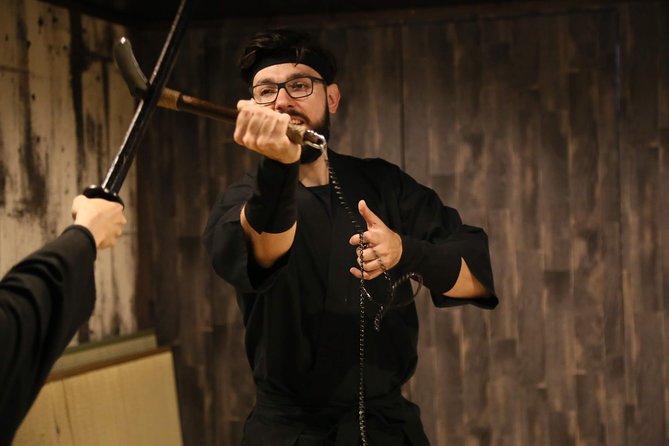
The most memorable part of this Kyoto experience is how quickly it moves beyond dressing up for a photo. You put on ninja clothing, then work through breathing, meditation, movement, sword handling, throwing stars, kunai, rope techniques, and blow darts under the direction of a Japanese Sensei. The class is taught in English and capped at six people.
I like the small group size, which gives you room to ask questions and try the equipment without feeling lost in a crowd. I also like the mix of playful activities and quieter skills, especially Kuji-In meditation and ninja walking. The main consideration is that this is a beginner lesson, not a serious martial arts course, and two hours goes by quickly when so many techniques are included.
What makes this Kyoto ninja class worth your time
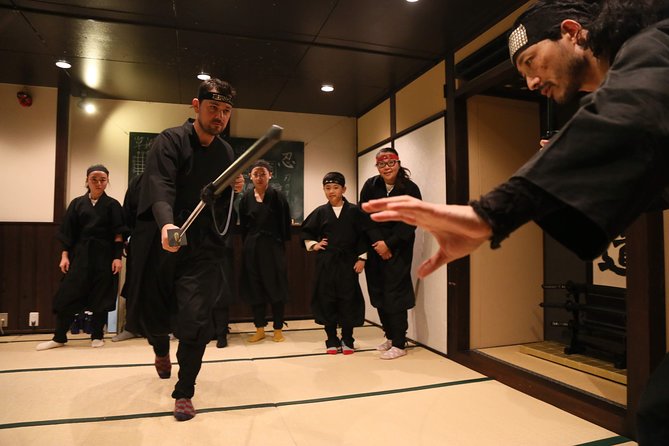
- A six-person maximum keeps the lesson personal, with more chances to watch demonstrations and practice yourself.
- You wear ninja clothing during the class, making the photos feel part of the experience rather than an afterthought.
- The lesson covers far more than sword work, including breathing, meditation, walking, traps, rope skills, shuriken, kunai, and a blowgun.
- English instruction is included, with a Japanese Sensei trained in ninja arts leading the session.
- Families and mixed-age groups fit well, with children as young as five taking part according to the available feedback.
- Photos and videos may be emailed afterward, sometimes through Google Photos on the same day.
Arriving at NINJA DOJO and STORE KYOTO
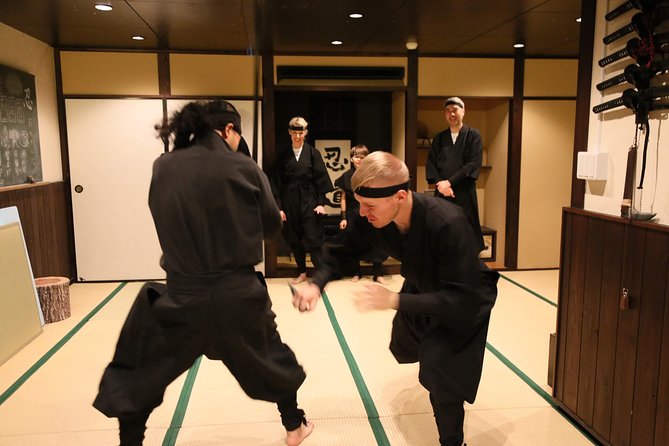
The class begins at NINJA DOJO and STORE KYOTO, at 528 Hakurakutenchō, second floor, in Kyoto’s Shimogyo Ward. The listed start time is 10:00 a.m., and the activity ends back at the same place. It is near public transportation, but you should still allow time to find the building and reach the second floor.
Arrive about 15 minutes early. One practical detail is that shoes are left at the door, and slippers are provided in shoe boxes. You will want to wear comfortable clothing underneath the rental outfit, since the session includes movement, kneeling, and repeated practice with equipment.
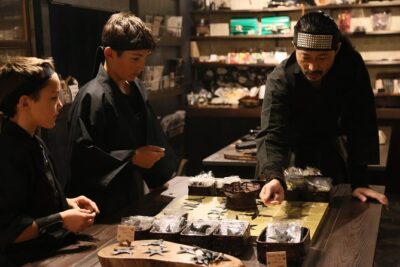
Sho is mentioned as the staff member who welcomes people at the door. After changing, you meet the instructor and receive an introduction to the class. The setting is a dojo and store, so you can also browse ninja-themed items before or after training.
The small-group limit matters here. With no more than six people, the Sensei can demonstrate a movement, watch you try it, and correct your position. That is a much better arrangement for a hands-on class than a large theatrical show where you only watch from the side.
More Ninja Experiences in Kyoto
- Skip the lines Basic Ticket at SAMURAI NINJA MUSEUM KYOTO
★ 4.5 · 632 reviews - Ninja 1-hour Hands-on Lesson by Japanese master in Kyoto -Entry
★ 5.0 · 489 reviews - Kyoto: Ninja Weapon Forging Experience
★ 4.8 · 478 reviews
Changing into ninja clothing
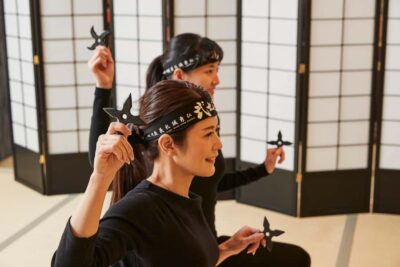
The rental clothing is included in the price and is worn during the training. This is more than a quick costume photo. The outfit helps set the mood, and several parts of the lesson are designed to be photographed while you practice.
Staff members help with the clothing when needed, which is useful for children and anyone unfamiliar with the outfit. The available information does not give exact clothing sizes or fitting rules, so you should ask about those points if they matter to you before booking.
The clothing also signals what kind of experience this is. You are not signing up for a formal certification in Japanese martial arts. You are taking part in a carefully arranged introduction to ninja culture, with enough real practice to make the subject feel active rather than purely theatrical.
Beginning with ninja breathing and Kuji-In meditation
The class starts with quieter work before the weapons appear. You learn ninja breathing and practice Kuji-In, a form of ninja meditation involving hand signs. This opening gives the class a useful rhythm: first settle your attention, then learn how the body moves, and only afterward handle the equipment.
I like this part because it gives some context to the ninja image. The session is not simply about throwing stars and posing with a sword. It introduces discipline, focus, and controlled movement as parts of the tradition being presented.
You should keep your expectations sensible. Two hours is not enough time for a detailed study of meditation or ninja philosophy. Instead, you get a short, practical introduction that frames the later exercises. If you are especially interested in history, you may want to ask questions during the lesson, since one participant wanted more historical detail.
Learning to walk like a ninja
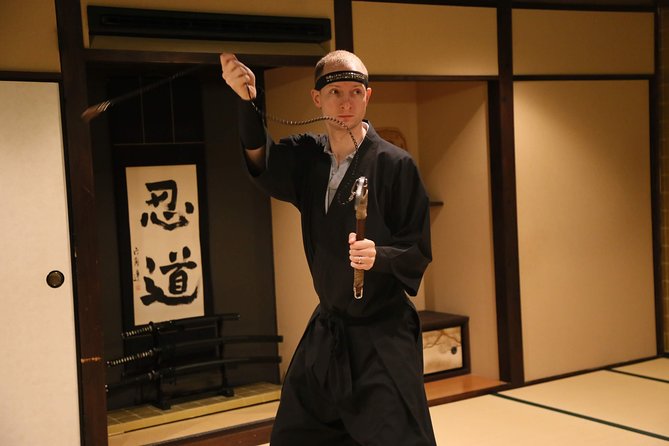
Ninja walking is one of the more unusual parts of the lesson. The instructor demonstrates how to move quietly and how to control your steps, then gives you time to copy the movement.
This is a useful change from standard sightseeing in Kyoto. You are paying attention to balance, foot placement, posture, and sound. It can also be easier for adults who are not very flexible than you might expect, since the class is described as suitable for middle-aged couples and beginners.
The Sensei’s teaching style seems important here. The strongest feedback describes instructors as patient, funny, and clear in their demonstrations. That combination helps when the movements feel unfamiliar. You can make mistakes without the exercise becoming embarrassing.
Same trip, a completely different kind of day:
- PERFECT KYOTO 1-Day Bus Tour
★ 5.0 · 13,518 reviews - Kyoto: Fushimi Inari, Kinkakuji, Bamboo Grove 1 Day Bus Tour
★ 4.8 · 4,316 reviews - Kyoto: Tea Ceremony in a Traditional Tea House in Kiyomizu
★ 4.9 · 3,519 reviews - Kyoto Geisha Walking Tour: Gion District & Hidden Gems
★ 4.7 · 3,273 reviews
Exploring the ninja trick house
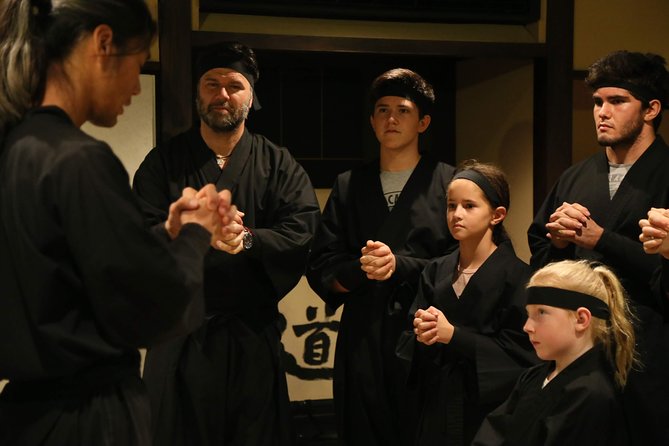
The introduction to the ninja trick house covers gimmicks and traps. This section gives you a look at the theatrical and practical side of ninja stories, showing how hidden mechanisms and surprise could be used in a traditional setting.
The available details do not specify every trap or how long you spend inside the trick house, so do not expect a full escape-room-style attraction. Think of it as one part of a fast-moving lesson. It adds variety and helps break up the physical drills.
For families, this may be one of the easiest sections to enjoy together. Children can take in the secret-door feeling, while adults get a little context for the familiar ninja image. The experience works best when you treat it as both cultural activity and playful entertainment.
Handling the ninja sword and other equipment
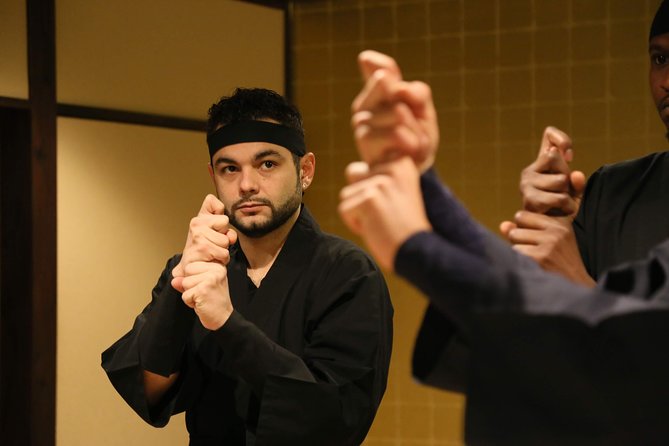
The sword lesson is likely to be the central attraction for many people. The Sensei demonstrates basic handling, then gives you a chance to practice. You also work with a kunai, a ninja dagger, and a kusarigama, a sickle attached to a chain.
The equipment is presented as part of the training, not as loose props handed out without instruction. You should listen closely and follow the Sensei’s directions, especially when handling the sword or chain weapon. The supplied information does not describe specific safety rules, so the instructor’s demonstration and close attention are important.
The class also includes rope techniques and a kunai with rope. These exercises broaden the session beyond the standard movie version of a ninja. You get a taste of how tools could be used for movement, control, or distance, though you should not expect advanced mastery after one class.
The lesson moves at a brisk pace. You will not spend a long time perfecting one technique. Instead, the value comes from trying several different skills in one visit and seeing how they fit together.
Throwing shuriken and shooting blow darts
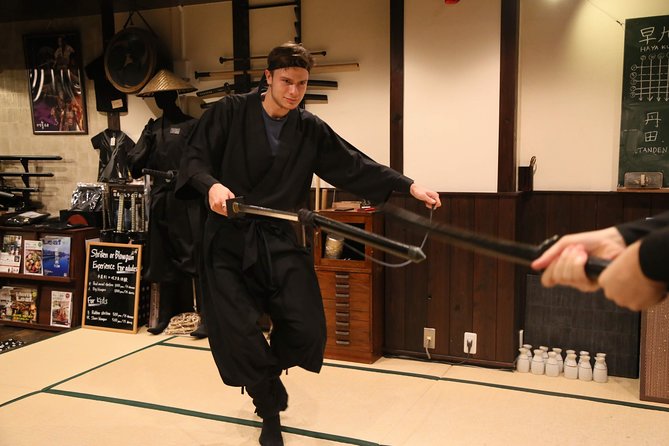
The shuriken section lets you try ninja stars, including a stick-type shuriken. Participants also practice with a ninja sword and shuriken together, and use a ninja blowgun with blow darts.
This is where the class becomes especially hands-on. You are not only watching a Sensei perform. You get to aim at targets and test the tools yourself. One parent described being able to try each weapon after a professional demonstration, which is a useful way to understand the format.
The blowgun is a memorable addition because it is less familiar than the sword. The same is true of the sickle and chain. These activities give the session variety, but they also make clear why following instructions matters. Children should remain under the direction of the instructor throughout.
The wording around authentic weapons deserves a careful reading. The experience is presented as using real training equipment rather than toy props, but the supplied information does not spell out the exact material or design of every item. You should rely on the Sensei’s rules and ask staff if you have concerns about a particular tool.
What the instructors add to the class
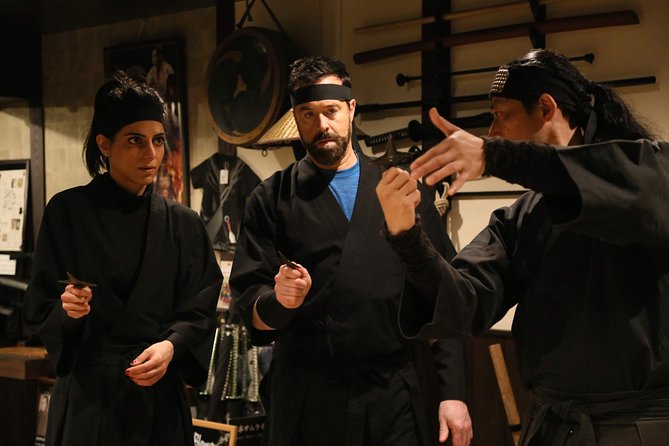
The instructor is a Japanese master trained in ninja arts, and English instruction is included. Several accounts also describe the Sensei as funny, patient, and able to explain movements clearly to complete beginners.
That teaching style is a major part of the value. The class includes many separate skills, and a less organized instructor could make it feel rushed or confusing. Here, the format is described as orderly, with demonstrations followed by practice.
The experience can suit a solo participant, a parent and child, a couple, or a mixed group. One person joined without a companion and found the small class comfortable. Other groups included couples, teenagers, children, and adults in their fifties.
The class is not limited to boys. Girls and women also take part, and one family with children aged 12 to 17 enjoyed the interactive format. The broad age range is one of the strongest reasons to consider it for a family day in Kyoto.
Photos, videos, and the value of the $95.51 price
At $95.51 per person, this is not a cheap photo stop. You are paying for about two hours of instruction, ninja clothing rental, admission, an English-speaking Sensei, and access to a long list of activities.
The price makes more sense if you take part in most of the session and value the instruction, rather than treating it as a costume rental. A regular cultural attraction may cost less, but it will not give you the same chance to practice sword handling, shuriken, rope techniques, and blowgun skills.
Staff may photograph and film the class using a professional camera. These images and videos can be sent by email, with several accounts describing same-day delivery through Google Photos. This is a useful extra for families and solo participants who want proof of the activity without relying on selfies.
Do not assume the photos are guaranteed unless the provider confirms that before booking. The official inclusions list does not separately promise photography, even though it is frequently described as part of the experience.
For a family, the cost adds up quickly, so consider the ages and interests of everyone in your group. Children who enjoy active participation are likely to get more from it than children who prefer quiet cultural visits. Adults who join in rather than simply watch will also get better value.
Timing, transport, and practical limits
The class lasts about two hours and starts at 10:00 a.m. There is no hotel pickup or drop-off, and food and drinks are not included. Plan this as a stand-alone morning activity and arrange your own route to the dojo.
Most people can participate, and service animals are allowed. The activity is near public transportation, but the information does not give a recommended station or walking time. Use the full address when planning your route rather than relying only on the dojo name.
The experience requires good weather according to its cancellation terms, even though the training takes place at a dojo. If poor weather causes cancellation, you can be offered another date or a full refund. A minimum number of participants is also required, so the provider may offer a new date or another experience if that minimum is not reached.
Free cancellation is available up to 24 hours before the start time. Inside that window, the payment is not refunded and changes are not accepted. That makes it wise to book once your Kyoto schedule is firm.
Who should book this ninja lesson
I would recommend this class to families with children who enjoy trying things, couples looking for an unusual Kyoto activity, and solo visitors who want a social experience with a clear structure. It also fits adults who are curious about ninja culture but do not have martial arts experience.
You do not need to be athletic. The lesson is designed for beginners, and the available feedback includes adults who were not especially limber. Still, expect to move, kneel, handle equipment, and repeat basic actions.
I would be more cautious if your main goal is detailed Japanese history. The session includes cultural ideas such as Kuji-In, ninja breathing, and philosophy, but the emphasis is on practice. You get an introduction, not a long lecture or academic course.
I would also skip it if you dislike dressing up, group activities, or playful instruction. The class takes its skills seriously enough to be interesting, but it is still meant to be fun.
Should you book the two-hour Kyoto ninja lesson?
Book it if you want a hands-on Kyoto activity that combines cultural explanation, costume photos, physical practice, and a little family-friendly theater. The six-person limit, English instruction, patient teaching style, and wide range of techniques give it more substance than a simple dressing-up session.
At $95.51, it earns its price when you take part fully and value the photos, the instructor’s guidance, and the chance to try many forms of equipment. If you want a deep study of ninja history or advanced martial arts training, choose something else. For a memorable two-hour break from temples and gardens, this is a strong pick.
FAQ
Where does the ninja lesson take place?
The lesson starts and ends at NINJA DOJO and STORE KYOTO, 528 Hakurakutenchō, second floor, Shimogyo Ward, Kyoto, Japan, postal code 600-8422.
What time does the class start?
The listed start time is 10:00 a.m. The activity lasts about two hours.
How many people can join the lesson?
The class has a maximum of six participants.
Is ninja clothing included?
Yes. Ninja clothing rental during the training is included in the price.
Is the lesson taught in English?
Yes. A Japanese Sensei trained in ninja arts teaches the lesson in English.
What is included in the experience?
The price includes admission, the English-language instruction, and ninja clothing rental. Hotel transportation and food or drinks are not included.
More 2-Hour Experiences in Kyoto
- Kyoto Gion: 2-Hour Geisha Culture & History Walking Tour
★ 5.0 · 1,186 reviews - Kyoto: 2-Hour Maiko Makeover and Photo Studio Shoot
★ 4.7 · 122 reviews - Kyoto 2 Hours Genuine Kendo / Samurai Experience In Japan
★ 5.0 · 57 reviews - 2 Hour Night Walking Tour Throughout Gion with snack
★ 4.0 · 13 reviews
Just added around Kyoto
- Sekka Cotton Furoshiki Class★ 5.0 · 19 reviews
- Kyoto Sword Experience – includes Museum Ticket/Ninja Experience★ 4.5 · 149 reviews
- Scenic Green Tea Fields of Hidden Kyoto & Local Tea Exp (Private)★ 5.0 · 32 reviews
- Secret Eastern Kyoto Biking Adventure★ 5.0 · 44 reviews
- Private Sake Tasting in Central Kyoto with Sake Sommelier★ 5.0 · 32 reviews
- Samurai School in Kyoto: Samurai for a Day★ 5.0 · 202 reviews
- SHIRAKAWA Japanese Culture Experiences with private English staff★ 5.0 · 16 reviews
- A Privately Guided Photoshoot in Beautiful Kyoto by a Pro★ 5.0 · 18 reviews
Ninja Experiences, compared.
Ninja 1-hour Hands-on Lesson by Japanese master in Kyoto -Entry
Our verdict →

Try Mindful Calligraphy Near Kanazawa’s Ninja Temple
Our verdict →
Browse the lists this tour appears in