
Reviewed · TRADITIONAL CRAFTS
Private Echizen Knife Making Factory and walking Tour
Echizen knife making is not a museum display. You enter working factories, smell freshly worked wood at Yamaken Woodworks, then watch blacksmiths shape blades at Ryusen Hamono. The best part is the direct contact with craftspeople who have devoted their working lives to this trade.
I like the small private format, which lets your group ask questions without being pushed along. I also like that the tour covers both halves of a knife: the handle and the blade. The main drawback is practical: this is an out-of-the-way stop, and an English guide costs an additional ¥10,000 per person.
The experience is a strong choice for anyone who collects Japanese knives, cooks seriously, or wants to see traditional manufacturing in a real working setting. Allow extra time for transport, and consider driving if you want the simplest arrival.
Key points to know before you book
- Two factories, two skills: See wooden handles at Yamaken Woodworks and blades at Ryusen Hamono.
- Real craftsmen lead the experience: You can speak directly with the people who make the products.
- You try part of the process: This is more than a walk-through factory visit.
- Private for your group: No unrelated participants join your booking.
- Plan transport carefully: The area is reachable by public transportation, but driving is the easiest option.
- English help costs extra: An English guide is available for ¥10,000 per person, in addition to the tour price.
Why Echizen knife making is worth the side trip
Fukui Prefecture is one of Japan’s important knife-making areas, and Echizen gives you a chance to see the craft where it still happens. The value here is not simply looking at finished blades in a shop. You see the separate skills that turn raw materials into a usable kitchen tool.
That distinction matters. A polished knife in a display case tells you very little about the work behind it. At Yamaken Woodworks, you learn how much care goes into the handle. At Ryusen Hamono, you see the blade-making side and meet the blacksmiths responsible for the final edge and shape.
I find this kind of factory visit more useful than a general craft demonstration because the businesses are still producing items for sale. You are looking at working methods, finished goods, and the connection between the two. The tour also gives you a chance to ask questions directly instead of relying only on signs or a prerecorded explanation.
The setting adds to the experience. The meeting point is in Ikenokamichō, in the Echizen area, rather than in central Fukui. One visitor walked about 35 minutes from Oshio Station through rice fields to reach the factories. That walk can be pleasant in good weather, but strong winds made the return trip difficult on one occasion. Driving is the most straightforward way to arrive.
More Craft Workshops in Japan:
- Tokyo Sumo Experience: Chanko & Mochi with a Former Pro
★ 4.8 · 567 reviews - Kintsugi Experience: Art of Golden Joinery in Tokyo
★ 5.0 · 467 reviews - Tokyo Chopstick Making Workshop with Artisan
★ 5.0 · 466 reviews
At Yamaken Woodworks, start with the handle
Your first stop is Yamaken Woodworks at 46-1-10 Ikenokamichō. This factory makes knife handles, an area that can be easy to overlook when people talk about Japanese blades.
The first thing you may notice is the aroma of wood. It gives the visit a sensory quality that a standard retail stop lacks. You see the material before it becomes a finished handle and learn about the careful work needed to shape it for a knife.
The craftsmen are central to this stop. You can speak with them about their work and ask about the steps involved in making the handles. The tour is not built around a large presentation, so your questions are especially useful here. If you are interested in woodworking, tool design, or how a handle affects the feel of a knife, this part may be just as interesting as the blade factory.
The shop beside the factory sells handles made there. That gives you a clear link between production and purchase. You can look closely at the finished work and consider the differences in shape, material, and appearance.
There is one limit to keep in mind. The information provided does not promise that every handle, style, or material will be available for purchase on your visit. Treat the shop as a chance to see what the factory makes, not as a guaranteed way to find a particular replacement handle.
The stop lasts about one hour. That is enough time for an introduction, conversation, a look at the factory, and time in the adjacent shop without making the day feel rushed.
At Ryusen Hamono, watch the blade take shape
The second stop is Ryusen Hamono, a knife factory and store with a wide selection of finished products. This is where the tour turns from woodwork to metalwork.
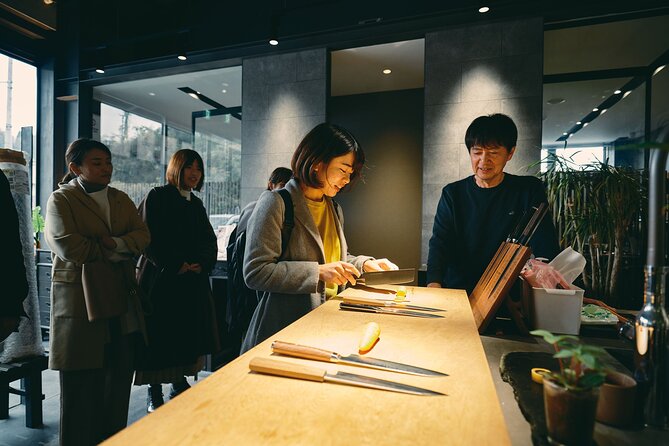
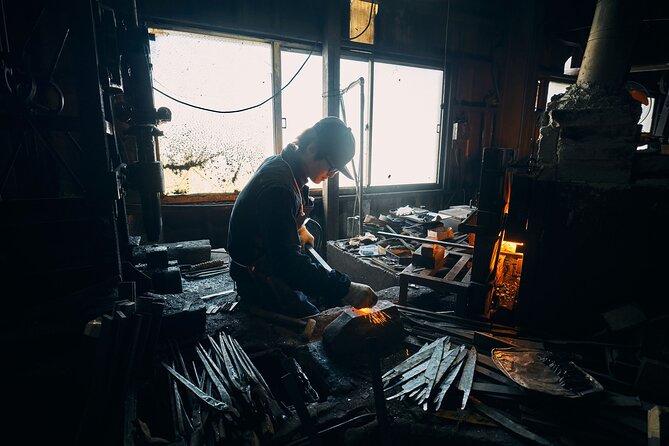
You meet actual knife-making blacksmiths and learn about the process used to create high-quality blades. The benefit of this setting is direct access. You are not only looking at knives after all the difficult work is finished. You are learning from the people who handle the demanding production steps.
You also get to try part of the knife-making process yourself. The exact task is not specified in the tour details, so you should not expect to make an entire knife from start to finish. Still, that hands-on element changes the visit. It helps you understand that a knife is the result of repeated, controlled work rather than a single dramatic act of forging.
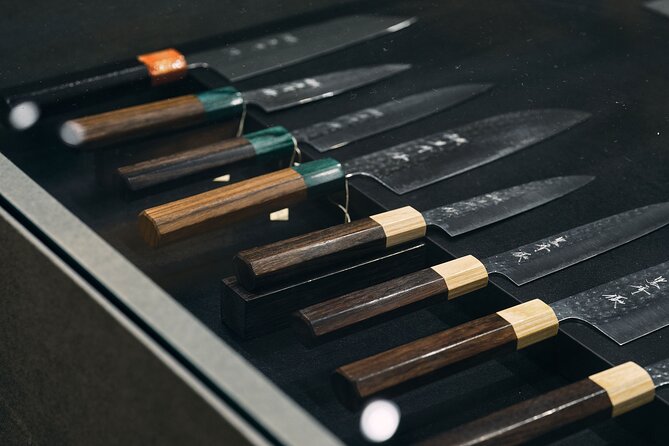
The shop offers another useful part of the visit. You can examine the assortment of knives made by the factory and compare the finished products with what you have just learned. For someone who wants to buy an Echizen knife, this is the natural point to ask about the items on display.
The Ryusen Hamono visit lasts about one hour and ten minutes. That longer time makes sense because it combines factory viewing, conversation, a practical activity, and shopping.
You should also remember that the shop visit is optional in spirit, even though it forms part of the stop. The tour is not only a shopping trip, but the product display helps explain what the factory produces. If you already own more knives than you need, focus on the workmanship rather than feeling obliged to buy.
The private format makes questions easier
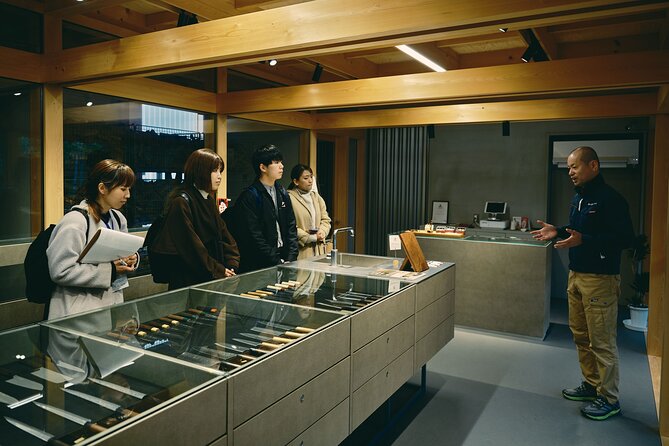
This is a private activity, so only your own group participates. That is an important advantage in a factory setting. You can ask about handle construction, blade production, sharpening, or the division of work without waiting for a large group to catch up.
A private tour can also move at a more comfortable pace. If your group is fascinated by woodworking, you can spend more time discussing handles. If you are focused on Japanese kitchen knives, you can direct your attention toward the blades and finished products.
The tour is listed with a mobile ticket, which makes the booking side simple. Confirmation is normally received at booking, but a reservation made within seven days of the visit may be confirmed within 48 hours and remains subject to availability.
The basic tour price is $163.30 per person. That is not a bargain for a two-and-a-half-hour activity, especially once you add transport and any purchase from the shops. Still, the price includes private access to two working factories and a hands-on portion. For a knife enthusiast, that is a more focused experience than a general sightseeing stop.
An English guide costs an extra ¥10,000 per person. That fee is significant, so check what language support your group needs before booking. If you do not speak Japanese and want detailed explanations, the guide may make the visit much more rewarding. If your group can manage with limited English support, the additional charge may affect the value calculation.
More Walking Tours in Japan:
- Kyoto Geisha Walking Tour: Gion District & Hidden Gems
★ 4.7 · 3,273 reviews - Tokyo Tsukiji Fish Market Food and Culture Walking Tour
★ 5.0 · 3,184 reviews - Kyoto: Gion Magical Night Walking Tour with Geisha Trivia
★ 4.9 · 2,393 reviews - Tokyo: Imperial Palace and Shogun Historical Walking Tour
★ 5.0 · 2,251 reviews
Getting there from Fukui and Oshio Station
The meeting point is 48-6-1 Ikenokamichō, Echizen, Fukui 915-0873, Japan. The activity ends back at the same meeting point, so you need to plan your return transportation from there.
Public transportation is available nearby. Oshio Station is close enough for a walk of about 35 minutes, according to the practical experience built into the tour information. That walk passes through rice fields, which can make the approach feel more connected to the rural setting than a taxi or car ride.
I would choose the walk only in suitable weather and with comfortable shoes. Strong winds have made the return difficult, and this is not the sort of place where you want to arrive tired, wet, or short on time. Driving is described as the easiest option, so a rental car may be worth considering if the factories fit into a wider Fukui itinerary.
The tour requires good weather. If poor weather forces cancellation, you are offered another date or a full refund. That matters because part of the experience may involve walking between locations or reaching the area from the station.
The overall duration is about 2 hours and 30 minutes. The two main factory stops add up to about 2 hours and 10 minutes, leaving time for movement and transitions. Do not schedule a tight train connection immediately afterward.
Who will get the most from this experience
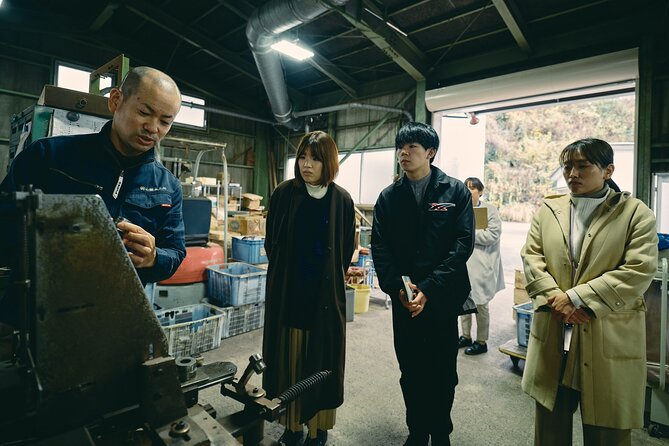
This tour is best for a few specific kinds of visitors.
If you are a Japanese knife enthusiast, the fit is obvious. You can see the work behind the finished blade, ask questions of the makers, and browse knives at the factory shop. The visit gives context that you will not get from buying a knife at a department store.
It also suits cooks who care about tools. You do not need to be a collector. If you want to understand why a knife feels different in the hand, the handle visit adds useful perspective.
Woodworkers and craft fans should pay close attention to Yamaken Woodworks. The handle-making stop keeps the experience from becoming only a metalworking demonstration. You see that the final tool depends on several skilled processes.
Families and mixed-interest groups may enjoy the private format, but the appeal depends on age and attention span. The tour is built around factory work, conversation, and craftsmanship, not games or a broad sightseeing program. The information provided says most people can participate, but it does not list special child-focused activities.
This is less suitable if you have only a short stop in Fukui, dislike rural transport, or want a tour with a full-time English explanation included in the price. The extra guide fee can change the total cost quickly for a larger group.
Price, shopping, and the real value
At $163.30 per person, the tour asks you to pay for access and contact, not just admission. You are paying for a private visit to two specialist businesses, time with working craftspeople, and a practical part of the process.
That makes the price easier to justify for a serious knife buyer. You get to examine products in the place they are made and understand more about the labor behind them. If you are only mildly curious about Japanese knives, the cost may feel high for a 2-hour-30-minute activity.
Shopping can also affect your final budget. Yamaken Woodworks has a shop selling its handles, and Ryusen Hamono has an assortment of knives. The tour price does not include food or drinks, and the provided details do not include purchases from either shop.
I would set a spending limit before you arrive. Factory shops can make an item feel more special because you have just seen its makers at work. That does not mean you need to buy, but it helps to decide in advance what kind of knife or handle would truly be useful.
The 100 percent recommendation rate and 4.9 rating from 12 published ratings suggest strong satisfaction, though the sample is small. The most consistent praise centers on the unusual access to the factories and the quality of the craftsmanship. That matches the tour’s strongest feature: you are seeing a working tradition up close, not simply hearing a sales pitch.
Practical booking advice for a smoother visit
Book ahead if the date matters. The activity is booked an average of 28 days in advance, which signals that last-minute availability may not be dependable.
If you need English explanations, arrange the guide option before you go and include the extra ¥10,000 per person in your budget. The standard tour information does not identify a named guide, so there is no guide name to request.
Wear shoes suitable for walking and factory floors. The tour details do not list a formal dress code, but comfortable footwear is a sensible choice given the possible walk from Oshio Station and the movement between locations.
Keep the weather forecast in mind. You can cancel for a full refund up to 24 hours before the start time. Cancellations made less than 24 hours before the start are not refunded, and changes within that period are not accepted. If the operator cancels because of bad weather or because the minimum number of participants is not reached, you can choose another date or receive a full refund.
Should you book this Echizen knife tour?
Book it if you want a close look at how Japanese knives are made and you are willing to travel beyond central Fukui. The combination of wooden handle production, blade forging, direct conversation with craftsmen, and a hands-on step gives the visit real substance.
I would especially recommend it to knife buyers, cooks, craft enthusiasts, and anyone building a Fukui itinerary around local production. The private setting and authentic factory access are the main reasons to choose it.
Skip it if you want a cheap, centrally located activity, need guaranteed English guidance included, or have no interest in buying or understanding knives. For the right audience, though, the price pays for access to a part of Echizen that most standard sightseeing plans miss.
FAQ
Where does the tour start?
The tour starts at 48-6-1 Ikenokamichō, Echizen, Fukui 915-0873, Japan.
Where does the tour end?
The activity ends back at the meeting point.
How long does the experience last?
The total duration is about 2 hours and 30 minutes.
What factories will I visit?
You will visit Yamaken Woodworks for knife handles and Ryusen Hamono for knife blades and finished knives.
Can I try making part of a knife?
Yes. The Ryusen Hamono visit includes an opportunity to experience part of the knife-making process.
Is an English guide included?
No. An English guide costs an additional ¥10,000 per person.
Is the tour private?
Yes. Only your group will participate in the activity.
Can I cancel for a full refund?
Yes, if you cancel at least 24 hours before the experience start time. Poor-weather cancellations by the operator offer a different date or a full refund.
Just added around Japan
- Sekka Cotton Furoshiki Class★ 5.0 · 19 reviews
- Kyoto Sword Experience – includes Museum Ticket/Ninja Experience★ 4.5 · 149 reviews
- Scenic Green Tea Fields of Hidden Kyoto & Local Tea Exp (Private)★ 5.0 · 32 reviews
- Secret Eastern Kyoto Biking Adventure★ 5.0 · 44 reviews
- Private Sake Tasting in Central Kyoto with Sake Sommelier★ 5.0 · 32 reviews
- Samurai School in Kyoto: Samurai for a Day★ 5.0 · 202 reviews
- SHIRAKAWA Japanese Culture Experiences with private English staff★ 5.0 · 16 reviews
- A Privately Guided Photoshoot in Beautiful Kyoto by a Pro★ 5.0 · 18 reviews
Traditional Crafts, compared.

Tokyo Sumo Experience: Chanko & Mochi with a Former Pro
Our verdict →
Kintsugi Experience: Art of Golden Joinery in Tokyo
Our verdict →

Matcha Making Experience with Mochi Sweets in Asakusa
Our verdict →
Authentic knife making experience at a blacksmith in Kyoto
Our verdict →

Roketsu dyeing experience: M course Roketsu Dyeing Experience
Our verdict →Browse the lists this tour appears in