
Reviewed · SUMO EXPERIENCES
Tokyo: Sumo Morning Training Visit
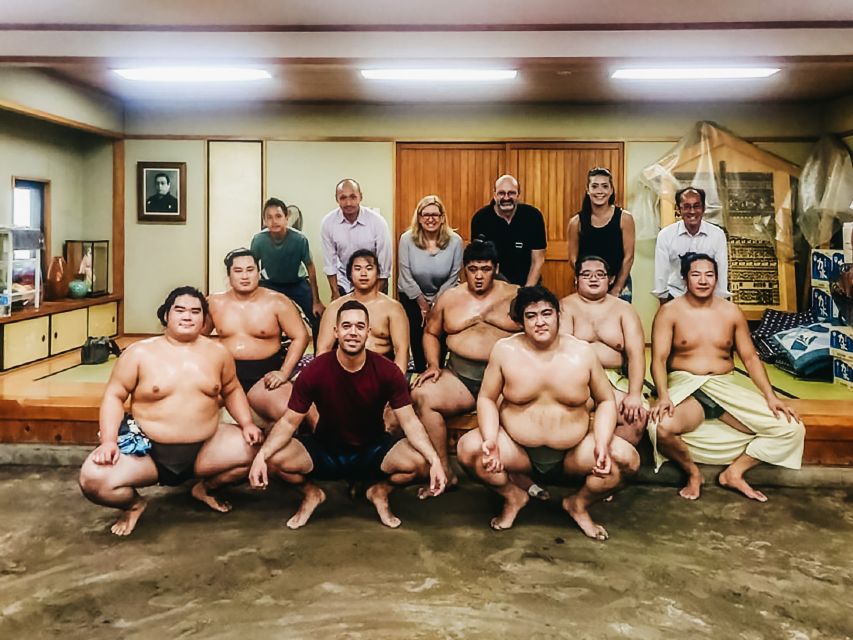
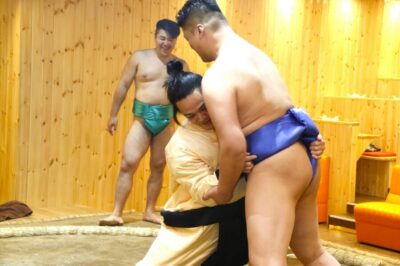
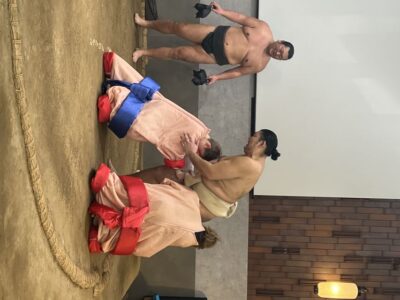
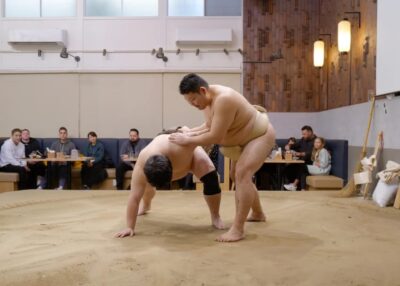
The best part of this Tokyo experience is the distance between you and the action. You are not watching from the far side of a stadium. You sit quietly inside a working sumo stable, close enough to hear the impact when two wrestlers collide and see the sweat, balance, and control behind the sport. I like the authentic setting and the chance to take a group photo with the wrestlers afterward.
I also like that this costs $77, less than chasing a tournament ticket when you mainly want to see sumo up close. The catch is that this is a real practice, not a polished show: the guide may offer little explanation, you must sit quietly, and the meeting point is confirmed only a few days before the visit.
Key points to know before booking
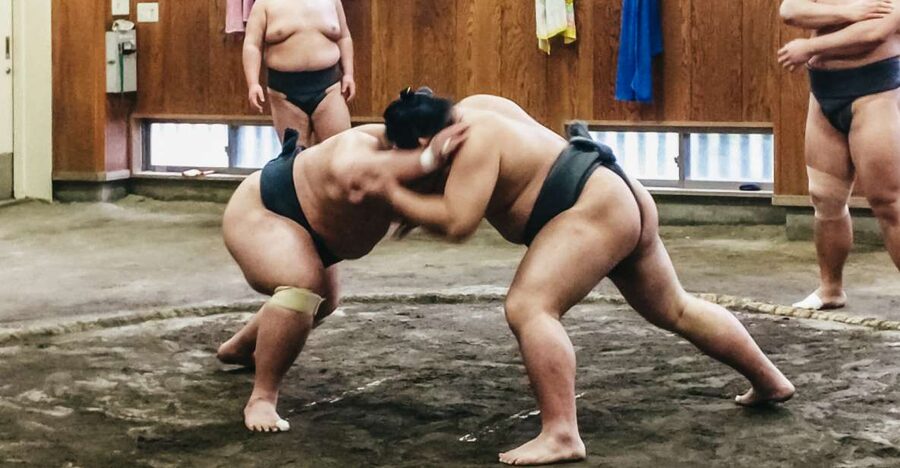
- You watch active professionals train: Expect warmups, drills, pushing exercises, and sometimes full sparring.
- The stable is a working space: You must enter with the guide, follow strict behavior rules, and keep phones silent.
- The location arrives late: The final meeting place and directions are sent about two or three days before the date.
- The session length can change: Training is normally around 60 minutes, but it may last 90 minutes or two hours, or only about 30 minutes during a Tokyo tournament month.
- The group photo is part of the appeal: You can pose with the wrestlers at the end, but leaving early means giving up the picture.
- Floor seating requires planning: Ask in advance about a chair if your knees or hips make sitting on the floor difficult.
Why a sumo stable beats watching from the stands
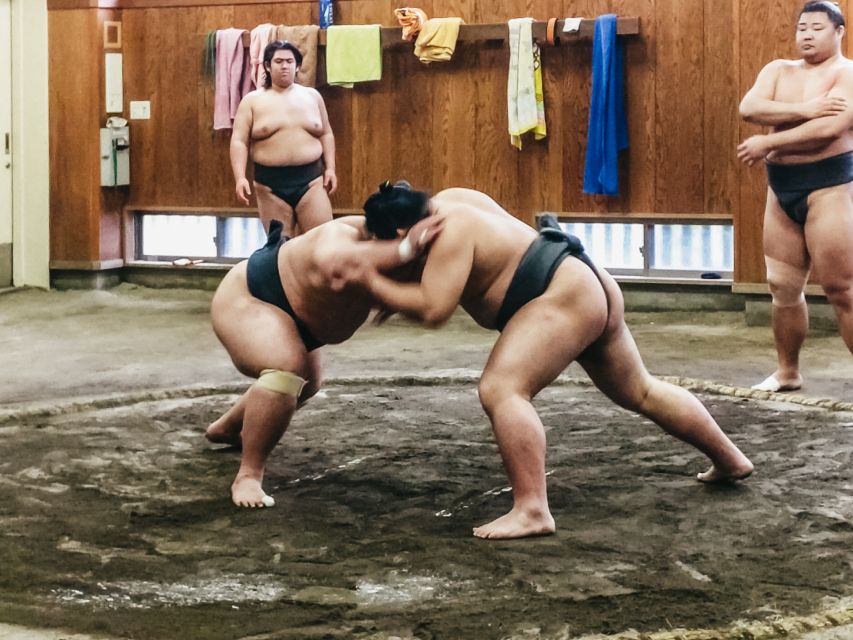
A tournament gives you the full spectacle: the formal entrance, the packed arena, the banners, and the bouts that count. This visit gives you something different. You see the repetitive work that makes those brief matches possible.
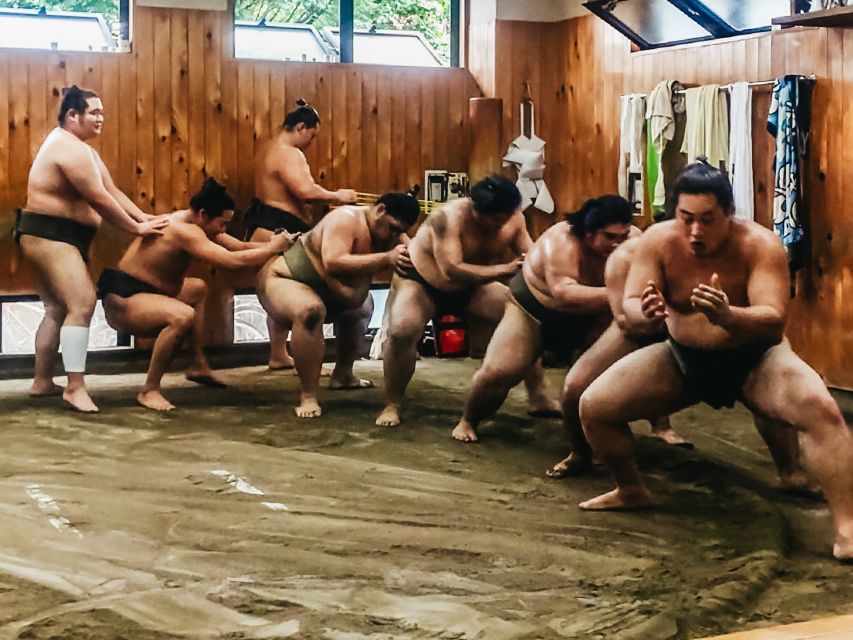
The wrestlers practice body control, footwork, balance, pushing strength, and timing. Even if you know little about sumo, the physical force is easy to understand. You hear the slap of feet, the thud of bodies, and the sharp effort behind each movement. Some sessions include sparring, while others may focus more on drills and warmups.
I find that closeness changes the way you read the sport. From a seat in a large stadium, sumo can look slow because the bouts are short and carefully controlled. Inside the stable, you can see how much work happens before a wrestler ever steps into a contest. The strength is obvious, but so are speed, technique, and balance.
This is also a more personal cultural experience than a staged sumo performance. The stable is where wrestlers train as part of their daily discipline. That is why the rules for visitors matter. You are entering a place where the athletes need concentration, not a theater where the audience is expected to react.
More Sumo Experiences in Tokyo:
- Tokyo: Sumo Show Experience with Chicken Hot Pot and a Photo
★ 4.8 · 6,678 reviews - Tokyo: Sumo Show and Dining Experience
★ 4.8 · 2,742 reviews - the SUMO show
★ 5.0 · 1,960 reviews
Your morning begins with an email, not a fixed address
Do not rely on the location shown by Google Maps or on the sample information in an automatic voucher. The actual stable and meeting point are decided shortly before your date, usually about three days in advance, and sent by email.
Read both the final message and the voucher. The stable named on the voucher is the one to follow. Specific stable requests cannot be accepted, but all of the participating stables are within Tokyo.
This late confirmation is the biggest practical wrinkle. You need enough time to check the route from your hotel and work out the final approach. One person missed part of the training after going to the wrong address, so do not treat the first map pin you see as final.
Check-in begins at the stated meeting time. If you arrive early, do not ring the doorbell or enter the building. Wait outside until the host is ready to receive the group. If you have trouble finding the place, call the number in the confirmation email. Fast assistance is available, including early in the morning.
An English-speaking host or greeter handles the meeting. The actual amount of guiding can vary. You may receive a short welcome and rules sheet, or mainly have your name checked before being led inside. Do not book this expecting a long lecture from a professional sumo expert.
Inside the stable: warmups, drills, and hard contact
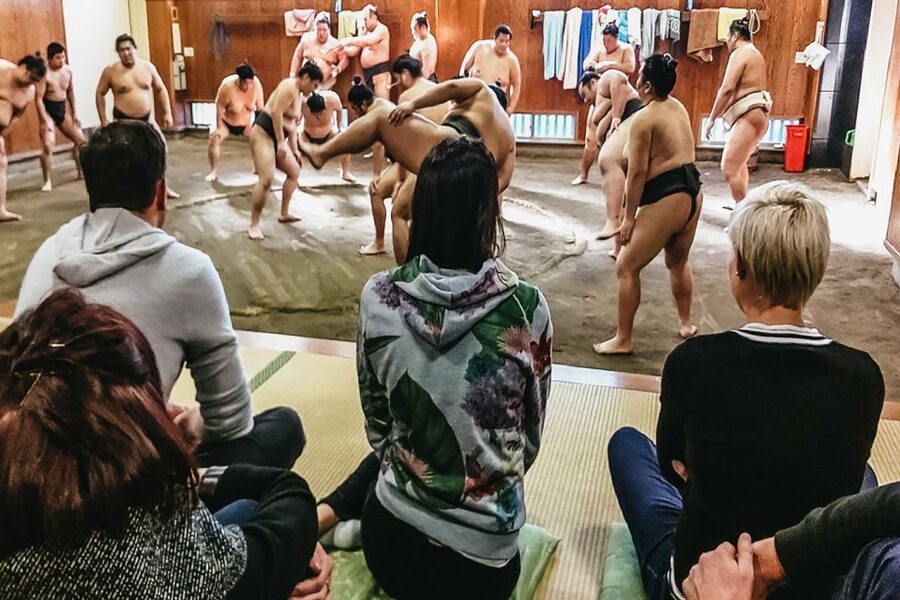
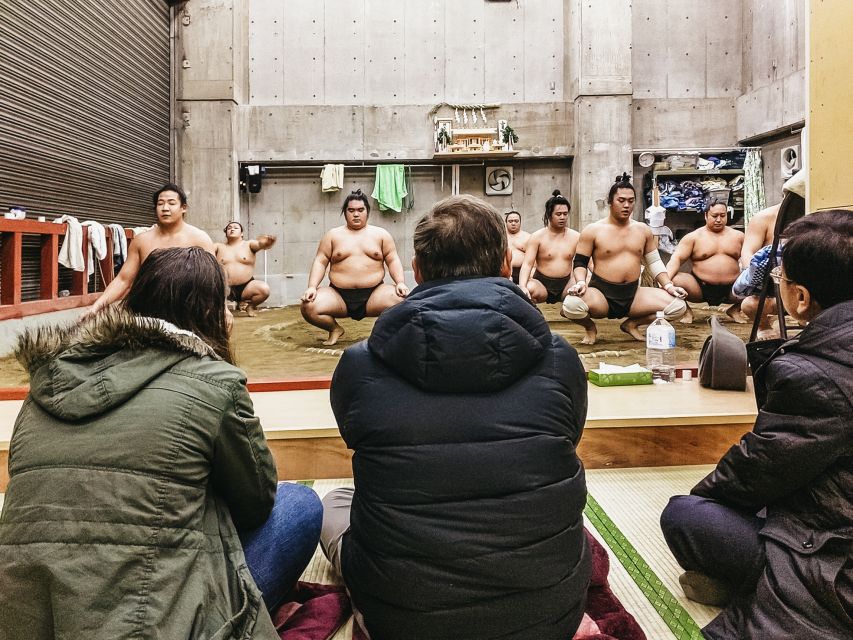
Once the group is admitted, you take a seat around the training area. The viewing setup can place people on two sides of the dohyo, the raised clay ring used for sumo. Seating is generally free, so arriving on time matters. A late arrival may leave you at the back, where taller people can block parts of the action.
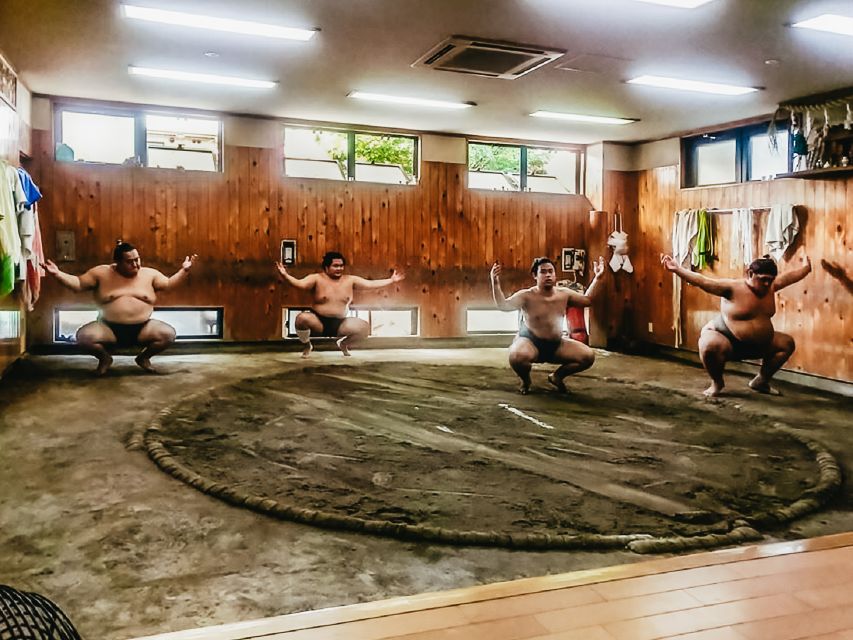
The session can begin with warmups and repeated exercises. You may see wrestlers stretch, stamp, practice balance, and work on the basic movements that support a bout. The pace is not built for an audience. Some periods are intense, while others may feel slow if you do not know what each drill is developing.
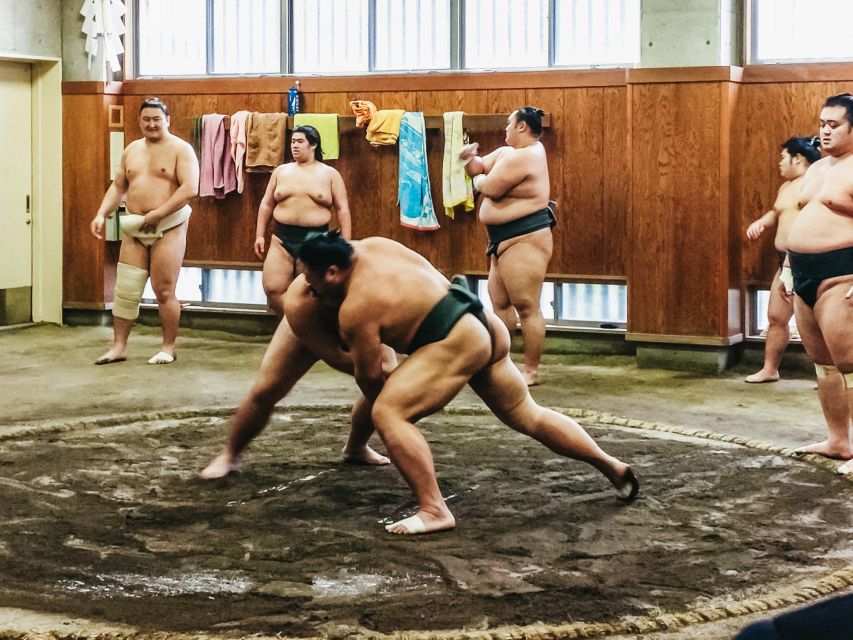
The most gripping moments come when wrestlers work against one another. You might see pushing practice, controlled collisions, or sparring bouts. The close setting lets you notice details that disappear in an arena: a sudden shift of weight, a planted foot, a wrestler absorbing force without losing balance, or the speed packed into a brief exchange.
The program is not guaranteed to include the same sequence each day. The wrestlers’ condition can change the schedule, and the stable may run a quieter practice. That is an important distinction. You are observing training as it happens, not buying a promise of a particular fight or a fixed performance.
During the Tokyo Grand Sumo Tournaments in January, May, and September, training may last only about 30 minutes. Wrestlers may be preparing for competition, so the usual morning session is shortened. There is no refund for the shorter visit, which makes tournament timing a key point when deciding how to spend your $77.
The etiquette is part of the experience
You are expected to be quiet throughout the practice. Keep your phone on silent, do not talk loudly, and do not make sudden noise. Flash photography is forbidden, and video is allowed only if you receive permission first.
Do not bring food or drinks into the stable. Hats and sunglasses are not allowed, and large bags and luggage should be left behind. A face mask or protective covering is listed as something to bring.
The seating rules may be harder than the silence. You can be on the floor for a long stretch, with limited freedom to move. Past sessions have lasted 90 minutes or two hours, even though the standard description says about 60 minutes. You may not be able to take a toilet break, eat, drink, or shift around freely without disturbing the room.
If you have knee trouble, limited flexibility, or simply dislike floor seating, contact the operator in advance about a chair. A chair may need to be arranged before the visit. Do not assume one will be waiting when you arrive.
The rules can feel strict, but they protect the training. I would rather have a quiet room and a clear view of serious practice than a louder tour that turns the stable into a photo stop. Go in ready to observe, not to chat.
More Morning Tours in Tokyo:
- Tokyo: Sumo Morning Practice Viewing Tour
★ 4.8 · 570 reviews - Tokyo: Sumo Morning Practice Tour at Sumida City
★ 4.8 · 308 reviews - Tokyo Sumo Morning Practice Tour at Stable
★ 5.0 · 298 reviews - Tokyo Ryogoku Sumo Morning Practice + Photo Shoot with Wrestlers
★ 4.5 · 277 reviews
The guide may explain less than you expect
The host speaks English, but the level of explanation can be limited. Some people receive little more than directions, seating instructions, and a behavior sheet. That works if your main goal is to watch the wrestlers. It is less satisfying if you want the rituals, history, training system, diet, rankings, and meaning of each gesture explained as you go.
A little preparation helps. Learn a few basic sumo terms before arriving, and look up the main rituals and practice movements. Then you can follow the action instead of wondering why the wrestlers repeat a particular motion.
The lack of commentary is not always a flaw. Too much talking would clash with the stable’s need for quiet. Still, a two-minute introduction at the start would help many people understand the difference between warmups, pushing drills, and sparring. Families and first-time viewers may find the experience more meaningful with some background knowledge in hand.
Communication about the meeting place is more important than cultural narration. Make sure you understand the final location, start time, and route. If the email is unclear, use the contact number before the morning of the visit.
The group photograph comes after the work
At the end, you get the chance to take a group picture with the wrestlers. This is a memorable finish because it changes the mood from silent observation to a brief personal encounter.
The photograph is not guaranteed if you leave early. Some sessions last longer than expected, so plan your morning with extra room. If you have another appointment, train departure, or timed attraction, do not schedule it too tightly after this visit.
The photo also works best when you arrive promptly and stay through the full session. Sit near the front if you can, follow the instructions, and keep your camera ready without using flash. Video requires prior permission, so still photography is the safer plan.
Is $77 a fair price?
At $77 per person, this is not a cheap way to fill an hour. The price pays for access to a working stable, an English-speaking host or greeter, the organized entry, and the group photograph. It does not include hotel transportation unless you choose the optional one-way transfer.
For someone who wants to see a full tournament, the value is limited. During January, May, or September, the training may be only 30 minutes, and you will not see an official match. One past visitor found that a tournament ticket offered better value after the stable visit.
For someone who wants close contact with sumo and cannot get a tournament ticket, the calculation is better. You see professional athletes at arm’s length, witness the preparation rather than only the final bout, and enter a place most people would never access on their own. The group photo adds a clear finish.
I would consider the price reasonable if sumo is high on your Tokyo list and you understand the format. I would skip it if you want a lively show, a polished historical talk, or a guaranteed series of bouts.
Optional hotel transfer: useful, but limited
A one-way hotel transfer can be arranged as an extra option. Pickup must be within Tokyo’s 23 wards, the vehicle can carry up to four passengers, and the driver speaks Japanese rather than English.
Hotels without a front desk cannot be used for pickup. After booking, you need to send the hotel name, check-in date, and name of the person who made the reservation, along with a Japanese mobile number that can be reached the day before.
The pickup time arrives by email at least one day ahead. If you are not ready within 10 minutes of that time, the booking is treated as a no-show. This option may reduce the stress of finding an unfamiliar stable before sunrise, but it does not replace reading the final instructions carefully.
Who will enjoy this most?
This suits you if you like authentic working sites, quiet observation, and sports where technique matters as much as raw power. It is also a good choice for first-time visitors who want a cultural activity that feels different from a standard Tokyo attraction.
Families can enjoy it, but children need to remain quiet and still. One family found that even children aged 9 and 12 stayed captivated by the intensity, while a younger child was warmly included in the final photo. The format is less suitable for a child who needs frequent movement, snacks, or bathroom breaks.
You should think carefully if you have difficulty sitting on the floor. Ask for a chair in advance, and do not count on being able to change position whenever you like. You also need to be comfortable with limited explanation and a schedule that may run longer than one hour.
The experience is strongest for people who want to understand what sumo wrestlers do before competition. If your only goal is to see a dramatic bout, attend a tournament instead.
Cancellation and timing details
You can cancel up to 11 days before the experience for a full refund. The advertised duration is one hour, but the actual practice can be shorter during tournament months or longer on other mornings.
Plan to arrive at the exact meeting time, not well before it. Entering the stable is allowed only with the guide, and early arrivals should wait without ringing the bell. Bring a face covering, leave luggage behind, and keep your camera use discreet.
Should you book the Tokyo sumo morning visit?
Book it if you want to see sumo close up in its working environment, and if you can accept silence, floor seating, uncertain session length, and modest guide commentary. The strongest moments are physical and direct: the warmups, the thud of contact, the controlled sparring, and the realization that these short bouts depend on long, demanding practice.
Skip it if you need a fixed address months ahead, a guaranteed 60-minute schedule, comfortable chairs, or a detailed English lesson on every ritual. Also reconsider it during a Tokyo tournament month if the shorter practice would disappoint you.
For the right visitor, $77 buys a rare look behind the stadium curtain. Arrive ready, read the final email twice, sit quietly, and let the wrestlers’ work carry the morning.
FAQ
Where does the sumo morning training visit meet?
The actual meeting point is decided shortly before your visit and is sent by email about two or three days in advance. Do not rely on the location shown by Google Maps or on the sample information in the automatic voucher.
How long does the experience last?
The advertised duration is one hour. Training normally lasts about 60 minutes, but some sessions can last 90 minutes or two hours. During Tokyo Grand Sumo Tournament months in January, May, and September, training may last only about 30 minutes.
Can I choose the sumo stable?
No. The stable and meeting point depend on the day, and specific location requests cannot be accommodated. All participating stables are within Tokyo.
Is the experience conducted in English?
The host or greeter language is English. However, the amount of spoken explanation may be limited, and the host may mainly handle check-in and directions.
Can I take photographs?
Yes, but flash photography is forbidden. Video recording is allowed only with prior permission. Keep your phone on silent and follow the stable’s instructions.
Can I take a picture with the wrestlers?
Yes, a group picture is included. If you leave before the training finishes, you will not receive the group photo.
Do I need to sit on the floor?
Floor seating is common, and you may need to sit still for a long period. If you need a chair because of knee or mobility problems, ask in advance so one can be arranged.
Can I bring food, drinks, luggage, or a large bag?
No. Food and drinks, luggage, and large bags are not allowed inside. Hats and sunglasses are also prohibited.
Is hotel transportation included?
No. Hotel pickup and drop-off are not included, but an optional one-way transfer may be available from hotels within Tokyo’s 23 wards. The driver speaks Japanese, and hotels without a front desk cannot be used for pickup.
Just added around Tokyo
- Kawagoe Japanese Food Tour : Unagi Kaiseki and Sake near Tokyo★ 5.0 · 30 reviews
- Kawagoe 4hr Private Tour with Licensed Guide (Kawagoe Dep)★ 5.0 · 13 reviews
- Little EDO Sushi Making workshop in Kawagoe★ 5.0 · 18 reviews
- 【R34】Tokyo:Private Daikoku tour in Modified R34★ 4.9 · 92 reviews
- :Tokyo,Shibuya/ Pro Photography in Kimono / English-Friendly★ 5.0 · 26 reviews
- Tokyo:Celebrate Unique Japanese New Year Tradition Festivity★ 3.9 · 20 reviews
- Tokyo: Allstar Food Tour★ 4.7 · 29 reviews
- Tokyo: West-Side Cycling and Food Tour with Guide★ 5.0 · 37 reviews
Sumo Experiences, compared.
Sumo Show Experience with Chicken Hot Pot and a Photo
Our verdict →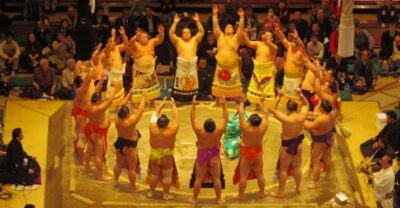
Authentic Sumo Experience in Tokyo: Enter the Sanctuary
Our verdict →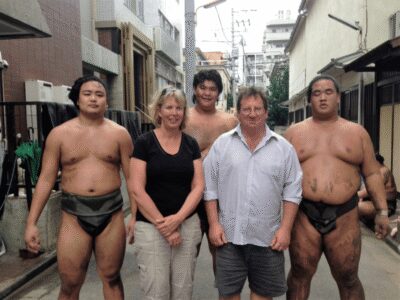

Browse the lists this tour appears in