
Reviewed · SUMO EXPERIENCES
Tokyo Sumo Morning Practice Tour at Stable
The best part of this Tokyo morning tour is simple: you watch professional sumo wrestlers train inside a real working stable, not on a stage built for tourists. The wrestlers repeat throws, footwork, stretching, and full bouts at close range, with the raw effort and silence of serious practice all around you.
I love the close view of repeated sparring, which can show you more action in 90 minutes than a formal tournament, where ceremony fills much of the day. I also like the guides, including Seiji, Yumi, Noriko, Nobu, and Cameo, who explain the rituals, rankings, lifestyle, and tournament calendar in clear English.
The main drawback is that this is a quiet observation visit, not an interactive show. You cannot talk during practice, videos are forbidden, audio equipment has occasionally been hard to hear, and seating can affect your view. Summer heat inside the stable is another real concern.
Key points before you reserve
- Real morning practice: Watch wrestlers train inside an active sumo stable in the Ryogoku area.
- Early start: Meet near Ryogoku Station at 7:45am, with the exact point confirmed after booking.
- Close but formal: You sit near the practice area, yet must remain silent and follow strict stable etiquette.
- Useful cultural context: Learn about Shinto traditions, wrestler rankings, training life, and Japan’s six Grand Tournaments.
- Small-group format: The maximum group size is 20 people, though seating within the stable still matters.
- Summer warning: The stable has no air conditioning. Bring water or a sports drink in summer, plus a cold towel or ice pack.
Why watching practice beats a staged sumo show
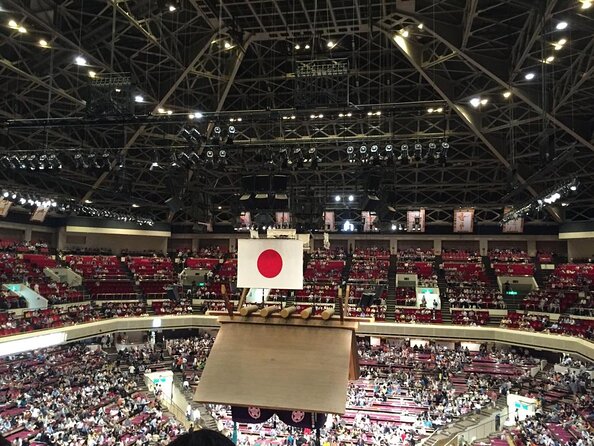
A sumo tournament is exciting, but it is also a large public event with formal entrances, long pauses, rankings, and ceremony. At a stable, the focus is different. You see wrestlers working through one bout after another, often with little decoration and no theatrical polish.
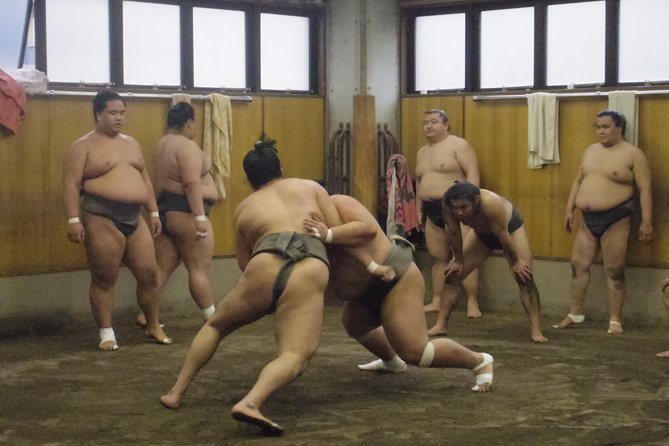
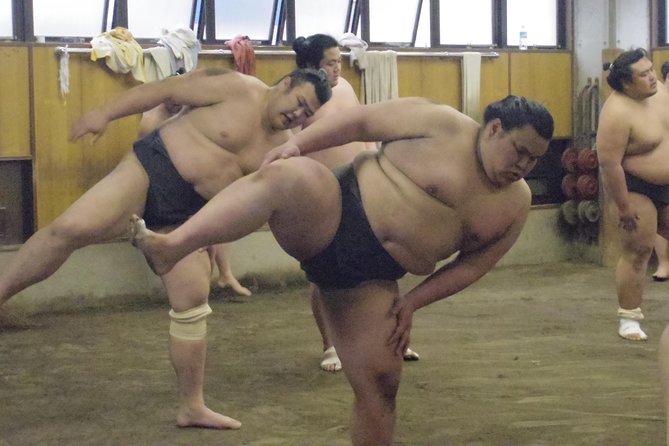
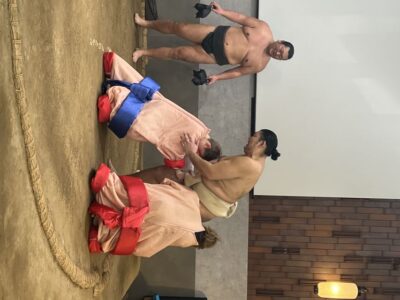
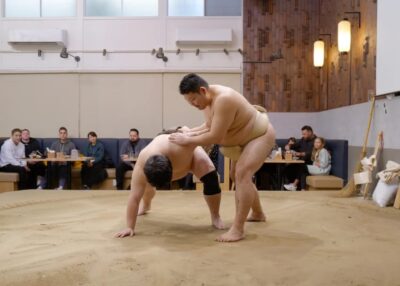
That makes the morning feel like a visit to a serious training room. You may watch athletes stretch, perform ritual movements, practice balance, and collide in short, hard exchanges. The size of the wrestlers is striking, but the bigger lesson is the discipline required to repeat the same movements under pressure.
I find this useful for anyone who knows sumo mainly from television. A guide can point out what is happening, explain the goal of a drill, and give you the basic rules before the action begins. You leave with a better sense that sumo is not simply about pushing a larger body out of a ring. Timing, grip, balance, foot placement, and stamina all matter.
The setting also keeps the experience honest. This is not a dinner performance with actors or a staged contest designed to produce a neat ending. Practice may be intense, short, or longer than expected, depending on what is happening at the stable that morning.
More Sumo Experiences in Tokyo:
- Tokyo: Sumo Show Experience with Chicken Hot Pot and a Photo
★ 4.8 · 6,678 reviews - Tokyo: Sumo Show and Dining Experience
★ 4.8 · 2,742 reviews - the SUMO show
★ 5.0 · 1,960 reviews
Meeting at Ryogoku Station at 7:45am
The morning begins near Ryogoku Station, the Tokyo district most closely linked with sumo. You meet the guide at about 7:45am, then walk or take a train to the stable, depending on the day’s arrangements.
Read your confirmation carefully because the meeting point can change with the selected option. One practical warning: do not rely on a vague map pin. Some people have found that Google Maps placed the location about a block away, and one morning there was confusion when the guide was not immediately visible at the station. Give yourself extra time and keep the confirmation details open on your phone.
The early hour is part of the experience. Sumo training takes place in the morning, so this is not a tour you can casually fit between lunch and an afternoon museum visit. The reward is arriving while the city is starting its day and entering a part of Tokyo most visitors never see.
Use the restroom before meeting the guide. Once you enter the stable, you should not plan on leaving during practice, and re-entry is not allowed after you depart.
Inside a working stable, not a public arena
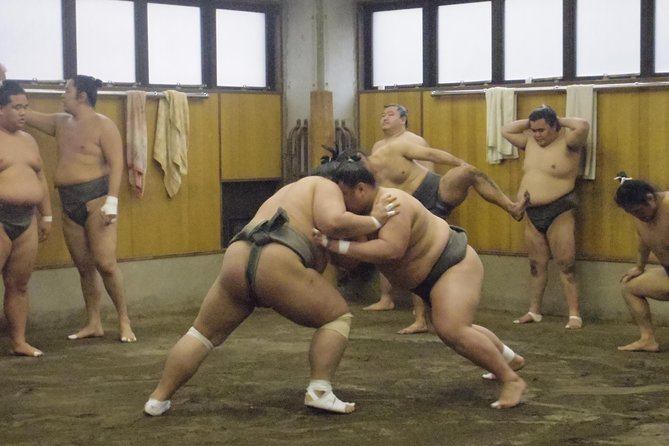
A sumo stable is the wrestlers’ training base and living community. The Japanese term is heya, though the supplied tour information generally uses stable. This is where wrestlers prepare for competitions, follow a strict daily routine, and learn from senior members under the direction of the stablemaster.
Your guide explains the basic background before you sit down. Sumo is tied to Shinto, Japan’s traditional religion, and preserves rituals that reach back roughly 1,500 years. The sport has changed into a major professional spectacle, but the sacred character of the ring remains important.
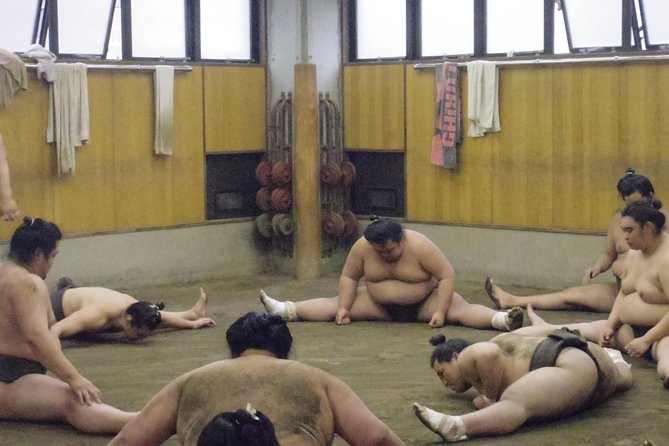
That matters once you see the practice area. You must not step onto the ring or sandy ground. It is treated as a sacred place, not simply a sports surface. Do not stretch your legs toward the ring, since showing the soles of your feet toward the wrestlers is considered rude.
The atmosphere is controlled and respectful. Cellphones must be silent. Photos may be allowed without flash or shutter sounds, but videos are not permitted. You also cannot ask wrestlers for photos while practice is taking place.
These rules can feel strict if you are used to ordinary sports events. They make sense here. The wrestlers need to concentrate, and your presence is a privilege rather than permission to interrupt the work.
What the 90-minute practice really looks like
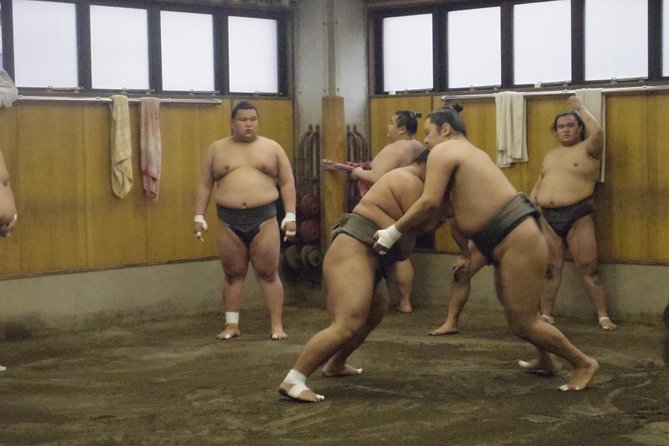
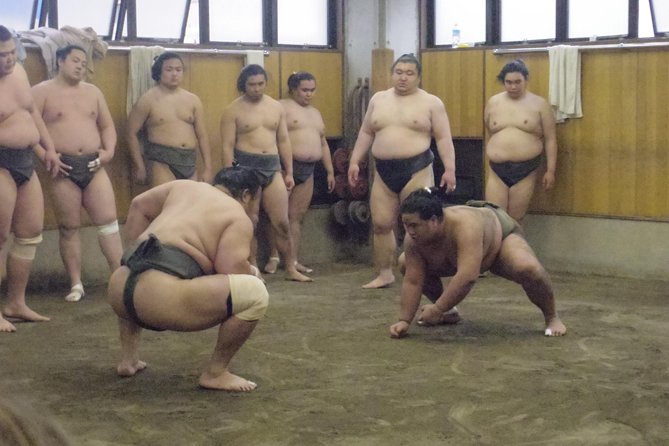
The practice itself lasts about 90 minutes, though the total visit can be shorter or longer depending on the stable’s routine. You may see warmups, strength work, repeated drills, and bouts between wrestlers at different levels.
Some sessions feature many exchanges, while others may devote more time to exercises or instruction. You cannot count on one particular champion appearing or on a set number of matches. That uncertainty is part of seeing a working practice rather than a fixed performance.
The viewing area is close enough for you to notice the slap of bodies, the effort in a wrestler’s breathing, and the quick shift in balance. Seating is not identical for everyone. The front row may be reserved for sponsors or other special parties, and arriving early can improve your position. One useful tip is to line up promptly if you want a second-row seat.
The floor arrangement can also vary. One person described sitting on stools rather than mats, which made the viewing more comfortable. Do not assume every stable uses the same seating. You may sit on a stool, on the floor, or in another arranged area.
The group size is capped at 20 people. That is small enough for the guide to manage, though your exact view depends on where you are placed and how the stable organizes the room.
More Morning Tours in Tokyo:
- Tokyo: Sumo Morning Practice Viewing Tour
★ 4.8 · 570 reviews - Tokyo: Sumo Morning Training Visit
★ 4.4 · 370 reviews - Tokyo: Sumo Morning Practice Tour at Sumida City
★ 4.8 · 308 reviews - Tokyo Ryogoku Sumo Morning Practice + Photo Shoot with Wrestlers
★ 4.5 · 277 reviews
The guide’s commentary and the audio question
The guides are an important part of this tour because practice can be confusing at first. Names, rankings, rituals, and techniques move quickly, and there is no announcer explaining every exchange as there would be at a tournament.
Guides such as Seiji, Yumi, Noriko, Nobu, and Cameo have been praised for their clear explanations and enthusiasm for sumo. A good guide helps you understand what you are seeing without turning the practice into a loud presentation. The commentary may cover the wrestler hierarchy, daily life, training methods, sacred customs, and the path to a professional tournament.
Some groups use in-ear headsets so the guide can speak without disturbing the stable. This is clever in theory, but the equipment has not always been easy to hear. Static and low volume can make it hard to watch the wrestlers and follow the explanation at the same time.
I would treat the commentary as helpful background, not the whole reason to book. If your audio is clear, it adds a lot. If it is not, focus on the physical practice and ask questions at an appropriate time. Some guides provide information before the session or allow questions afterward, but a formal question period is not guaranteed on every visit.
The six Grand Tournaments and how the season works
Before practice, you learn about Japan’s six annual Grand Tournaments, each lasting 15 days. Three are held in Tokyo, with one each in Osaka, Nagoya, and Fukuoka.
This short introduction gives the practice a useful frame. You begin to understand that the wrestlers are not simply exercising for general fitness. They are preparing for a tightly ranked professional system, where results affect status and future opportunities.
The stable visit can also introduce you to the lifestyle behind the competition. Sumo wrestlers follow demanding routines, train under senior figures, and live within a traditional stable structure. The sport is both athletic and cultural, with ceremonies and customs that do not appear in a quick television clip.
The tour does not replace attending a Grand Tournament. It gives you a different kind of access. At a tournament, you see the public contest and the formal presentation. Here, you see preparation, repetition, fatigue, and the relationships within a stable.
Photos after practice, with important limits
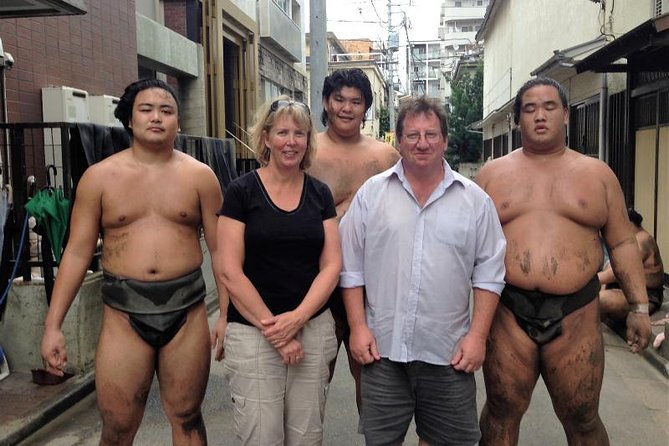
Some sessions end with a short photo opportunity. Several people have been able to take pictures with wrestlers after practice, and it can be a memorable finish. However, you should not treat a photo with a wrestler as guaranteed.
The timing may be brief, sometimes only a few minutes, and the stable may need to clear the room quickly. Photography rules still apply. Use no flash or shutter sound, do not record video, and never publish or use photos in an unauthorized way. Privacy and image rights matter here.
The safest approach is to enjoy the practice first and see what the guide says afterward. Do not interrupt the athletes or ask for a picture while training is underway.
Heat, clothing, and stable etiquette
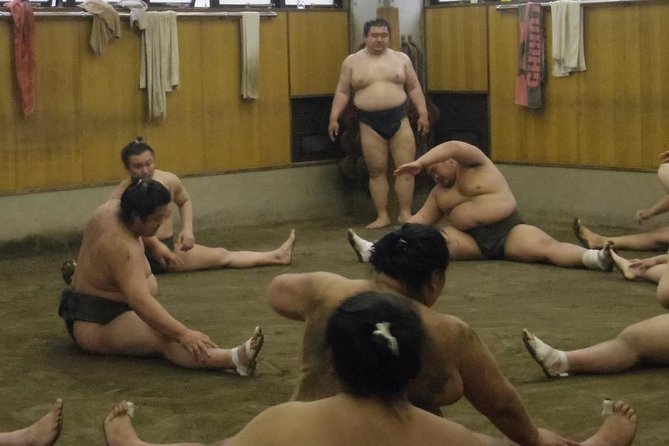
Tokyo summers can make this visit uncomfortable. The stable has no air conditioning, and the room may feel hot while you sit quietly for a long period. During summer, water and sports drinks are allowed, but eating and drinking are otherwise not permitted.
Bring a cold towel or ice pack in hot weather. If you feel unwell, do not join the tour. This is not the place to push through heat exhaustion, especially since leaving during practice is discouraged.
Sunglasses and hats are not allowed inside. Wear simple, comfortable clothing that lets you sit or remain still without fuss. You should also avoid anything that makes noise, including phone alerts and camera sounds.
The etiquette is not complicated, but it must be taken seriously:
- Stay silent during practice.
- Keep your phone on silent.
- Do not step onto the ring or sandy area.
- Do not point your feet toward the ring.
- Do not leave halfway through if you can avoid it.
- Do not distract the wrestlers.
- Do not use flash, shutter sounds, or video recording.
Children must be at least 12 years old. Younger children cannot enter the stable, so this is not a family option for families with children aged 11 or under.
Is $83.57 a fair price?
At $83.57 per person, this is not a cheap way to fill two hours. You are paying for access to a working stable, a guide, transport arrangements when needed, and cultural explanation, not for a full tournament ticket or a guaranteed photo session.
The value depends on what you want. If you mainly want a polished show, the price may feel high, especially if the audio is poor or your seat is less favorable. If you value access to a genuine training setting and want to understand the sport beyond the costume and ceremony, the price is easier to justify.
I think the strongest value comes from the combination of three things: close physical action, a rare setting, and a guide who can explain what you would otherwise miss. The experience also gives you many bouts in a concentrated period, while a tournament includes long stretches of ceremony and waiting.
Book it for the access, not for a promised celebrity wrestler, fixed schedule, or guaranteed photograph.
Who will enjoy this morning most?
This tour suits you if you want a cultural activity that feels connected to daily professional life in Japan. It is especially useful if you are new to sumo and want someone to explain the rankings, rituals, tournament schedule, and stable lifestyle in plain English.
It also works well for sports fans. You get to see technique repeated at close range, without the polished distance of a large arena. You may leave with more respect for the wrestlers’ conditioning and concentration.
It is less suitable if you dislike early starts, sitting quietly, heat, or strict rules. It may also disappoint you if you expect to walk around the stable, chat freely with wrestlers, record video, or ask questions throughout the session.
The maximum group size is 20, but this remains an observational activity. You are there to watch, not take part.
Booking, cancellation, and final advice
You receive confirmation at booking, and the ticket is mobile. Free cancellation is available up to 24 hours before the start time, based on local time. Changes or cancellations inside that window are not accepted for a refund.
I would reserve this tour if seeing real sumo practice is high on your Tokyo list and you can manage an early morning. Check the meeting instructions twice, arrive early for a better seat, use the restroom first, and prepare for heat in summer.
I would skip it if you need a relaxed, flexible morning or if you want a formal tournament with full public seating and predictable production. For everyone else, this is one of the more direct ways to understand why sumo is more than a contest. You see the work before the applause.
FAQ
Where does the tour meet?
The stated meeting point is near Ryogoku Station, with the guide meeting you at about 7:45am. The exact meeting location can vary by option, so check your confirmation email carefully.
How long does the experience last?
The tour lasts about two hours in total. The stable practice itself is listed at about 90 minutes, but the visit may be shorter or longer depending on the morning’s training.
How old must children be to join?
The minimum age is 12. Children aged 11 and under cannot enter the sumo stable.
Can I take photos inside the stable?
Photos are allowed under specific conditions. You must not use flash or shutter sounds, and unauthorized use of photographs is prohibited. Videos are not allowed.
Can I eat or drink inside?
Eating and drinking are not allowed. During the summer months, you may bring water or a sports drink because the stable has no air conditioning.
Can I wear a hat or sunglasses?
No. Hats and sunglasses are not allowed inside the stable.
Can I leave during practice?
You should make every effort to stay until practice ends. Once you leave the stable, you cannot re-enter.
Can I talk to or photograph the wrestlers during practice?
No. Watch quietly and do not interfere with their concentration. You cannot ask wrestlers to pose while practice is in progress. A photo opportunity may be arranged after practice, but it is not presented as guaranteed.
Can I cancel for a refund?
You can cancel for a full refund up to 24 hours before the experience’s start time. Cancellations or changes made less than 24 hours before the start are not accepted for a refund.
Just added around Tokyo
- Kawagoe Japanese Food Tour : Unagi Kaiseki and Sake near Tokyo★ 5.0 · 30 reviews
- Kawagoe 4hr Private Tour with Licensed Guide (Kawagoe Dep)★ 5.0 · 13 reviews
- Little EDO Sushi Making workshop in Kawagoe★ 5.0 · 18 reviews
- 【R34】Tokyo:Private Daikoku tour in Modified R34★ 4.9 · 92 reviews
- :Tokyo,Shibuya/ Pro Photography in Kimono / English-Friendly★ 5.0 · 26 reviews
- Tokyo:Celebrate Unique Japanese New Year Tradition Festivity★ 3.9 · 20 reviews
- Tokyo: Allstar Food Tour★ 4.7 · 29 reviews
- Tokyo: West-Side Cycling and Food Tour with Guide★ 5.0 · 37 reviews
Sumo Experiences, compared.
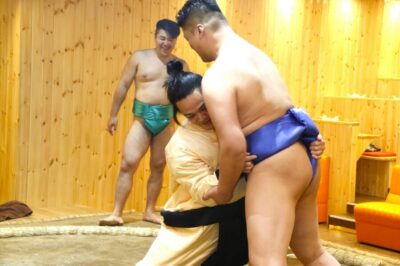
Sumo Show Experience with Chicken Hot Pot and a Photo
Our verdict →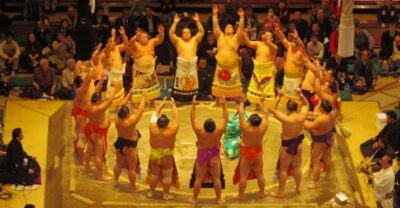
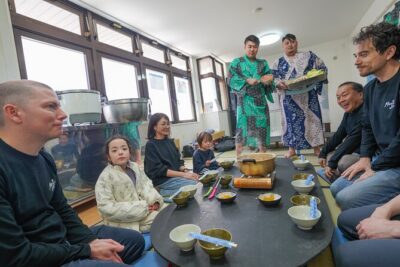
Authentic Sumo Experience in Tokyo: Enter the Sanctuary
Our verdict →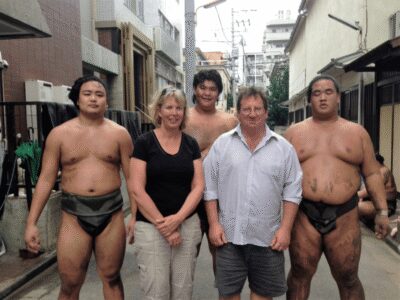

Browse the lists this tour appears in