
Reviewed · SUMO EXPERIENCES
Tokyo: Sumo Morning Practice Viewing Tour at a Real Stable
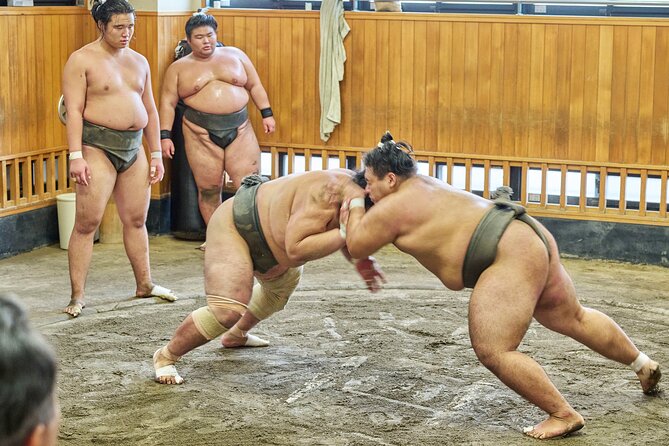
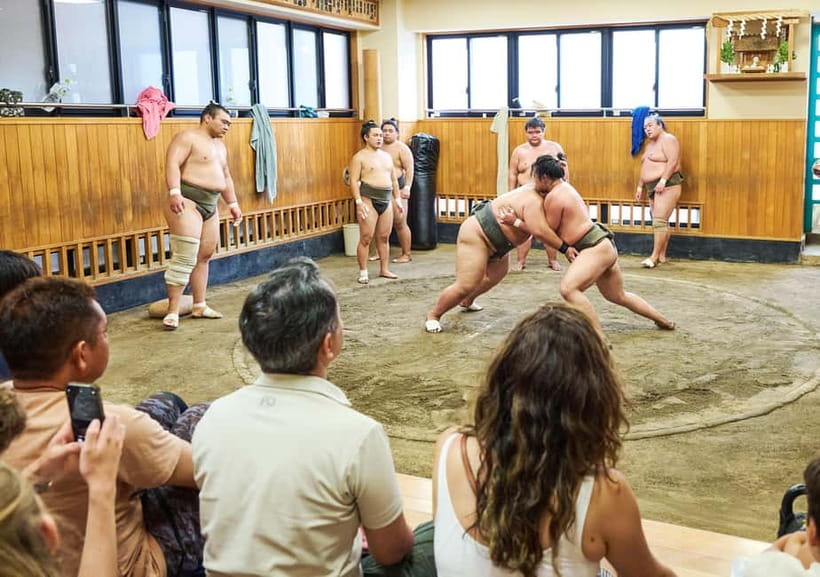
Sumo practice is not a polished performance for tourists. It is a serious morning workout, held at close range in a real stable where wrestlers live, eat, and train. You sit near the ring and watch the slaps, footwork, throws, and hard breathing with almost no barrier between you and the action. I like the genuine working atmosphere and the way guides such as Mao, Yuki, Kawa, and Tomo explain what you are seeing without drowning you in facts.
I also like the chance to understand sumo as a spiritual tradition, not just a wrestling match. The main drawback is the strict etiquette: you must stay quiet, seated, and until the practice ends, and late arrival may mean no entry. A group of latecomers once shortened the viewing time for everyone, so allow plenty of time to reach the meeting point.
Key points to know before booking
- Watch real morning practice: The wrestlers train for their careers, not for an audience, which makes the session feel unusually direct and serious.
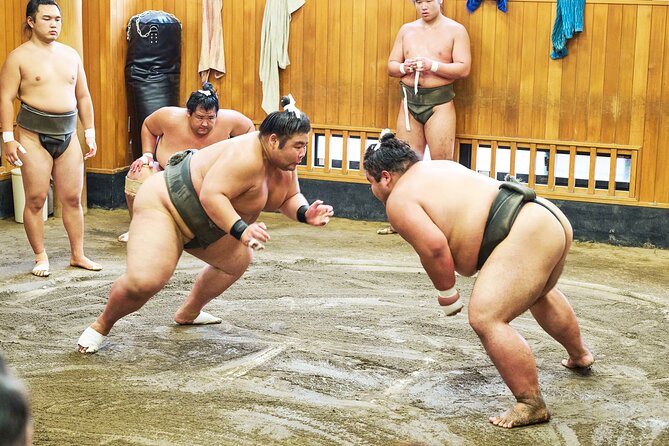
- Sit close to the ring: You can see and hear the physical effort at close range, including the sharp sound of flesh striking flesh.
- Learn the meaning behind the rituals: Your English-speaking guide explains the rules, customs, Shinto links, and tournament goals.
- Meet the wrestlers after practice: Conversation is possible outside training hours, although the stable remains a place of work.
- Prepare for strict silence: Modest clothing, a silent phone, and staying seated are essential.
- Plan extra travel time: Meet at Kiyosumi-Shirakawa Station, and expect that the group may take a train to the stable.
What makes this Tokyo sumo visit different
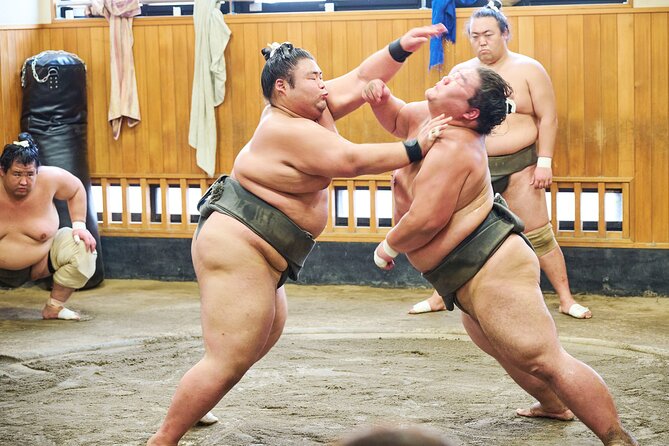
Tokyo offers plenty of staged cultural experiences. This one is different because the stable is a functioning workplace. The wrestlers are not performing a simplified demonstration, posing on command, or changing their routine for your group. They train because their next tournament depends on it.
That distinction matters. You see young wrestlers working through the demanding path toward higher ranks, while more experienced rikishi go about the same disciplined routine. The atmosphere is quiet because everyone in the room understands that practice comes first.
The stable is normally closed to the public and was once mainly accessible to sponsors. For you, that means the opportunity feels rare without needing a grand production around it. The experience is strongest when you accept that you are an observer in someone else’s workplace.
More Sumo Experiences in Tokyo:
- Tokyo: Sumo Show Experience with Chicken Hot Pot and a Photo
★ 4.8 · 6,678 reviews - Tokyo: Sumo Show and Dining Experience
★ 4.8 · 2,742 reviews - the SUMO show
★ 5.0 · 1,960 reviews
Meeting at Kiyosumi-Shirakawa Station
The tour begins at Exit A1 of Kiyosumi-Shirakawa Station. You can reach the station on the Toei Oedo Line or the Hanzomon Line. Look for a guide holding a sign marked Local Guide Stars.
Do not treat the meeting time as a rough suggestion. From the station, the group may take a train to the stable, and the final location may differ from the meeting place. The exact route and destination are not something to handle casually if you have a museum reservation, flight, or lunch booking afterward.
I would arrive at least 30 minutes early. That is not excessive for Tokyo, where changing lines, finding the right exit, and moving through an unfamiliar station can take longer than expected. Late arrival may prevent entry, and once the group leaves the stable, there is no re-entry.
The tour lasts about two hours, but the practice can run a little shorter or longer. You are also expected to stay until the end, usually around 9:00 to 10:00 in the morning. Tell the operator in advance if you must leave by a fixed time.
The guide’s introduction to sumo
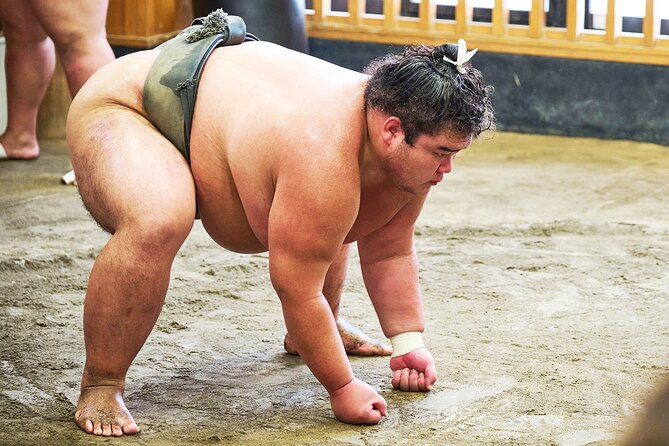
Before entering the stable, your guide gives you the basic framework for what you are about to see. This is important because sumo practice can look repetitive if you do not know what the movements mean.
Guides including Mao, Yuki, Kawa, and Tomo have been praised for clear English and useful explanations. The best approach here is not a long lecture. It is a short introduction that helps you follow the rules, identify the purpose of each exercise, and understand why the rituals matter.
You learn that a match is won by forcing an opponent outside the circular ring or making any part of the opponent’s body, other than the soles of the feet, touch the ground. The goal sounds simple. The practice shows how much strength, balance, timing, flexibility, and discipline are required to achieve it.
Your guide also places sumo in its Shinto setting. The salt, bowing, stamping, and other rituals are not decorative extras added for visitors. They connect the sport to older religious beliefs and help explain why the ring is treated with such respect.
This briefing makes the morning more rewarding. Instead of simply watching two large athletes collide, you begin to notice preparation, positioning, balance, and the different levels of effort in each drill.
Sitting beside the ring during practice
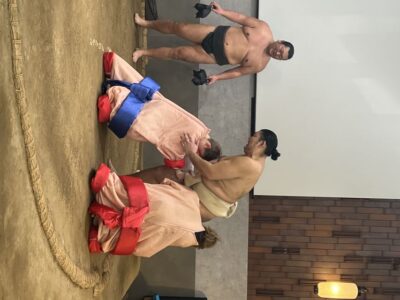
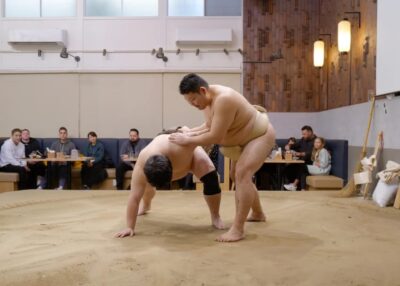
The central part of the visit is the practice itself. You sit beside the ring, close enough to see the wrestlers’ concentration and hear the physical impact of their training. One of the most memorable details is the sound: sharp slaps, heavy movement, and the force of bodies meeting on the practice surface.
This is not gentle exercise. The wrestlers work through repeated movements with speed and strength, and the physical effort is plain to see. At the same time, the session is controlled and professional. The athletes carry on as if the visitors are not there, which is exactly what gives the experience its value.
You may see wrestlers at different stages of their careers. The stable is a place where they live, eat, and dedicate themselves to sumo, so the practice offers a glimpse of a demanding daily life rather than a single match. It shows the work behind the tournament bouts that most visitors see on television.
The close seating is a major benefit, but it also creates responsibility. You cannot stand up whenever you want, shift around constantly, or make conversation during practice. Keep your phone on silent, avoid noise, and wear modest clothing. Use the restroom first, since getting up can disturb the session and may not be allowed.
You should also be ready for a sweaty, physical atmosphere. The action is not edited, softened, or arranged around your comfort. That is part of the appeal, but it may not suit anyone looking for a relaxed sightseeing stop.
More Morning Tours in Tokyo:
- Tokyo: Sumo Morning Practice Viewing Tour
★ 4.8 · 570 reviews - Tokyo: Sumo Morning Training Visit
★ 4.4 · 370 reviews - Tokyo: Sumo Morning Practice Tour at Sumida City
★ 4.8 · 308 reviews - Tokyo Sumo Morning Practice Tour at Stable
★ 5.0 · 298 reviews
Why the rituals matter as much as the wrestling
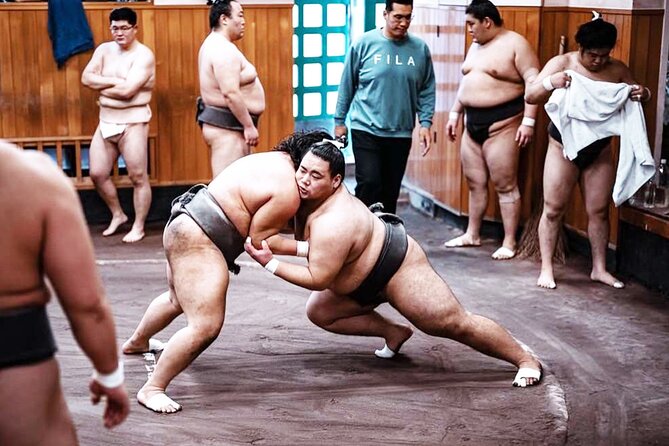
Sumo can look like wrestling at first glance, but the surrounding customs give it a different character. The movements in the ring have both practical and spiritual meaning. The rituals prepare the wrestlers mentally, show respect, and connect each practice to a much older tradition.
Your guide helps you read these moments. Without that context, you might notice the gestures but miss why they happen. With it, the morning becomes a lesson in how sport and religion can remain closely linked in Japanese culture.
I especially like this part for first-time visitors because it prevents the experience from becoming a simple spectacle. The training has athletic power, but it also reflects discipline and duty. The wrestlers are not merely trying to win an individual bout. They are following a way of life that demands complete commitment.
The stable itself reinforces that point. This is where the wrestlers train and live, not a theater built for a two-hour cultural presentation. You are seeing a small part of an ongoing routine, and you need to behave accordingly.
Speaking with wrestlers after the session
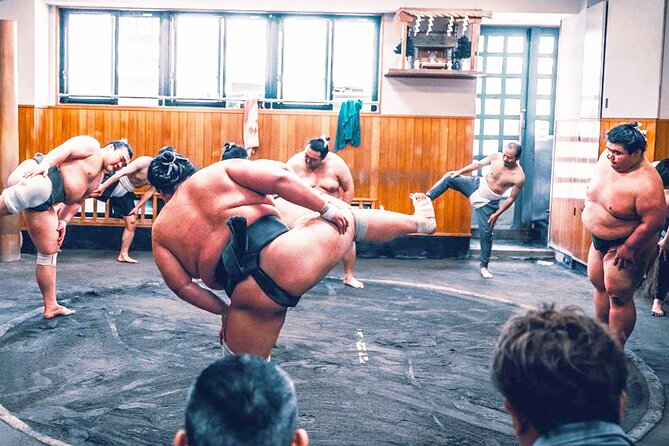
The tour includes an opportunity to speak with wrestlers outside training hours. This can give you a more personal sense of the people behind the sport and let you ask about sumo life, training, or the tournaments they work toward.
Keep your expectations measured. Conversation is possible, but the stable is still a workplace. The wrestlers may have other duties, and the timing can depend on the practice schedule. The heart of the tour is watching the training, not getting a long meet-and-greet.
Photographs may be possible in some circumstances, but do not assume that every moment can be photographed. Follow your guide’s instructions, especially inside the stable. A quiet, respectful approach is more important than collecting pictures.
The chance to speak with the wrestlers adds warmth to what can otherwise feel like a formal observation. It also gives you a better sense of the effort behind the sport. You have watched the athletes train, and then you may have a brief chance to connect with them as people.
Timing, group size, and the real cost
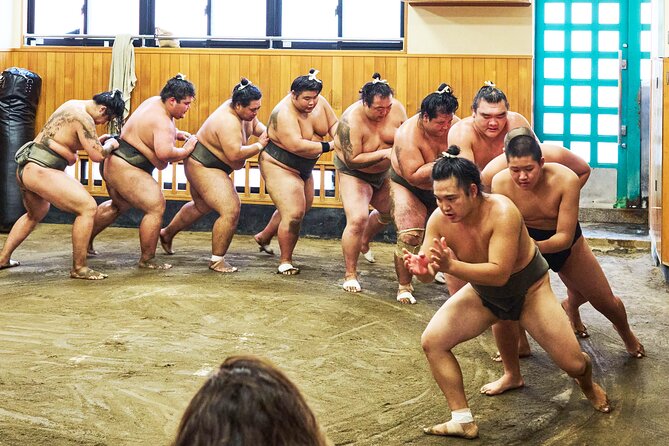
At $98 per person, this is not a budget activity. You are paying for access that is normally unavailable, an English-speaking guide, the sumo explanation, and the chance to enter a working stable. You are not paying for a long list of attractions or a full day of sightseeing.
I think the price makes sense if sumo is high on your Tokyo list. The close seating and unusual access are hard to reproduce by simply attending a public tournament, especially if your trip does not match the tournament calendar. The guide also saves you from trying to interpret the rituals and rules on your own.
The value is weaker if you are only mildly curious about sumo or dislike quiet, formal settings. Two hours can feel long if you expect constant movement or want a hands-on activity. This is an observation experience, and the restrictions are part of the deal.
Group size can vary. One session had 11 people, while another group included 14. A smaller group generally makes the setting feel less crowded, but the stable itself sets the limit, not the tour company. The important point is that every person’s behavior affects the room. One late arrival or noisy guest can reduce the quality of the session for everyone.
Free cancellation is available up to 24 hours in advance, and you can reserve now and pay later. Those policies help if your Tokyo schedule is still shifting, but they do not change the need to arrive on time.
Who will enjoy this most
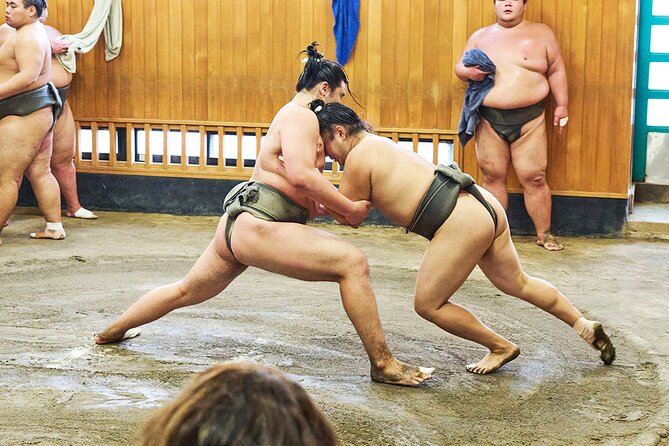
I recommend this experience to adults and older children who are curious about Japanese culture, physical discipline, and the daily life behind a traditional sport. It is especially good for first-time visitors who want something more personal than a standard sightseeing stop.
The minimum age is 11. Younger children are not suitable for this tour, and the silence and fixed seating would be difficult for anyone who needs to move around often.
You should also choose it if you can follow instructions without complaint. Modest clothing is required. You must keep your phone silent, avoid noise, remain seated during practice, and stay until the end. Eating and drinking are not part of the viewing, apart from water according to the practical guidance given to visitors.
This is not the right pick if you need a flexible exit or have a tight appointment afterward. The practice may last a little longer or shorter than expected, and the ending point may differ from the station where you met.
My practical verdict on the guides
The guide can shape this experience more than any other part of it. Mao is especially good at giving clear background information and answering questions, while Yuki has been praised for friendly communication and explanations of sumo history and sport. Kawa brings useful context about sumo and Japanese life, and Tomo is described as helpful without overloading the group.
That range of guides matters because the stable itself is quiet. You rely on the briefing before entering and on the explanations afterward to connect the movements with their meaning. A good guide gives you enough information to understand the session while knowing when to let the training speak for itself.
The strongest approach is to listen carefully before practice. Once the wrestlers begin, your chance to ask questions is limited. Save detailed questions for outside the training period, when conversation is more appropriate.
Should you book this sumo morning tour?
Book it if you want real training rather than a tourist show, can handle strict etiquette, and are willing to start your morning early. The close view of the ring, the sound and force of practice, and the chance to learn about Shinto-linked rituals make this one of Tokyo’s more unusual cultural experiences.
Skip it if you need a casual schedule, dislike sitting quietly, or have to leave at a precise time. Arrive early, dress modestly, use the restroom first, and treat the stable as a workplace. Do that, and the $98 cost buys something difficult to find elsewhere: a direct look at the discipline, tradition, and hard physical work behind professional sumo.
FAQ
Where does the tour meet?
Meet your English-speaking guide in front of Kiyosumi-Shirakawa Station at Exit A1. The guide carries a sign marked Local Guide Stars.
How can I reach the meeting point?
You can reach Kiyosumi-Shirakawa Station on the Toei Oedo Line or the Hanzomon Line.
How long does the tour last?
The stated duration is about two hours. Practice may be slightly shorter or longer than expected.
What time does the practice usually end?
You must stay until the practice ends, which is usually around 9:00 to 10:00 in the morning.
Can I leave the stable early?
You are expected to stay until the end of practice. Once you leave the stable, re-entry is not possible.
Can I speak with the sumo wrestlers?
You may have an opportunity to speak with wrestlers outside training hours. Conversation depends on the stable’s schedule and working conditions.
Is the tour conducted in English?
Yes. The activity includes a live English-speaking guide.
What should I wear?
Modest clothing is required because the stable is a place of work.
Can I use my phone during practice?
Your phone must be on silent. You must also avoid making noise and should not stand up or move around during the session.
Is the tour suitable for children?
The experience is not suitable for children under 11 years of age.
What happens if I arrive late?
Late arrival may mean that entry is not possible. Allow extra time for the station, meeting point, and possible train ride to the stable.
Can I cancel the booking?
You can cancel up to 24 hours in advance for a full refund. Reserve now and pay later is also available.
Just added around Tokyo
- Kawagoe Japanese Food Tour : Unagi Kaiseki and Sake near Tokyo★ 5.0 · 30 reviews
- Kawagoe 4hr Private Tour with Licensed Guide (Kawagoe Dep)★ 5.0 · 13 reviews
- Little EDO Sushi Making workshop in Kawagoe★ 5.0 · 18 reviews
- 【R34】Tokyo:Private Daikoku tour in Modified R34★ 4.9 · 92 reviews
- :Tokyo,Shibuya/ Pro Photography in Kimono / English-Friendly★ 5.0 · 26 reviews
- Tokyo:Celebrate Unique Japanese New Year Tradition Festivity★ 3.9 · 20 reviews
- Tokyo: Allstar Food Tour★ 4.7 · 29 reviews
- Tokyo: West-Side Cycling and Food Tour with Guide★ 5.0 · 37 reviews
Sumo Experiences, compared.
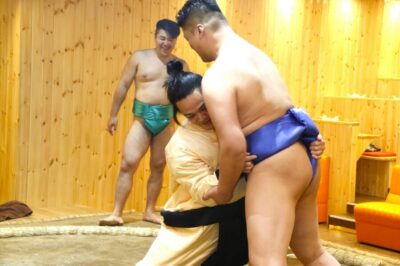
Sumo Show Experience with Chicken Hot Pot and a Photo
Our verdict →
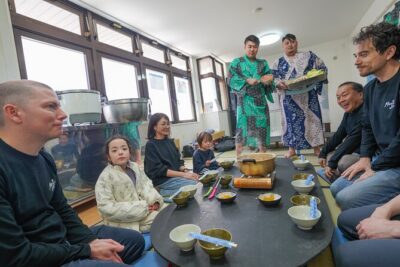
Authentic Sumo Experience in Tokyo: Enter the Sanctuary
Our verdict →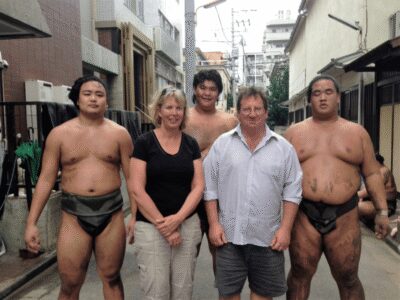

Browse the lists this tour appears in