
Reviewed · SUMO EXPERIENCES
Tokyo: Sumo Morning Practice Tour at Sumida City
The most striking part of this Tokyo experience is the distance between you and the action. You sit inside a working sumo stable, close enough to hear the slap of bodies and feel the force of each charge. This is training, not a staged show, so the mood is quiet, serious, and deeply focused.
I like the close view of real practice and the chance to ask the stable master about the wrestlers’ daily life. I also like the guides, including Yoko, Yuriko, Tadashi, Kiyomi, and Oku, who help explain the customs and keep the visit running smoothly.
The main drawback is physical: you sit on the floor for about 90 minutes, with no chairs, and you cannot use the toilet during practice. The early start, 15 to 20 minute walk, and strict rules make this a poor fit for anyone with mobility problems or young children who cannot remain quiet.
Key points to know before booking
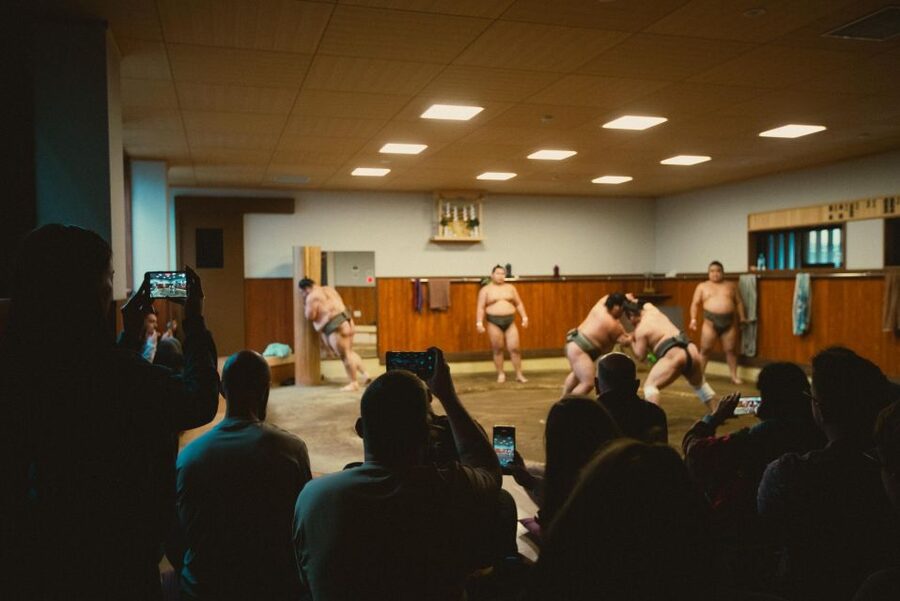
- You watch inside a working stable: The wrestlers train for their own purposes, not to entertain a tour group.
- The practice lasts about 90 minutes: The full activity takes two hours, including the walk, explanations, questions, and possible photographs.
- You sit on the floor: There are no chairs, and you need to watch silently and respectfully.
- The stable master answers questions: The final question session is one of the best chances to understand sumo life beyond television.
- The meeting point is Oshiage Station: Arrive at 7:15 a.m. for the 7:30 start, then walk to the stable.
- March, July, and November are unavailable: Grand Sumo tournaments take place outside Tokyo during those months.
Watching sumo before the crowds wake up
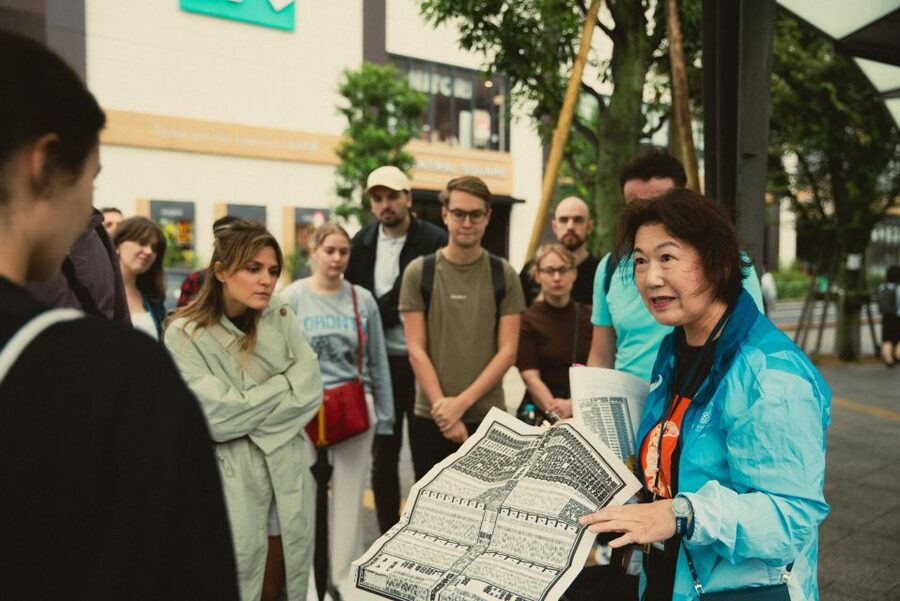
At 7:15 a.m., you meet your guide on the ground floor at Exit A1 of Oshiage Station, also called Tokyo Skytree Station on the Tokyo Metro network. The tour begins at 7:30, so do not treat the meeting time as a loose suggestion. Tokyo trains are punctual, but finding the correct exit and getting everyone together still takes a few minutes.
From the station, you walk roughly 15 to 20 minutes toward the stable. The route passes through the Oshiage area near Tokyo Skytree, but this is not a sightseeing walk with stops and photo breaks. It is a practical transfer, and you should allow for wet pavement or rain. Bring a small towel if your feet may get damp, since you will remove your shoes at the stable.
Your guide uses the walk and the time before practice to explain basic sumo customs, rules, and behavior. Some guides provide printed information, while others explain more along the way. Past guide names include Yoko, Yuriko, Tadashi, Kiyomi, Oku, Yukiko, and Juki, though the guide assigned to your date can vary.
This early start has a benefit. Sumo stables train in the morning, and you are seeing the wrestlers during a normal work session rather than fitting into a performance designed for sightseeing. The tradeoff is simple: set your alarm, eat beforehand, and arrive ready to sit quietly.
More Sumo Experiences in Tokyo:
- Tokyo: Sumo Show Experience with Chicken Hot Pot and a Photo
★ 4.8 · 6,678 reviews - Tokyo: Sumo Show and Dining Experience
★ 4.8 · 2,742 reviews - the SUMO show
★ 5.0 · 1,960 reviews
Inside the stable, the mood changes
At the entrance, you take off your shoes and enter the stable. Wear footwear that slips on and off easily. Large bags, luggage, hats, sunglasses, food, and drinks are not allowed, so pack lightly.
The practice area is small and intimate. You sit on the floor around the ring, close to the wrestlers. Depending on the size of the group and any other visitors present, your view may not be perfect from the start. Some groups have rotated positions so people could see different parts of the practice, while others have found that an additional group or visiting athletes affected the seating.
That uncertainty is part of the deal. You are entering a working place, not a theater with numbered seats. If a front position matters to you, listen carefully to your guide and move only when asked. Do not crowd the ring or try to improve your view by wandering around.
The stable requires silence during practice. You may take photos and videos without flash or shutter sounds, but you may not upload them to social media. The rule protects the wrestlers’ concentration and reminds you that this is private training opened to visitors, not a public spectacle.
What the 90-minute practice looks like
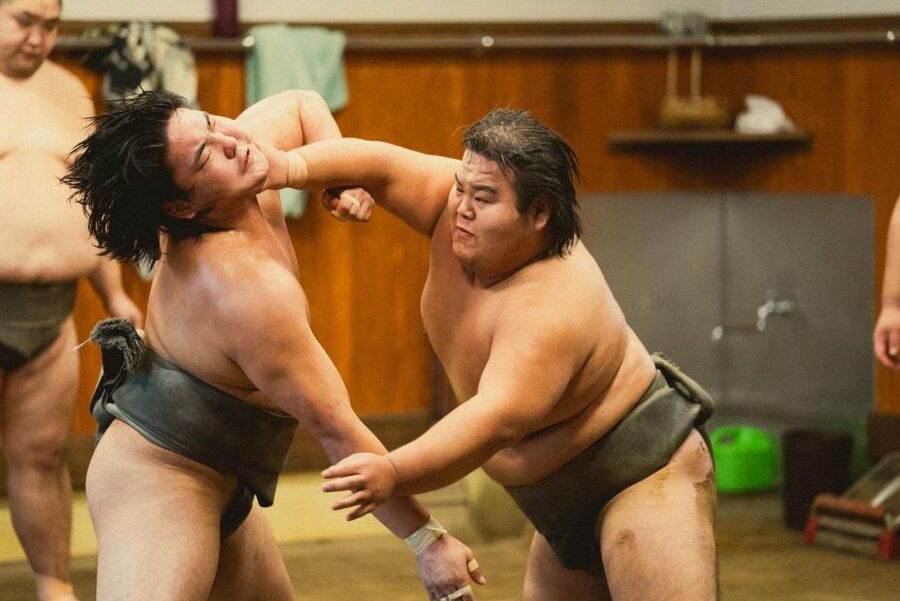
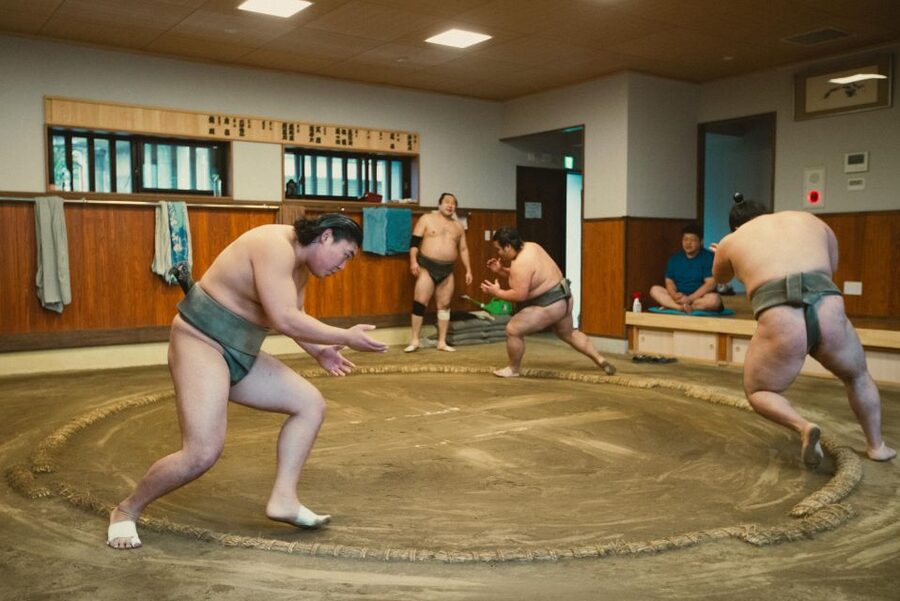
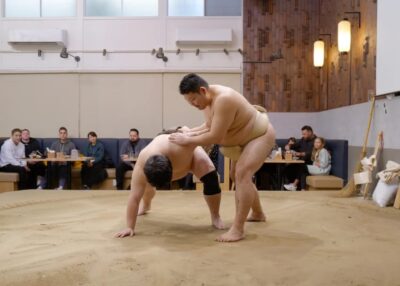
The wrestlers repeat drills, stretches, and bouts with great force. You see large athletes moving with more flexibility and speed than their size suggests. The physical contrast is striking: the bodies look heavy, but the footwork, balance, agility, and timing demand control.
A bout can be brief, yet the preparation around it is serious. You watch wrestlers face one another, build tension, and use strength and technique in close quarters. The training may vary from day to day. During one visit near a tournament period, the practice was lighter and included fewer full bouts, so you should not expect a fixed program.
You also may not see the sport’s most famous champions. This stable includes trainees and professional wrestlers in development, and the people in the room can change. That does not make the session less worthwhile. In fact, seeing wrestlers working through the daily discipline gives you a better sense of sumo as a profession than watching only a polished tournament match.
The guide’s role is important here. A quiet explanation of what you are seeing can turn repeated drills into a lesson in technique and custom. Some guides, including Yoko and Yuriko, have been praised for explaining what was happening before and after the practice. Others have relied more on printed material, so the amount of spoken background can vary.
One practical issue is sound. Groups can be large enough that a soft-spoken guide is difficult to hear, especially before entering the stable. Stay close, and ask politely if you miss an explanation. This is a quiet environment, so a guide cannot simply raise their voice without disturbing the training.
The question session is more than a photo opportunity
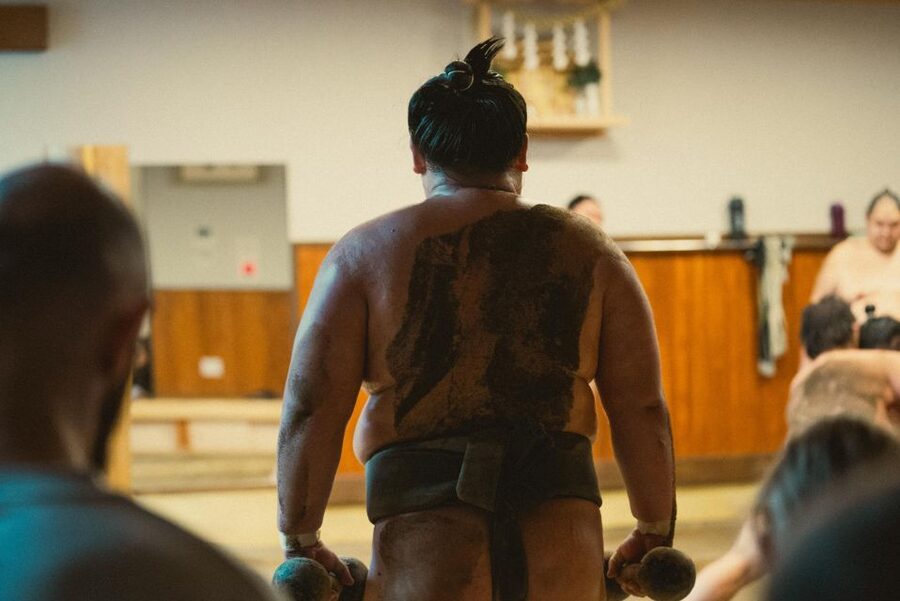
After practice, the atmosphere usually relaxes. There may be time for questions with the stable master, who can explain the wrestlers’ routines, the stable’s work, and the demands of the sport. This part helps place the training in context.
I would prepare two or three questions before you arrive. Ask about a wrestler’s daily schedule, how training changes before a tournament, or what life is like inside a stable. The exact questions available depend on the stable master and the time on the day, but this is your best opportunity to move beyond watching bodies collide.
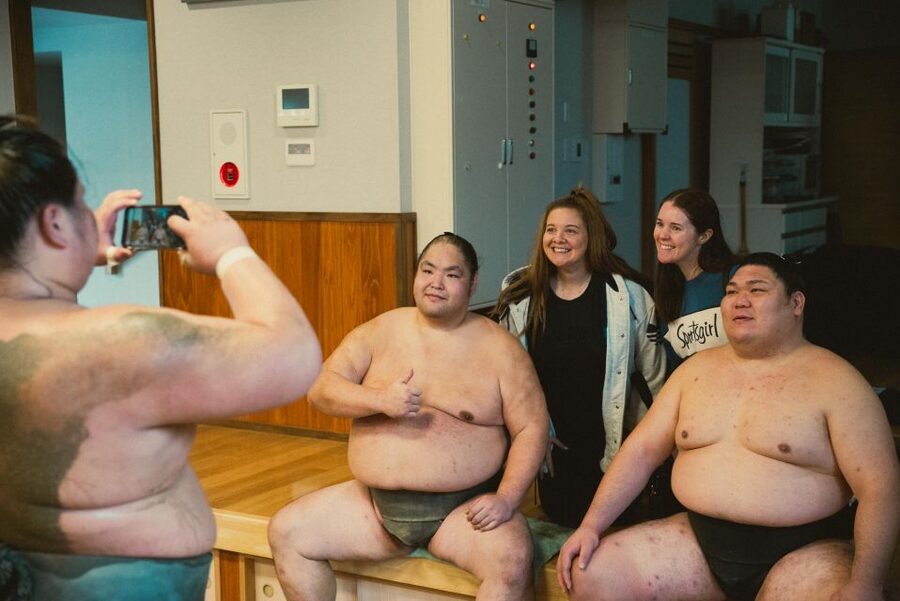
A group photo with the wrestlers may also be possible after practice. Treat it as a courtesy, not a guarantee. If photographs are offered, follow the guide’s instructions and keep the process quick and respectful. Some groups have left with a souvenir photo, and the wrestlers have sometimes offered a friendly farewell as visitors departed.
The photo is nice, but it is not the heart of the experience. The valuable part is the chance to see the people behind the sport, then ask about the training you have just watched.
More Morning Tours in Tokyo:
- Tokyo: Sumo Morning Practice Viewing Tour
★ 4.8 · 570 reviews - Tokyo: Sumo Morning Training Visit
★ 4.4 · 370 reviews - Tokyo Sumo Morning Practice Tour at Stable
★ 5.0 · 298 reviews - Tokyo Ryogoku Sumo Morning Practice + Photo Shoot with Wrestlers
★ 4.5 · 277 reviews
Why sumo feels different from a stadium match
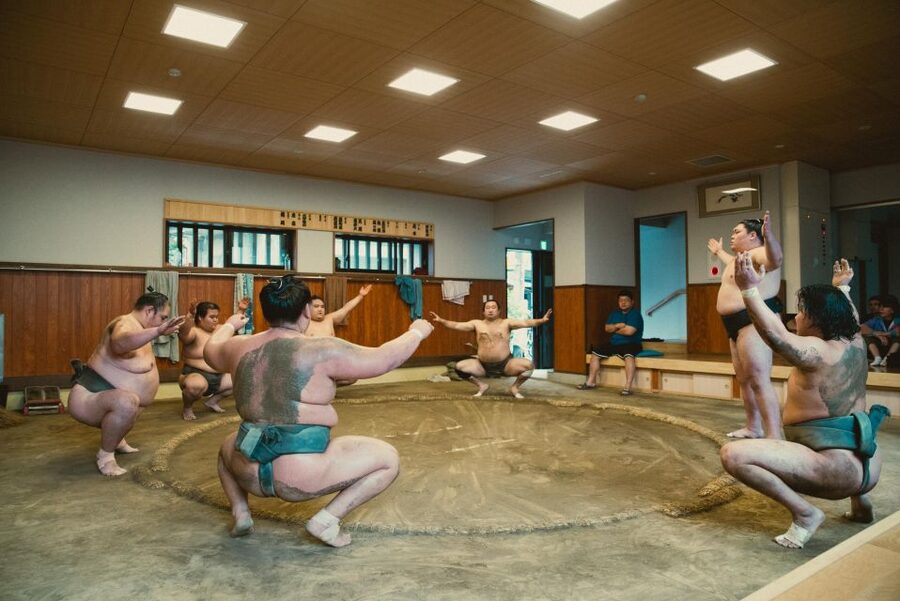
A tournament gives you formal bouts, crowd energy, rankings, and a clear contest between opponents. This visit gives you repetition, correction, fatigue, and routine. You see the work that makes competition possible.
That difference matters. The stable is connected to Japan’s religious and cultural traditions, and your guide may explain the link between sumo and ritual. You notice that respect is not an extra feature added for visitors. It shapes how the wrestlers enter the space, train, interact, and respond to the stable master.
The visit also strips away some of the television drama. There is no announcer explaining every move and no large audience reacting to a victory. You listen to the movements themselves. The effect can be powerful, but only if you accept that the session is not built around your entertainment.
One detail I value is the chance to see several wrestlers training together. You can compare styles and watch how technique changes from one bout to the next. You might also recognize a well-known wrestler, but the tour does not promise any particular athlete.
The $116 price and what you receive
At $116 per person, this is not a budget morning activity. The fee covers the stable entrance and an English-speaking guide, but not food, drinks, transport to the meeting point, or hotel pickup and drop-off.
The value depends on what you want from Tokyo. If you simply want to see sumo, a tournament ticket may offer more formal action. If you want to enter a working stable, sit close to training, receive cultural explanations, and ask the stable master questions, this tour offers access that is difficult to arrange on your own.
The guide adds practical value. You need to know how to behave, where to wait, when to remove your shoes, and how to avoid disturbing the wrestlers. The guide also serves as a bridge between visitors and the stable, which matters when the setting depends on trust and quiet manners.
Still, the price can feel high if the practice is shorter or lighter than expected. One visit included about an hour and 20 minutes of training rather than the full advertised period, while another had fewer full bouts because of a tournament period. You are paying for access and context, not a guaranteed number of matches.
The activity has free cancellation up to two days before the scheduled date. Availability is released about one to two months ahead, and you should check early if your dates are fixed.
Timing, seasons, and the strict rules
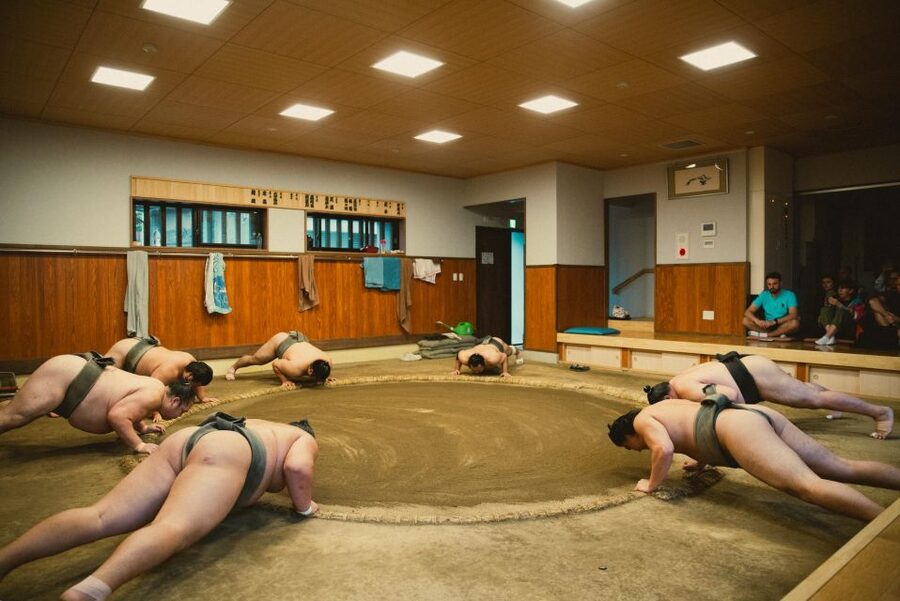
Morning practice and tours do not take place in March, July, or November because Grand Sumo tournaments are held outside Tokyo during those months. Practice can also feel different around tournament periods, with a lighter session possible.
The age minimum is six. Children must remain quiet and still during practice. If a child talks loudly, moves around, or cannot watch silently, the family may be asked to leave the stable.
The activity is not suitable for people with mobility impairments. You sit cross-legged on the ground for roughly 90 minutes, with no chairs. If that position is difficult, this is not the right tour, even if you have a strong interest in sumo.
Use the toilet before meeting your guide. You cannot leave for a bathroom break during practice. This small detail has a big effect on comfort, especially with the early morning start.
If you are late, contact the provider. You may receive the stable’s address and walk there yourself, but do not enter alone, ring the doorbell, or disturb the wrestlers. Wait outside until the guide comes to meet you.
Who should book this sumo experience?
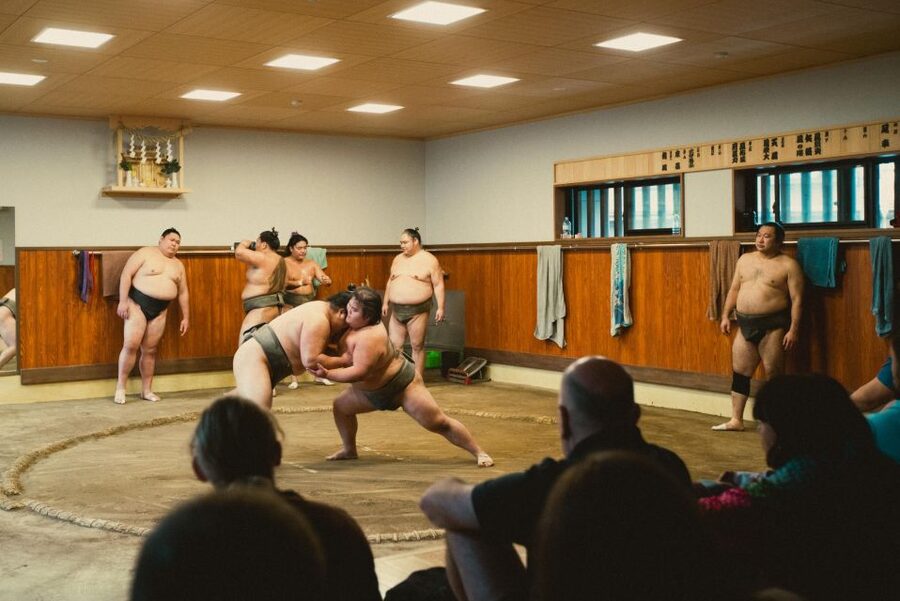
This tour suits adults, older children, and anyone curious about how sumo works away from the tournament arena. You do not need to be a lifelong sumo fan. Several people who began with little interest found the combination of physical training, custom, and daily routine surprisingly absorbing.
It is also a strong choice if your Tokyo schedule does not include a sumo tournament. You get close to the athletes and learn about the sport without needing to understand the ranking system in advance.
I would skip it if you need comfortable seating, dislike early mornings, want a guaranteed photo with a famous wrestler, or expect nonstop bouts. It is also a poor fit for anyone who cannot remain silent for the practice.
My recommendation: book it for access, not spectacle
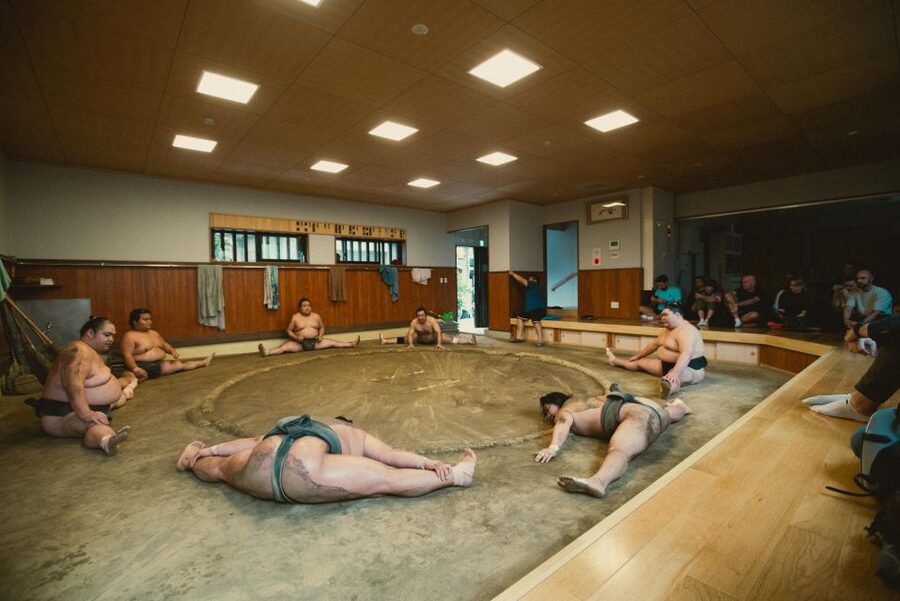
I recommend this tour if you can handle the floor seating and accept the rules of a working stable. The best parts are the close view, the serious atmosphere, and the question session with the stable master. Guides such as Yoko, Yuriko, Tadashi, Kiyomi, and Oku have helped make the experience clear and welcoming, though the quality and amount of explanation can vary by guide.
Book well ahead once dates open, avoid March, July, and November, and arrive early at Oshiage Station. Wear easy-to-remove shoes, bring no large bag, use the restroom first, and keep your camera flash and shutter sound off.
You are not buying a polished show. You are paying for a rare look at the work behind one of Japan’s oldest sports. For many people, that is the better deal.
FAQ
How long does the sumo morning practice tour last?
The activity lasts about two hours. This includes the meeting process, the walk to the stable, about 90 minutes of practice, and time for questions and possible photographs.
Where do I meet the guide?
Meet at 7:15 a.m. on the ground floor at Exit A1 of Tokyo Metro Oshiage, also called Skytree Mae Station, or Toei-Asakusa Line Oshiage Station. The tour starts at 7:30 a.m.
How far is the stable from the station?
The stable is about a 15 to 20 minute walk from the meeting point. Bring a small towel if rain may make your feet wet before you remove your shoes.
Can I take photographs or videos?
You may take photos and videos without flash or shutter sounds. You may not upload them to social media platforms.
Do I need to sit on the floor?
Yes. There are no chairs in the stable, and you should be prepared to sit cross-legged on the ground for about 90 minutes.
Are children allowed on the tour?
The minimum age is six. Children must watch quietly and avoid moving around. If they cannot remain respectful during practice, they may be asked to leave the stable.
Does the tour operate all year?
No. Morning practice and tours are not held in March, July, or November because Grand Sumo tournaments take place outside Tokyo during those months. Availability is usually known one to two months before the desired date.
Just added around Tokyo
- Kawagoe Japanese Food Tour : Unagi Kaiseki and Sake near Tokyo★ 5.0 · 30 reviews
- Kawagoe 4hr Private Tour with Licensed Guide (Kawagoe Dep)★ 5.0 · 13 reviews
- Little EDO Sushi Making workshop in Kawagoe★ 5.0 · 18 reviews
- 【R34】Tokyo:Private Daikoku tour in Modified R34★ 4.9 · 92 reviews
- :Tokyo,Shibuya/ Pro Photography in Kimono / English-Friendly★ 5.0 · 26 reviews
- Tokyo:Celebrate Unique Japanese New Year Tradition Festivity★ 3.9 · 20 reviews
- Tokyo: Allstar Food Tour★ 4.7 · 29 reviews
- Tokyo: West-Side Cycling and Food Tour with Guide★ 5.0 · 37 reviews
Sumo Experiences, compared.
Sumo Show Experience with Chicken Hot Pot and a Photo
Our verdict →
Authentic Sumo Experience in Tokyo: Enter the Sanctuary
Our verdict →

Browse the lists this tour appears in