
Reviewed · SUMO EXPERIENCES
Tokyo Sumo Morning Practice: Viewing & Exclusive Interaction
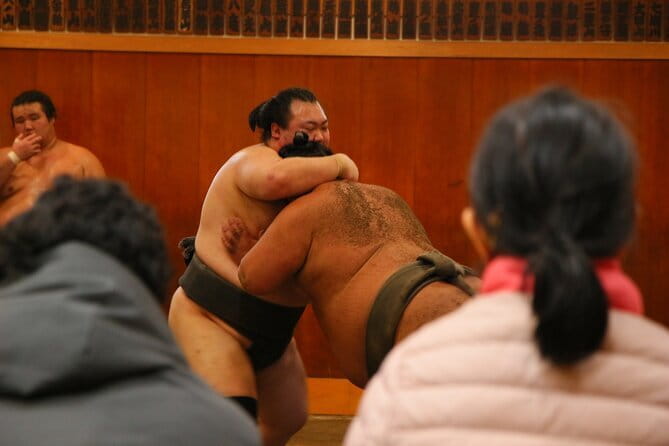
The most memorable part of this Tokyo morning is not a staged bout or dinner show. It is the sound of real wrestlers training inside an active sumo stable, with bodies colliding, feet stamping, and practice continuing at close range. You begin at Narihira Park, where your guide explains the rules and manners before leading you to the stable.
I like the direct wrestler interaction after practice, and I like the choice between a front-row floor cushion and a rear stool. The main consideration is that this is a quiet, rule-bound visit, not a casual photo attraction. You cannot record video or audio, and young children under six cannot join.
Key points at a glance
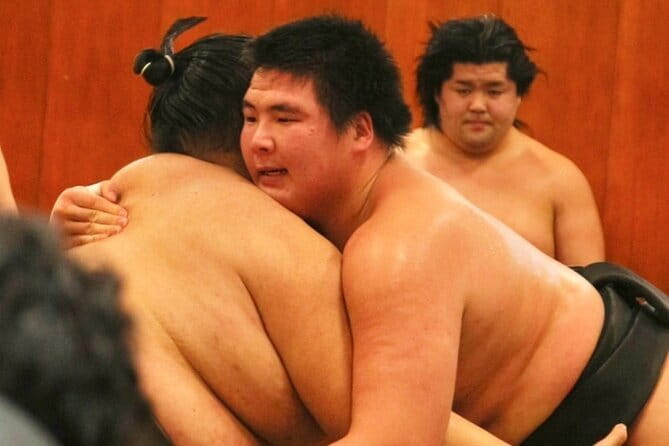
- Real morning practice: Watch current professional wrestlers train in an active stable rather than attending a staged performance.
- Personal questions afterward: Speak with wrestlers through the guide, then take commemorative photos.
- Flexible seating: Sit on a traditional zabuton cushion near the action or use a stool at the back.
- Useful Tokyo location: The 3-hour visit ends around 11:00 AM, near Tokyo Skytree and Asakusa.
- A proper souvenir: Take home an official Banzuke ranking sheet in a specially designed folder.
- Strong guide support: English and Japanese guidance helps explain etiquette, rituals, and the details of training.
Why watching practice beats a staged sumo show
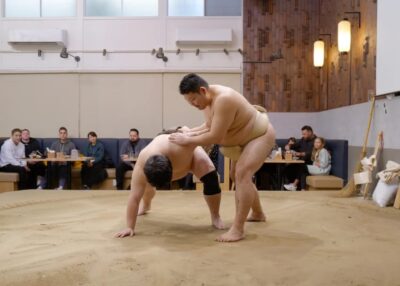
Sumo is easy to reduce to two large athletes pushing each other out of a ring. Morning practice shows you how much comes before that moment. You see warmups, repeated drills, footwork, ritual gestures, and sparring. The physical work is serious, direct, and sometimes startlingly loud.
That difference matters. A staged performance can be fun, but it gives you a finished product. Here, you see athletes working through a routine that is part of their daily life. The atmosphere is less polished and more revealing. A practice session may not provide a neat beginning, middle, and end, but that is part of its value.
The stable is a place of discipline. Your guide explains what you are seeing and how to behave, so you are not left guessing why the wrestlers repeat certain movements or why the room suddenly becomes quiet. Guides such as Haru, Momo, Sana, Sarah, and Ryoko have been praised for clear explanations and friendly help, although your guide depends on the date of your visit.
More Sumo Experiences in Tokyo:
- Tokyo: Sumo Show Experience with Chicken Hot Pot and a Photo
★ 4.8 · 6,678 reviews - Tokyo: Sumo Show and Dining Experience
★ 4.8 · 2,742 reviews - the SUMO show
★ 5.0 · 1,960 reviews
Starting at Narihira Park
The meeting point is near the multipurpose restroom at Narihira Park. Arrive ready to listen. Your guide checks names, hands out sumo-related materials, and explains the rules before the group walks to the stable.
This opening matters more than it may seem. Sumo practice is not arranged for casual tourism, and the stable follows its own customs. You need to know when to stay quiet, where photography is allowed, and how to avoid disturbing the wrestlers. A short introduction at the park gives you enough background to watch with some understanding instead of simply staring at a series of collisions.
The introduction also covers sumo history, rules, and etiquette. You do not need prior knowledge. If you know only the basic idea of pushing an opponent out of a ring, the guide fills in the missing pieces before you enter.
Transportation to Narihira Park is not included, so plan your route in advance. The experience is in Sumida, and the finish makes it practical for a later visit to Tokyo Skytree or Asakusa. The early start is part of the bargain: you get a rare morning activity, but you must be willing to get moving before much of Tokyo has fully woken up.
Inside the stable: close, quiet, and physical
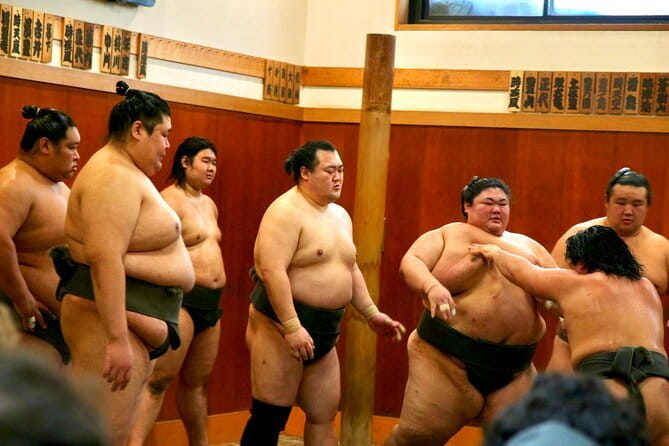
The walk from the park leads to an active sumo stable. Once inside, the tone changes. This is not a theater with a fixed program. The wrestlers are training, and you are observing an ongoing working environment.
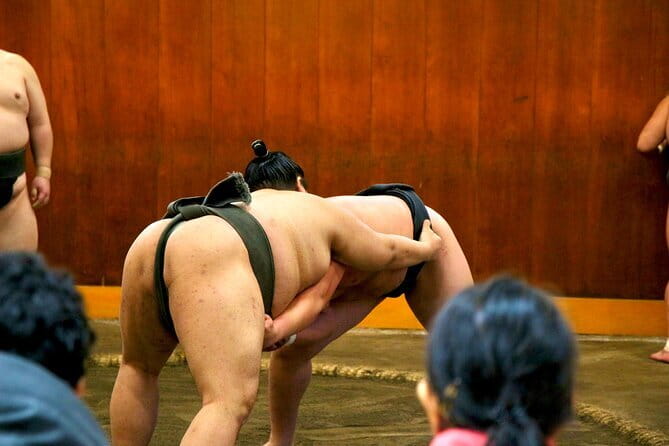
You may see warmups, technical practice, and sparring. The reviews describe the session as intense, sometimes overwhelming, and particularly powerful because you are close enough to notice the effort behind each movement. The noise of bodies hitting the floor and the concentration in the room make the sport easier to understand than any short explanation can.
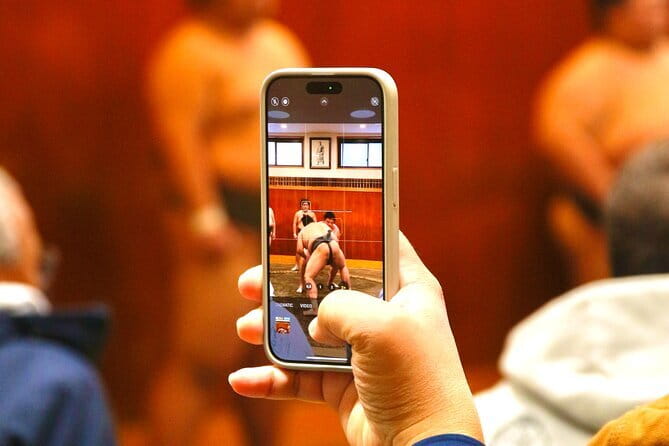
The stable visit is also a lesson in restraint. You are expected to remain quiet during practice and follow the guide’s instructions about seating and photography. Food, alcohol, drugs, audio recording, and video recording are not allowed. Photography is permitted, but flash is forbidden.
That last point is important. You may want to capture every exchange, but constant shooting would change the experience for you and the athletes. Keep your camera ready for approved moments, then watch the practice with your eyes. This is one of those activities where a phone can become a distraction.
Choosing between a zabuton and a stool
The seating arrangement is a welcome practical touch. You can sit on a traditional zabuton floor cushion near the front for a close view, or choose a stool at the back if sitting on the floor is uncomfortable.
The cushion offers the more intimate position. You are closer to the action and get a better sense of the room’s force and concentration. It also asks more of your knees and hips. If floor sitting is difficult, do not treat the stool as a lesser option. A rear seat lets you watch without turning a cultural experience into a physical endurance test.
Follow the guide’s directions on where to sit and when you may move. The stable is an active workplace, not a viewing gallery designed around visitor convenience. The flexible seating helps, but it does not mean you can wander around freely.
More Morning Tours in Tokyo:
- Tokyo: Sumo Morning Practice Viewing Tour
★ 4.8 · 570 reviews - Tokyo: Sumo Morning Training Visit
★ 4.4 · 370 reviews - Tokyo: Sumo Morning Practice Tour at Sumida City
★ 4.8 · 308 reviews - Tokyo Sumo Morning Practice Tour at Stable
★ 5.0 · 298 reviews
Meeting the wrestlers after practice
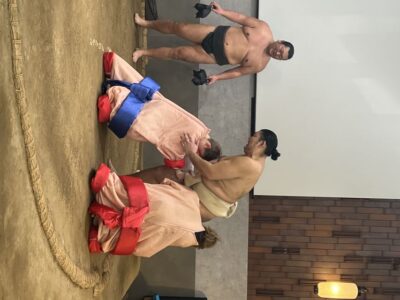
The most unusual part of the morning comes after the training. You have an opportunity to speak directly with active wrestlers and take commemorative photos with them. The guide helps translate or frame questions, allowing you to ask about daily life, training, and the mental side of sumo.
This changes the experience from observation to conversation. You may arrive focused on size and strength, then leave thinking more about routine, discipline, and the demands of professional sport. The questions are your chance to move beyond basic rules. Ask about the training day, what practice feels like, or how wrestlers approach competition.
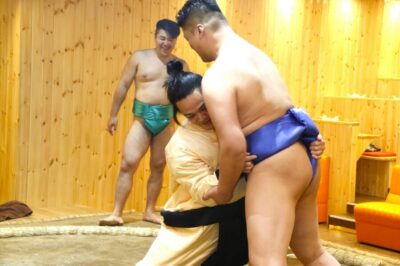
Some sessions may include a playful chance for male audience members to try a short wrestling exchange with professionals. This appears in individual experiences rather than as a guaranteed feature, so do not book solely expecting to enter the ring. If it happens, treat it as an optional extra, not the main purpose of the visit.
The photo session gives you a clear souvenir, but remember the setting. Follow instructions, stay respectful, and do not assume you can continue chatting or photographing beyond the arranged time. The wrestlers have just completed hard training.
The Banzuke souvenir and final park session
After leaving the stable, the group returns to Narihira Park. You receive an official Banzuke, the ranking sheet used in the sumo world, inside a specially designed folder.
This is a better souvenir than a generic branded trinket because it connects directly to what you have just seen. A Banzuke can look dense if you do not know how to read it, so use the guide’s explanations to understand what the rankings represent. It gives the morning a tangible closing point.
The final session is an extended Q&A with the guide. Instead of rushing you into a meal or ending at the stable door, the tour leaves room for questions about traditions, training, and Tokyo sightseeing. This is also a useful moment to ask for personal suggestions for the rest of your day.
The finish around 11:00 AM is well judged. You have spent three hours on the activity, but still have most of the day available. Tokyo Skytree and Asakusa are nearby options, making this easy to pair with a larger Sumida or old Tokyo itinerary.
What the $93 price buys you
At $93 per person, this is not a cheap way to fill a morning. The price includes the stable visit fee, an English-speaking guide, and the Banzuke souvenir. You are paying mainly for access and explanation, not for a long list of extras.
That distinction is important. The value comes from entering a place that is normally closed to the public, seeing authentic practice, and having a structured chance to speak with active wrestlers. A regular sightseeing stop may cost less, but it will not offer the same access.
The price makes the most sense if you have a genuine interest in sumo, Japanese customs, or unusual Tokyo experiences. It is less compelling if you want a relaxed morning with food, shopping, or extensive sightseeing. There is no meal included, and the tour deliberately uses the final park session for questions instead of a rushed brunch.
The 4.9 rating from 74 reviews reflects especially strong praise for the guides, the authenticity of the stable, and the question-and-photo session. The practical takeaway is not simply that the activity is popular. It is that the guide makes a major difference. Without explanations, practice could look like a blur of movement. With a good guide, you understand what deserves your attention.
The rules that shape your visit
The restrictions are firm but reasonable. You may not bring food into the experience, and alcohol and drugs are prohibited. Video and audio recording are not allowed. Still photography is permitted under the stable’s rules, with no flash.
During practice, remain quiet. Do not treat the session as a chance to call out, ask questions from your seat, or move around in search of a better angle. Save your questions for the arranged interaction afterward.
The activity is not suitable for children under six. Older children may find the quiet rules and long period of observation difficult, so think about attention span as well as the formal age limit. Adults and older children with a real interest in sport or Japanese culture are likely to get much more from it.
During the Grand Sumo Tournament periods, roughly two weeks in January, May, and September, practice starts 30 minutes earlier and the viewing period lasts about one hour. That is a significant change. Check the date carefully and plan your morning around the earlier start.
Who will enjoy this most
I would choose this for someone who wants access rather than spectacle. It suits first-time visitors who want a clear introduction to sumo, as well as people who already follow the sport and want to see the training culture behind tournament days.
It is also a strong choice for photographers who can work within restrictions. You may take photos, but the no-flash rule, quiet atmosphere, and seating instructions mean this is not a free-form photo shoot.
Sports fans should appreciate the physical detail. You can watch athletes repeat movements, absorb impact, and work through a demanding routine. Culture-focused visitors will value the etiquette and the chance to ask about daily life. Solo visitors and couples may find the Q&A especially rewarding because they can shape it around their own questions.
I would hesitate to recommend it to anyone who dislikes early mornings, floor seating, quiet observation, or strict visitor rules. It is also not ideal if your main goal is a long meal or a full day of sightseeing. The activity gives you one focused cultural experience, then sends you back into Tokyo before midday.
How to plan the rest of your morning
Because the tour ends around 11:00 AM, you can build a useful half-day around it. Tokyo Skytree is a natural next stop from the Sumida area. Asakusa is another good choice if you want more traditional streets and major cultural sights after the stable.
Do not schedule something across Tokyo with a tight arrival time immediately after the tour. The finish is planned for around 11:00 AM, but an authentic practice session is not a machine with a guaranteed pace. Leave some breathing room for the walk back, photographs, and the final questions.
Wear clothing that lets you sit comfortably and quietly. The seating choice helps, but the morning still involves time inside a stable and possibly on a floor cushion. Arrive prepared to follow instructions rather than trying to force the visit into your usual sightseeing rhythm.
Cancellation is free up to 24 hours before the activity, and you can reserve now and pay later. Those terms help if your Tokyo schedule is still changing, but they do not remove the need to check the start time, especially during tournament periods.
Should you book the sumo morning practice?
Book it if you want to see professional sumo as a working discipline, not just as a colorful event. The stable access, active wrestlers, direct questions, and Banzuke souvenir give the morning more substance than a quick photo stop. The guides, including Haru, Momo, Sana, Sarah, and Ryoko on different dates, are an important part of that experience.
Skip it if you want a casual show, a meal, unrestricted filming, or a late start. The rules are real, the visit is quiet during practice, and the floor seating may not suit everyone.
For the right visitor, $93 is fair because the hard-to-get element is the access itself. You leave with a better sense of what sumo demands, a personal exchange with athletes, and enough of the day left for Skytree or Asakusa. That is a useful combination in Tokyo.
FAQ
Where does the sumo morning practice begin?
Meet near the multipurpose restroom at Narihira Park in Sumida. The guide checks your name, gives you sumo-related materials, and explains the rules before the group walks to the stable.
How long does the experience last?
The activity lasts about three hours and usually finishes around 11:00 AM. Check the available start times when booking.
Is transportation to the meeting point included?
No. Transportation to Narihira Park is not included, so you need to make your own way to the meeting point.
Can I take photos during practice?
Photography is allowed, but you must remain quiet and follow the rules about flash and seating. Flash photography is not allowed.
Can I record video or audio?
No. Video recording and audio recording are not allowed.
Can I sit on a chair instead of the floor?
Yes. You can choose a traditional zabuton floor cushion near the front or use a stool at the back if you prefer not to sit on the floor.
What changes during the Grand Sumo Tournament?
During the tournament periods, which last about two weeks in January, May, and September, practice starts 30 minutes earlier and the viewing time is about one hour. Check the schedule carefully for your date.
Just added around Tokyo
- Kawagoe Japanese Food Tour : Unagi Kaiseki and Sake near Tokyo★ 5.0 · 30 reviews
- Kawagoe 4hr Private Tour with Licensed Guide (Kawagoe Dep)★ 5.0 · 13 reviews
- Little EDO Sushi Making workshop in Kawagoe★ 5.0 · 18 reviews
- 【R34】Tokyo:Private Daikoku tour in Modified R34★ 4.9 · 92 reviews
- :Tokyo,Shibuya/ Pro Photography in Kimono / English-Friendly★ 5.0 · 26 reviews
- Tokyo:Celebrate Unique Japanese New Year Tradition Festivity★ 3.9 · 20 reviews
- Tokyo: Allstar Food Tour★ 4.7 · 29 reviews
- Tokyo:Calligraphy &Make your original folding fan in Asakusa★ 5.0 · 62 reviews
Sumo Experiences, compared.
Sumo Show Experience with Chicken Hot Pot and a Photo
Our verdict →
Authentic Sumo Experience in Tokyo: Enter the Sanctuary
Our verdict →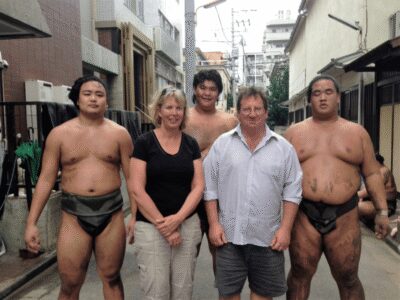

Browse the lists this tour appears in