
Reviewed · SAMURAI EXPERIENCES
Tokyo: Samurai Sword Academy in the Hometown of Last Samurai
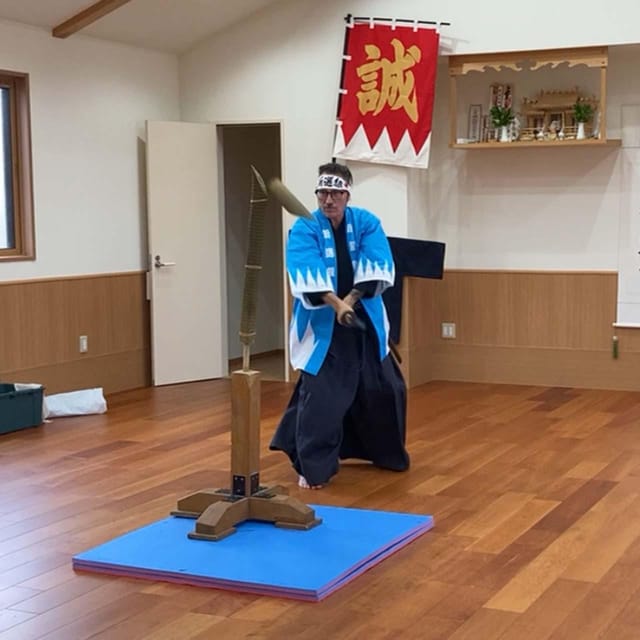
The remarkable part of this two-hour class is that you practice Tennen Rishin-ryu, the sword tradition linked to the Shinsengumi, in an actual dojo in Hino, their home city. Masao Inoue, a descendant of Shinsengumi executive Genzaburo Inoue, leads the program with other instructors.
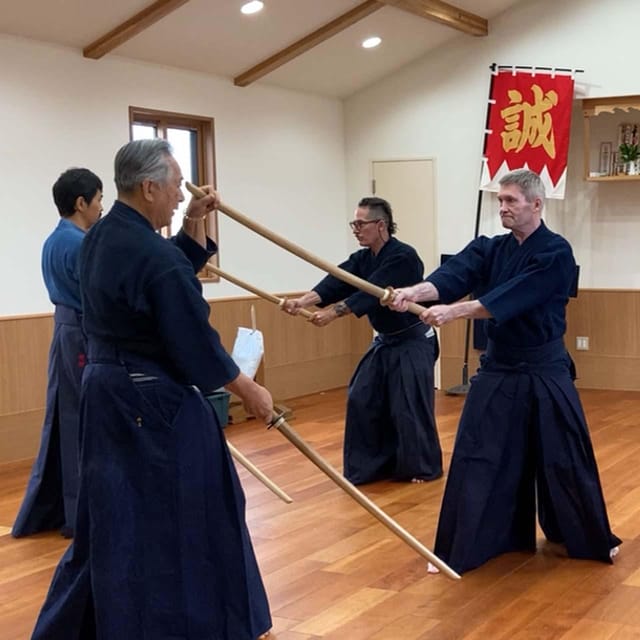
I like the small four-person limit, which gives you close attention, and I like the steady build from posture and footwork to wooden sword drills and controlled work with a real Japanese sword. The main drawback is that this is a physically demanding martial arts class, not a passive museum visit. It is not suitable for children under 18 or for people with several listed health and mobility concerns.
Key points at a glance
- Practice in the actual Tennen Rishin-ryu Hino Dojo, rather than watching a staged samurai performance.
- Learn the Shinsengumi tradition from Masao Inoue, a descendant of executive Genzaburo Inoue.
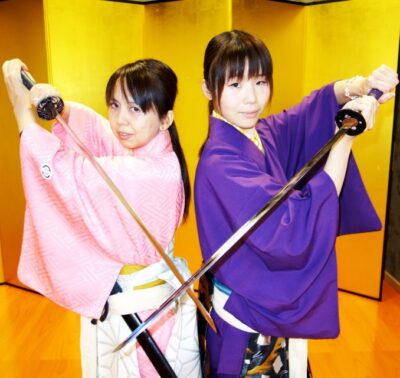
- Wear dogi, hakama, and a dandara baori, the distinctive Shinsengumi-style uniform.
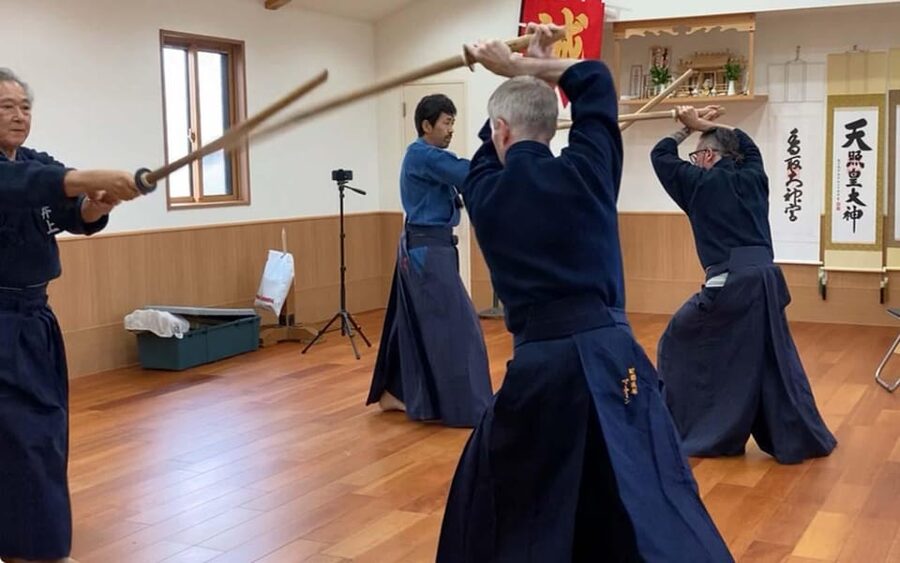
- Build skills in stages, starting with stance and footwork before kata, partner drills, and sword work.
- Handle a wooden sword and a Japanese sword, with close instruction throughout the session.
- Reach the venue easily, with the dojo on the second floor of the Inoue Genzaburo Museum, five minutes from JR Hino Station.
Hino, where the Shinsengumi story feels close
Tokyo is full of samurai-themed attractions, but many are polished performances made for a quick photo. This class takes you to Hino, a city west of central Tokyo tied directly to the Shinsengumi, the late-Edo-period swordsmen often called the Last Samurai.
The men associated with Tennen Rishin-ryu in Hino helped form the Shinsengumi at the end of the Edo period. Their story belongs to a turbulent moment when the old samurai order was fading and Japan was moving toward the modern era. That setting gives the class more weight than a generic lesson in sword movement.
You meet at the Inoue Genzaburo Museum, then go upstairs to the dojo. The museum connection matters. It places the class in a setting tied to an actual Shinsengumi figure, rather than separating the sword lesson from the history that gives it meaning.
The location is practical, too. Hino Station is on the JR Chuo Line, and the venue is about a five-minute walk away. You do not need to plan a complicated trip across Tokyo or set aside a full day. Still, Hino is outside the central sightseeing core, so allow enough time for the train ride from your hotel.
More Samurai Experiences in Tokyo
- Tokyo: Samurai Restaurant Show Ticket with 2 Drinks
★ 4.5 · 1,307 reviews - Tokyo: Samurai Ninja Museum Guided tour and Experience
★ 4.6 · 1,010 reviews - Tokyo: Samurai Sword & Archery Class from Samurai Descendant
★ 5.0 · 603 reviews
The first steps: uniform, etiquette, and safe movement
The class supplies the clothing you need: a dogi and hakama for practice, plus a dandara baori, the recognizable Shinsengumi-style coat. That removes one common worry. You do not need to pack a costume or buy special equipment before arriving.
The clothing also changes the feel of the session. You are not simply holding a prop in street clothes. You are entering a working dojo and taking part in a formal practice, so posture and respect matter from the first minute.
The instructors begin with the basics. Expect attention to stance, foot placement, body alignment, and the way you hold yourself before you make larger movements. One useful lesson is that correct footwork is not just about looking traditional. It helps prevent injury and gives you better control.
That careful start is important for beginners. Sword movement can look simple from a distance, but balance, timing, and safe positioning take practice. The instructors use a patient, encouraging approach, and the group size of no more than four lets them correct small mistakes before they become habits.
You should still arrive ready to concentrate. This is not a costume photo session with a few theatrical swings. The class asks you to listen, repeat movements, and stay aware of the people around you.
Wooden sword drills and the Shinsengumi style
Once you have the basic stance and footwork, the class moves to the wooden sword. This stage gives you a safer way to learn the shape of the movements before progressing to a Japanese sword.
You work through sword forms, often called kata, and may practice partner movements or a controlled duel sequence. The point is not speed. It is learning where your feet go, how your hands guide the sword, and how each movement connects to the next.
The instructors explain not only what to do, but why. That makes a difference in a short class. You may not retain every sequence after two hours, but you can understand the logic behind the movements instead of copying them blindly.
I especially like this staged format because it gives the session a clear rhythm. You begin with the body, add the wooden sword, and only then approach the more demanding part of handling a real blade. It feels more responsible than handing a sharp sword to a first-time visitor and asking for a dramatic pose.
The class is taught in English and Japanese. English support is available, though the exact balance between languages may vary. Simple demonstrations, repetition, and close correction help bridge the gap, but you should be comfortable following physical instructions carefully.
Handling a Japanese sword under close supervision
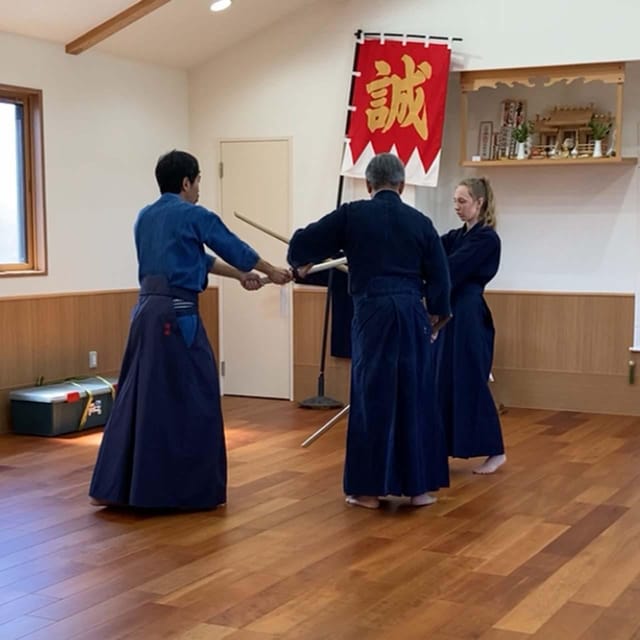
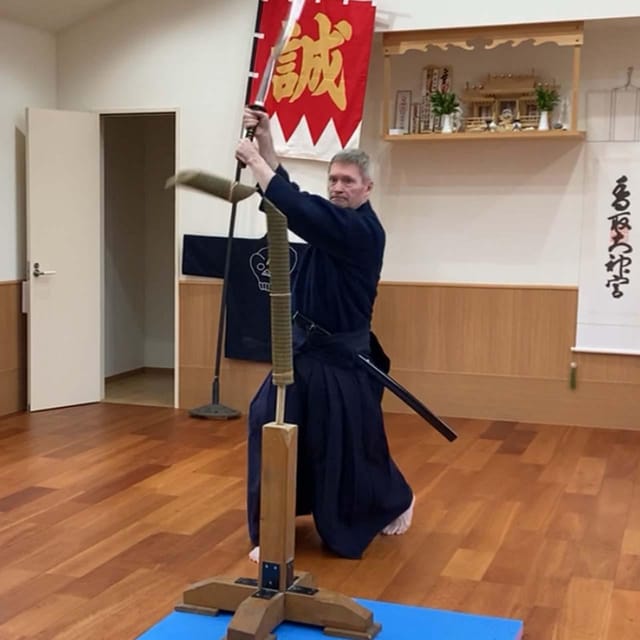
The most memorable part for many people will be using a real Japanese sword. The listing specifically includes a Japanese sword, and the class treats it as more than a souvenir prop. You learn how to handle it with care and respect.
This section comes after the basic work, which is the right order. By then, you have had time to understand stance, grip, movement, and the need for control. The sword is presented as the soul of the samurai, so the lesson carries a ceremonial and cultural side as well as a physical one.
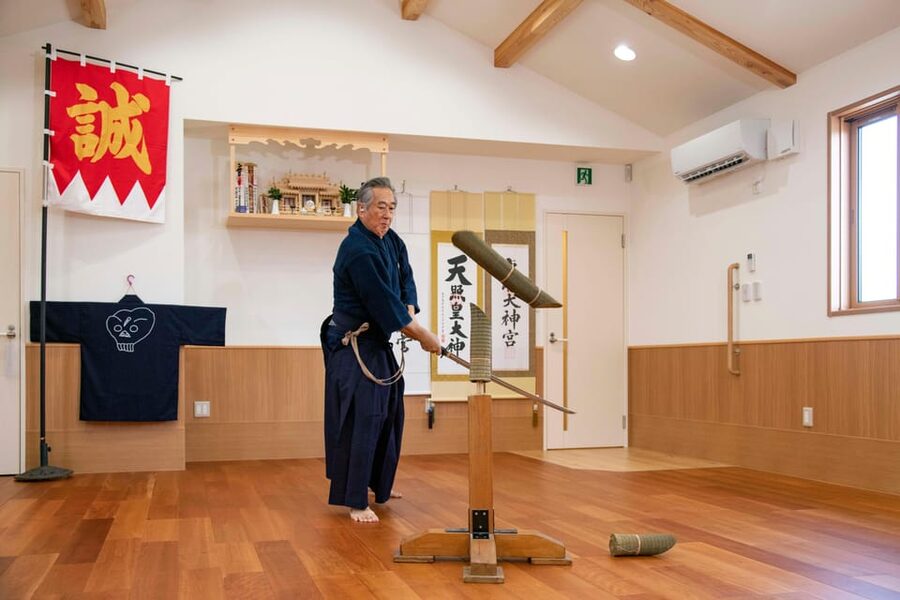
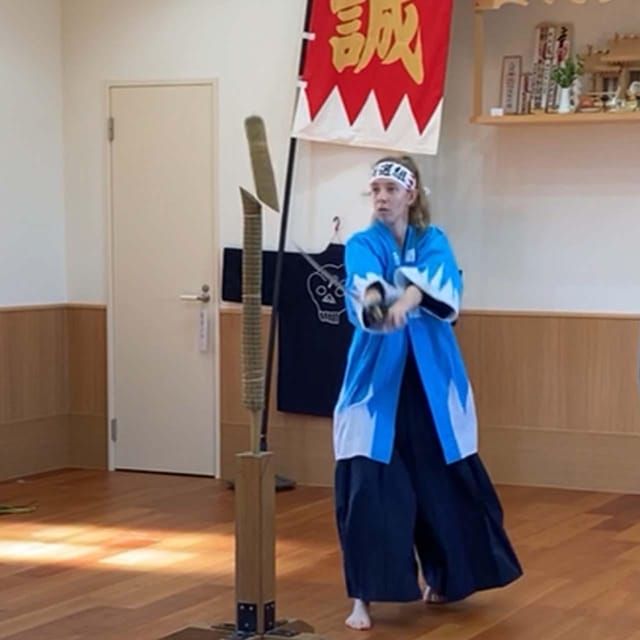
The cutting portion includes tatami mats. That gives you a clear test of control and technique, but it also explains why the class has strict suitability rules. A real blade requires attention, strength, and steady movement. This is not something to rush through for a photograph.
Descriptions of the class also mention a final surprise, but the details are not given in advance. That is a nice reason to stay present rather than trying to guess the full schedule.
Do not expect to become a trained kenjutsu practitioner in two hours. What you can gain is a brief, serious introduction to how a traditional sword school approaches movement, discipline, and safety. The value is in the setting and instruction, not in mastering a large number of techniques.
Same trip, a completely different kind of day:
- 1-Day Tokyo Bus Tour
★ 5.0 · 14,250 reviews - Tokyo: TOKYO SKYTREE® Admission ticket
★ 4.5 · 11,192 reviews - Tokyo: teamLab Planets TOKYO Digital Art Museum Entry Ticket
★ 4.6 · 9,779 reviews - Tokyo: Sumo Show Experience with Chicken Hot Pot and a Photo
★ 4.8 · 6,678 reviews
A real dojo, not a stage show
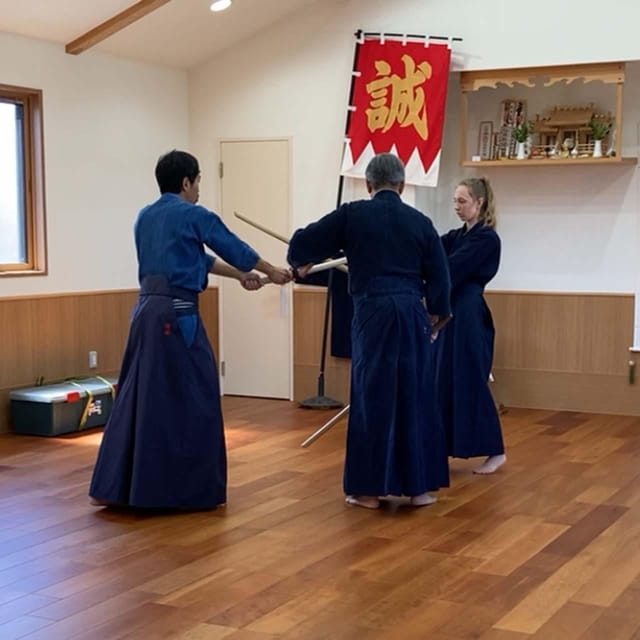
The dojo is the heart of this activity. You are practicing where students of Tennen Rishin-ryu continue to train, and the equipment and training hall are described as well kept and spacious.
That distinction matters. A staged samurai show can be fun, but it is built around watching. Here, you take part in a structured lesson led by people connected to the school. The atmosphere is formal without being cold, and the instructors balance seriousness with friendliness.
Masao Inoue is the chairman of the Tennen Rishin-ryu Hino Dojo and a descendant of Genzaburo Inoue, a Shinsengumi executive. That family connection gives the history a human face. You are not simply hearing a distant legend repeated in a tourist district.
The museum below adds another layer. After the lesson, you can place the dojo and its traditions in the wider story of Hino and the Shinsengumi. A Shinsengumi map has also been provided at the end of the class, giving you a useful way to connect the session with historic points in the area.
If you are already interested in Japanese history, this setting may be the main reason to choose the class. If you only want a quick sword photo, the two-hour format and physical instruction may feel like more than you need.
What the two hours are worth at $116
At $116 per person, this is not a cheap add-on. You are paying more than you would for a museum admission or a short cultural demonstration. The price needs to be judged against what is included.
The fee covers the master and instructors, the swordsmanship lesson, wooden sword, Japanese sword, dogi, hakama, and dandara baori. It also buys access to a small class limited to four people. That last point is important. A large group would make careful instruction and safe sword handling much harder.
I see the value in the combination of access and teaching. You are not only renting a costume or posing with a blade. You receive a staged lesson, use supplied equipment, practice in an actual dojo, and learn from instructors connected to the Tennen Rishin-ryu tradition.
The session also saves you from buying or arranging anything special. You can travel light and still take part in the full program. For a person who has always wanted to handle a Japanese sword in a serious setting, the price is easier to justify than it would be for someone with only a casual interest.
The best comparison is not with a standard attraction. Compare it with a private or very small-group cultural lesson that includes specialist instruction and equipment. By that measure, $116 is reasonable, though still a considered purchase for a short activity.
Who should book this sword class
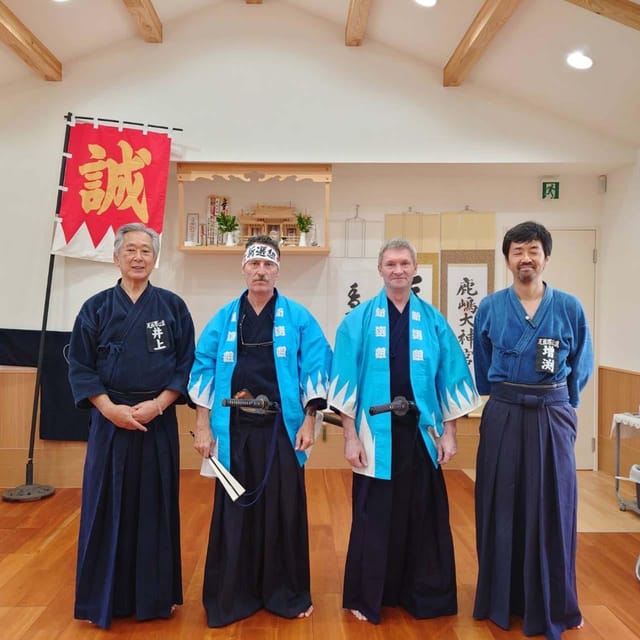
This suits adults who want an active cultural experience and have a real interest in samurai history, martial arts, or traditional Japanese practice. It is especially well matched to people who prefer a small class over a large, polished show.
You will get the most from it if you:
- Enjoy learning physical skills step by step.
- Are interested in the Shinsengumi and late Edo-period Japan.
- Can follow safety instructions and stay focused.
- Are comfortable with some bending, stepping, and repeated movement.
- Value meeting instructors in a working cultural setting.
It is less suitable if you want a relaxed sightseeing stop with little physical effort. The activity is not for pregnant women, people with back, heart, mobility, or balance problems, or people with recent surgery. It is also not intended for children under 18, people over 75, people with a cold, or people with a low level of fitness.
The restrictions are worth taking seriously. Sword practice requires stable movement, and the class involves more than standing still for photographs. If you have a medical concern that is not clearly covered, ask before booking rather than assuming the activity will be gentle.
Practical details before you reserve
Plan on two hours at the dojo. Starting times vary, so check availability for your date. The venue is on the second floor of the Inoue Genzaburo Museum, a five-minute walk from Hino Station on the JR Chuo Line.
The class is available in English and Japanese. The group limit is four people, which is excellent for instruction but means spaces may be limited on popular dates.
The activity offers free cancellation up to 24 hours before the start time for a full refund. You can also reserve now and pay later, which helps if you are still arranging a Tokyo schedule.
Wear or bring whatever you need to feel comfortable changing into the supplied dogi and hakama. Fancy clothing is unnecessary because the practice uniform and other equipment are provided.
Allow a little extra time around the appointment. Hino is easy to reach once you are on the JR Chuo Line, but it is not next door to the major central Tokyo sights. The museum and dojo are close to the station, so the final walk is simple.
Should you book the Hino samurai experience?
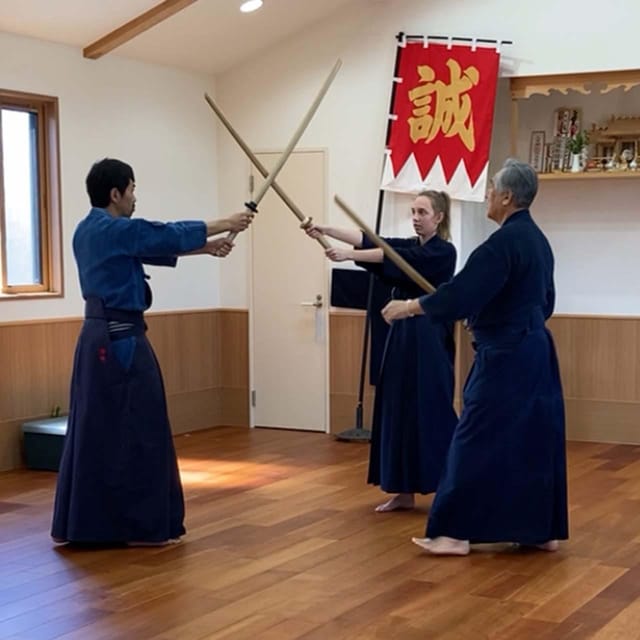
I would book this if you want a serious, hands-on introduction to a living sword tradition, especially if the Shinsengumi story interests you. The strongest reasons are the four-person limit, the real dojo setting, Masao Inoue’s family connection, and the gradual path from wooden sword practice to a Japanese sword and tatami cutting.
I would skip it if you are seeking a short photo stop, dislike physical instruction, or cannot comfortably manage the movement required. At $116, it deserves more interest than a casual impulse booking.
For the right person, this is one of the more distinctive cultural activities you can add to a Tokyo itinerary. You leave with a better sense of how much discipline lies behind the samurai image, plus a direct connection to Hino and the men who became the Shinsengumi.
FAQ
Where does the swordsmanship class take place?
It takes place on the second floor of the Inoue Genzaburo Museum in Hino, Japan.
How far is the venue from Hino Station?
The museum and dojo are about a five-minute walk from Hino Station on the JR Chuo Line.
How long does the activity last?
The class lasts two hours.
Who leads the experience?
Masao Inoue, chairman of the Tennen Rishin-ryu Hino Dojo and a descendant of Shinsengumi executive Genzaburo Inoue, leads the program with instructors.
What languages are available?
Instruction is available in English and Japanese.
How many people can join the class?
The group is limited to four participants.
Are clothing and swords provided?
Yes. The activity includes a dogi and hakama, a dandara baori, a wooden sword, and a Japanese sword.
Can participants cut tatami mats?
The sword practice includes cutting tatami mats under instruction.
Who should not take part?
The activity is not suitable for pregnant women, people with back, heart, mobility, or balance problems, wheelchair users, children under 18, people over 75, people with a cold, people with recent surgery, or people with a low level of fitness.
Just added around Tokyo
- Kawagoe Japanese Food Tour : Unagi Kaiseki and Sake near Tokyo★ 5.0 · 30 reviews
- Kawagoe 4hr Private Tour with Licensed Guide (Kawagoe Dep)★ 5.0 · 13 reviews
- Little EDO Sushi Making workshop in Kawagoe★ 5.0 · 18 reviews
- 【R34】Tokyo:Private Daikoku tour in Modified R34★ 4.9 · 92 reviews
- :Tokyo,Shibuya/ Pro Photography in Kimono / English-Friendly★ 5.0 · 26 reviews
- Tokyo:Celebrate Unique Japanese New Year Tradition Festivity★ 3.9 · 20 reviews
- Tokyo: Allstar Food Tour★ 4.7 · 29 reviews
- Tokyo: West-Side Cycling and Food Tour with Guide★ 5.0 · 37 reviews
Samurai Experiences, compared.
Browse the lists this tour appears in